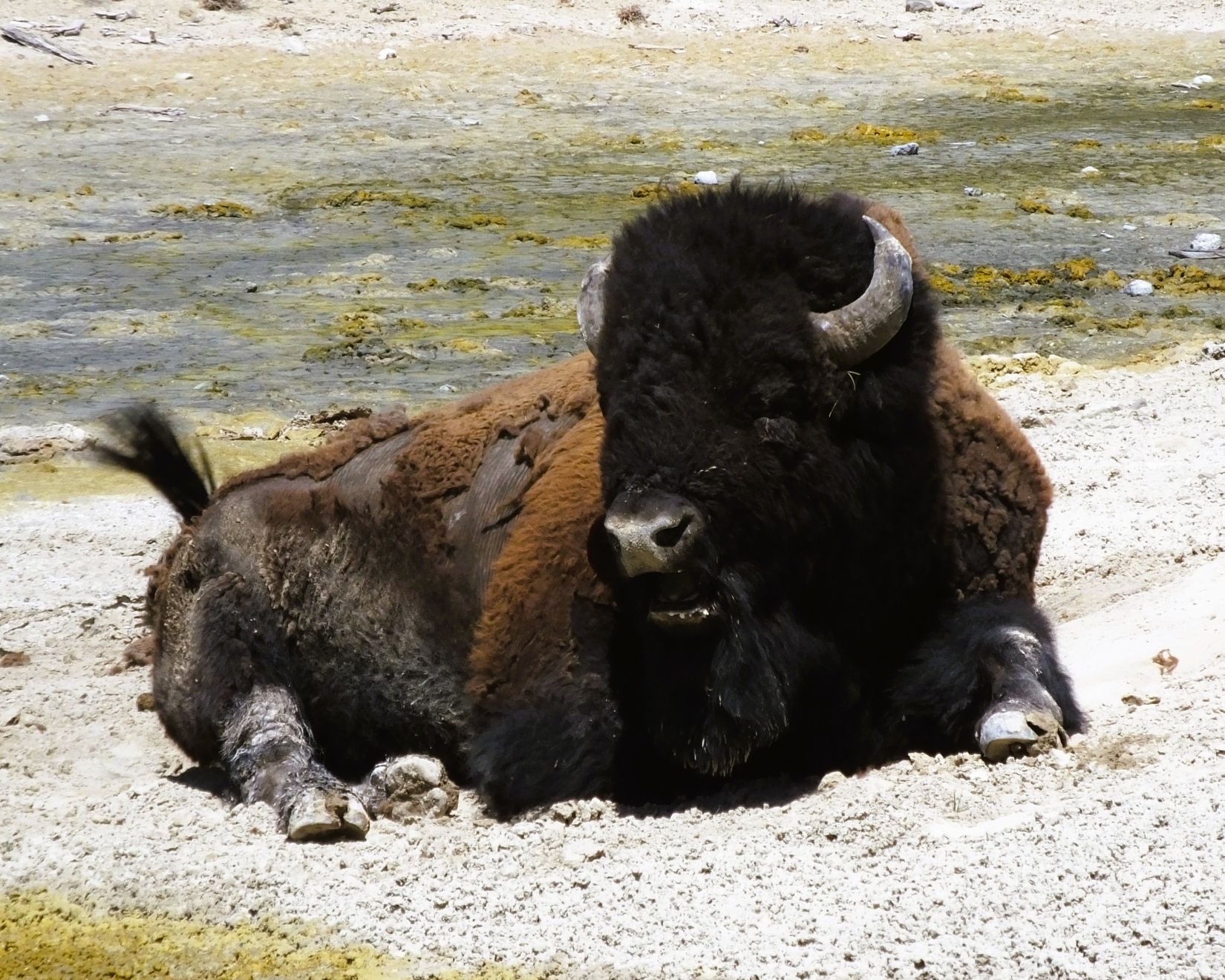

(2026 Wild West Wander Ep 14)
Here at the junction of the Firehole and Gibbon Rivers on September 19, 1870, members of the Washburn-Langford-Doane Expedition gathered around a campfire the last evening of their historic exploration of the Yellowstone country and discussed the astounding natural wonders they had seen. There emerged an idea, expressed by Cornelius Hedges, that there should be no private ownership of these wonders but that the area should be preserved for public enjoyment. Others shared these views and on March 1, 1872, President Ulysses S. Grant signed the Act establishing Yellowstone as the world’s first National Park. In the century since, 1200 national parks and equivalent preserves have been established by more than 90 nations. (from a plaque in Yellowstone National Park)
Our wild west wandering continued.
We left Idaho with its nasty goatheads and headed toward Yellowstone National Park. Although Yellowstone was not in our original travel plans, several last-minute campground cancellations and our flexible truck camper allowed us to spend several days in America’s first national park.
2.4 Million Bricks
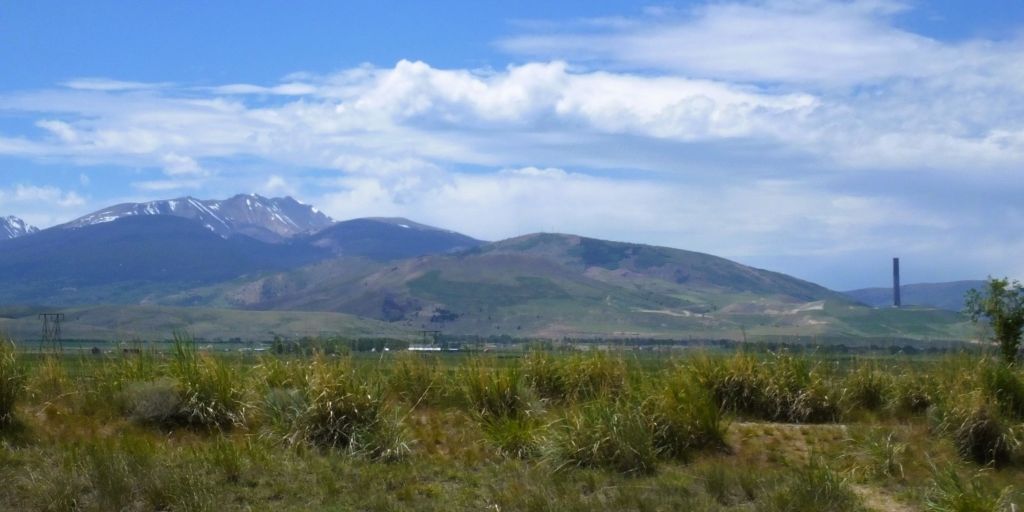
Pat spotted a very unusual tall column jutting up in front of mountains west of Billings, Montana. The column was a 585-foot smokestack used by the Anaconda Copper Mining Company from 1919 – 1980. Nearly as tall one-and-one-half SpaceX Starships and taller than the Washington Monument, the stack contains more than 2.4 million bricks.


Summer in Yellowstone = Crowds
That night, we camped just outside Yellowstone National Park in West Yellowstone. When we entered the park at 7 the next morning, there was a quarter mile line of cars and RVs waiting at the entrance gate. We learned an important lesson that we would relearn numerous times over the next three days – Yellowstone is unbelievably crowded during the summer months.
This was our sixth visit to Yellowstone. We never tire of the park’s mountains, valleys, rivers, geysers and thermal areas. Add to that abundant wildlife – bison, grizzly and black bears, deer, mountain goats, bighorn sheep, wolves and more. It is easy to understand why the park is a major bucket list destination for Americans and international travelers alike.
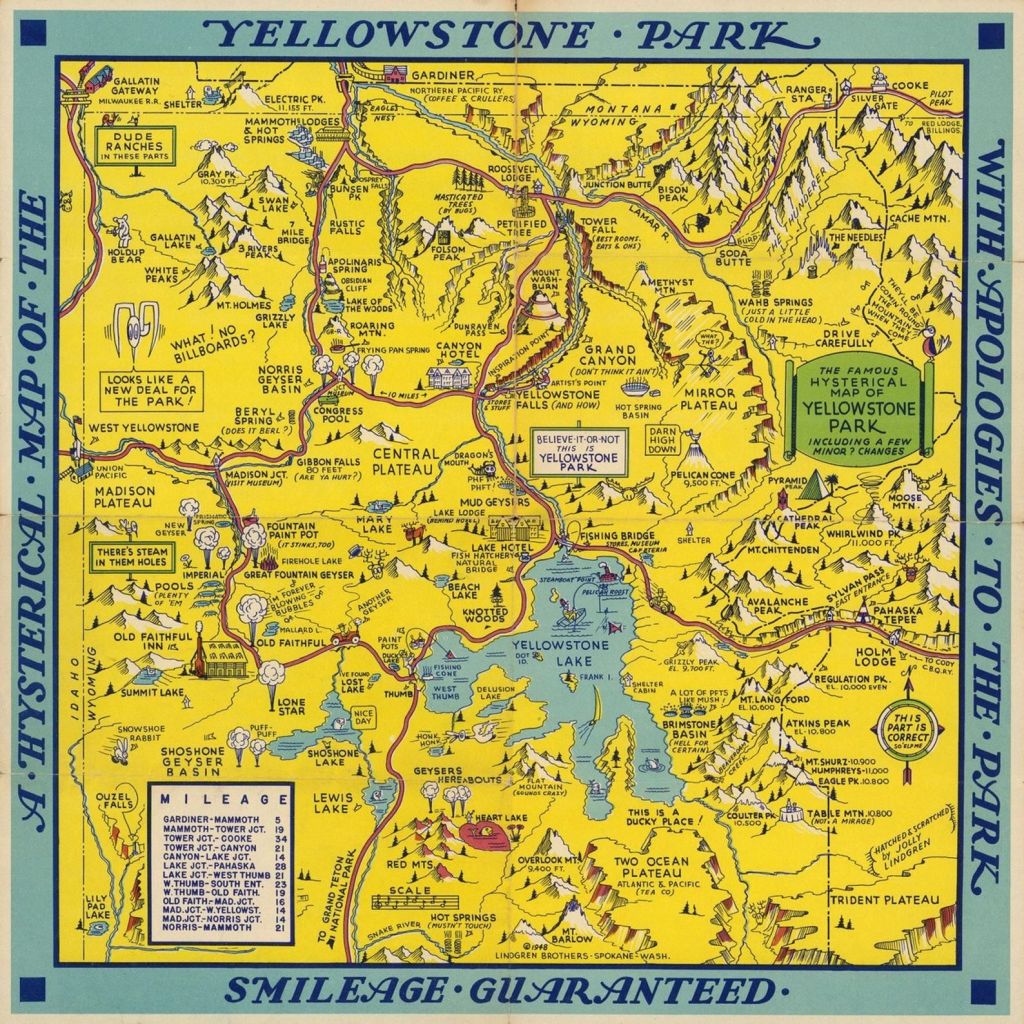
Yellowstone is huge – 63 miles north to south and 54 miles east to west. At 2.2 million acres, it’s larger than Rhode Island and Delaware combined. We knew we couldn’t see everything in three days, so we decided to visit several parts of the park that we were less familiar with along with some of the favorite places we’ve visited before.
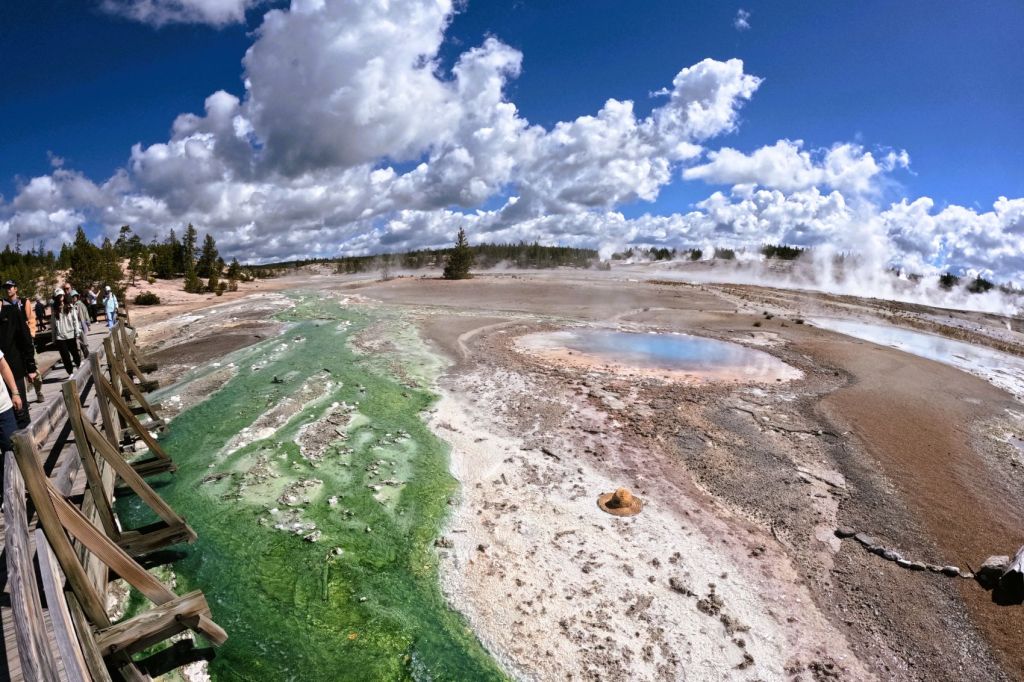
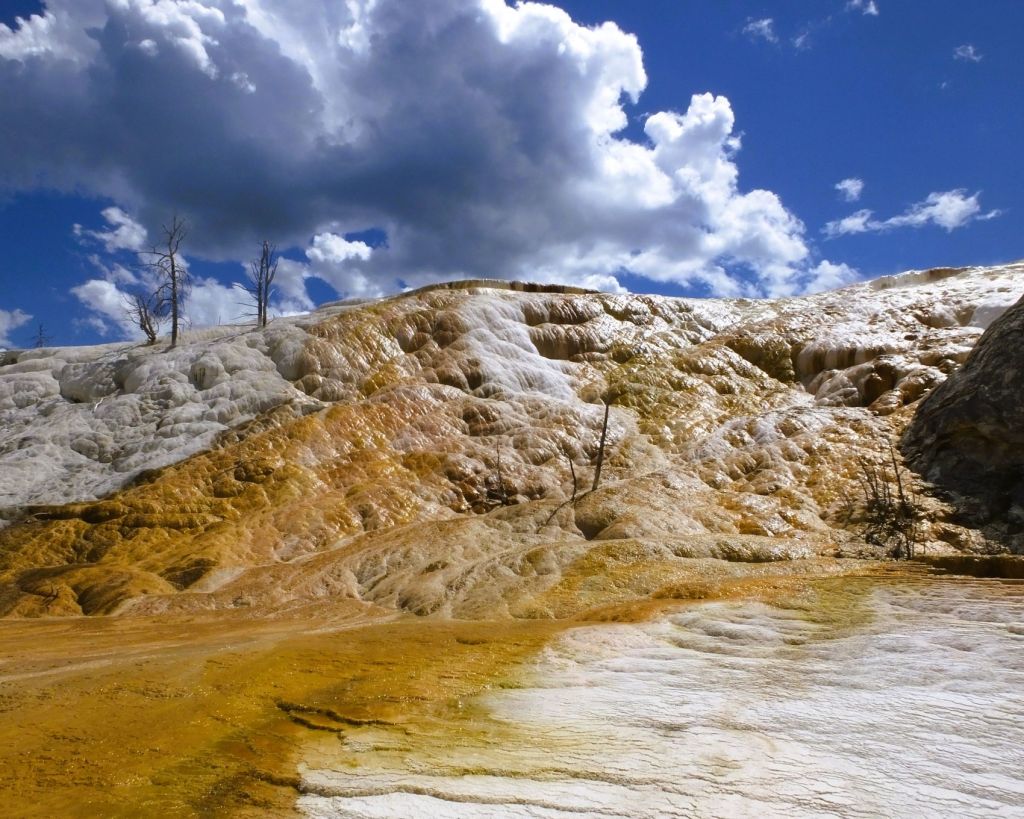
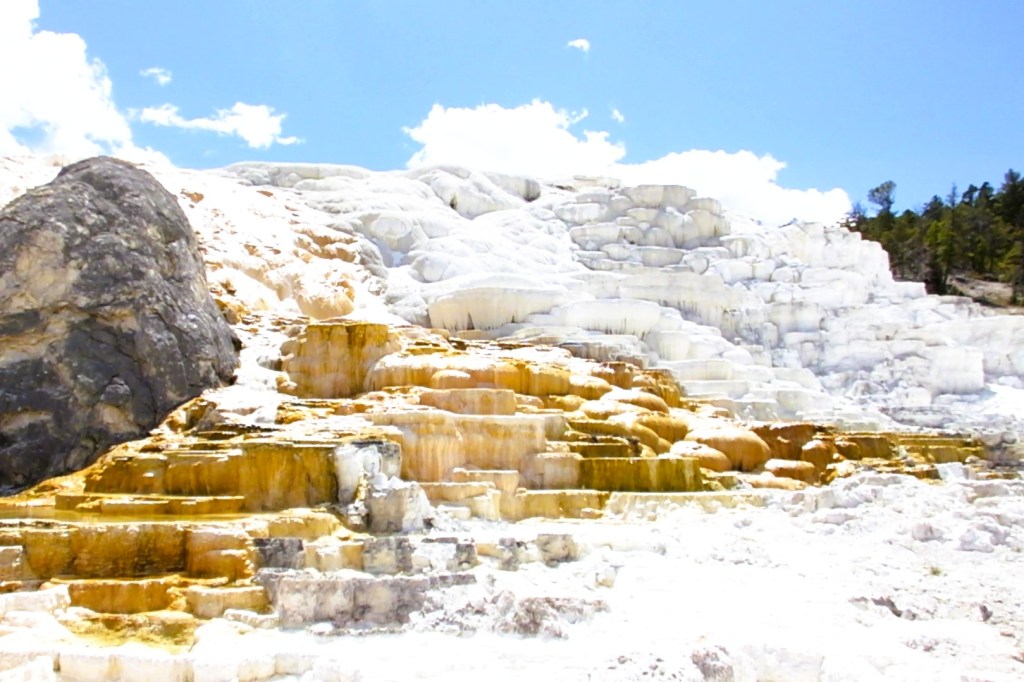
Day 1 – Norris Geyser Basin and Mammoth Hot Springs
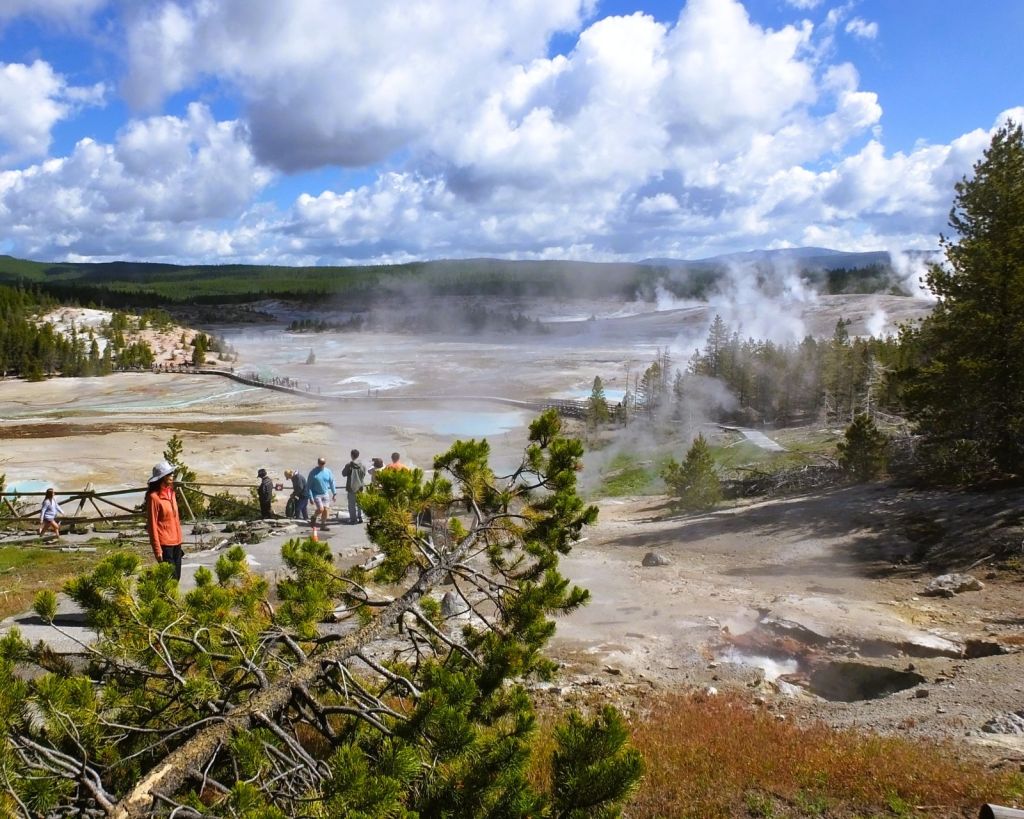

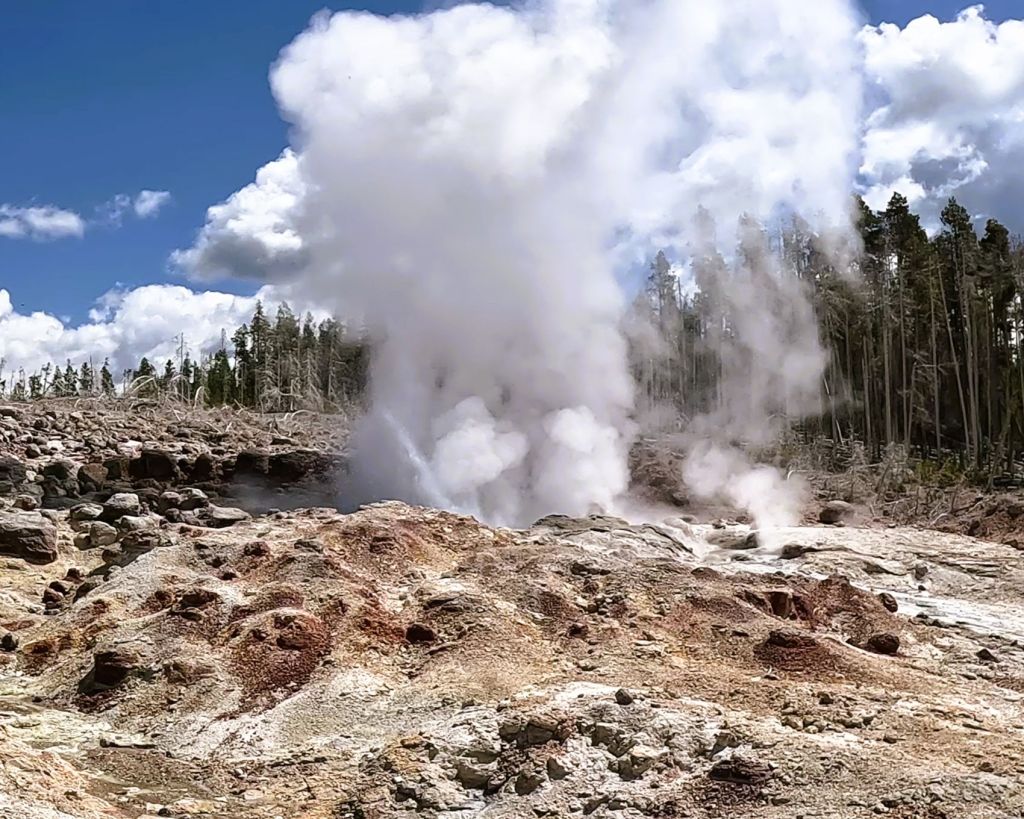
Eruptions are unpredictable and infrequent – the last major eruption was on February 27, 2026.
Day 2 – Old Faithful, Grand Prismatic Spring, Fairy Falls
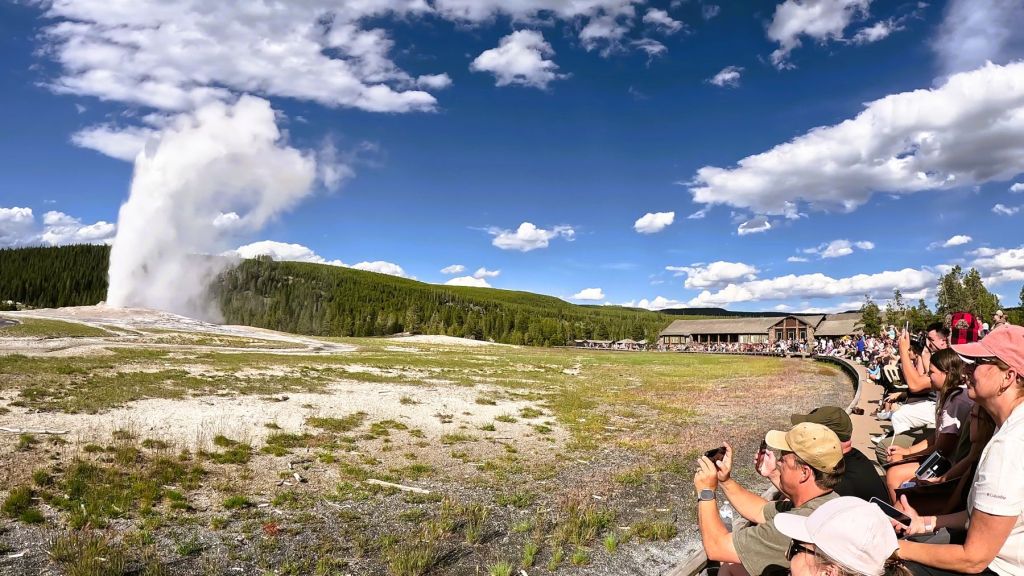

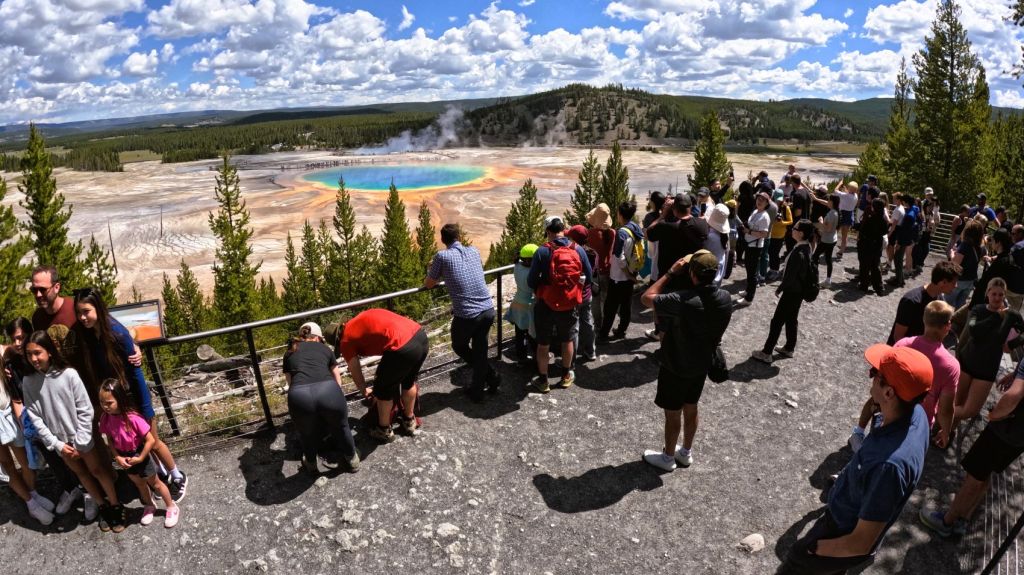
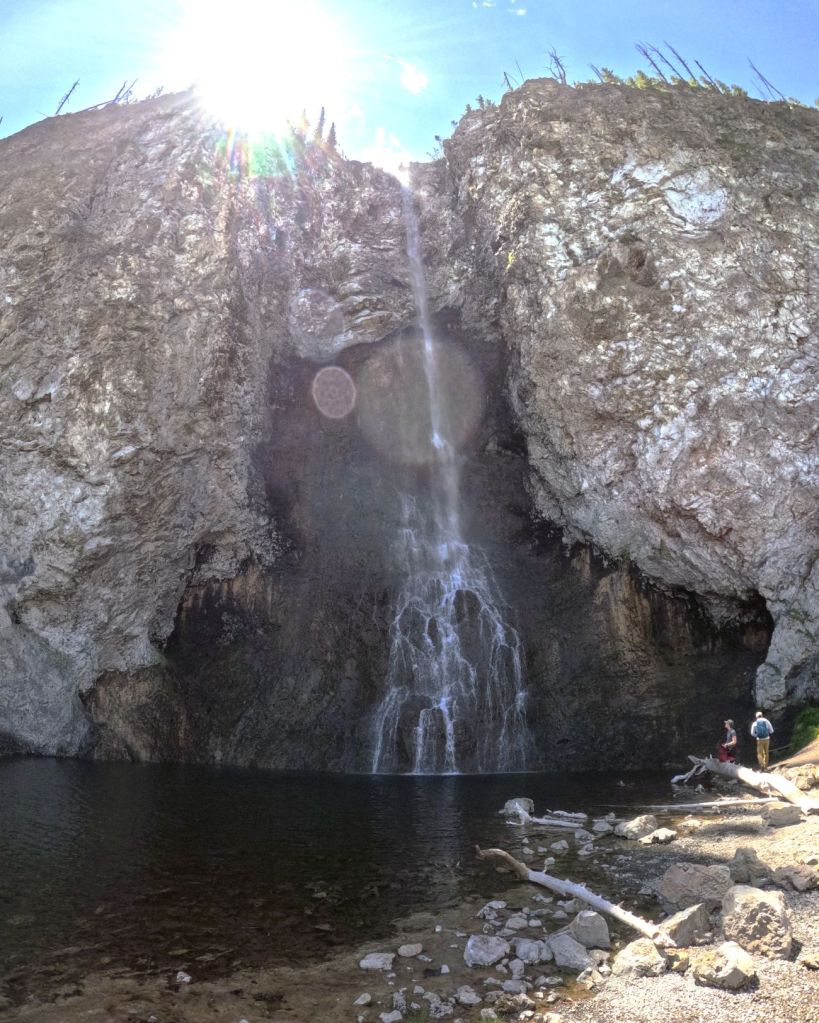
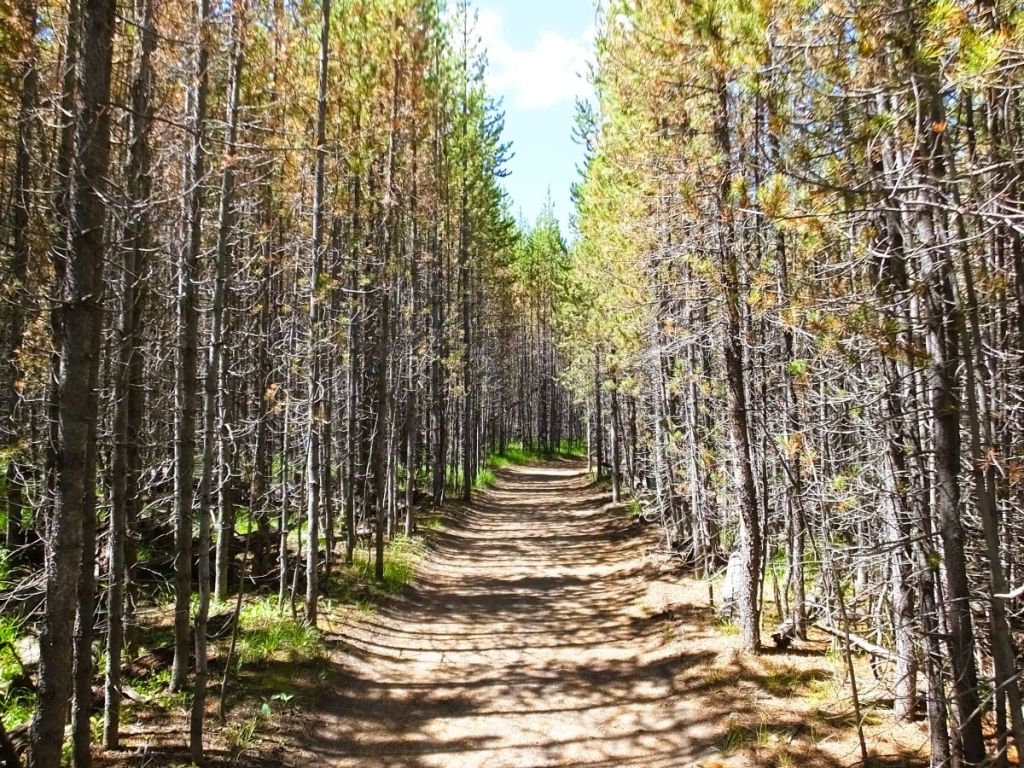
Day 3 – Mud Geyser, Hayden Valley, Yellowstone River, Yellowstone Falls

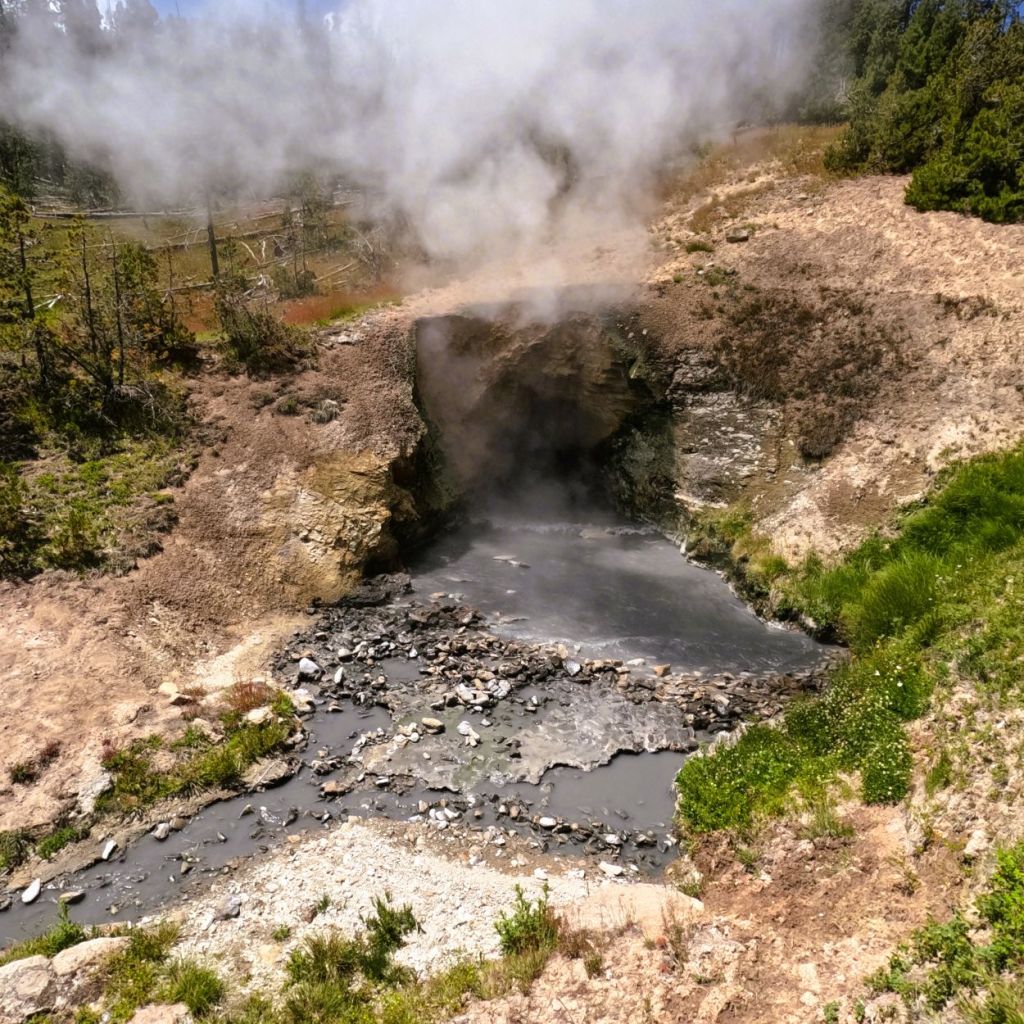
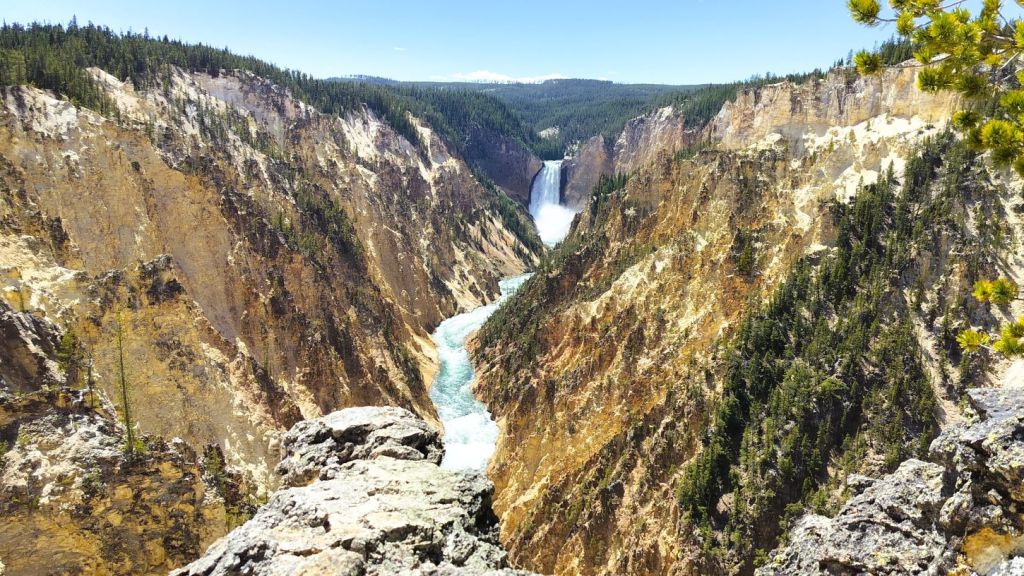

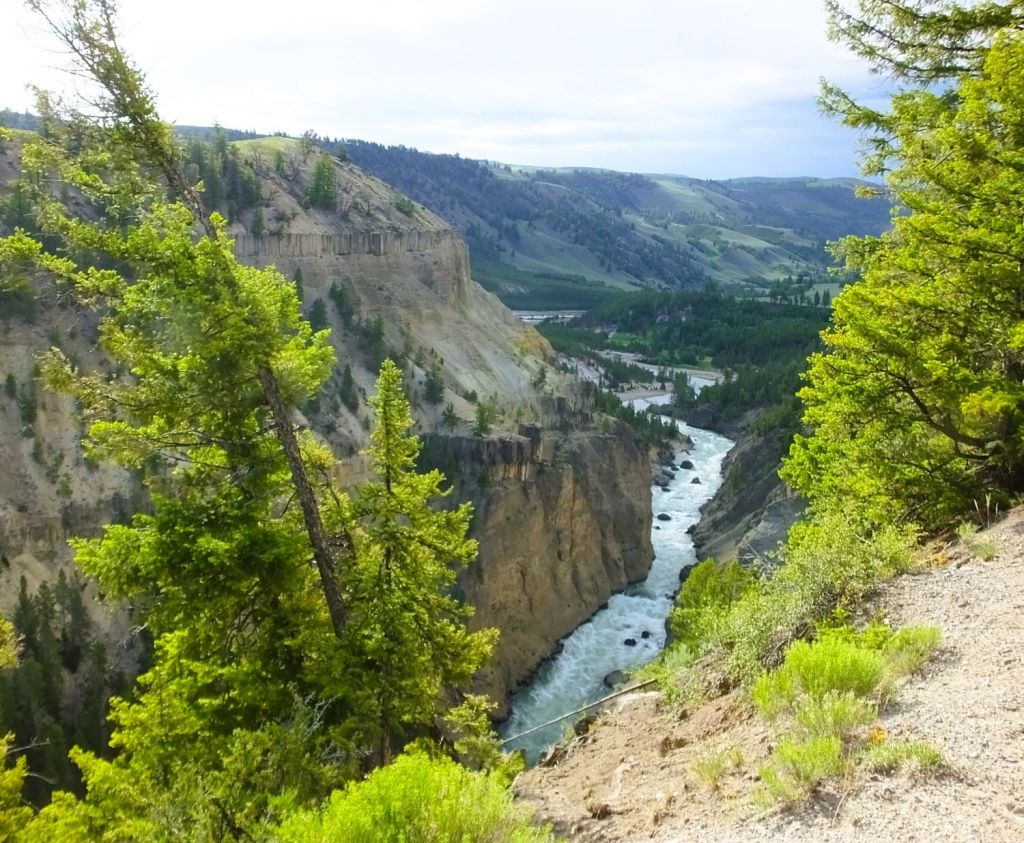
On our last morning, we drove through the Lamar Valley in the northeast corner of Yellowstone. The bison must have been having a convention – from the highway we saw several herds, each with dozens of the majestic animals.

Goats and a Grizzly
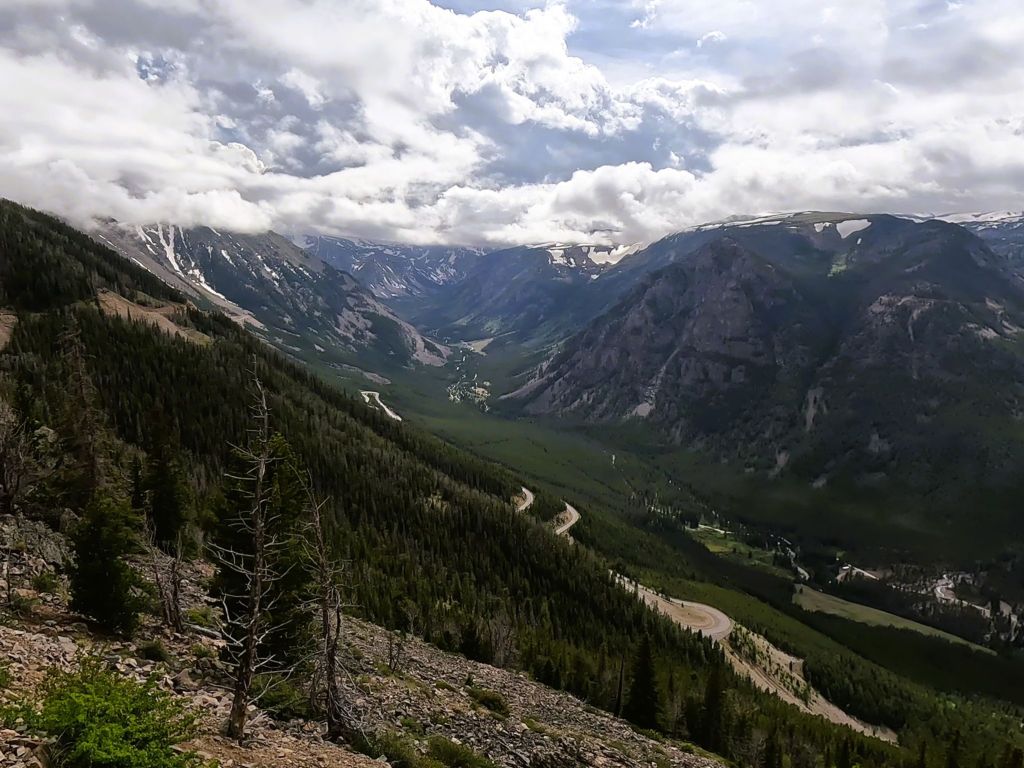
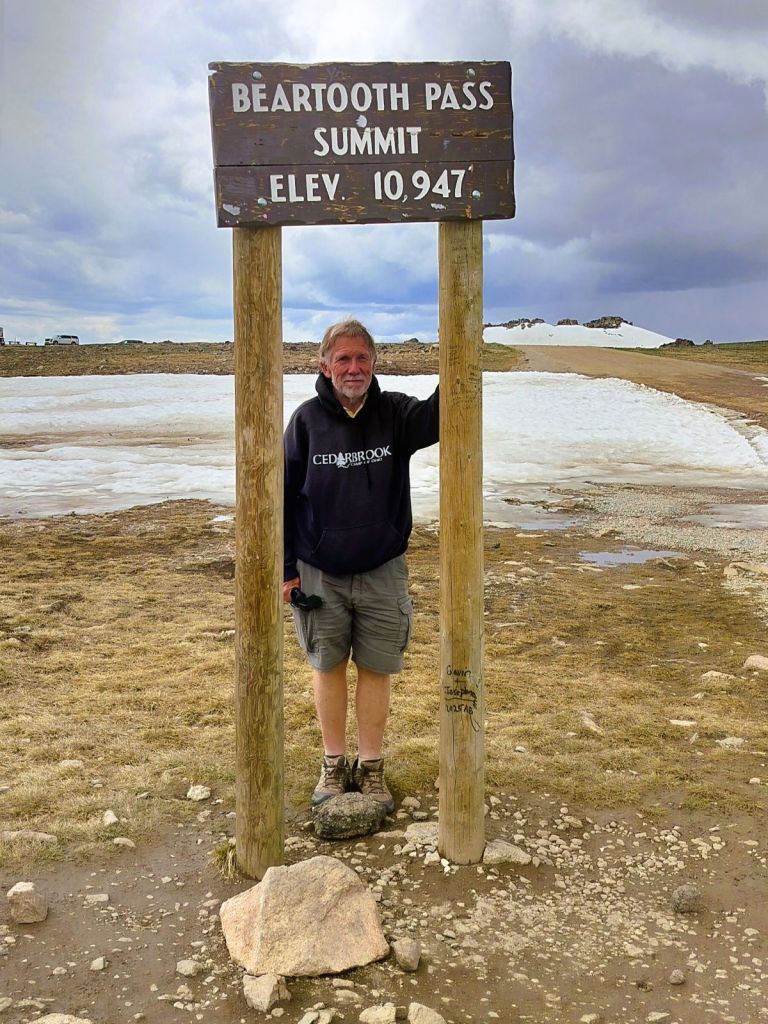
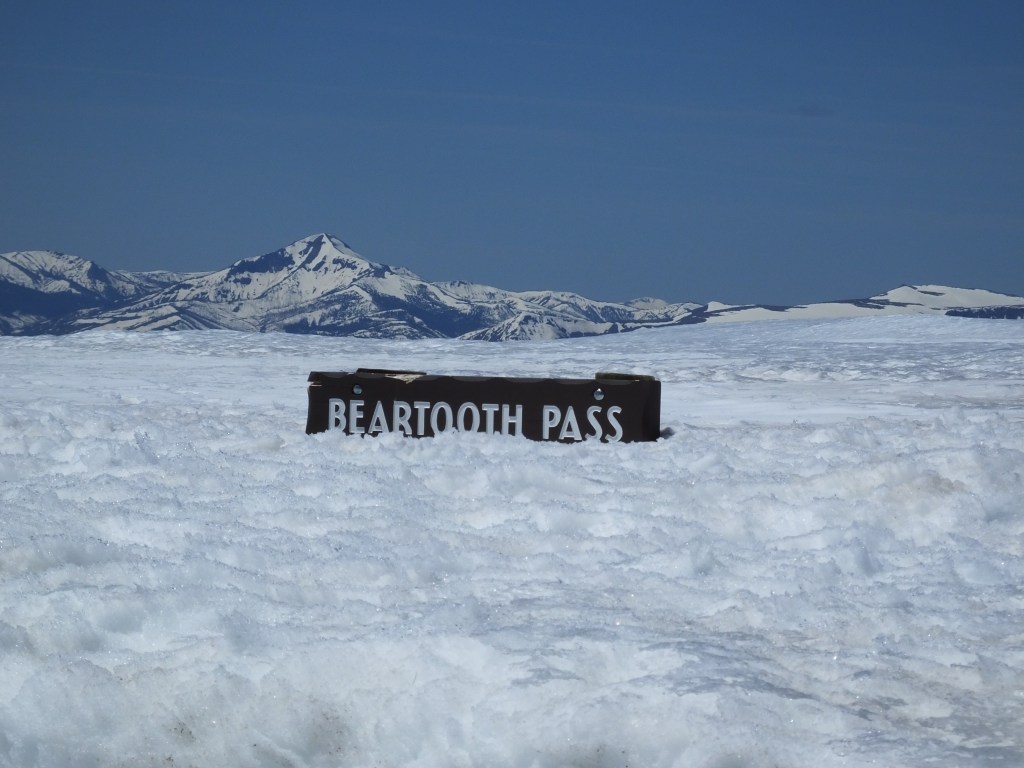
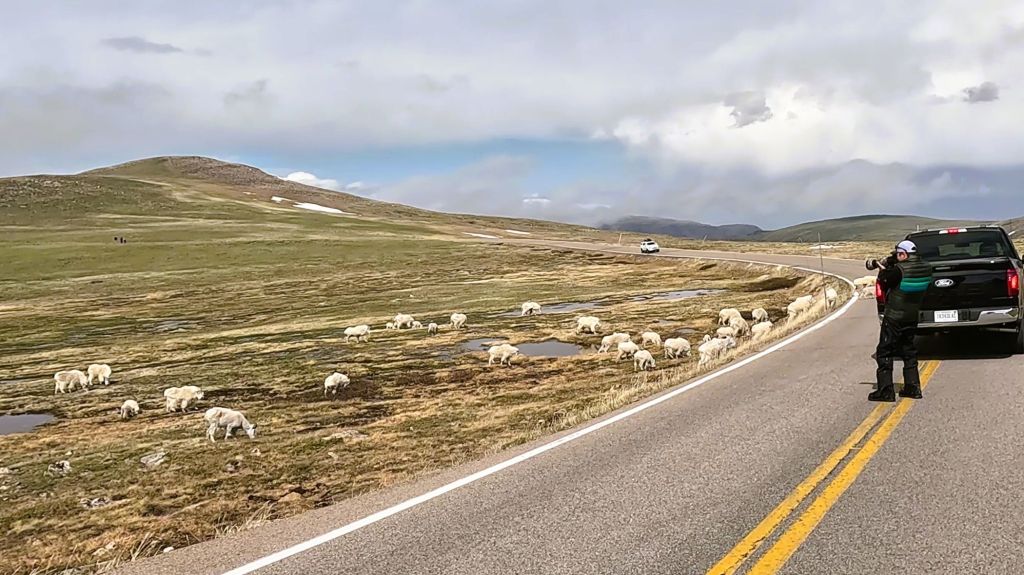
That afternoon we descended the scenic Beartooth Highway toward Red Lodge, Montana, and came upon a large herd of mountain goats crossing the highway. Traffic stopped and drivers got out of their vehicles to watch the scruffy critters pass.

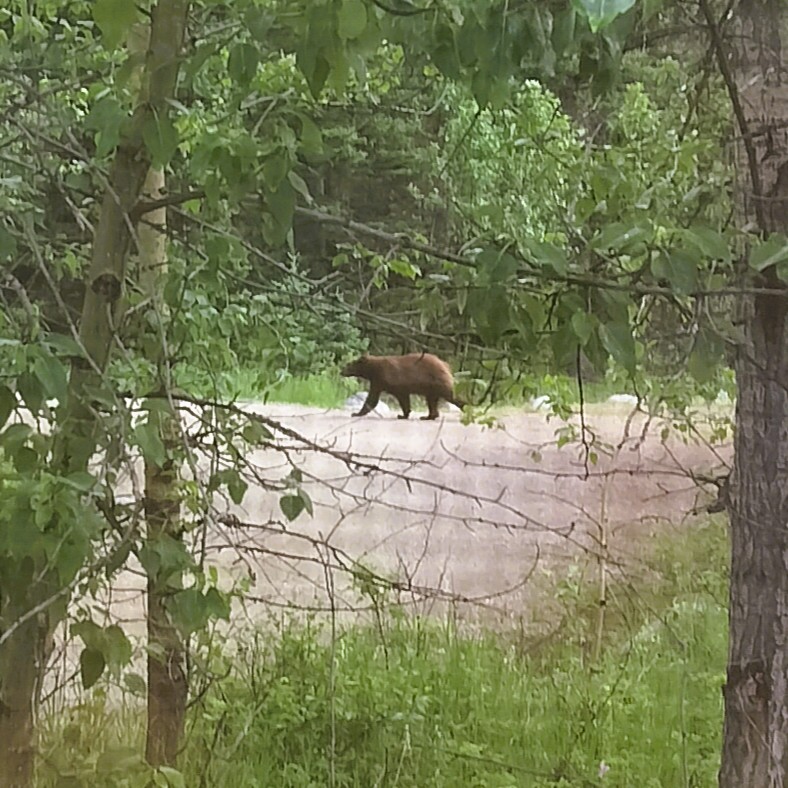
We camped near Red Lodge at a National Forest campground and during breakfast the next morning, we were surprised when a grizzly bear walked directly behind our camper in search of its morning meal. It was good to be safely inside Pap and not part of the bear’s repast.
Next Week
Visits to Montana’s Little Big Horn Battlefield National Monument for the 150th anniversary of the Battle of the Greasy Grass and the Black Mountains in South Dakota.


