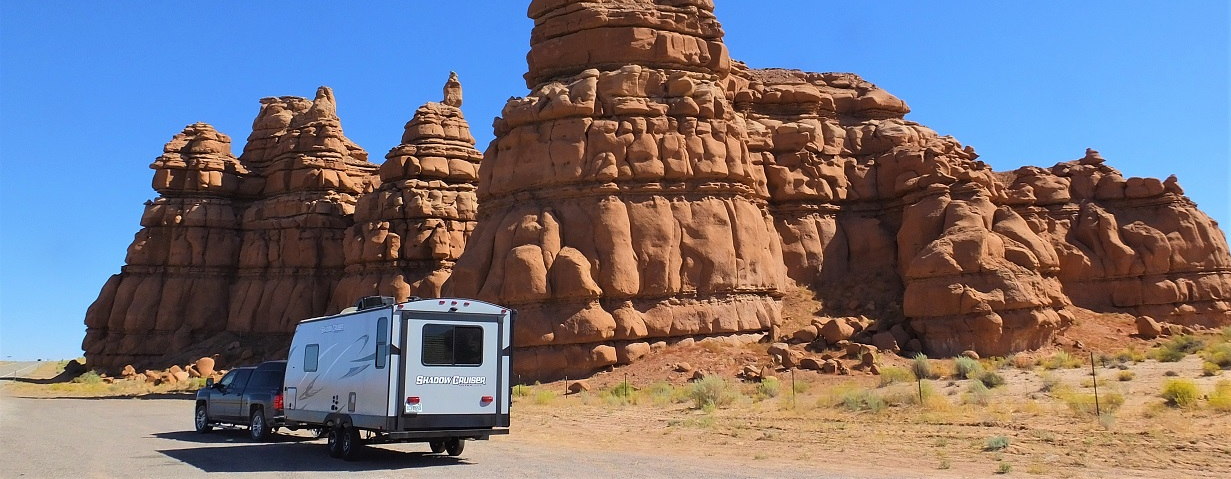


(2025 Wild West Wander Ep 11)
We escaped the cold and rain at Lake Tahoe into an area of Northern California with widespread evidence of volcanic activity. There were flows of jagged lava rocks, cinder cones of various sizes and shapes, and several massive snow-capped volcanoes in the distance.
Lassen Volcanic National Park
Lassen Volcanic National Park has all four types of volcanoes found in the world – shield, plug dome, cinder cone and composite. Lassen Peak is a plug dome volcano and is the southernmost active volcano in the Cascades. It erupted between 1914 and 1917, sending ash hundreds of miles. A series of photos taken during the eruption is on display at the park’s visitor center. They are hauntingly reminiscent of the 1980 eruption of Mount St. Helens in Washington state.
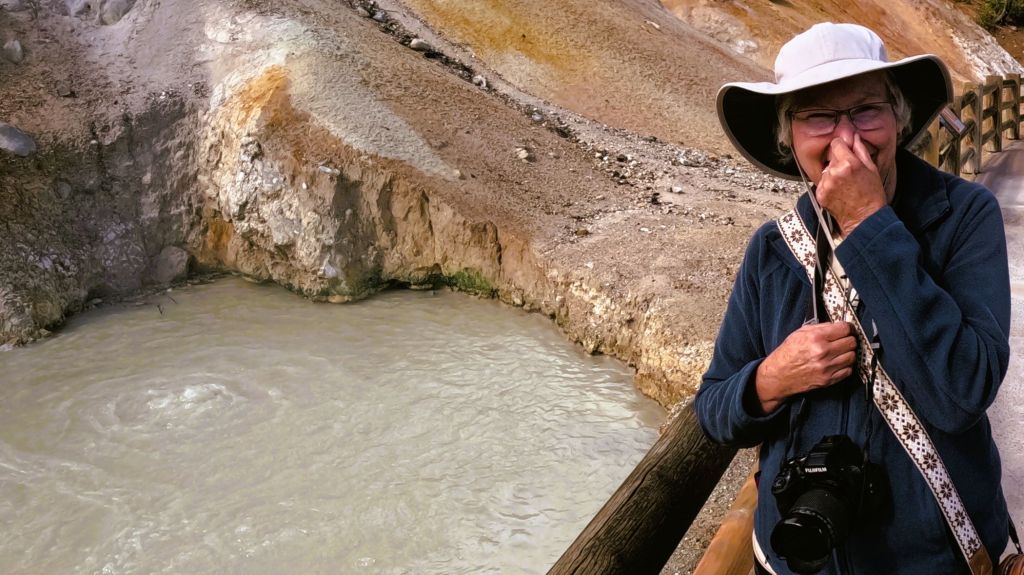
Lassen has lingering evidence of ongoing geothermal unrest. We stopped to see (and smell) the boiling mud pots and smelly steam vents at Sulfur Works. The area was a sulfur mine and tourist attraction before being acquired by the National Park Service in 1952.
We hoped to hike to Bumpass Hell, a 16-acre hydrothermal area in the park that features springs, mud pots and steam vents similar to Yellowstone. The area is named for Kendall Bumpass, an early settler who lost his leg after stepping through the thin crust of a boiling mud pot.
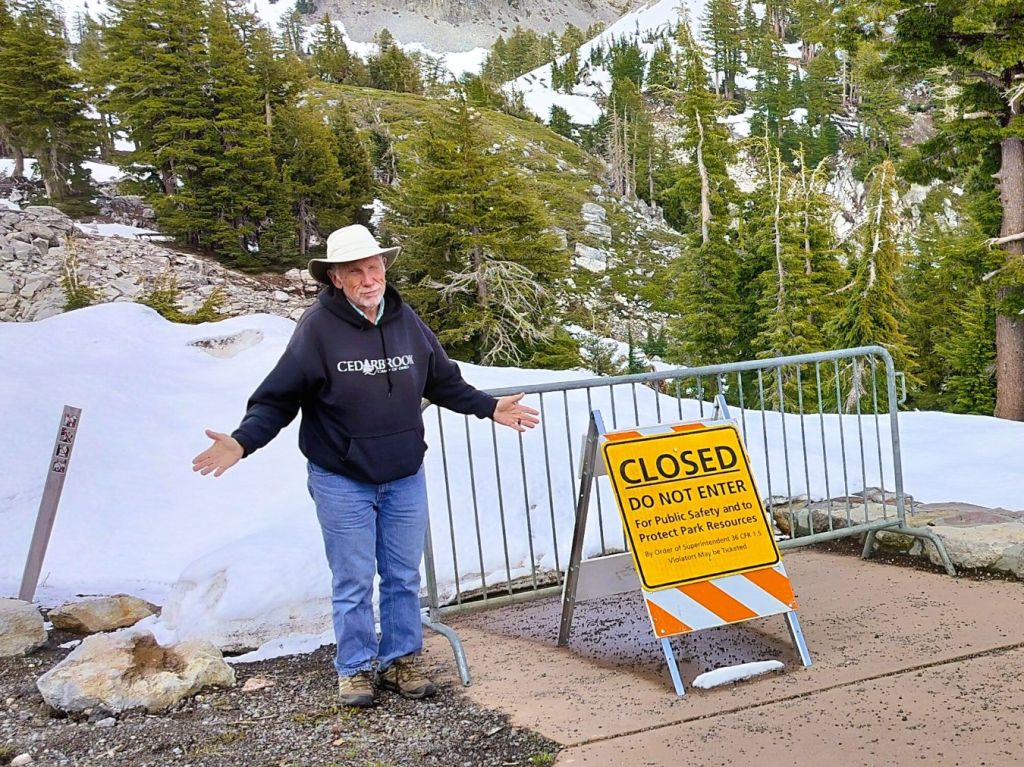
Unfortunately, the area was closed because of deep snow on the access trail. The trail was also closed when we first visited Lassen in September 2018 due to construction. Perhaps we’ll succeed on a third visit in the future!

We were amazed with the amount of snow still remaining on 10,457-foot Lassen Peak and the ice on several lakes at the base of the volcano. Dozens of people at the Lassen Peak Parking Area were skiing across the flats and hiking steep snow-covered trails.
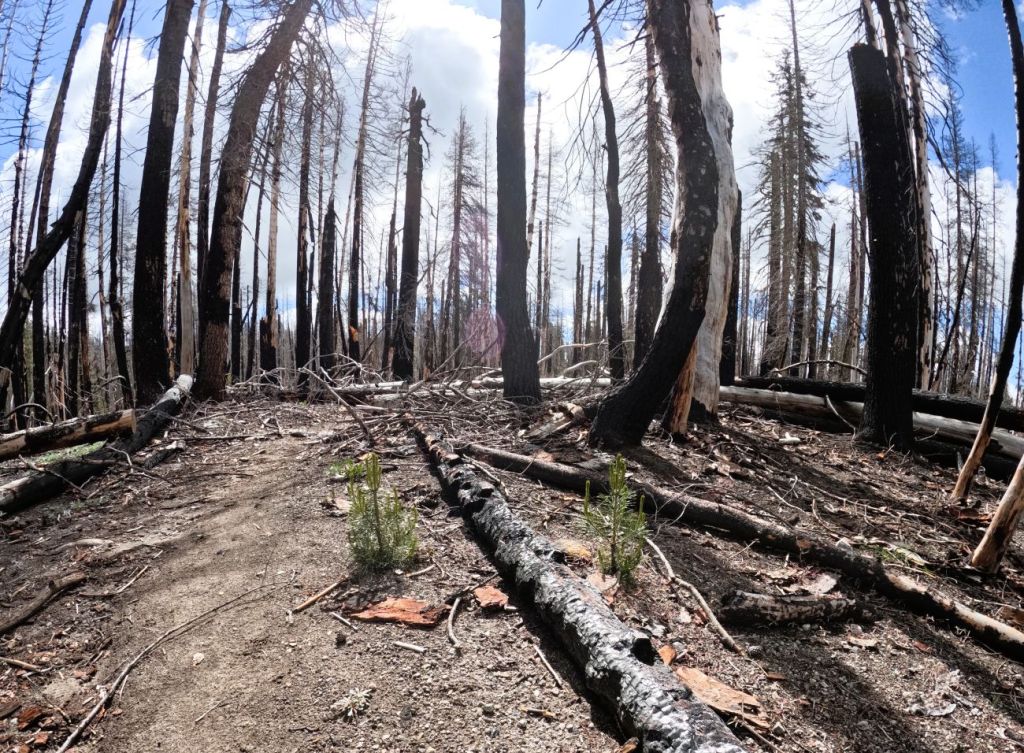
Elsewhere in Lassen, we hiked to areas devastated by the Dixie Fire in 2021. More than 73,000 acres were burned within the park. Flowering plants, berry bushes and tiny trees are evidence that the recovery will take many years.
No Worms in these Dark Tubes
Nearly to Oregon, we visited Lava Beds National Monument.
Eruptions of Medicine Lake Volcano between 30,000 and 40,000 years ago formed the more than 900 lava tube caves found in the park. The tubes were formed when streams of hot, flowing lava started to cool. The hot center of the tube continued to flow as the outside cooled and hardened. Once the lava drained out, a pipe-shaped cave remained.
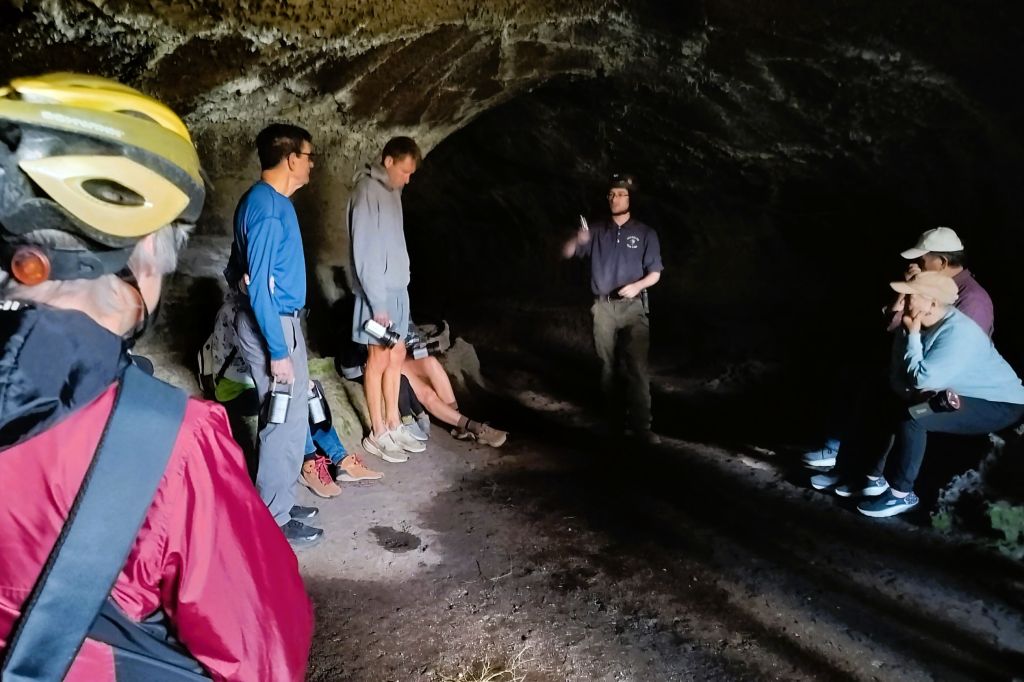
The park offers tours of more than two dozen tubes – some are easily to access with relatively smooth floors, and others are very challenging requiring rock scrambling and navigating tight passages.
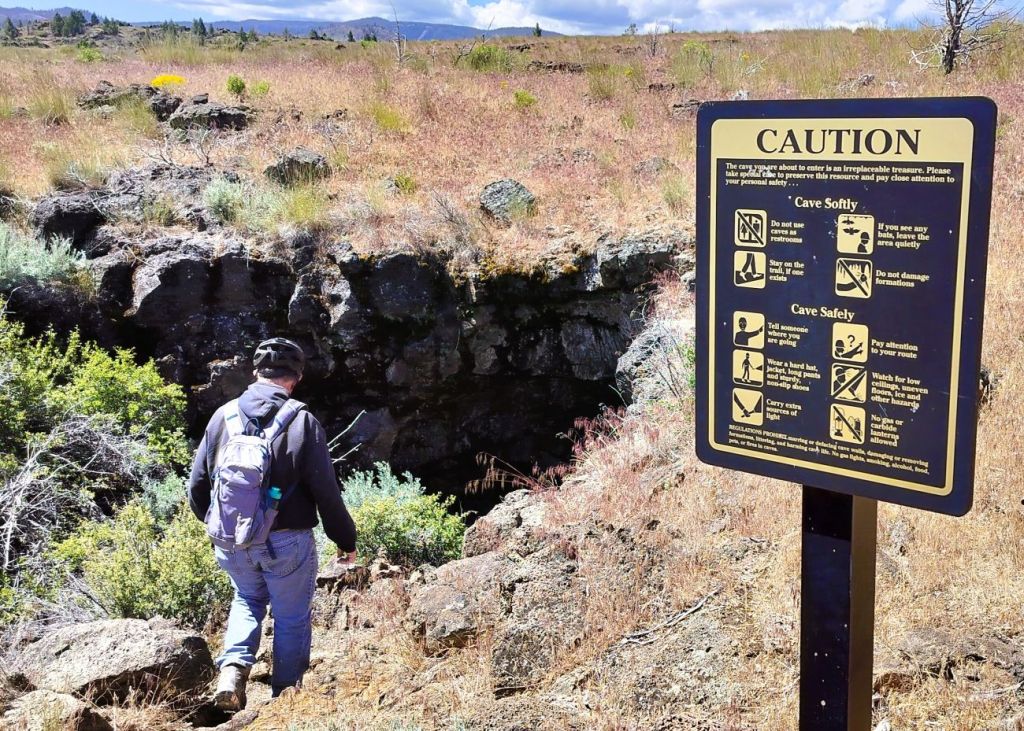
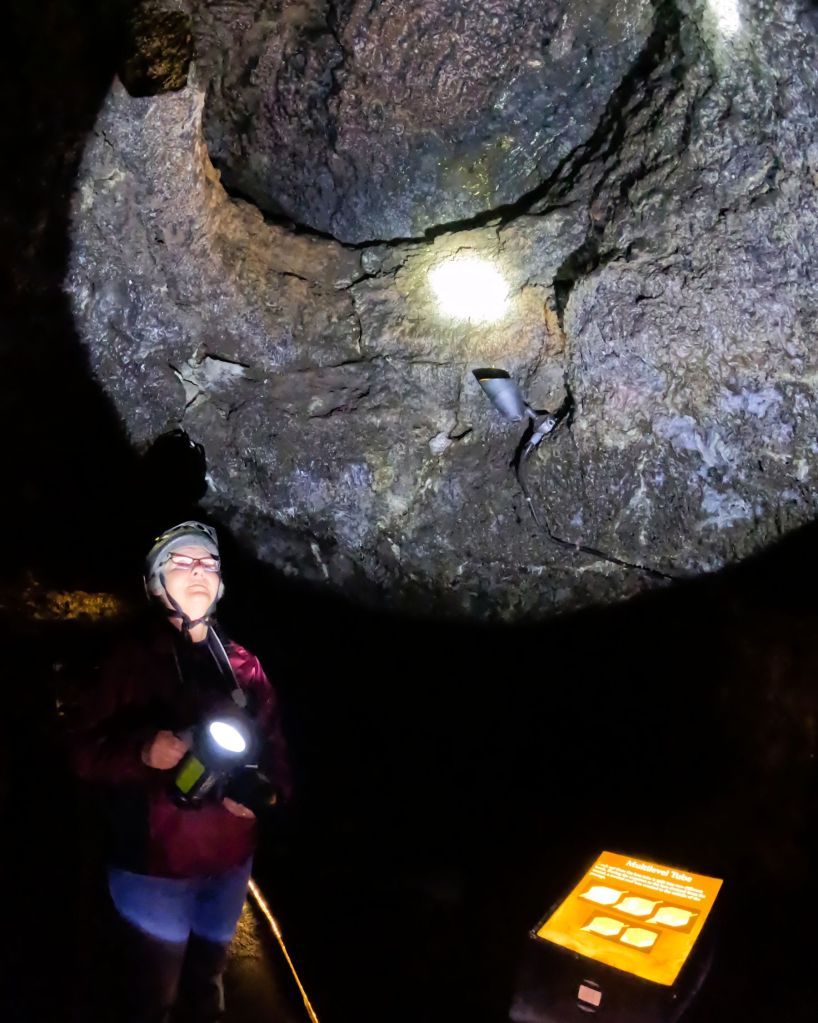
We wore our bike helmets and carried bright LED lights as we explored several of the caves. The first cave was lighted with a very smooth floor. The other caves required flashlights – one was more than a half mile long with different entry and exit points, and another had ice and animal bones at the bottom of a long series of stairs.

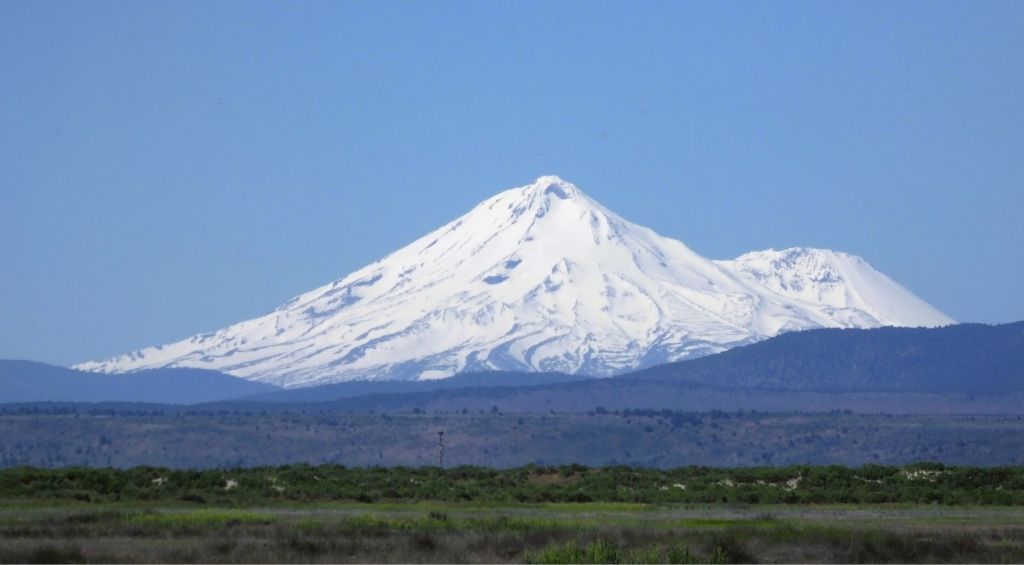
We left Lava Beds NM and when we crossed into Oregon, Mount Shasta was very prominent to the southwest. The snow-covered 14,179-feet high volcano is further evidence of the volcanic activity in the region. During the last 10,000 years Mt Shasta has erupted an average of every 800 years, and because of its location and eruption history, it is closely monitored as a very-high threat volcano.
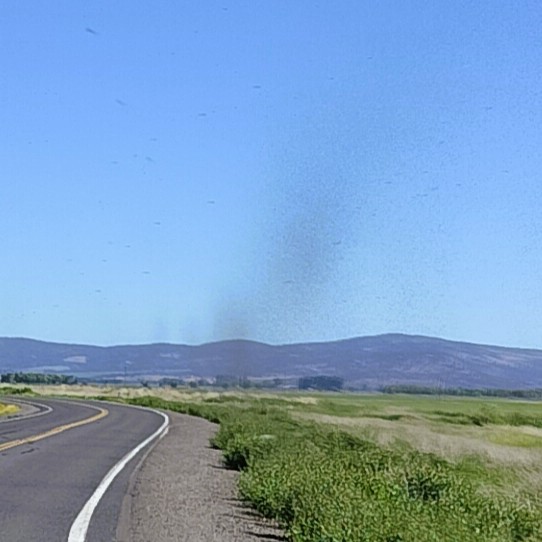
Train Mountain
We took a free train tour on the world’s longest miniature railroad nestled in the scenic mountains of Southern Oregon. Train Mountain has more than 34 miles of 7.5-inch gauge miniature railway track that runs across 2200 acres.

We sat low to the ground with our legs stretched out on seats atop a small rail car. Our battery-operated locomotive hummed to life and pulled us into a both playful and strangely immersive world!
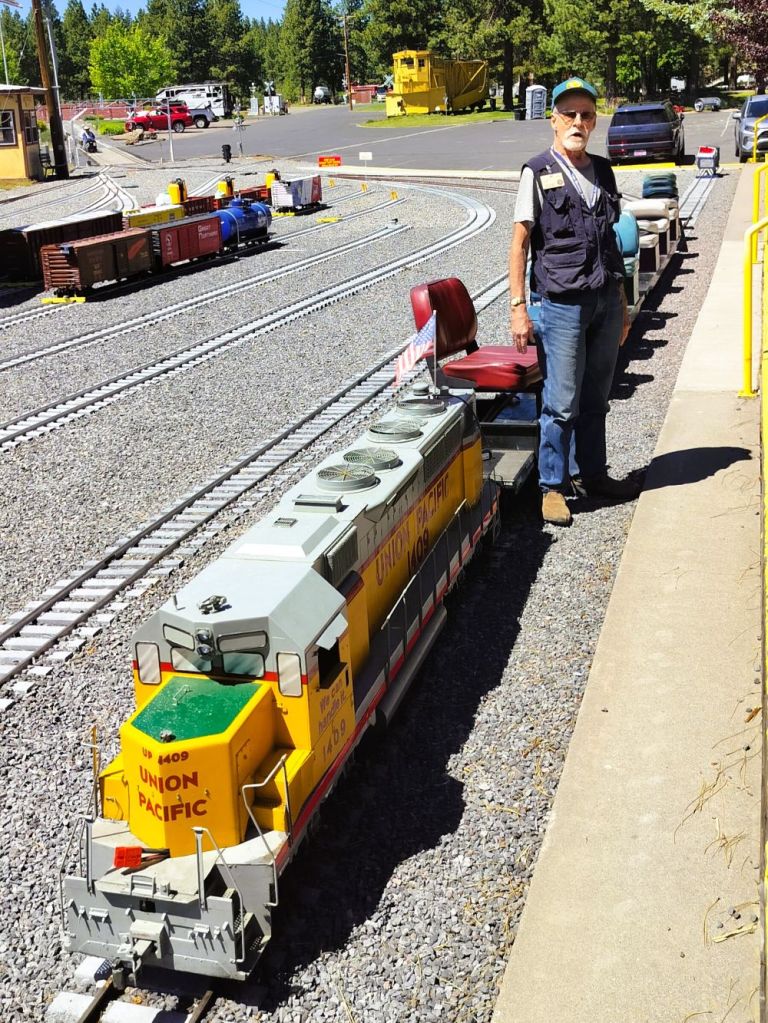
Dave, our tour guide and train driver, taught us several signals so we could safely get underway. We went past a variety of buildings and other static displays, across trestles, under bridges and through a long tunnel. He even blew the train’s horn appropriately at each road crossing (two long, one short, one long)!
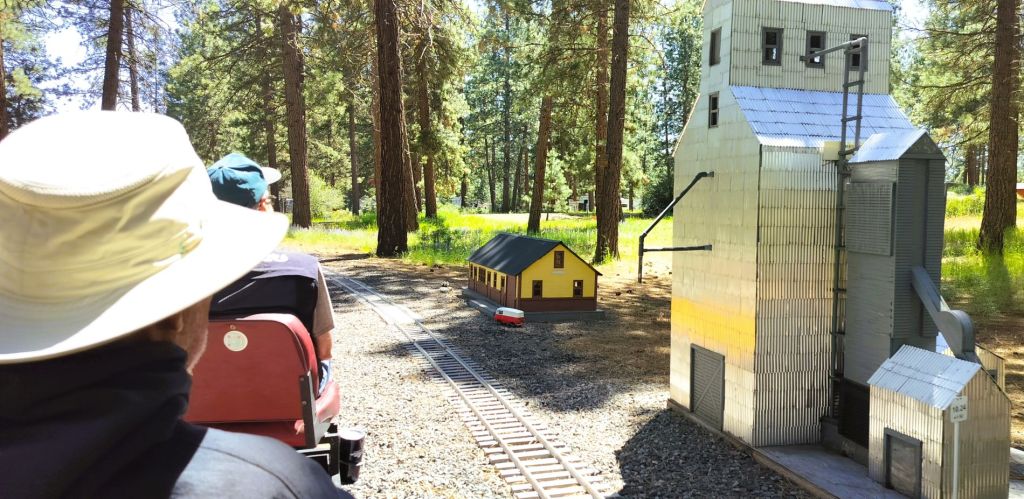
Miniature train enthusiasts bring their 1.5” (1/8 scale) and 2.5” (1/5 scale) locomotives and other train cars to run on the facility’s tracks, and every three years more than 1000 participants gather at the location, some from as far away as Germany and Australia!
This Town Welcomes Data Centers
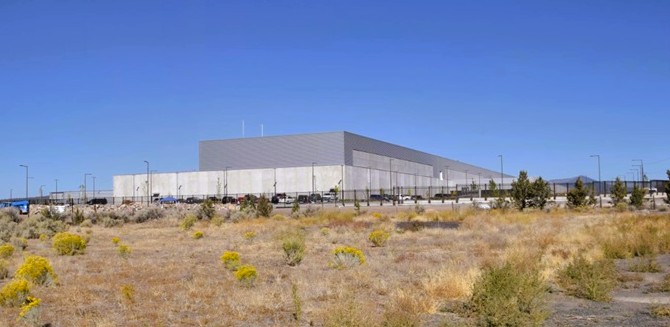
We continued north through Bend and Redmond, and then turned east. As we descended a long hill near Prineville we could see more than a dozen HUGE buildings. We learned that the buildings are Meta (Facebook) and Apple data centers. Unlike many communities that reject such data centers, Prineville welcomes them and has been transformed from a declining mill town to a hyper-modern computer processing hub.
Devine Artwork
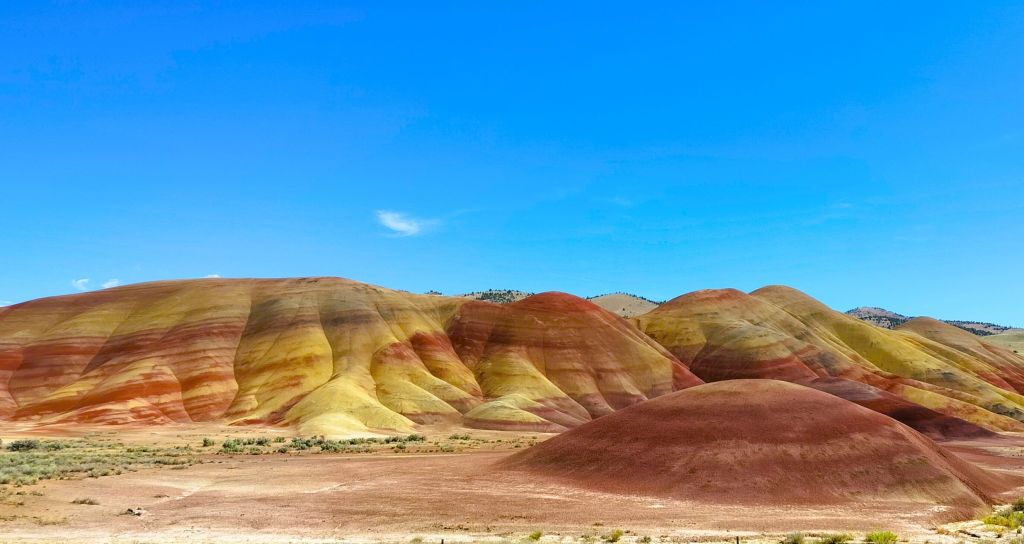
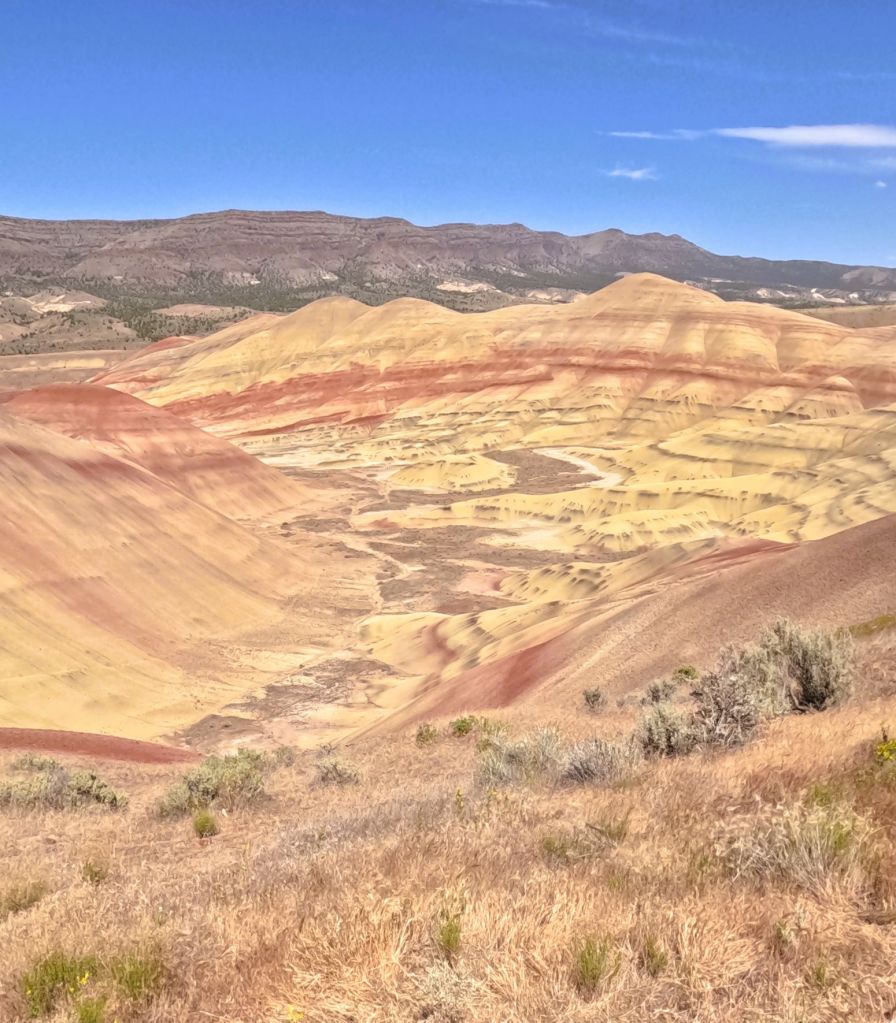
Further east we detoured to see the Painted Hills. Named for delicate layers of reds, yellows, golds and blacks in the soil, the hills are an amazing mural of God’s creation.
Quite a Drug Store
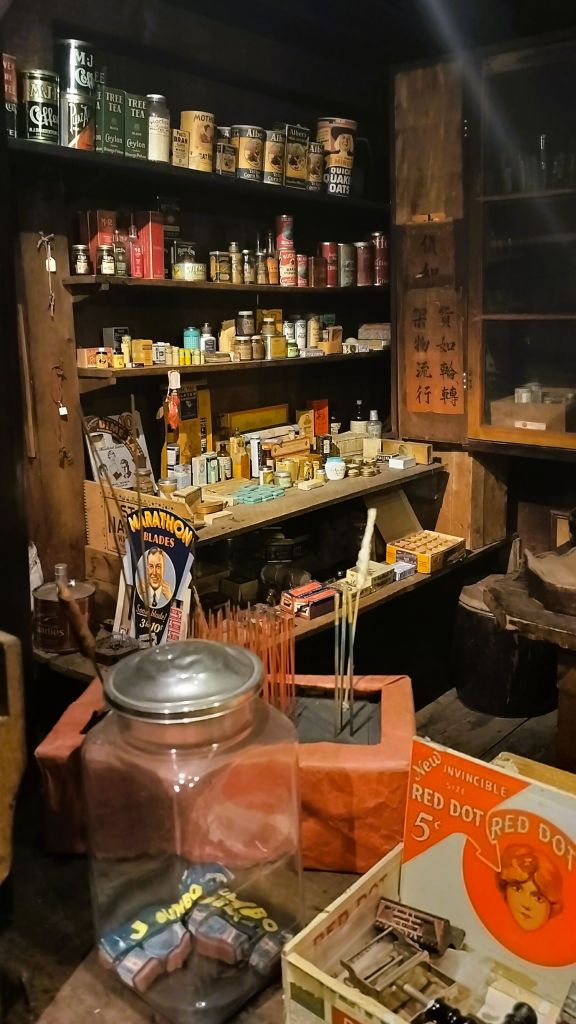
In John Day, OR we visited the Kam Wah Chung Museum, an Oregon state park and National Historic Landmark location that houses the largest intact collection of Chinese medicine and formulas in the world.
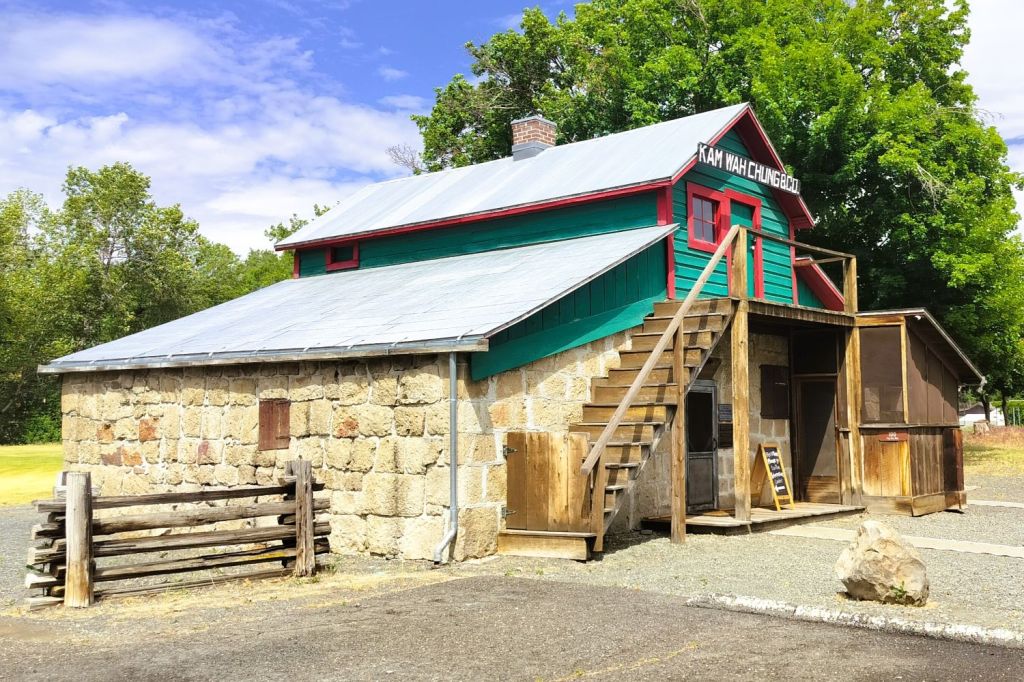
The museum is a unique time capsule with more than 100,000 well-preserved artifacts.

Built in 1865 as a trading post, the general store and herbal medicine shop was home in 1888 to two Chinese immigrants, Ing “Doc” Hay and businessman Lung On. For over 60 years the building was a social, medical, and religious center for Chinese laborers that worked in the region.
Next Week
Stanley, ID, the magnificent Sawtooth Mountains and wild Salmon River.
 Take the LONG Road...