
(2025 Wild West Wander Ep 8)
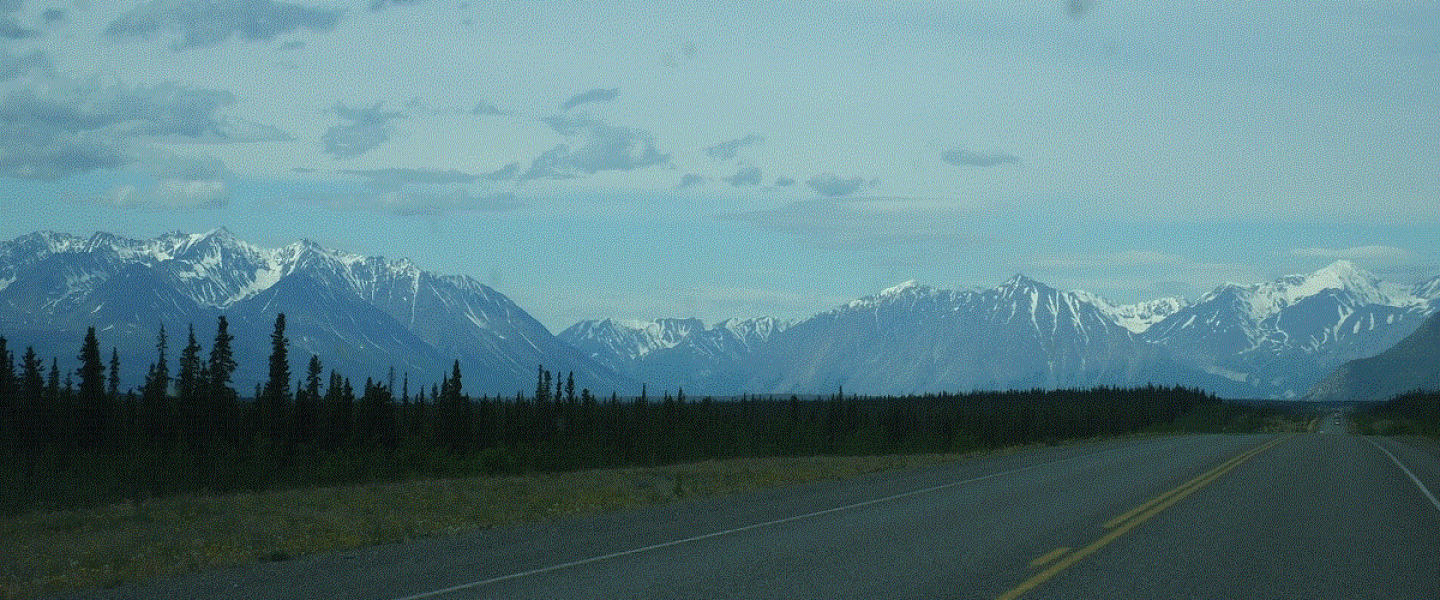
As the California Condor flies, it is about 30 miles from Alabama Hills to Sequoia National Park. Percy and Pap (and other land vehicles) can’t fly unfortunately and must detour nearly 275 miles around the Sierra Nevada Mountains.
Thus began our five-day visit to Sequoia and Kings Canyon National Parks.
Limited Choices and Hot Camping
When making our camping reservations back in January, we learned all but two of the campgrounds in the parks are closed until late May or later in the summer. Sierra Nevada winters are long and the campgrounds are snowed in until late spring some years.
At Potwisha Campground near Sequoia, summer had already arrived. It was 90+ degrees on our first two days so we ate dinner outside. Fortunately, it cooled once the sun set and sleeping was comfortable. Temps moderated on our third day and remained pleasant for the reminder of our visit.
Getting There Was NOT Half of the Fun
Sequoia is known, of course, for its groves of magnificent sequoia trees. Potwisha has an elevation of 2100 feet and the sequoia groves are at about 6000 feet. Connecting the two is a tortuous 16-mile road that is very steep with dozens of very sharp turns and numerous switchbacks. The drive takes nearly an hour.
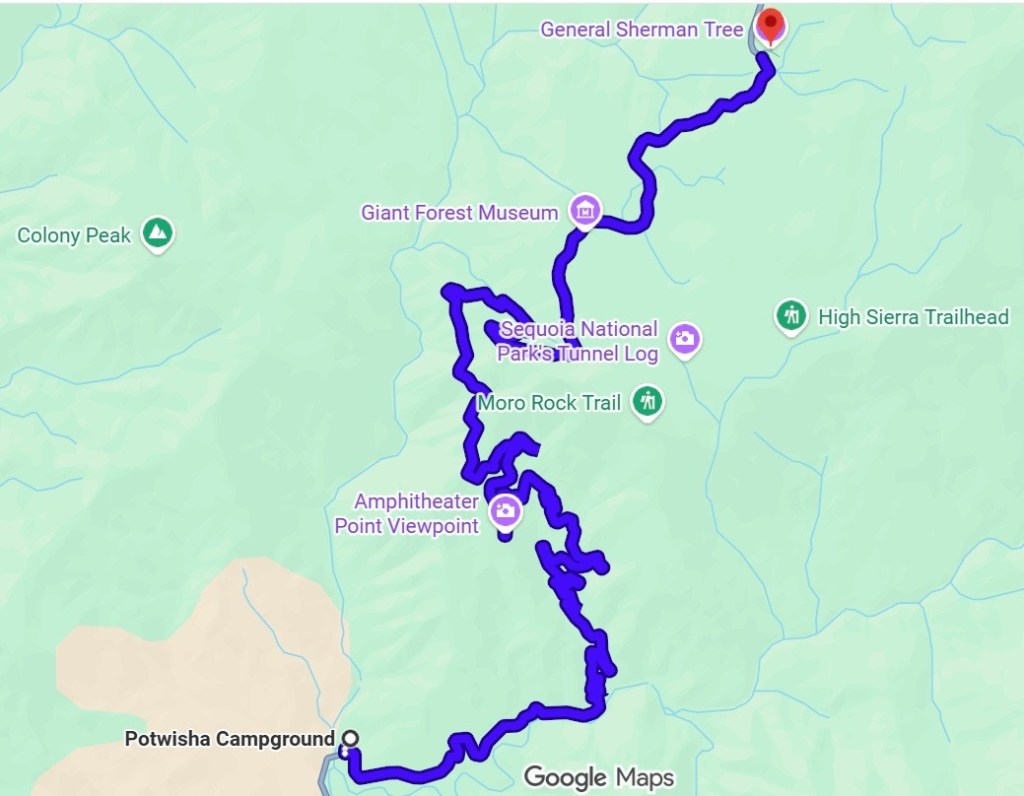
We left Pap at the campground for our first two days. When we left for Kings Canyon on the third day via the same route, we had to stop midway to let our truck’s transmission cool.
Enough of driving challenges – on to the BIG trees!
Biggest of the Big
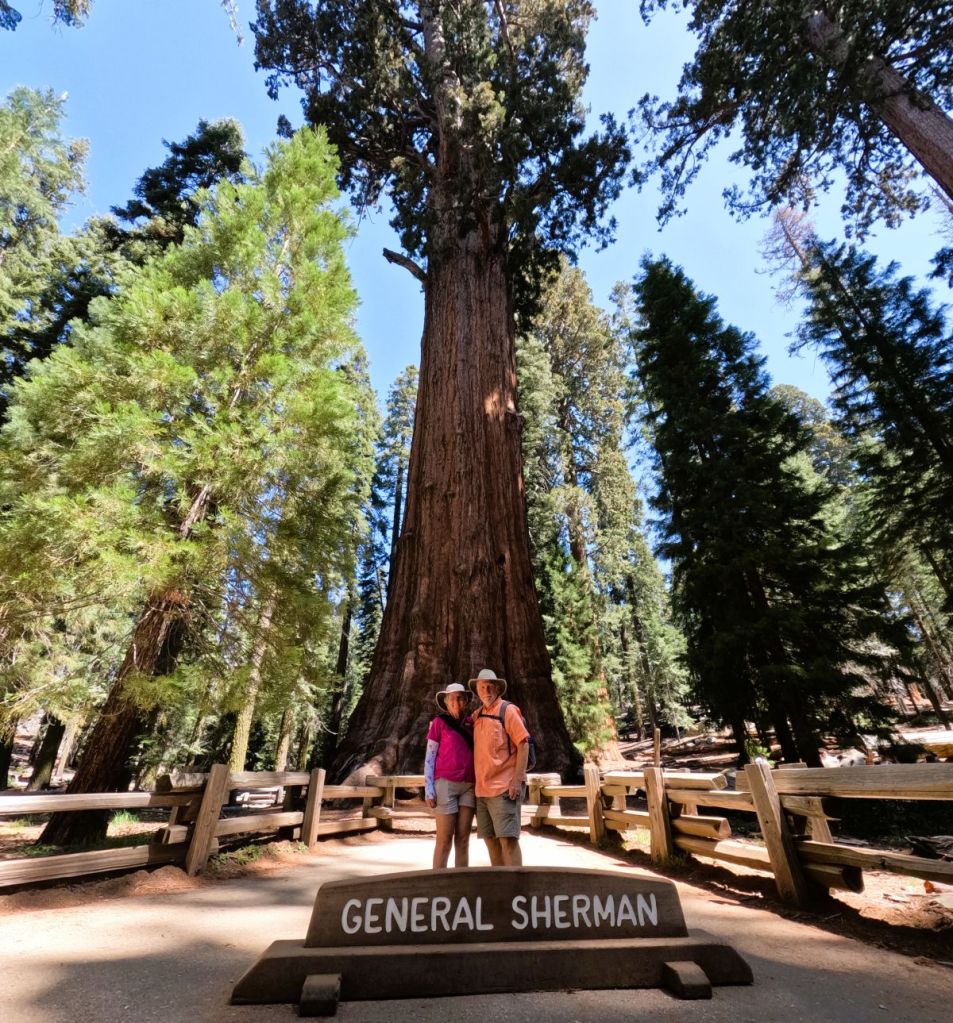
Our first hike in Sequoia NP was a half mile downhill walk to the General Sherman Tree.
A few other Sequoias are bigger around. Some are taller. Others are older. But no other tree in the world has more wood in its trunk than the General Sherman Tree. The tree is estimated to have a volume of 52,500 cubic feet – enough wood to build 200 medium-sized homes!
We stood back to take in the whole tree and admired the nearly football field height (275 feet) of the tree.
The tree is estimated to be 2200 years old. Like other mature Sequoias, the top is dead and the tree doesn’t get taller. Instead, each year the trunk grows wider. The girth of this massive tree at ground level is 103 feet!
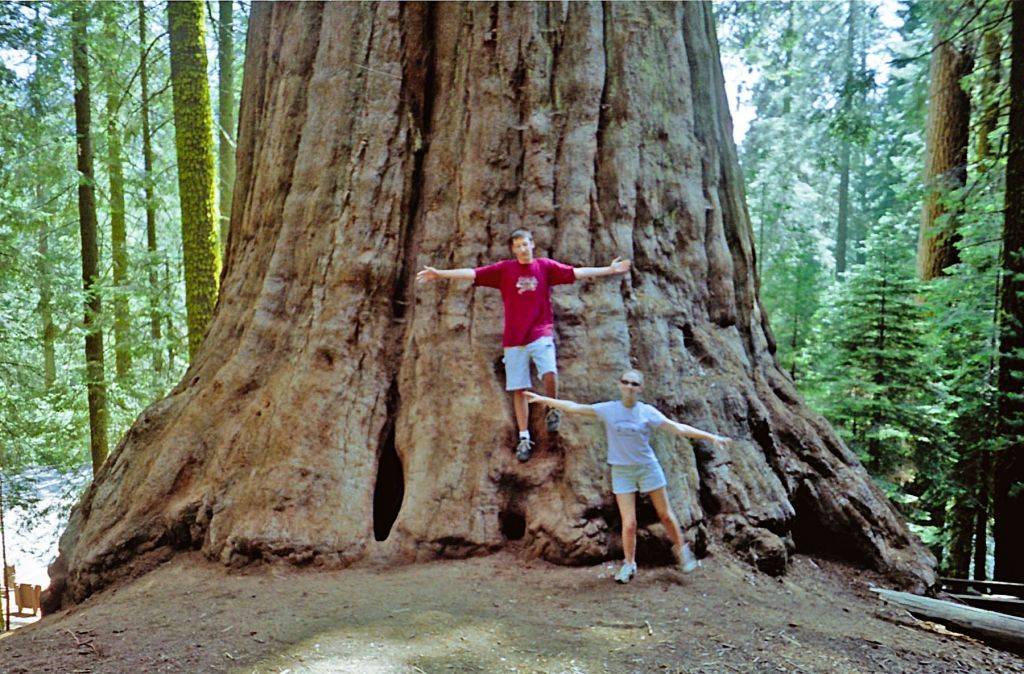
We waited in line closer to the tree for a photo. A six-foot-tall human looking up at the General Sherman tree is like a mouse looking up at a six-foot human – an interesting perspective indeed.
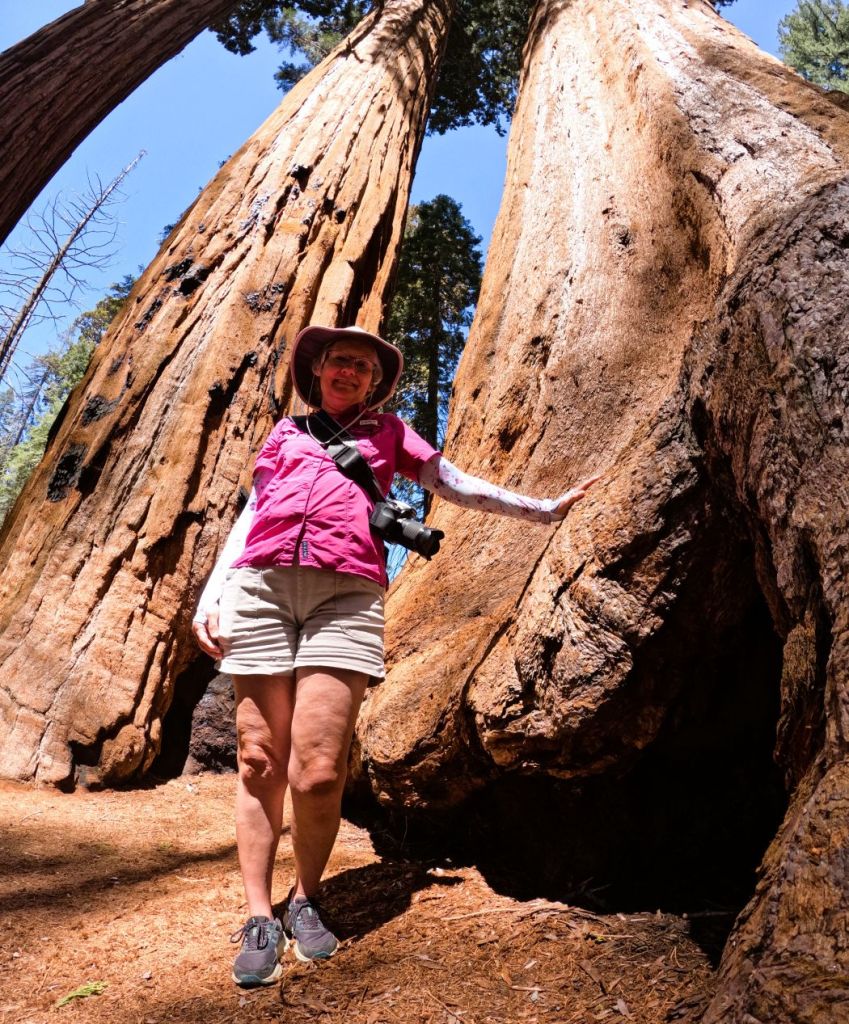
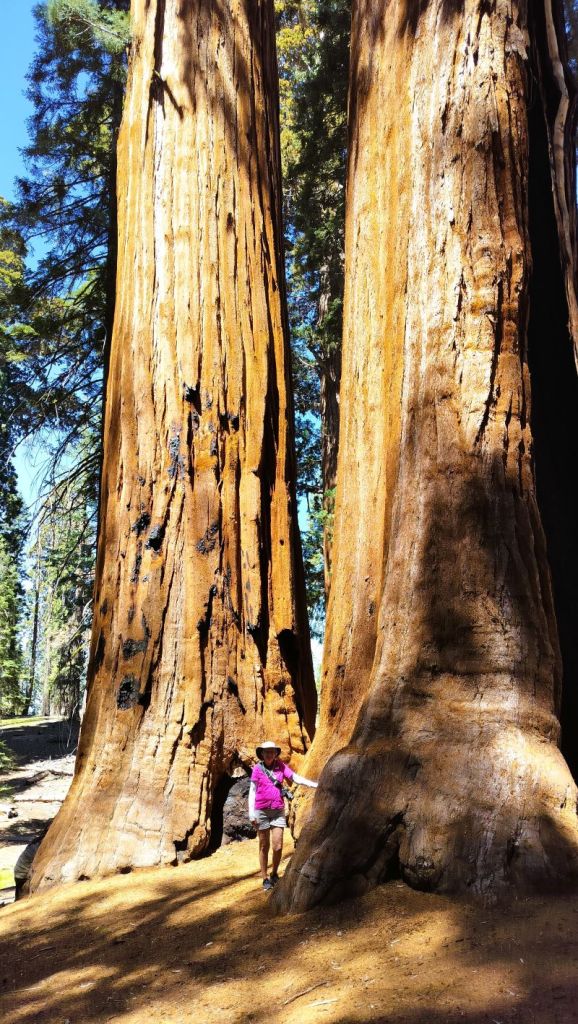
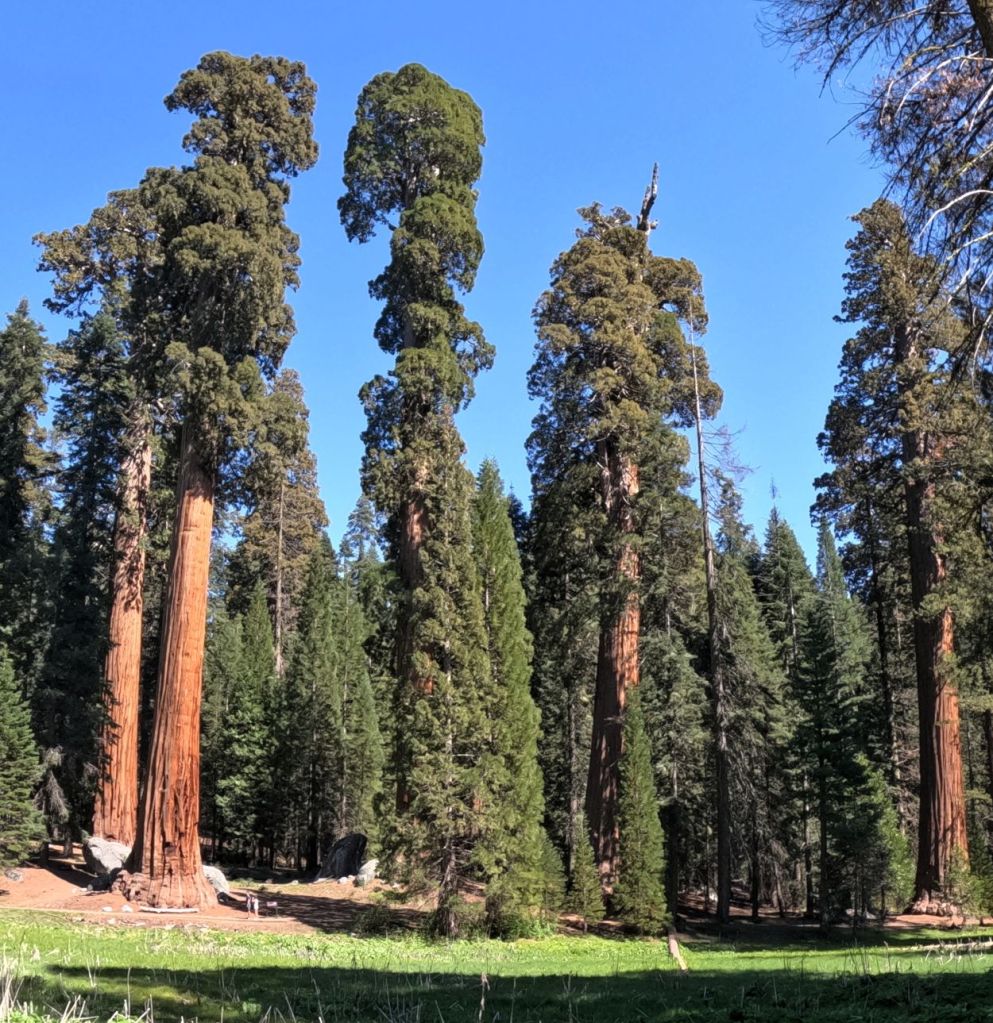
Like photos of redwoods or skyscrapers, those of General Sherman and other sequoias don’t give a good sense of the size of the trees.
More Big Trees
The Congress Trail continues more than a mile beyond the Sherman Tree as it passes by dozens of sequoias. We ate lunch while viewing two groups of the trees, labeled appropriately as the House and the Senate. This is a must-do five-out-of-five boot hike.
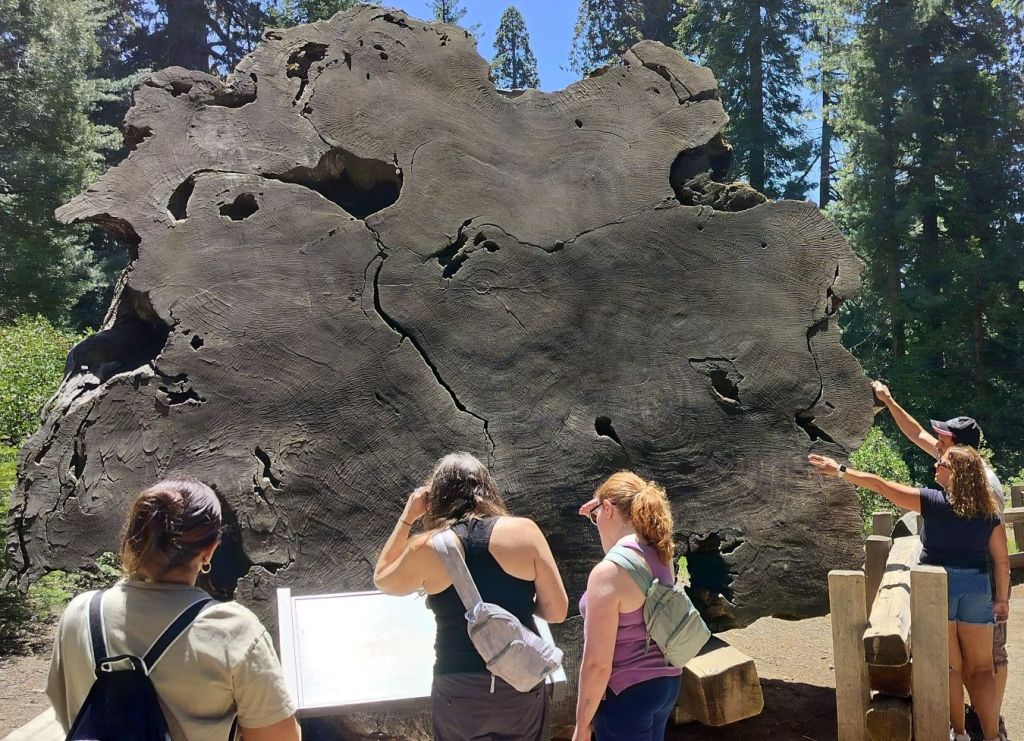
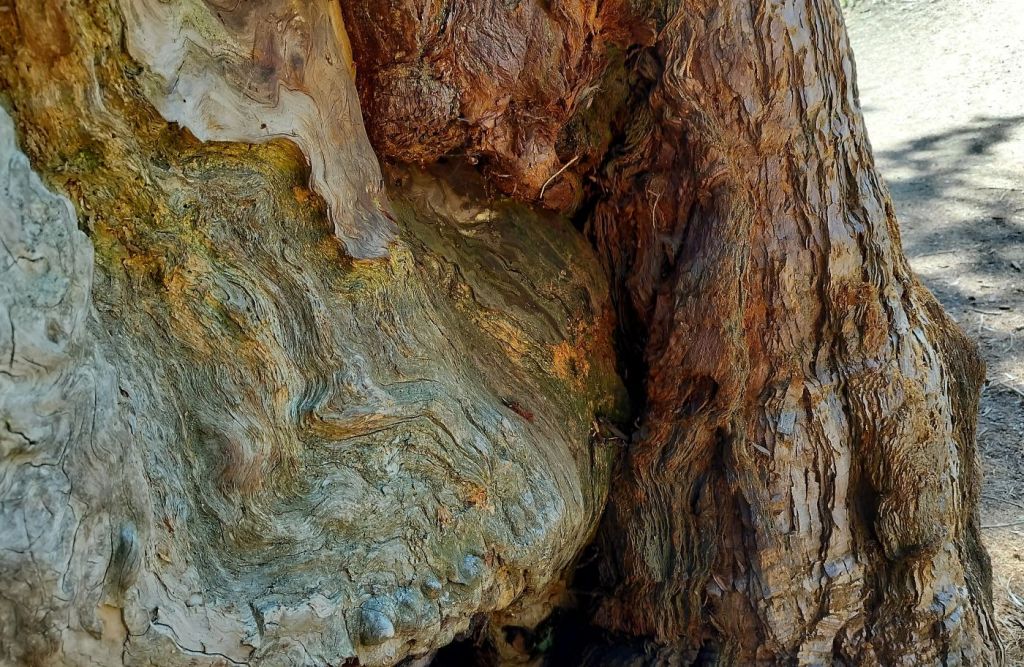
An immense sequoia cross section at the end of the trail tells a story: the tree was about 2210 years old and experienced at least 80 different fires hot enough to leave a scar. Mature sequoias live quite well despite large fire scars. Thick, fibrous bark on the trees provides insulation and holds little sap or pitch that is flammable.
Saving the Sequoias
Sequoia NP was formed in 1890 to protect Sequoia Trees from the imminent threat of logging. In more recent years, development in the groves was also deemed to be a threat. At the grove near Round Meadow, a restaurant, campground, dozens of cabins, utilities, roads crowded the sequoias. The park service began removing these in the 1990s and the last building was removed in 1999. Today there is no sign of the past development in the grove.
Moro Rock – Above It All
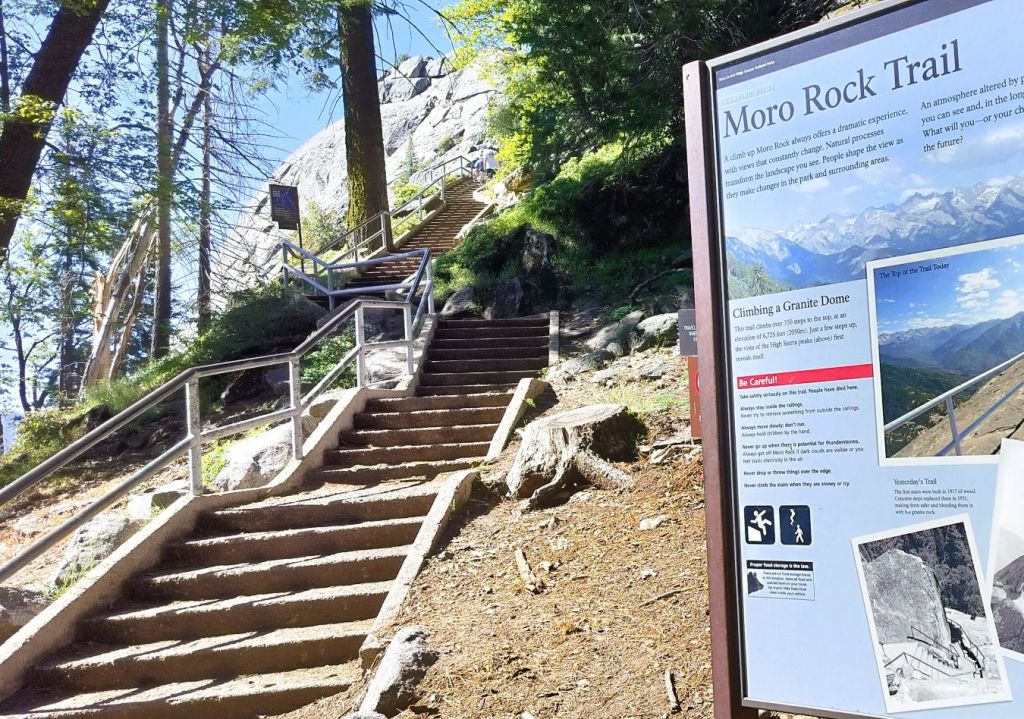
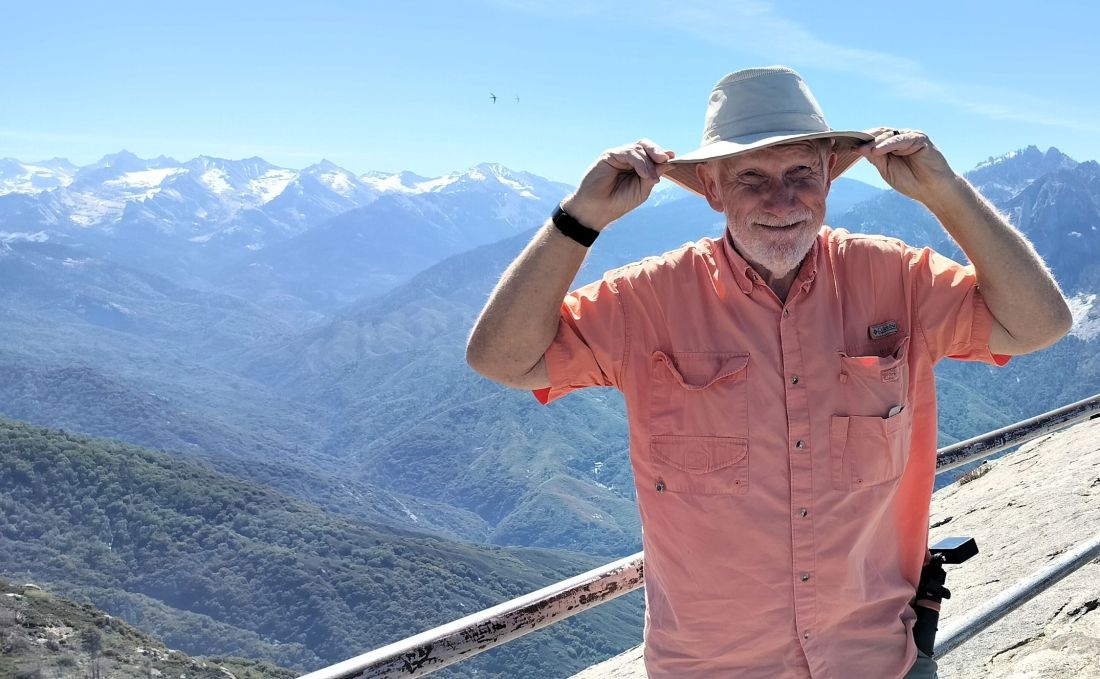
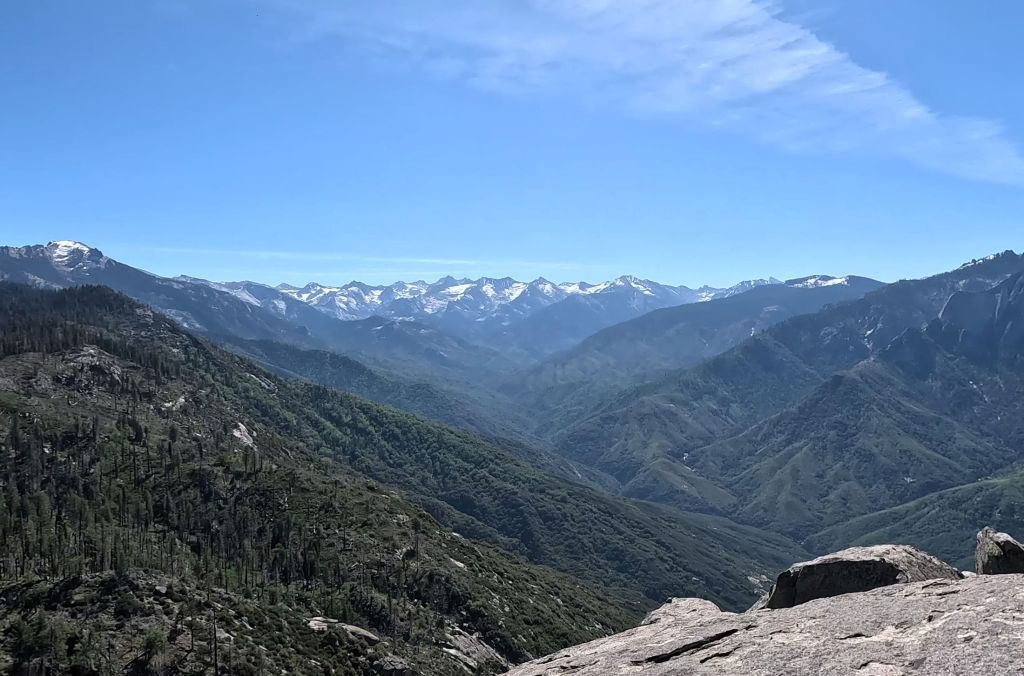
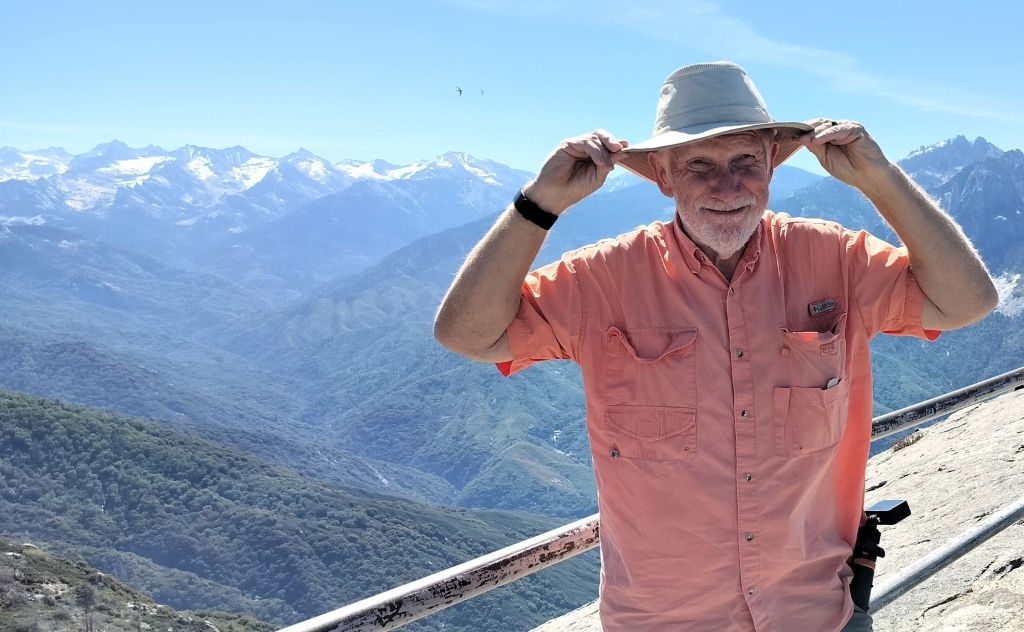
On our second day we climbed 350 steps to the top of Moro Rock. Handrails and resting places made the climb easier and the view from the top of the 6725-foot granite dome was amazing. To the east were the snow-covered peaks of the Sierra Nevada Mountains. To the west, the California coastal range seen on clear days was not visible due to haze.
This is another must-do five-out-of-five boot trail at Sequoia NP.
Nada Means NADA!
Leaving Moro Rock, we passed by Tunnel Log.
When a sequoia fell across the road in 1937, a CCC worker suggested cutting a tunnel through the 275-foot long, 21-foot-high tree. The result was a cutout 17 feet wide and 8 feet tall, big enough to drive a car through.
Percy perhaps?
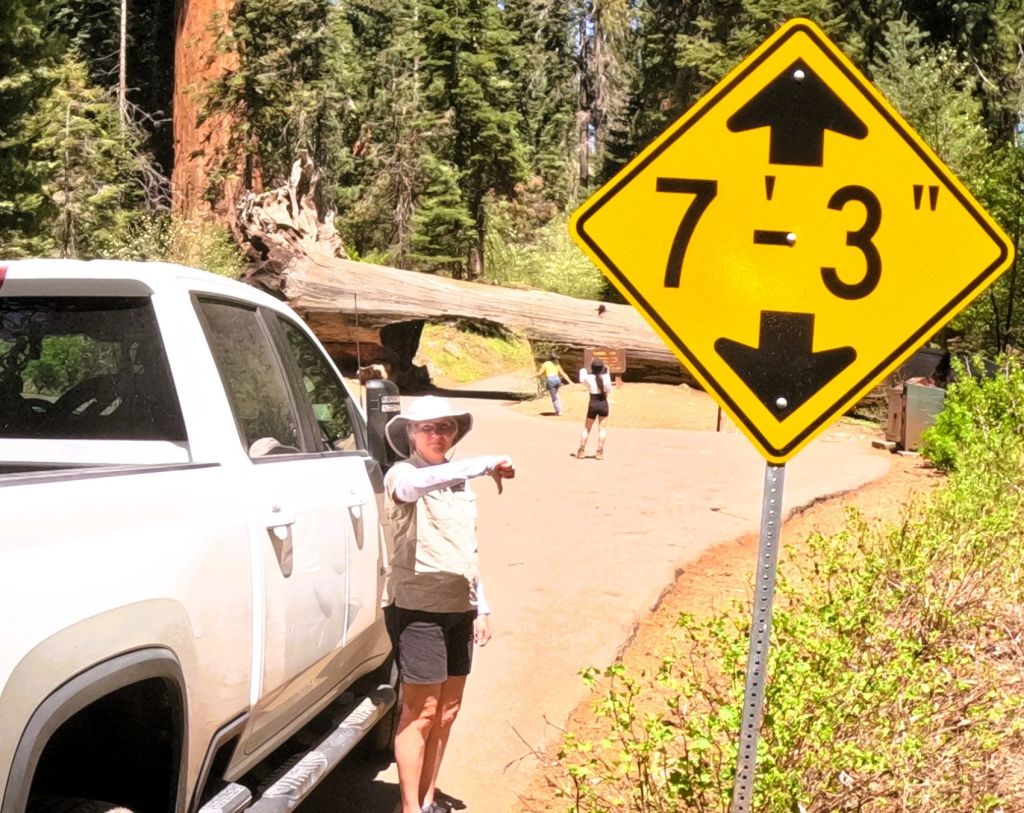
Recalling our experience driving through a rail tunnel in Kentucky during our travels in 2025, I listened to Pat’s NADA this time and took the bypass around the tunnel instead.
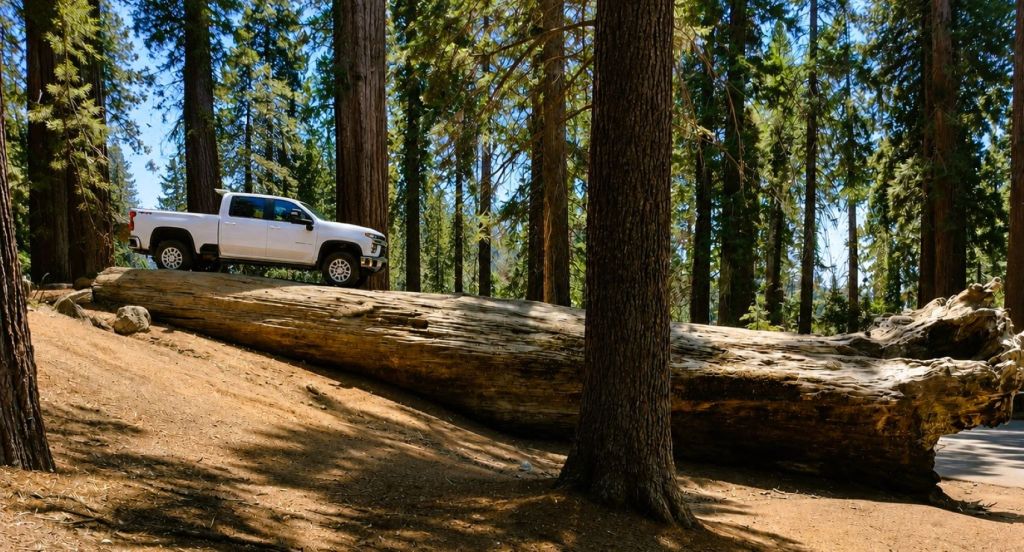
We also passed by the Auto Log tree. Many vehicles have been photographed on the unusual and unique driveway on the top of a sequoia that fell in 1917.
Kings Canyon
Kings Canyon NP adjoins Sequoia NP and we drove 30 miles west where we camped near the Grant Grove.
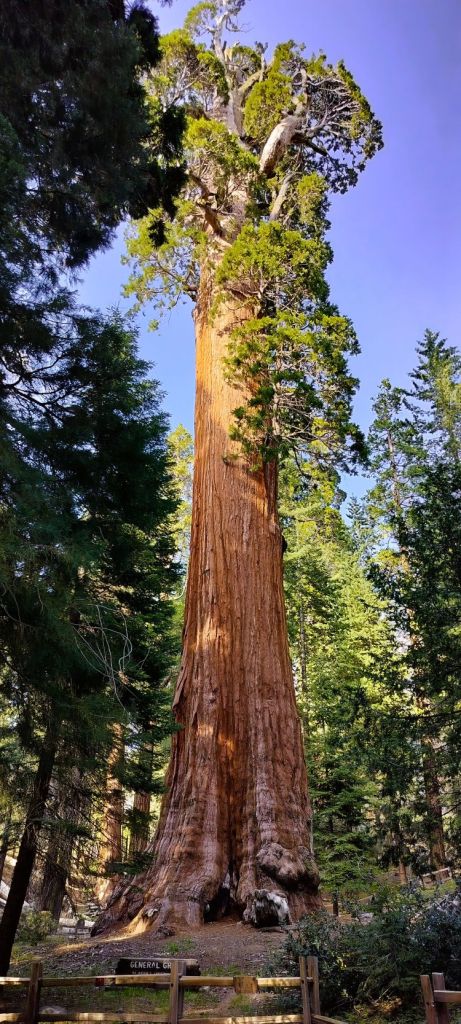
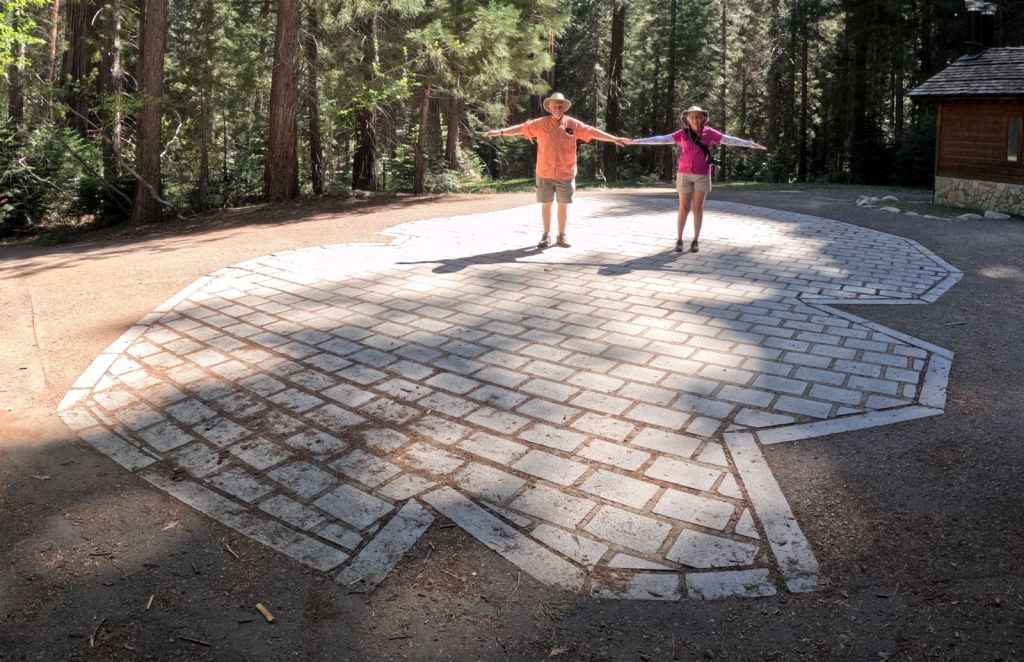
The General Grant Tree is the star of the grove. Second largest in the world by volume, the 268-foot-tall tree is the widest known sequoia with a diameter of 40 feet and circumference of 107 feet, more than General Sherman Tree.
Deep Canyon Drive to Road’s End
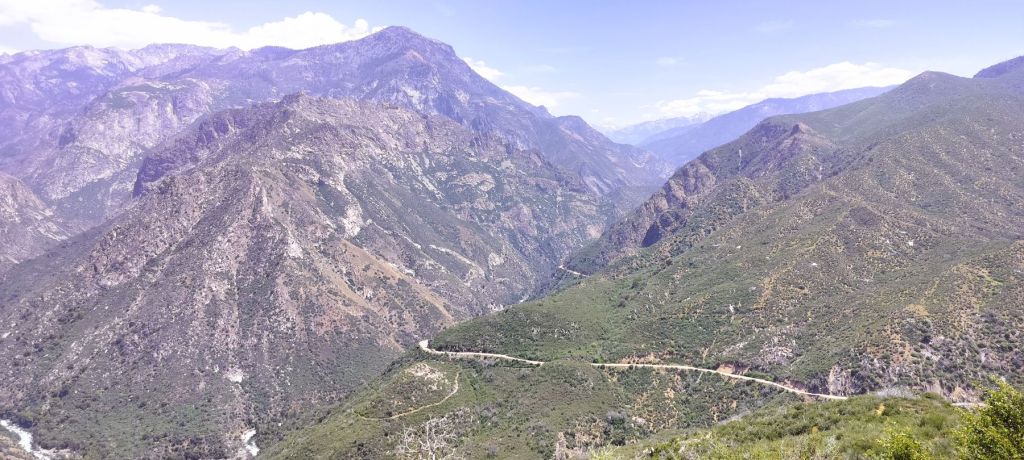
We drove the 29-mile road through King’s Canyon to Road’s End, the starting point of numerous wilderness hiking trails into the Sierra Nevada Mountains. We had spectacular views of the glacier-carved canyon that is over a mile deep, rivaling the Grand Canyon in depth.
Next Week
Our son, Phil, joins us for a visit to Yosemite National Park.

