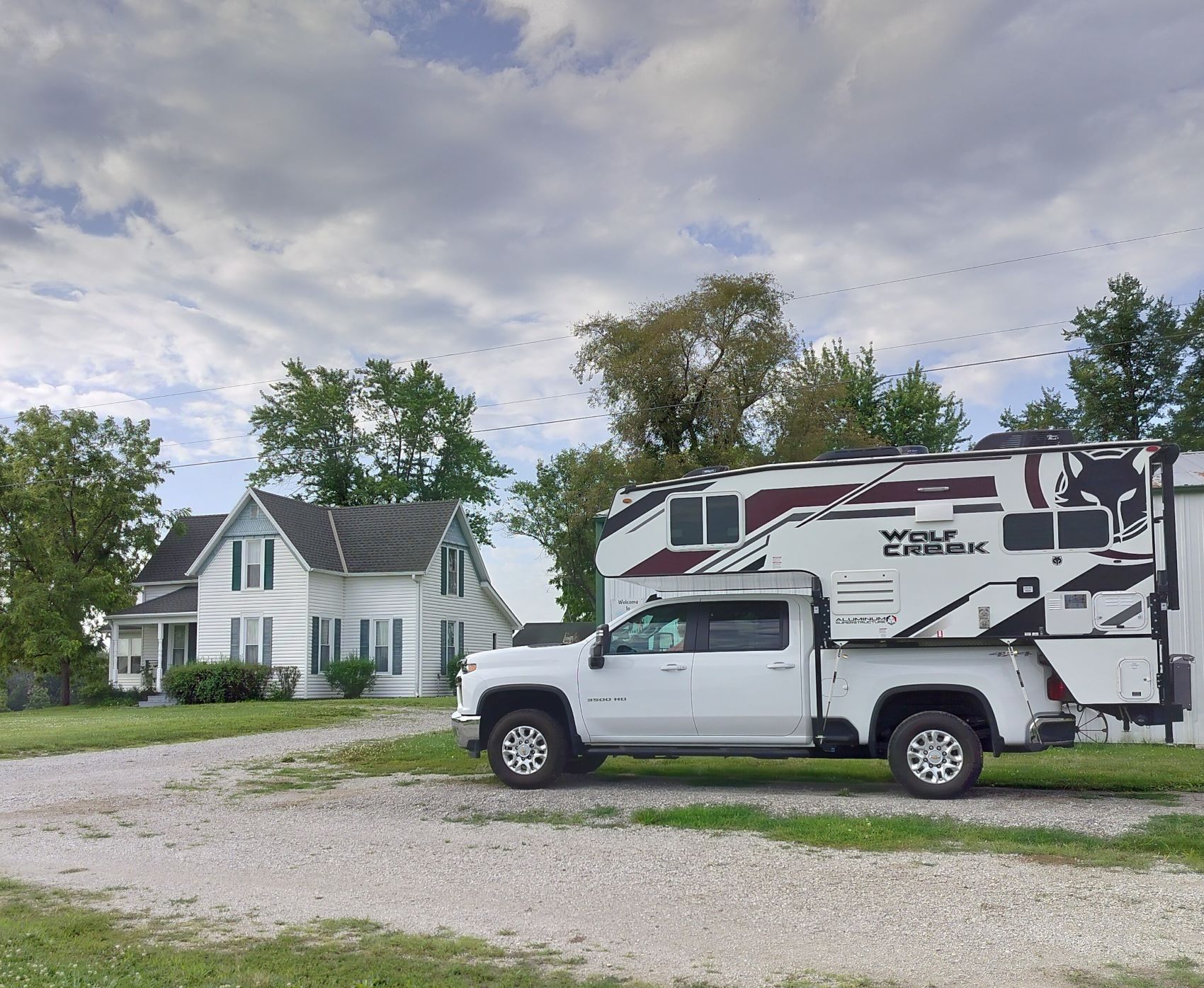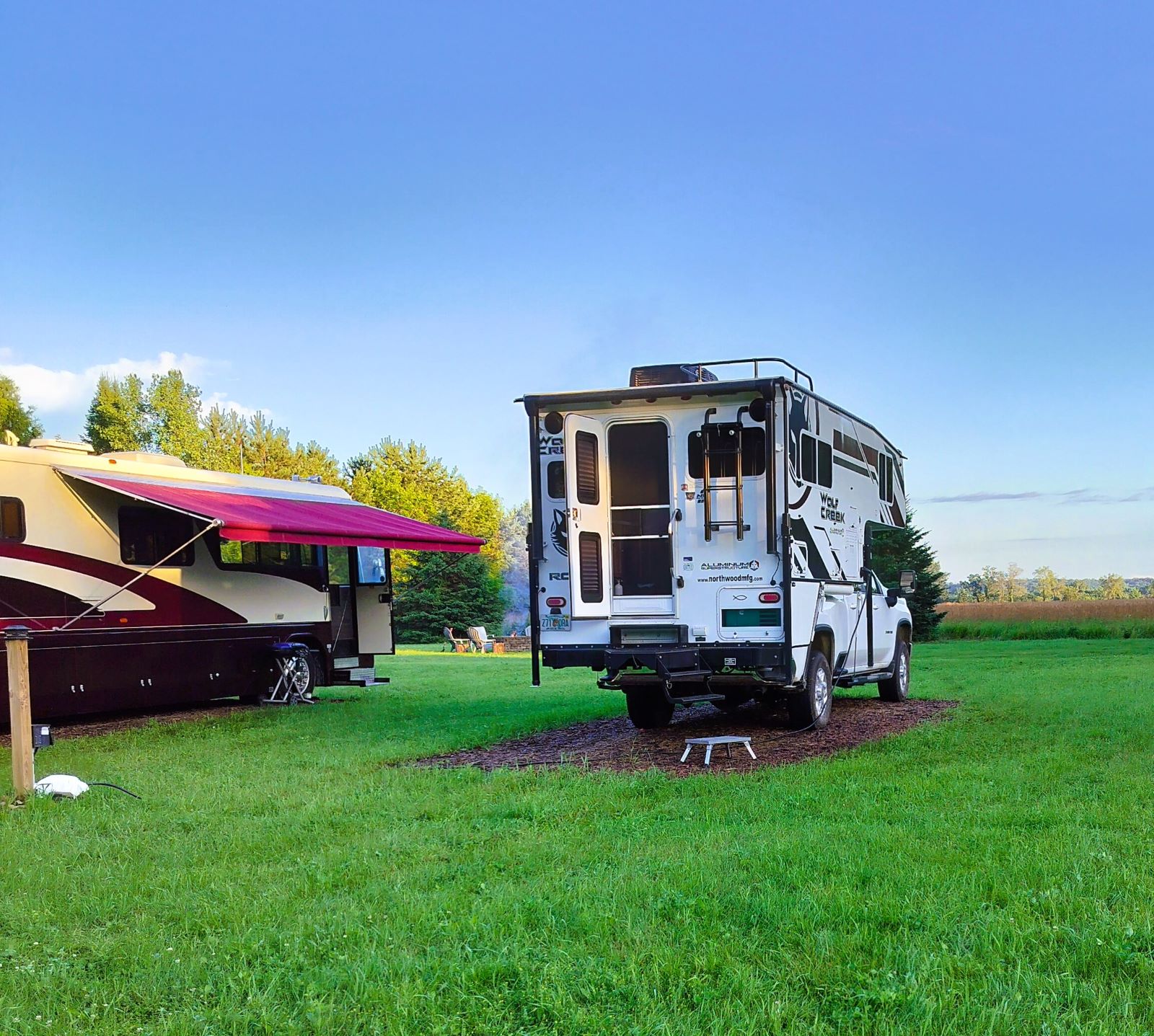

Dempster: RabbiTRAIL of a Lifetime

(2023 Alaska Revisited Ep 24)

Were we crazy? 

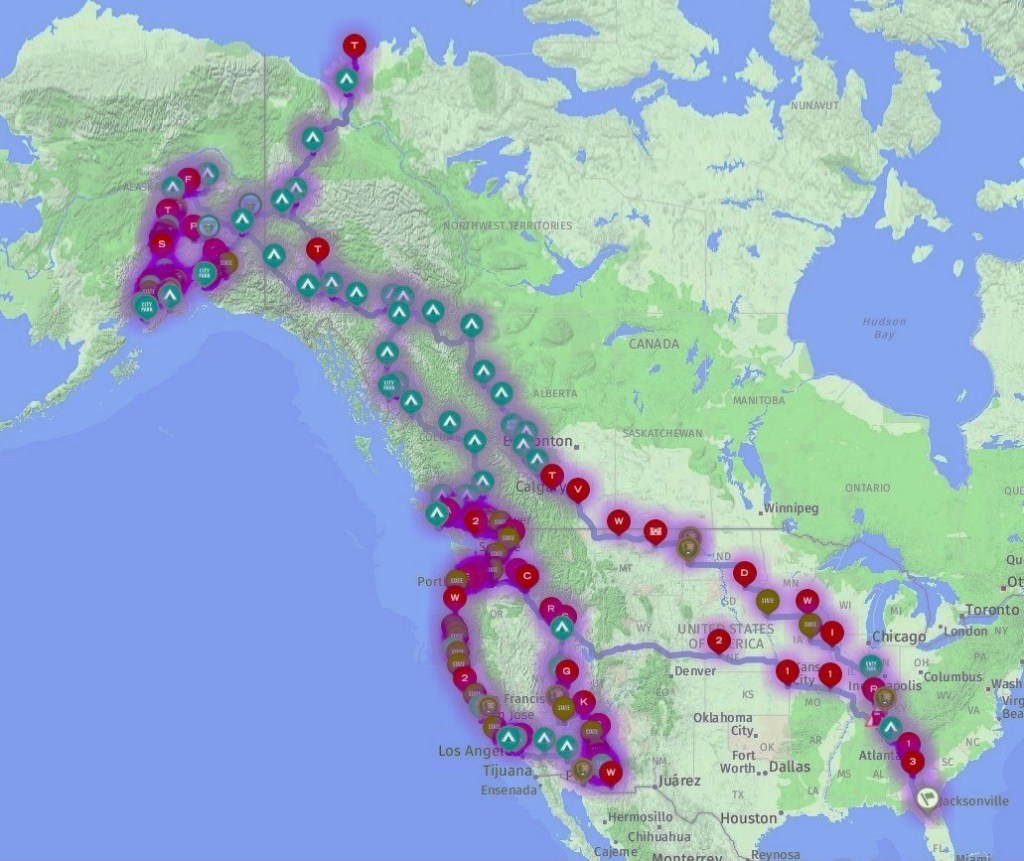
1000+ miles of dust and mud on a remote bone-jarring, tire-grinding dirt roads.  Just to dip our toes in the Arctic Ocean.

You betcha! 

This journey was a RabbiTRAIL of a lifetime.  For us, anyway.   

Drive to the Arctic?

There are two roads to the Arctic Ocean in North America. 

Alaska’s Dalton Highway – from Livengood (north of Fairbanks) to Prudhoe Bay

The Dalton Highway, constructed in the 1970s for the Alaska Oil Pipeline, runs 414 miles from Livengood (north of Fairbanks) to Prudhoe Bay.  It follows the oil pipeline as it crosses several mountain ranges and a wide expanse of the Arctic tundra. 

2018 – Our First Arctic Opportunity

In August 2018, we left Pancake in Fairbanks and followed the Dalton northward across the Yukon River, past the Arctic Circle, and camped in the back of Max at a BLM campground a few miles north of Coldfoot.   It was a cold night.  The tops of the nearby mountains were dusted with snow when we awoke the next morning.  

Camping on the Dalton Highway – our home away from home away from home…

Our overnight stop was still 230 rugged miles from Prudhoe Bay, and special arrangements were needed to visit the Arctic Ocean due to security at the oil production facilities.  So, we decided to turn back to Fairbanks. 

By the end of the trip Max was covered with thick mud from the slushy (mostly) gravel highway. We’re pretty sure several pounds of Dalton Highway mud were still imbedded in the truck when we sold it earlier this year!

2023 – A Second Chance!
Canada’s Dempster Highway – from a road junction near Dawson City to Inuvik extending on to Tuktoyaktuk

This year we had another chance to visit the Arctic Ocean – this time via Canada’s Dempster Highway

The 500+ mile dirt road starts a few miles from Dawson City as it goes north through Canada’s Yukon and Northwest Territories.  Although the Dempster officially ends at Inuvik, there is an extension to Tuktoyaktuk (Tuk), a small town on the Arctic Ocean.   

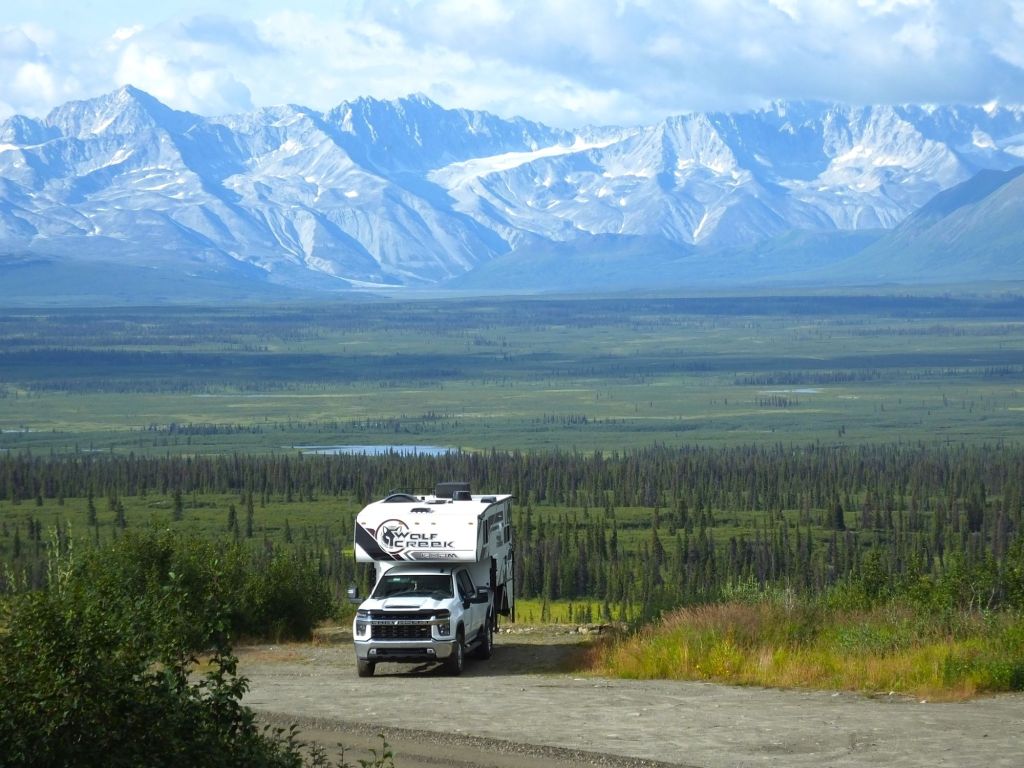
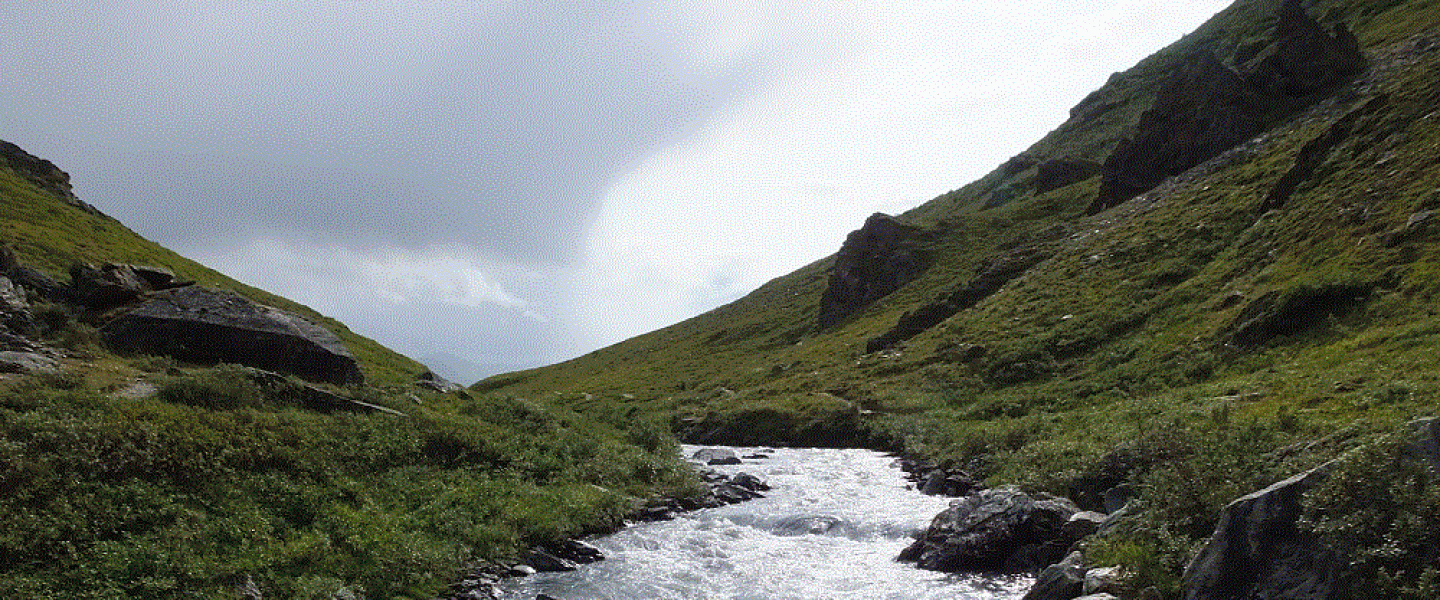
Views along the Dempster near Tombstone Territorial Park

We camped the first night at Tombstone Territorial Park (mile 46).  The gravel road wasn’t too bad, but we could see what was ahead. 

Vehicles starting the trip, like ours, were just a little dirty.  Those finishing were COVERED with dust and mud.

The Dempster can be very dusty or very muddy, depending on the weather. It was BOTH for us!

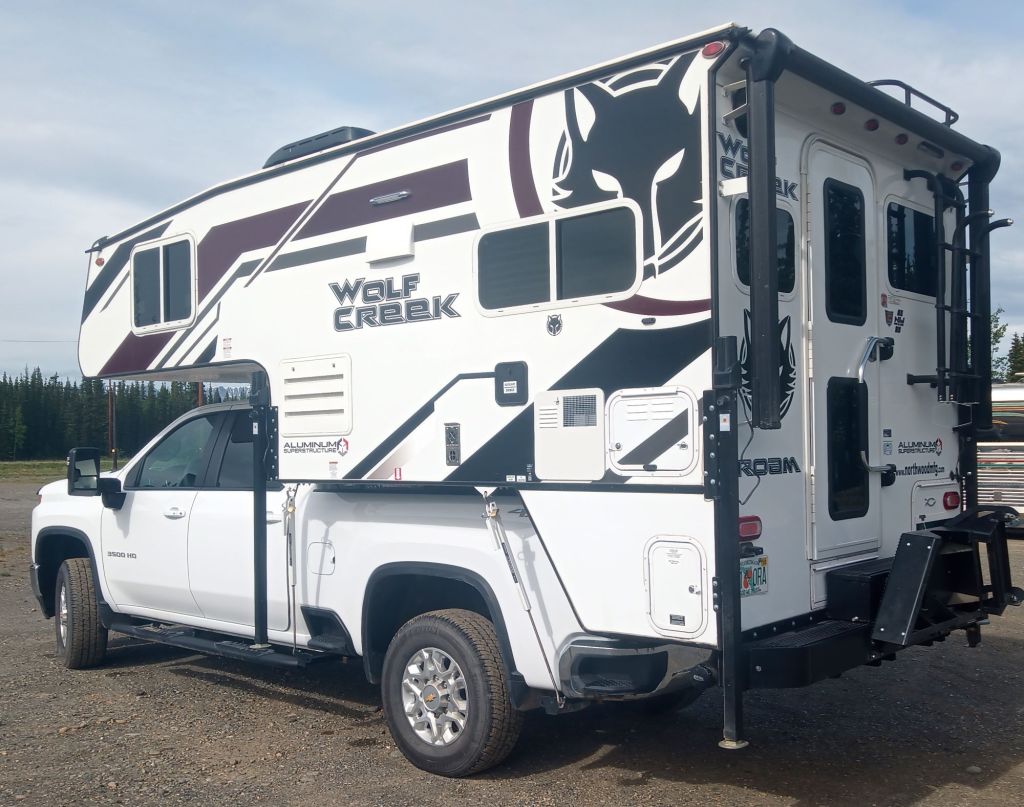
Percy and Pap were mostly clean at the start of the Dempster
Our trip continued through the mountains north of Tombstone Territorial Park
A Welcome Stop at Eagle Plains   

The next morning, we drove along a creek with unusual pumpkin orange water.  It was Engineer Creek (mile 107).

We thought it might be some sort of industrial runoff.  The water was totally natural, however, rust colored from surface iron deposits upstream.

Pat examines the rust colored water in Engineer Creek

The road continued to Eagle Plains (mile 227), first services on the highway that included gas at $6.03 a gallon, a garage, restaurant, motel and campground.   We were grateful they allowed us to connect to their wifi to check on things back home.     

Selfie at the Arctic Circle sign

A few miles north, we took a selfie at the Arctic Circle marker (mile 251).   We were surrounded by valleys and distant mountains covered with short yellow bushes. It was a sign that fall had arrived.    

Fall colors along the Dempster
The next morning we were greeted with rain and fog as we entered Northwest Territories
Foggy reminder we still had a long way to go

More views along the Dempster: wet and windy road through the mountains; we slowed often for large trucks hauling fuel and supplies to Inuvik and Tuk

The next morning we endured 40 miles of the roughest roads thus far, often driving at less than 20 mph to dodge potholes and rough washboard. 

Fortunately, when we crossed into Northwest Territory (mile 290), road conditions improved.  We were told and it was evident that NWT spends more to maintain their portion of the Dempster.

Getting ready to board the small ferry that would take us across the Peel River

At mile 337, we crossed the Peel River on a small cable-guided ferry and continued until our first major hurdle of our Dempster trip – a flat tire. 

A Roadside Tire Swap and Unexpected Connection

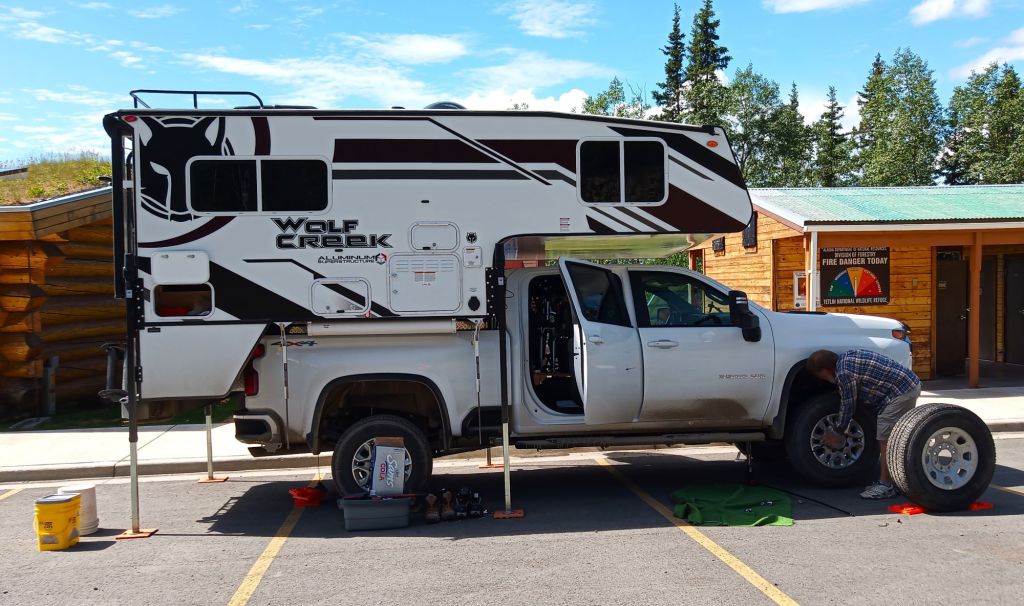
We hastily stopped on the side of the narrow gravel road, thankful Percy’s TPMS alerted us before the hissing tire went flat. 

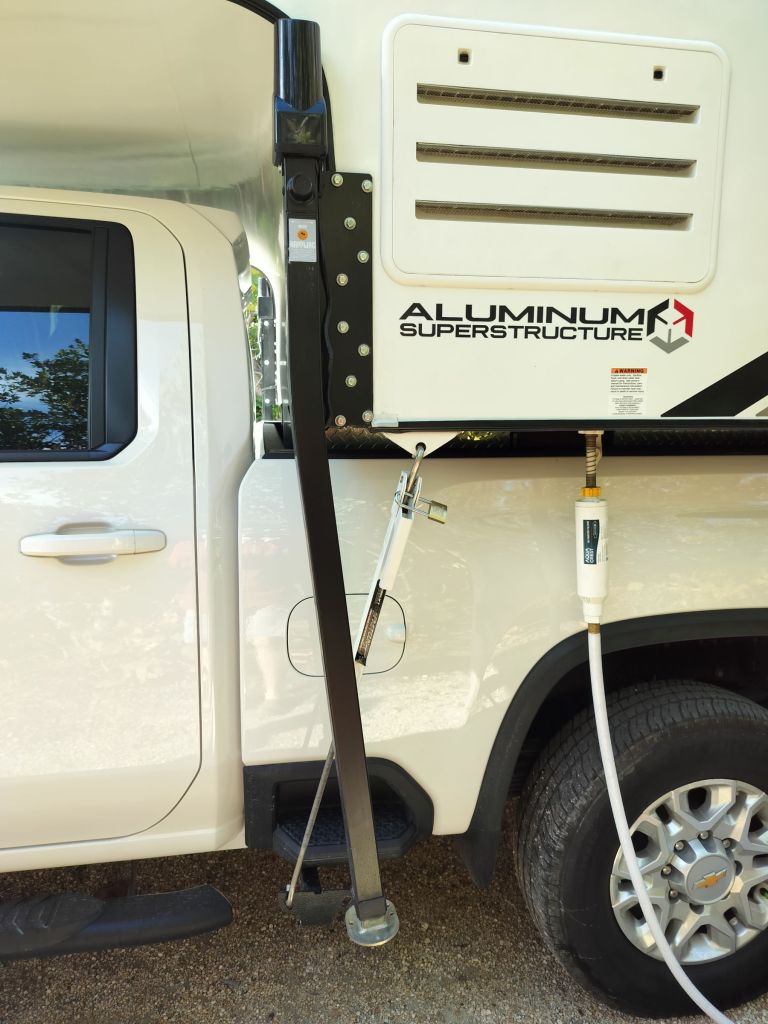
We performed the previously rehearsed tire swap routine with one big change (emphasis added): raise the camper, loosen the tire lugs, jack up the truck, lower and install the spare, and CAREFULLY lower the camper ensuring the connecting wire is not underneath!

Passing drivers stopped to offer help. One driver noticed the ‘In God We Trust’ slogan on our Florida license tag.  We learned he was a Christ-follower from Edmonton working on a government fiber project along the road.  What a neat and unexpected way to connect with another believer!

Tire replaced, we continued, checking the TPMS often for additional tire leaks.   

We crossed the Mackenzie, the largest North American river that flows into the Arctic Ocean

A few miles later we crossed the broad Mackenzie River on a second ferry (mile 380) and spent the night in Inuvik (mile 456), the largest community along the Dempster.

Dempster view – Inuvik was less than 50 miles away

We discovered most businesses in Inuvik are closed on Sunday, so we had to wait until Monday to have our flat repaired.  We attended Lighthouse Community Church where we were warmly greeted by the pastor and his wife.  The service included heartfelt testimonies from several teenagers who just returned from a church camp on Vancouver Island.   We were reminded of the many fond memories we have of Camp Cedarbrook.

We wondered whether our tires could handle the rough gravel roads ahead.  This was our second flat of this trip.  New tires would be very expensive and might take a week or more to be delivered if not available in Inuvik.  We prayed for wisdom and patience. 

On Monday, the tire was repaired and we learned the flat was caused by a four-inch-long metal tube the diameter of a drinking straw.  The repairman said the tires were fine, otherwise.  Praises and thanks!

On to the Arctic

From Inuvik, it was still 90 miles to Tuk and the Arctic Ocean. We opted to leave Pap at the campground and drive the round trip to Tuk on Tuesday. 

The next morning we drove along the tundra, past dozens of lakes. Eventually we had a treeless view to the horizon. The roads were the worst of the trip and it took more than three hours to reach Tuk.  

Land of the Pingos

Nearing Tuk, we noticed a number of unusual hills in the distance. They appeared to be about 100-foot tall and several hundred yards in diameter. 

The hills were pingos, ice-cored mounds pushed up from the permafrost. 

Hills like that above are pingos – large ice mounds pushed up from the permafrost

In Tuk, we climbed to the top of a pingo for an elevated view of the small town and distant Arctic Ocean.

A viewing of Tuk and the Arctic Ocean from atop a pingo

Sitting in red Canada Parc chairs and a sign welcoming visitors to Tuk – both with a pingo in the background

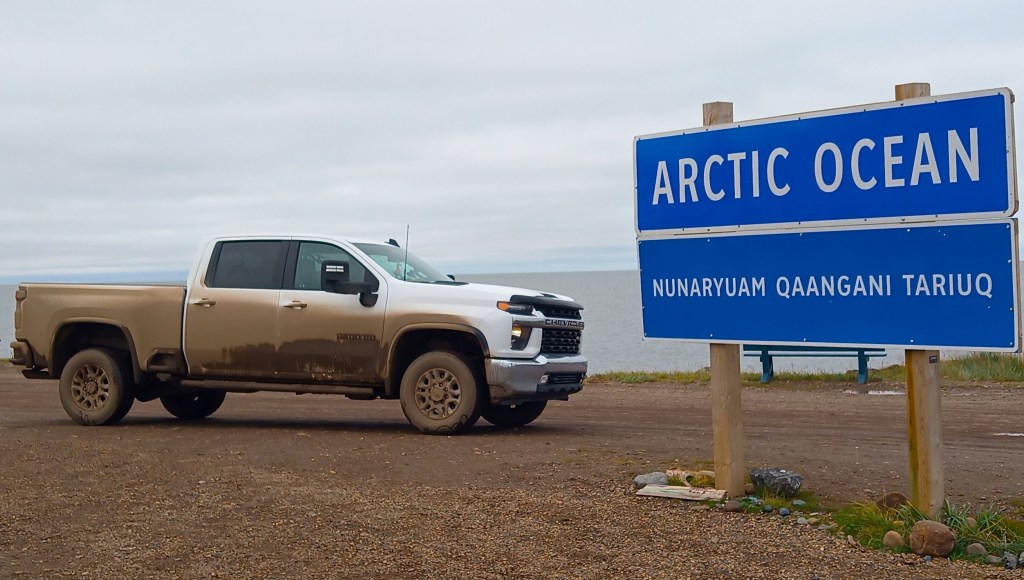
We drove to the end of the road where a large blue sign informed us we had arrived at the Arctic Ocean.  The skies were overcast and the surprisingly calm ocean was gray. 

We walked along the stony shoreline, took off our shoes and socks, and carefully waded into the water.  It was windy and cold, so we didn’t linger.

Dipping our toes in the chilly Arctic Ocean
The Long Return Trip to Smoother Roads

We returned to Inuvik and began driving the 500+ mile LONG ROAD south the next morning. 

Roadside camping near the Arctic Circle with a backdrop of golden fall colors

Our return was uneventful.

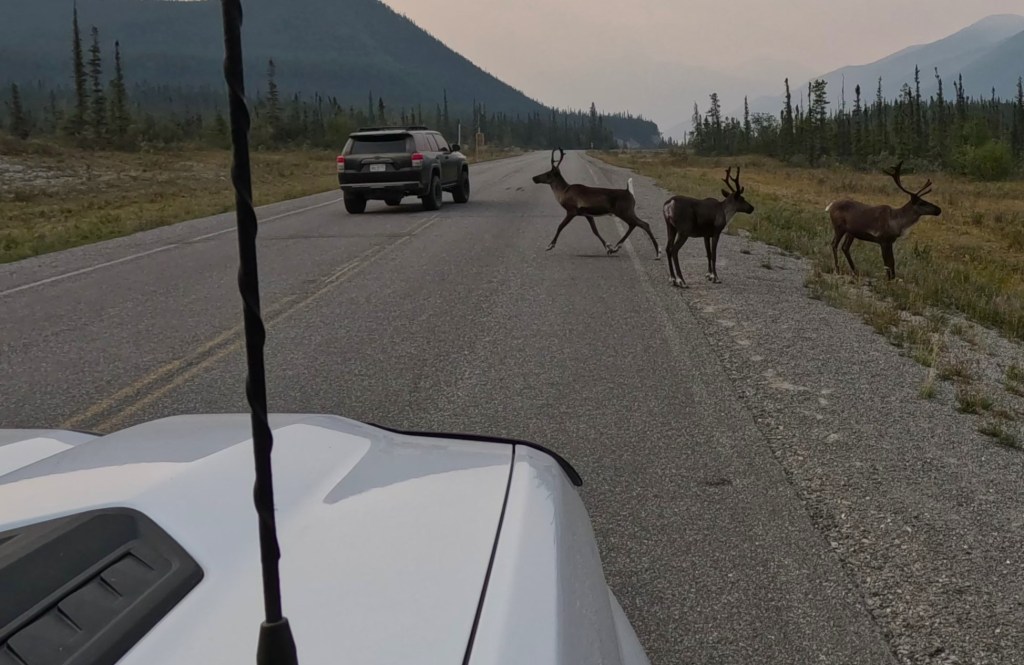
We camped alongside the road near the Arctic Circle where we carefully walked through the tundra and picked more blueberries.  Near Engineer Creek, a grizzly bear was walking on the road.  We stopped and the large sandy-brown bear passed within a dozen feet of us!        

A grizzly encounter of the Dempster kind!
Dempster Reflections

Reflecting on our eight day LONG ROAD trip to the Arctic Ocean, Pat and I marvel at the remoteness and beauty of the Dempster, and give thanks for safe travels and blessings of the various amazing experiences that culminated with dipping our toes into the Arctic Ocean.  We especially appreciate the numerous kind people we met who helped make the trip interesting, positive and fun.

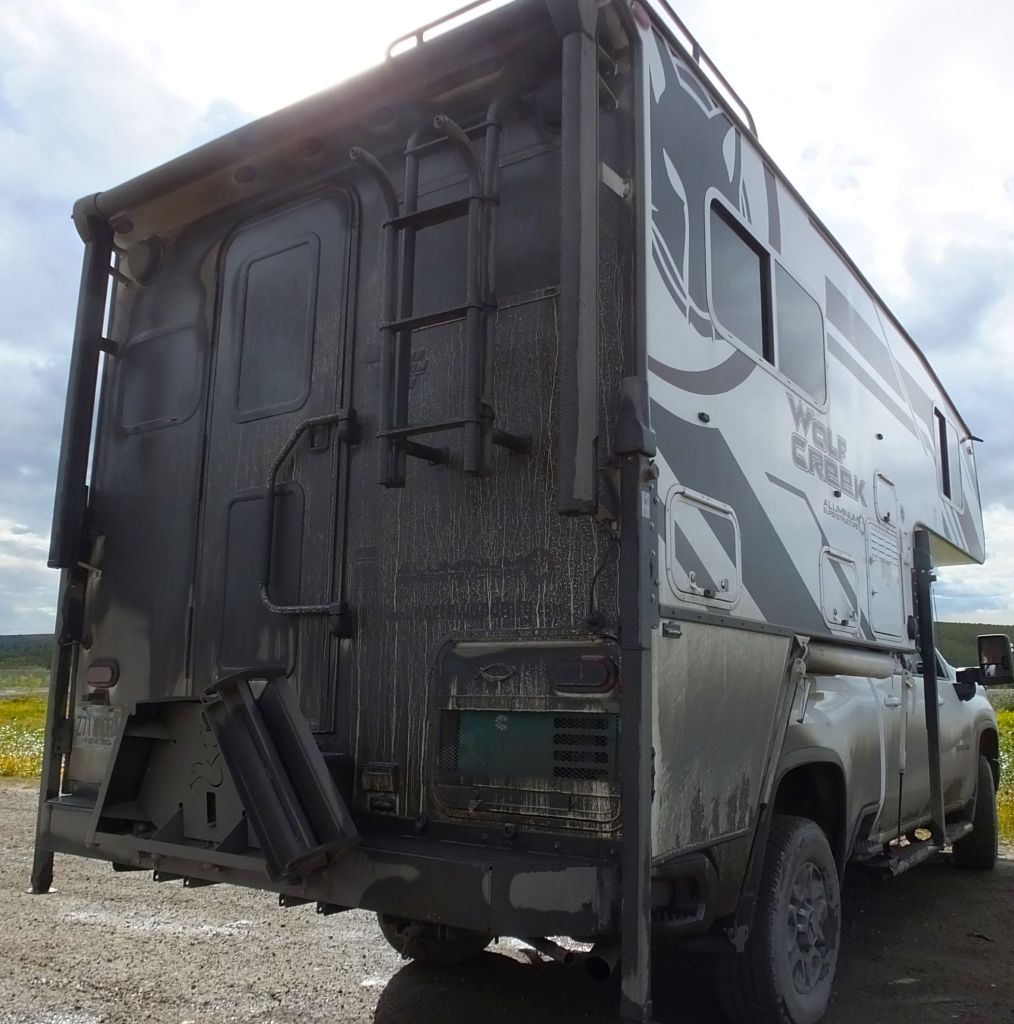
And finally, like others before us, our truck and camper were covered with mud and dirt, distinctions of the long and interesting Dempster RabbiTRAIL!

Desperate for a C-A-R-W-A-S-H!
Critter Count

Grizzly bears – 1
Coyote – 1
Porcupine – 1
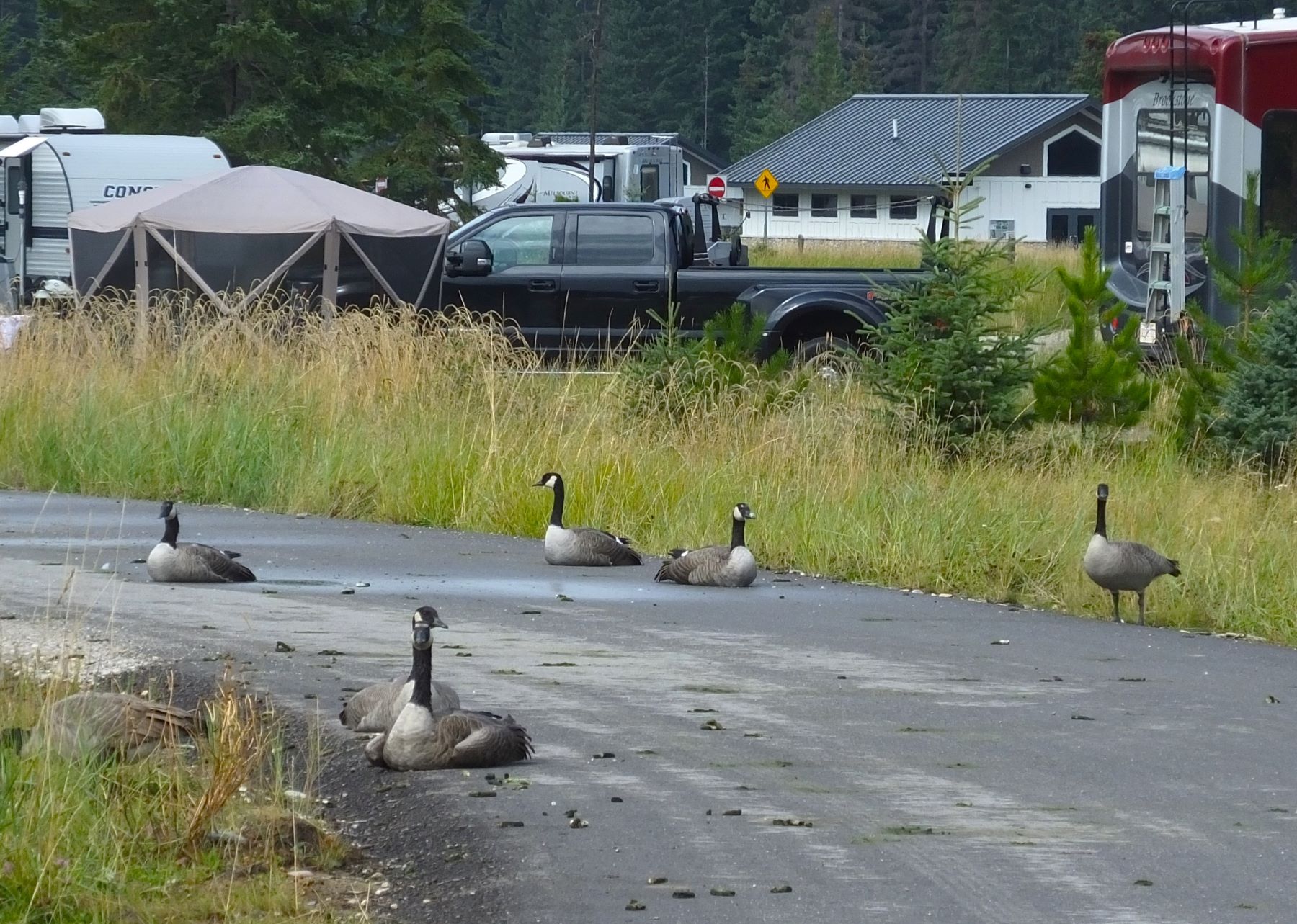
Canada geese – many
Grouse – 26+
Eagles, Owls – 1 each
Grouse – 26+
Swans – 45+
Sandhill canes – 15+
Open range horses – many

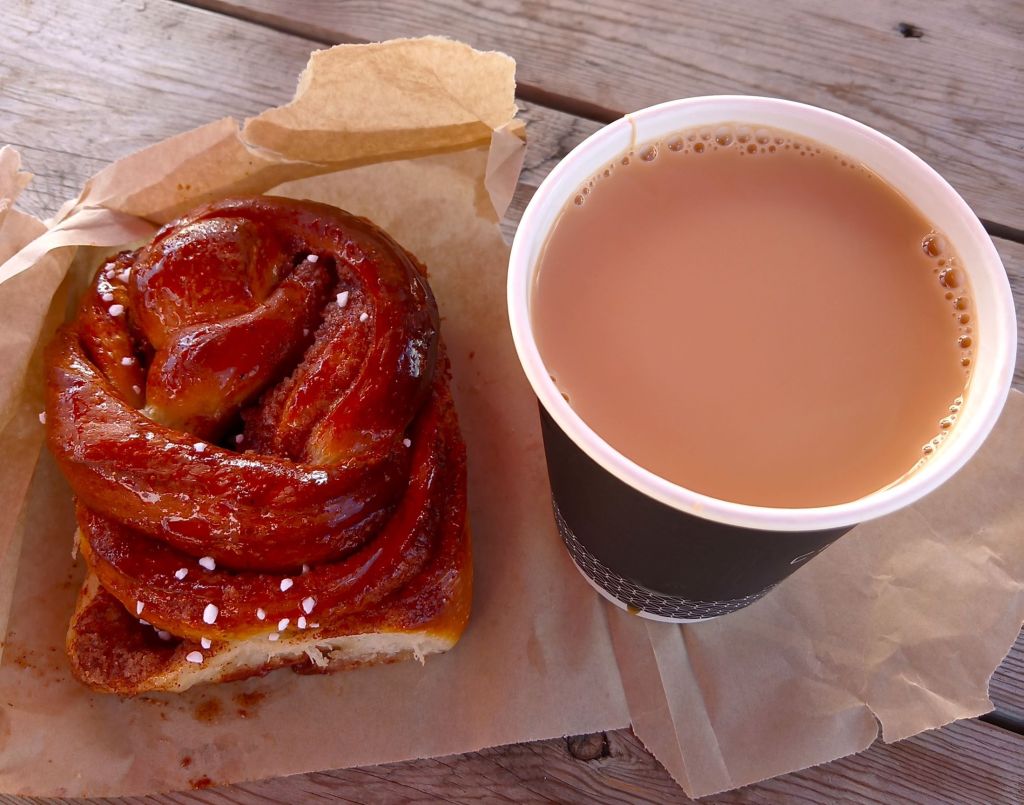
Cinnamon Bun Review

Cinnamon buns weren’t to be found along the Dempster.   

So we tried thinking outside the bun. We tried some cinnamon bun-flavored Oreos from a small store in Inuvik.  Each crunchy cookie had a sweet cinnamon-flavored center. 

Bun score – 0 out of 5.  Oreo score – 5 out of 5!

Fortunately, we didn’t abandon our bun quest.

After completing the Dempster, we continued south to Whitehorse (on paved roads, yeah!).  A few miles from our destination, we stopped at Braeburn Lodge to try one of their famous cinnamon buns. 

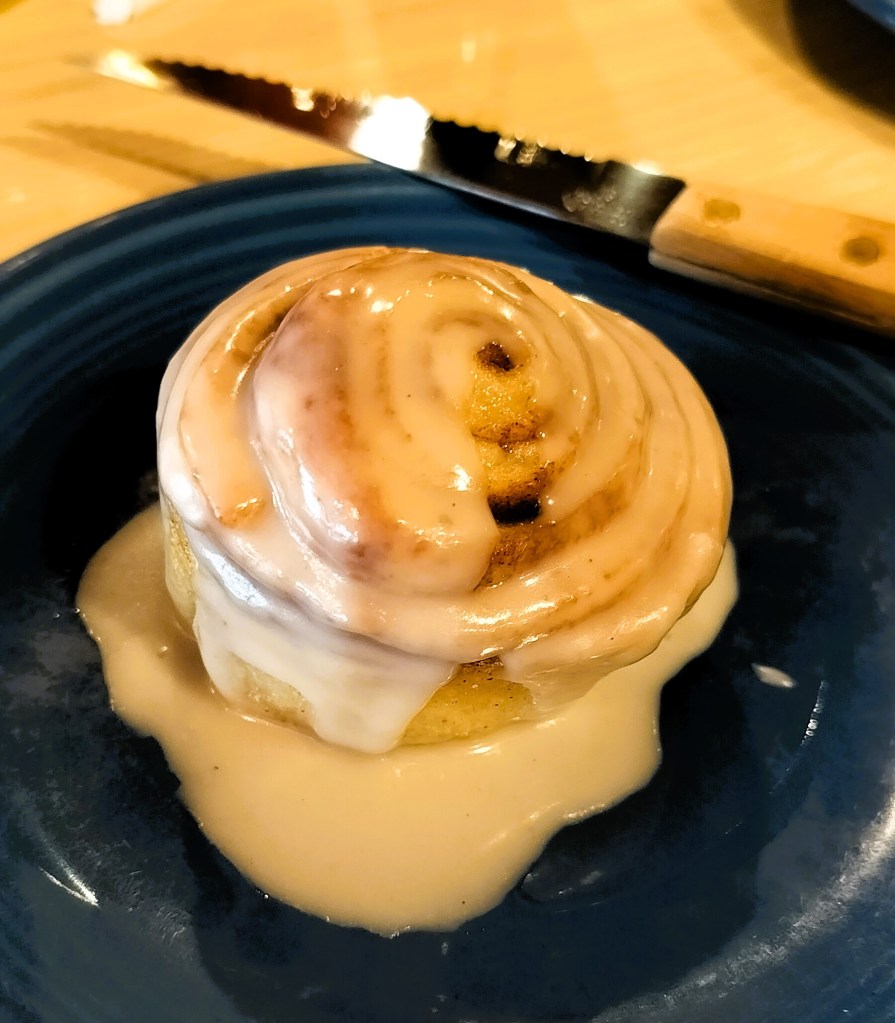
The Braeburn bun is not a snack – it’s an experience! 

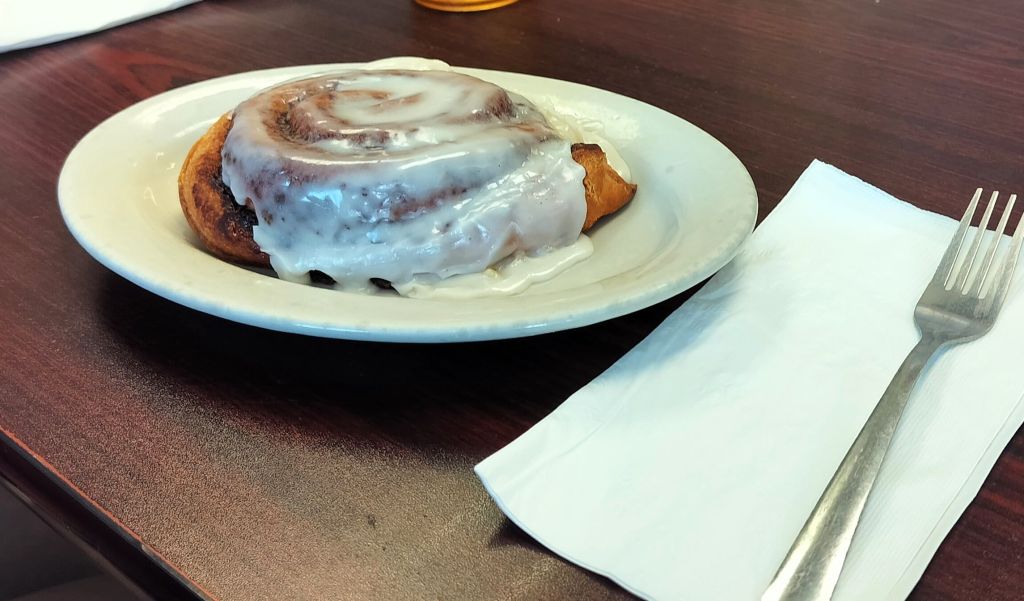
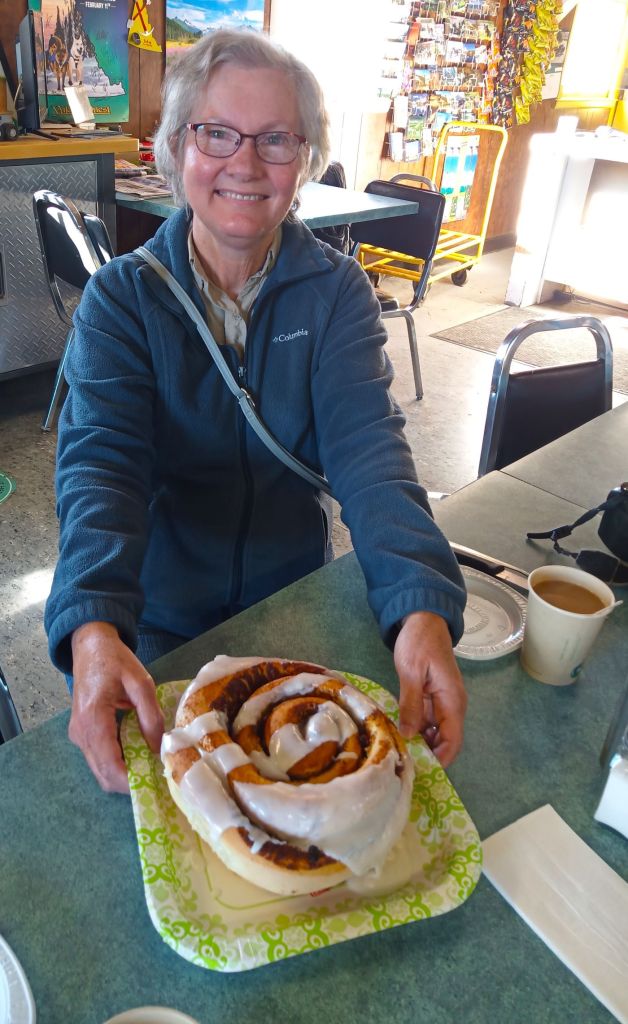
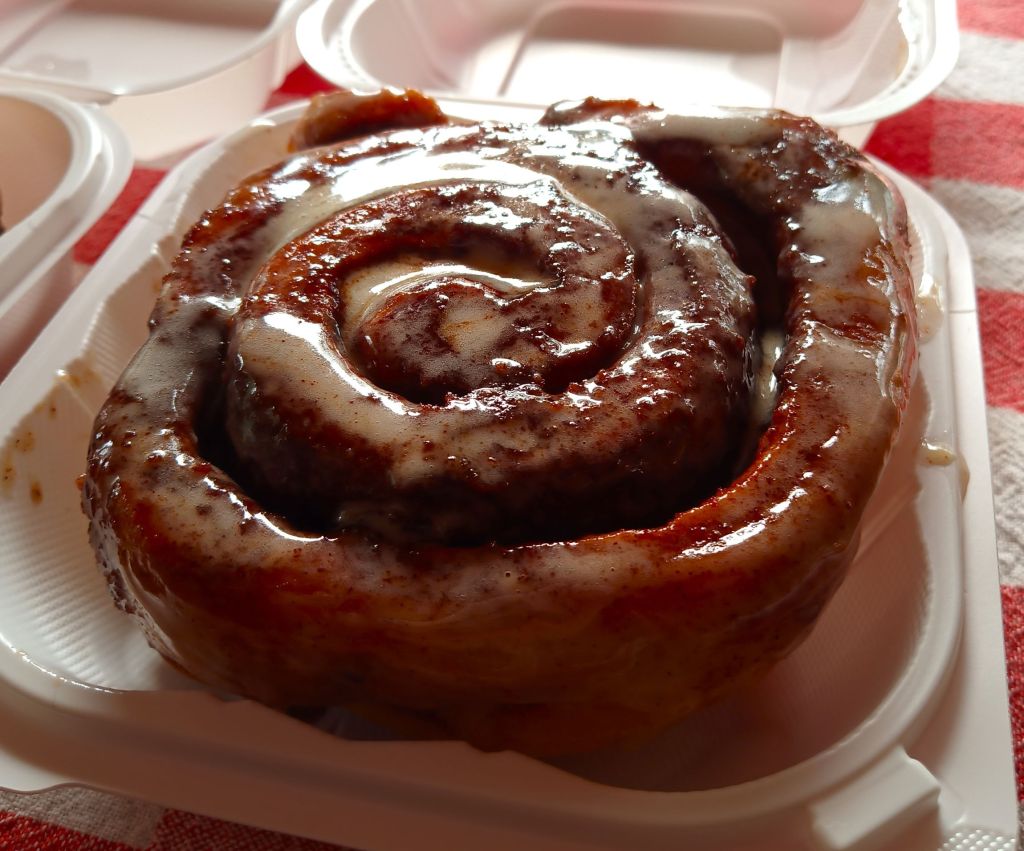
The owner brought a fresh-baked bun from the kitchen where the magic happens and placed it in front of Pat.  We were awestruck by the the paper-plate-sized bun. Its pillowy soft coils were layered with gooey cinnamon and raisins, and drizzled with a generous amount of white icing. Oh my!

My hun holds a bun!

We struggled to finish the four-person bun (someone had to do it!), washing down the delicious bites with fresh coffee. 

Cinnamon buns don’t get better than this!

Bun score: 5+ out of 5  

Next week:

Bears and bison on the Alaska highway

Dawson City: Gold Flows and Sourtoes

(2023 Alaska Revisited Ep 23)

A visit to the Yukon wouldn’t be complete without a visit to Dawson City, location of the historic Klondike Gold Rush.  Before leaving Alaska, we stopped at quirky Chicken, and then continued to Dawson City via the Top of the World Highway.

Chicken, Alaska
Downtown Chicken

Chicken is a surviving Alaska gold rush town with a year-round population of 17.  There’s a historic gold dredge, gas station, campground, a couple gift shops, café and saloon, and, of course, a large chicken statue. 

In 1902, town founders planned to name the community Ptarmigan. However, due to disagreement on the spelling, they named it Chicken instead.

Visitors are greeted by a big metal chicken!

After walking around the town and checking out the gift shops (which didn’t take long), we stopped in the café for, you guessed it, a cinnamon bun and coffee.  See our cinnamon bun review below to find out the results.

Crossing into Canada at the Top of the World
Pat surveys the top of the world view; smoke from several small forest fires can be seen

We continued on the Top of the World Highway, a 106-mile winding, gravel road between Chicken and Dawson City.   Trees became more and more scarce as the road climbed to over 4500 feet, and by the time we crossed the border into Canada at mile 40, there were amazing treeless views in all directions.  We were reminded of similar views along the Blue Ridge Parkway in North Carolina.

Crossing the Yukon River on the small George Black Ferry
Dawson City

We camped along the Yukon River across from Dawson City.   A 10-minute ferry ride brought us across the swift flowing river into the town.  Most of the town consists of gold-rush era buildings and aside from the paved main street, all other streets are dusty/muddy dirt with wooden sidewalks throughout.

Downtown Dawson City

After looking through several shops and eating lunch at Sourdough Joe’s, we visited the small Jack London Heritage Museum. 

Several of London’s best known short stories (To Know Fire) and novels (Call of the Wild, White Fang) are based on his experiences during the Klondike gold rush in 1897, when he spent a year in the Yukon.  The museum includes a replica of a cabin he lived in while in the Yukon, built with half of the logs from his original cabin.  The other half are in a museum in Oakland, CA, London’s hometown.      

Recreated Jack London cabin

Can-cans and sourtoes:  not our thing!

We decided to pass on a couple of well known Dawson City attractions:  Diamond Tooth Gertie’s Gambling Hall, a small casino with bawdy can-can shows each evening, and the sourtoe cocktail at the Downtown Hotel.  The toe-tally bizarre cocktail features a shot of Yukon Jack whiskey garnished with a dehydrated human toe.   Yuck!

Klondike Gold Fever       

Outside and inside views of Gold Dredge #4

Later that day we drove several miles out of town through an active gold mining area to Historic Gold Dredge #4, a Canada National Parks National Historic Site.   The dredge and others like it scooped up and filtered tons of dirt and rocks to extract millions of dollars of gold.  An unfortunate result of such mining are the rocky tailing mounds throughout the area.

Gold dredge tailings seen from Midnight Dome

There’s a public-accessible gold mining claim not far from the dredge where Pat and I panned for gold, seeking our fortunes or at least enough to pay for our next cinnamon bun.  Using pans borrowed from the Dawson City visitor center, we crouched by an icy creek where we added water to a small scoop of dirt in each of our pans.  We pulled out larger rocks and swirled away sand and finer grit, hoping to find yellow flakes glistening at the bottom of our pans.  The result?  A few specs of something, perhaps gold or (more likely) pyrite, otherwise known as fool’s gold.

Klondike Ed pans for gold (yellow cat litter bucket added for effect)
Midnight Dome
View of the Yukon River and Dawson City from the Midnight Dome

The next day we visited Midnight Dome, a lookout atop a 2911-foot mountain above the town.  People gather on the dome on the summer solstice (June 21) to watch the sun drop below the horizon and rise a few minutes later.   The sun didn’t set during our daytime visit, but we did see the town far below, as well as where the winding Klondike River flows into the Yukon.  The Ogilvie Mountains, where we drove the Top of the World Highway several days before, was visible in the distance.

Paddlewheel Graveyard

Riverboat relics in the Paddlewheel Graveyard

On our final evening we walked a half-mile along the banks of the Yukon River to explore the paddlewheel graveyard.  There we saw the collapsed and decaying hulls and paddlewheels of several boats, once the primary method of transportation on the Yukon and other rivers in the area.  As air transport became more common and the road connecting Dawson City to Whitehorse was completed in 1953, the need for such boats diminished and several were drydocked along the river.                    

Critter Count

One severed toe (which we didn’t actually see and will spare you a picture of)
All of the other critters were hiding this week

Cinnamon Bun Review

Who would think a tiny café in a remote Alaska town would have amazing cinnamon buns! 

We stepped into the small Chicken Creek Café and there they were, cinnamon buns fresh from the oven and lined up on the counter, ready for us to consume and review!

Fresh baked cinnamon buns (and more) in the Chicken Creek Cafe

Each pillowy bun was the size of two fists, golden brown, and covered with a thick layer of icing.  We cut our bun into smaller pieces, and washed down the cinnamony, sweet morsels with fresh brewed coffee.  The cream cheese icing was unusually good.   

Our tummies were bloated when we finished. It was the best bun thus far in our trip. 

Bun score – 5 out of 5  

Next Week:

1000 miles of dirt road and the Arctic Ocean.  

Alaska Wild – Three Denali Experiences

(2023 Alaska Revisited Ep 22)

Experiencing Denali, or the Great One, is high on the bucket list of many Alaska visitors.  It was high on ours as well, so we experienced Denali in three ways.

Experience 1: Camping in Denali National Park

After touring Alaska for more than six weeks we arrived at Denali NP, anticipating camping four days in the park.  Our first night was at Riley Campground, at the park entrance, where we caught up on laundry, filled Pap’s fresh water tank and dumped our gray and black tanks.  We were ready for a three-day stay at Teklanika (Tek) Campground.

Denali area map

Before continuing, here’s some information about Denali NP.    The park was established as Mt McKinley NP in 1917 to protect a dwindling dal sheep population.  It wasn’t until 1980 that the park was enlarged to include Denali, the mountain, and renamed to Denali NP.

Much of the park is remote and rarely visited.  From the entrance, there is a 92-mile road (see map above) that extends east-west into the park to Kantishna, a historical gold mining area.  After a major landslide in 2021, the road is now open only to mile 43. 

The first 15 miles of the road are paved and can be driven by visitors.  After mile 15, the road is dirt and visitors must take a bus to get to the temporary end at mile 43.  Those camping at Tek can drive to mile 29. They must stay a minimum of three days and cannot drive further into the park or back to the park entrance until they leave.  That’s three days with no electricity, limited fresh water, no way to dump tanks and no cell service.

The remoteness and wild beauty are what attracted us to Tek. 

Teklanika River, near our campground

From our campsite we walked along the ribboned channels of the Teklanika River, surrounded by beautiful mountains. 

The next day we hopped a park bus for a ride to mile 43. 

Denali park bus pauses for several willow ptarmigan

The bus groaned as it climbed the narrow, winding road up and down several mountains.   The driver shared interesting facts about the park until someone shouted ‘caribou at 2 o’clock.’  The bus stopped and everyone crowded to the right side to see a large caribou walking on the tundra about 50 yards away.  After a few minutes we continued until the next animal was spotted.

Sections of the Denali park road are closed each hour to allow dal sheep to cross the road. As Ed checks his watch, we wondered how the sheep know what time it is

We saw a number of caribou, some with antlers more than three foot long, mama grizzly bears and their cubs, a gangly moose cow, dozens of willow ptarmigan, arctic squirrels and even a couple dal sheep.  Some were on distant hillsides and others were just off the side of the road.

There were plenty of animals along the Denali park road

Fireweed and distant mountains along the Denali park road

Later, we asked to be dropped off to walk several miles along the road.  We carried water and snacks, a couple ponchos and bear spray just in case.  We took our time to enjoy views of the mountains and deep valleys. 

A Caribou Encounter of the Denali Kind
A caribou struts down the center of the park road

We stopped to pick blueberries and noticed a large animal about 100 yards away, walking toward us along the road.  It was a caribou.   On one side of the road there was a steep upward slope and on the other a substantial drop off.  We stood close to the drop off, waved our arms and made loud noises.  Did the animal get the hint and turn aside?  Nope.  He strutted down the middle of the road and didn’t miss a step as he passed less than 15 feet from us!

A taste of Denali – we picked enough blueberries to make wild blueberry pancakes!

A hike along the untamed Savage River near the Teklanika Campground

Our Tek camping experience was one of the highlights of our trip!

Experience 2: Denali By Air

We left the park and drove a couple hours south to Talkeetna for a two-hour flight to see Denali, the mountain, up close.  We flew above immense glaciers and hung on as the pilot made a bumpy landing on Ruth Glacier.  Snow covered mountains towered all around us. After a white-knuckled take off, the pilot flew through several mountain passes and near incredible cliff faces thousands of feet tall.  We saw the base and mid-elevations of Denali, but the peak was hidden by rain clouds and fog.

Cockpit view during Denali flight takeoff
Circling the mountains and glaciers near Denali
Another view of glaciers near Denali
Landed on Ruth Glacier
A chilly pose on Ruth Glacier
Experience 3: The Denali Highway
Our speed was closer to 30 mph as we drove the rugged dirt portion of the Denali Highway

Since 1971, most people visit Denali NP via the Parks Highway between Anchorage and Fairbanks (route 3 on above map). Before then, the park could only be reached via the Denali Highway, a remote 135-mile road that goes east-west along the Alaska Mountain Range (route 8 above).

Nearly 100 miles of highway is pot-holed and muddy/dusty, depending on the weather.  We drove slowly and carefully, and after 40 miles, we camped at a pull off with a view of the mountains to the north.  We picked more blueberries, stepping carefully to avoid ankle-deep wet areas in the boggy tundra, and we later hiked up a nearby hill to enjoy a rainbow produced by a passing rain shower. 

It was a nice end to our Denali experience.

Under a rainbow on the Denali Highway
Cinnamon Bun Review

Our Denali experiences were nearly cinnamon bun-less.  Stopping for groceries at Three Bears Alaska in Tok, we decided to try a couple of their grocery store cinnamon buns. 

The buns were covered with an enticing thick layer of icing.  The icing was yummy, but the bun was dry with little flavor.

Bun score – 2 out of 5

Lesson learned?   Put enough icing on just about anything (even liver) and it would earn a score of 2!   

Three Bears – Alaska’s version of Buc-ees with groceries, hardware and more; a nicely iced cinnamon bun

Critter Count

Moose – 6
Willow Ptarmigan – 60+
Dal sheep – 2
Vole – 1
Swans – 6
Beavers – 4
Porcupine – 1
Caribou – 18
Grizzlies – 9 (including a mama griz and her three cubs)
Ground squirrels, jays, magpies, seagulls  – lots

Next week: 

Our Alaska journey comes to a close and we continue on to Canada, looking forward to new RabbiTRAILS ahead! 

Alaska Wild – Kennecott Copper Mines

(2023 Alaska Revisited Ep 21)

As our time in Alaska came to a close, several RabbiTRAILS gave us a sense of how wild and remote the 49th state can be. This week we visit the Kennecott Copper Mines nestled on the western side of the Wrangell Mountains in southeast Alaska. Next week our RabbiTRAILS take us to remote campsites in Denali National Park and along the Denali Highway, where we see amazing sights and wildlife.

The efforts that humans use to obtain valued resources are amazing.  At the turn of the 20th century, thousands of fortune-seeking prospectors came to Alaska in search of gold.  In the 1970s, an 800-mile oil pipeline was built from Prudhoe Bay to Valdez to help satisfy America’s need for black gold and energy independence. 

Today’s RabbiTRAIL is about another quest for resources: copper and the Kennecott Mines in a remote area several hours north of Valdez. 

Leaving Valdez

We traveled north from Valdez on the Richardson Highway through scenic mountains and along wide rivers, and turned east on the highway that would take us 92 miles east to McCarthy and the Kennecott Mines.

We were surprised to see a herd of yaks as we drove toward Kennecott. They are being raised at the Circle F Ranch

To the northeast were ghostly silhouettes of the Wrangell Mountains, hard to see due to smoke from fires in central Canada.  Several of the mountains are nearly as tall as Denali, and on a clear day we were told the view is spectacular.

Smoke-shrouded Wrangell Mountains

The Wrangell and St Elias mountains are part of America’s largest national park.   During our drive to Alaska in June we visited Canada’s Kluane National Park on the other (eastern) side of these mountains.  Together they make up the largest international protected area in the world. 

The Kennecott Mines are a special historic district within the Wrangell-St Elias NP.

Alaska natives use fish wheels to harvest salmon on the Copper River. The fishwheels resemble a porch swing, says Pat
Kennecott Bound

We dry camped at a state park on the banks of the Copper River, about a third of the way to the Kennecott Mines.   Copper River salmon are prized for their distinctive taste.

The highway is not paved past the Copper River Bridge and quite rough and dusty as it follows an old railroad bed.   We were warned that railroad spikes occasionally surface, and not wanting to risk a flat tire, we decided to take a shuttle to the Kennecott instead.

A lone cyclist braves the bumps and dust along the road to Kennecott
A portion of the road to Kennecott follows the CR&NW railroad bed, including the 525-foot Kuskulana Bridge built in 1910. It is 238 feet above the river and cost more than a million dollars in 1910
You must cross a footbridge to get to McCarthy and Kennecott; the turbulent grey river outflows from the Kennicott Glacier

After nearly three hours, we arrived at the Kennicott River where we walked across a narrow footbridge that spans the river.   The Kennecott Mines were still five miles away, so we rode a second shuttle past McCarthy on our way to the mines.

Kennecott Mining District, with gravel-covered ice mounds of the Kennicott Glacier and Wrangell Mountains beyond

As we neared the mines, we could see the Root Glacier extending from the distant mountains and a  broad area of gravel mounds adjacent to the mining area. Although the gravel piles might appear to be tailings from the mine, they are actually on top of a thick layer of ice, part of the Kennicott Glacier.

14-story Kennecott Concentration Mill

The Kennecott Mining District has informative displays that explain the history of the area along with more than two dozen restored and well-preserved buildings, including the prominent concentration mill, machine shops, a general store, living quarters for laborers and skilled workers, several houses for senior staff on a hill overlooking the district (known as Silk Stocking Row), a hospital and more. 

Pat holds a couple copper ore samples. Ore from Kennecott was desired because of a high concentration of copper

During a two-hour tour we walked through the mining district, where we learned that copper ore was extracted from five mines near the top of the nearby mountains (from 77+ miles of tunnels) and transported via several tramways to the red concentration mill. 

Hardhats on and getting ready to descend into the Kennecott Concentration Mill

Our guide Patrick explains after the copper ore was crushed, it was shaken and sifted on multiple tables like these. Ore with a higher concentration of copper settled to the bottom

At the top of the 14-story concentration mill, we donned hard hats and descended several sets of steep stairs to various levels where copper ore was crushed, shaken and sifted numerous times and in different ways.   After non-copper particles were removed, the resulting 72+ percent copper mix was put into 140-lb bags and shipped by the Copper River and Northwestern (CR&NW) railroad to Cordova, Alaska.  From there, the ore was transported by ship to Tacoma, Washington, where copper smelting took place. 

Advancements yielded an increasing percent of copper in processed ore to more than 95%. What might appear as a brewery is actually an ammonia leaching plant for copper extraction

The CR&NW railway itself has an interesting history.  Engineers had to overcame significant challenges of rivers, glaciers, canyon crossings and weather.  Each spring portions of the 196-mile railway had to be rebuilt.  Reflecting the impact of the challenges, some referred to the CR&NW as the Can’t Run and Never Will railway. 

By the early 1930s the highest grades of ore at the Kennecott Mines were largely depleted, and open pit mines in Utah and Nevada began to produce more copper at a lower cost.  The last train left Kennecott on November 10, 1938.  

The mines operated from 1909 to 1938, processing over 4.6 billion tons of ore containing nearly 1.2 billion pounds of copper. Total cost of operations was nearly $200 million with a net profit of more than $100 million.   

Cinnamon Bun Review

No cinnamon bun bakeries in the wild. Perhaps next week…

Critter Count

Moose – 3
Yaks – 50+
Coyotes – not seen, but heard in the Chitina Campground
Eagles – 10
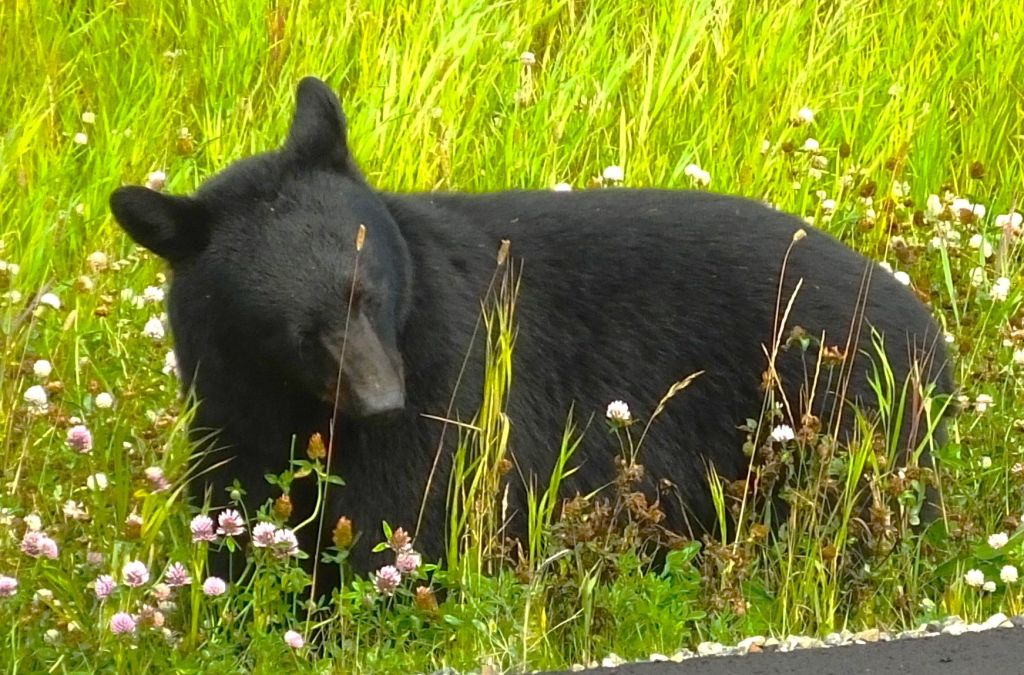
Black bear – 1

Next Week:

Remote camping in Denali NP and along the Denali Highway.

A Day on the Lu-Lu Belle (and more)

(2023 Alaska Revisited Ep 20)

After nearly four weeks on the Kenai Peninsula, it was time to move on.  The summer was more than half over and there’s lots more Alaska to see. On to Valdez!

Views at Anchor Point – Mt Redoubt Volcano from our campsite; North America’s most western highway point

Anchor Point

We stopped for the night at Anchor Point, 30 minutes north of Homer.  Anchor Point has the distinction of being North America’s most westerly highway point.

We camped in Kyllonen’s RV Park, the same campground we enjoyed in 2018.   Our campsite overlooked a broad expanse of low bushes and small trees bordered by the Anchor River and snowy Mt Redoubt volcano across the Cook Inlet.  Imagine my surprise to see a mama moose and her calf grazing their way across the thicket as the sun was setting.  It was after 10:30 pm and I watched them for nearly an hour!

Late evening moose mama and baby grazing amidst the cow parsnip

Bound for Valdez, our route took us past Soldotna, Williwaw, Turnagain Arm and Anchorage, earlier stops on our travels.  We took our time, camping several nights before we neared our destination. 

Thompson Pass views near Valdez – Blueberry Lake and Worthington Glacier

Valdez

The highway crosses 2678-foot Thompson Pass as it descends to Valdez.  We camped at Blueberry Lake, a small campground near the pass surrounded by the rugged Chugach Mountains. Our hikes in the area were fruitless – there were no blueberries to be found!

Beautiful mountains frame Valdez; a distant black bear seen during a hike

Alaska Oil pipeline and oil terminal across from Valdez

Valdez is a small town of around 2000 persons with a number of interesting distinctives:  the town was moved several miles to is current location after being destroyed by the 1964 Alaska earthquake, it is near the end of the 800-mile long Trans-Alaska crude-oil pipeline, and area fishing and wildlife rival those found in Seward and Homer.

Solomon Gulch Fish Hatchery; a seagull seems to comment on a sea lion’s fresh salmon catch

Solomon Gulch Fish Hatchery

Across the bay from Valdez, we visited Solomon Gulch Fish Hatchery, the largest single-species salmon hatchery in North America, where millions of pink and Coho salmon are incubated and released each year.  As the salmon return each July and August, some swim up a fish ladder to renew the incubation cycle. Many more are feasted upon by sea lions, seals and bears. 

We watched as several rotund sea lions near the fish ladder dipped their heads underwater and pulled up wriggling salmon.  Nearby, seagulls picked up fish pieces from the beach.  Only the bears were absent.

Carts with halibut and rock fish at the Valdez Marina; FedEx will even ship fish (hopefully on time)!

One evening we walked to the Valdez marina where we saw a large crowd watching fisherman wheel carts full of halibut, salmon and other fish to metal tables, where they were cleaned and filleted.  It is amazing how many large fish were part of the day’s catch.

A Day on the Lu-Lu Belle

In 2018 we enjoyed a wildlife and glacier cruise in Seward with our son, Phil.  Several people told us about a similar, not-to-be-missed cruise in Valdez on the Lu-Lu Belle.

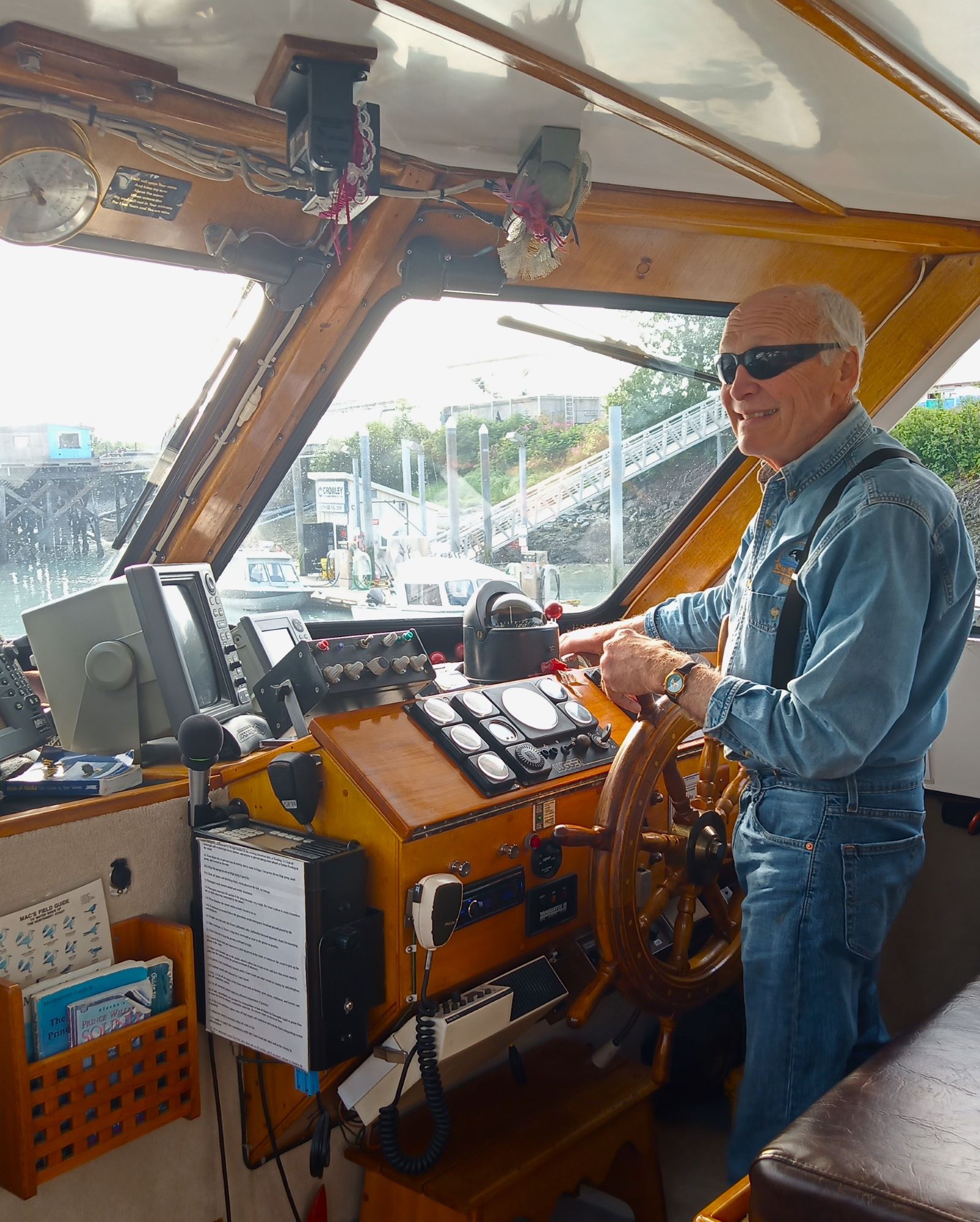
The Lu-Lu Belle; Captain Fred at the helm

Captain Fred Rodolf and his crew greeted us as we boarded the boat on a sunny, pleasant Sunday morning.   It was actually our second time on the Lu-Lu Belle – we attended a Chapel of the Sea church service on the boat earlier that day.

We saw otters in Valdez Bay – a sign of a healthy environment; beached seal lions a few miles away were active and noisy!

Captain Fred piloted the nose of the Lu-Lu Belle into rocky alcoves in search of nesting puffins

We were soon underway on the nearly 10-hour cruise.    Captain Fred provided continuous commentary as he guided the boat past seals, fishing boats pulling in nets full of salmon, a beach crowded with hundreds of barking sea lions, and several narrow cliff alcoves with nesting puffins.  We later followed a pair of orcas for nearly an hour as they surfaced, flipped their tails and even dove under the boat.

An Orca whale surfaces as we followed for more than an hour; mountain goat seen near Columbia Glacier

The cold didn’t seem to bother harbor seals that were riding on floating ice chunks near the glacier

That afternoon Captain Fred piloted the Lu-Lu Belle to Columbia Glacier, the second largest tidewater glacier in America.  A few small icebergs gave way to more numerous and much larger icebergs, some bigger than a bus. 

As the Lu-Lu Belle zig-zagged between the ice obstacles, the 84-year-old captain pointed out how far the glacier extended when he first started the glacier and wildlife cruises in the late 1970s.  The Columbia Glacier has retreated more than ten miles up the bay in the last 45 years. 

Views as we approached Columbia Glacier

Captain Fred guides the Lu-Lu Belle through ice filled waters as we approached the glacier

A helicopter gives scale to the glacier face; Pat with a glacier souvenir

Carefully cruising near the face of the glacier

We stopped about a quarter mile from the glacier, surrounded by large and small chucks of ice.  We were a Lu-Lu Belle slushie of sorts.  As we watched, a huge chunk of ice calved from the face of the glacier, producing a big splash and mini tsunami.

A large piece of ice calves from the face of the glacier

We dozed a bit during our late evening return to Valdez, tired from the long day seeing amazing wildlife and the immense Columbia Glacier.  We were thankful for the knowledge and skills of the captain and his crew.

Cinnamon Bun Review

Valdez is a cinnamon bun desert – no suitable buns to review this week!

Critter Count

Salmon – lots (alive and eaten)
Harbor seals and otters – hundreds
Sea lions – 500+ noisy barkers, zero quiet ones
Eagles – 24
Moose – 2
Weasel – 2
Swans – 10
Black bear – 1
Dall sheep – 2
Puffins – more than a dozen
Mountain goats – 15
Orca whales – 4
Ducks and ducklings, seagulls – many

Next Week:

Our first of four experiences in the Alaska wild: Copper River and the Kennecott Copper Mine


At Home on the Homer Spit

(2023 Alaska Revisited Ep 19)

Before moving on to Homer, here is a little geography information about the ‘Kenai.’   The various references to Kenai can be confusing.

Kenai Peninsula? Town? River? Lake? Yes!

The Kenai Peninsula extends south of Anchorage.  It is approximately 90 miles top to bottom and 70 miles wide.  It is rather mountainous, with big mountains extending southwest across the peninsula. 

Seward is on the southeast side of the range, Homer, Soldotna and the town of Kenai are on the west side.   The Kenai River, with its multitude of fisherman, runs from Kenai Lake in the center of the peninsula westward past Soldotna and the town of Kenai, before flowing into the Cook Inlet. 

Volcanoes along Cook Inlet: Mt Redoubt and Mt Iliamna

Broad view of both volcanoes across Cook Inlet
Volcanoes and Views

From the town of Kenai and Soldotna, we drove south toward Homer.  Homer has its own fishing frenzy – for salmon AND halibut.  In fact, Homer claims to be the Halibut Capital of the World. 

The highway runs along the west side of the Kenai Peninsula, where there are amazing views of the Cook Inlet and three volcanoes – Mt Redoubt, Mt Iliamna and Mt Spurr.  Mt Redoubt, the tallest at 10197 ft, last erupted with steam and ash clouds in 2009.

Homer welcome sign; View of Kenai Mountains, Kachemak Bay and Homer Spit

As we neared Homer, we stopped to view the Cook Inlet, Kachemak Bay and the Kenai Mountains.  We could also see Homer Spit, a narrow sliver of land that extends about five miles into the bay toward the mountains.  This is where a lot of the fishing takes place.

Salmon fishing at the Homer Spit Fishing Hole
Home, Home on the (Homer) Spit

The spit was our home for three nights.  Our campsite overlooked the Fishing Hole, a sizeable tidal lagoon where dozens of persons could be seen salmon fishing just about any time of the day or night.  The fishing was surprisingly good, as evidenced by stringers of 18+ inch fish being carried up to a fish cleaning shed not far from where were camped.

Cleaning fish on the spit – halibut, salmon and more

The shed was busy.   Salmon, rockfish and halibut caught on boats and salmon from the lagoon were placed on metal tables, where they were deftly cleaned, fileted and stored in coolers.  Fish carcasses were dumped into a tall blue bin, where they would eventually be hauled away and made into fertilizer.     

Jeff masterfully filets a large halibut

I met Jeff as he cleaned an assortment of fish caught that morning from his boat.  Originally from Soldotna, he, his wife and teenaged children fly from Minnesota for two weeks each summer to visit family and to fish.  He skillfully filleted several large halibut, starting with the white underside and continuing with the gray-brown top of the fish.  I found it interesting that both eyes of mature halibut are on the top side of the fish!

Jeff freezes the fillets, and when the family flies home, they are packed in coolers and sent as checked ‘baggage.’

As Jeff worked, we talked about a variety of things.  I learned that he works in construction and his wife is a school psychologist.  They are Christians who homeschool their children.  I encouraged him to be steadfast as the spiritual leader of his home and to value their family times in Alaska each summer.  Time flies quickly and their Alaska fishing trips will all-to-soon be treasured memories.      

Sunny day on Kachemak Bay
Riding the Spit  

The days were sunny and pleasant, and we explored the spit on our bikes. We rode past a large marina, several seafood processing buildings and the Alaska Maritime auto ferry dock, where drivers can ferry to Kodiak or all the way to Washington state.  There were halibut fishing charter boats and water taxis that cross the bay to Kachemak Bay State Park and the small town of Seldovia.  In 2018, we crossed the bay for an interesting day hike to Grewingk Glacier

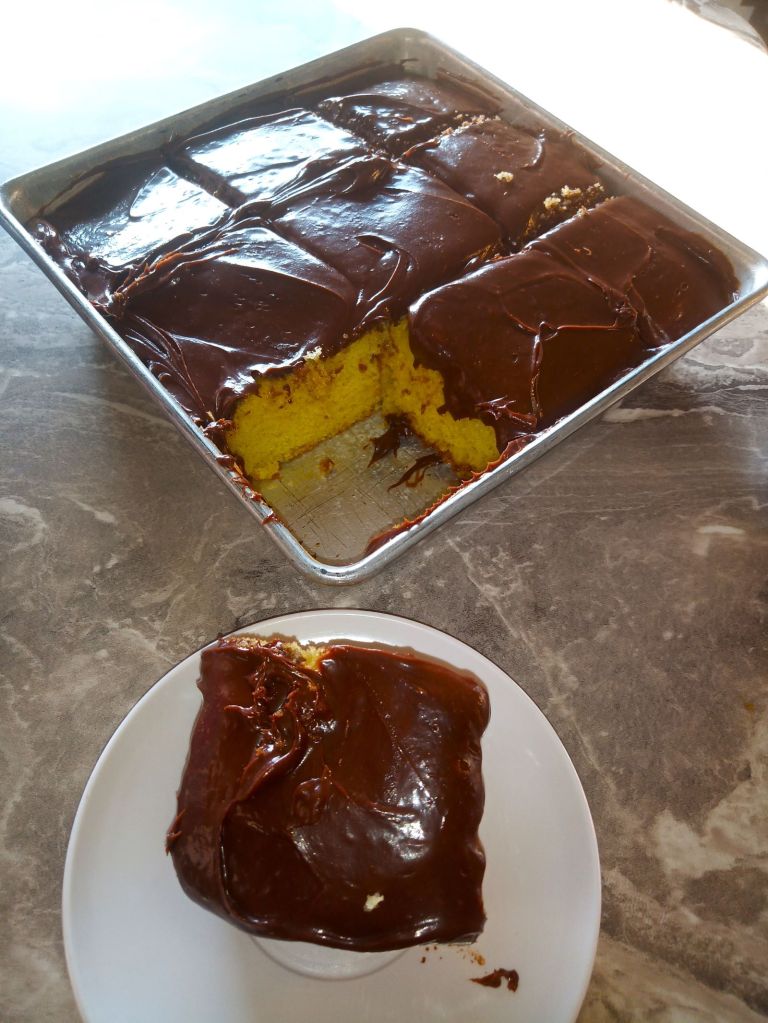
Pat cooked a phenomenal birthday dinner – pan-seared salmon and chocolate frosted cake

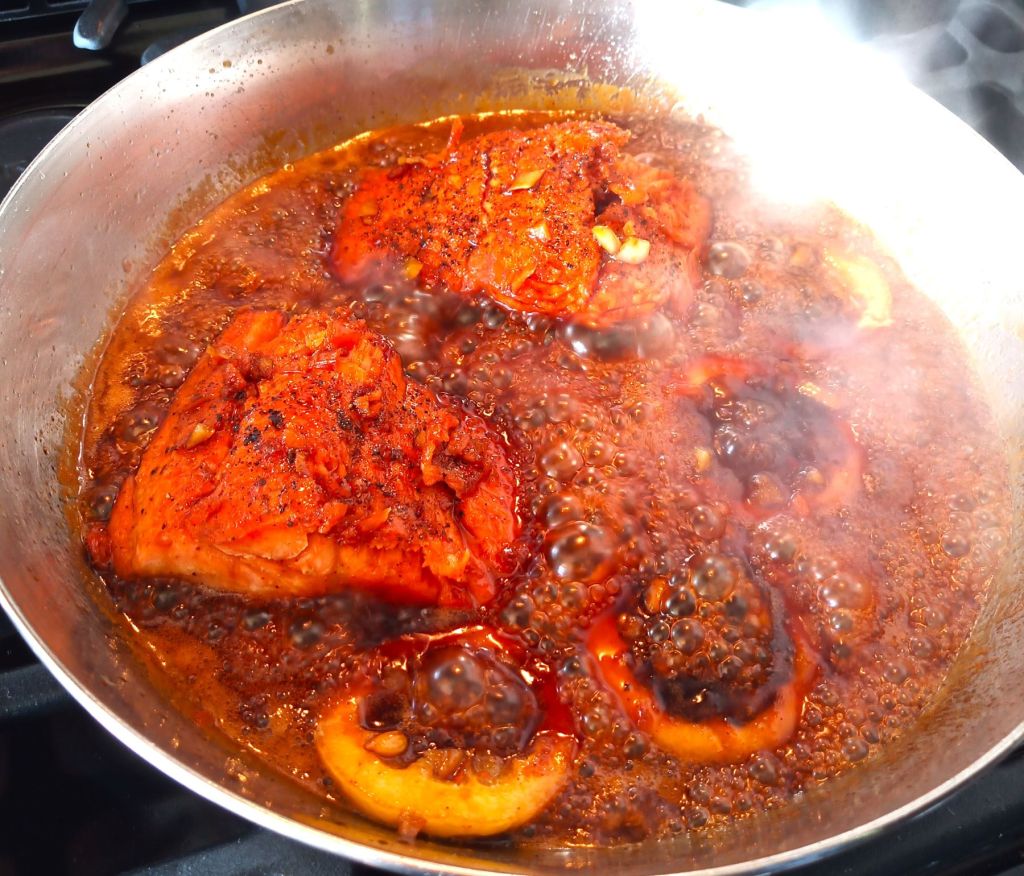
The spit also has numerous small tourist shops and restaurants.  Our plans were to try halibut and chips while on the spit, but when a camping neighbor from Oregon gave us a fresh salmon filet, Pat pan-seared it with a wonderful butter, soy and lemon sauce.  She also baked a small cake in Pap’s oven.  These were a delicious way to celebrate my birthday!

Vegetables and Alaska weather rocks for sale at the Homer Farmers Market

A Trip into Homer

One morning we drove into town, where we visited the Homer Farmers Market.  Locally grown vegetables, such as lettuce, carrots, radishes and green onions, were for sale, along with jams and jellies, baked goods, soaps and crafts, and even Alaskan weather rocks.

We stopped at Two Sisters Bakery to try a cinnamon bun and coffee. The bakery was recommended to us by Brad, the fellow traveler we met at several different stops earlier this trip (see 2023 Alaska Revisited Ep 17).   Check out our bun review below.

Views of the beach in Homer

From the bakery, we walked a short distance to the beach.  The tide was out and we carefully crossed a shallow inlet to the water’s edge.  The wind was blowing fog across the beach and, just like that, the fog lifted and it was clear!

We visited the Alaska Maritime National Wildlife Refuge Visitor Center where we learned about the history and conservation projects in the Aleutian Islands, and before returning to our campsite, we watched several float planes take off and land.
Homer is the furthest that we will be from home – nearly 4900 miles.  When we left we were essentially heading home. 

But the LONG ROAD beckons with lots of new RabbiTRAILS as our travels continue.    

Cinnamon Bun Review

The pastry part of our Two Sisters cinnamon bun was amazing – fresh, flaky and flavorful.  However, the icing was okay

Better iced, we would have given the bun a perfect 5.0 score.  Bun score – a solid 4.5 out of 5.

Critter Count

Otters – 2
Eagles – 1
Seagulls – lots
Salmon, rockfish and halibut – lots, most being ‘processed’

Nesting seagulls and their chicks
Next week

We stop at Anchor Point for a night and then continue to Valdez, a town with scenic mountains, a beautiful seashore and the end point of the Alaska oil pipeline.

Kenai: It’s All About the Fishing

(2023 Alaska Revisited Ep 18)

From Williwaw and Whittier, we drove 90 miles to the west side of the Kenai Peninsula.  The route took us through lush, green valleys between rugged mountains that were topped with remains of winter snows, and along swift flowing rivers turquoise with glacial silt.

A view along the Kenai highway

We learned what most everyone was up to in Soldotna and Kenai.  It is best summarized by one obvious word.     

It is obvious along the Kenai River, where aluminum walkways extend more than a mile along the river.  

It is obvious in the large sporting goods departments in Walmart, Fred Meyer and other area stores.

It is obvious along the Russian River, one of the Kenai’s major tributaries.

Wall-to-wall tents and RVs in the mosquito infested woods along the Kenai River

It is obvious by all the traffic and vehicles carrying an assortment of equipment, and by campgrounds packed with tents and RVs.

The word?  FISHING!

After a year or more at sea, huge numbers of salmon return each summer to the Kenai River and its tributaries to spawn before they die.  Five types of Alaskan salmon arrive at different times, joining other fish, like steelhead and trout, already in the waterways.

Considerable efforts are spent catching all those fish!

Crowded fishing on the Kenai River
Combat Fishing on the Kenai
Rain-filled potholes in the campground

In Soldotna, we followed a boardwalk from the packed city campground to the Kenai River.  It had rained the previous day, the roads had huge potholes and the mosquitoes were hungry!

Along the water’s edge fishermen (and fisherwomen) cast into the swift flowing river, some using fiberglass rods with open-faced reels and others using fly rods.  They reeled in their lines attempting to ‘catch’ salmon by snagging the fish in their mouths. Those snagged in a fin or elsewhere had to be thrown back.

With fishermen often less than 10 feet apart, crossed lines and tangles were inevitable.  Some waded into the river while others fished from the aluminum walkways. Fish were cleaned and fileted on large metal tables along the river and waste parts were thrown back into the river.

Kenai’s Burger Bus; Pat places her order and our lunchtime feast!

Burger Bus

All that fishing made us hungry, so we decided to have lunch at the Burger Bus in Kenai. One of our favorite lunch stops from our trip in 2018, burgers, sandwiches and other items are cooked in a converted school bus and eaten on picnic tables outside.   It was cold and rainy so we decided to eat inside Pap.  Pat ordered a bus burger with cheese.  My order?  Fish and chips, of course!   

Dip-netting at the mouth of the Kenai River

Dip-netting

Later, we visited the mouth of the Kenai River where hundreds of people were camped on both sides of the river.  They waded into the river, extending 10+ foot long poles with netted aluminum hoops at the ends into the water. Salmon caught in the 4 to 5-foot diameter dip-nets were quickly dragged onto the beach. 

Dip-netters head home with a cooler full of salmon

We watched as one woman carried a 24-inch salmon to a friend. The fish was quickly ‘processed’ and placed in a cooler.  Fish remains were collected in a bucket and returned to the water.  Hundreds of nearby seagulls were having a feast.
Kenai dip-netting only lasts a few weeks each summer as salmon start their trip upstream.   Such fishing is open only to Alaska citizens with limits on the numbers of fish that can be caught.  We learned the fish are an important source of protein during the long Alaskan winter.

Salmon Frenzy (from Alaska Missions website)
A Different Kind of Fishing

A short distance up the beach, Alaska Missions and Retreats was giving away free hot dogs and water.  The strategy of this local ministry is to break down walls so people can turn from apathy to curiosity about Christ and find HIM irresistible.  We met two young volunteers from Hawaii and Texas helping with the ministry’s Salmon Frenzy outreach. 

They were engaged in a different kind of fishing.

Tsunami Warning!

One evening while camping near Kenai we were almost asleep when a loud emergency alert sounded on my phone.  The alert was like lost person alerts you might have received.
I found my phone and the message abruptly woke me up. It was a tsunami warning. A magnitude 7.2 earthquake had occurred several minutes earlier about 70 miles south of Sand Point, AK and evacuation was advised from low lying areas along the Cook Inlet.
Questions raced through my mind:  Where is Sand Point?  (it is on a Aleutian island, about 650 miles from Kenai)  Were we in an area that should evacuate?  (no, we were more than a mile inland)  Assured that we would not have to sleep with life jackets, we eventually went to sleep. 

We were thankful a tsunami did not strike the coast.          

Cinnamon Bun Review

When we couldn’t find a suitable coffee shop in Soldotna or Kenai, we made our own cinnamon buns.  Pat baked a batch of Pillsbury Cinnamon Rolls.  The freshly baked buns were basically canned biscuits with small pieces of cinnamon on top.  The icing was pretty good, however.  Bun score:  2.5 out of 5. 

‘Homemade’ Pillsbury Cinnamon Rolls
Critter Count:

Eagles – 1

Salmon and seagulls – LOTS!

Seagulls feasting on the Kenai beach
Next week:                        

Homer, Halibut Capital of the World

Camping on the Kenai Peninsula

(2023 Alaska Revisited Ep 17)

From Denali State Park where we viewed the Great One, we continued to Anchorage, Alaska’s biggest city.  Anchorage has a typical big city feel, with multiple lane highways, urban sprawl, tall downtown buildings, shopping districts with the same chain stores found in the lower 48, and a sizeable homeless population.

Anchorage also has wonderful parks and bike trails, and a beautiful backdrop of tall mountains in Chugach State Park. 

Patriotic 4th of July at Anchorage’s Delaney Park

We spent July 4th in the city, opting to visit the patriotic celebration at Delaney Park.  While kilted bagpipers performed in a field of American flags and suited dignitaries gave speeches, the sizeable crowd enjoyed carnival rides and festival foods that included several types of salmon, halibut and chips, and reindeer sausage. 

Unlike the sunny and very warm (80s) July 4th celebration we attended in 2018, this year’s event was overcast and sweatshirt cool.  We enjoyed the festivities but decided not to come back for the fireworks.   They were scheduled at midnight after the (very) late evening sunset in Anchorage.    

A view across Turnagain Arm showing broad low tide mud flats; tidal bore wave as the sea rapidly flowed up Bird Creek

Turnagain Arm     

We left the city for the Kenai Peninsula and our route took us along Turnagain Arm, a 40-mile-long bay southeast of Anchorage with 30-foot tidal fluctuations.   Broad mudflats and deep mud canyons are revealed at low tide. 

We walked a half mile from our campsite at Bird Creek SP and watched the tidal bore come up Bird Creek.  The wave, at times several feet tall, moved quickly.

Kenai Views: hiking above Summit Lake and a shoreside view of turquoise Kenai Lake

Norwegian Spirit departing the Seward Harbor; at first, fog and low clouds blocked the view from our campsite

Waterfront Camping in Seward

We drove on to Seward, a small town on the Prince William Sound.  From Seward, cruise ship passengers can journey by train to Anchorage, Denali and Fairbanks.  Others take day trips to Kenai Fjords National Park to see tidewater glaciers, whales, seals and sea lions, and a variety of coastal birds.  Many go on fishing charter boats as well. 
We camped at a city campground on the waterfront.  It was raining when we arrived and the mountains that surround the town were shrouded in fog and rain.  The weather slowly cleared over the next day and a half. By mid-day thick morning fog burned off and we could see the bottom half of the mountains across the inlet.  Finally, the entire mountains were visible the next morning, framed by the beautiful sky.  The wait was worth it!

After fog and low clouds cleared, we enjoyed this amazing view

Typical of many campgrounds in Alaska, our campground was a gravel parking lot with deep potholes everywhere. There were few amenities. Other campers were just a few feet away. 

Despite these shortcomings, the location was amazing.  We enjoyed magnificent mountain views, rode our bikes throughout the town, and discussed our Alaska experiences with other campers. 

We met a dad, mom and teenaged son from Bend, Oregon camped in a small teardrop camper next to us.  Dad was between jobs and mom, a schoolteacher, was free for the summer.  They were excited to visit Alaska for the first time.

Brad, another camper from Washington, stopped by to say hello.  It was the fourth time we met during this trip.   He, his wife and two golden retrievers were camping at a Yukon Provincial Park in June when we first met.  We later connected at Whitehorse and Tok.  It’s very possible we may meet again!              

Exit Glacier and outwash river in Kenai Fjords NP

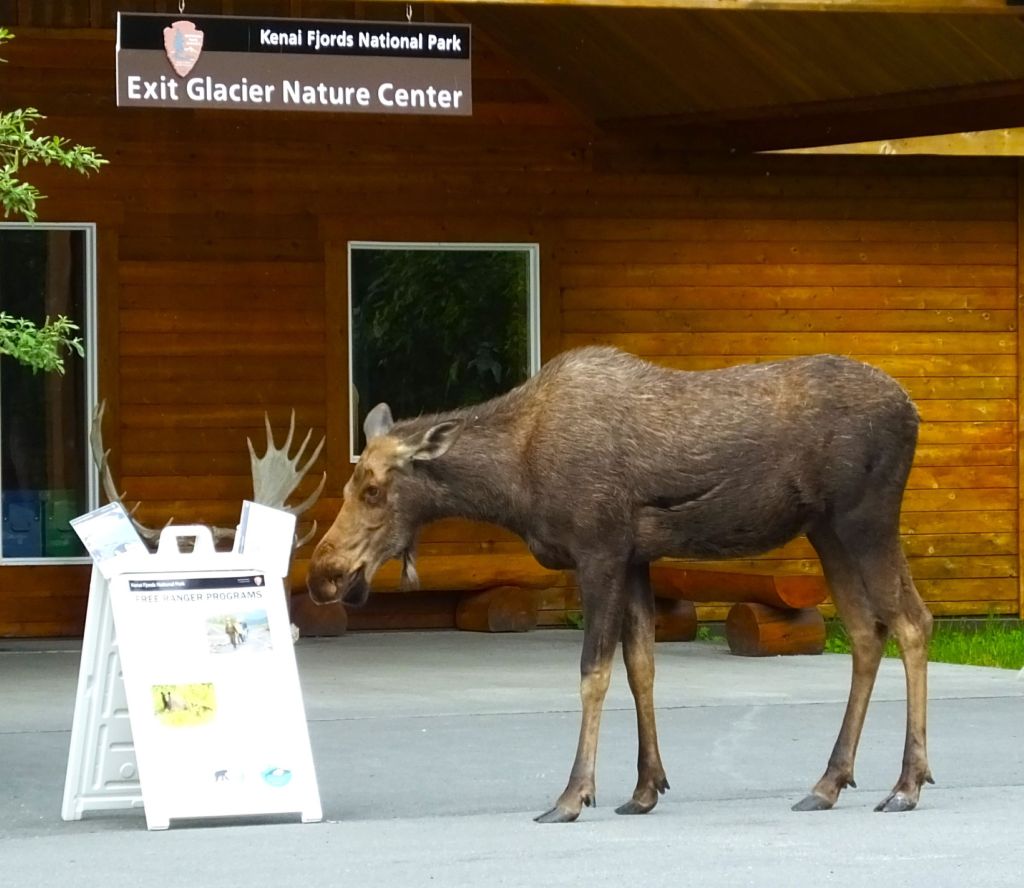
The next morning, we visited Kenai Fjords NP, a few miles outside Seward.  Our hike up a short trail to view the base of Exit Glacier was delayed 30 minutes as we endured a Moose Encounter of the Kenai Kind (photos below).
The restless moose wandered around the parking lot and nature center, while park staff kept visitors at a safe distance. She snacked on grass and tree branches, and even examined the center activity board before knocking it over. When she finally wandered into the woods, we were able to continue our hike.

From a viewpoint at the end of the trail, we could see the blue ice of the glacier well above the valley floor.  It extends downward from the massive Harding Ice Field at the top of the mountains.  We later explored the broad rocky outwash plain below the glacier, where we were amazed at how much meltwater continually flows from the glacier and icefield.

Williwaw and Whittier

The weather was clear when we left Seward after three days.  We decided to detour a few miles to visit Williwaw Campground and Portage Glacier, and to drive to Whittier via a 2.5-mile tunnel.  We endured heavy rains in 2018 at both stops and were looking forward to clearer weather this time.

Byron Glacier has retreated to the upper left area of the valley

From the campground, we rode our bikes to Portage Glacier Visitor Center.  Located on a beautiful lake beneath the glacier, the center has interesting natural history and geology exhibits.  Outside, it was clear, breezy and cool, and after eating a sack lunch, we secured our bikes and hiked to Byron Glacier.  Like most of the glaciers in the region, the melting glacier is quickly retreating up the valley.

Narrow entrance to 2.5 mile single lane tunnel to Whittier; trains and vehicles share the tunnel

That afternoon we drove through the long and narrow tunnel to Whittier.

Views of Whittier and Begich Towers; exploring the abandoned Buckner Building nearby

Whittier is a working town, with stacks of cargo containers, loading cranes, ships and a railroad yard.  Many of Whittier’s residences, business offices and city services are housed in Begich Towers, a 14-story building that overlooks the port area. 

The Buckner Building, an abandoned military ‘city under one roof’ is nearby. It was completed in 1949 and abandoned in 1966. There is also a cruise ship dock, along with a few restaurants and souvenir shops.  All are situated along a narrow fjord that is surrounded by tall mountains.

Our 2023 tour of Whittier was much better than the rainy and cold visit in 2018. It took two visits for us to finally agree with local expression: “Things are prettier in Whittier!

Bun Report: Lazy Otter Cafe

While in Whittier, we stopped at Lazy Otter Café for coffee and a cinnamon bun.  The warmed bun, baked earlier that day, had a familiar taste and appearance.  We think it was a grocery store Grands cinnamon roll!   Although the bun tasted good and was nicely iced, it was nothing remarkable.  Our bun score: 3.5 out of 5.   

Enjoying a cinnamon bun and coffee, along with the view of the Whittier harbor and mountains


Critter count

Moose – 1

Otters – 2

Eagles – 10+

Seagulls – lots

A curious moose checks the daily activity board at Exit Glacier Nature Center before knocking it over

Photo of eagle taken from our campsite
Next week:

Find out what one word best describes the Kenai River and Soldotna!

Alaska: Long Days and Interesting Stays

(2023 Alaska Revisited Ep 16)

With repairs completed on our leaking tire and frayed wires, we left Tok for Fairbanks. 

The roads were very good, unlike those near the US-Canada border that had frost heaves, potholes and road construction.   We were thankful for the smoother ride.

Monument marking end of Alaska Highway; Alaska-sized mosquitoes

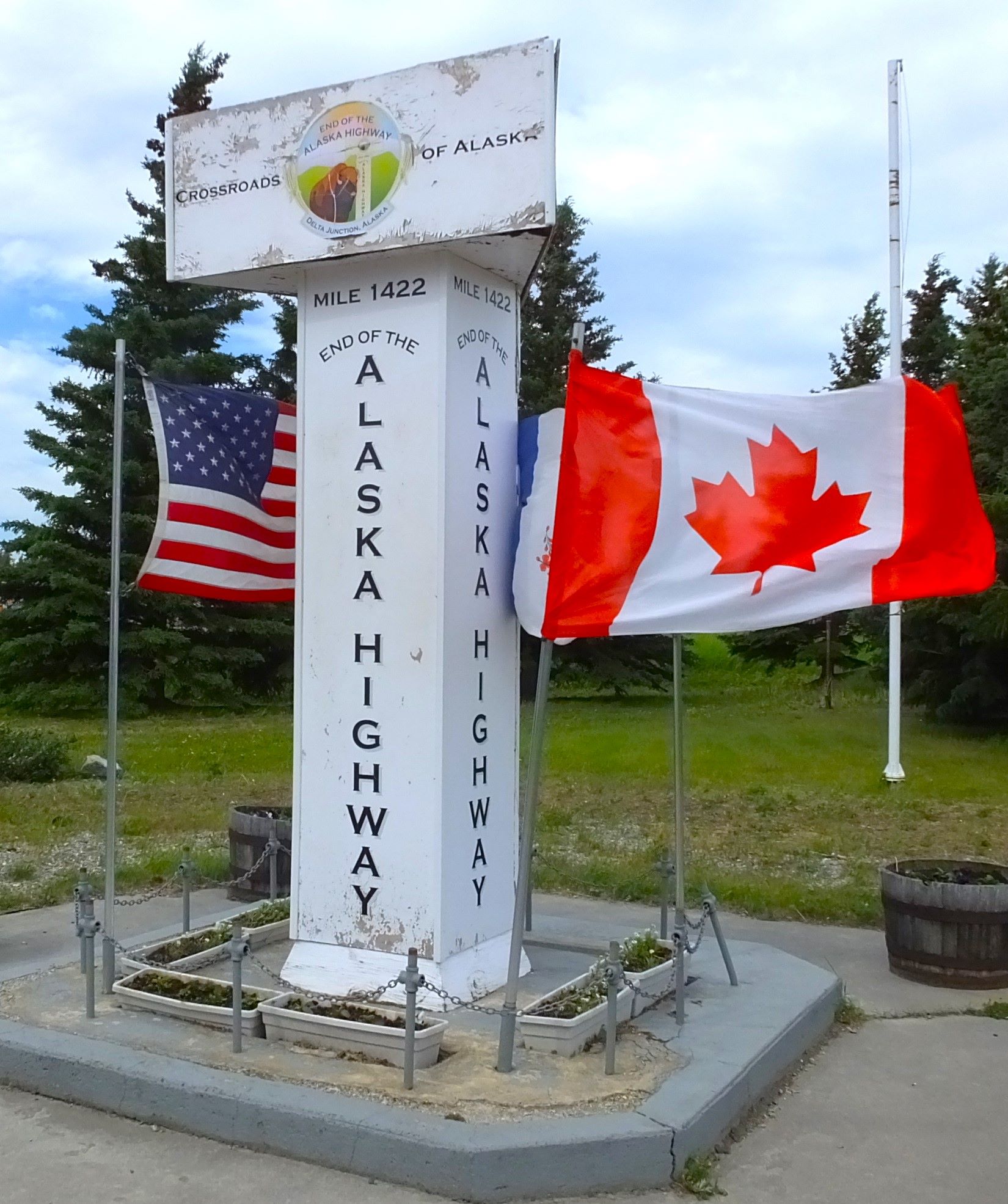
Midway between Tok and Fairbanks we visited Delta Junction, the original ending of the 1390-mile Alaska Highway (the highway was originally 1422 miles).  From there, the highway continues northwest to Fairbanks or south toward Anchorage.  We drove past broad, swift-flowing rivers filled with snowmelt from distant mountains. A strong, chilly wind rocked Percy and Pap as the skies cleared.

Tanana River with snow capped mountains in the distance – a common Alaska landscape
Walmart parking lot at 12:19 am – the sun wouldn’t set for another 30 minutes

We ‘wallydocked’ (overnighted) at the Fairbanks Walmart, where we replenished our supplies.   Sleep was a challenge – the sun rose before 3 am and set after 12:30 am. And after the sun set, it never really got DARK.

We visited Creamer’s Dairy, a one-time dairy farm that is now a migrating bird sanctuary.  Hundreds of sandhill cranes foraged in the fields along with many other birds. 

Other stops in the Fairbanks area include Pioneer Park, an amusement park with interesting historical and cultural displays, the Museum of the North, a natural history museum at the University of Alaska, and the Alaska oil pipeline. We visited these during our 2018 trip to Alaska.

At the recommendation of a friend, we drove two hours from Fairbanks to visit Chena Hot Springs. 

We hoped to camp a night or two on the way to the springs but our plans quickly changed when we stopped for a short hike.  The cool, wet weather had resulted in an outbreak of hungry Alaska mosquitoes that descended on us in thick swarms.  We were reminded of the mosquito-infested hardwood hammocks in the Florida Everglades.

Pat and I soak in the outdoor pool at Chena Hot Springs

We decided to continue to the springs, where we enjoyed an early morning soak in a warm outdoor pool.  Chena is an interesting destination, with a lodge, campground and hiking, biking and ATV trails.  Hot water from deep wells in the area is used to generate electricity and heat large greenhouses where tomatoes, lettuce and other vegetables are grown all year round. 

Chena greenhouses use geothermal energy to produce vegetables

Ice museum exterior along with an elevated DC6 (future hotel); Pat wore a heavy parka to keep warm; inside the ice museum

Chilling in the Chena Ice Museum

We donned heavy parkas to see sculptures in the Chena Ice Museum.  The museum includes an altar for wedding ceremonies and rooms where the brave of heart can spend the night. 

Not us however – we opted for our nice warm camper instead!

One of several elaborate ice sculptures in the museum; interesting items in ice

Nenana

Leaving Chena and Fairbanks, we turned south toward Anchorage on the Parks Highway. 

At Nenana, a small town on the Alaska railway where the train and cruise buses stop, we toured the original train station that houses an interesting assortment of train relics. It’s the kind of place Pat’s dad would have really enjoyed.

Nenana is known for the Nenana Ice Classic, said by some to be Alaska’s best guessing game. 

Each winter since 1917 a tall wooden structure has been placed on the frozen Tanana River adjacent to the town. Ticket purchasers predict when the structure will fall through the ice during the spring thaw and the person whose prediction is closest to the actual fall receives a sizeable jackpot. 

The 2023 prize was $222,101 and the winning time was 4:01 PM AST on May 8.  Money raised by the event is used to fund college scholarships for local students.

Views of The Great One

The Parks Highway took us past the entrance to Denali National Park. We plan to return in August for five nights of camping and hiking in the park. 

An early morning view of Denali, the Great One

A few miles further we visited Denali State Park, where we were rewarded with a spectacular view of Denali early the next morning. The Great One is North America’s tallest mountain at 20,310 ft. Later that day we hiked a steep trail for a better view of Denali and the Alaska Range.

The Alaska Range; Denali is covered in a layer of clouds

Denali is often covered with clouds and only 1 in 3 visitors see the mountain.  We were thankful for clear weather and the great view.

Mary Carey’s Cinnamon Buns   

Mary Carey’s McKinley View Lodge near Denali State Park offers a phenomenal view of Denali from their back patio. When we learned the lodge sells cinnamon buns using Mary’s recipe from nearly 50 years ago, we had to try one. 

Warmed in the microwave, the pillowy bun had a nice cinnamon flavor. It was topped with thick, sweet icing dusted with additional cinnamon.

It was the best bun so far in our travels. We’d give it a bun score of 4 out of 5.

McKinley View Lodge; Mary Carey was a true Alaska legend – check out her interesting story.
Critter Count

Moose – 4  (cows and babies, no bulls)

Grizzly bears – 2

Sandhill cranes – many

Swans (8), eagles (4) and other birds

Sandhill cranes at Creamer’s Dairy in Fairbanks; a watchful mama moose and her baby

Next week: 

We visit Alaska’s biggest city, Anchorage, and continue to the scenic Kenai peninsula.         

Protection and Provision at the Alaska Border

(2023 Alaska Revisited Ep 15)
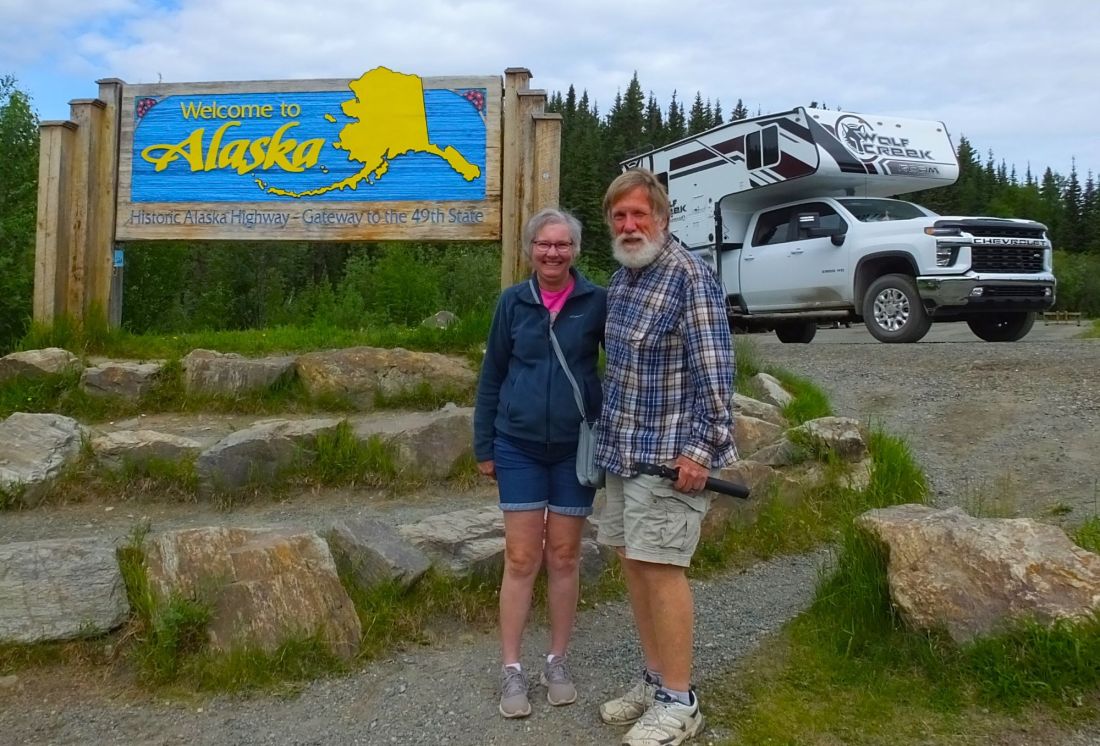
Welcome to Alaska!

Last week’s RabbiTRAILS included a photo of the sign that welcomed us to Alaska.  There is a nearby stone marker that is on the actual border with Canada.  We found it interesting that there is a wide cleared area that extends to the north and south from the marker showing where the border is.  We wondered if the clearing extends for the thousands of miles of border between the US and Canada. 

Ed is in Canada, Pat is in the US; the border clearing extends to the horizon (and beyond!)

A few miles further, we stopped at the border checkpoint for entry into the US.   The checkpoint is remote – 20 miles from Beaver Creek in the Yukon and 100 miles from Tok, Alaska.    

US border checkpoint

We pulled up to the checkpoint and handed the border control agent our passports.  She asked the standard questions:  where are you from (Florida), why are you traveling to Alaska (vacation), do you have any firearms (no) or illegal substances (no).   We’ve heard they sometimes ask about and confiscate food (eggs and produce mainly) and some travelers have even been detained while their vehicles were searched.   I guess we look like we are honest or we don’t pose a threat.  We were cleared to proceed with no issues.

TPMS alert!

Well almost. 

As we pulled away Pat pointed out a message on Percy’s dashboard.  A TPMS alert indicated the front passenger tire was at 41 lbs PSI, not the normal 65 lbs.   We pulled into a parking spot just past the checkpoint, presumably where vehicles are searched.   I inspected the tire, verified the PSI, and used our tire inflator to add air.

We continued on, keeping an eye on the TPMS.  Almost immediately the pressure started dropping – it was clear we had a leak.  At the Tetlin National Wildlife Refuge Visitor Center, 20 miles from the border, the pressure had fallen by nearly 10 psi.  We decided to put on the spare.

Calling for roadside assistance wasn’t an option – we were outside the cell service area (not uncommon on the Alaska Highway) and even if we were able to reach someone, it could have been hours before they arrived to swap the tire.  So we let a ranger at the visitor center know we would be swapping our tire in their parking lot. 

Percy is jacked up as Ed works on a parking lot tire swap

Such an endeavor is a challenge with a truck camper.  We raised the camper a few inches off the bed of the truck to lessen the weight on the jack. Then we lowered the spare from under the back of the truck, loosened the lug nuts, jacked up the right front, removed the tire, put on the spare and finally stowed the bad tire back under the truck.   In case you are wondering, an 18-in truck tire is heavy!

Loosening and removing the tire lugs before putting on the HEAVY spare

Spare tire installed, we lowered the camper back onto the truck.  It was at this point we made a BIG MISTAKE.  We did not notice we lowered the camper on the wire that connects the camper to the truck.

We arrived in Tok and as we were setting up for the evening, we noticed there was no power in the camper.  I started troubleshooting.  After unplugging the camper from the truck, I verified the camper battery.  It was OK, so I thought perhaps there was a blown fuse or flipped breaker. 

It was late afternoon, so we decided to connect the camper to shore power, hoping it would work, and to troubleshoot the power problem later.

Shore power worked – everything powered on as normal.  So, I disconnected shore power and everything still worked!  Hmmm, perhaps there was some sort of power transfer/relay issue.

The next morning, we were preparing to leave and to have our tire checked out at a nearby garage.  When I plugged camper into the truck I heard an arcing noise and noticed a cloud of smoke at the rear of the camper. 

THAT WAS NOT GOOD!  I quickly disconnected the camper plug. 

Pat and I discussed what might be going on. We realized that when we lowered the camper after swapping the tire, we didn’t check the location of the connection wire.  We raised the camper and it was obvious we had lowered the camper on top of the wire. Several of the wires were rubbed bare and there was a silver dollar-sized hole melted into the rubber mat under the camper.

Frayed wires (and nerves); repaired wires, almost as good as new

Although Tok is a very small, remote town, they have a NAPA auto parts store.  We purchased some wire connectors and sleeves, and after removing the frayed portions, we repaired and tested the wires.

Later that morning our leaky tire (caused by a small piece of metal) was repaired and reinstalled, and we were on our way to Fairbanks.

Pat and I praise God for His protection and provision.

  • Protection from a remote roadside breakdown or even an accident.   
  • Provision for a safe place to swap the tire on a paved, level parking lot and a tire that only needed to be repaired and not replaced. 
  • Protection from shorted, frayed wires that could have damaged our camper or truck (or even caused a fire).
  • Provision for a relatively simple repair and for the needed parts that were locally available.

One final provision: it was lunchtime as we swapped our tire.  One of the rangers was grilling something on the deck behind the visitor center.  He stopped by the truck to check our tire-swap progress and handed us a plate with grilled halibut and vegetables. 

We thanked the ranger and praised God.  Lunch never tasted so good!   

Next week:

We arrive in Fairbanks, battle mosquitoes on the way to Chena Hot Springs and see The Great One. Critter counts and cinnamon bun reviews will also resume.