
(2025 Wild West Wander Ep 12)
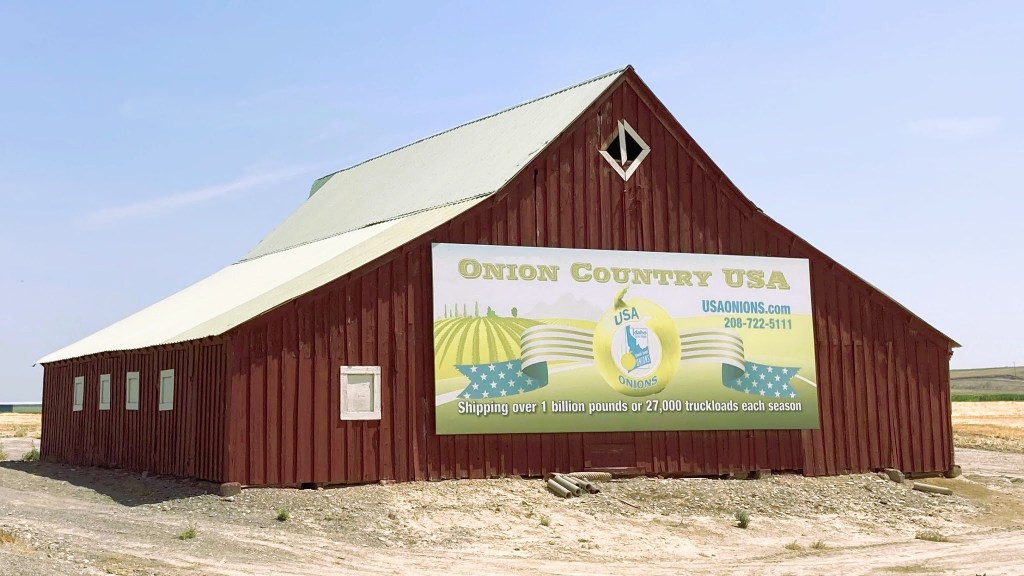
We left the painted hills and Chinese merchants in eastern Oregon, and continued on to Idaho. Although they grow a lot of potatoes in the Gem State, we didn’t see any as we drove across southwestern Idaho. We did see LOTS of onion fields, however.
We turned north on Idaho route 21 after passing by Boise, Idaho’s capital, and endured more than 100 miles of twisting mountain roads before arriving at our destination – the Sawtooth Mountains. Midway, we camped at tiny Bad Bear Campground in the Boise National Forest and were happy we didn’t see any bears, good or bad.
Just Like a Saw
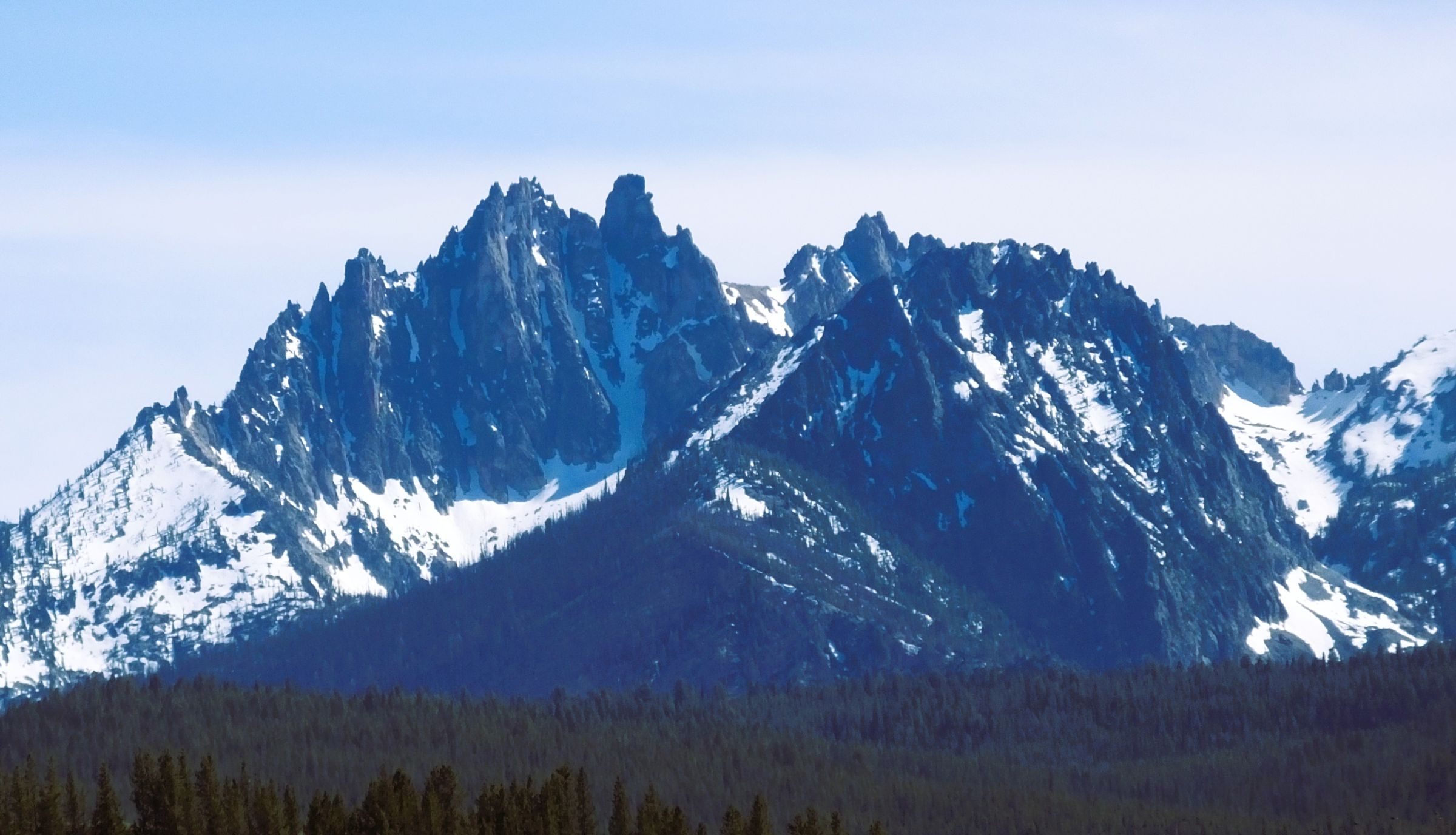
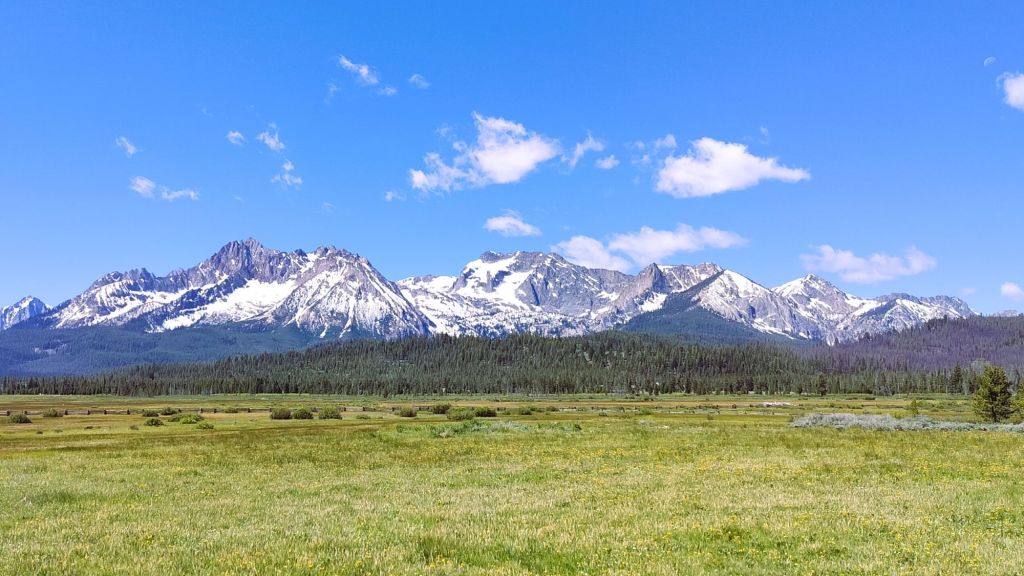
Our first view of the snow-covered Sawtooth Mountains didn’t disappoint. Rising more than 4000 feet above the surrounding valleys, it’s obvious how the range got its name. The peaks have multiple short, jagged edges, just like a saw. The tallest is 10,571-foot Thompson Peak (no relation to us) and there are 56 other peaks in the range higher than 10,000 feet.
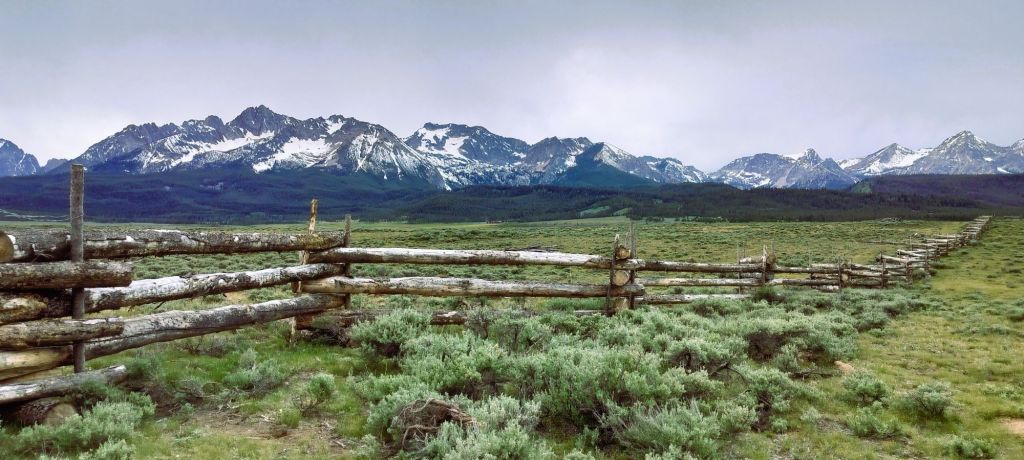
We camped near Stanley, a small town at the base of the range. Perhaps waking from a long winter season, the town was not very busy during our early June visit. Many businesses and services had just opened or were getting ready to open. We were told summer travelers would arrive in another week or two, and then things would be crazy busy.
Stanley holds several records for being the coldest place in Idaho and in the United States (between 1996-2015, Stanley led the nation recording the nation’s lowest temperature 522 times). The temps dipped to near freezing each night of our visit and we had to run our small heater to keep toasty warm. Days were mostly pleasant thankfully.
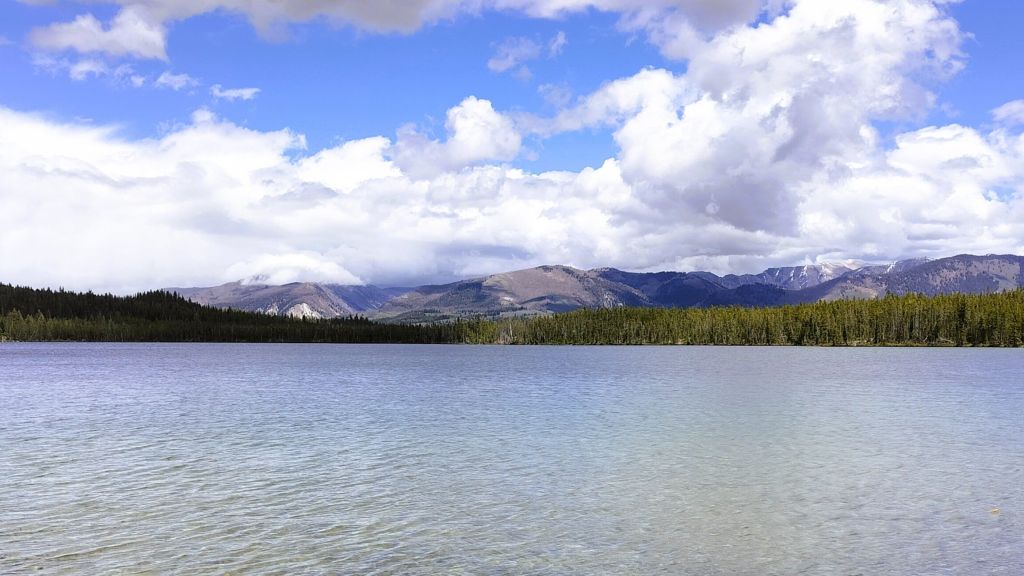
At the base of the range, we hiked several trails that took us along the shoreline of crystal clear and cold alpine lakes. We ate sandwiches along the shore of Yellow Belly Lake, warily eyeing approaching rain clouds. The lake isn’t named for someone lacking courage or a sapsucker-type bird – it is named for yellow-bellied marmots found nearby.
Salmon > Snake > Columbia > Pacific
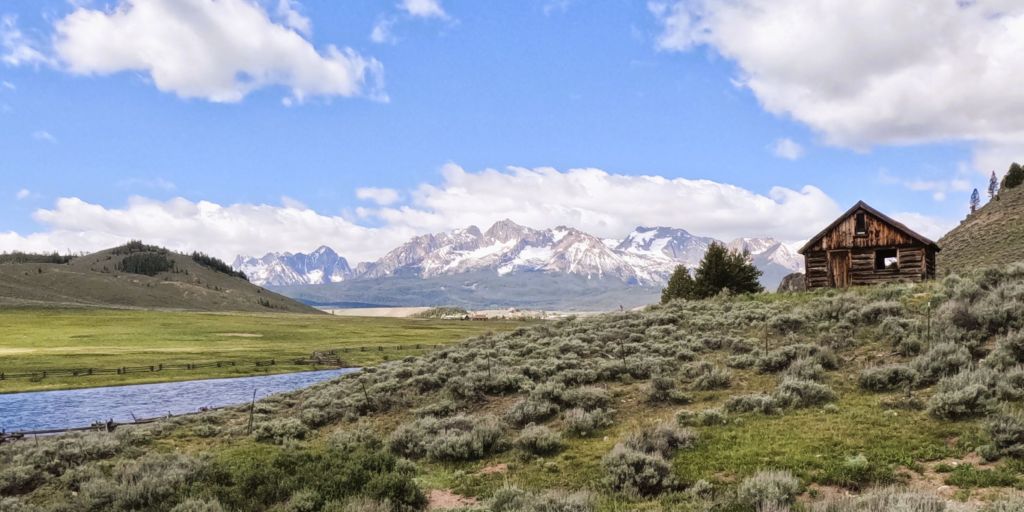
The Salmon River flows from the base of the Sawtooth Range until it joins the Snake River 425 miles downstream. It’s the longest undammed river in the contiguous U.S. and popular for exciting rafting and floating, fishing and wildlife viewing. We were amazed that a small number of chinook and sockeye salmon return 1000 miles from the Pacific Ocean to the river’s headwaters near Stanley to lay their eggs in the sandy shallows.
Hot Springs and Gold Fever
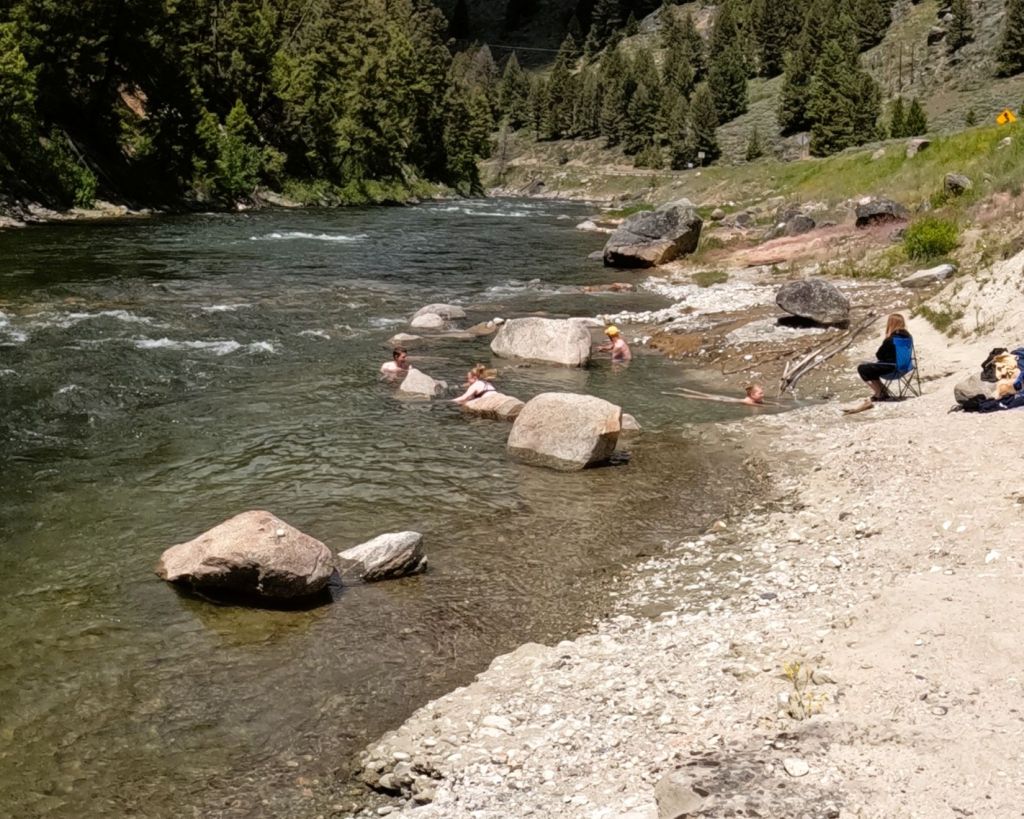
Leaving Stanley, our route followed the river through deep canyons, past several hot springs and small towns before reaching Salmon.
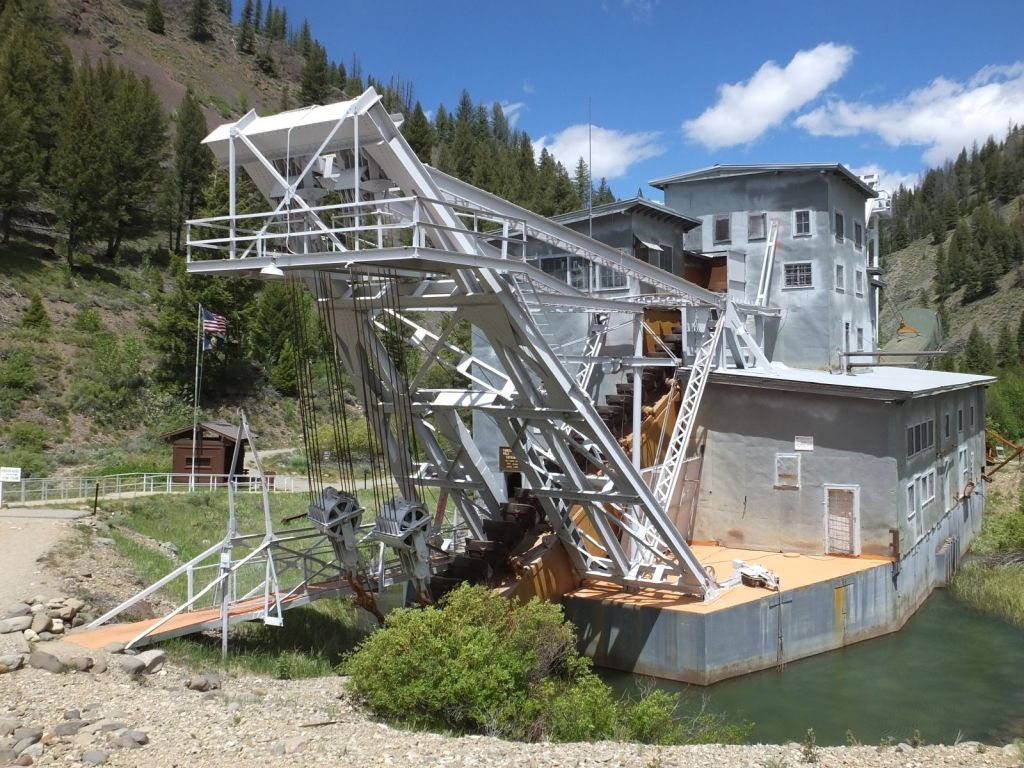
We stopped to tour the massive, well-preserved Yankee Fork Gold Dredge, a self-powered dredge that operated from 1940-1952. The 112-foot-long machine, complete with 71 buckets, several booms, various pulleys and cables, large generators and rock tumblers, chewed up 5 1/2 miles of the Yankee Branch of the Salmon, recovering over $1.2 million of gold during its operation. We were reminded of similar (but much larger) gold dredges in Chicken, Alaska and Dawson City, Yukon.
No Return Wilderness?
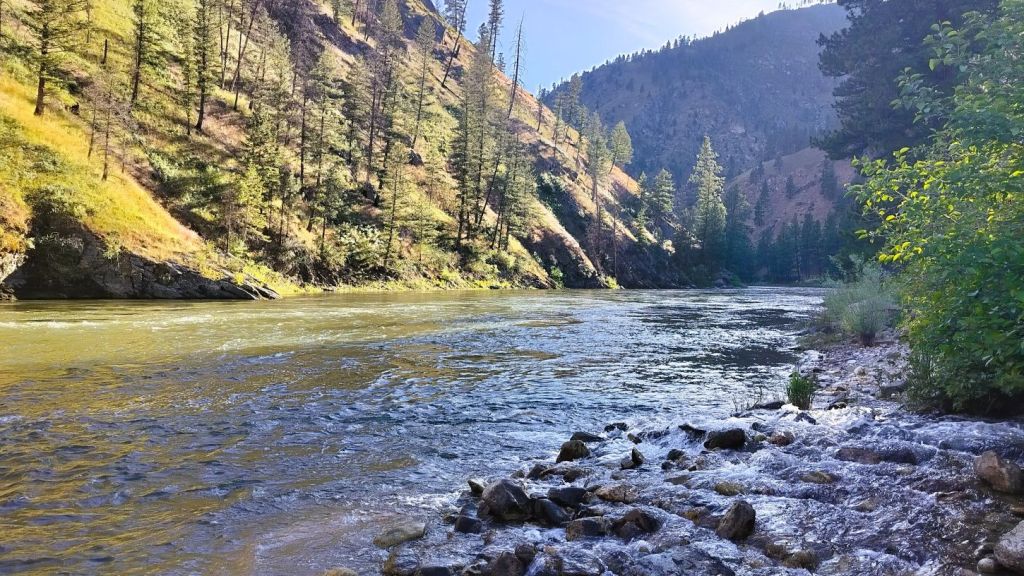
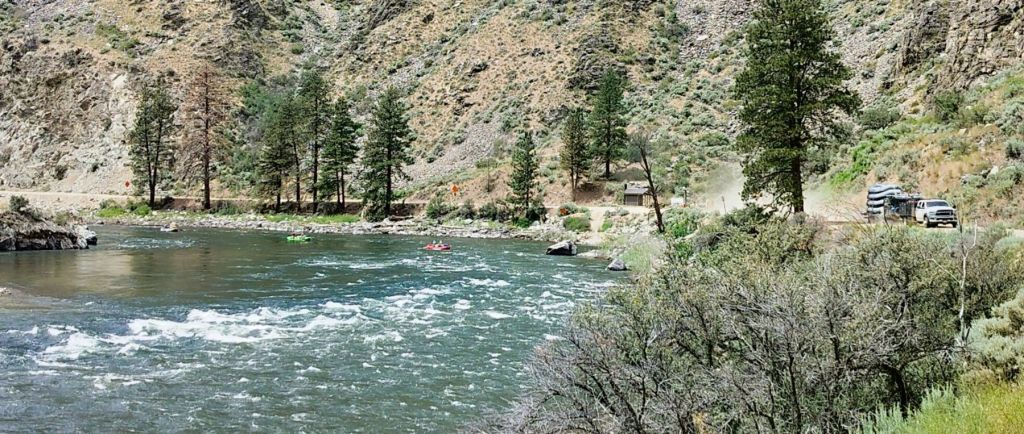
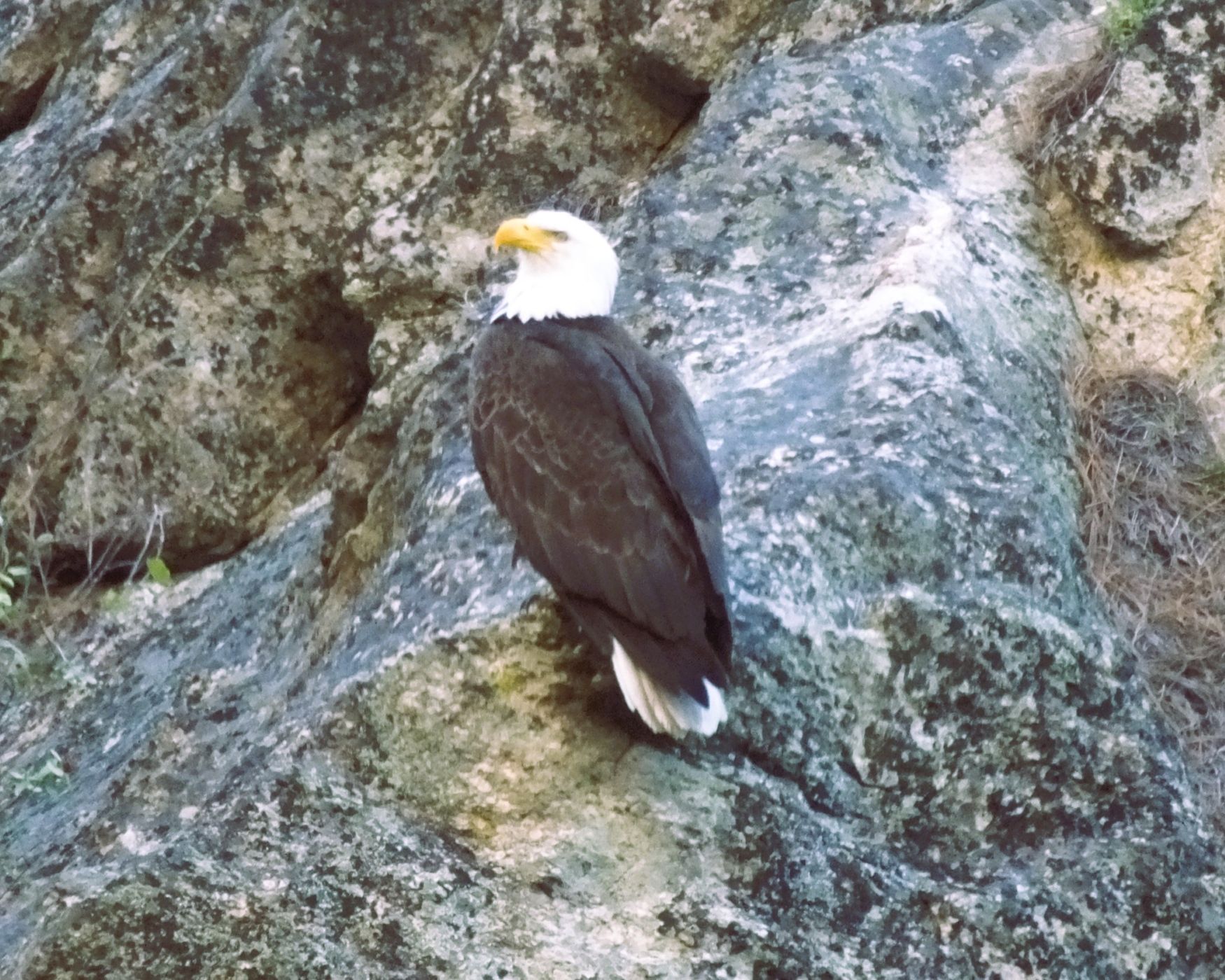
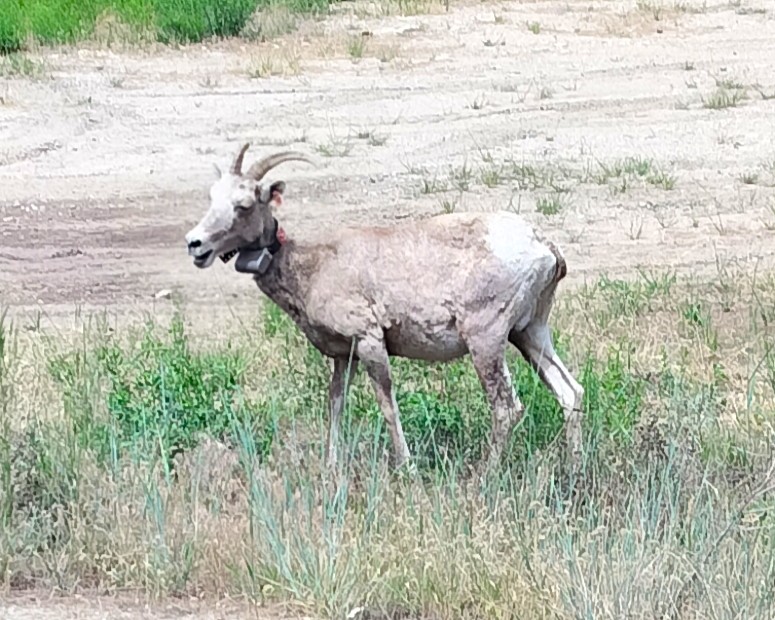
North of Salmon, the river turns west through the Frank Church-River of No Return Wilderness, the second deepest canyon in the United States with sections more than a mile deep. We camped next to the river and drove the 29-mile dirt road to the launching point for whitewater rafting trips into the wilderness portion of the river. Trucks hauling raft trailers and vans carrying rafters raised clouds of dust as they passed us. In the quieter areas we saw deer, bald eagles and a few bighorn sheep.
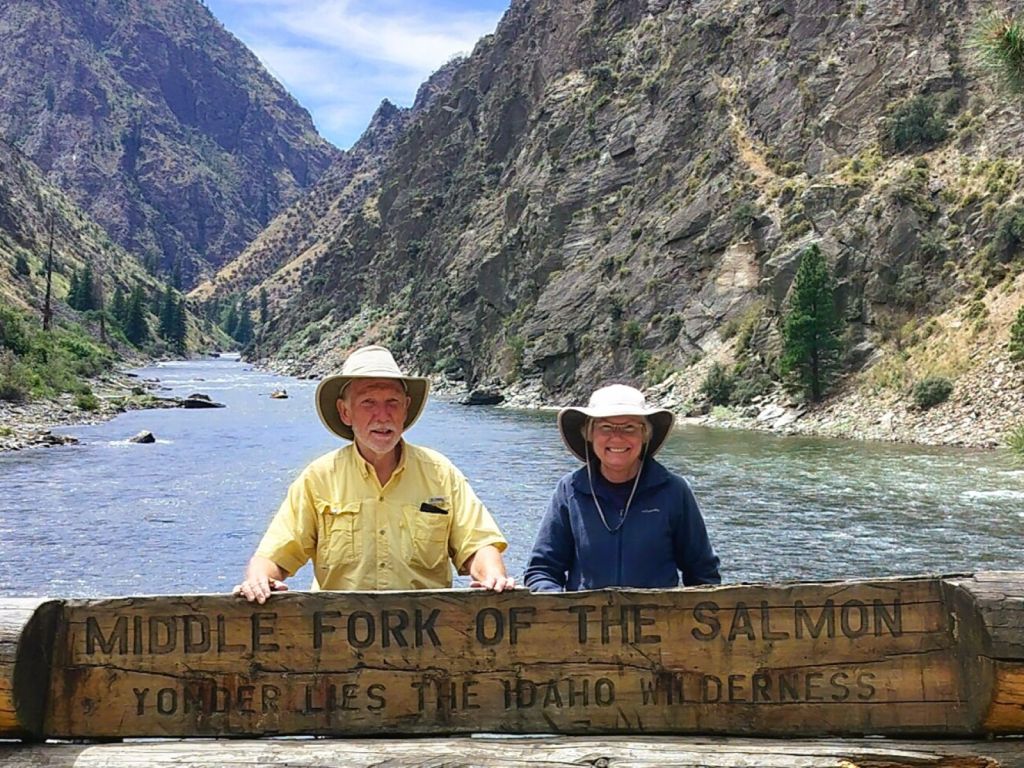
At the confluence of the Salmon and Middle Fork rivers, we took a photo for a group of weary rafters who were finishing a weeklong trip on the Middle Fork. The leader of the group reciprocated and took a photo of Pat and me.
We enjoyed Stanley, the Salmon River and views of the Sawtooth Range. Some say the mountains are as spectacular as Wyoming’s Grand Teton Range.
Our take – not quite, but close!
Critters
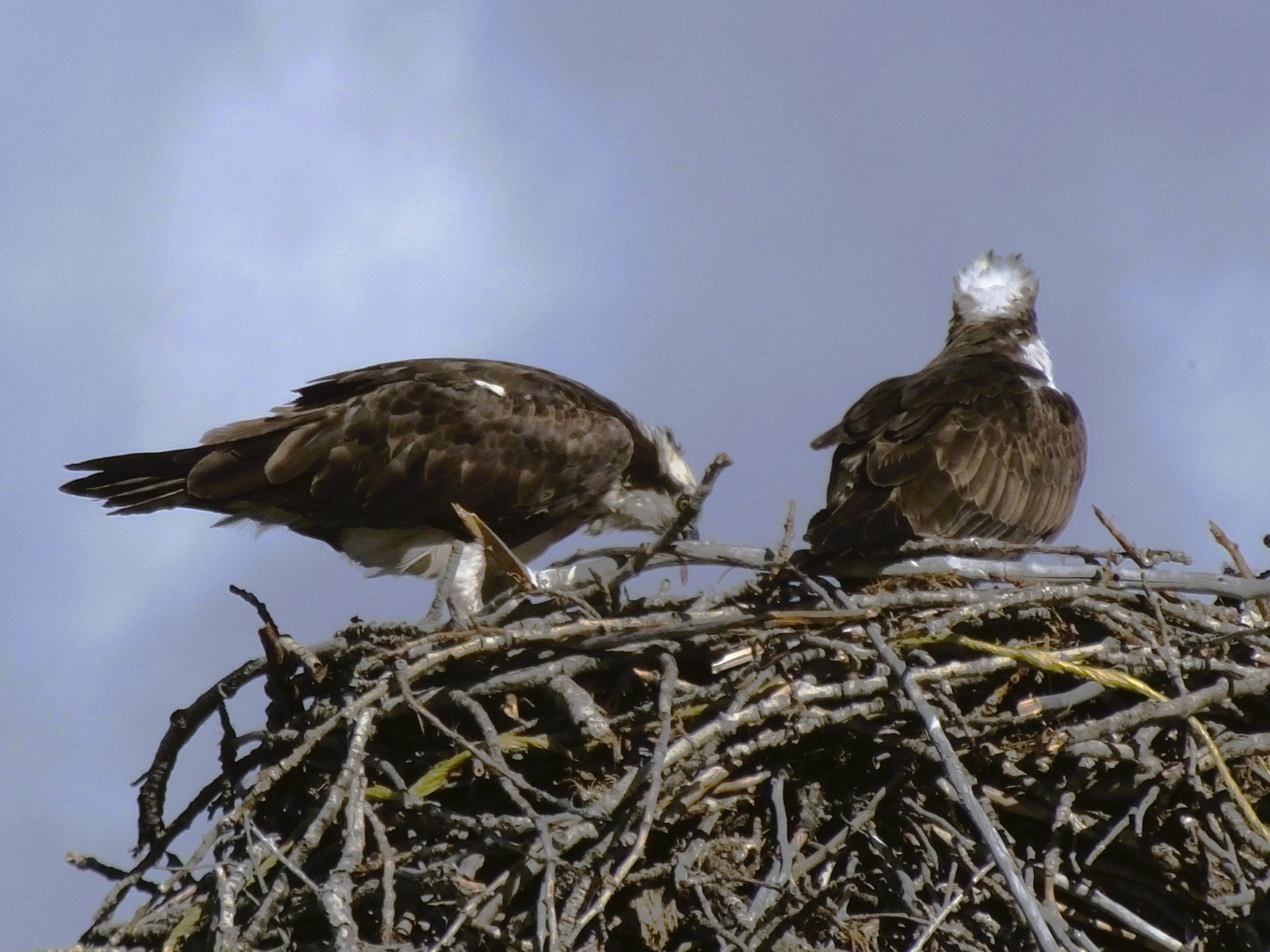
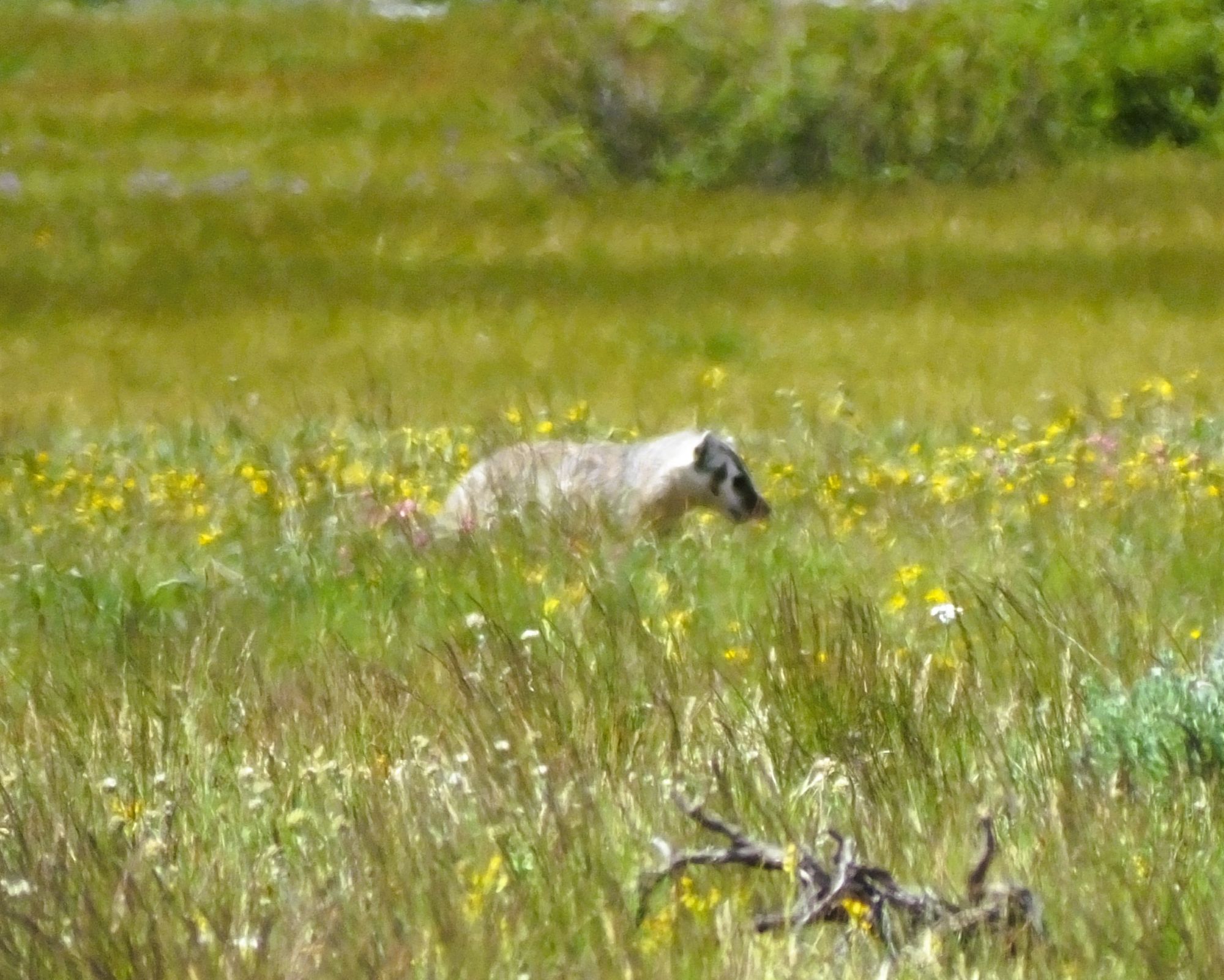
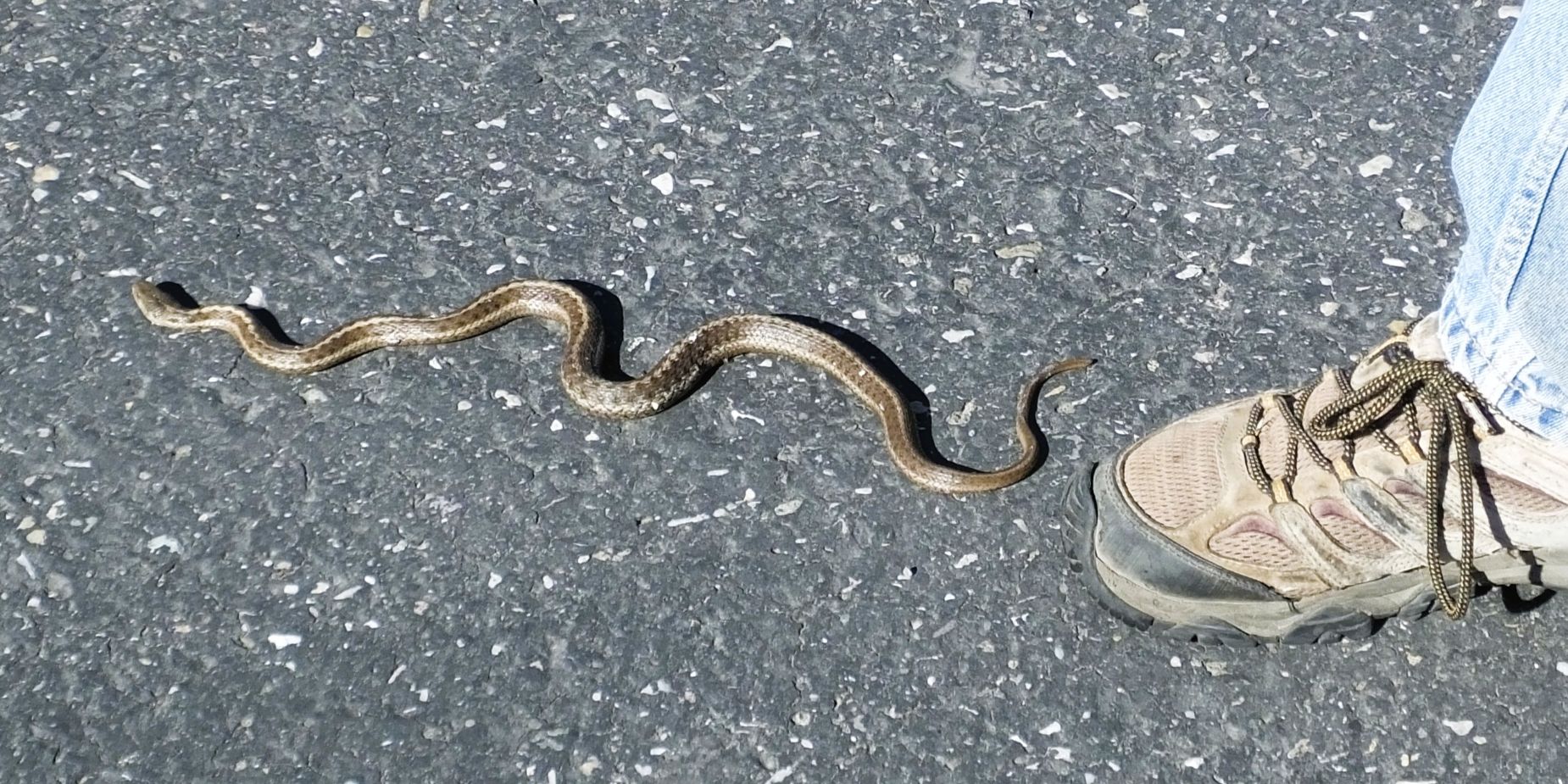
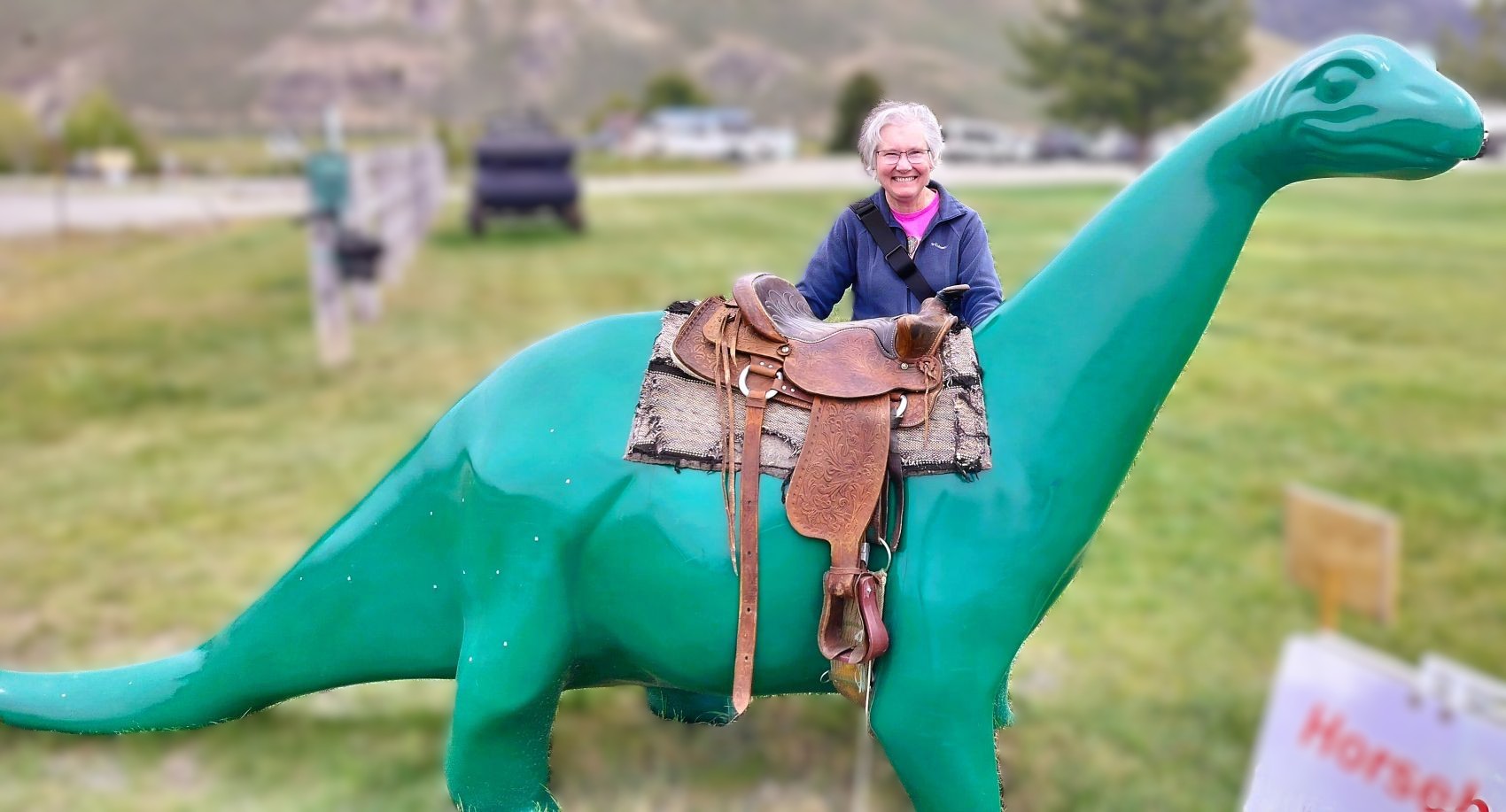
We saw a variety of critters during our Sawtooth Mountain visit: a bald eagle and ospreys on cliffs along the Salmon River, a collar-wearing juvenile big horn sheep along the highway, a shy badger across a field, an 18-inch snake in parking lot and a green Sinclair dinosaur ready for a ride!
Next Week
Coeur d’Alene and the Trail of the Goatheads
(Don’t forget to LIKE our blog posts and to SUBSCRIBE for future updates)


