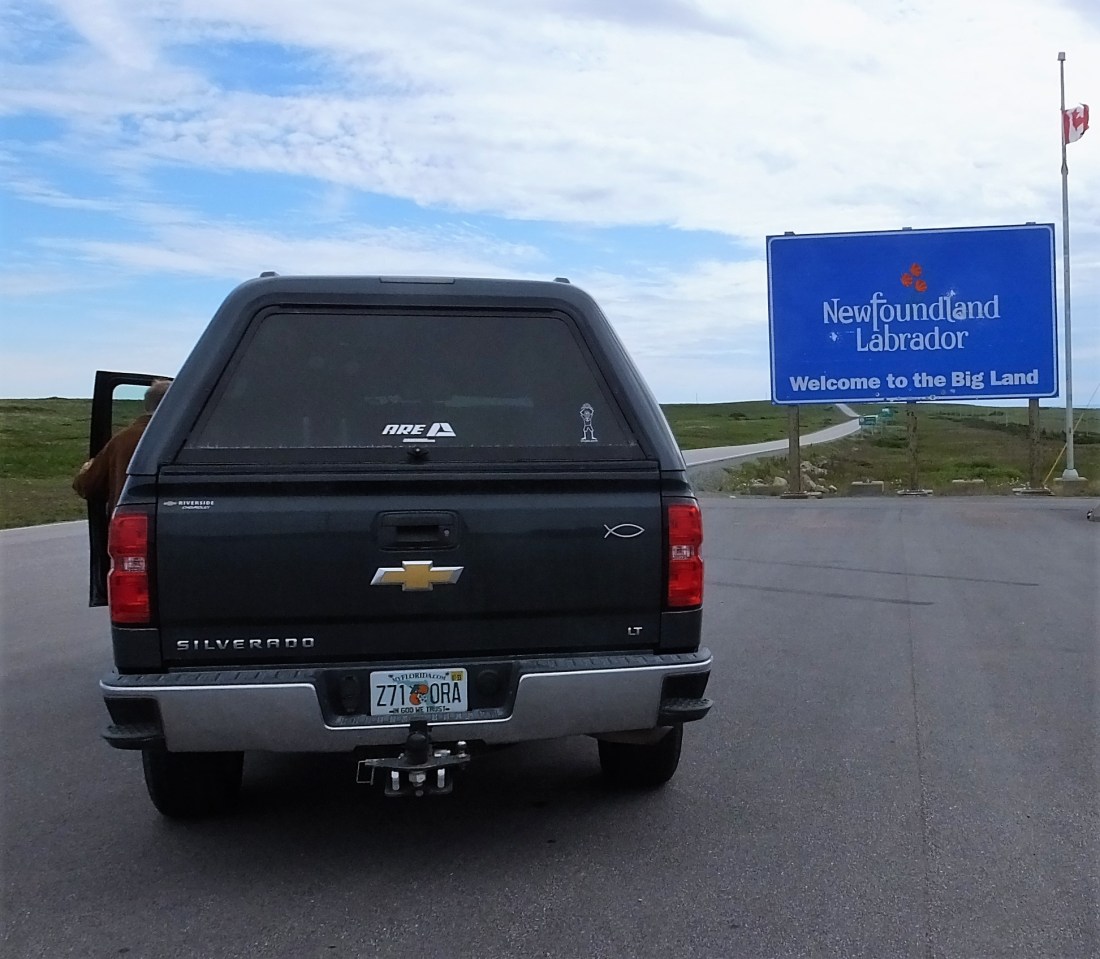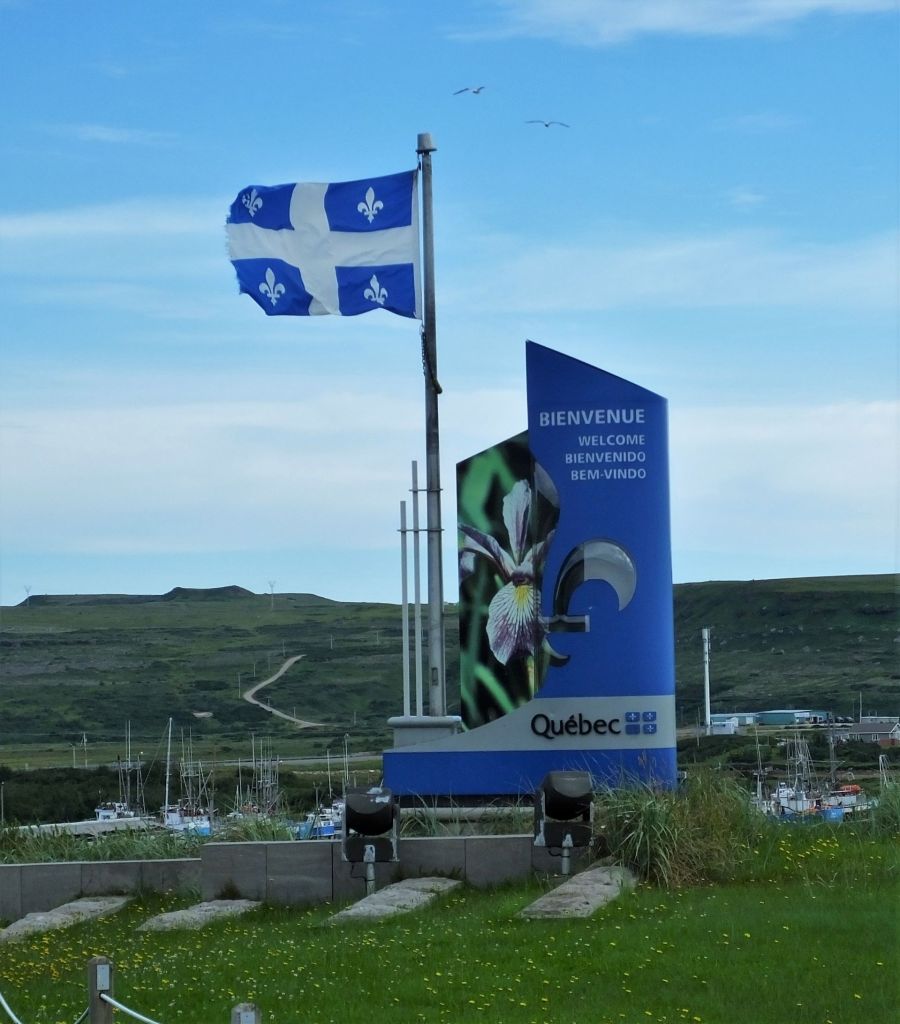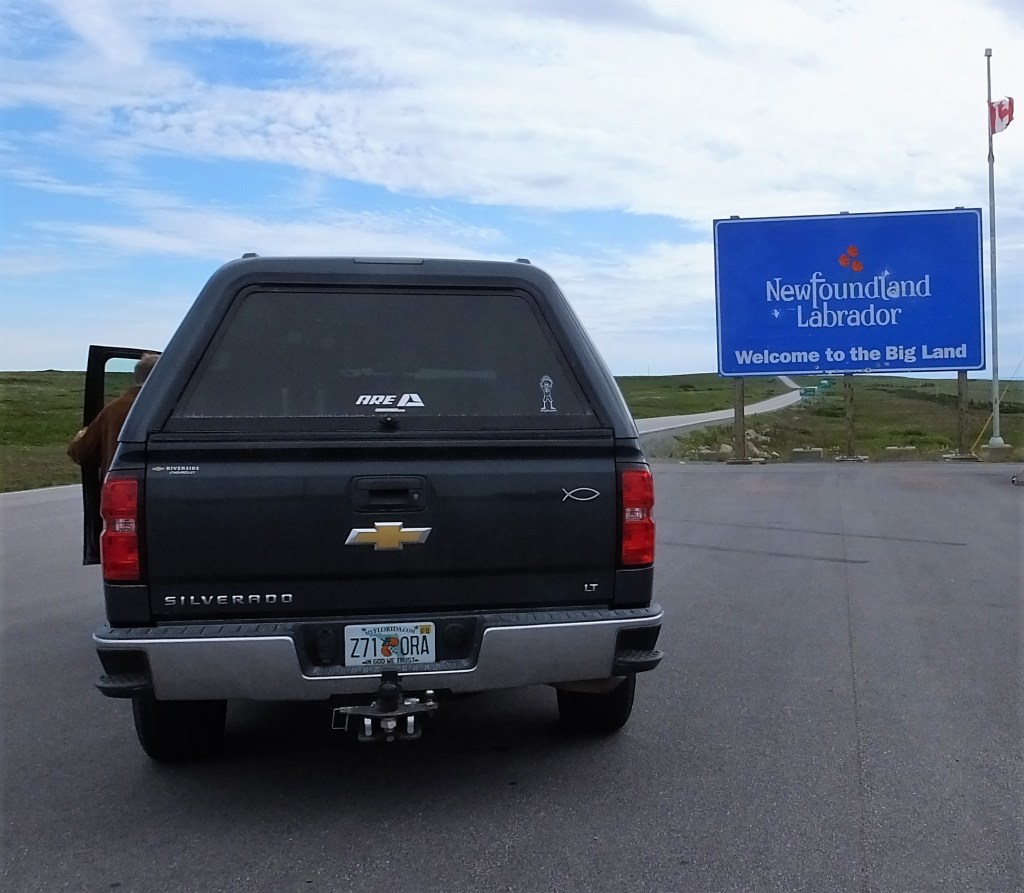

Mountain Views and Sea Swept Vistas

(2022 Newfoundland Ep 6)

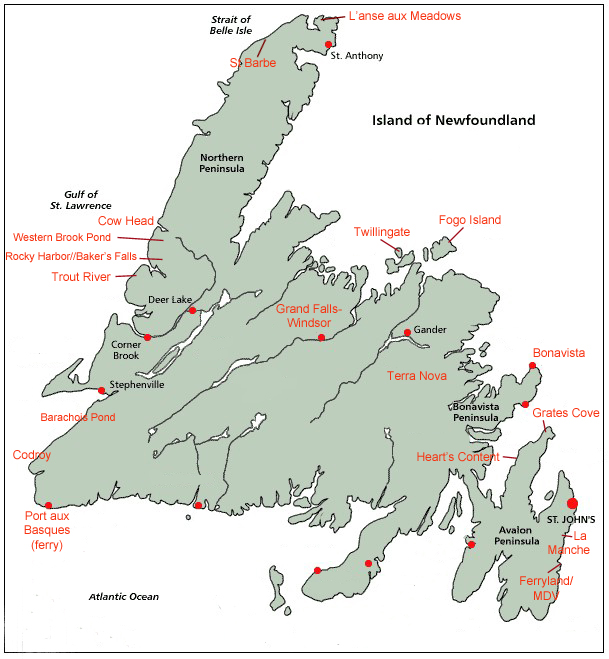
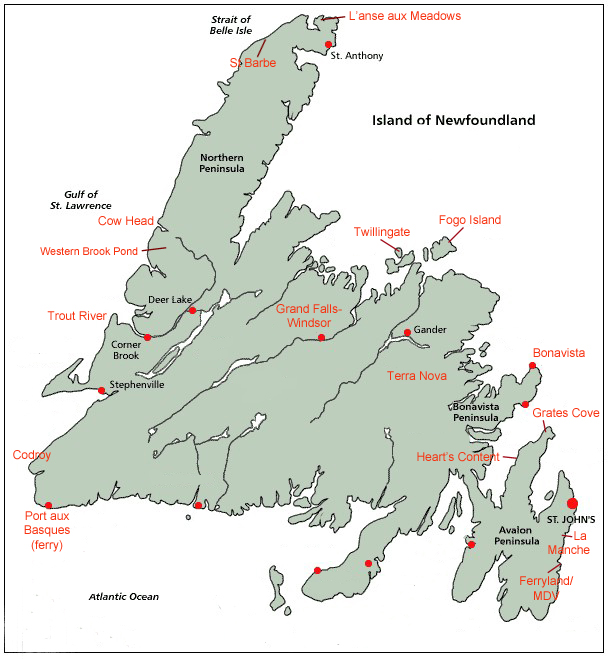
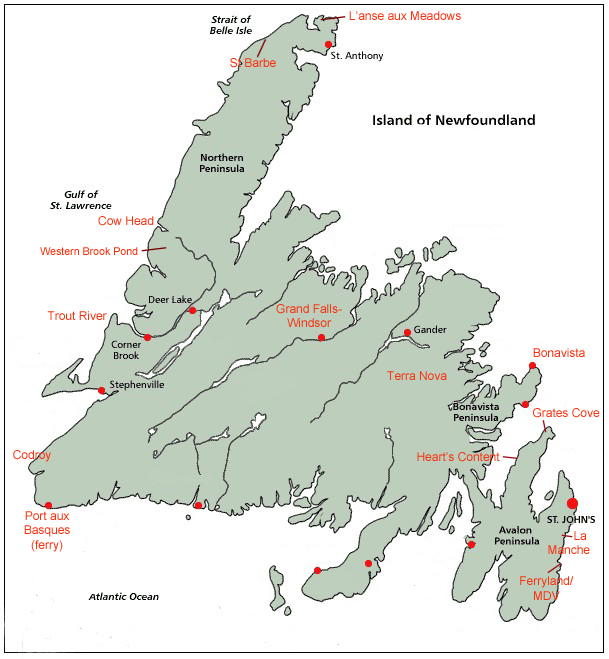
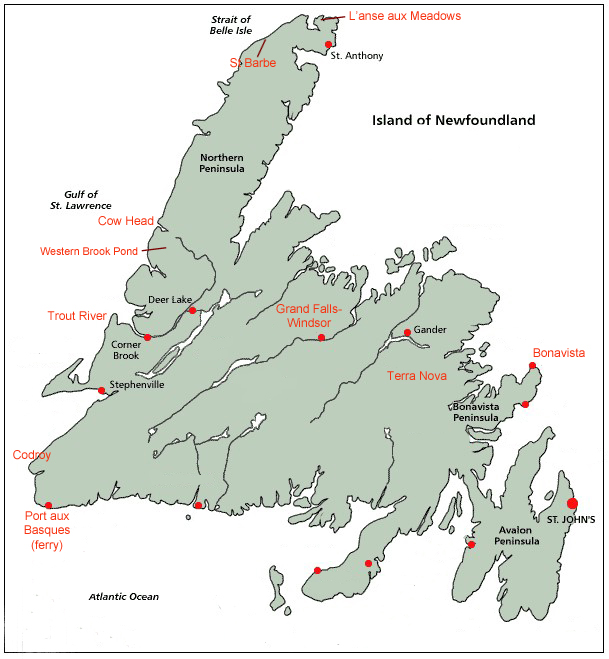
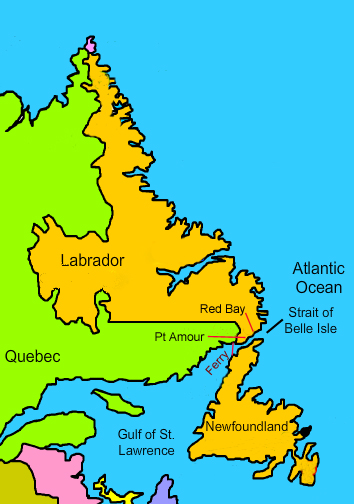
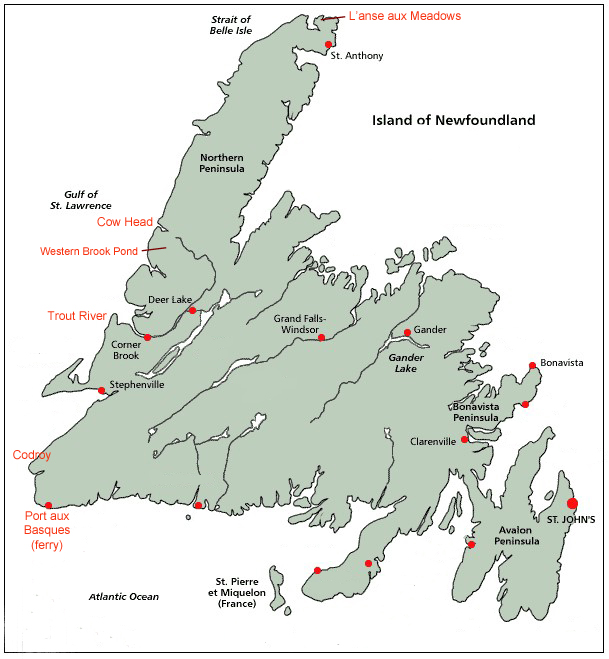
Map of Newfoundland showing some of our stops

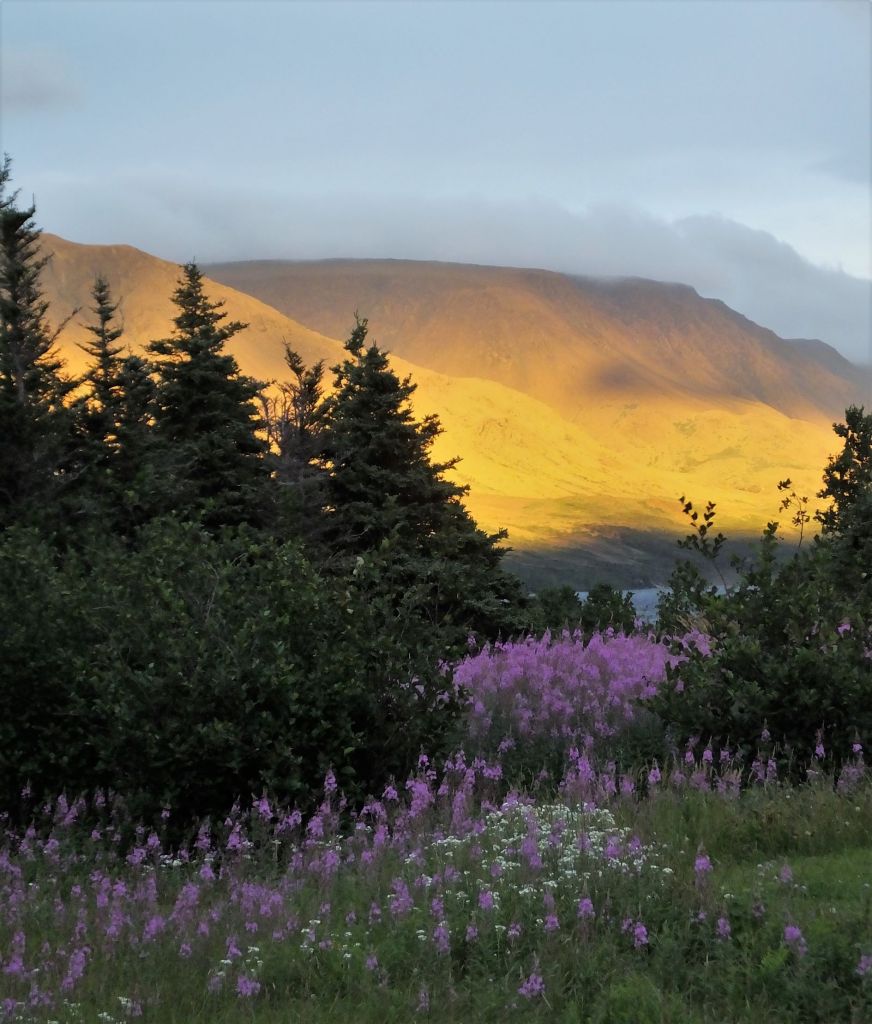
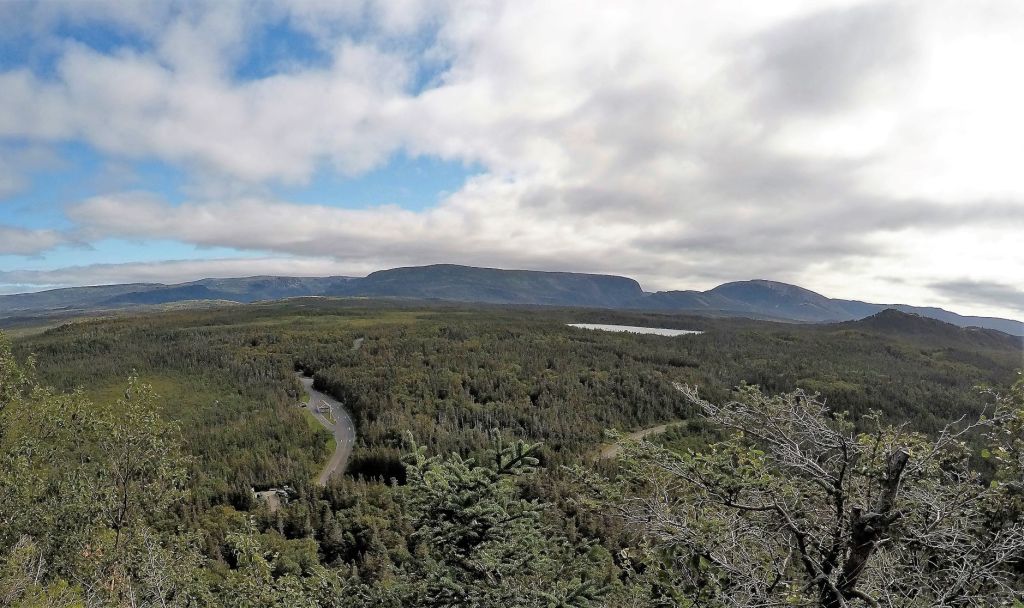
We arrived on Newfoundland (NF) early on August 6 after a redeye ferry ride from Nova Scotia.  At a gravel parking lot a few miles from the ferry landing, we cooked breakfast and viewed the Long Range Mountains to the east.  The range is an outlying extension of the Appalachian Mountains – western NF is surprisingly mountainous.

View of Long Rang Mountains across a field of fireweed flowers

We continued to our campsite overlooking the Codroy Valley.  After resting for most of the day, we completed the August 7 RabbiTRAILS blog post.

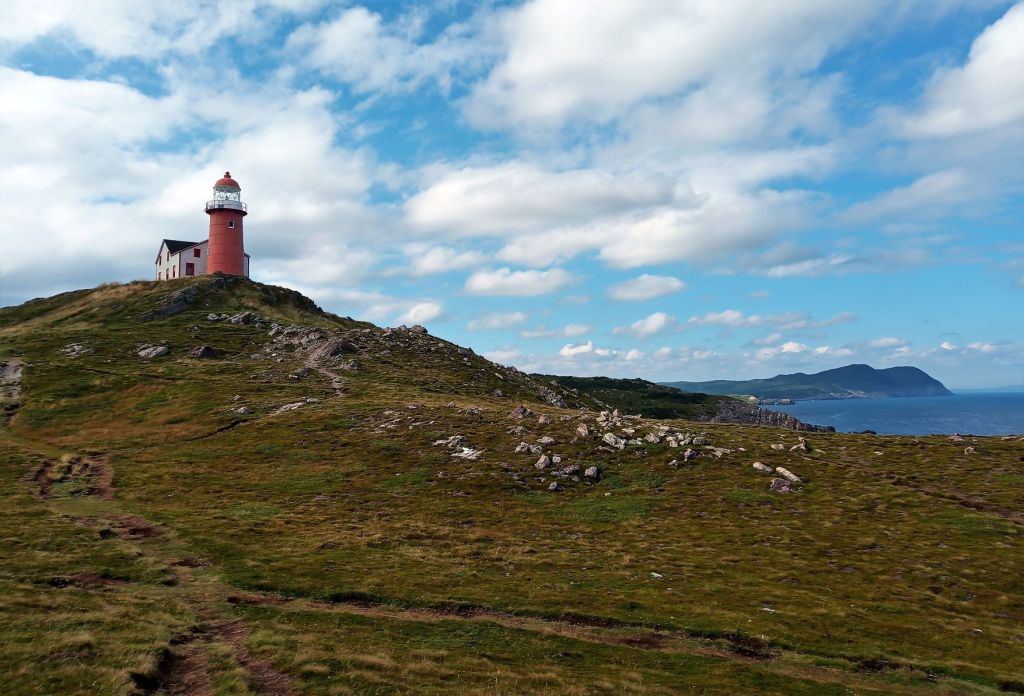
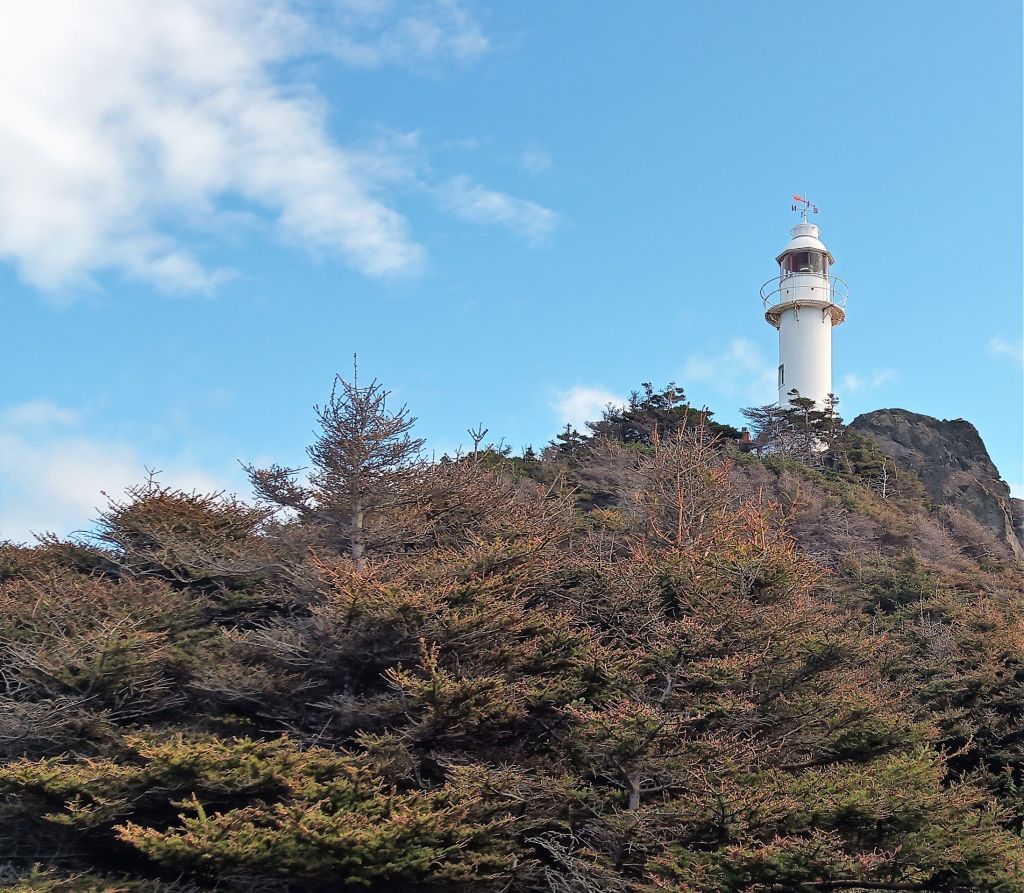
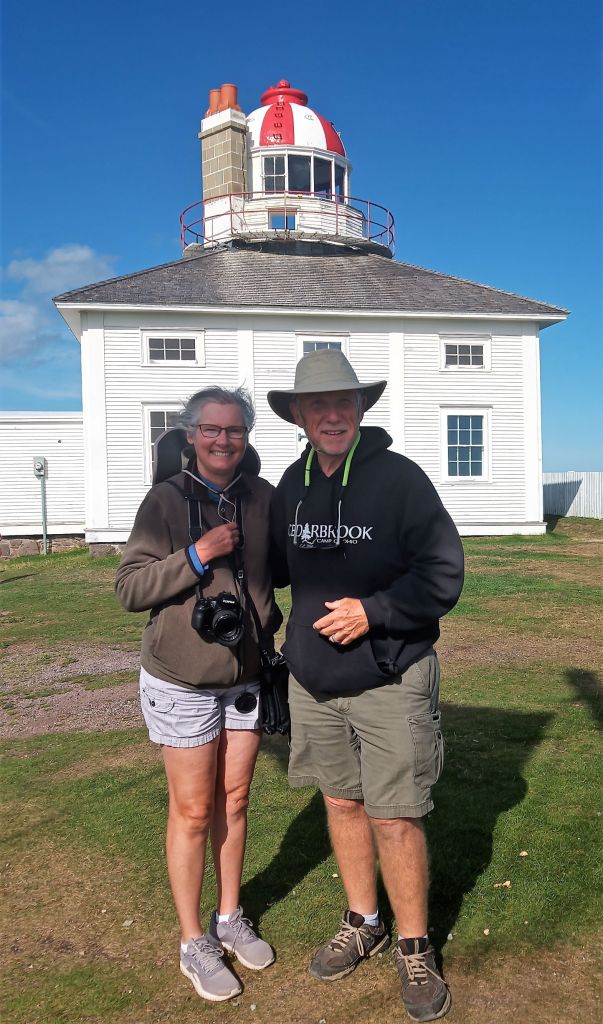
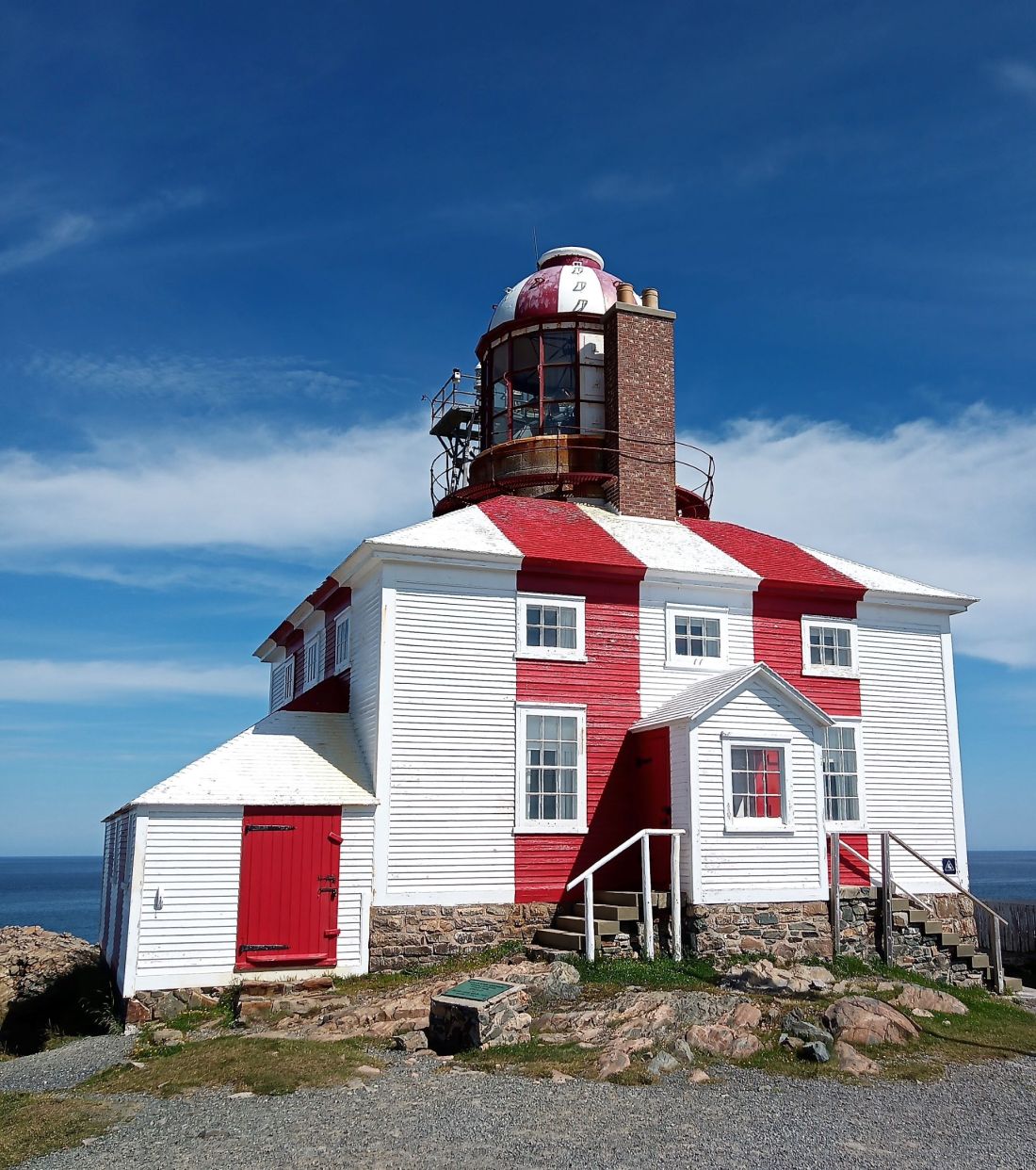
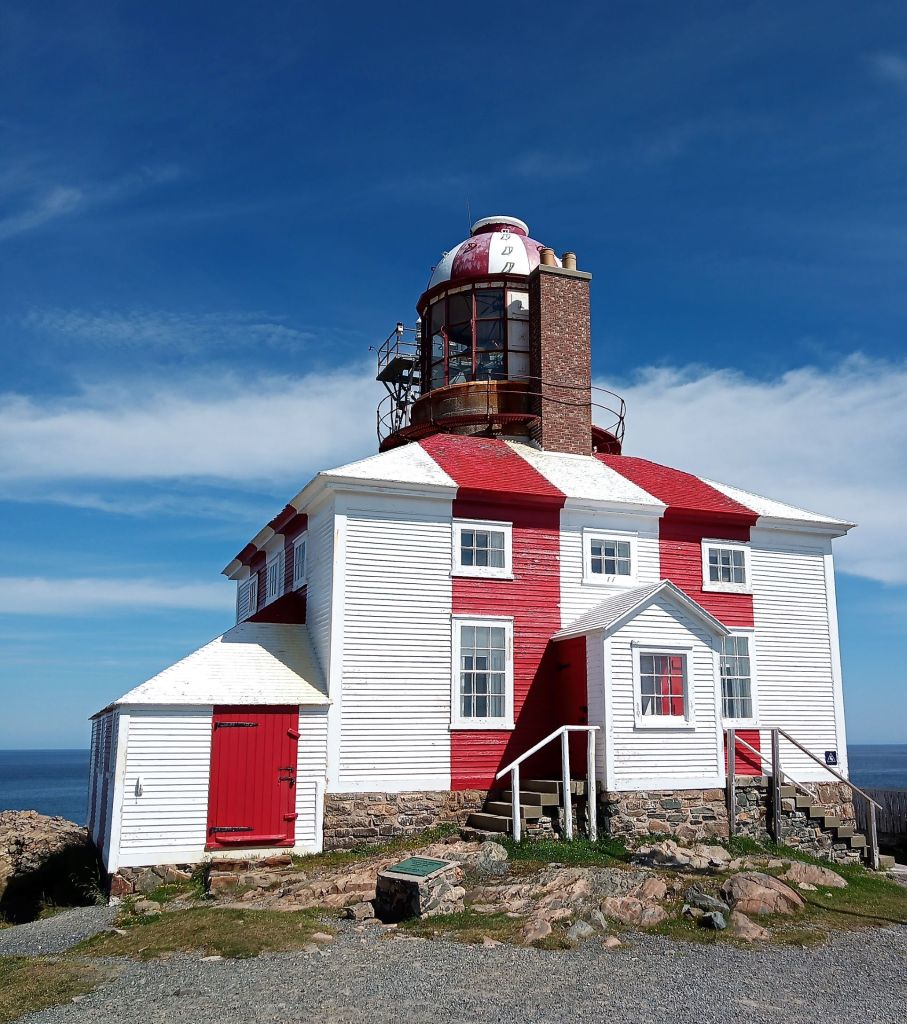
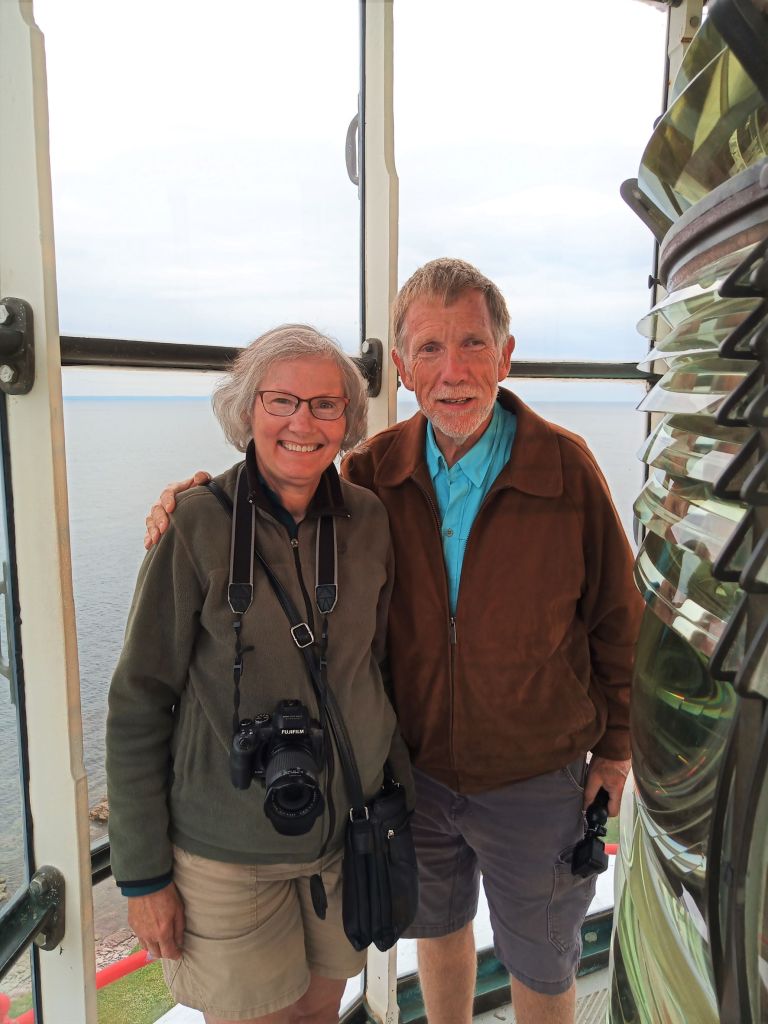
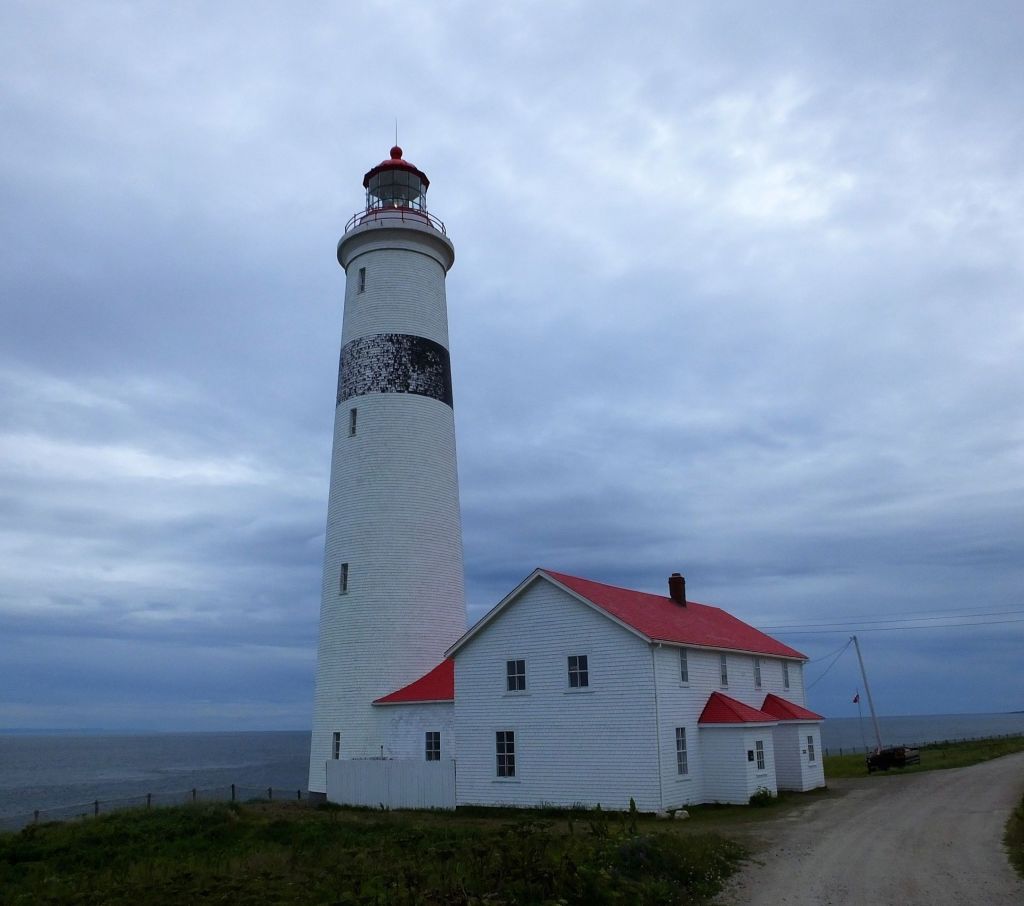
Cape Anguille Lightstation

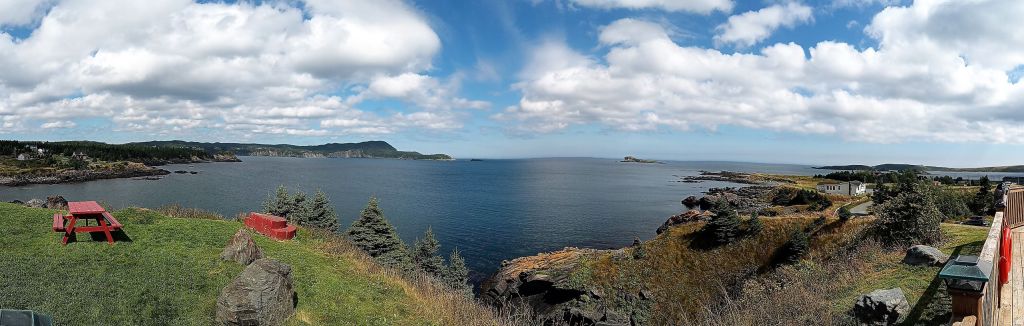
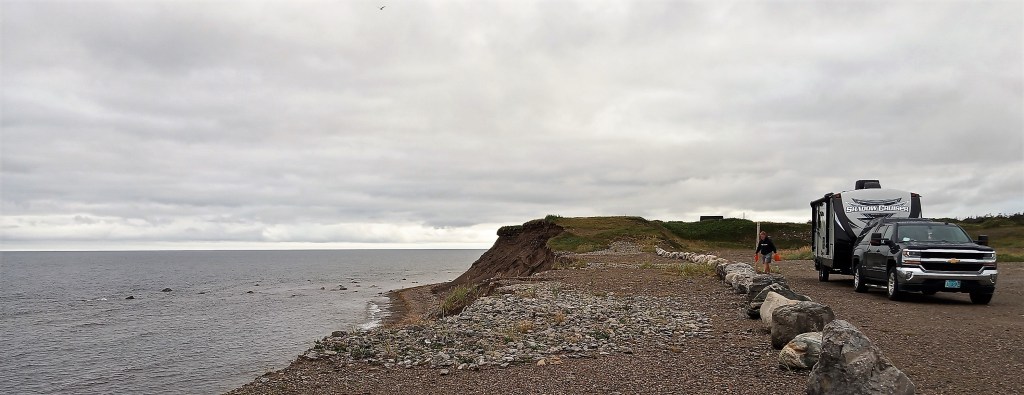
The next morning we drove around the sparsely populated area and visited the Cape Anguille Lightstation on the westernmost point of NF.  We ate lunch and enjoyed the solitude of the windswept place.  Later, we visited a nearby town and walked around a church that dramatically sits on cliffs overlooking the ocean.

Anglican Church at Codroy

The next day our travel plans almost changed.  We were driving towards Trout River Pond in Gros Morne National Park.  As we neared Corner Brook, the largest town in western NF, our tire pressure monitoring system (TPMS) alerted that the right rear tire on Oscar had dropped 20 percent.  We exited the Trans Canada Highway to air up the tire and to go grocery shopping.  As I was getting the inflator ready, the TPMS again alerted the tire pressure had dropped another 5 percent.  Action was needed!

Pat went shopping while I removed the tire.  I rolled the tire over to a Canadian Tire store just across the street. (Thank you, Lord!)   They were busy and couldn’t look at the tire for several hours.  Finally, they called and said they found a fishhook in the tire!  Although a careful check revealed the hook didn’t penetrate the inside of the tire, they redid the tire bead and put in a new valve stem. We’ve had no further problems with the tire. 

I guess Oscar was a big one that got away.

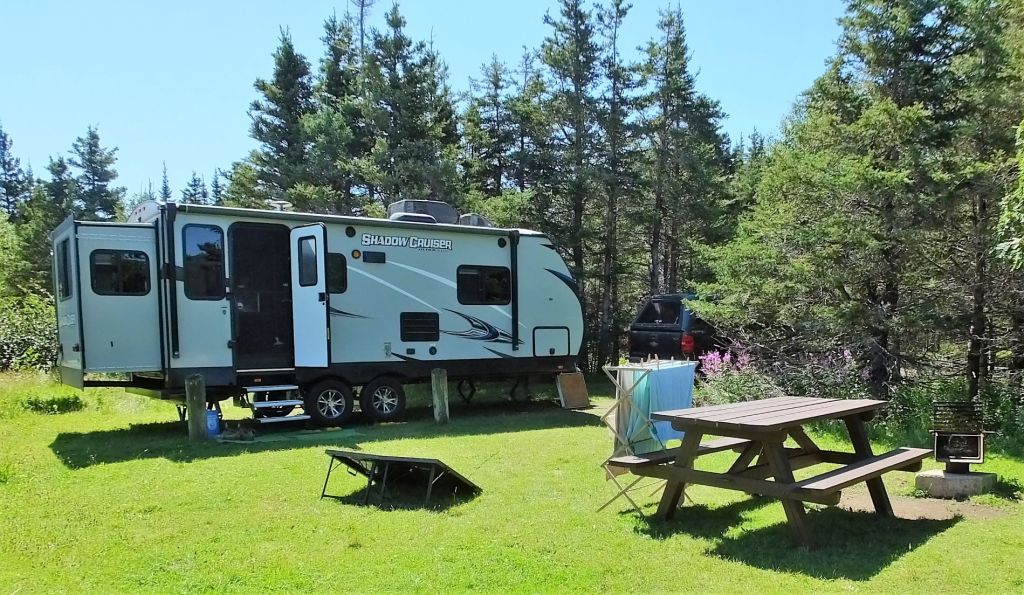
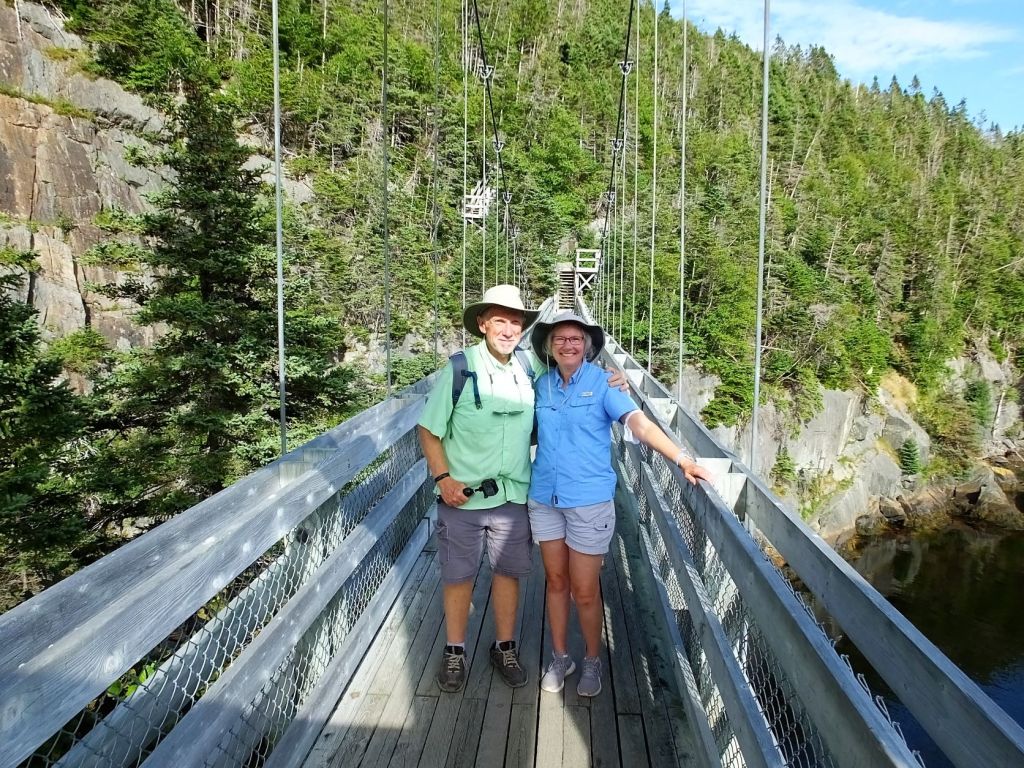
Our trip resumed.  We arrived at the VERY small fishing community of Trout River after 6 pm and followed signs to the nearby national park campground.  We crossed three narrow wooden plank bridges to a gravel road with lots of potholes.  The campground was nowhere in sight. 

We considered turning back to find somewhere else but decided to go a little further.  Shortly we arrived at a very nice campground, home for the next three nights.

Trout River Pond, near our campground
Trout River’s whale of a tale

Trout River’s ‘15 minutes of fame’ occurred in April 2014, when a blue whale carcass drifted to shore coming to rest on an icy beach near town.  By May, the ice drifted off leaving the grounded whale carcass.  After remaining on the beach for several weeks, the massive mammal was towed to another location for ‘dismantling.’   Today, the whale skeleton is on display at the Royal Ontario Museum in Toronto.

Dinnertime view of flowers and sunshine on the distant mountains
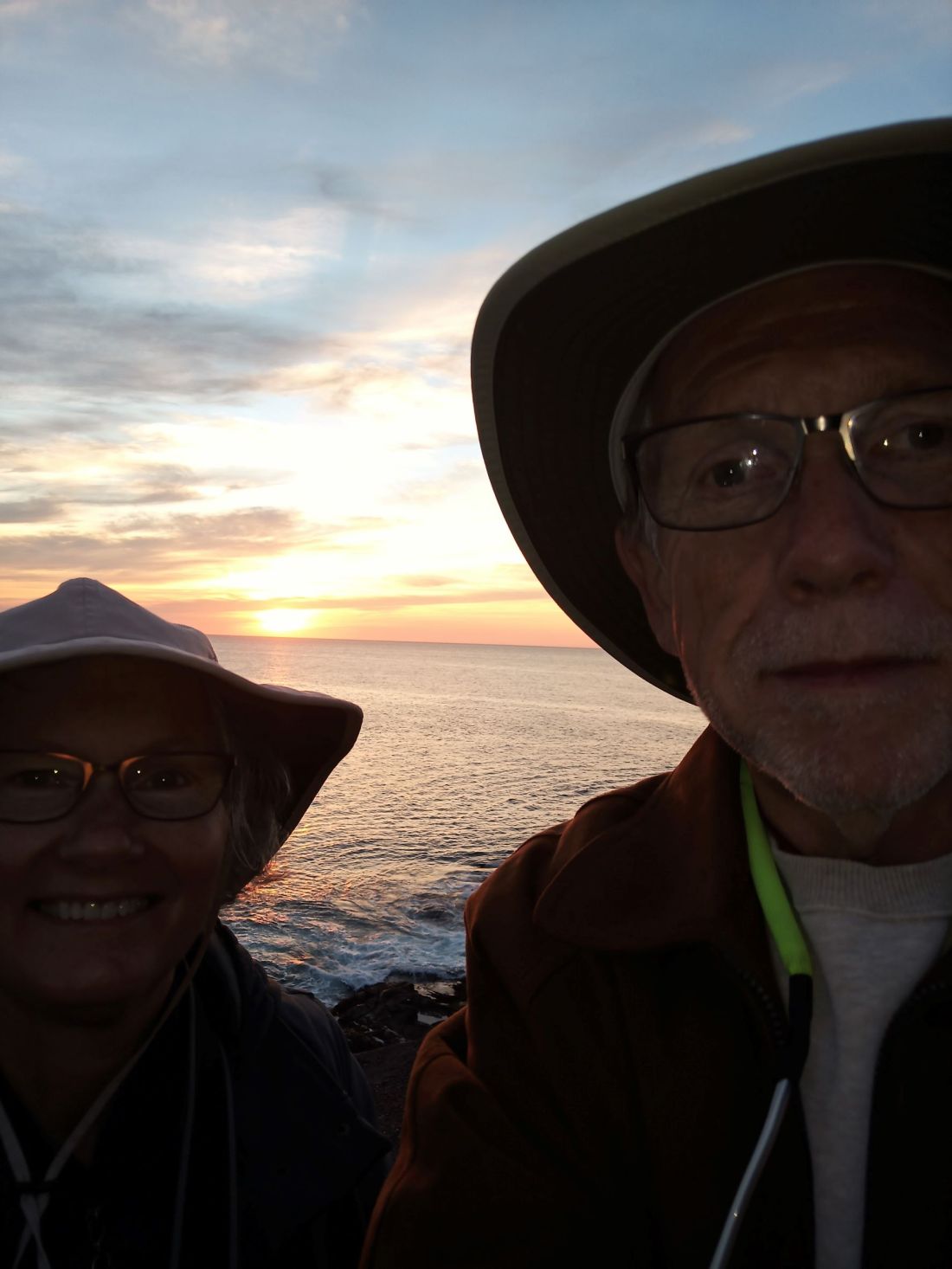
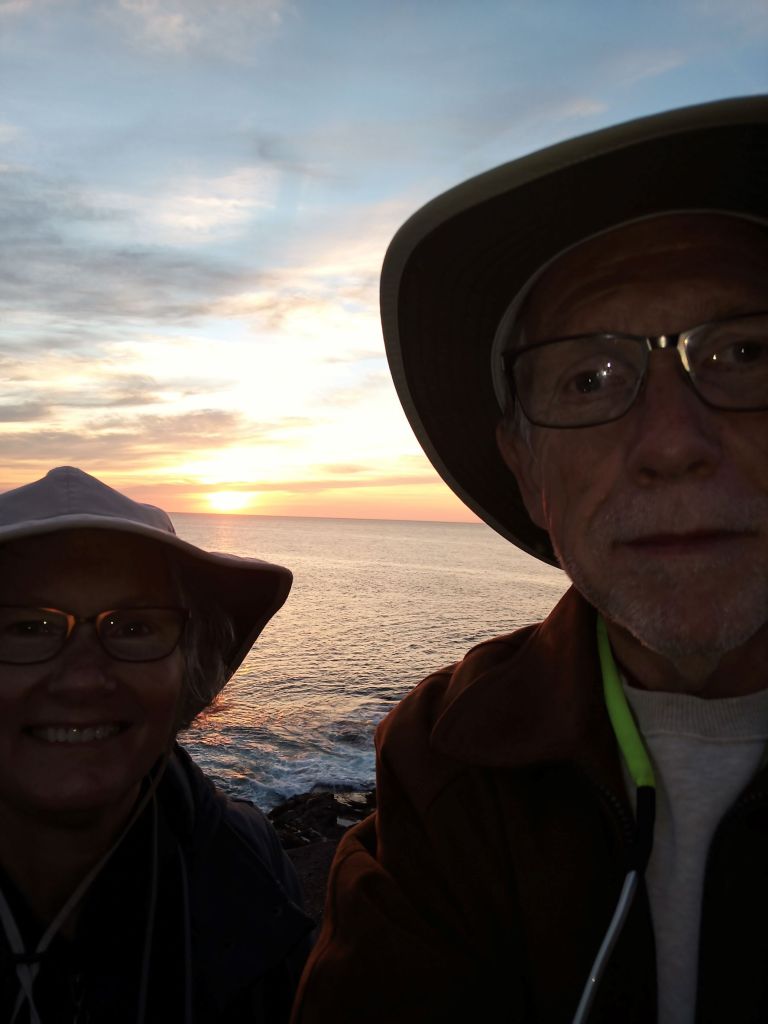
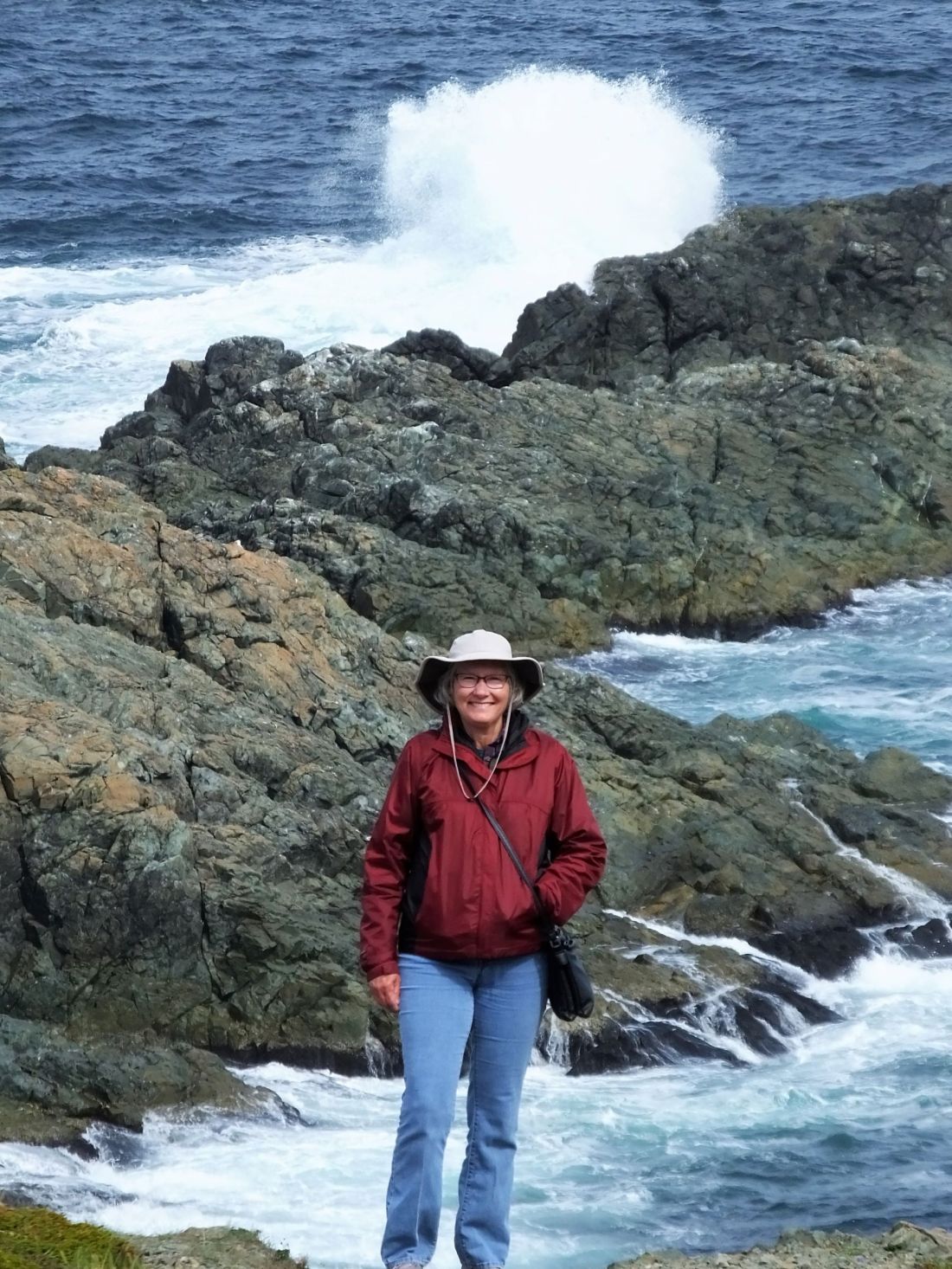
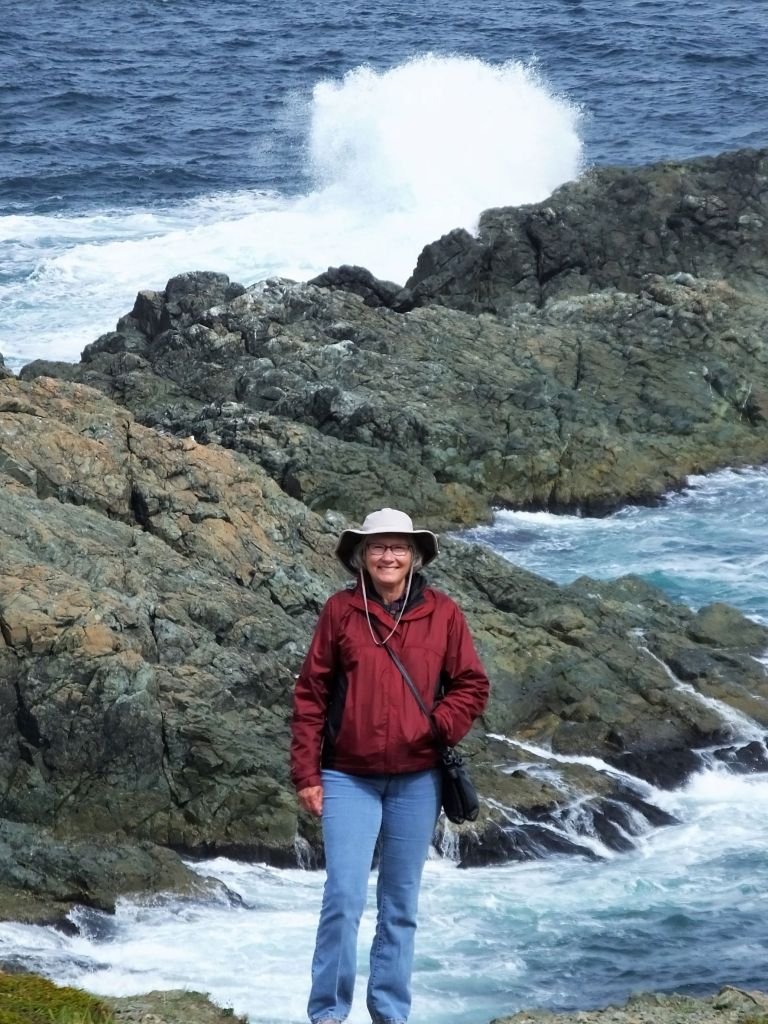
Tablelands selfie

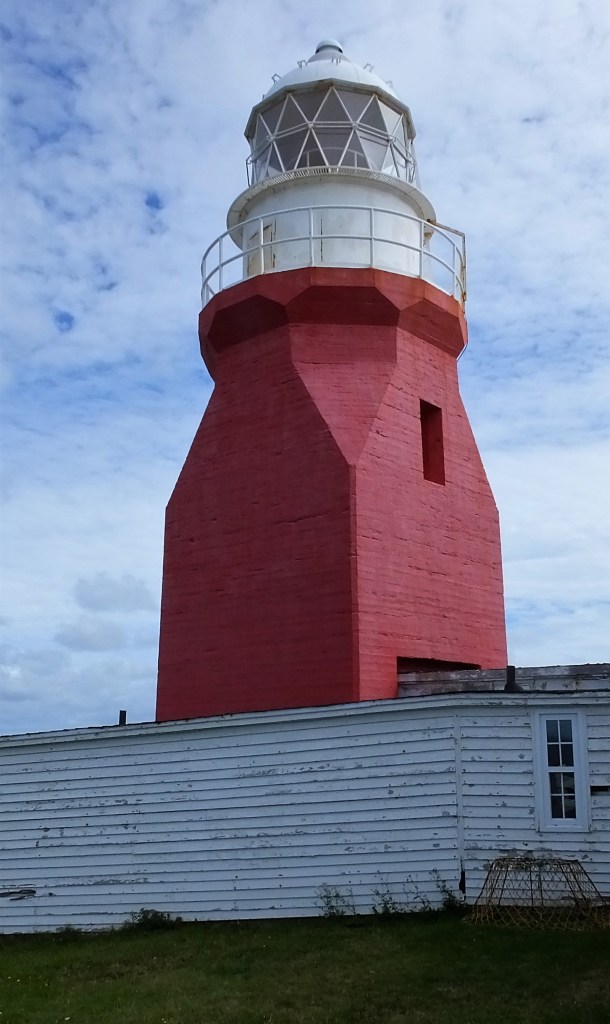
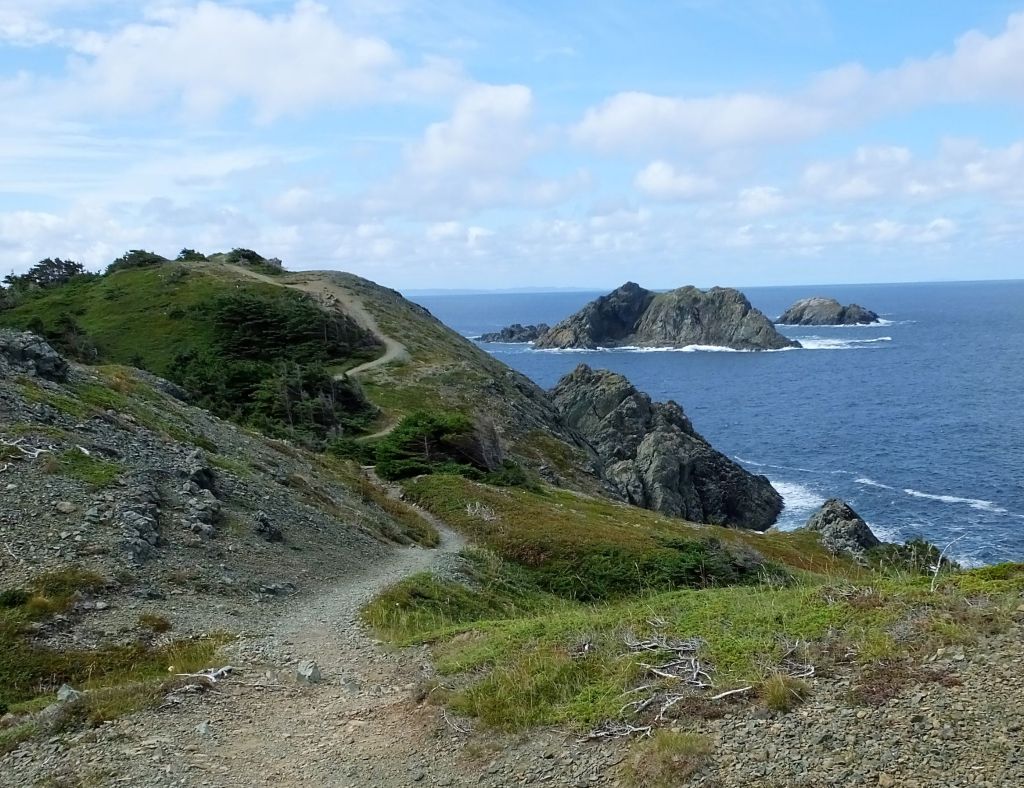
The next day was a three hike day: from Trout River, we hiked to a small lighthouse and then to a remote ocean lookout.  Later, we hiked the Tablelands Trail several miles away.  The mostly barren Tablelands consist of a geological feature found in few places in the world – a mountain pushed up from the earth’s mantle.  Aside from a few areas with small plants and grass, the terrain is barren and is said to resemble the surface of the moon and mars.

A creek flows through the heart of the Tablelands
Restored Cow Head Lighthouse

Our travels continued north to a national park campground near Cow Head.  The town got its name for a rock along the coast that an early explorer thought resembled a cow’s head.  We biked to town and then across a small spit of land to an island, where the inspirational rock is said to viewable from the Point of the Head trail.  We looked and looked and couldn’t find any formations that resembled a bovine skull.  The hike was beautiful anyway.

Point of the Head vista – no Cow Heads in sight

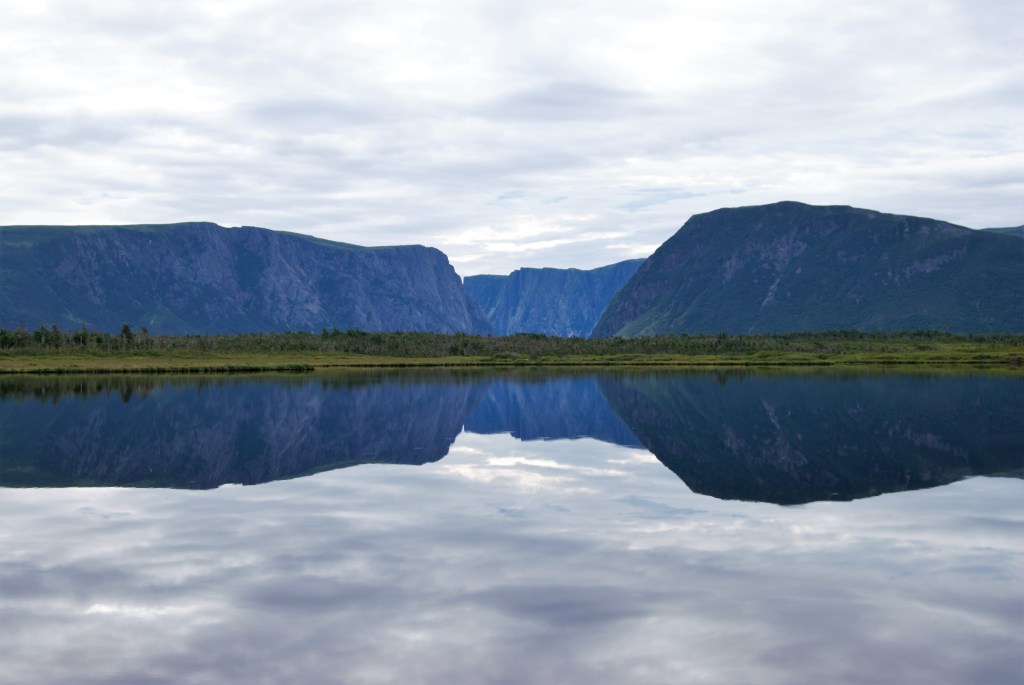
While at Cow Head, we enjoyed one of ‘top 10’ things to do while on NF – the Western Brook Boat Tour.  After a 1.8 mile hike from the parking lot, our morning boat ride started on the mirror smooth pond just west of the Long Range Mountains.  The trip took us nearly ten miles into a narrow freshwater fjord with two thousand foot cliffs on either side.  We learned the pond has a maximum depth of 541 ft and is ultraoligotrophic, low in nutrients so it supports a few slow growing plants and animals. 

Reflection of distant mountains at start of Western Brook Boat Tour
View from the boat

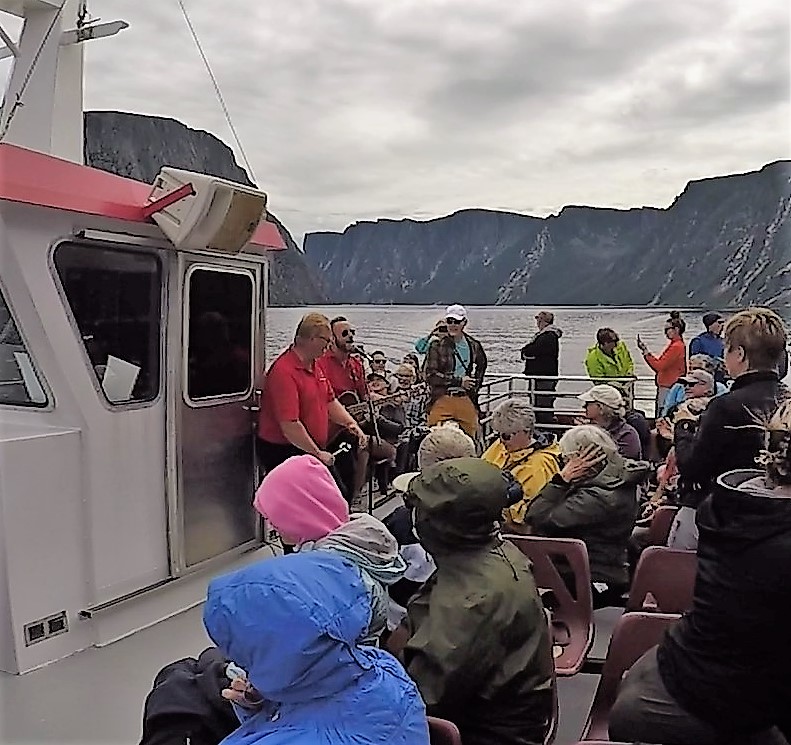
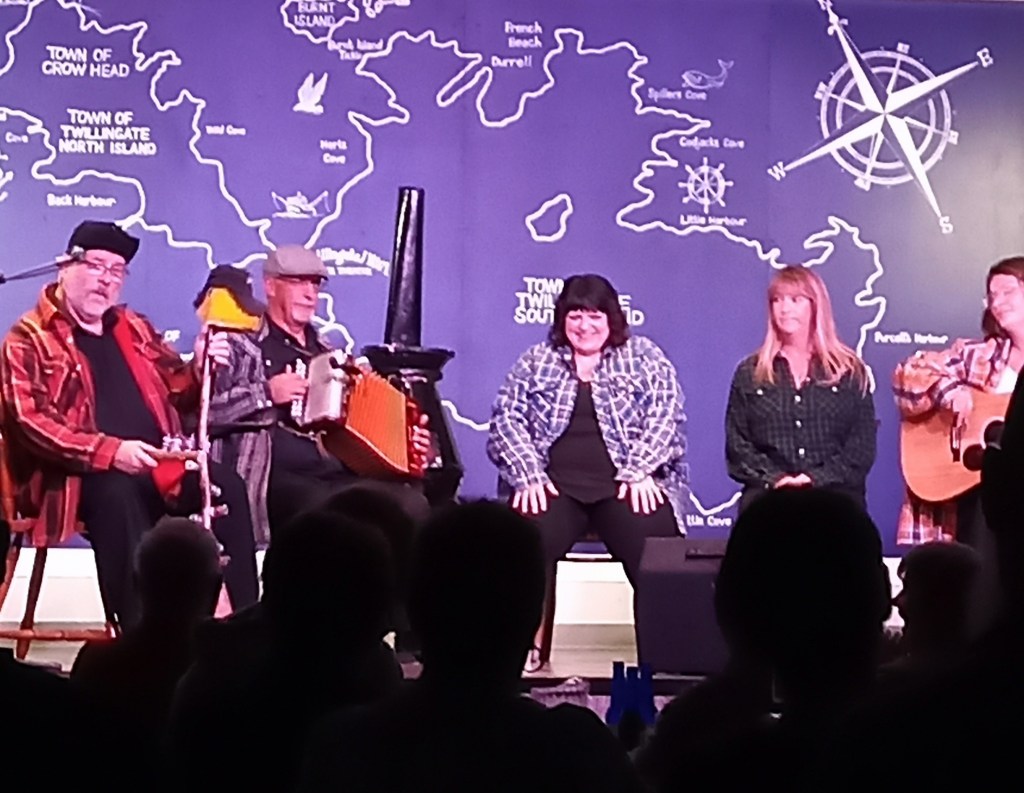
As we returned to the tour starting point, patches of sun broke through the clouds.  As the ride ended, we were entertained with an impromptu performance of NF folk tunes by the boat’s talented crew.

NF music on Western Brook Pond

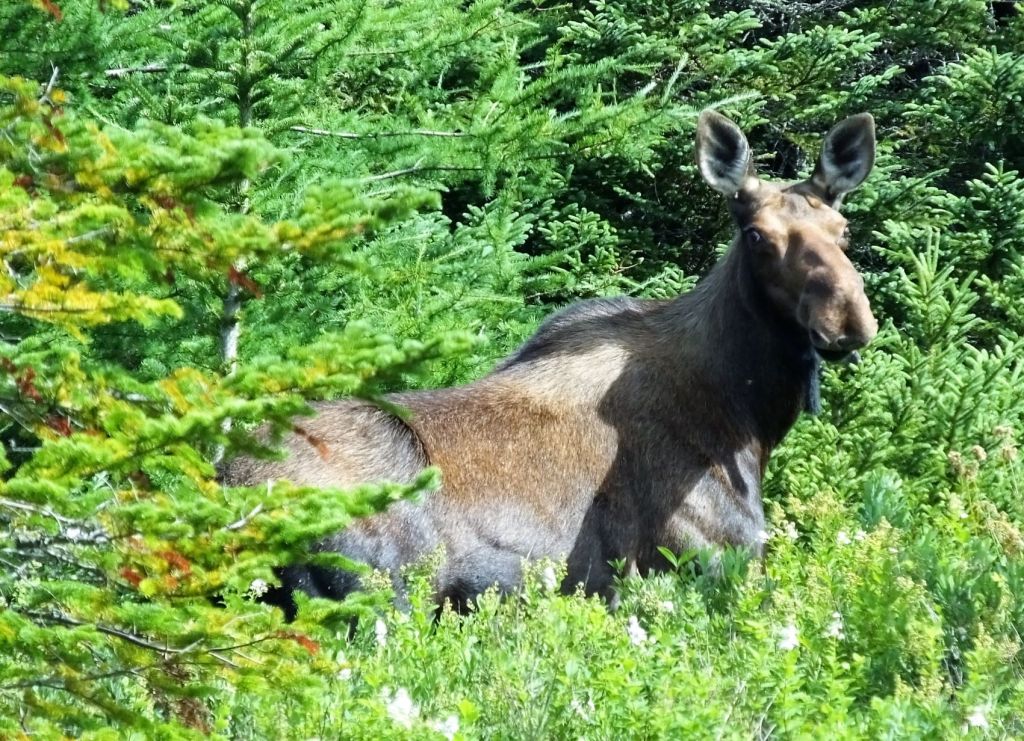
Next week:  learn what moose and pythons have in common, the significance of a Viking settlement at the northern tip of NF, and why we decide to leave the island.    

High Tides and Redeye Rides

(2022 Newfoundland Ep 5)

After two and a half weeks and 2425 miles, we arrived in Canada, crossing the border between Calais, Maine and Saint Stephen, New Brunswick.  The crossing was uneventful.  We used ArriveCAN, a database and phone app, where we uploaded our passport and Covid immunization information. Should you have plans to visit our neighbor to the north, we suggest completing the ArriveCAN information to avoid delays or other issues.

Our first night in Canada was near Saint Stephen and the next day we continued to Fundy National Park. 

Fundy NP is situated on the Bay of Fundy, between New Brunswick and Nova Scotia provinces, and is home of the highest tides in the world. 

Fundy beach wanderers at low tide

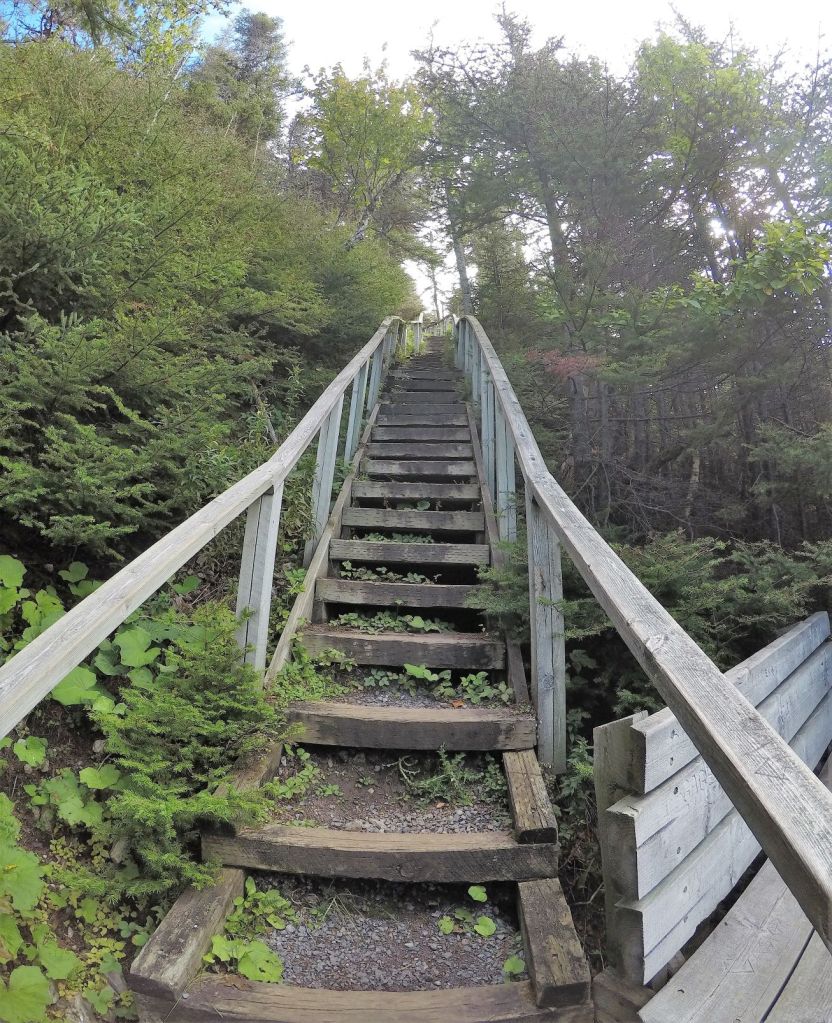
From a grassy bluff above Herring Cove Beach, we descended more than 150 stairs and found ourselves alone on a quiet and serene beach.  It was low tide and the edge of the water was more than 200 yards away.  Above the beach were the natural rock walls of the bluff and we could see where the tide would rise on the rocks over 50 foot above! 

Pointing to the high tide line far above
Some areas between the low and high tide lines consisted of thick muck!

The tide started to come in. Rocks and mucky areas visible just a few minutes earlier were soon under water.

Twice each day an estimated 100 billion tons of water flow in and out of the bay – more than twice the combined total flow of the world’s rivers over the same period.  The tides rise and fall an astounding 52 feet!

Leaving the beach, we climbed the stairs to hike the Matthew’s Head Trail.  The trail follows the bluff above the bay for more than a mile.  We enjoyed our lunch and a beautiful view.  Not wanting to repeat an unfortunate hiking experience at Grand Teton a couple of years ago when I tripped and dislocated a finger, we had to proceed slowly and carefully due to many exposed tree roots and rocks on the trail.  We are thankful we completed the trail with no mishaps!

After our hike we drove to Alma, a small town just outside the park, to look around.  We noticed several colorful fishing boats propped up above the water far below. 

We returned to the beach at high tide and stood at the high tide line again. It was amazing how different the beach looked.  Back in Alma, the once propped boats where now floating on a wide tidal creek. 

The next day we visited unusual rock formations at the nearby Hopewell Rocks Provincial Park.  The rocks were formed by the rising and falling tides, and reminded us of Bryce Canyon and Arches National Parks. There were tall ‘hoodoos’ nearly a 100 feet high. 

Hopewell Rocks

We were surprised to see dozens of people lined up to buy tickets to see the rocks – the park is very popular.

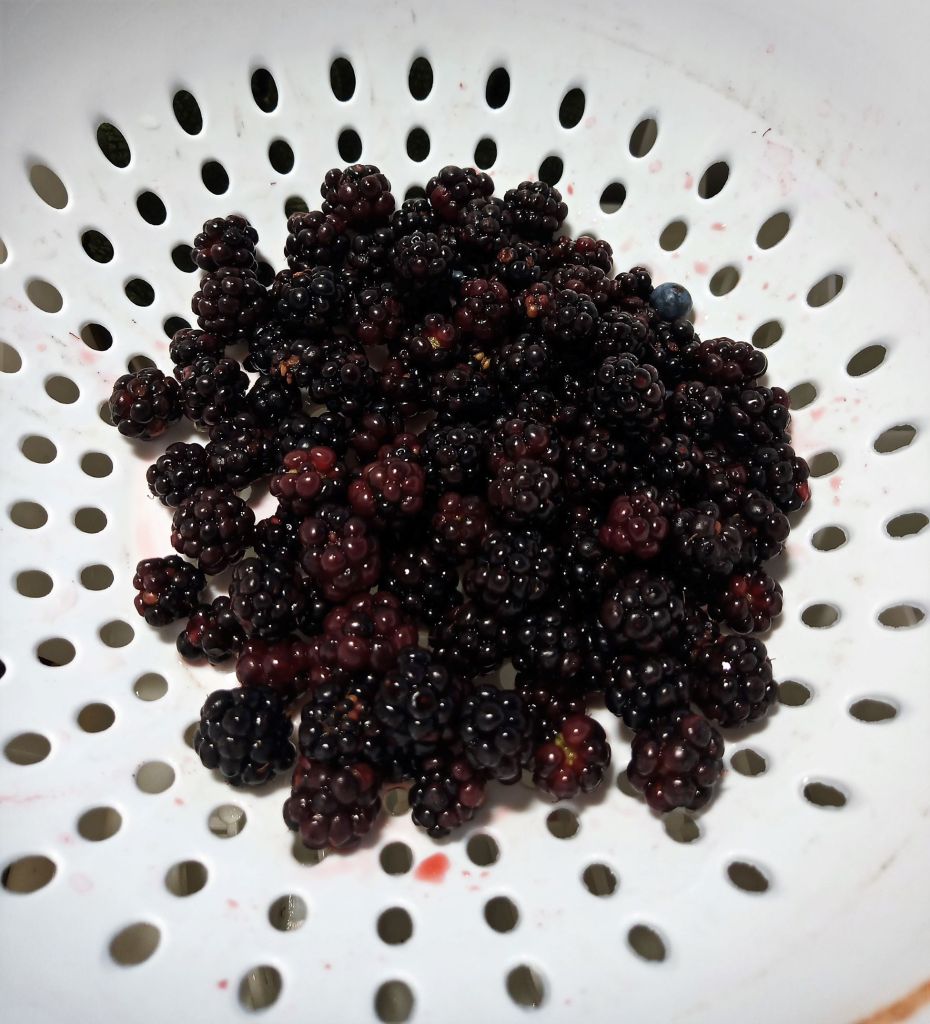
We picked and enjoyed wild blueberries with Greek yogurt

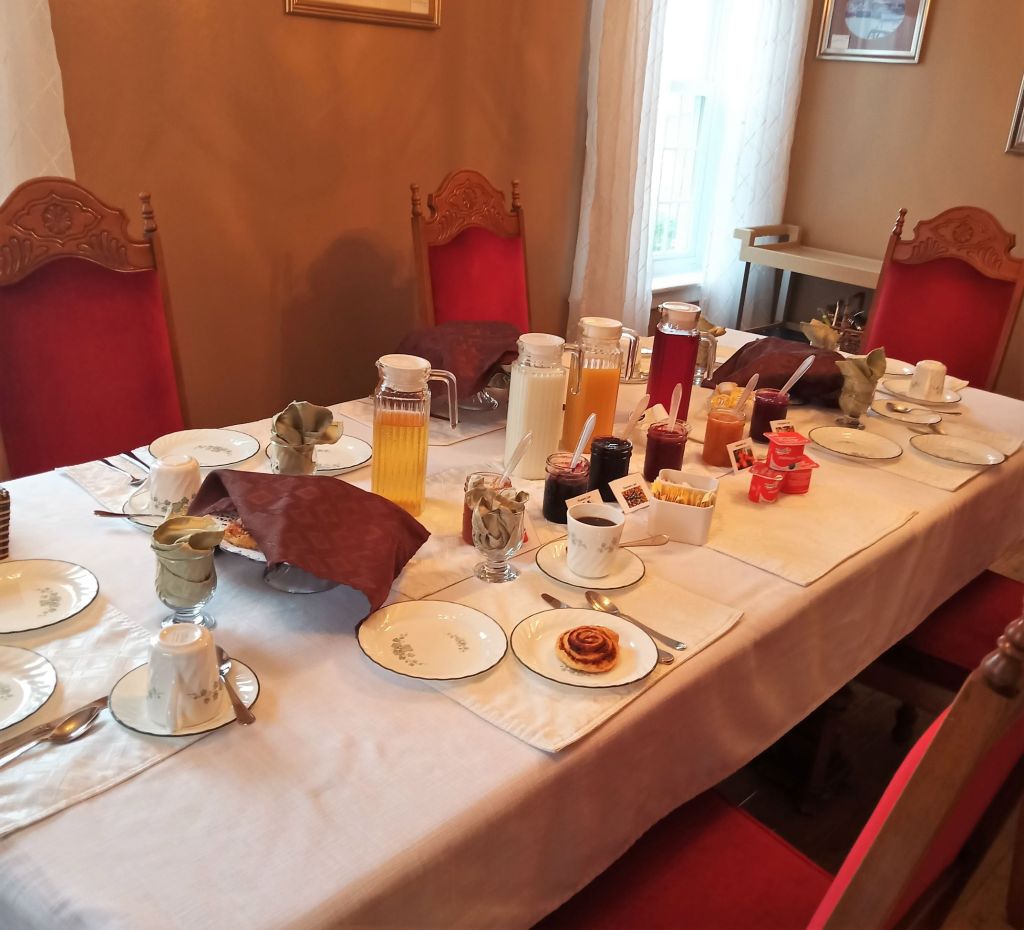
We camped the next two nights at the Earltown, Nova Scotia farm residence of Andrew and Patty Morrow.  They invited us for an amazing breakfast, and we later walked their property and then a short distance into town.  We couldn’t resist purchasing a loaf of fresh cranberry-blueberry-raisin bread at the Earltown General Store. 

Andrew, a native Newfoundlander, shared Newfoundland travel suggestions and coached us on the correct pronunciation of his home province – he said Newfoundland rhymes with understand!. 

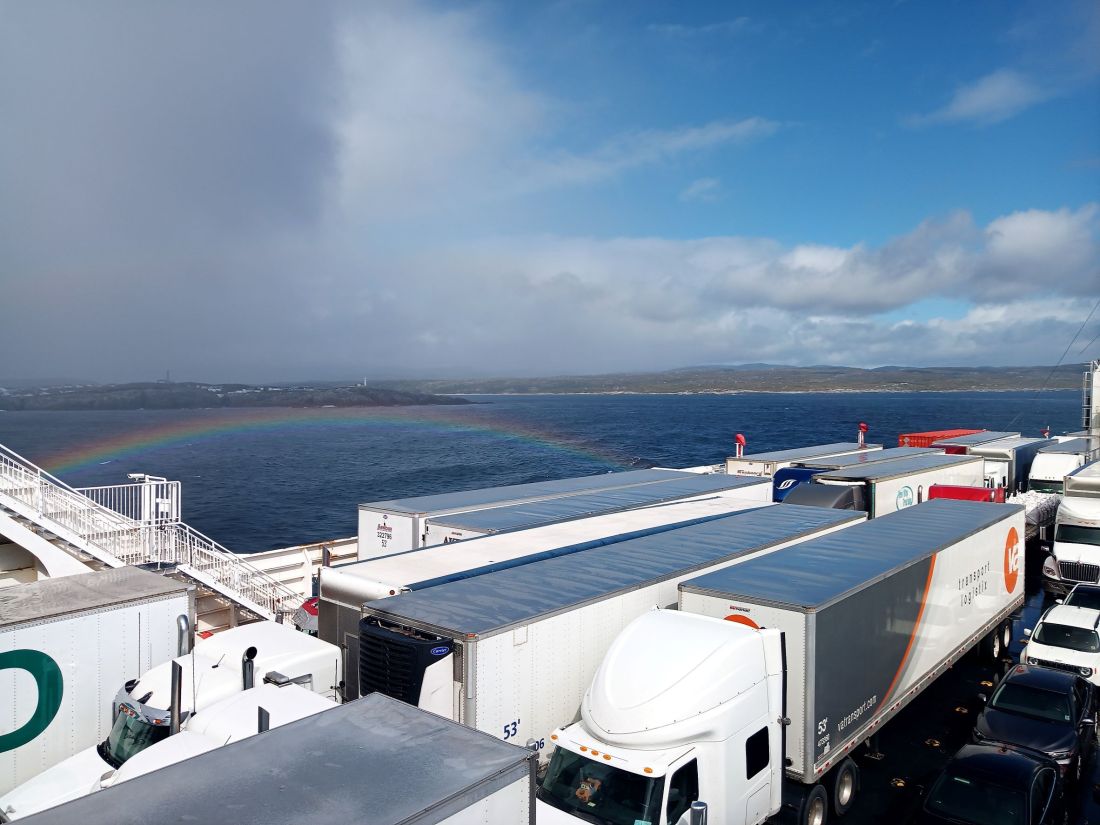
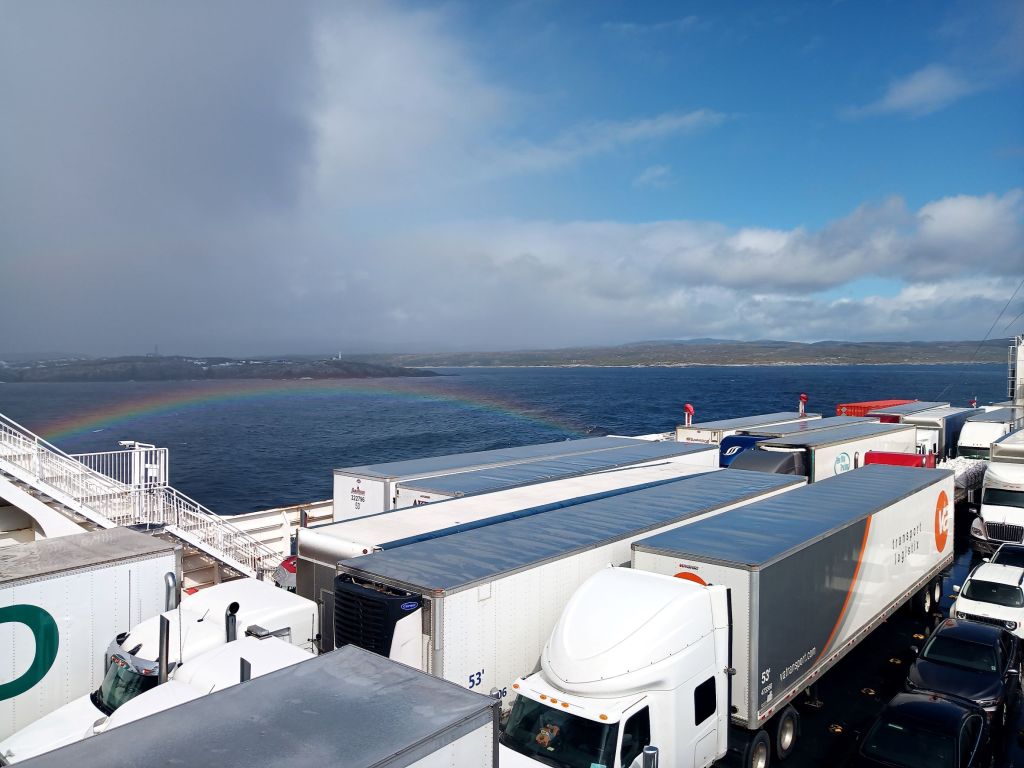
We continued north to North Sydney, Nova Scotia and prepared to board a Marine Atlantic ferry for a seven hour ‘cruise’ to Port aux Basque, Newfoundland.   We had a few hours to spare before our 11:45 pm ‘red eye’ ferry departure, so we took time to do what all travelers must do from time to time – laundry!
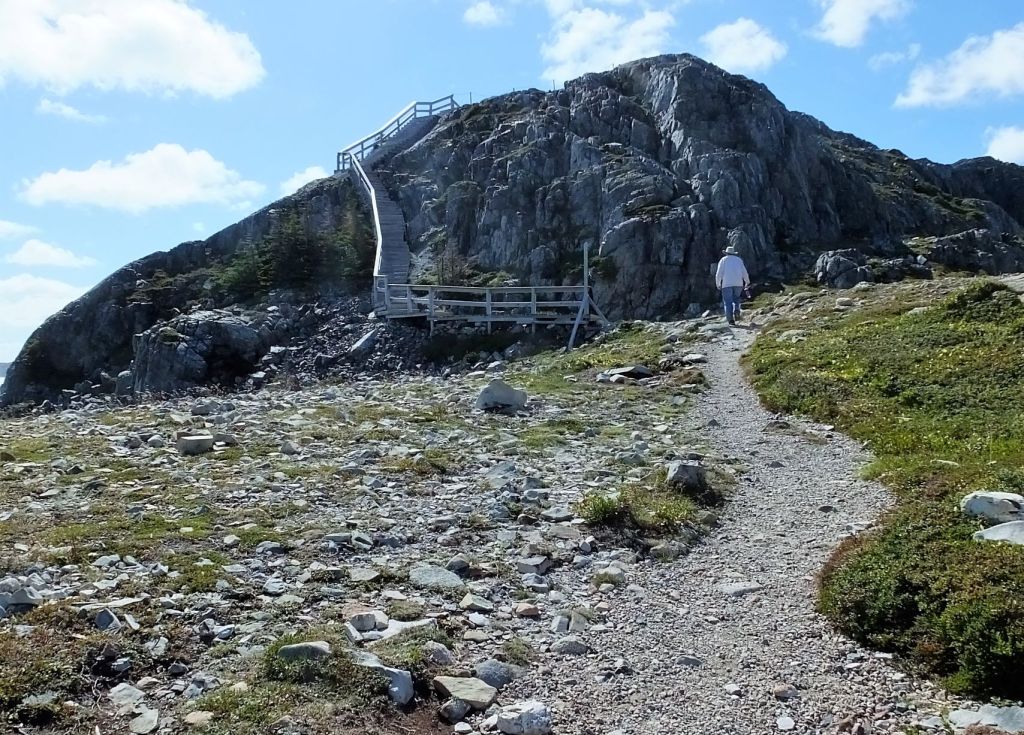
Early morning arrival at Port aux Basques, Newfoundland

Next week – we arrive on Newfoundland and spend a couple of nights at a campsite overlooking the Codroy Valley.  We continue on to Gros Morne National Park where bad roads threaten to change our plans!
Acadia NP: Coves, Carriage Roads and Cadillac

(2022 Newfoundland Ep 4)

After saying goodbye to our friend Norm, we pointed Max and Oscar northeast for our next stop at Acadia National Park on the Maine coast.

We arrived at Ellsworth, Maine that afternoon, a few miles north of the park.  We saw lots of signs for Maine lobster – lobster dinners, lobster rolls, lobster chowder, fresh and steamed lobsters from roadside stands with large steaming pots.  Despite these temptations, we decided to wait for Newfoundland lobster.

Hanging out at Sand Beach

The next morning we visited the park visitor center to get our bearings and to get our National Park book stamped.  We decided to take a free shuttle bus around the 27-mile park loop road.  The first stop was at Sand Beach, a beautiful beach where we ate a picnic lunch and watched visitors enjoying the sand, waves and summer sun.  Honestly, it was hard to get excited about the beach, considering the frigid temperature of the water and fantastic beaches we have in Florida.

Waiting for thunder…

From Sand Beach we walked about a mile to Thunder Hole.  Thunder Hole is a natural formation that thunders loudly when sea water races up a narrow inlet to a small cavern.  The thunder is loudest just before high tide. We were there a little early and had to settle for fainter, distant thunder.

Lunch on the Jordan Pond House Lawn

We reboarded the shuttle and rode to Jordan Pond House.  Many were enjoying dining on the lawn, an appealing grassy area dotted with chairs, tables and green umbrellas.   Having already eaten lunch, we opted for a 2-mile trail along the east side of the pond and then another trail back to the loop road and a shuttle bus stop.  Little did we know that the shuttle no longer stopped at that location.  As we considered whether to go back to Jordan Pond House or to continue along the road to the next shuttle stop, a volunteer park ranger and his wife from Tennessee kindly offered us a ride back to the visitor center.  We enjoyed visiting with them and learned we had much in common – RVing and past travels to Alaska and the US west.  

Deciding which way to go on an Acadia Carriage Road

We packed a lunch the next morning and set out to ride our bikes on Acadia’s carriage roads.  Forty-five miles of gravel lanes, gifted by philanthropist John D. Rockefeller, run throughout the park and are used by hikers, horseback and carriage riders, and cyclists.

From the visitor center we circled Eagle Lake and returned for a total of 12 miles.

Although the roads are designed so they are not too steep for horse drawn carriages, there were some rather substantial and long hills that required us to walk our bikes.  Of course, the rides back down were lots of fun!

Serene Eagle Lake view

A drive to Cadillac Mountain is not to be missed when visiting Acadia.  At 1530 feet, it is the highest point in the park and offers great views of Bar Harbor town and the Maine coastline.   Many get up early to see America’s earliest sunrise from the mountain. Sunrise the next day was at 4:37 am and that would have meant we leave our campsite at 2 am.

We decided to see the sunset instead.  We brought our dinner and were rewarded with a beautiful close to the day.       

Sunset on Cadillac Mountain

During our final day at Acadia we explored the lesser visited western side of the park.  We visited the picturesque and much photographed Bass Harbor Lighthouse and hiked to Ship Harbor, a beautiful, secluded cove. 

Next week:  we cross the border into Canada, travel through New Brunswick and Nova Scotia, and arrive in Newfoundland.

Iron Sharpening Iron

(2022 Newfoundland Ep 3)

Prov 27:17 gives a perspective on the value of a friend.  “Iron sharpens iron, So one man sharpens another.”  Indeed, caring friends are blessing and a treasure for life.   

Old friends

As we continued northward to Newfoundland, Pat and I caught up with an iron-sharpening friend like this.   We visited Norm Maclean, a long-time friend who moved from Jacksonville to New Hampshire (via Massachusetts) more than 25 years ago. 

Norm and I started working Prudential Financial around the same time in 1978 and became lunch buddies.  During after-lunch walks Norm shared his faith in Jesus Christ with me.  I was what today would be best described as a ‘seeker,’ one who has questions about the Christian faith.  Norm patiently answered my faith questions day after day, and after Pat and I were married in 1980, I trusted Christ and became a Christian on December 21, 1980.

Many historic mills, like this one in Exeter, have been converted to condos, apartments and businesses

Our friendship continued with weekly racquetball games until Norm married and moved to Massachusetts in the mid-90s.   

We’ve kept in touch via phone calls, emails and a few short visits over the years.  This time we had more than two days to reconnect.

Norm now lives in Exeter, NH, a few miles west of Portsmouth.  Exeter’s claim-to-fame is a story of a UFO abduction that allegedly took place in the ‘60s.  They even have a UFO festival in early September that Norms says is a sight to behold.  We’re sorry we’ll miss it!

It was hot – even for Florida

We arrived on a very hot Sunday afternoon and after setting up at our campsite, we joined Norm for ice cream and conversation on the Exeter waterfront.  We learned about the church he attends and updated Norm on what was happening at our church, Christian Family Chapel.  Ice cream finished, we took an after dark walk around Phillips Exeter Academy and several other downtown buildings.

The next morning it was drizzling lightly and much cooler.  After touring Exeter a bit more, we drove a short ways to Portsmouth.  Norm showed us some of his favorite places and we had lunch at Geno’s Chowder and Sandwich Shop on the waterfront.  Because Geno’s lobster rolls were rather pricey, we opted for chowder.  Our wait person brought samples of lobster, fish and clam chowder (all were great), and we decided on clam.

Chowda and fellowship at Genos

After lunch we walked to the nearby Trial Gardens, flower gardens on the Portsmouth waterfront that have a beautiful assortment of flowers and ornamental plants.  Pat really liked that! 

We finished the day with a stop at Jenness State Beach, where Norm likes to surf.  The waves were small and the boards were long, but they really do surf in New Hampshire!

One of many port fortifications in the Portsmouth area
Interesting bunker reflection

The next morning we returned to Portsmouth to visit a number of interesting fortifications that overlook the mouth of the Piscataqua River. around the port.  Portsmouth has long been deemed to have strategic value and the fortifications were built to protect the port from invasion from Britain (revolutionary and 1812 wars) and Germany (WWI and WWII).  We had a picnic lunch at Fort McClary State Historic Site in Maine on the north side of the river and learned that location has been repurposed for each of the wars above. 

Fortifications on both sides of the river ranged from a large wooden tower with narrow slots for cannons and muskets to large concrete bunkers that contained large 20-in guns, like those found on battleships.   At Odiorne State Park in New Hampshire we hiked to several large concrete structures that once housed large guns and are now covered with graffiti.  The massive bunkers reminded Pat and me of the Dharma Initiative on the TV series Lost.

Later, we rode our bicycles around Portsmouth to see a number of old homes and a few cemeteries, and enjoyed pizza in the basement of Portsmouth Gas Light Co. in the bustling and beautifully-restored Portsmouth downtown area.  What history were in those walls.

Piscataqua River panorama from Fort McClary

After our two day visit, we said farewell to Norm.  Our trip resumed north the next morning to Acadia National Park up the Maine Coast.

In closing, take the long road to visit friends and family as you travel.  You’ll never regret taking time to reconnect and never know what Rabbitrails you’ll experience in the process. 

Skyscrapers and Castles

(2022 Newfoundland Ep 2)

Early morning wait for Long Island Railroad Train to Penn Station

From our Long Island campsite, we decided to travel into New York City to visit the ‘new’ World Trade Center (WTC) and 9-11 Memorial.  After a short drive to nearby Port Jefferson, we left Max and took the Long Island Railroad to Penn Station in NYC.  The ride was on a double decker rail car and we zoomed the suburbs and city.  After an hour, we went underground to the bowels of Penn Station, where subways, commuter trains to Long Island, New Jersey and Connecticut, and Amtrak all connect to get people from just about any point A to any point B.

We went up stairs, along large crowded passageways and then down stairs to find the ‘E’ subway to the WTC.  Once there, we exited the subway, rode a long escalator, and found ourselves at street level.  We had our first glimpse of the 1776-foot World Trade Center and stretched our necks to see the top!

First glimpse of WTC after riding subway

After a short walk, we purchased tickets to the WTC observation deck and because there was no wait, decided to take the elevator right away.  The elevator took us up 1250 feet to the 102nd floor in 47 seconds.  We rode an escalator to the 100th floor where there was a phenomenal 360 degree view of the city, New Jersey, Statue of Liberty and much more.  One could easily spend an hour or more circling the entire floor to enjoy the sights. 

Manhattan Skyline from WTC
Statue of Liberty and Ellis Island from WTC
Boats and New Jersey shoreline

The return trip to the ground was interesting.  The elevator was lined with video screens and we soared like Superman in and around the buildings before ‘landing’ safely.

9-11 Memorial with World Trade Center in background
9-11 Memorial with white rose to mark birthday

Returning outside, we walked to the 9-11 Memorial located in a large tree shaded plaza adjacent to the WTC.  The memorial is two large squares with water that continually falls to a base.  The water in the base flows to and disappears into a smaller square base.  The squares correspond to the original twin WTC towers.

The names of the 2983 persons who were killed in the 2001 and 1993 NYC terrorist attacks are inscribed in bronze along the edge of the memorial squares.  The mood of those visiting the memorial was respectful and solemn.

Pat enjoying New York style pizza on Manhattan

From the WTC and memorial area, we walked a few city blocks in search of lunch.  We settled on a hole-in-the-wall place for slices of New York style cheese pizza and soft drinks.  We ate outside and watched the city pass by.  It began to lightly rain and we yearned to get back to our quiet and still campsite.  We hurried to catch the subway back to Penn Station and train back to Port Jefferson.

Rain in New York City

The next day we again traversed NYC as we drove toward Connecticut.  Traffic on I-95 was stop and go, and it took all day to go 160 miles.  Adding to the fun was a GPS mishap directing us northeast to Hartford, when we intended to go east of New Haven on the coast.

During our stay in Connecticut, we hoped to visit with my cousins whom I had not seen for more than 25 years.  Unfortunately, one cousin was recovering from Covid and the other was out of town.  We decided to tour the area a bit, and after enjoying donuts in Clinton, CT, we visited the nearby Gillette Castle.

Gillette Castle
Gillette Castle

We thought the castle namesake was of Gillette razor fame.  But we learned Gillette Castle was a residence built by William Gillette, an American actor who is most famous for his portrayal of Sherlock Holmes on stage.  Several elements associated with Sherlock Holmes, including his pipe, cap, cloak and expression “elementary, my dear Watson,” can be attributed to Gillette.

Max on Chester-Hadlyme Ferry with Gillette Castle in background

The 14,000 square foot castle sits on a cliff high above the Connecticut River and is covered with Connecticut fieldstone.  From the castle we could see small motorboats and jet skis, large tour boats and an auto ferry on the river below.

We left and followed signs to the ferry landing.  To our surprise, the ferry was boarding its last crossing of the day and a Max-sized spot was available.   The 10-minute trip across the river was fun and gave us a great view of the castle.  The ferry, known as the Chester-Hadlyme Ferry, has provided public transportation across the Connecticut River for more than 250 years!

Gillette Castle above Connecticut River

Next week:  we visit a long time friend in New Hampshire and enjoy a tour of Portsmouth and nearby areas.

White Knuckles, Horse Chuckles and Two Forks

(2022 Newfoundland Ep 1)

When we decided to travel north to cooler temps and magnificent vistas in the Canadian Maritimes and Newfoundland, we knew getting there would pose some driving challenges. 

Ed had white knuckles as we drove from Virginia to the eastern shore of Chesapeake Bay via the Chesapeake Bay Bridge and Tunnel.  The four lane (two each direction) bridge portions of the 17.6 mile crossing weren’t bad, but the two one-mile-long tunnels (with one lane each way) were stressful.  What if Oscar hit the side, what if we had a flat tire, what if Max had engine problems, what if…    

But we made it!

As we approached one of the tunnels we saw a Navy Destroyer on one side and a large tanker on the other, both at eye level.

Proceeding northward on the Delmarva peninsula, we camped a couple nights at Maryland’s Pocomoke River State Park.  We visited nearby Assateague Island National Seashore, where we rode our bicycles across a bridge to the barrier island and then several miles south passing nearly full parking lots and crowded beaches. 

The highlight of the ride was seeing the wild horses that roam Assateague – you see their ‘evidence’ everywhere.  When we stopped to watch and take photos of a group of nearby horses, the horses turned toward us and passed within 10 feet of Ed!

The next day was our second while knuckle experience as we traveled on the New Jersey Turnpike and crossed the George Washington Bridge to skirt New York City.  Traffic was heavy and it began to rain. 

But we made it!

We continued toward our Long Island campground for a four night stay and learned something critical.  Our GPS routed us via the Cross Island Parkway.  As we neared the parkway entrance, we saw signs indicating ‘car traffic only, bridge clearance 7 ft 11 in.’  We quickly rerouted to I-295.  Had we continued on the parkway it would have been disastrous – Oscar is 11 ft 6 in tall!

It turns out all parkways in the area have low bridges and accommodate cars only.

We drove to the northeastern end (called the North Fork) of Long Island one day, past numerous farms and vineyards.  Among them was Lavender By the Bay, with acres and acres of purple-flowered sweet smelling lavender.

The next day we went to the end of the South Fork to the Montauk Point Lighthouse.  The lighthouse is the fourth oldest active lighthouse in the United States, authorized by George Washington in 1792 and completed four years later.  We climbed 137 steps to enjoy the view from the top of the 110 ft lighthouse.

Next week:

We journey to NYC to see the World Trade Center and 9-11 Memorial, experience a double rabbittrail on the Connecticut River, and more. 

Two Days to Launch!

(2022 Newfoundland Ep 0)

Bright and early Friday (July 15) we launch our trip north to Newfoundland. We’re anticipating cooler temps and lots of new rabbitrails.

Preview of the First Week

  • We’ll head up I-95 and spend our first night at Jones Lake State Park, near Fayetteville, NC.
  • We’ll hang a right (east) in southern Virginia toward Norfolk and cross the Chesapeake Bay Bridge and Tunnel. Nights two and three will be at Pocomoke River State Park on Maryland’s eastern shore.
  • The next four nights will be at Wildwood State Park on Long Island. We’re praying for safe passage with Max (our truck) and Oscar (our travel trailer) as we drive through New York City!
Max and Oscar at Wilson Arch on road to Moab, UT in 2021

Grand Teton Wrap Up

(2019 Grand Teton Ep 23)

Oil and Wind
Old and new on the Oklahoma Panhandle: oil wells and windmills

After an other-worldly visit to Earthship Biotecture near Taos, NM, our next eight days were spent returning home to Florida.   Some days were longer than others as we crossed the Oklahoma panhandle, southern Missouri, Mississippi, Alabama and Georgia (map points 16-20).

(Quick aside: we recently learned about the 230 Rule from a fellow RVer.   According to the rule, one should drive no more than 230 miles or stop by 2:30 pm on travel days.  Sounds like a good thing – we will have to remember this on our next trip!)

After driving east for several days, we enjoyed two days at Monte Sano State Park (map point 21), atop a tall mountain near Huntsville, Alabama. We visited the US Space and Rocket Center in Huntsville where we learned the importance of German rocket scientist Wernher von Baun to the US space program following WWII.  The museum has lots of interesting displays including a full-scale Saturn V rocket/Apollo capsule and space shuttle mockup.  The museum is well worth visiting if you are in the area.

We visited Liz, Josh and Henry in Georgia on our last night before returning home. What fun it was to see them all and enjoy our grandson now that he is walking and beginning to talk.  We are eagerly anticipating the arrival of Henry’s baby sister in April!
Josh-Henry-Liz
Josh, Henry and Liz

Grand Teton Journey:  by the Numbers

  • 6960 / $1647.17 – total miles driven/total fuel costs (23.7 cents/mile)
  • 1380 – photos of trip (actually there were a lot more but we deleted duplicate and unflattering photos)
  • $1155.54 – campsite fees ($33 night average)
  • 35 and 22 – days of trip and different places camped
  • 23 – Grand Teton Journey blog posts
  • 18 – states visited (including our #50 Nebraska)
  • 10 – national parks visited (camped at 4)
  • 9 – state parks visited (camped at all 9)
  • 1 – dislocated finger (ouch)

Grand Teton Journey Faves

Favorite Place Camped

Both – Devils Tower National Monument.  Perfect weather and unparalleled views.

Devils Tower 2
From our campsite

Favorite View From The Road

Ed – first view of Grand Tetons to the west as we crossed the Togwotee Pass

Tetons - First View
Our first view of the Tetons.

Pat – bison herds and donkeys at Custer State Park

Favorite Hike

Ed – Notch Trail in Badlands National Park

Pat – Grand Prismatic Spring Overlook Trail in Yellowstone National Park

Grand Prismatic Spring

Otherworldly Sightings in NM: Earthship Biotecture

(2019 Grand Teton Ep 22)

We headed east across northern New Mexico (between map points 15 and 16).  From sagebrush covered mesas we enjoyed panoramic views of distant mountain ranges.

Near Taos we encountered a bizarre looking community spread across the arid valley floor.

There were dozens of houses that looked like a cross between Captain Nemo and Lost in Space.  Or perhaps Star Wars Tatooine come to Earth.  We stopped to take a look.

The houses are part of a community that is the home of Earthship Biotecture.

Earthships are passive solar houses made of natural and upcycled materials such as earth-packed tires, bottles and more.  Pioneered by architect Michael Reynolds, the houses offer unique solutions to (what they say) are six needs for harmonious living on earth: food, energy, clean water, shelter, garbage management and sewage treatment.

At the visitor center we learned about eco-construction and self-sufficient living. There are examples of interesting construction methods and implementations of systems for food production, solar energy collection and storage, and waste-water management.

Earthships have landed in dozens of locations around the globe.  Sustainable living concepts and how to build the structures are taught at Earthship Academies at the headquarters near Taos, in distant locations like Haiti and Puerto Rico, and online.

Want to experience life in an Earthship?  You can rent one for a night or a week!

Max and Earthship Oscar
Max and Our Earthship Oscar

Oscar is our more conventional version of an Earthship.   As we left, we programmed in our GPS coordinates, engaged Max’ propulsion systems and headed on to the next rabbit trail.


Next week – we take a blog break.  RabbiTRAILs will resume on January 29 with a wrap up of our 2019 Grand Teton journey.  Until then…keep taking the LONG ROAD!

Mesa Verde NP: Where Did The Cliff Dwellers Go?

(2019 Grand Teton Ep 21)

A few miles east of the Canyonlands there are archaeological sites containing dwellings and relics of ancestral pueblo people that lived in the area until around 800 years ago.  Many of these sites are preserved at Canyons of the Ancients and Hovenweep National Monuments, Escalante Pueblo (at the Anasazi Heritage Center) and Mesa Verde National Park.

We could only spend a couple days in the area (map point 15) before continuing home, so our visits had to be short.

Escalante Pueblo and Distant Mountains
Escalante Pueblo Ruin

After seeing a hand therapist in Cortez, Colorado for my dislocated finger, we toured the Anasazi Heritage Center, a short distance from town.  The center has interactive exhibits on archaeology, local history and Native America cultures, and includes a full-scale mock-up of an Anasazi pit house from around 1000 AD.  We then walked a half mile trail up to Escalante Pueblo, a partially excavated surface ruin that has at least 20 rooms and a kiva. From the hilltop, we enjoyed views of the Delores River and McPhee Reservoir, and several distant mountain ranges.

The next morning we drove to Mesa Verde National Park about 30 minutes from Cortez.  I first visited the park with my family when I was teenager.  Pat, our children and I have visited the park a half dozen times over the years.

Although Mesa Verde is Spanish for Green Table, the park actually slopes to the south.  From the visitor center at the park entrance, added since our last visit, a steep winding road scales the face of the mesa and continues nearly 25 miles to the ruins.  The park is the largest archaeological preserve in the US, with over 5000 sites and 600 cliff dwellings.

Tickets are required for ranger-led tours of three of the most well-known and visited cliff dwellings (see below).  Unfortunately tickets were sold out the day of our visit, so we settled for two self-guided tours.

We visited Step House after hiking 3/4 mile via a steep and winding trail that descends 100 ft.  The dwelling has more than a dozen rooms and several kivas.  We enjoyed cool shadows during an otherwise warm late September afternoon.

Step House
Step House

Several miles away, Spruce Tree House has 130 rooms and 8 kivas.  It the easiest cliff dwelling to access via a 1/2 mile round trip trail that descends only 100 ft with no steps or ladders.  Unfortunately we could only view the ruin from the mesa above – the trail and cliff dwelling were closed due to rock fall from the cliff above the ruin.  The view was amazing none-the-less.

Spruce Tree House
Spruce Tree House

Here is some information about ranger-led tours – we have visited these dwellings several times previously.

Cliff Palace, the largest cliff dwelling in North America, has 150 rooms and 23 kivas, and supported around 125 people.  You must follow a steep trail with four ladders to descend to the ruin and ascend back to the parking lot.

Cliff Palace

Not far away, Balcony House has 40 rooms.  You descend a LONG (and scary!) ladder to reach the ruin, crawl through a short tunnel, and then ascend a steep cliff face back to the parking lot.  This tour was one of our favorites!

Long House is located several miles away on the Wetherill Mesa.  After hiking more than two miles to reach the ruin, you must climb two ladders and a steep staircase to the 150 room cliff dwelling.

There is much more to see at Mesa Verde, and at least two days are needed to take it all in.  The park is a fascinating place to visit.


Our homeward drive to the east continued the next day.  Near Taos, New Mexico, we encountered a different type of fascinating and rather unique dwellings.

More on our visit next week.