From Capitol Reef National Park we headed northeast towards Moab and Canyonlands/Arches national parks. About half way there were signs for Goblin Valley State Park and decided to sidetrack a few miles.
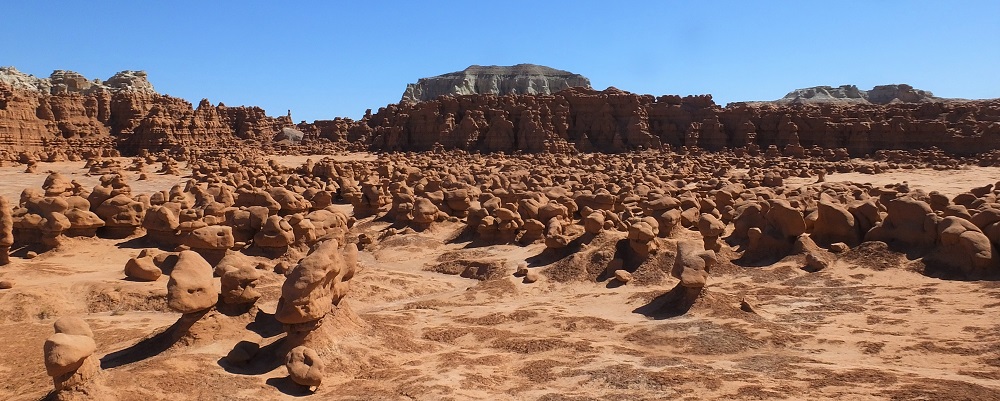
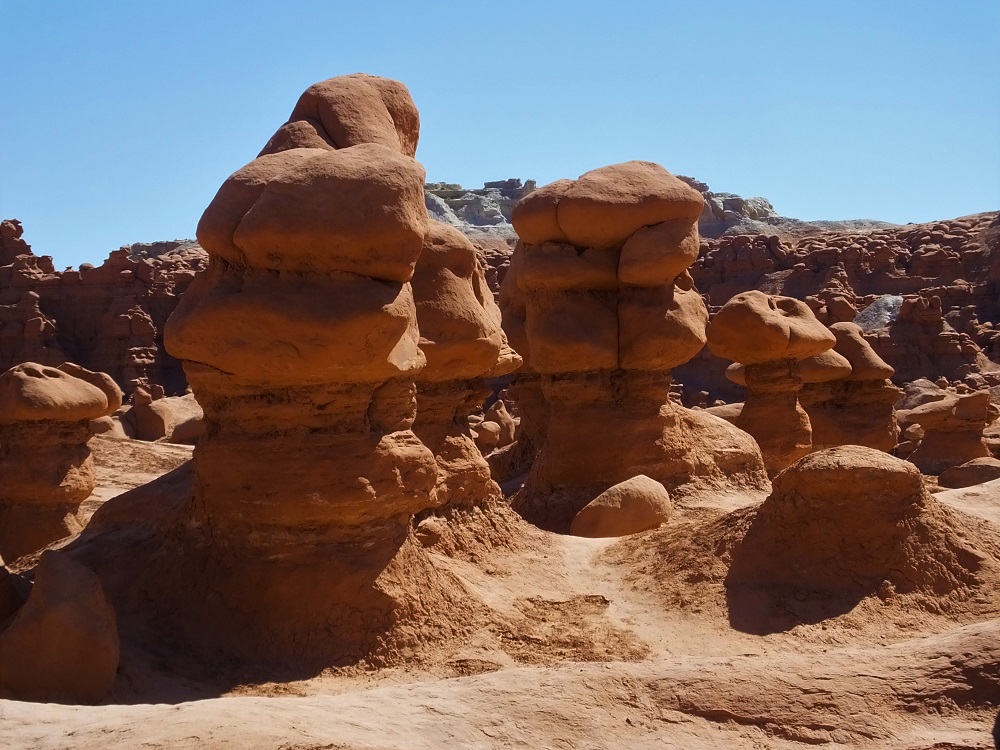
Located in a remote area about eight miles off the main highway, Goblin Valley State Park has thousands of hoodoos, referred to locally as goblins. The goblins are mushroom-shaped rock formations that are 10-20 foot in height.
Across several valleys, hundreds of these formations cast interesting shadows that look like goblins advancing on the visitor.
Goblin Valley
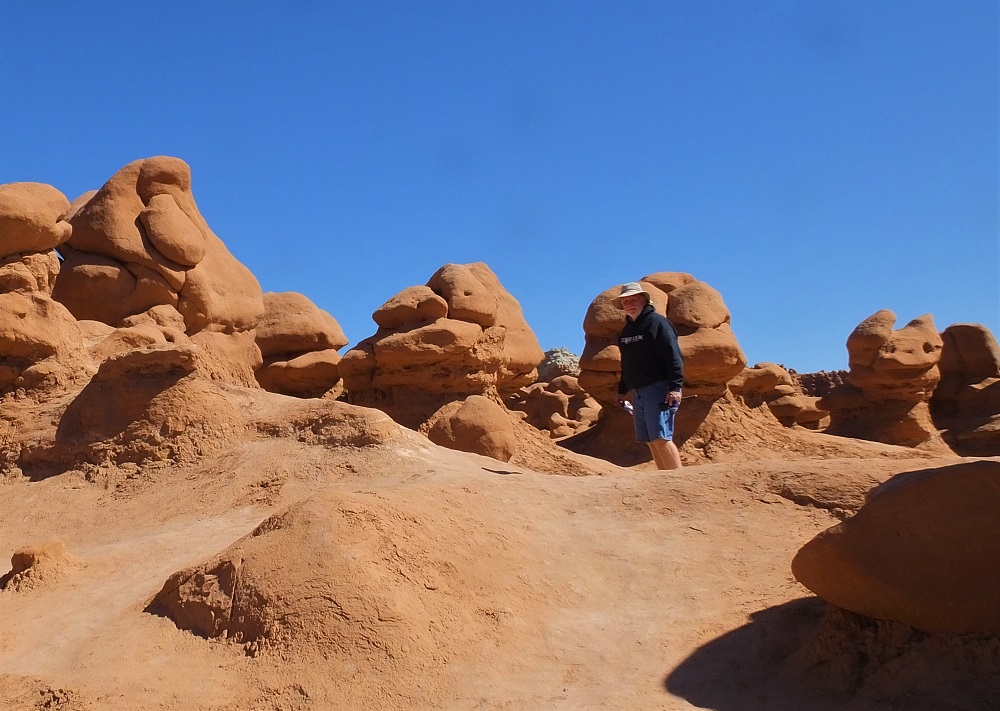
After lunch, we took a few moments to walk in one of the valleys, among the goblins/hoodoos.
Among the goblins/hoodoos
Here is a short video taken during our walk (please bear with us as we learn how to create and post Youtube videos).
After a safe escape from Goblin Valley, we continued to on Moab, where we found ourselves among many other visitors during one of the busiest times of the year.
During the weeks and miles of our trip to the Tetons, we saw some interesting sights that we would like to share with you.
Bison, Goats, Prairie Dogs, Sheep…Brontosaurus?
We were driving along the rolling hills of southwest South Dakota enjoying amazing wildlife. Then we saw it – a turquoise brontosaurus. We wondered how it got there…
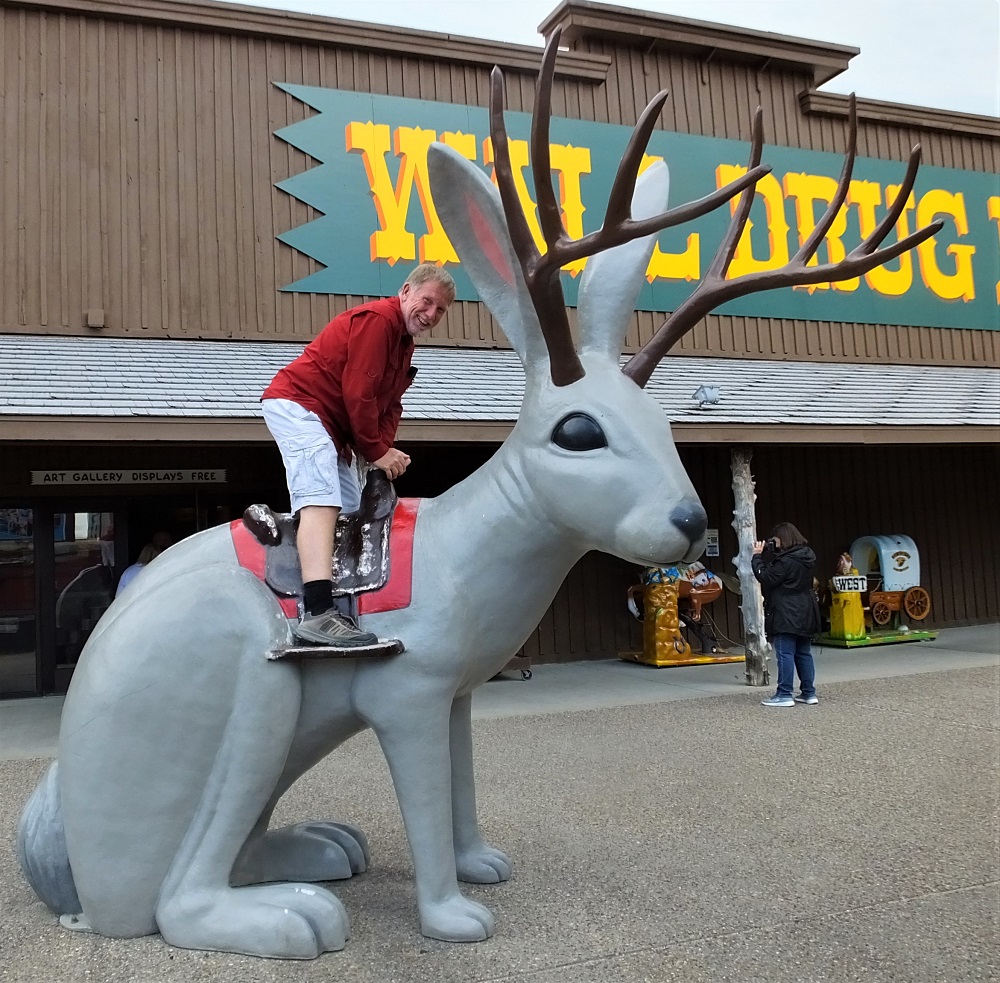
Riding A Jackalope
The jackalope is part of western folklore – said to be a cross between a now extinct pygmy-deer and a species of killer-rabbit. Occasional sightings of this rare creature are rumored to still occur, with small pockets of jackalope populations persisting in the America West.
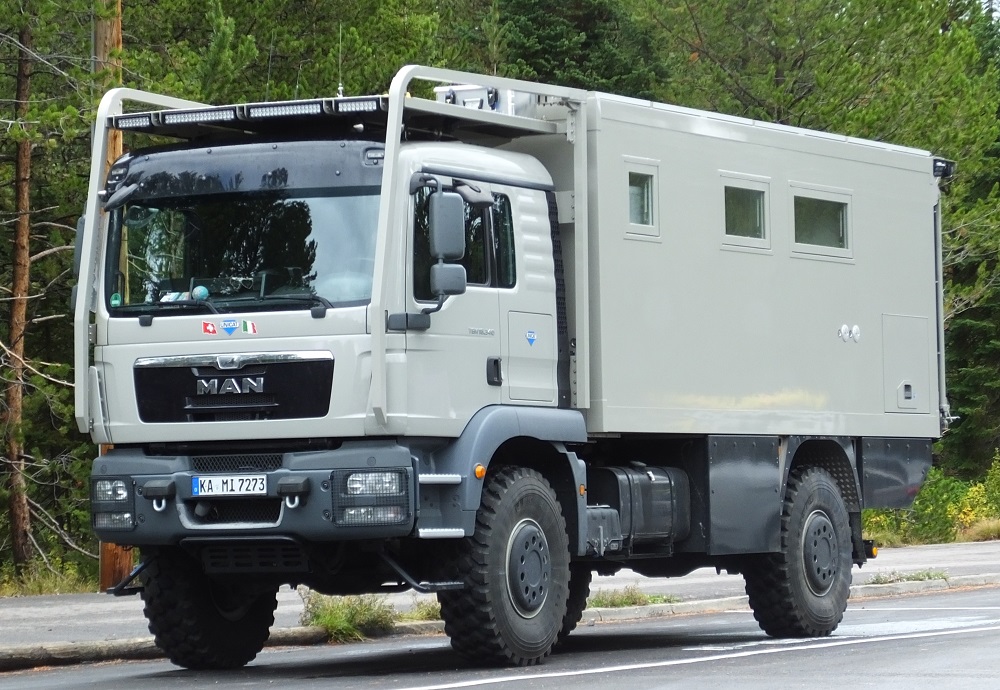
Expedition RV Inspiration
The typical RVs one sees while traveling include trailers, fifth wheels, pop-ups and slide-ins.
Some rugged, probably affluent and definitely eccentric travelers camp in military-style prepper expedition RVs. We saw the massive rig below in Grand Teton National Park.
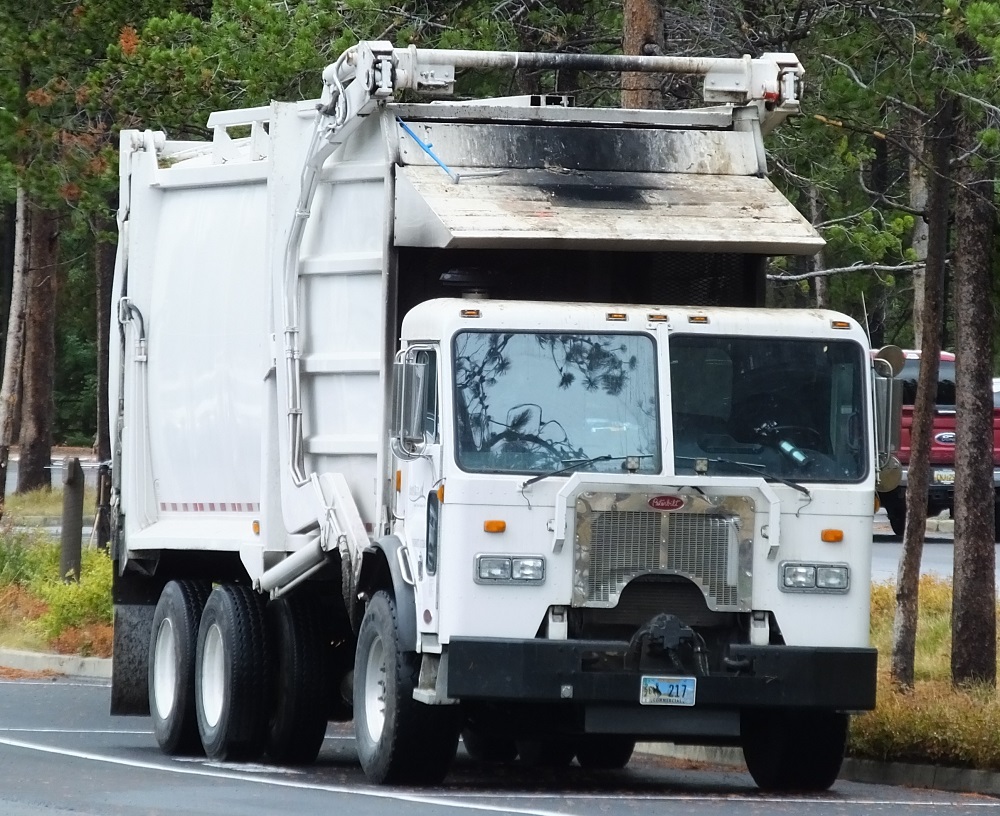
A few minutes later we discovered the vehicle that must have provided the inspiration for this rugged RV.
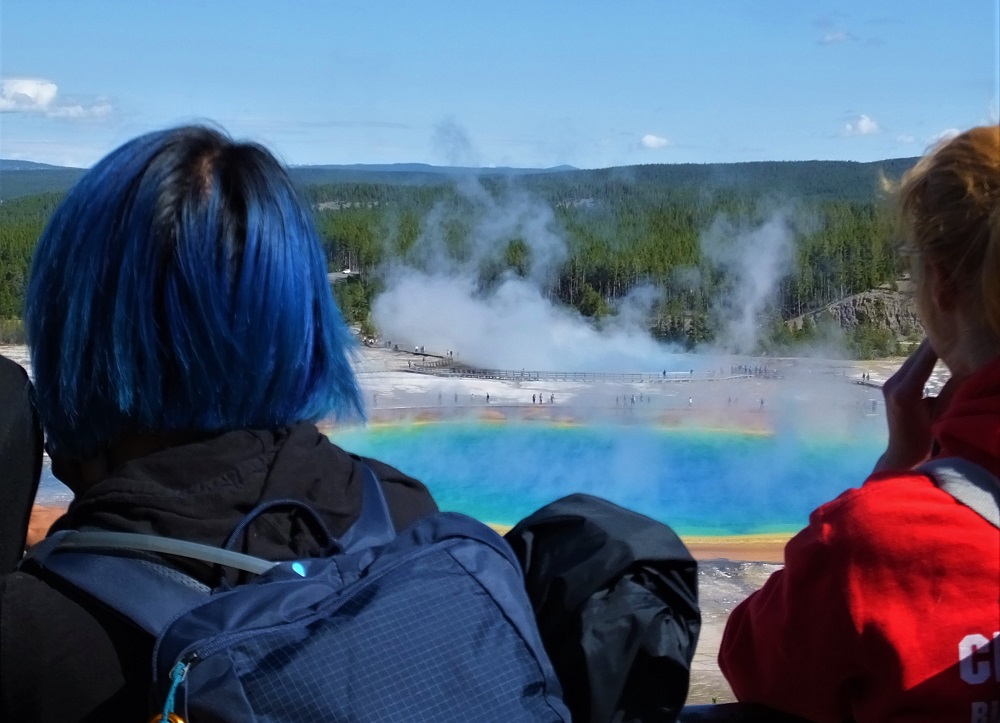
What Hair Color is That?
We hiked to an overlook with a phenomenal view of the Grand Prismatic Spring in Yellowstone. A young lady with blue hair was also enjoying the view. If you would like to dye your hair her color, request Grand Prismatic Blue.
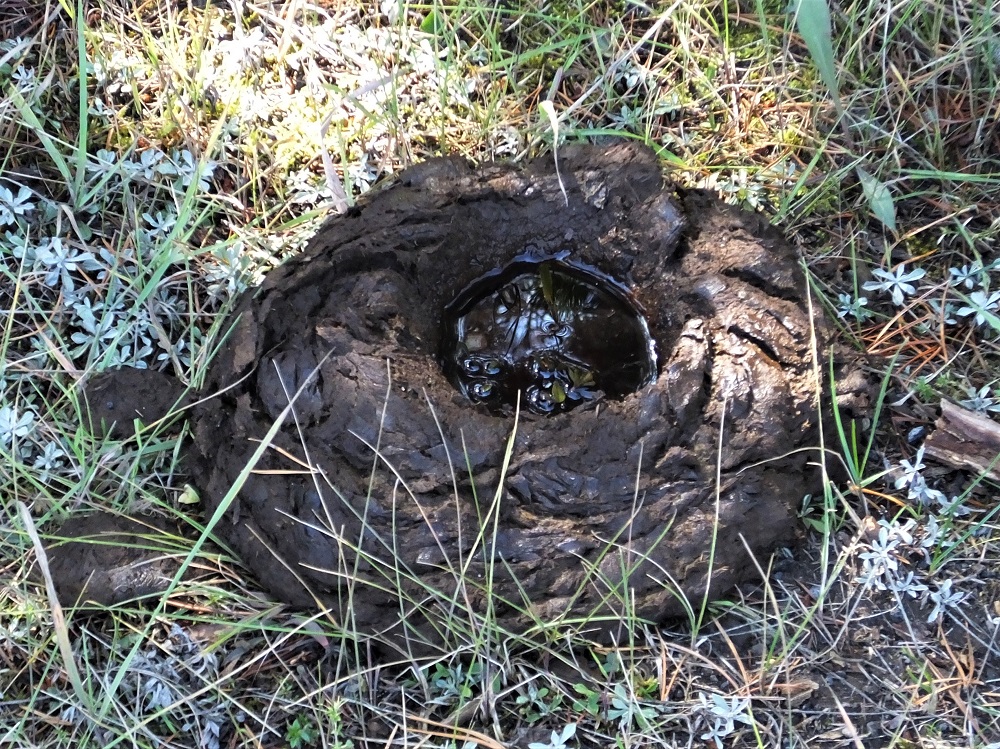
Caution: Bison Formation Ahead
As we returned to the parking lot from the Grand Prismatic Spring, we saw the interesting formation below alongside the trail. The cone resembled several of the geysers elsewhere in the park.
A reminder to stay alert and watch where you walk.
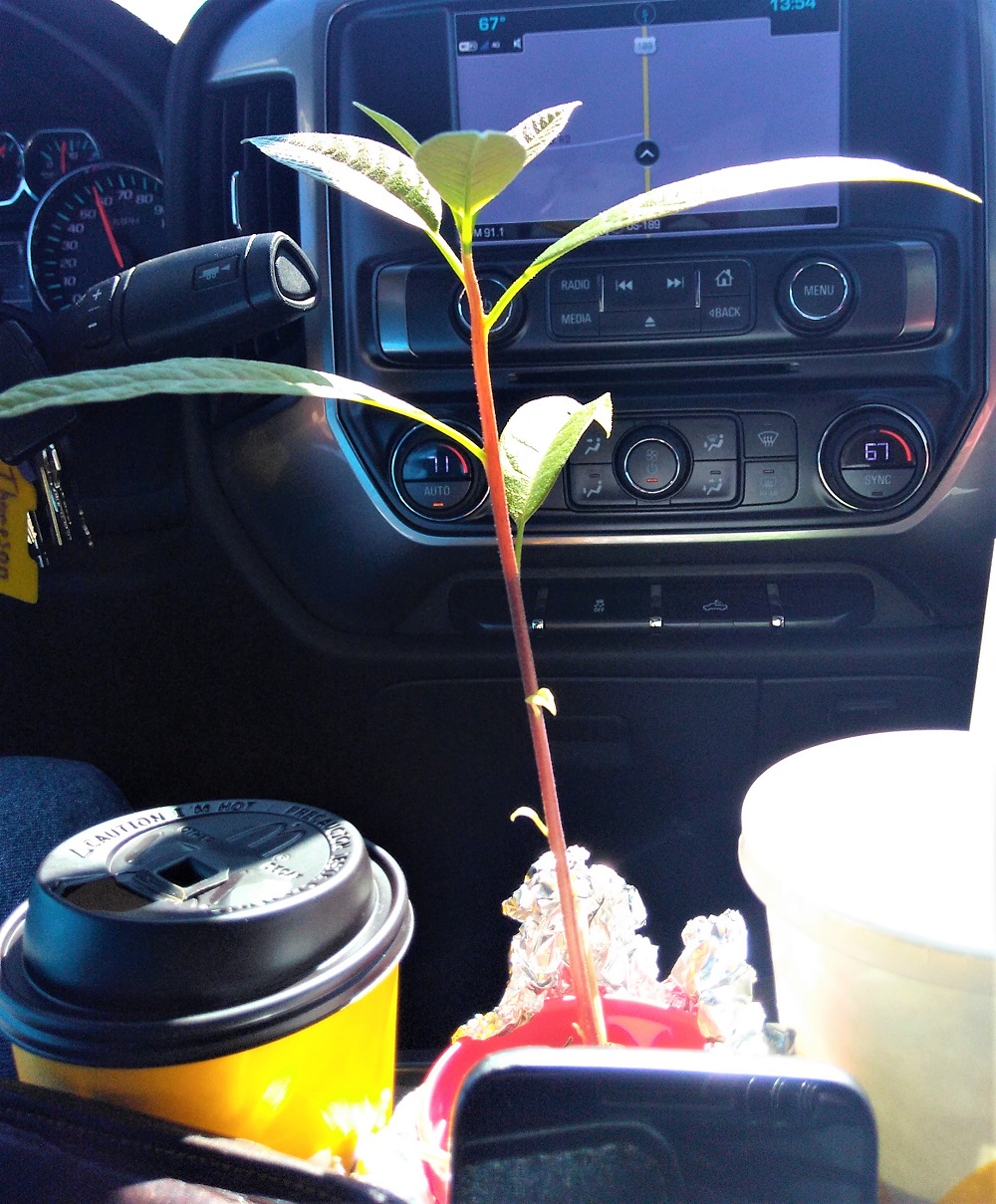
Ava the Avocado
Before we left for the Tetons, Pat placed an avocado seed in a cup filled with water to get it to sprout. We didn’t want the resulting baby avocado plant to shrivel up while we were away, so we brought Ava with us – for more for than 6000 miles and 17 states. Now that she’s home, Ava is putting down roots in a pot on our deck!
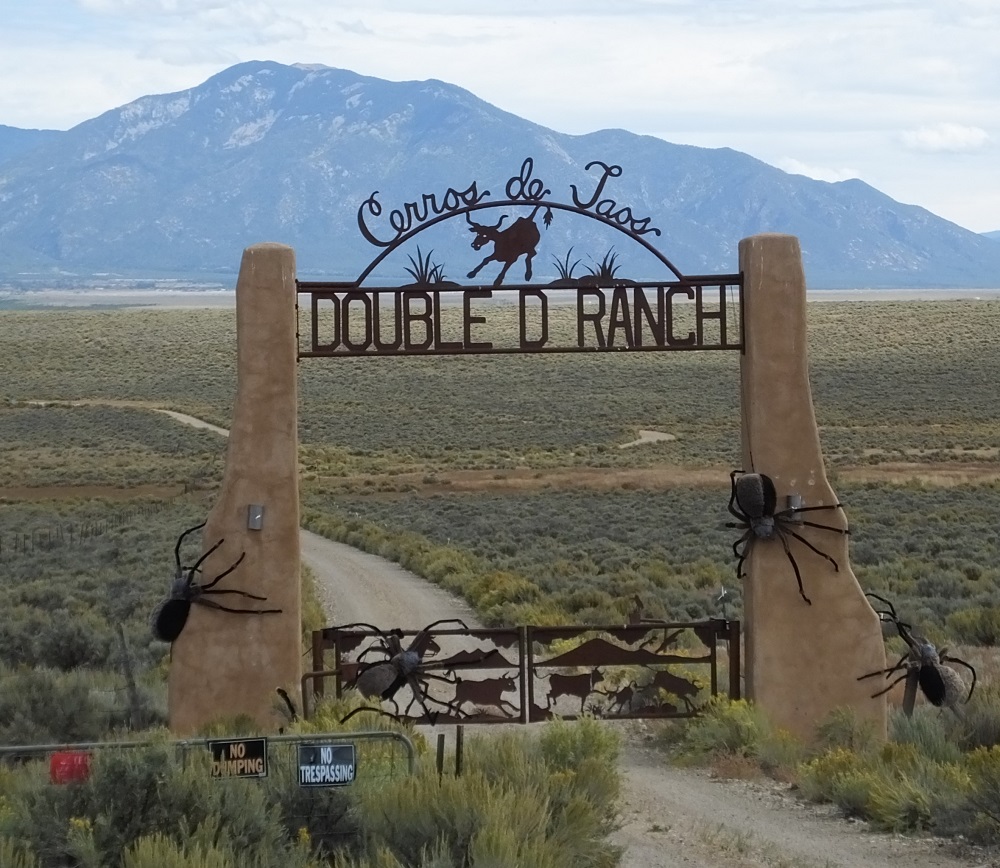
No Double D for Pat and Me
The photo below is of a ranch entrance near Taos, New Mexico. We had no desire to trespass or camp in the area.
Next week – Capital Reef National Park and the missing pies…
Having toured the Tetons and Yellowstone we faced a decision:
Head north to the Dakotas and Theodore Roosevelt National Park, then to International Falls and Voyageurs National Park in Minnesota, continue across the north shore of Lake Superior to Pukaskwa National Park in Canada and finally to Sault Ste. Marie in Michigan on the way home.
Or head south to Capitol Reef, Arches and Canyonlands National Parks in Utah, followed by Mesa Verde National Park in Colorado.
We chose the southern route. I had to find a place for treatment of my dislocated finger and the weather forecast for a major first storm of the winter was expected to hit Montana and the Dakotas . The northern route would have to wait for a future trip.
Our choice was good! To the north it was cold and snowy (see news), definitely not suitable for camping and outdoor activities – not for thin-blooded Floridians and most other people. In addition, we found a hand therapist in Cortez, Colorado (near Mesa Verde) to look at my finger.
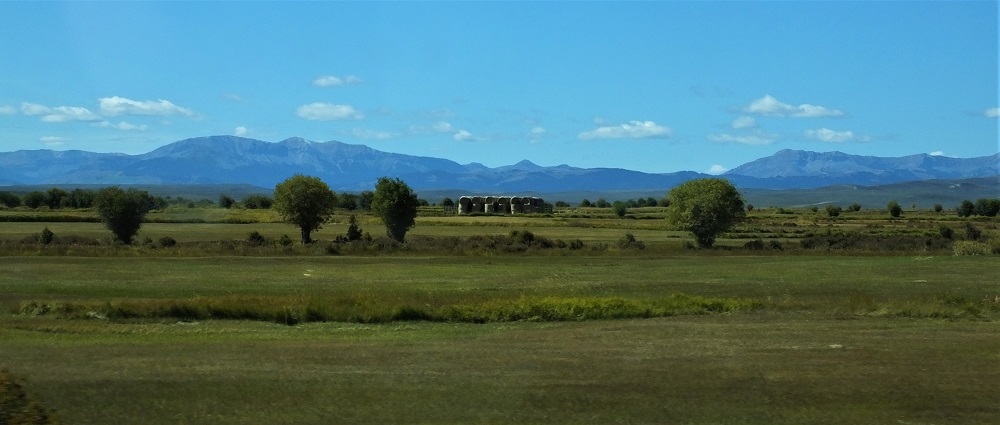
Wyoming rangelands and distant mountains
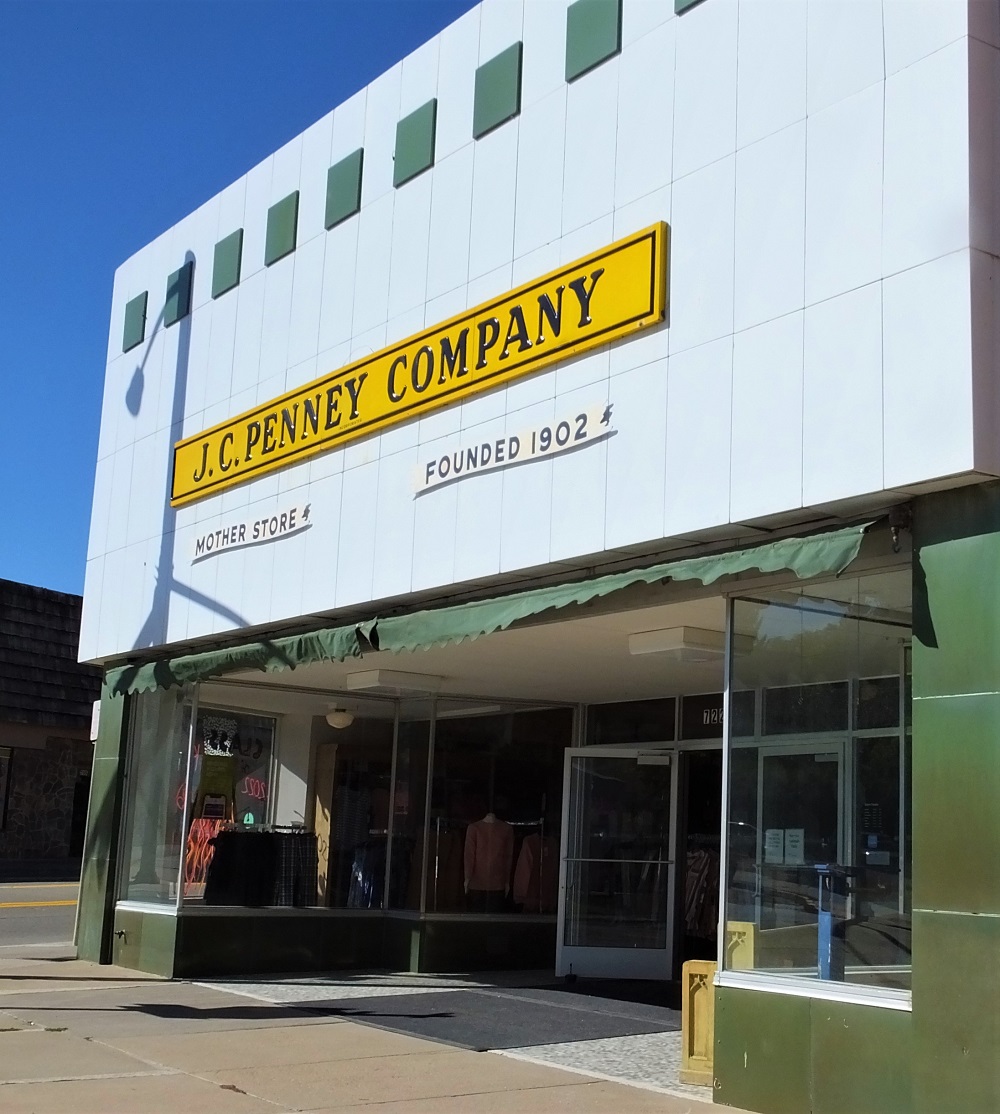
We made plans to spend the night in Evanston, a town in southwestern Wyoming (map point 12). Crossing rolling rangelands with mountains in the distance, we came to the town of Kemmerer, Wyoming. In the center of town, we noticed a sign on a building:
The first JC Penney store in Kemmerer, Wyoming
The first JC Penney store was in a small town in remote southwest Wyoming! We stopped to learn how the massive department store chain started in Kemmerer.
JC Penney
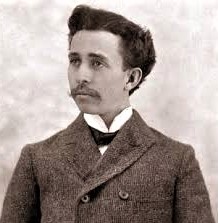
James Cash Penney was born in 1875 on a small farm in Missouri. After high school, he held several jobs, including that of clerk at a dry goods store where he began his training as a merchant. He moved to Colorado where he owned a butcher shop, and at age 23 he went to work for Golden Rule Stores based in Colorado and Wyoming.
The store owners offered him an opportunity to join them as a partner and to open a new store in Kemmerer, Wyoming. The store opened on April 14, 1902 and was an instant success, based on two then revolutionary ideas – cash only transactions and the golden rule: do unto others as you would have them do unto you.
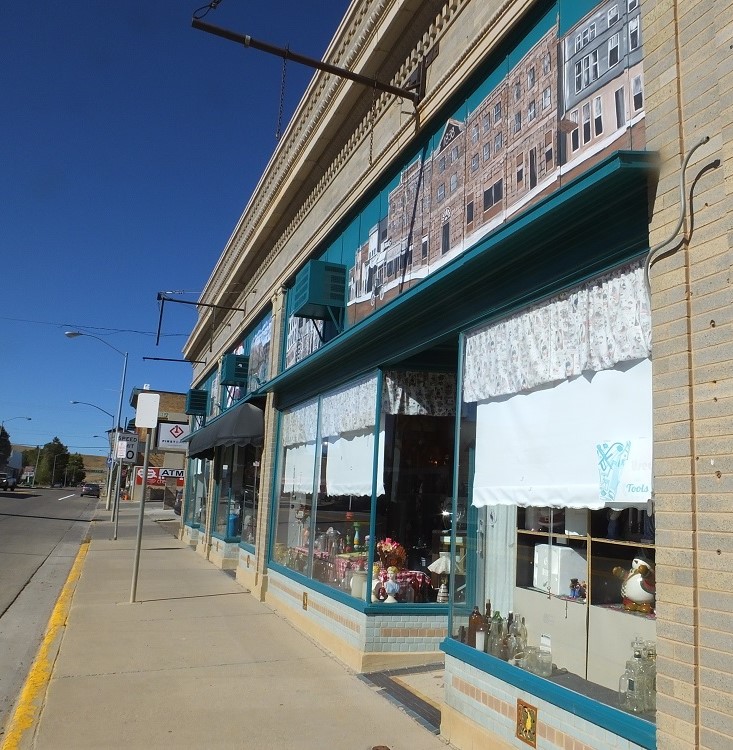
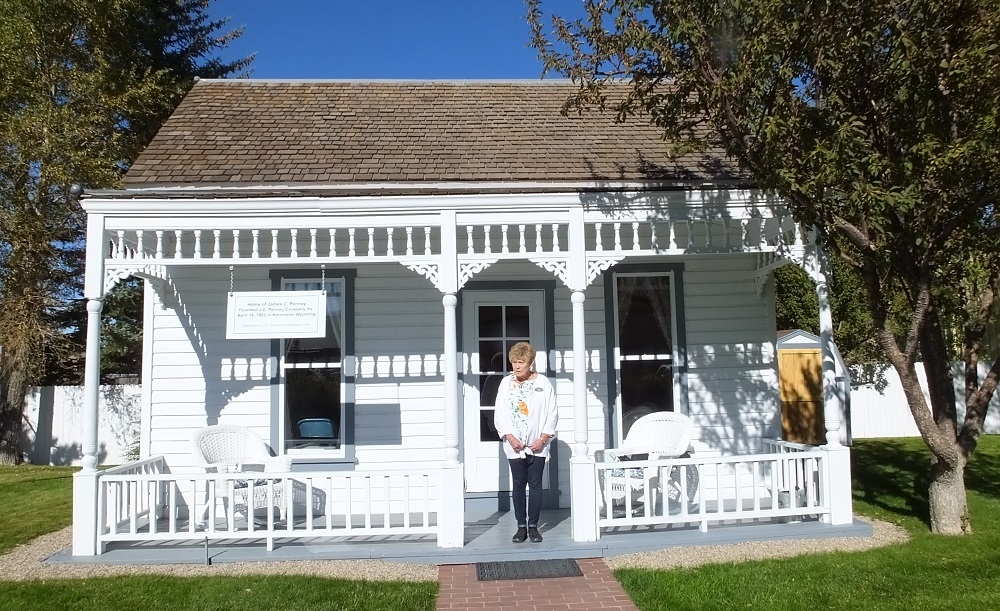
View along busy Kemmerer streetJC Penney home two blocks form the store
Additional stores were opened, and when the owners gave Penney an opportunity to buy their interest in the Wyoming stores, he jumped at the chance. By 1912, there were 34 Golden Rule Stores headquartered in Salt Lake City.
In 1913 the chain was incorporated in Utah as the JC Penney Company. The company headquarters was moved to New York City a year later to be closer to their major suppliers of merchandise.
The JC Penney Company was remarkably successful – by the beginning of the 1920s, there were 197 stores from coast to coast with sales of nearly $43 million.
See JC Penney for more fascinating information about this man and the department store chain that help shape America. For example, in 1940 he helped train a young Sam Walton at a JC Penney store in Des Moines, Iowa.
Penney lived the tenets of the company’s mission statement “Honor, Confidence, Service and Cooperation” and underlying Christian principles throughout his 95-year-life.
Before continuing to Capitol Reef National Park, we will pause next week to share several interesting sights encountered thus far during our Grand Teton travels.
From Devil’s Tower we headed west, eagerly anticipating the Tetons after a night in Riverton, Wyoming (map point 8). As we drove, the Black Hills of eastern Wyoming smoothed to gently rolling golden grasslands, with occasional hills and canyons.
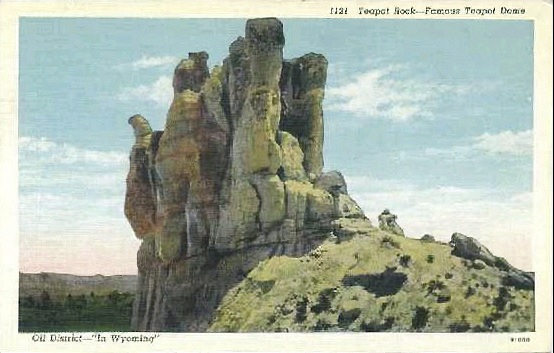
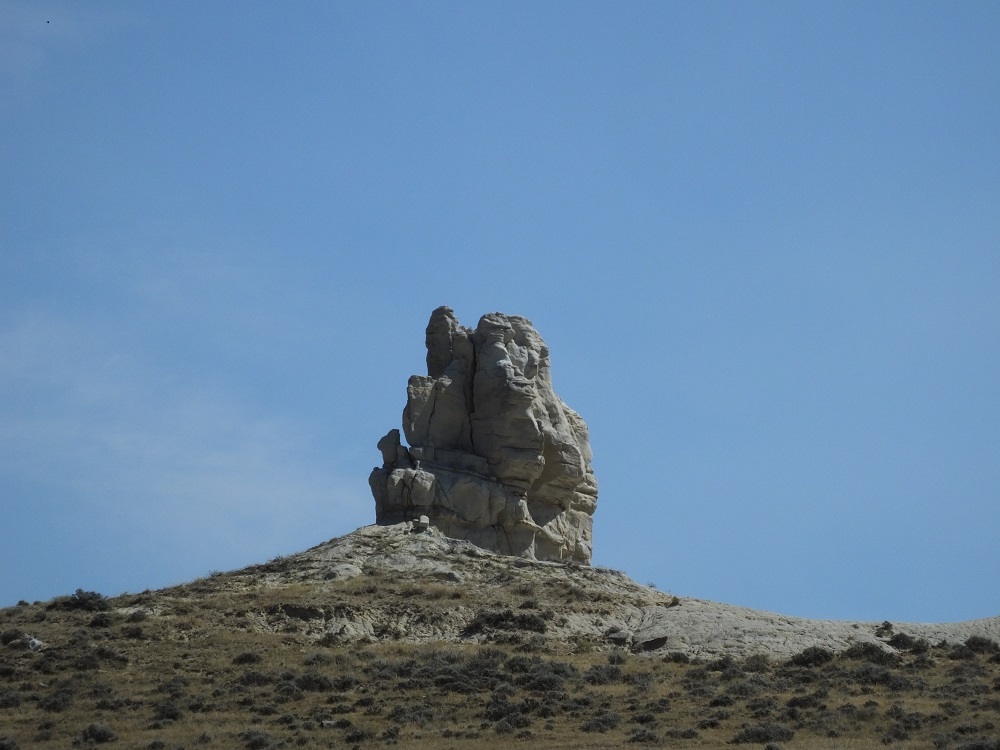
Stopped to see Teapot Rock
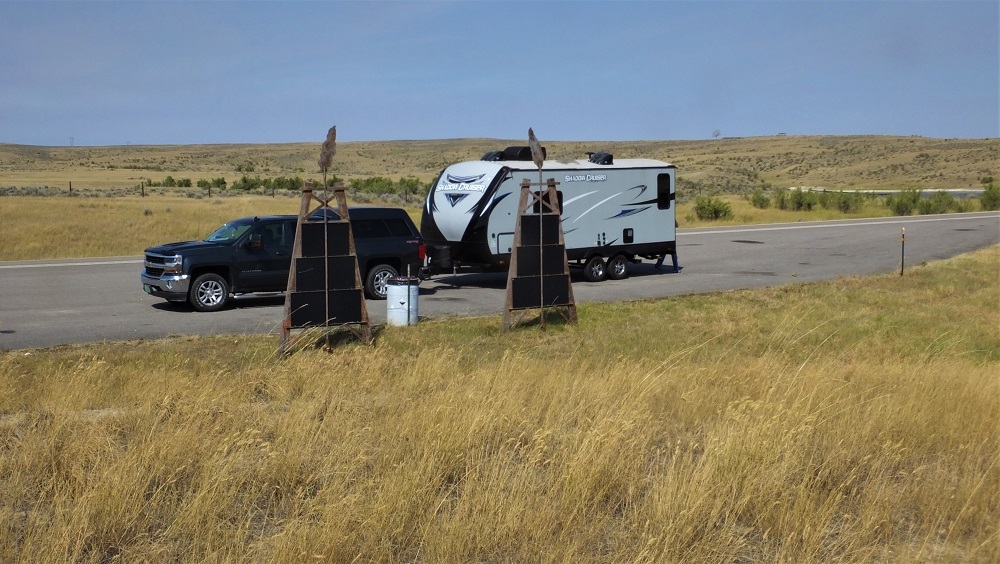
We discovered we would be passing Teapot Rock (map point A), quite literally in the middle of nowhere – 27 miles north of Casper WY! The teapot rests atop Teapot Dome, location of the infamous bribery scandal involving the administration of United States President Warren G. Harding from 1921-1923.
As the US Navy transitioned from coal to fuel oil, several oil-producing areas, including the Teapot Dome oilfield in Wyoming, were designated as oil reserves so the Navy would always have enough fuel available. A member of Harding’s cabinet, Interior Secretary Albert Fall, leased the oil production rights at Teapot Dome to a subsidiary of Sinclair Oil Corporation. Fall was accused of accepting sizable loans and gifts to award the leases to the oil company.
The Teapot Dome scandal is regarded as the worst cabinet scandal in US history and has been compared with subsequent scandals like Watergate (and some say the Trump administration).
Teapot Rock no longer resembles a teapot – the handle and spout broke off some years ago. Perhaps it should be renamed Teapot Urn!
This is a special post regarding some changes to the RabbiTRAILS we hope you will like.
Going forward, we will post blog updates each week as we travel. The updates may be related to a recent trip (such as our 2019 Grand Teton journey) or other interesting RabbiTRAILS topics.
We will also be adding map links to blog posts where applicable for you to better understand details about our travels. We will be using Scribblemaps software. You can zoom in or out on each map, and click on reference points for additional details.
We hope you like these changes. As always, your comments and suggestions are welcome!
Custer State Park is located In the heart of the South Dakota Black Hills. The park is more than 71,000 acres and has an amazing variety of wildlife and natural features. We spent two full days exploring the park.
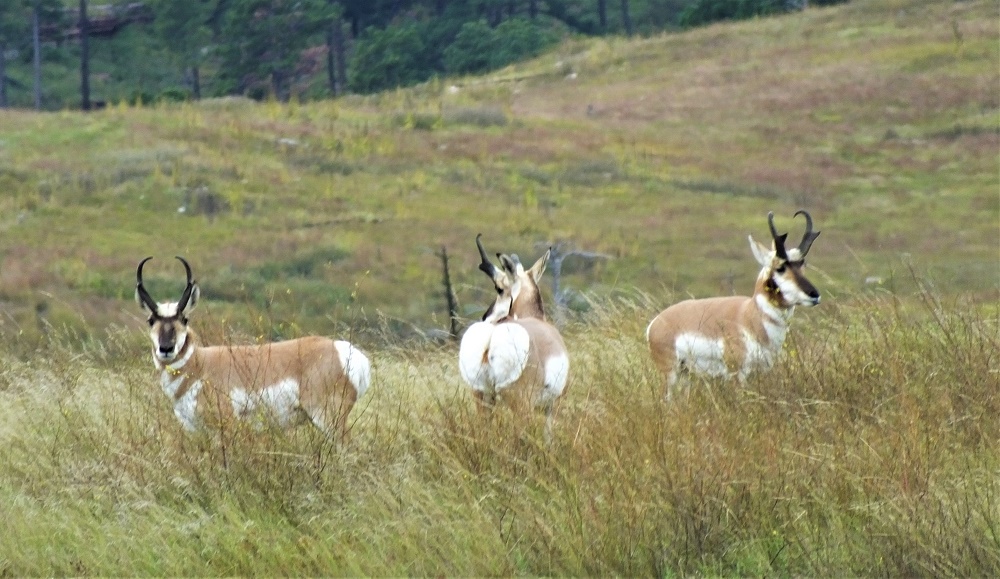
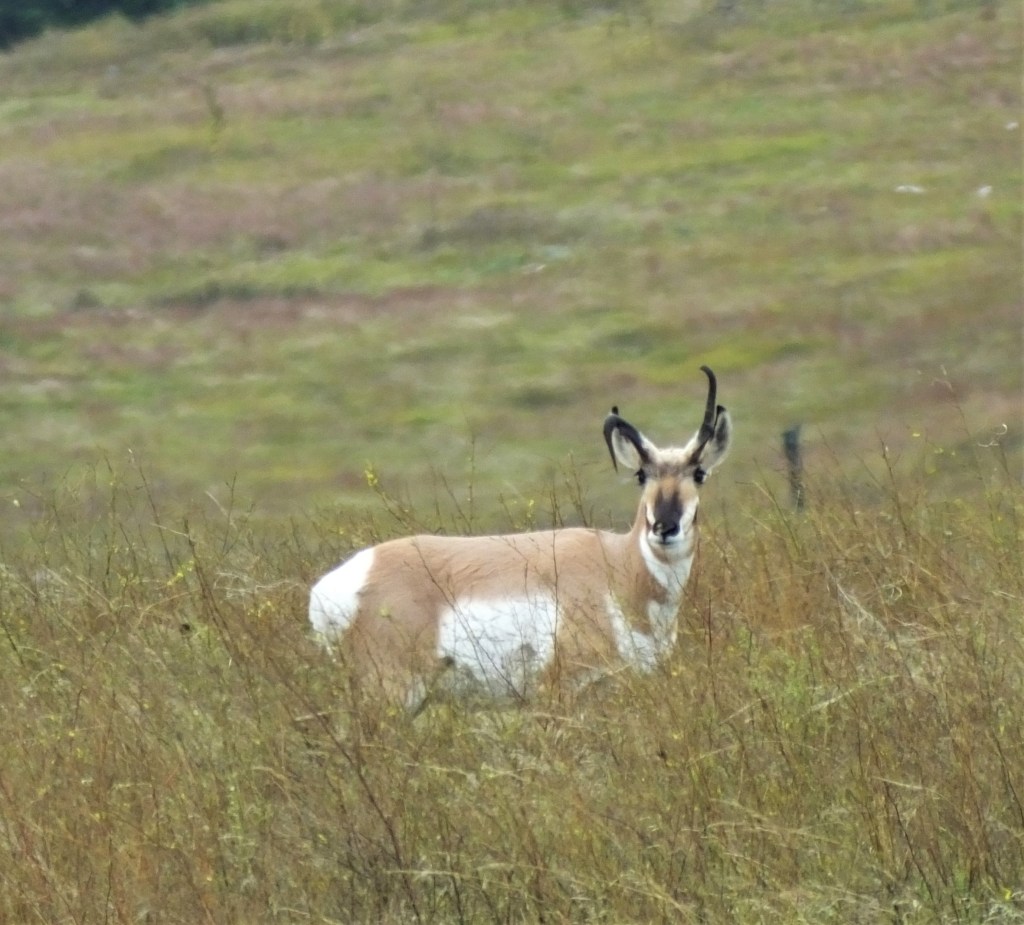
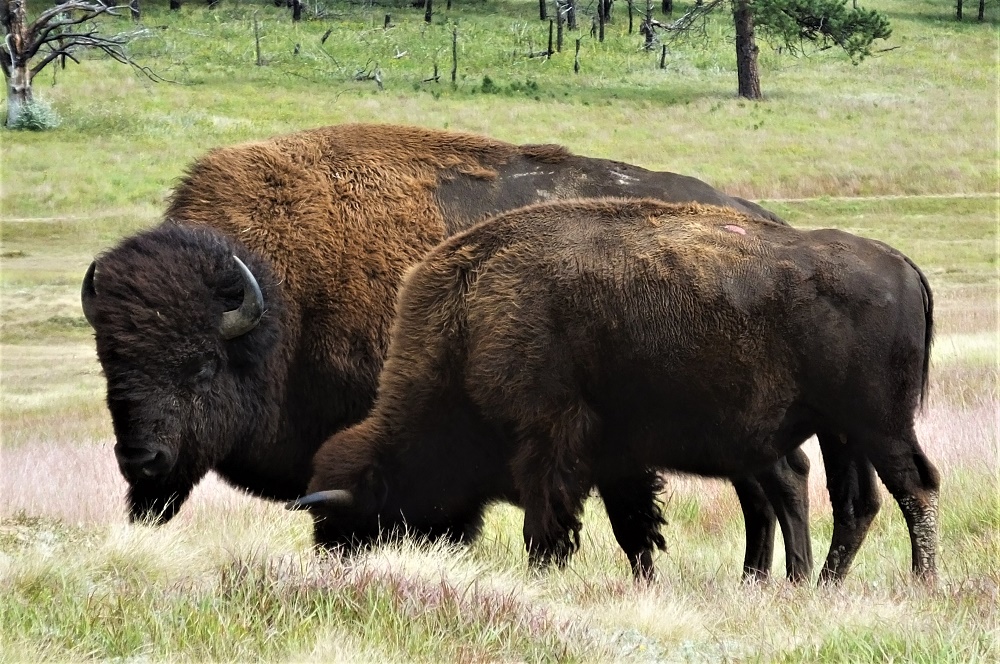
Three pronghorn antelopeProghorn antelopeTwo bison
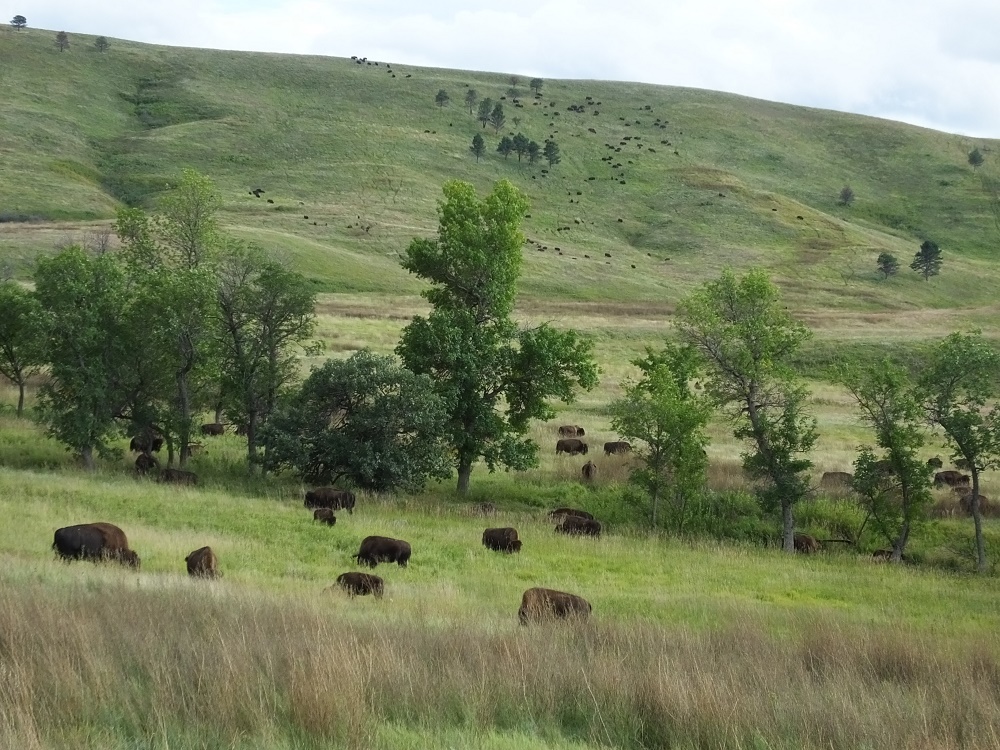
We started with the 18-mile wildlife loop. The loop traverses grass covered hills with tree covered taller hills in the distance. We saw dozens of pronghorn antelope and as we neared the southernmost part of the drive, we sighted a herd of about 50 bison slowly milling along as they dined on various grasses. At the Wildlife Visitor Center we learned the park can sustain 900-1100 bison during the winter. Each September, the herd is moved to the southern part of the park for a bison roundup. Several hundred bison in excess of the number above are sold and many become parts of bison herds elsewhere in the United States.
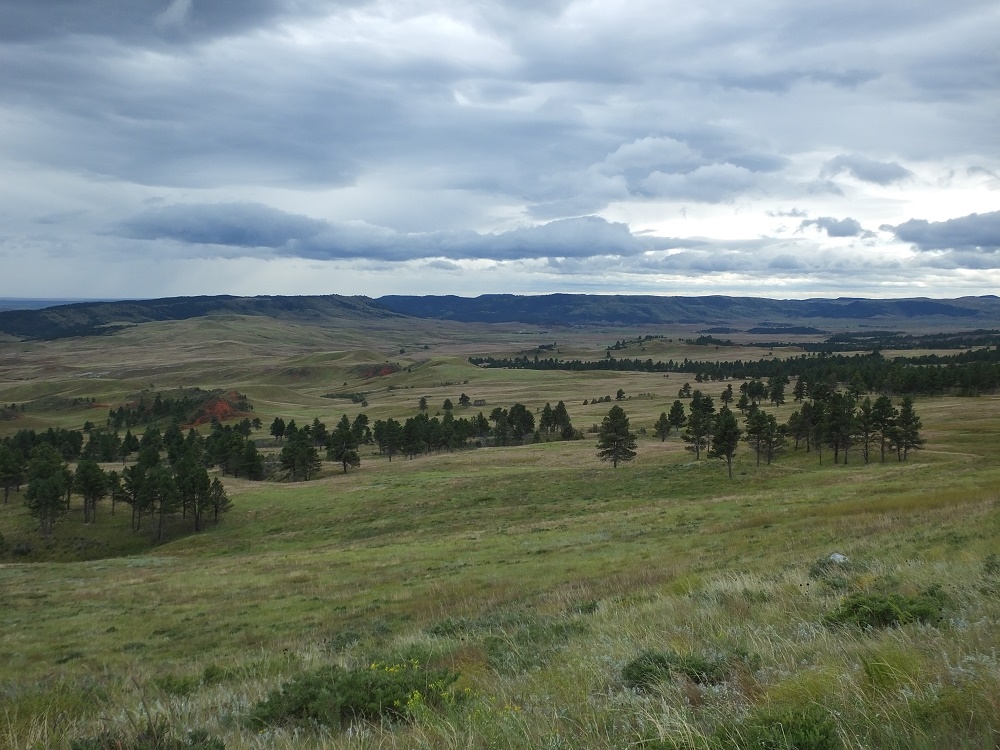
After viewing the bison for a while, we took a side trip on a dirt road that left Custer State Park and entered Wind Cave National Park. The views were amazing.
We noticed a number of small dirt mounds in some areas. On many of the mounds, one or more very active prairie dogs acted as sentries. The mounds mark the entrance to their underground burrows. There were lots of prairie dogs, and the noise they make really sounds like the bark of a small dog!
A prairie dog guards his burrow
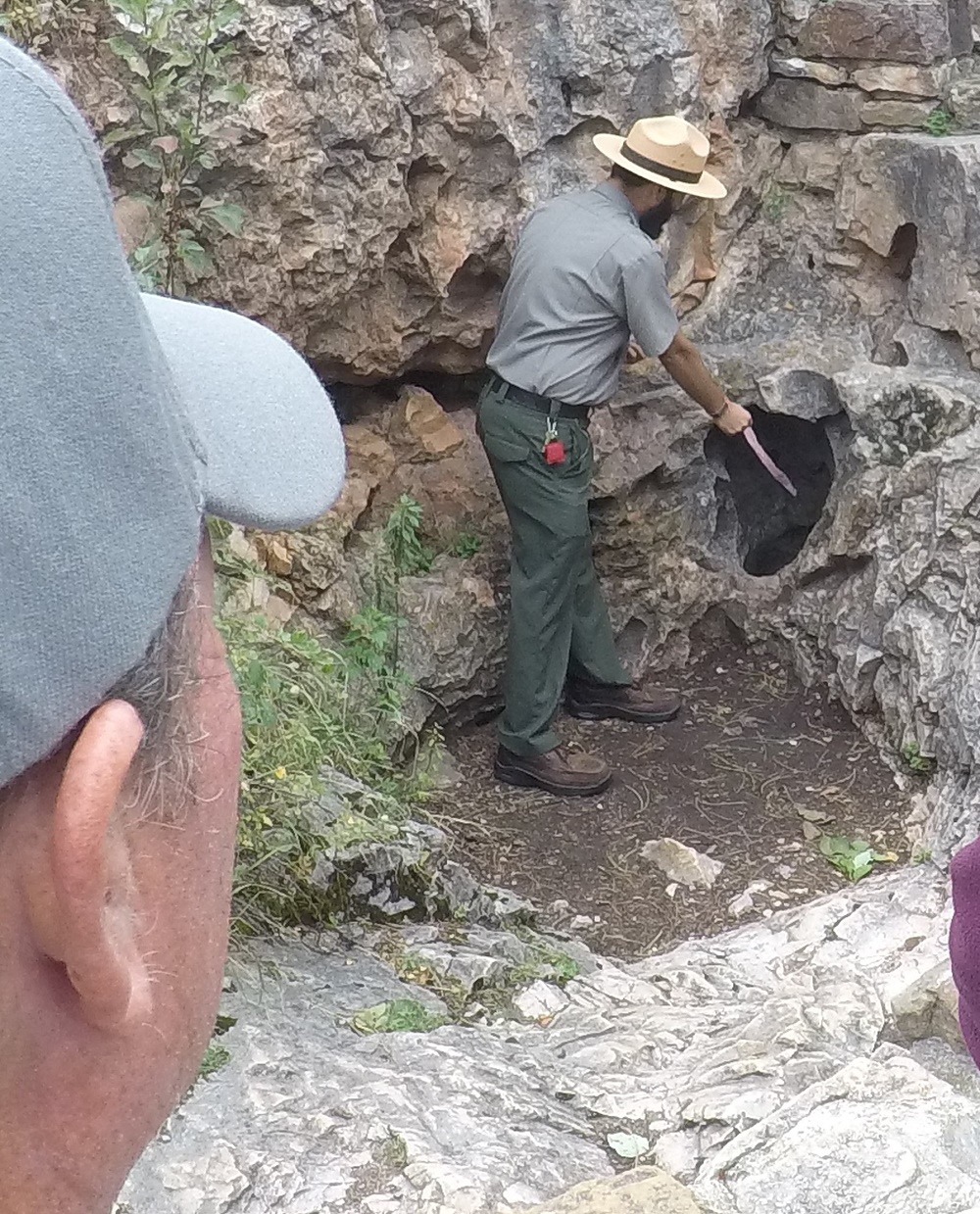
At the Wind Cave Visitor Center we learned cave tours were temporarily cancelled due to elevator problems. So we joined a ranger-led hike to the historic cave entrance to learn more about the cave.
A ranger demonstrates air being sucked into Wind Cave
The first documented discovery of the cave was in 1881, when the brothers Tom and Jesse Bingham heard wind rushing out from a hole in the ground. The ranger explained that during clear days with high pressure, air is sucked into the cave, and during stormy days with low pressure, air blows out of the cave. Using a small ribbon, he demonstrated a ribbon being sucked into the cave with a surprising amount of force. What a vacuum cleaner!
Although the historic opening is very small, about 10 inches by 14 inches, over 142 miles of cave passages have been mapped making Wind Cave is the third longest cave in the U.S. and the sixth longest cave in the world.
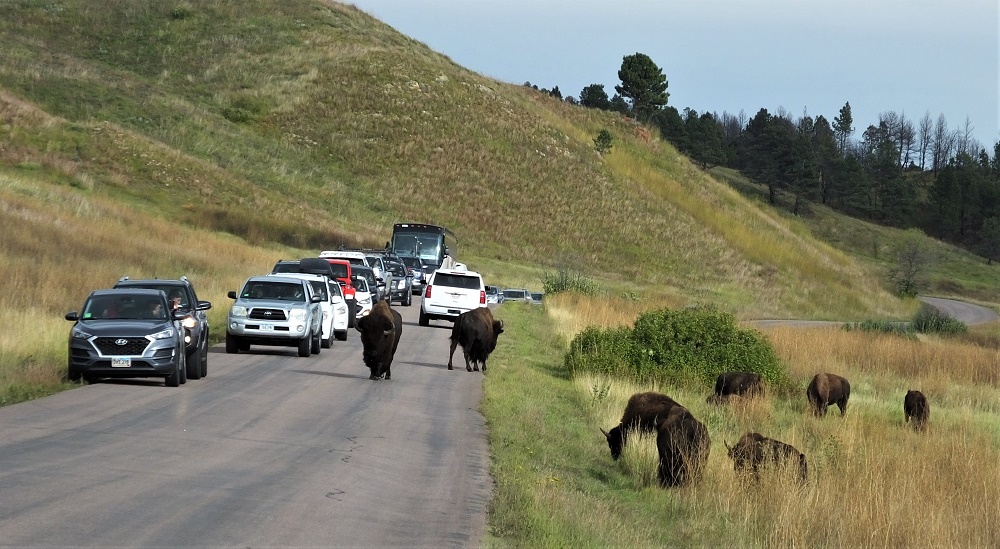
We returned to Custer State Park and the wildlife loop, and saw additional groups of antelope and bison. As we rounded a corner, we were stopped by a traffic jam in the middle of nowhere. Dozens of vehicles had stopped to see more than 500 bison – many on distant hills, others in a field close to the road and even a few walking down the middle of the road!
Bison on distant hills and fields belowBison jam!
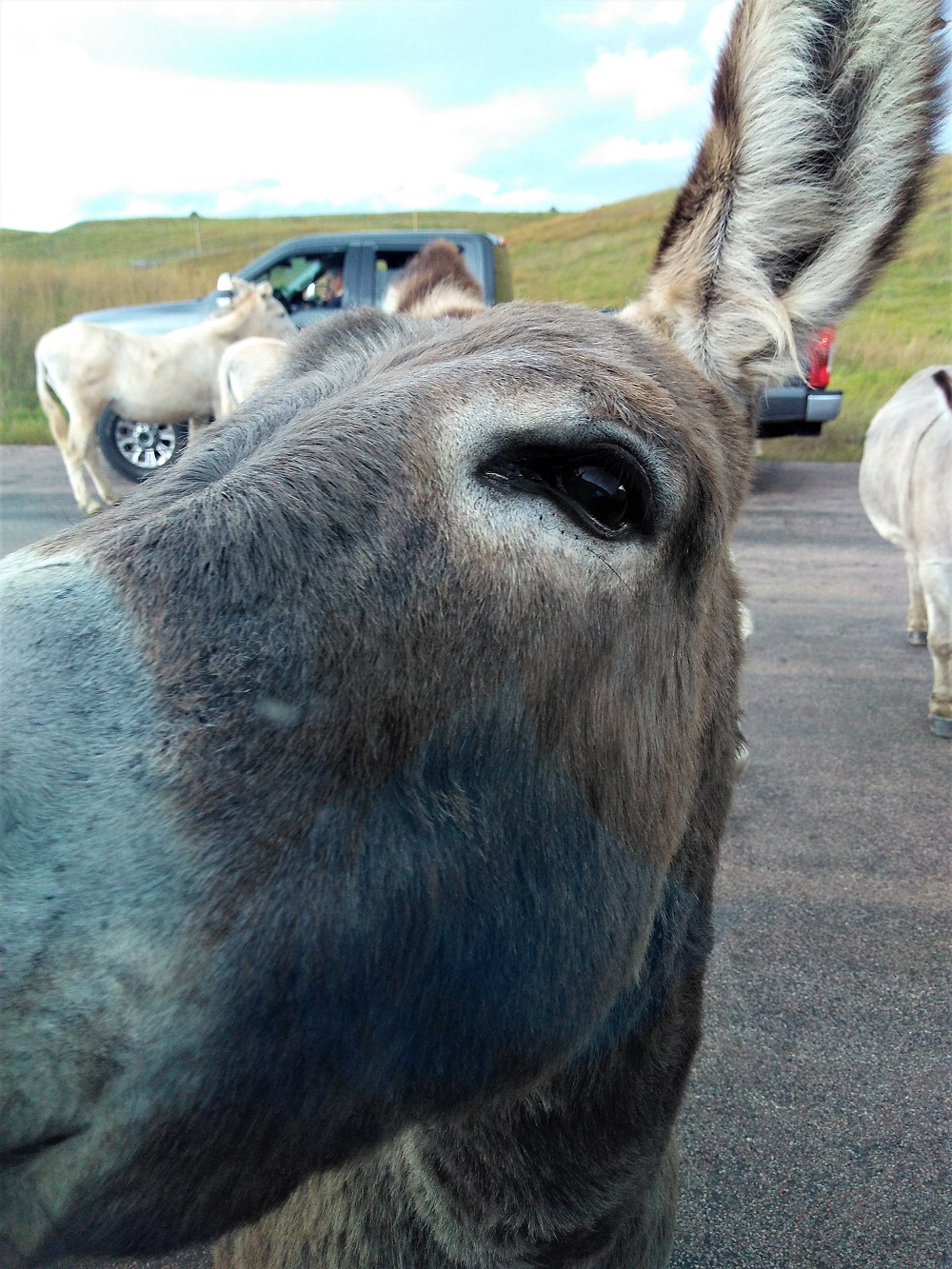
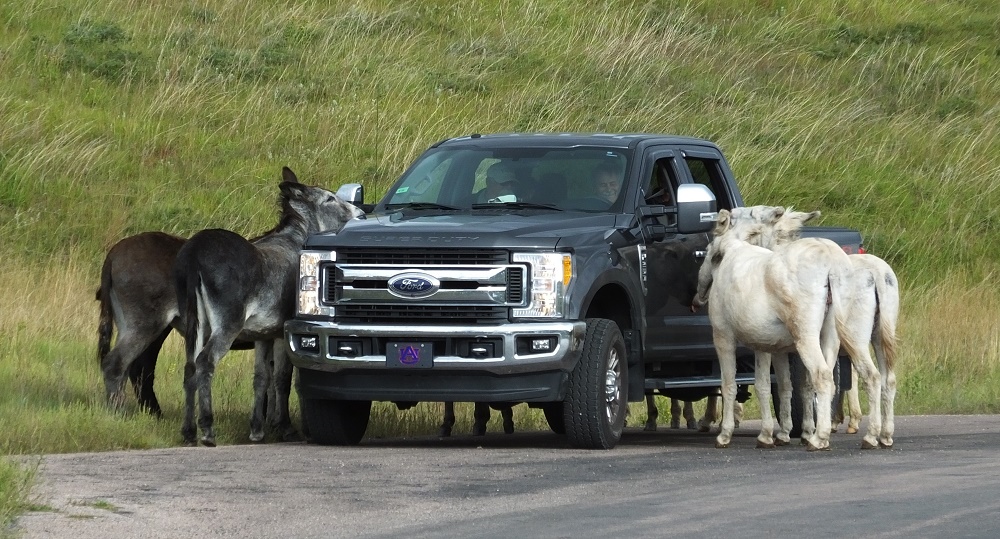
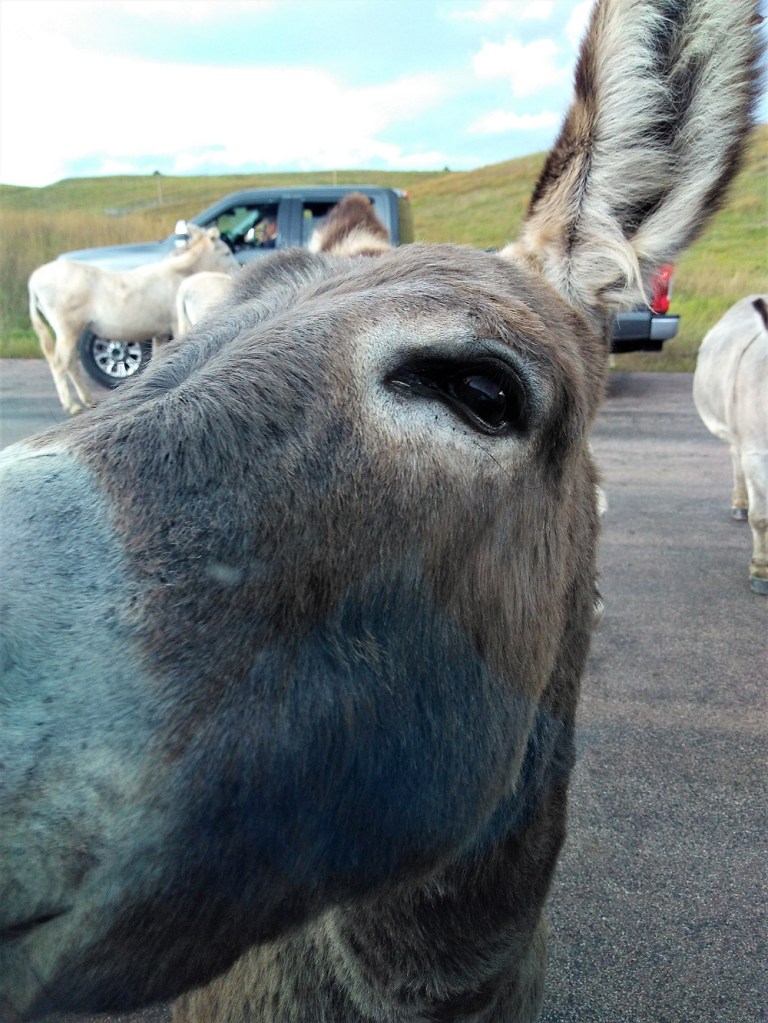
Not to be outdone for attention, there were about a dozen wild burros in the area as well, mooching carrots and such from passing vehicles. One burro approached our truck and tapped the side gently with its nose to see if we had anything.
Burros looking for a handoutOne persistent burro!
It was a great day to see wildlife and the big sky views of the park.
As we returned to our campsite, we looked forward to the next day to see the natural rock formations of the Needles Highway and the manmade massive stone carvings of Mt. Rushmore National Memorial.
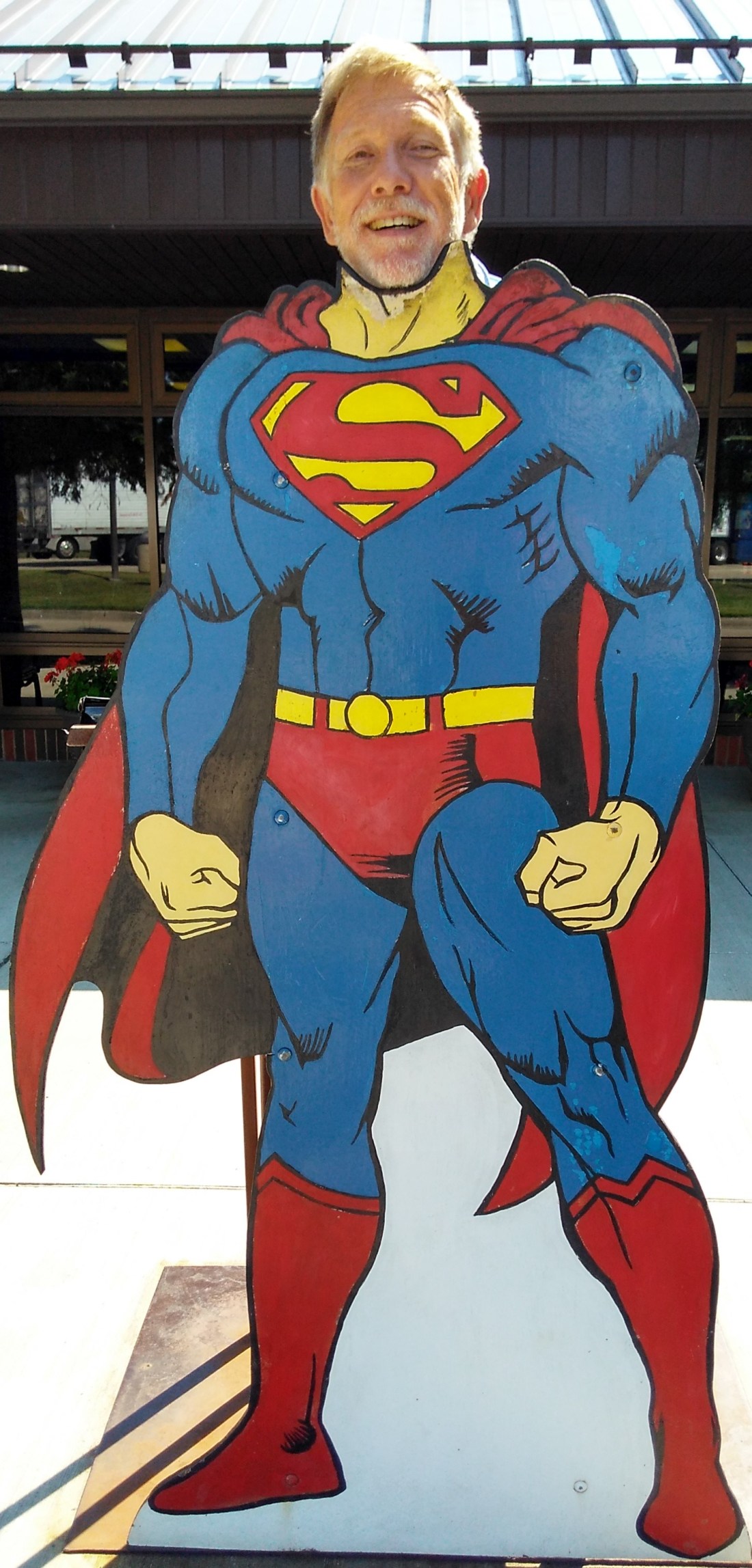
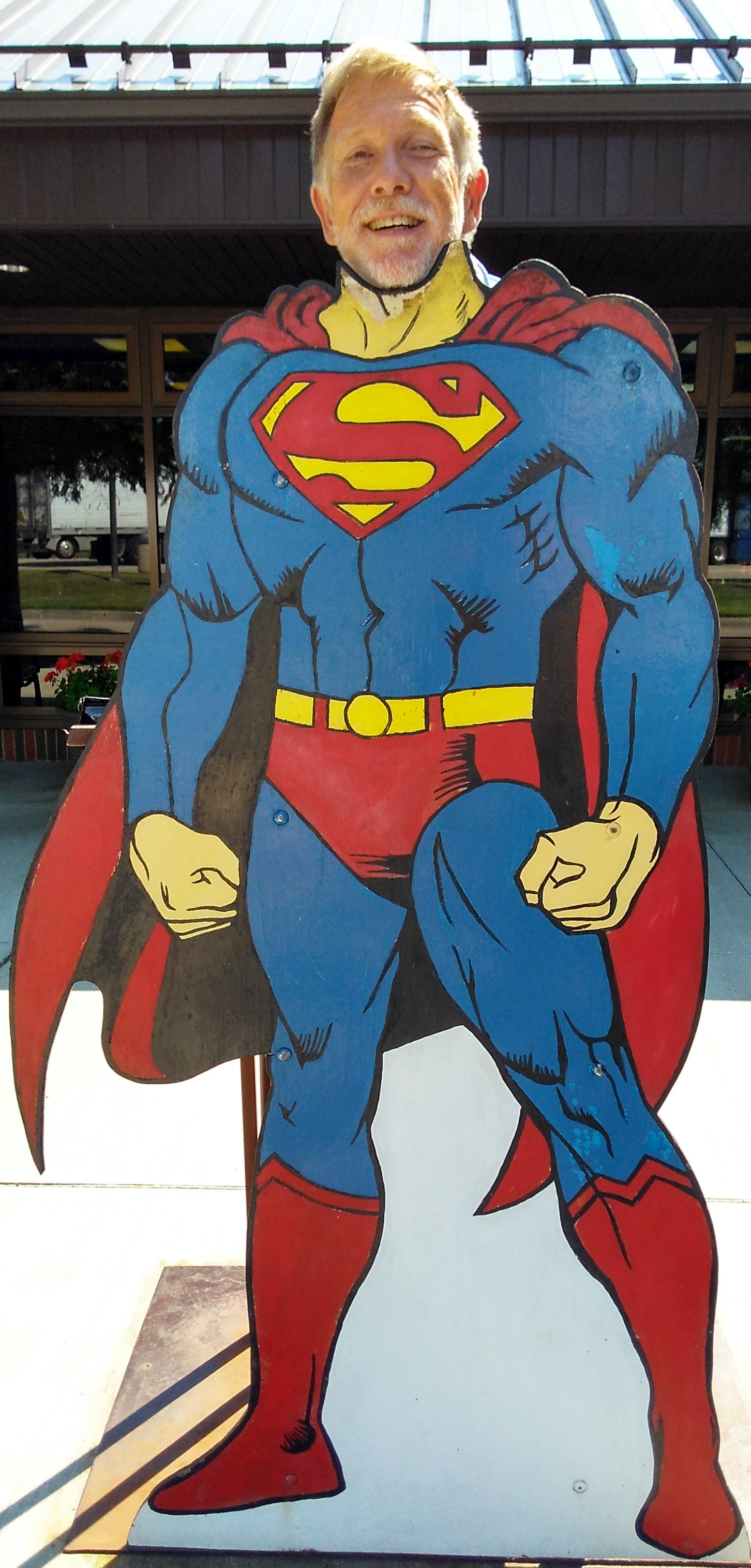
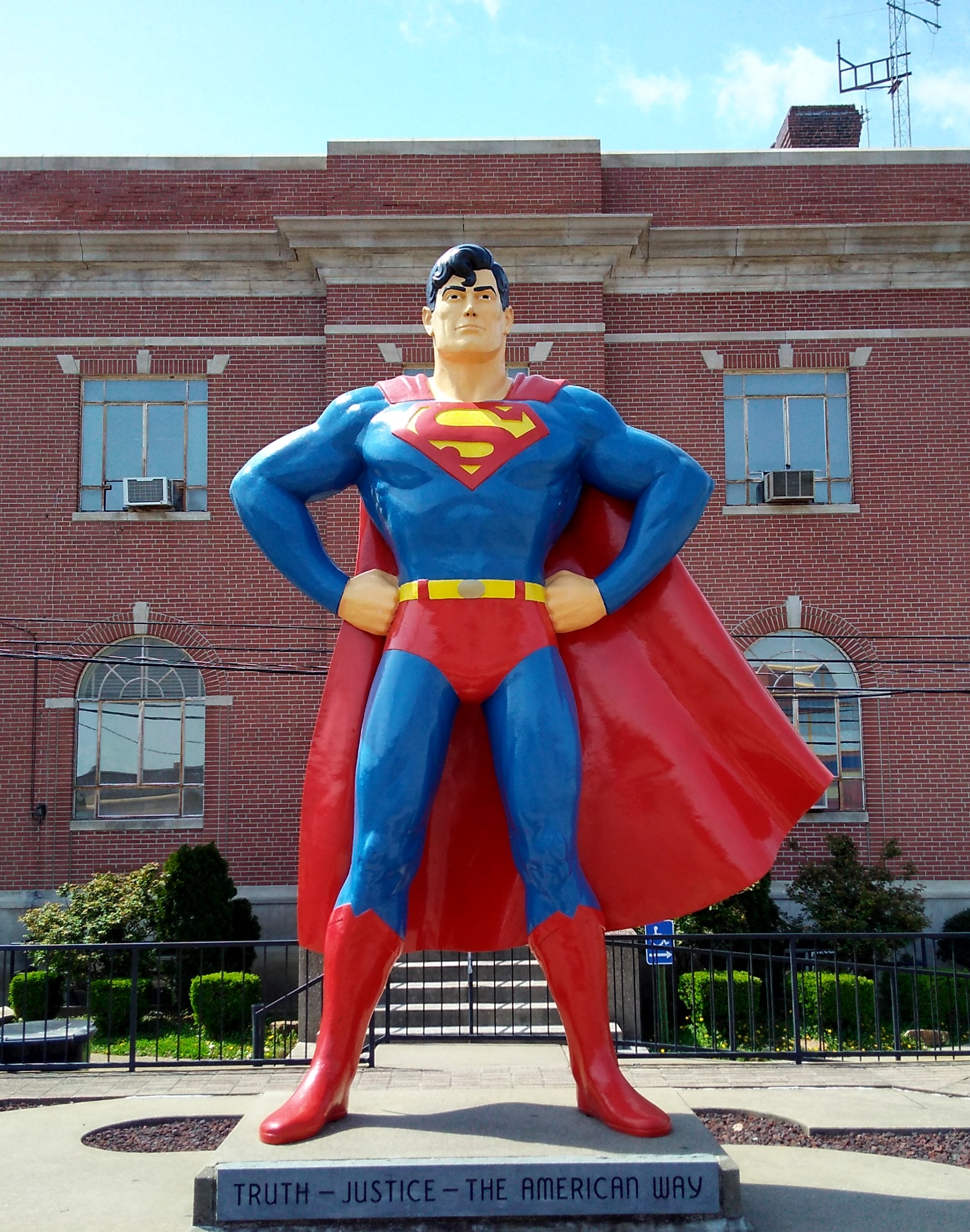
As we traveled north earlier in September, we passed by near Metropolis, the home of Superman. Pat took the picture below at a nearby Illinois rest stop.
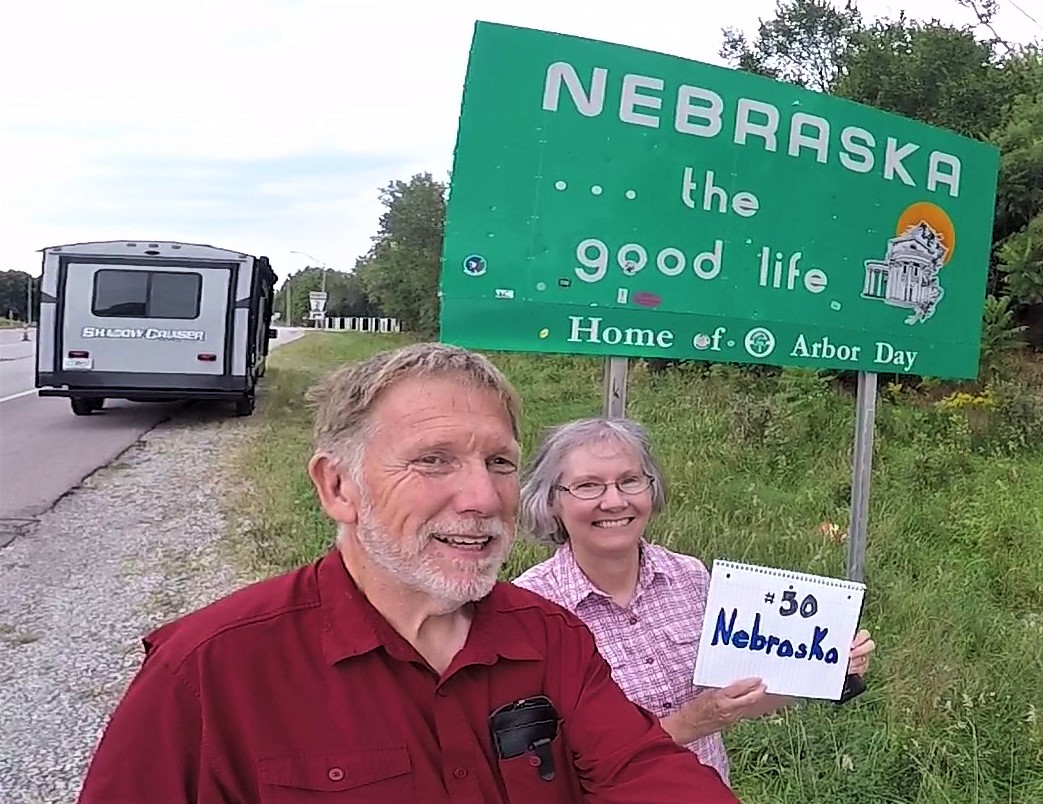
We decided our travels across Nebraska should include a visit to Omaha.
Omaha is a city of nearly a half million located on the western banks of the Missouri River. The city is the home of Warren Buffett, cake mix, butter brickle ice cream and TV dinners. It is clean and inviting for out-of-towners.
We camped a few miles away and after a 30-minute drive, we arrived in the city in the early evening.
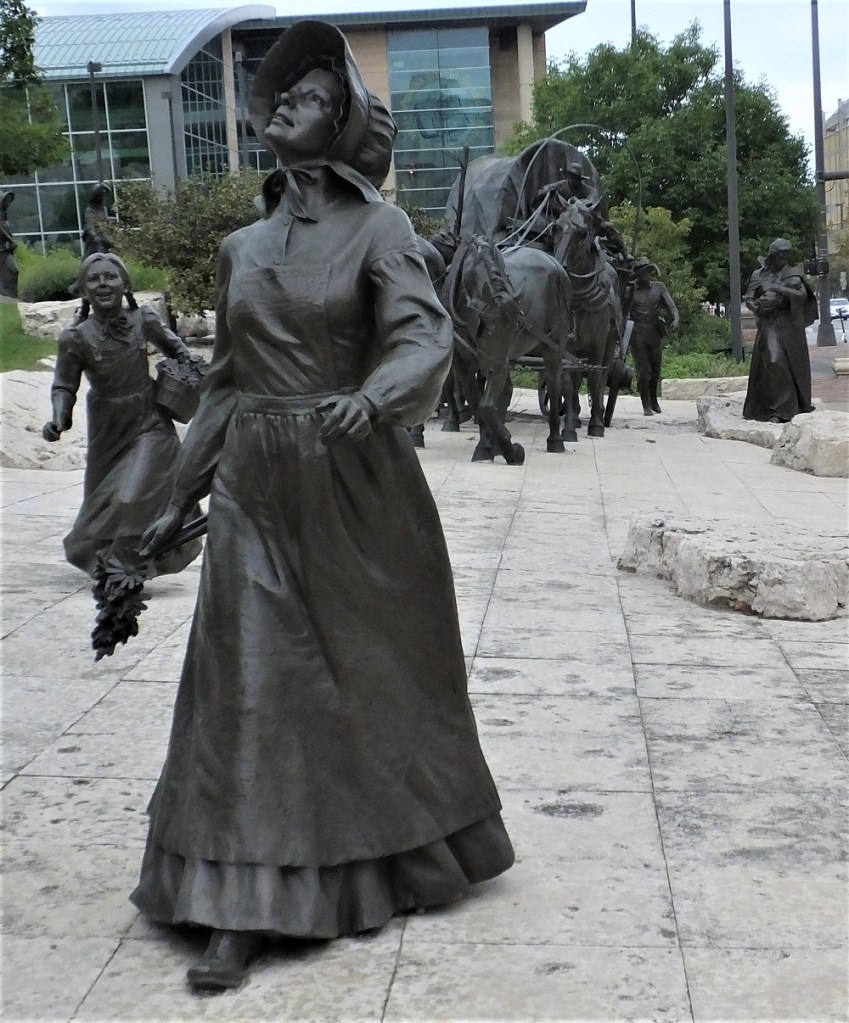
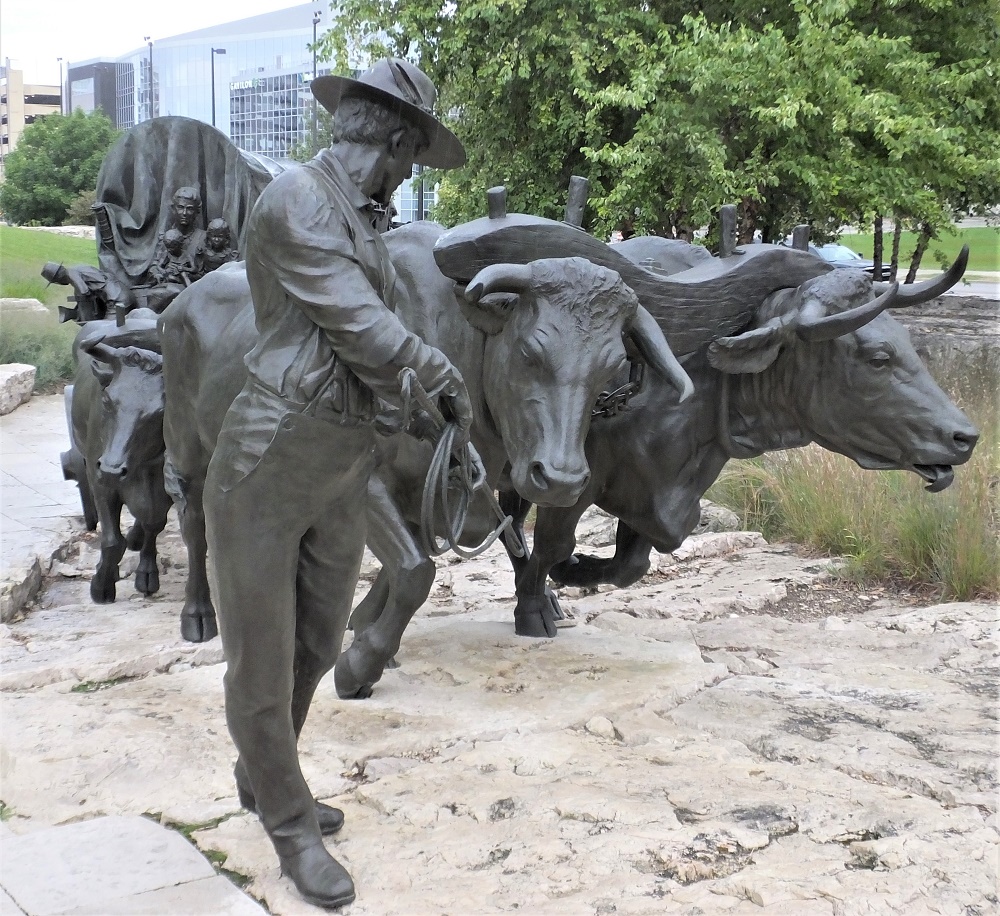
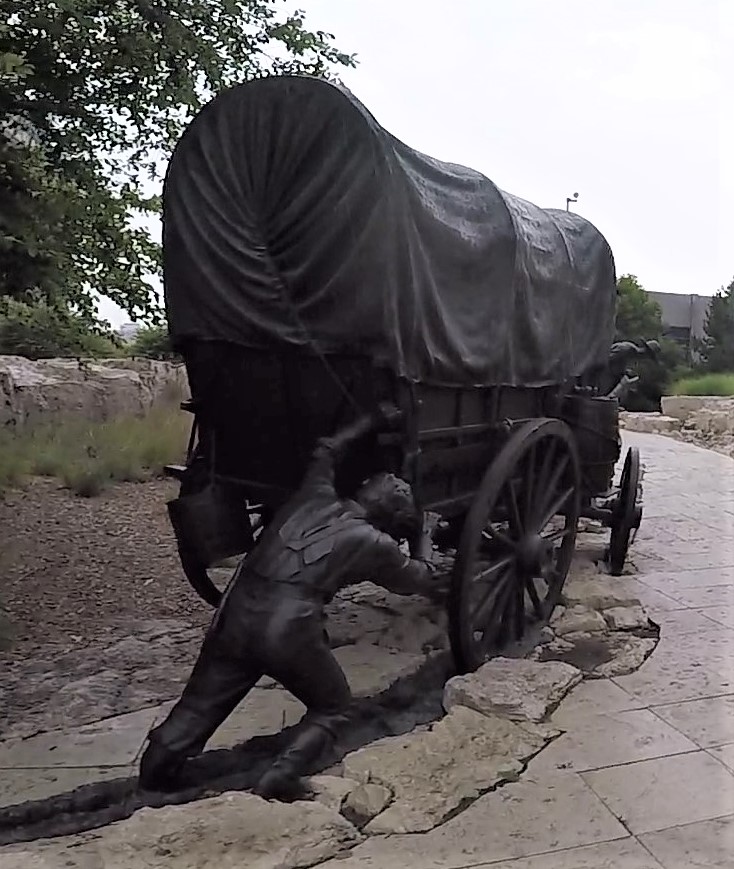
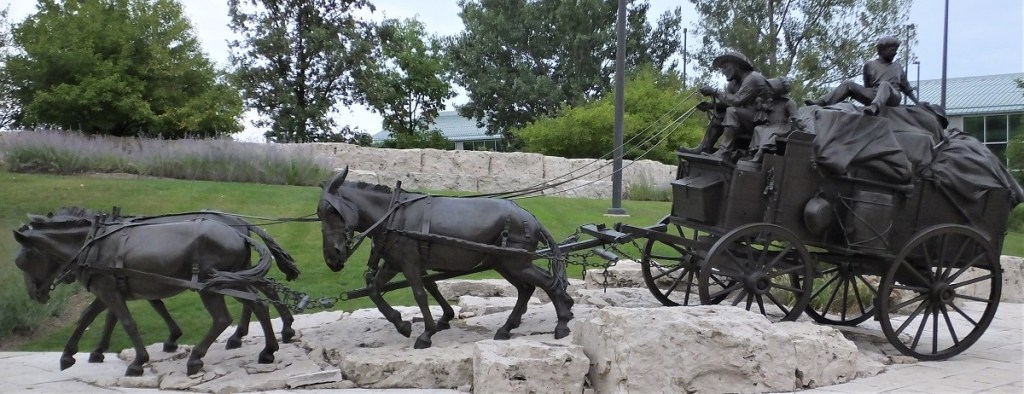
We stopped at Pioneer Courage Park. The park has numerous bronze and stainless steel sculptures dedicated to the pioneers. Our visit was cut short when it started to rain and there were several too-close-for-comfort lightning flashes. We QUICKLY (!) returned to our truck.
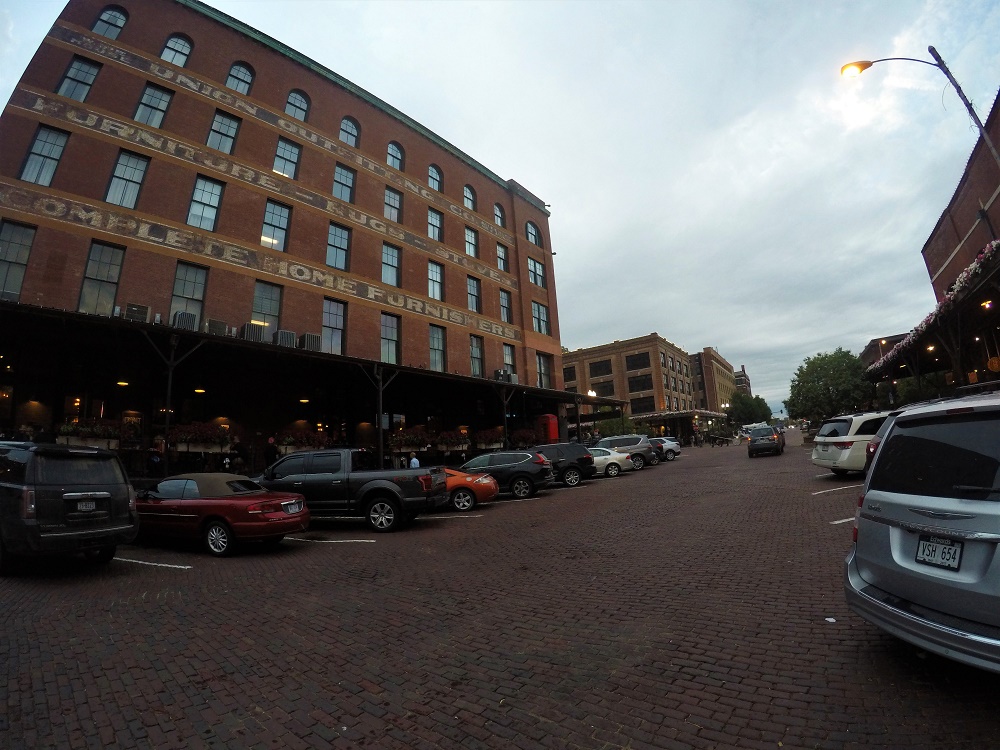
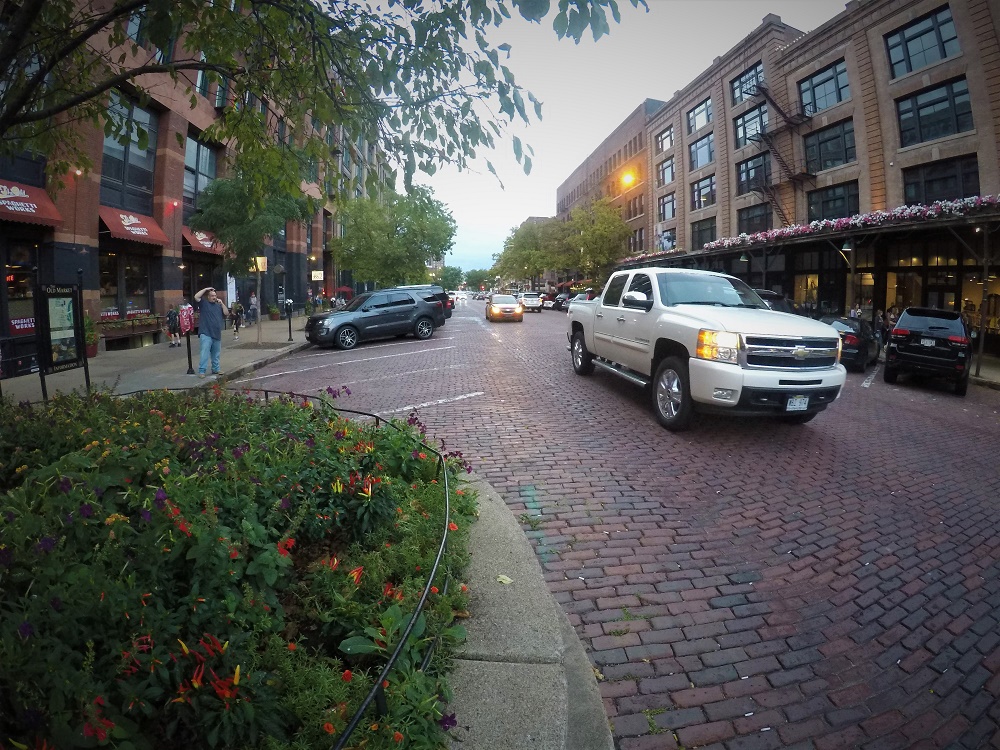
We drove a few blocks to the Old Market, a historical part of the city that has been renovated to include restaurants and shops. Horse drawn carriages shared brick paved streets with cars and trucks, and street performers entertained curious bystanders and families. We enjoyed dinner at a nice Mexican restaurant.
Many people were wearing Nebraska Cornhusker t-shirts and despite the college football team’s overtime loss to the Colorado Buffaloes, everyone was in a good mood.
Omaha Street Views
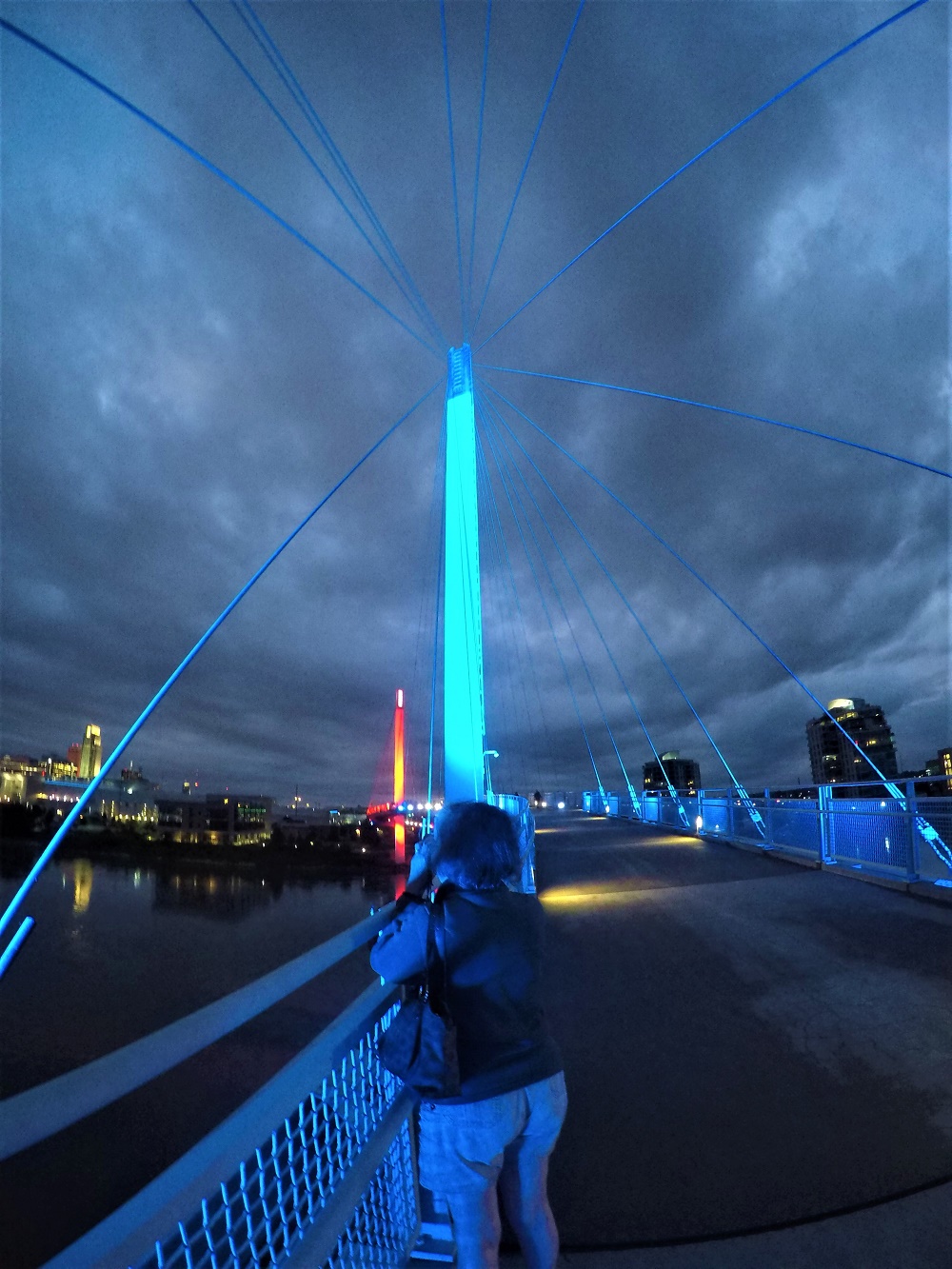
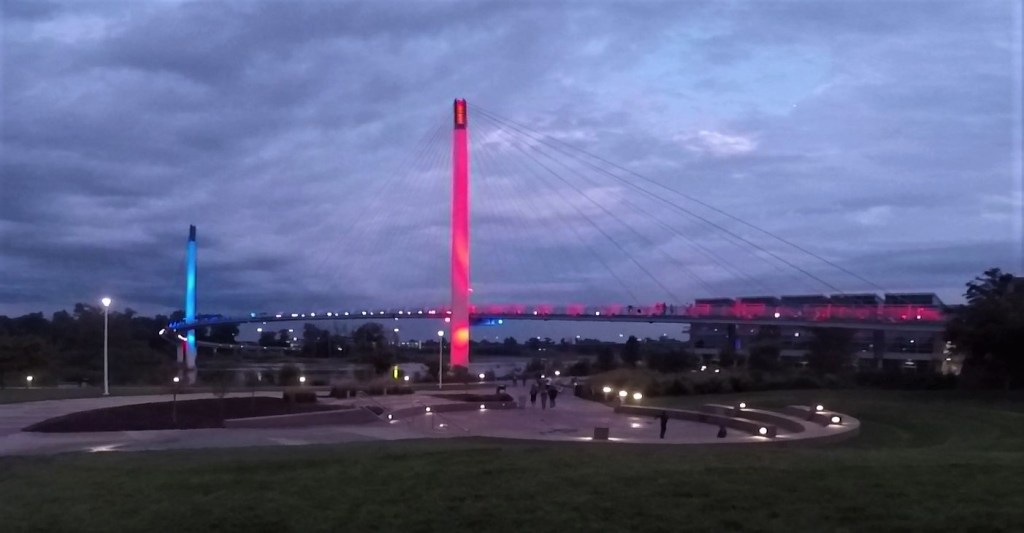
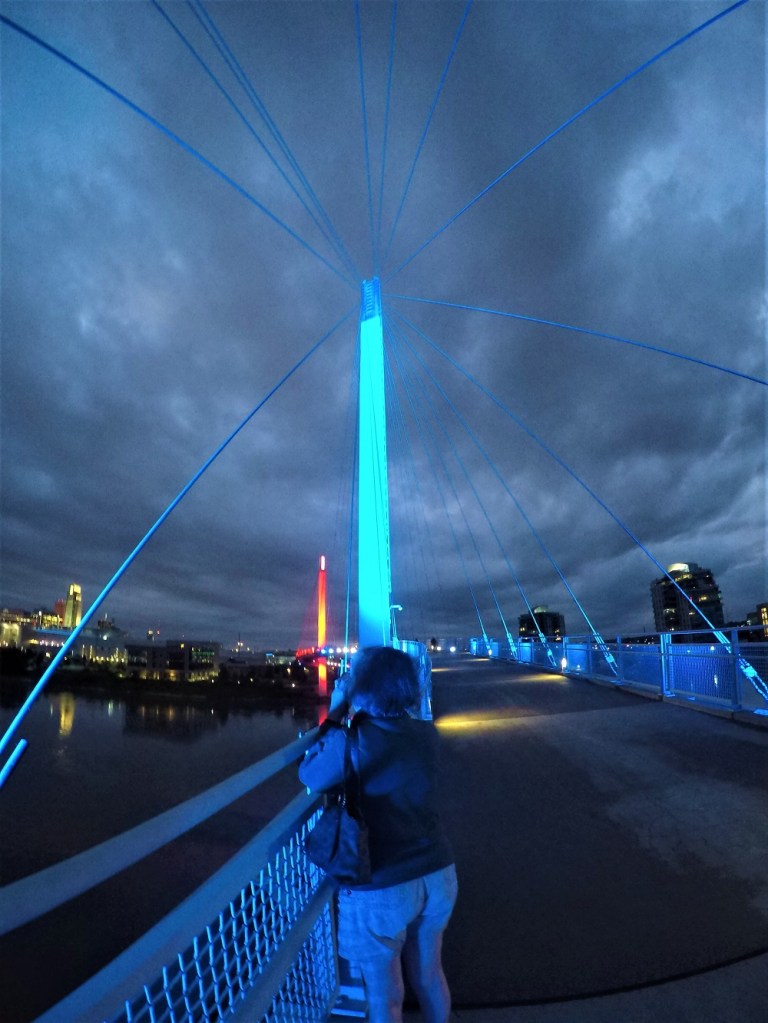
After dinner, we visited the Bob Kerrey Pedestrian Bridge. The 3000-foot suspension bridge crosses the Missouri River to Council Bluffs, Iowa. We enjoyed a sunset walk across the S-shaped bridge and marveled at the changing red and blue lights that illuminated the bridge towers as well as the Omaha skyline in the distance.
Sunset on the Bob Kerry Pedestrian Bridge
Because we were ‘catching up’ with our original trip itinerary, we had to cut our Omaha visit short and move on the next morning. Had we stayed longer, we would have visited the world class Henry Doorly Zoo and renowned Durham Museum. Might have even stopped by to visit Warren Buffet.
We’ve made it to Badlands NP in South Dakota (will post trip map soon). Two LONG days of 12+ hours driving and two medium days of about 8 hours.
Our travels took us through Atlanta (always a traffic challenge), Chattanooga (during afternoon rush hour), Nashville (not bad, we took the eastern bypass), St Louis (there is a modern new bridge – to us – across the Mississippi) and Kansas City (a lengthy construction detour).
In between, we were struck by the large number of 18-wheel trucks on the road. A lot of stuff is being moved around the US. For Amazon Prime, perhaps?
Early on we were also amazed at the number of power trucks, tree service vehicles and ambulances leaving Florida the day after Hurricane Dorian. Not much for them to do in Florida, fortunately. We are blessed with amazing resources to help people affected by disasters. Too bad they could not make it to the Bahamas.
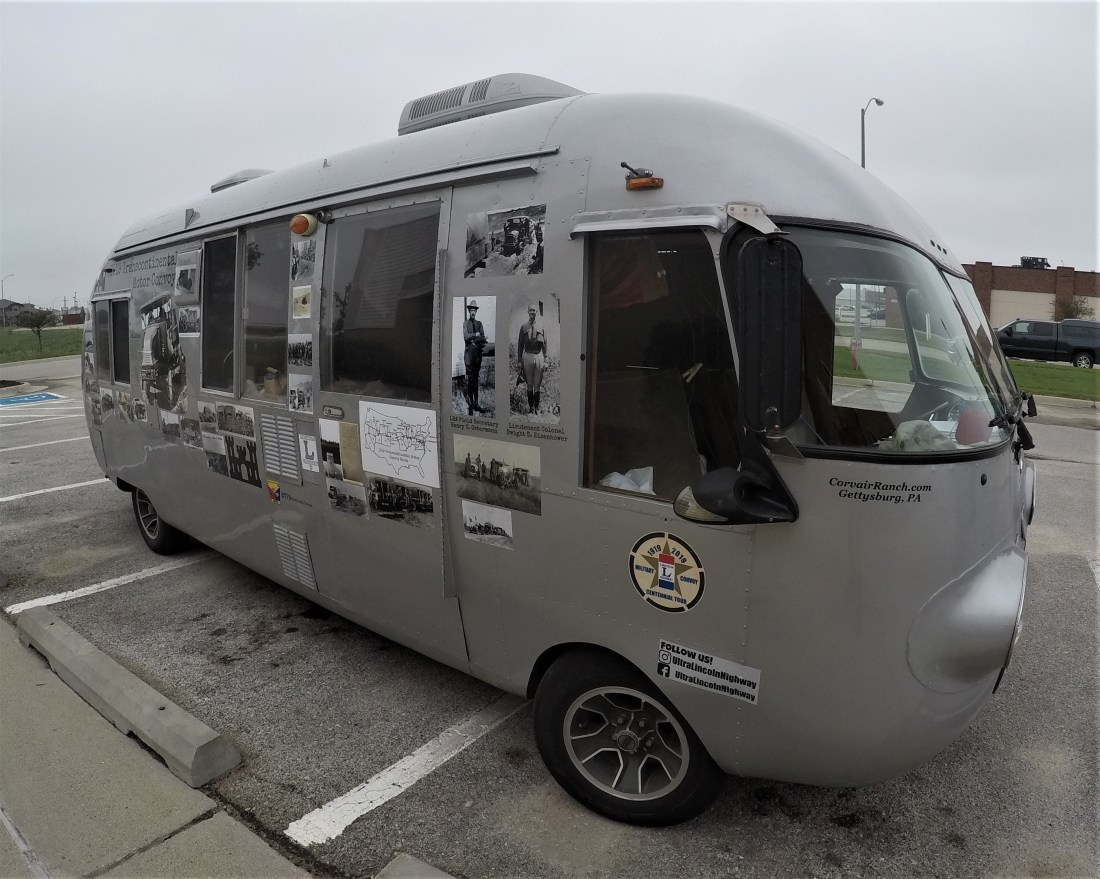
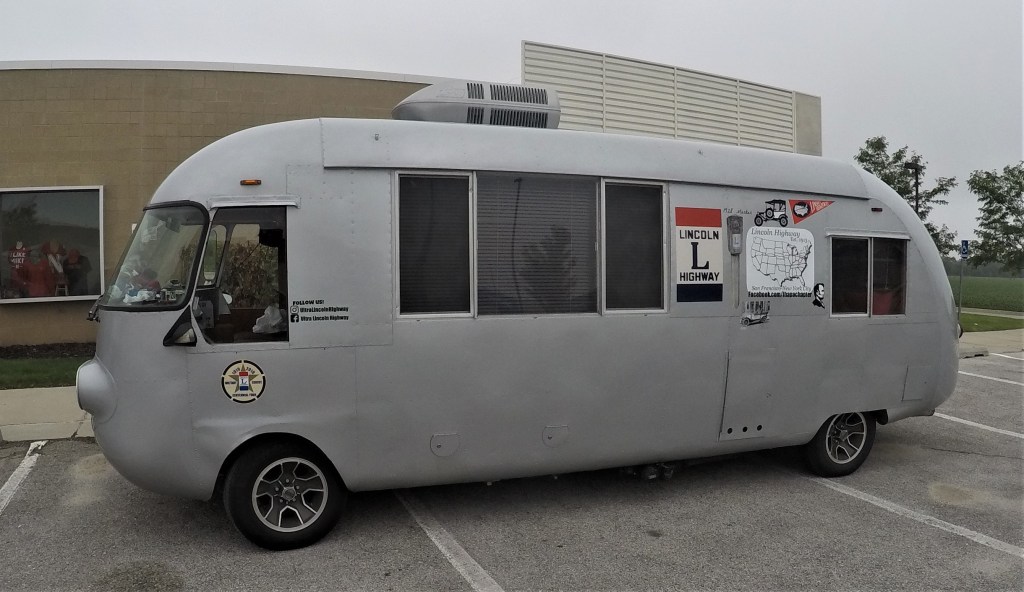
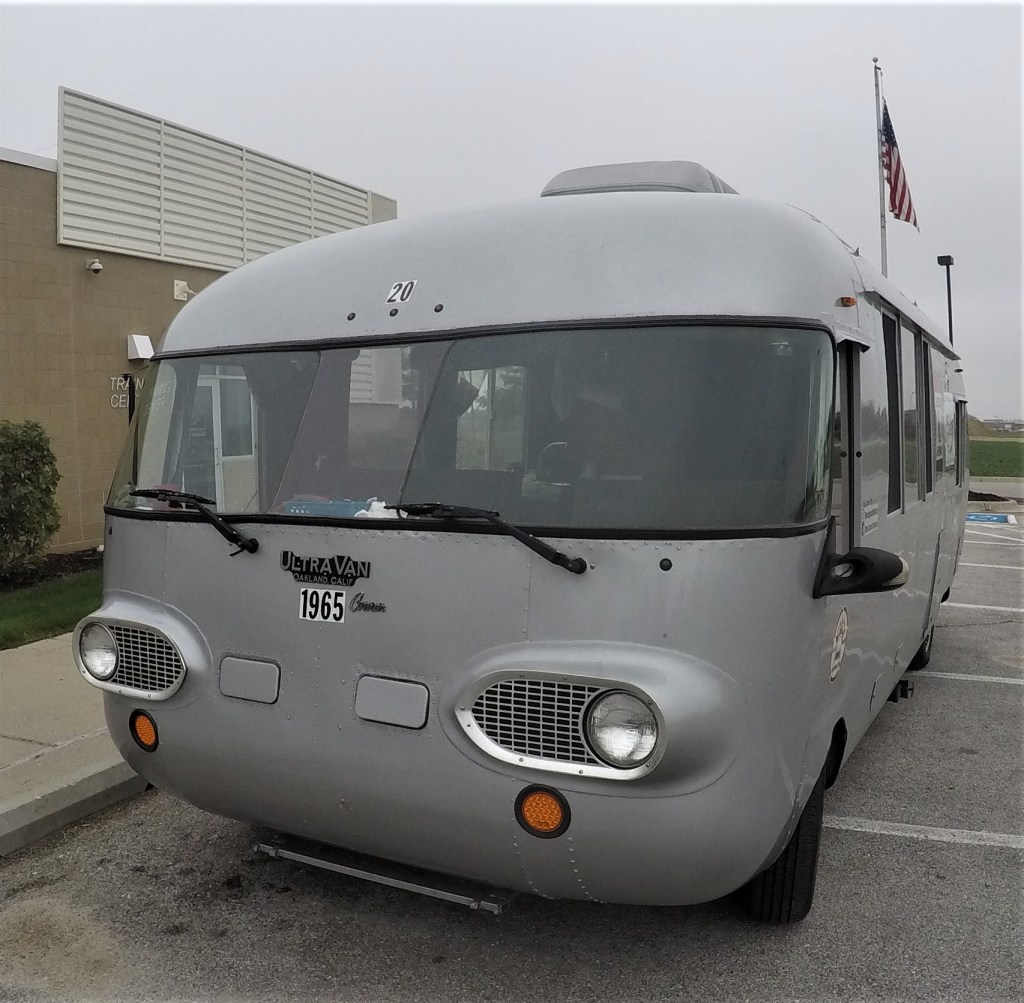
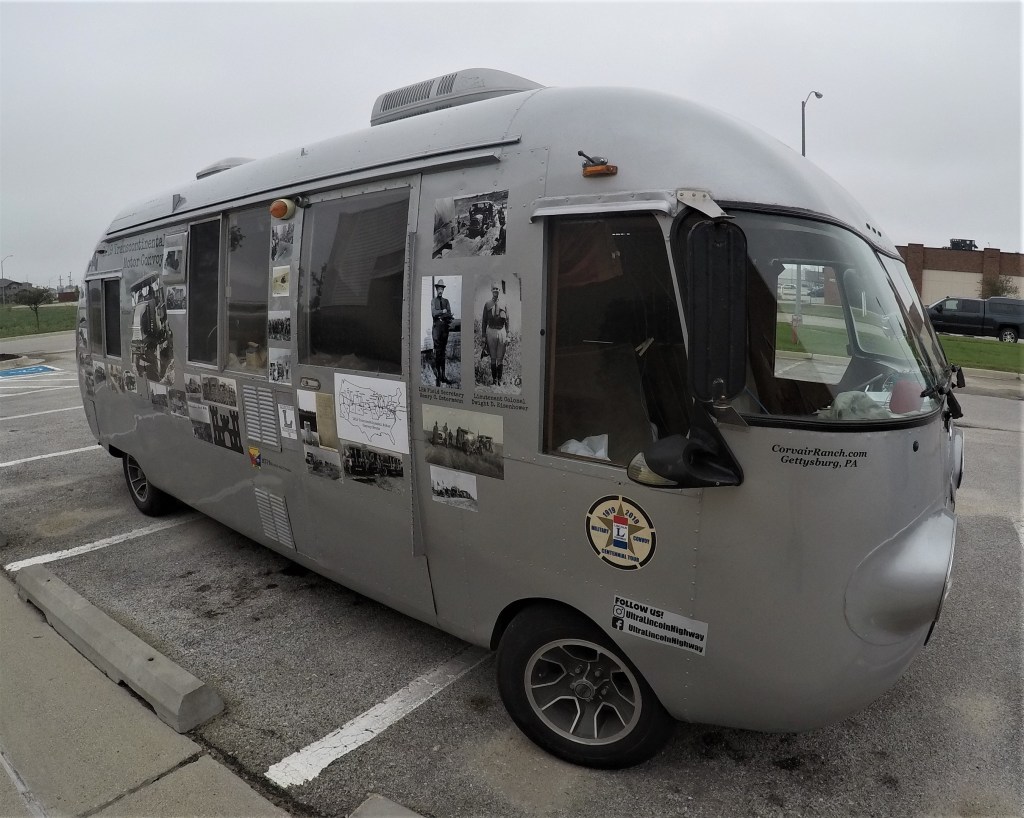
Near Omaha, we spotted a rather unusual camping vehicle – a 1965 Ultravan powered by Corvair. We didn’t meet the owners (from Pennsylvania based on the tags) but presume they were on their way to the Ultravan National Rally in Kearney, Nebraska this coming week.
Views of the Ultravan
This 1965 Ultravan is surprisingly modern looking, although some say it resembles a whale. The nose and tail are made of fiberglass, and the aluminum center section is built like an aircraft. Perhaps the most interesting detail is it is powered by a 110 hp Corvair engine.
Ultravan went through several powertrain iterations and was finally phased out in the early 1970s. In all, 373 were produced.
For more information about this interesting piece of RV history click here.



 We noticed a number of small dirt mounds in some areas. On many of the mounds, one or more very active prairie dogs acted as sentries. The mounds mark the entrance to their underground burrows. There were lots of prairie dogs, and the noise they make really sounds like the bark of a small dog!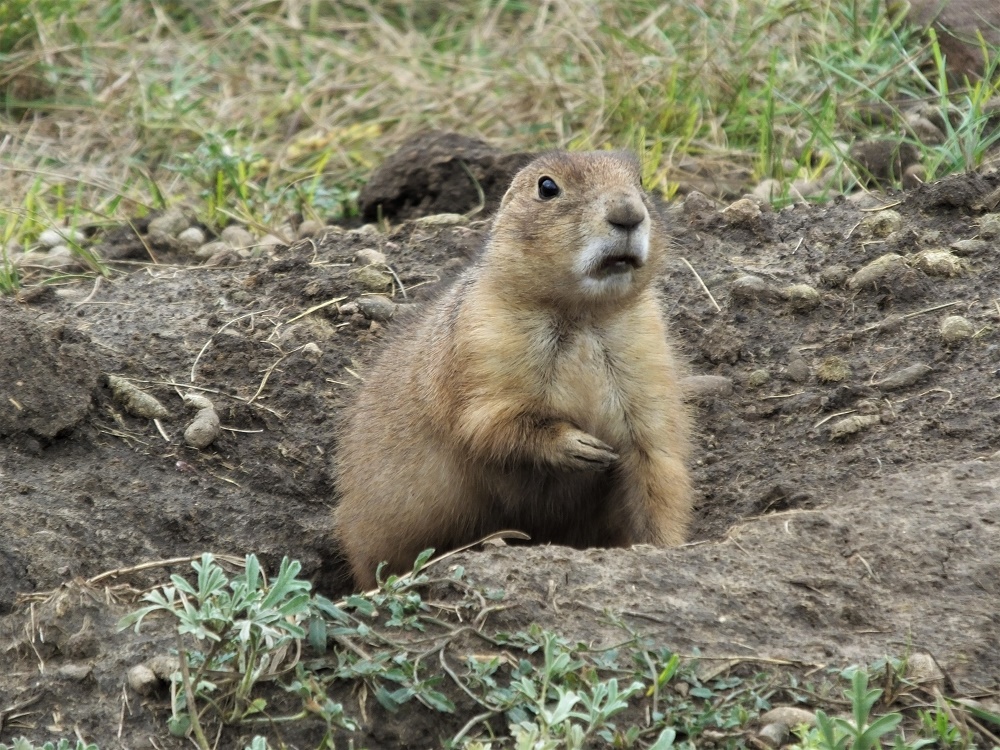
 Take the LONG Road...