1100 Miles and Heartfelt Camp Smiles

(2024 Heartland Ep 3)

Our 2024 Heartland Journey Begins
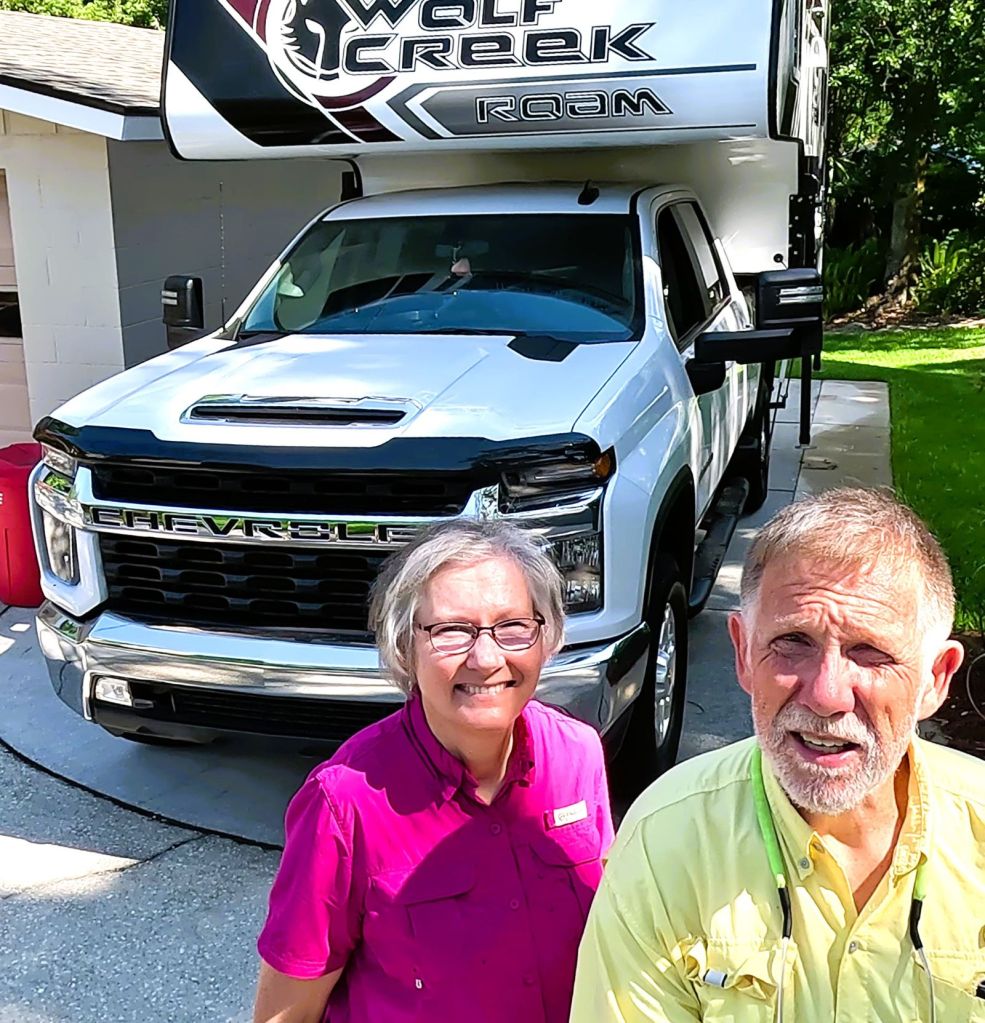
A last minute photo before leaving

Our travels got underway the second Sunday in June.  We visited Liz and Josh and our two grands, Henry and Emilia, near Warner Robins, GA, where we moochdocked in their driveway.  Like most grandparents, we marveled at how quickly they are growing up.  
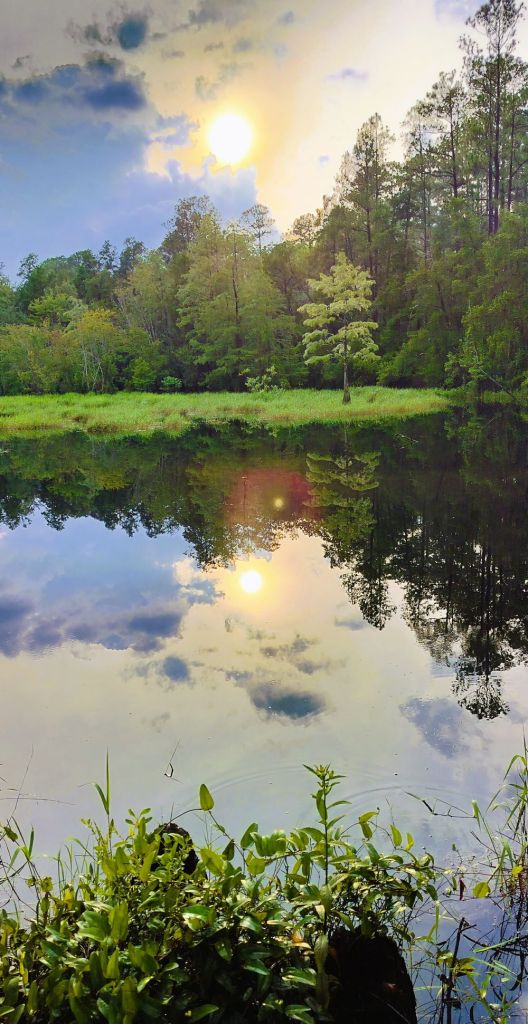
A peaceful view after a thunderstorm at Blackwater River SP

We left Georgia and continued to the western part of the Florida panhandle, where we spent the night at Blackwater River SP.   A thundershower grumbled in the distance, so we quickly set up camp.   

Once we were confident the storm was not getting closer, we followed a path to view the tea-colored river.  It twisted and turned with numerous sandbars on both sides of the flow.  The water in one backflow area was mirror-smooth, reflecting the sun and clouds.

We continued across Alabama, Mississippi and Louisiana, where we camped two nights in the bayou state.   We drove Louisiana Route 8 westward and neared the Sabine River, the border between Louisiana and Texas.  Ahead, a yellow sign warned the clearance of the bridge was 12 foot 3 inches.  Images of the tops of campers and trucks smashing into low bridges came to mind, so we quickly flipped down our passenger side windshield visor. 
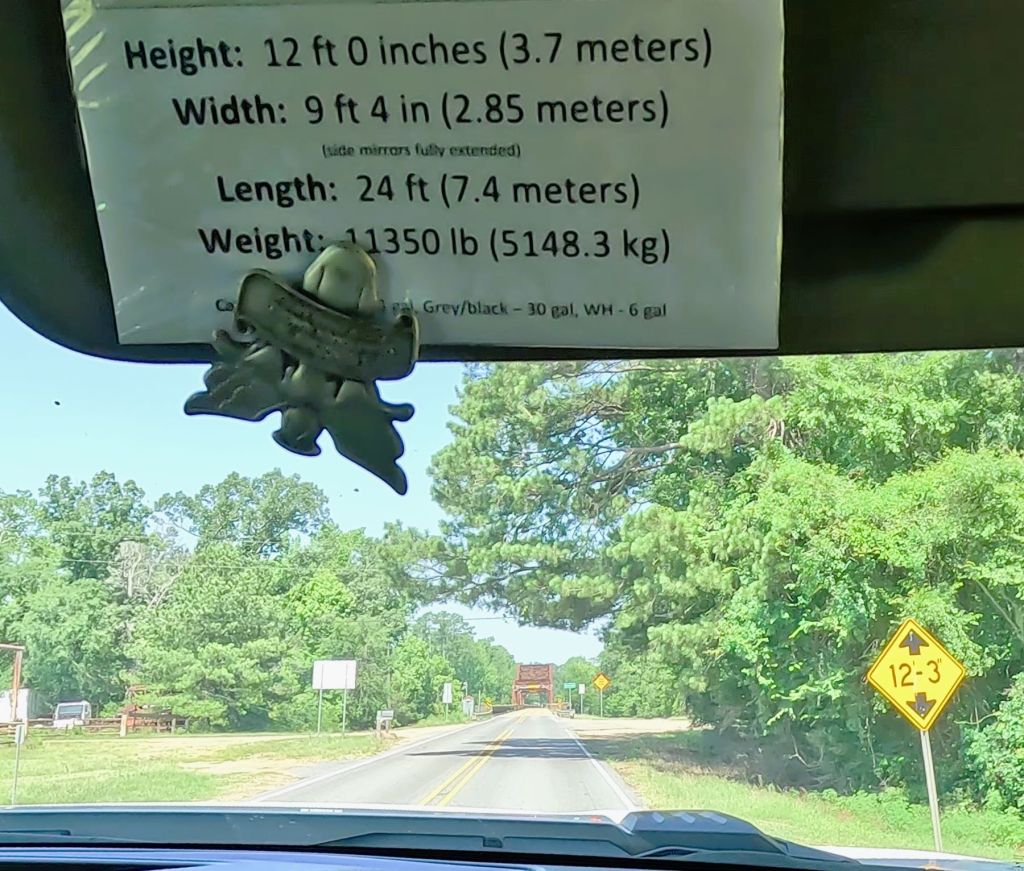
Checking our height before a low bridge crossing between Louisiana and Texas

When riding on Percy, Pap is 12 foot 0 inches high.  To be safe, we slowed considerably as we crossed the bridge and passed into Texas with three inches to spare! Whew!
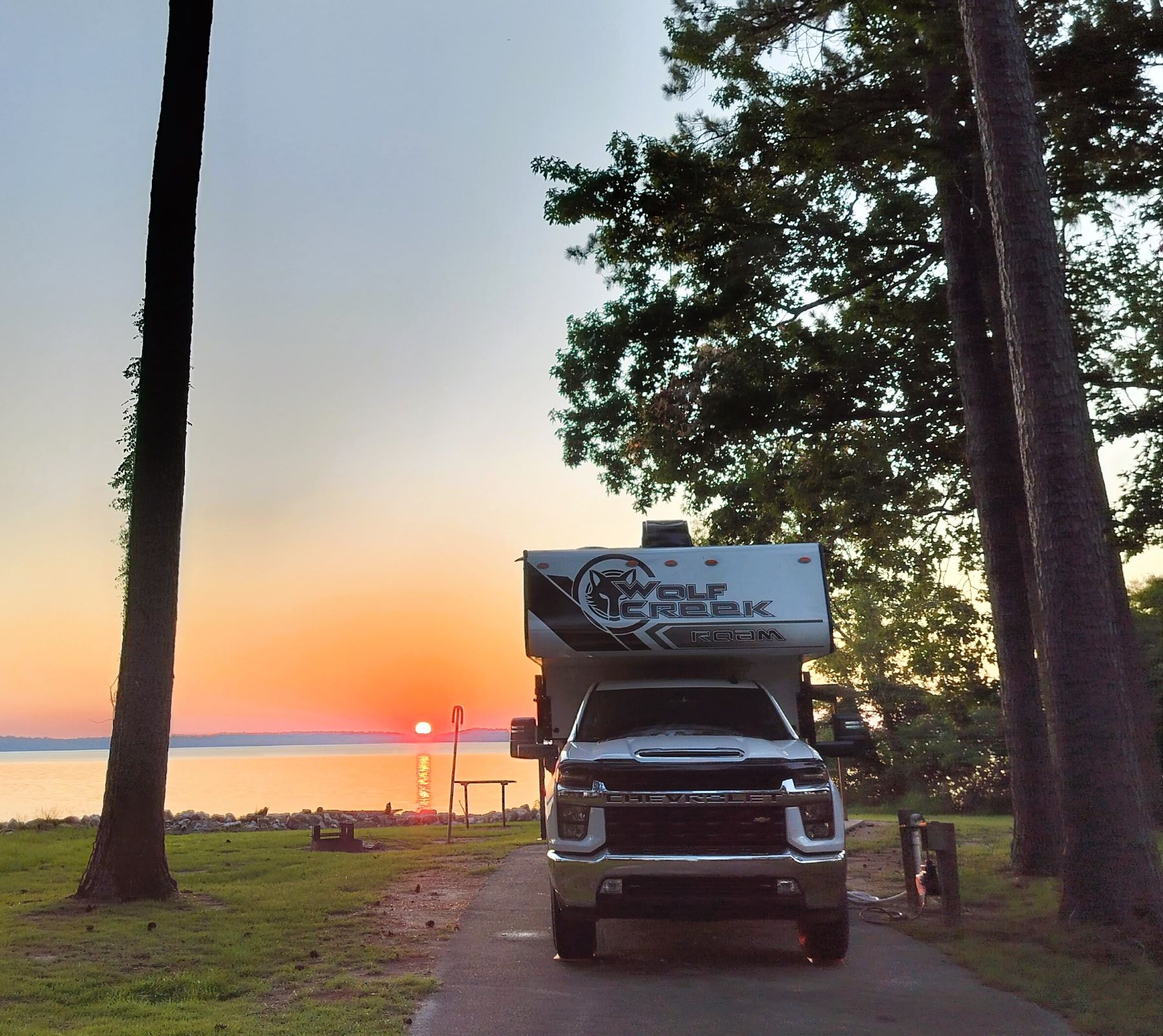
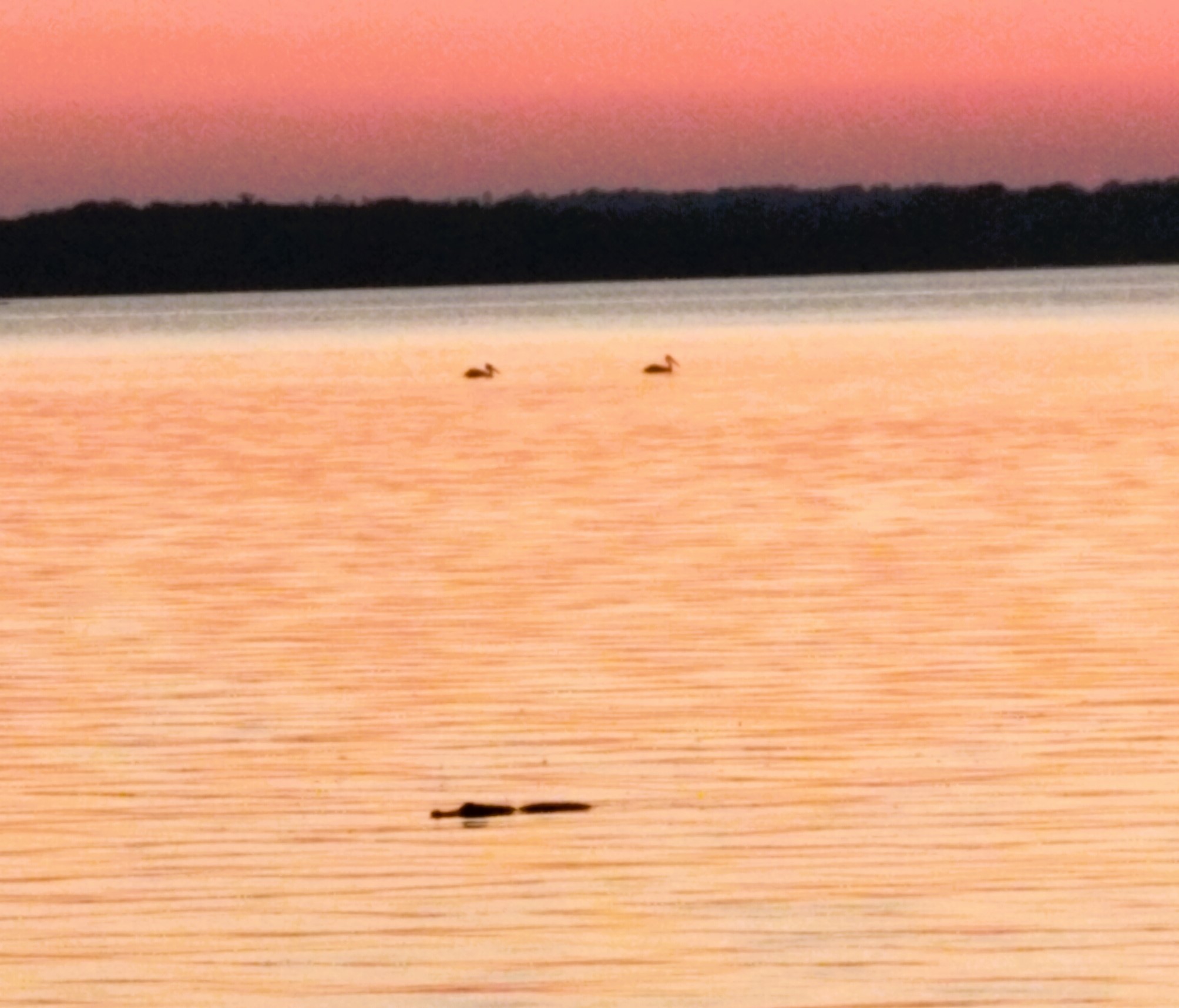
Views from our campsite on Steinhagen Reservoir in eastern Texas – a sunset and passing gator

Our two final nights before camp were spent at a Corps of Engineers campground on Steinhagen Reservoir near Jasper, TX.  Our campsite was right on the lake, and we enjoyed two beautiful sunsets.

Anchored in Truth
For the next week Pat and I were on staff with Camp Cedarbrook Texas, a Christ-centered, Bible-based camp near Huntsville, TX.   More than 100 campers arrived on Sunday, and for the next six days and nights we modeled and taught about God’s truths of grace, forgiveness and new life for those who believe in Jesus. 

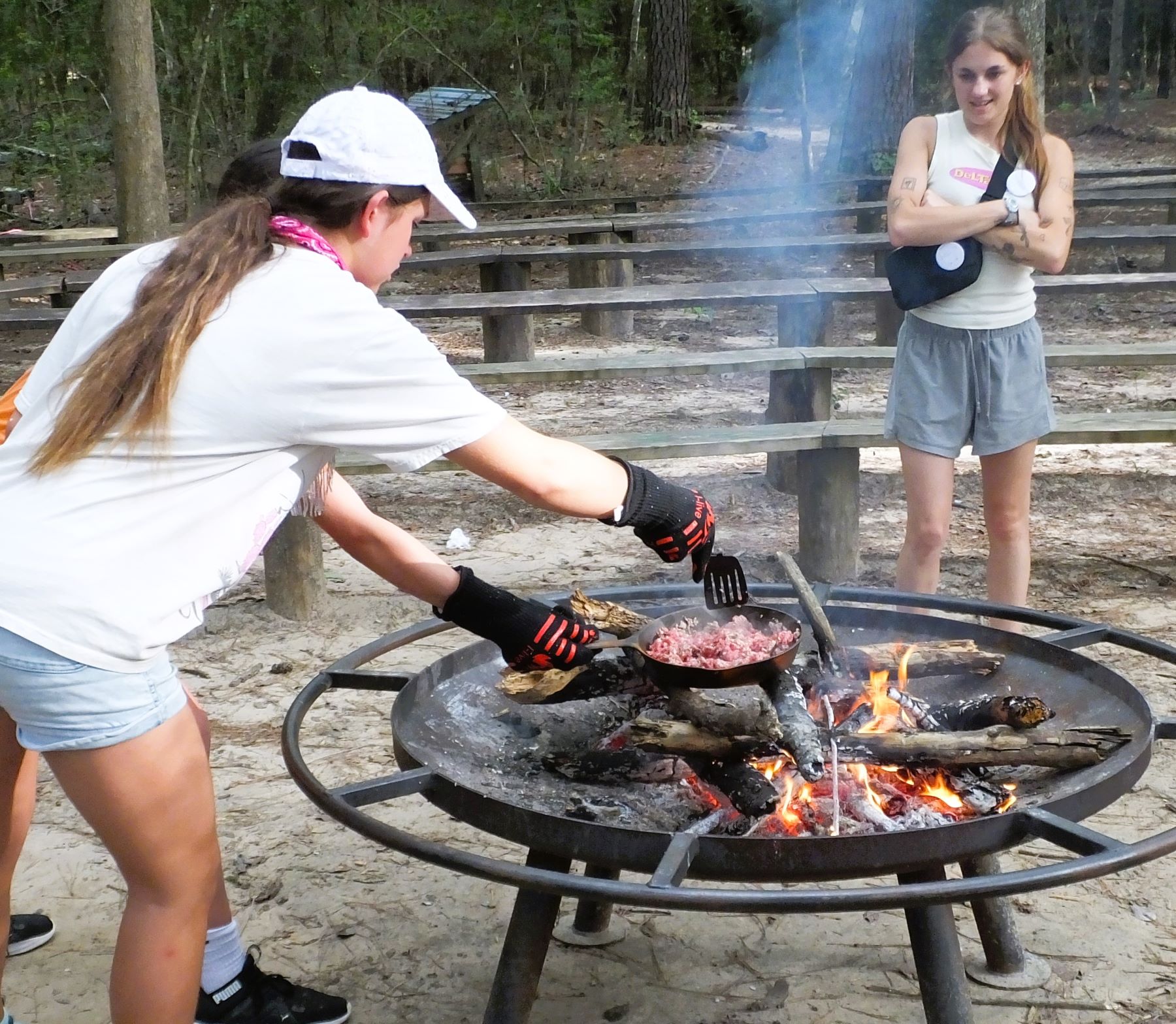
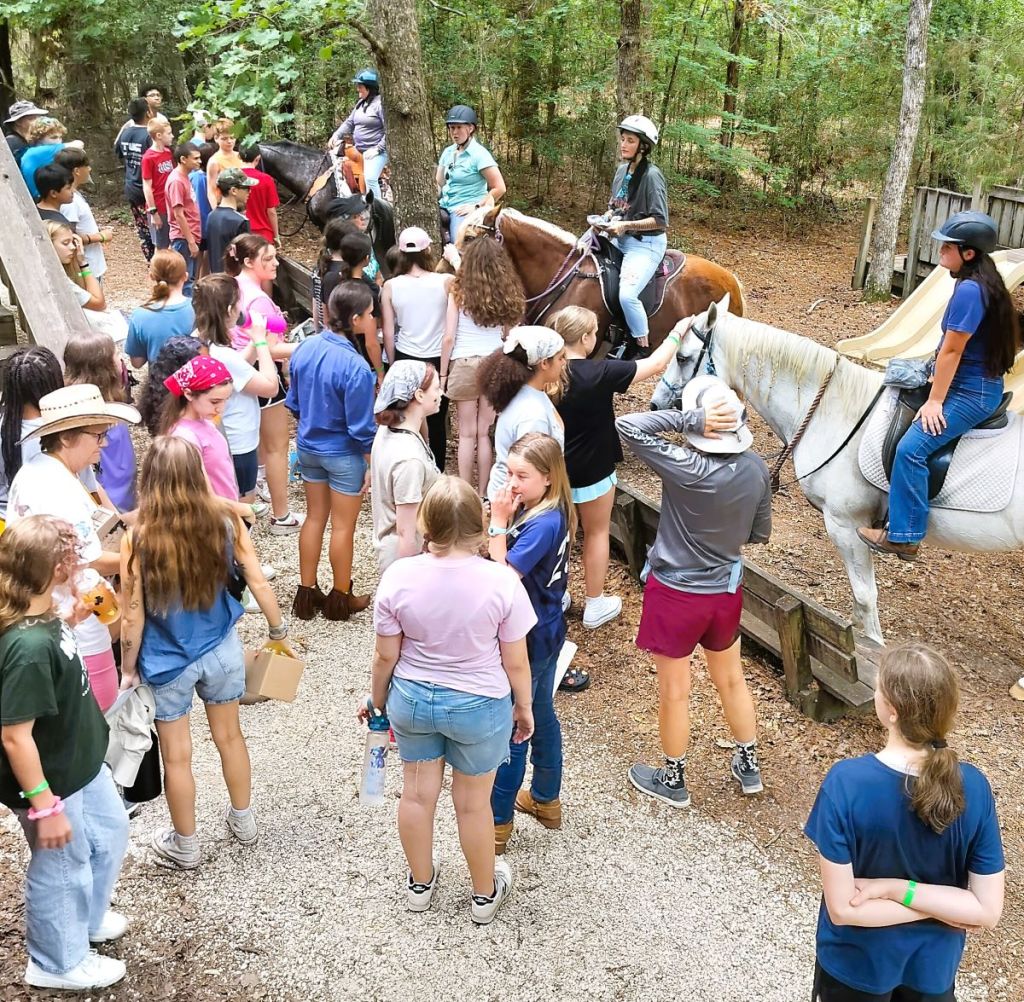
CCT offers campers a broad outdoor program that includes horsemanship and riding, archery, riflery, canoeing and kayaking, swimming, survival skills and lots more.  Pat and I led ‘Fire and Food’ activity, where we taught campers how to build and cook over a fire.  Pat worked with younger girls, and I taught younger boys.
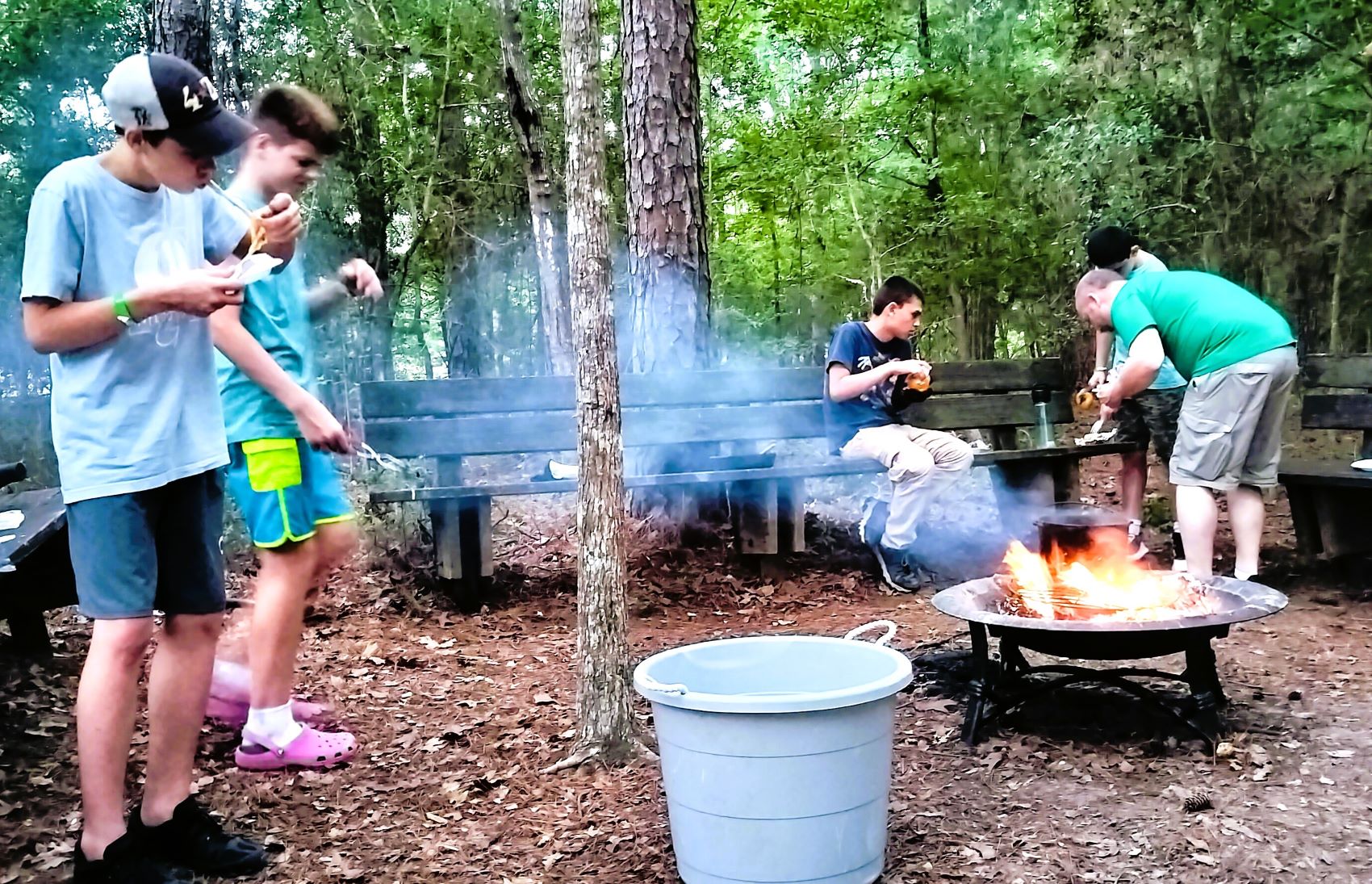
We joined our cabin groups at a cookout one evening
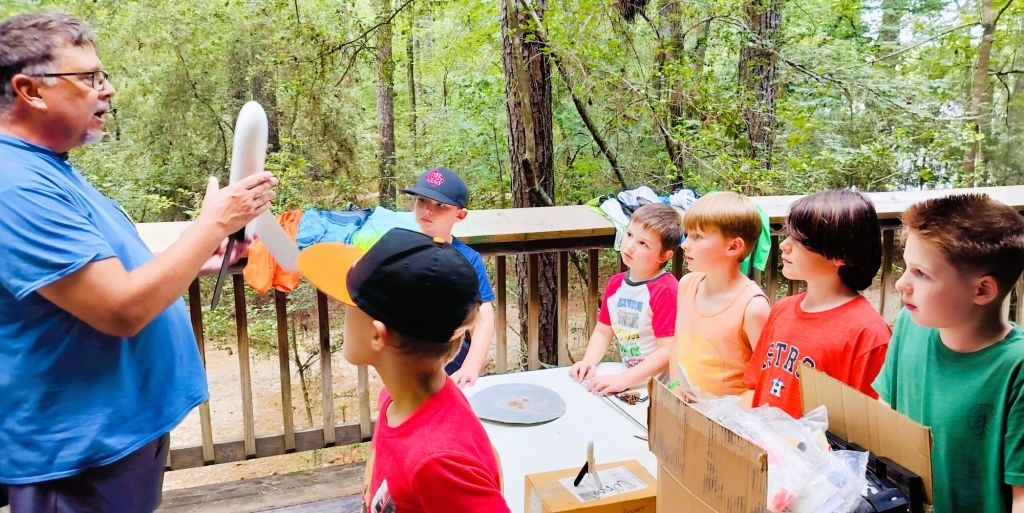
Whoo (CCT staff) shows third/fourth grades campers a model rocket he built as they work on their own model rockets
Campers receive mail from the CCT ‘Pony Express’ (horsemanship activity)
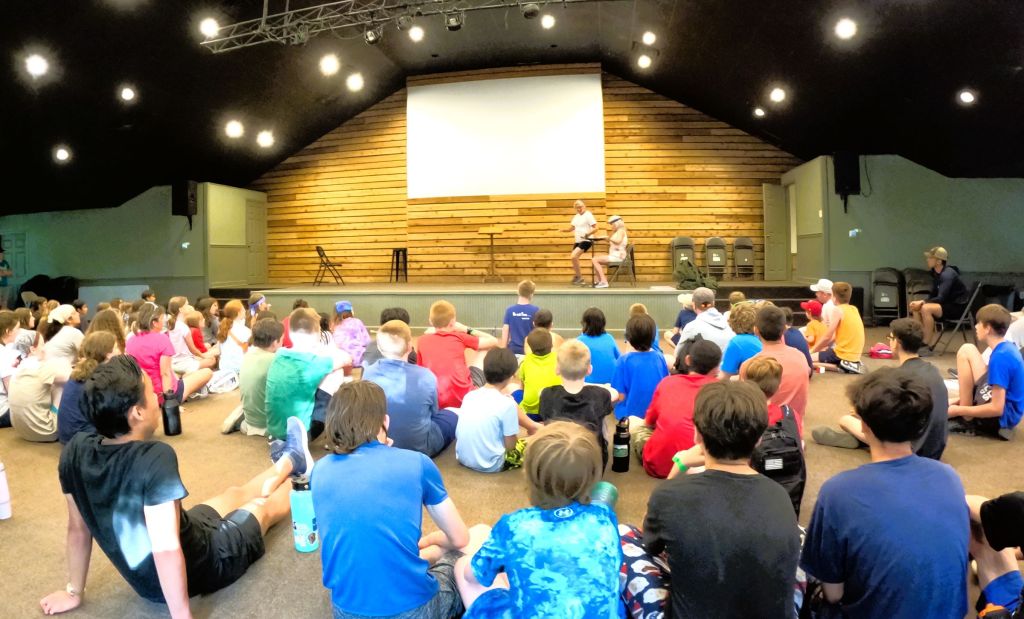
Evening worship included skits, and fun and worship songs

We enjoyed dining hall meals, evening worship times and nightly outdoor programs. 

50 and 1 Stars

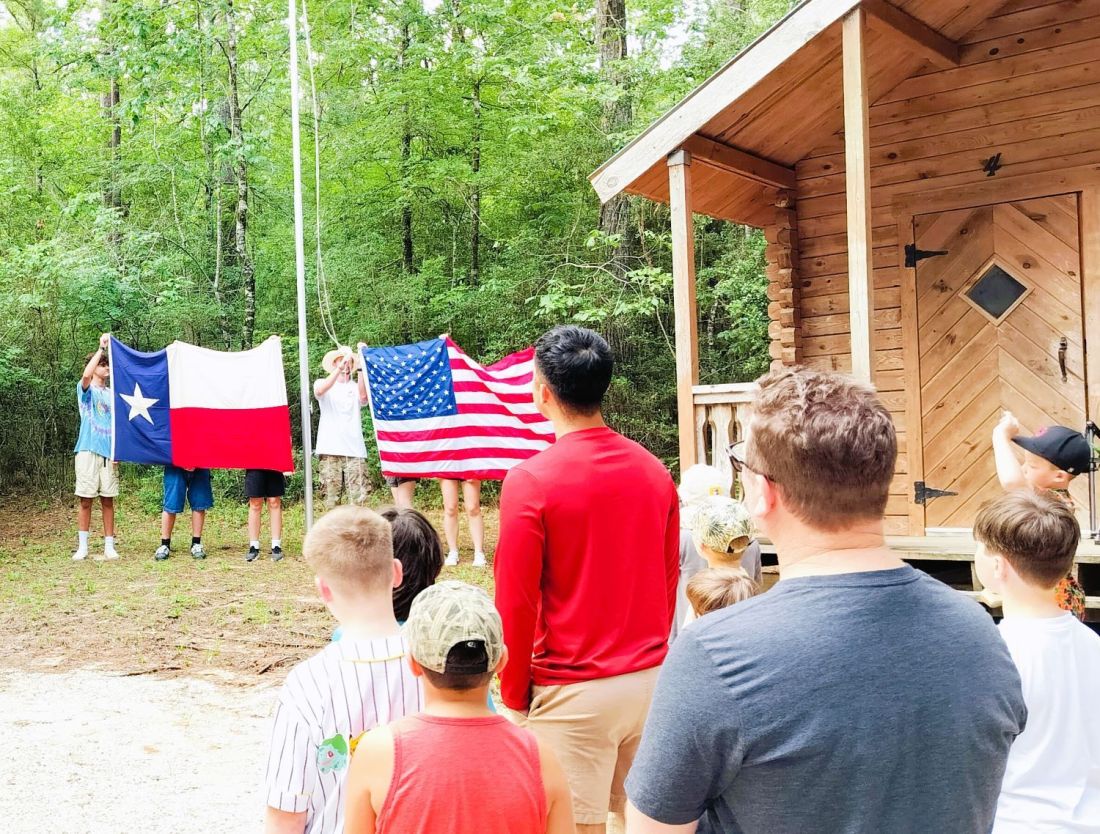
Following devotions and breakfast each morning, all campers and staff attended a flag raising ceremony.  When presenting the colors, it was interesting that the Texas state flag, with its single white star, was proudly displayed.  
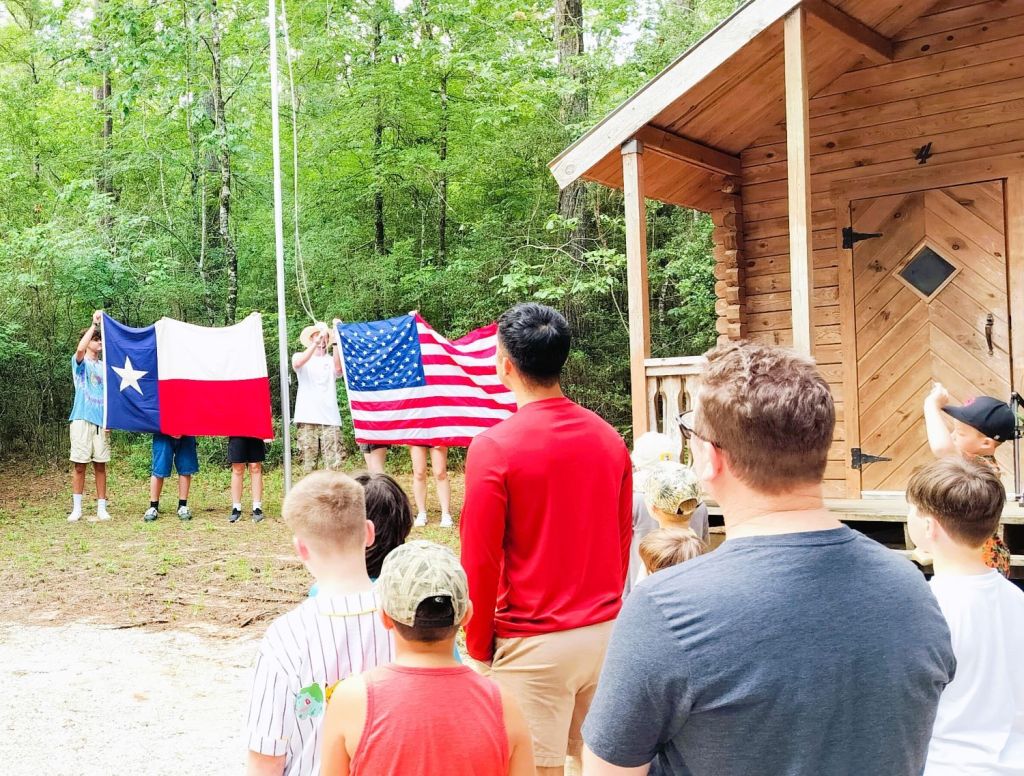
Flag raising ceremony

These were Texans after all!

Next Week

We say goodbye to CCT campers and staff friends, and continue west toward San Antonio for a visit with my brother and his family.     
Bent Leg Blues and Catching Up (part 2)

(2024 Heartland Ep 2)

In recent years we have made several late-winter/early-spring camping trips to the Florida Keys. This year’s trip has some interesting surprises.

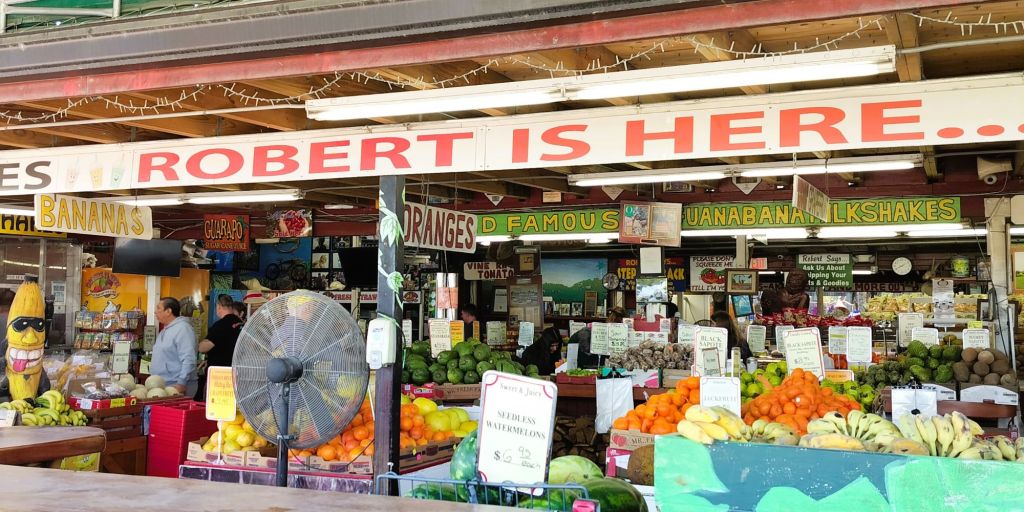
Robert is Here has an amazing selection of local and exotic fruits and vegetables

Robert is Here!

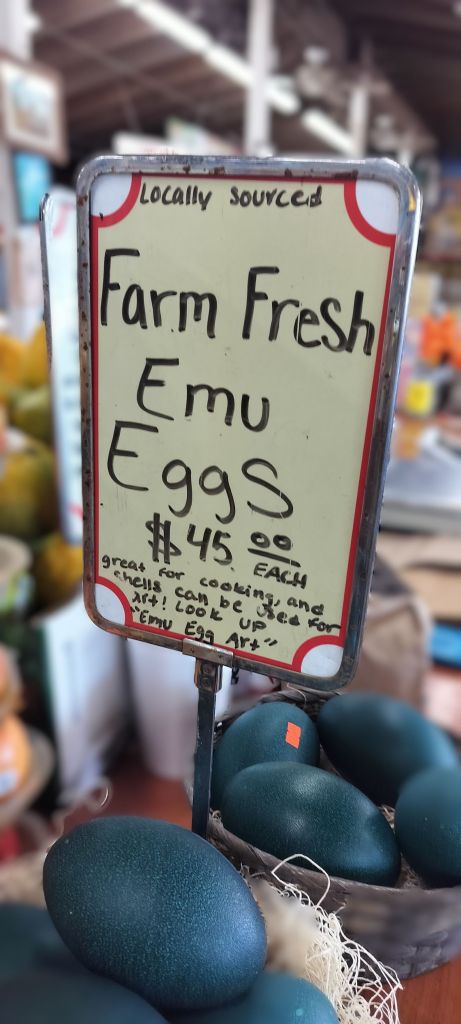
Fist-sized green Emu eggs would make a rather pricey omelet!

Our Florida Keys journey began with a stop at Robert is Here, an amazing fruit stand near Homestead at the start of the Keys. Dozens of local and exotic fruits and vegetables, and amazing fresh fruit-flavored milkshakes, can be purchased.  

The attraction was named for a sign Robert’s dad made to get the attention of people passing by his six-year-old son’s small fruit stand in 1959.  That day all of his produce was sold by noon and Robert’s lifelong fruit stand business was born!   

On to the Keys and John Pennekamp State Park 

From Florida City on the Florida mainland to its end in Key West, the Overseas Highway counts down 126 miles.  There’s lots to see and do all along the drive!

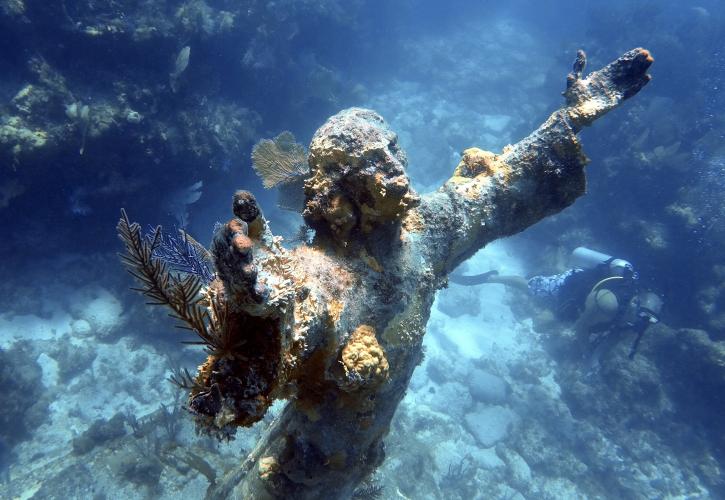
Our first stop was at mile marker 102.5 near Key Largo to spend a week at John Pennekamp Coral Reef State Park.  The park is known for coral reefs located several miles off the ocean side of the island.  Excursion boats carry snorkelers who view the coral and various sea life, and scuba divers who swim to a well-known underwater statue of Christ. 

Underwater statue of Christ at John Pennekamp SP (from Fla State Park website)

Due to choppy sea conditions, we opted for a glass bottom boat tour.  Unfortunately, the reefs were seriously damaged by high water temperatures last summer (as high as 101.1 F) and the reef views were disappointing.  One can only hope the reefs will recover with more normal ocean temperatures.

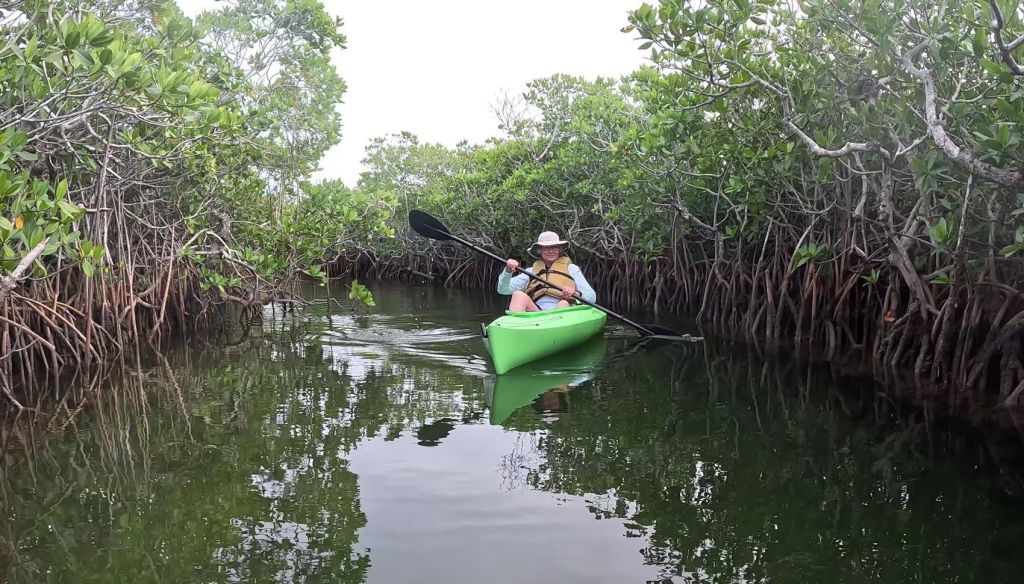
We did enjoy bicycling and hiking several short trails in the park and nearby.  A highlight of our visit was kayaking some very interesting ‘water trails’ in the park mangroves.

Pat kayaking in the mangrove canals at John Pennekamp SP

Crocs, Gators and More in the Everglades

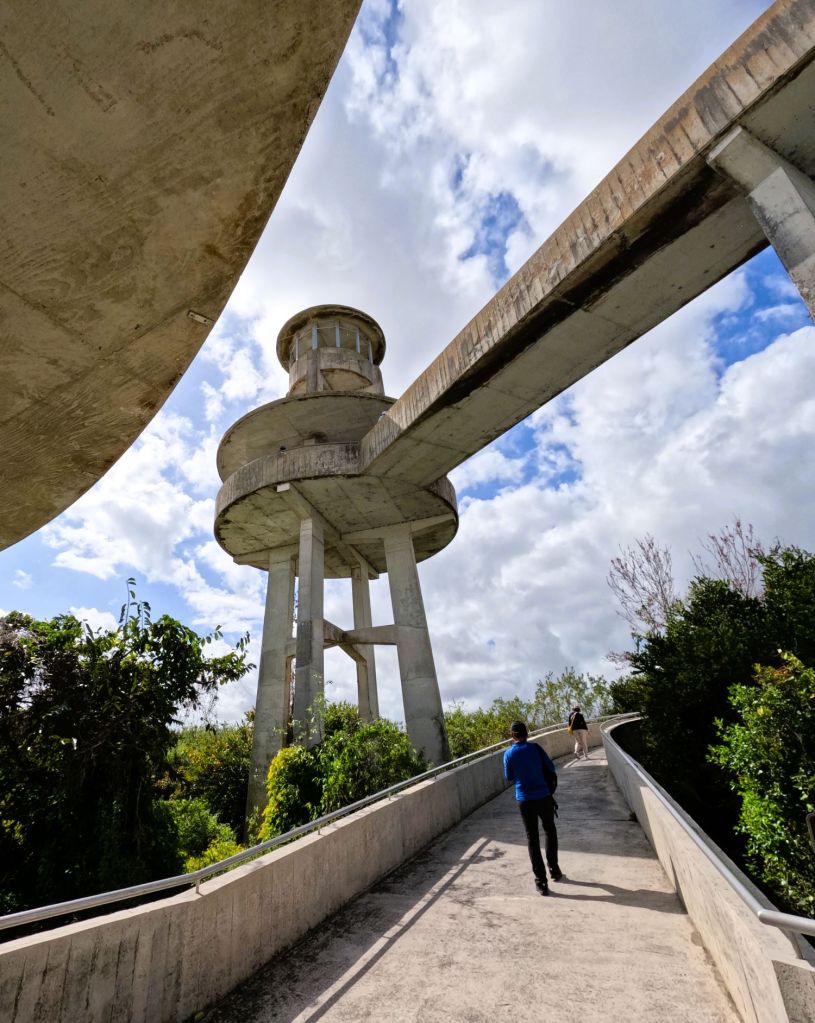
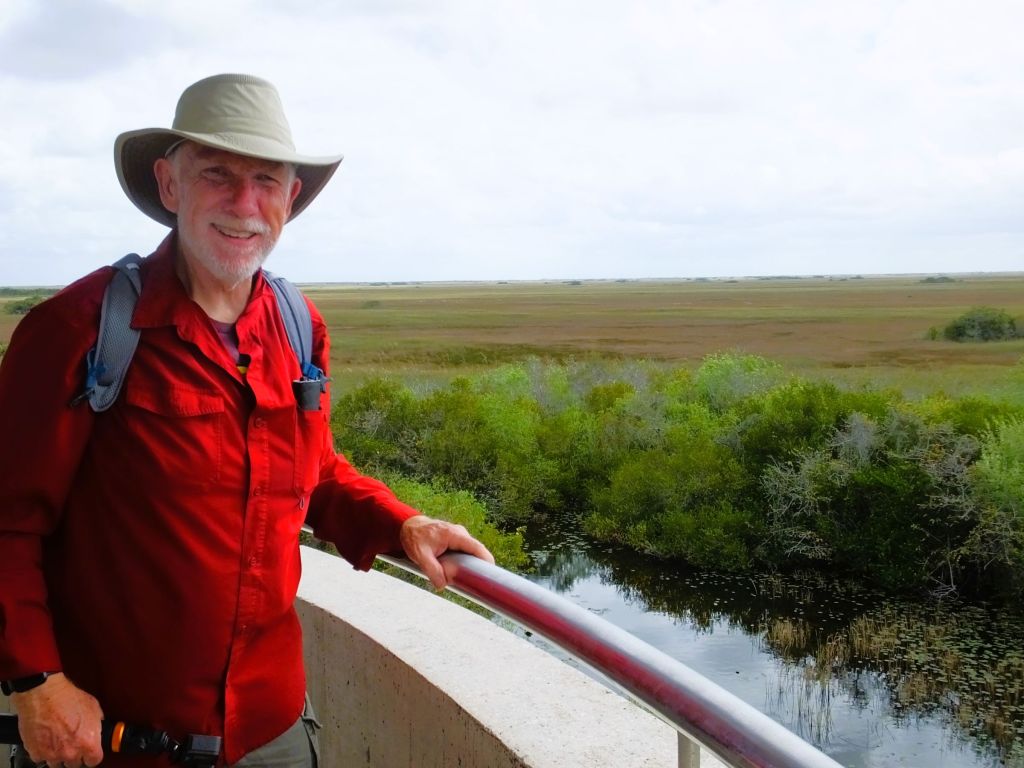
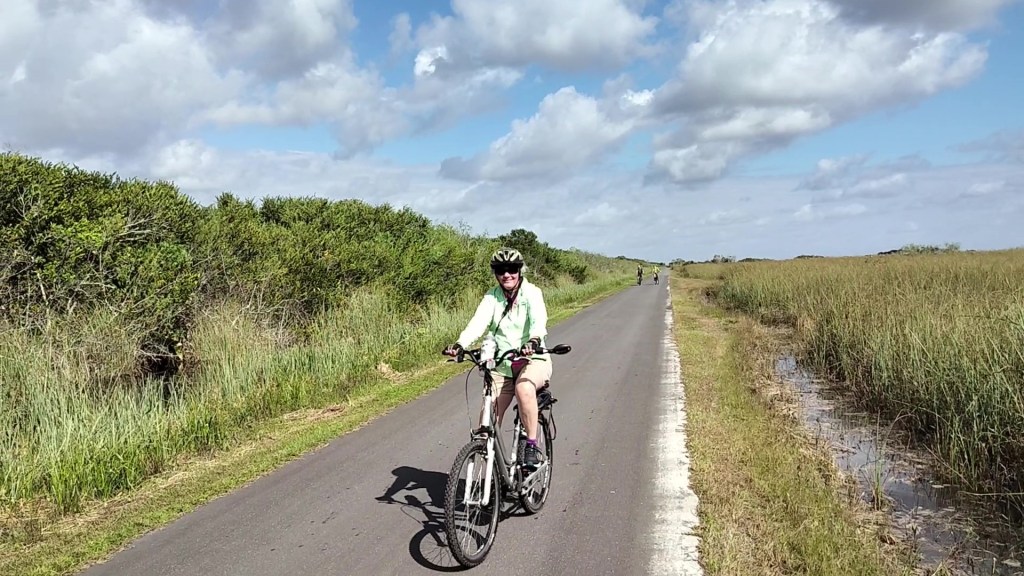
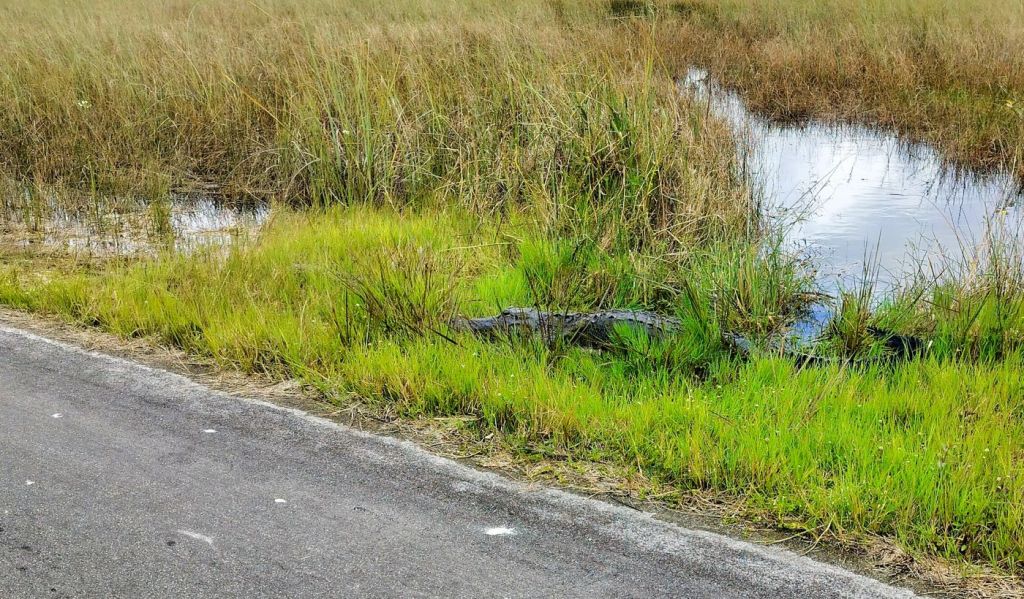
We took two day trips to Everglades National Park.  At the northern boundary of the park, we bicycled the 15-mile Shark Valley loop road, passing herons, egrets and numerous alligators. The highlight of the ride was a viewing tower from which we could see expansive grasslands and hammocks.  The tower reminded us of a similar structure at Clingman’s Dome in Great Smoky Mountains National Park.

Viewing tower at Shark Valley in Everglades NP

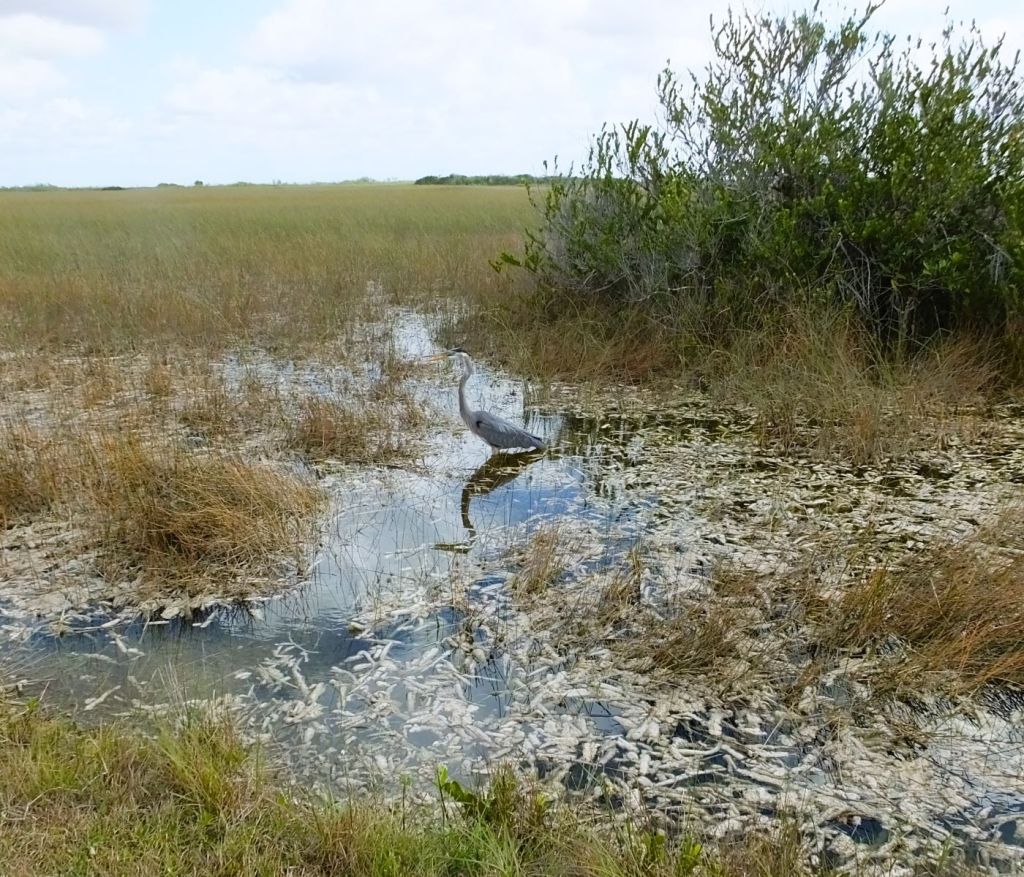
Shark valley views – biking, birds and trailside gators

The next day we drove to Flamingo, a developed area deep in the heart of the national park.  They have an excellent visitor center, campground, other accommodations and marina. 

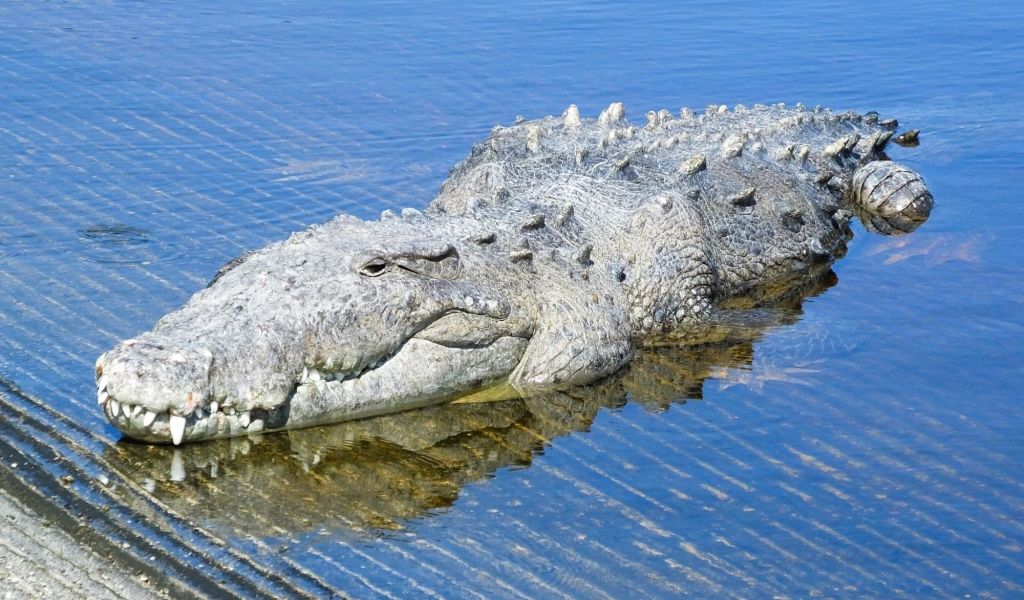
Snarly-toothed crocodile at Flamingo

At the marina boat landing, a park ranger kept curious visitors at a safe distance from two large snarly-toothed crocodiles that were sunning themselves.  We learned the Everglades has crocodiles AND alligators – both are rather ominous!  Meanwhile, several manatees swam at boat docks not too far away.

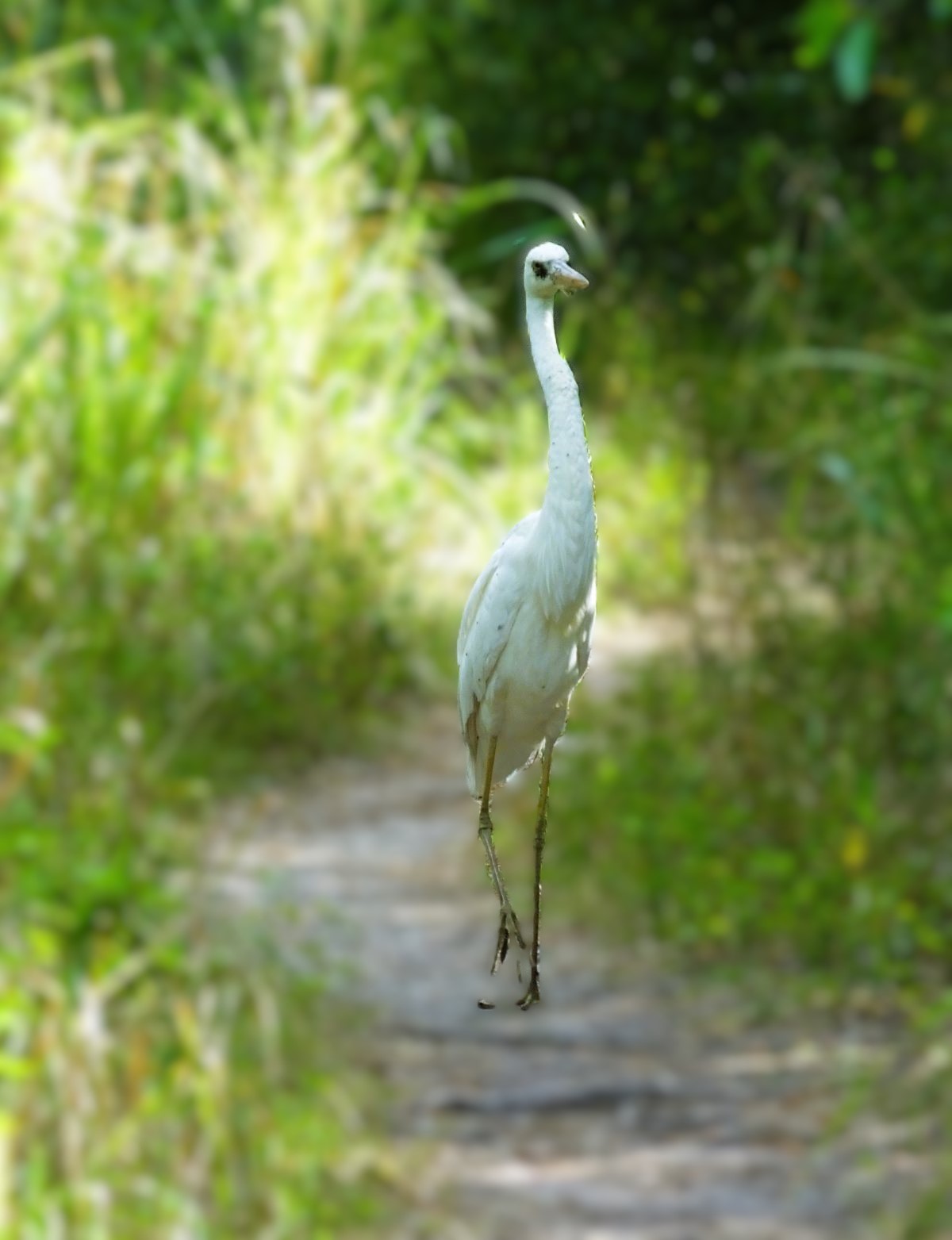
We hiked along an overgrown canal to Florida Bay; the tall white feathered fellow blocked the path

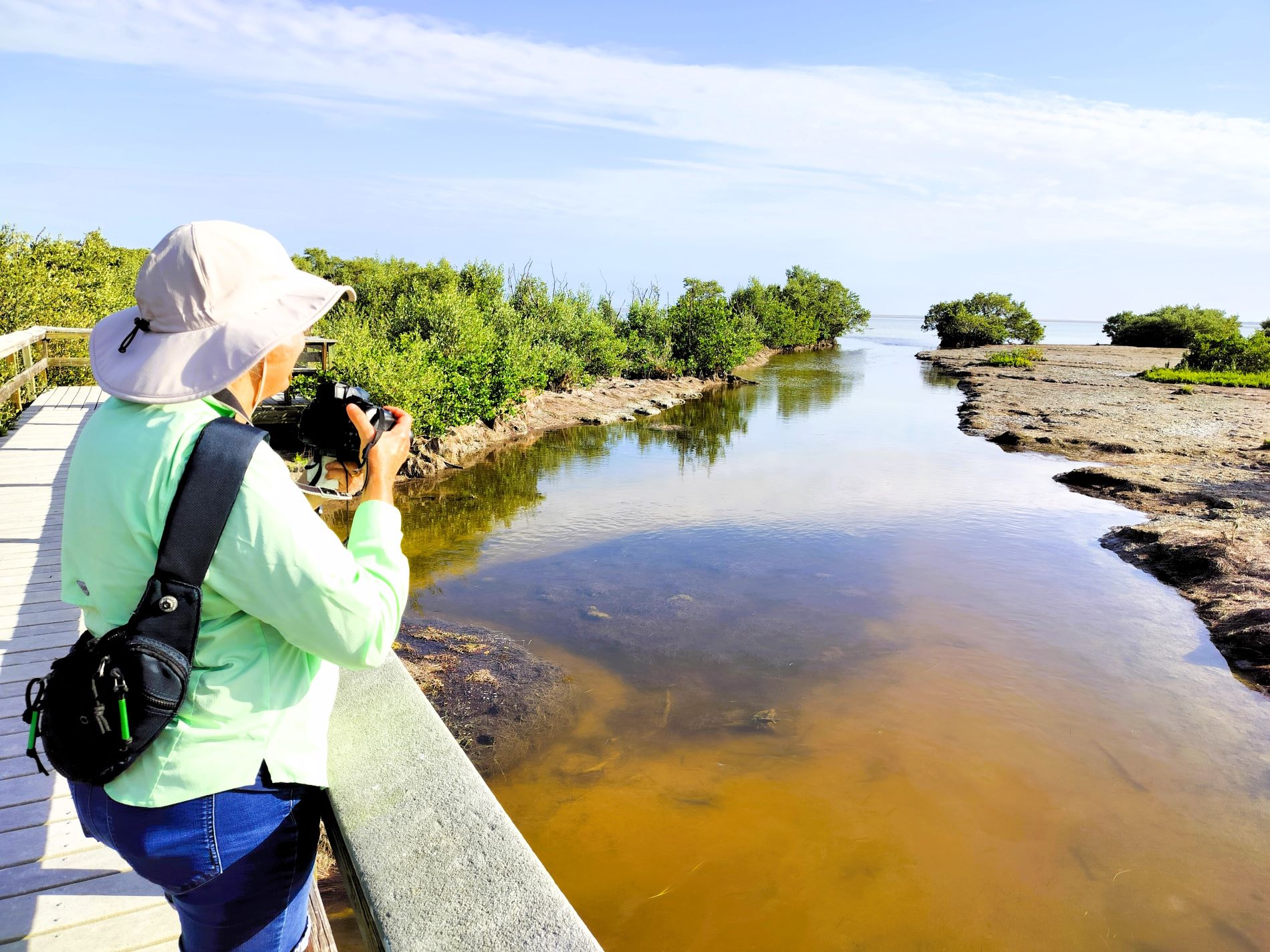
Later, we hiked along an overgrown canal trail to a viewpoint of the Florida Bay.  We saw many birds, including one rather tall white egret that blocked the trail for a bit, and a number of stealthy alligators trying to hide nearby.

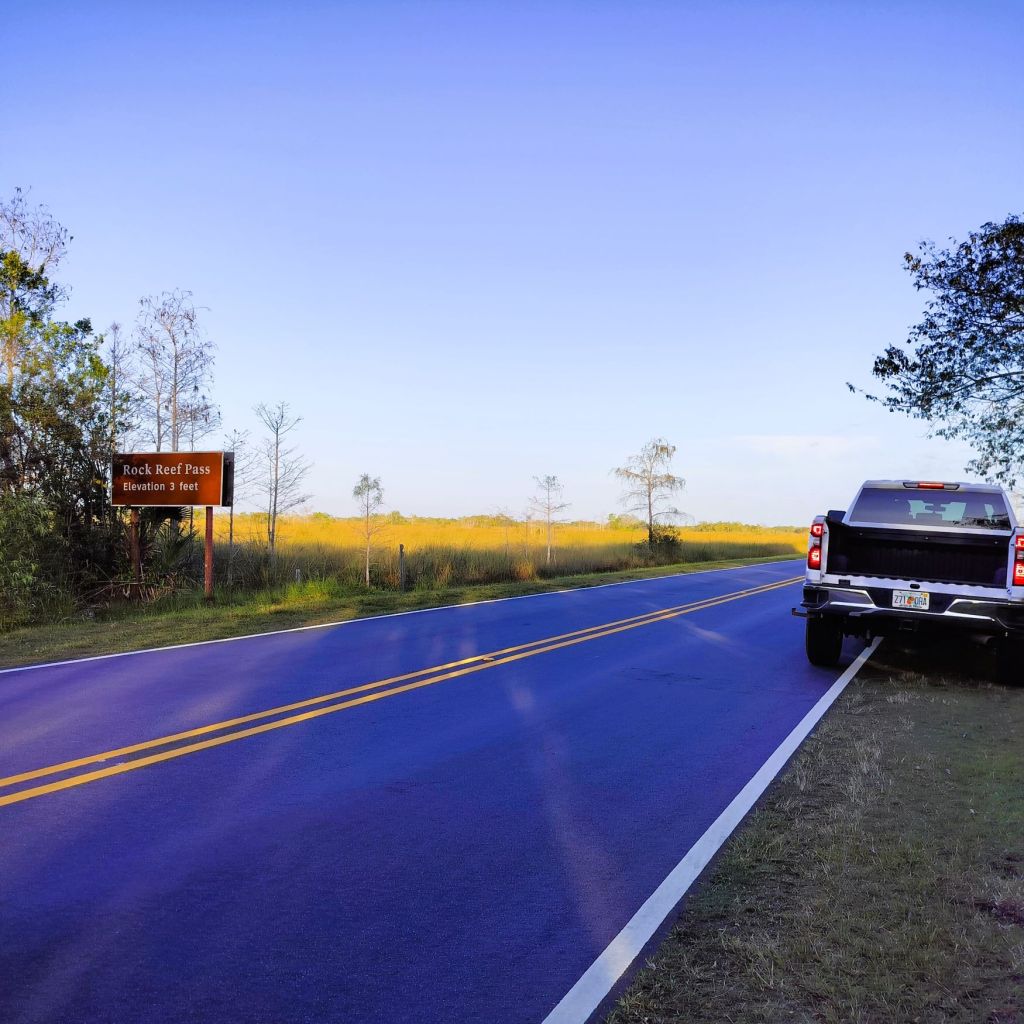
Elevation 3 feet – the Everglades are flat!

As we exited the park that afternoon, we stopped at Rock Reef Pass, elevation 3 foot.  The Everglades are remarkably flat, indeed!

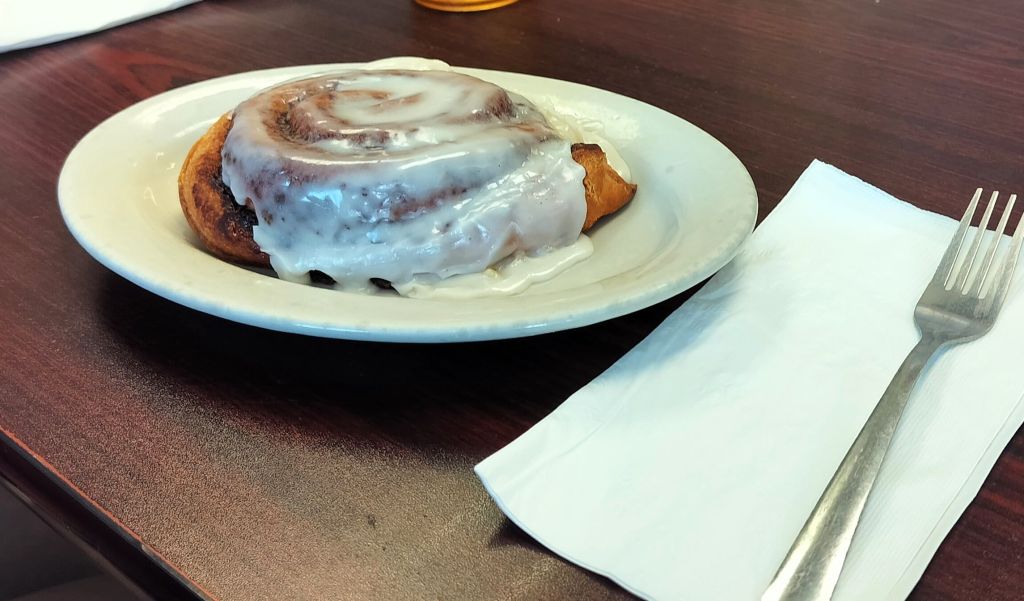
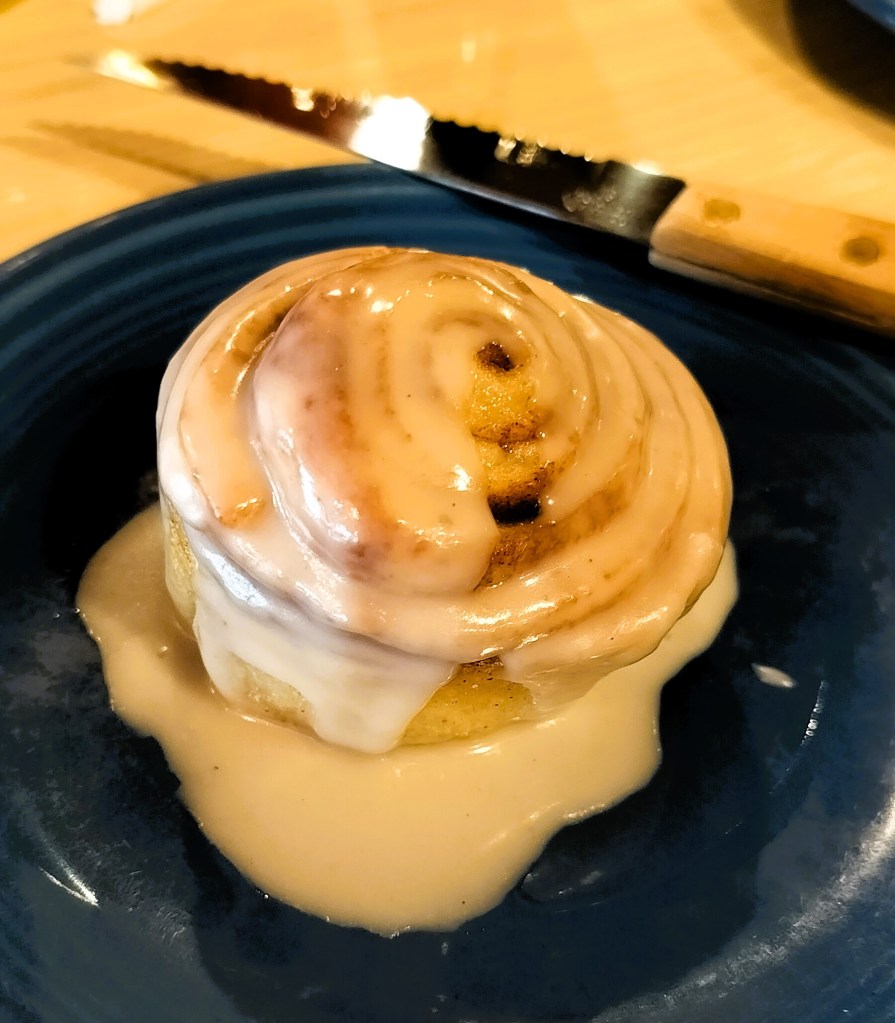
We tried a cinnamon bun at Doc’s Diner in Key Largo – it was 4+ (out of 5) sweet goodness

On to Bahia Honda State Park

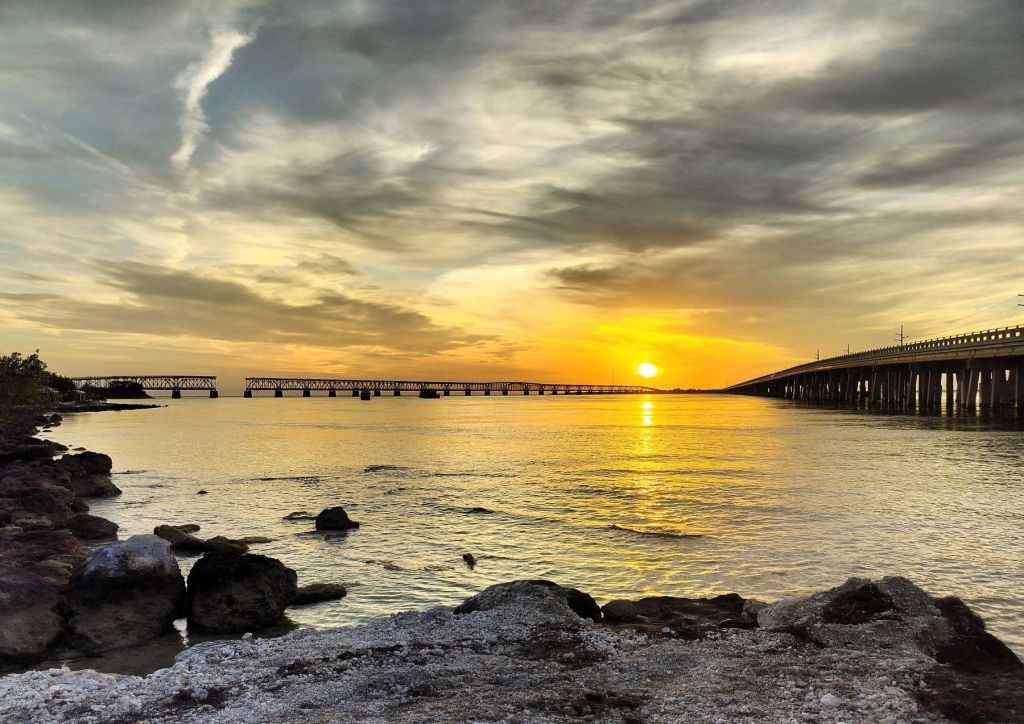
Bahia Honda sunset seen from the campground

From Pennekamp SP we continued on the Overseas Highway past the busy towns of Islamorada and Marathon, and across the seven-mile bridge to Bahia Honda State Park, mile marker 37.8.  The park is one of our favorite places to camp.

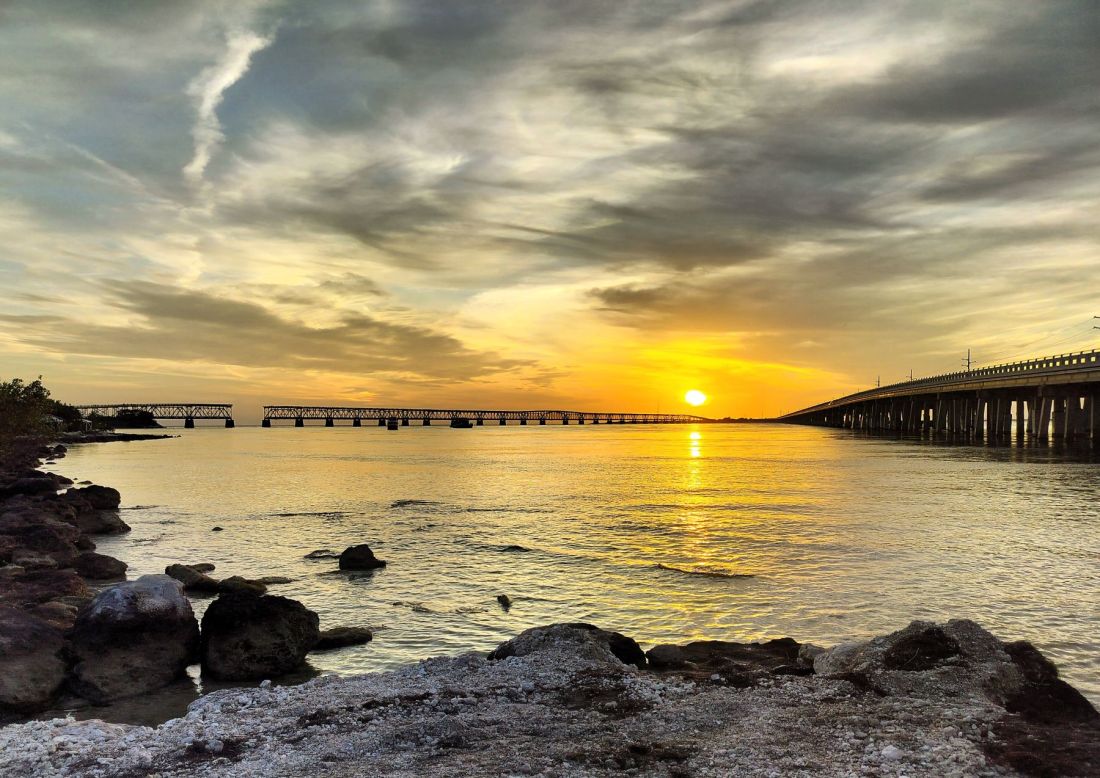
We bicycled to see the remains of a railroad bridge built by Henry Flagler.  The railroad to Key West was an amazing engineering feat for its time.  Completed in 1912, trains made the trip for 23 years before the bridges and rail lines were seriously damaged by the Labor Day Hurricane of 1935.   The railway was turned over to the state and converted to an automobile highway in the following years.

There are beaches on both sides of the island – an oceanside beach faces the Strait of Florida and Cuba, and a gulf-side beach faces Florida Bay and distant Everglades.  There are places to camp on both sides of the island.

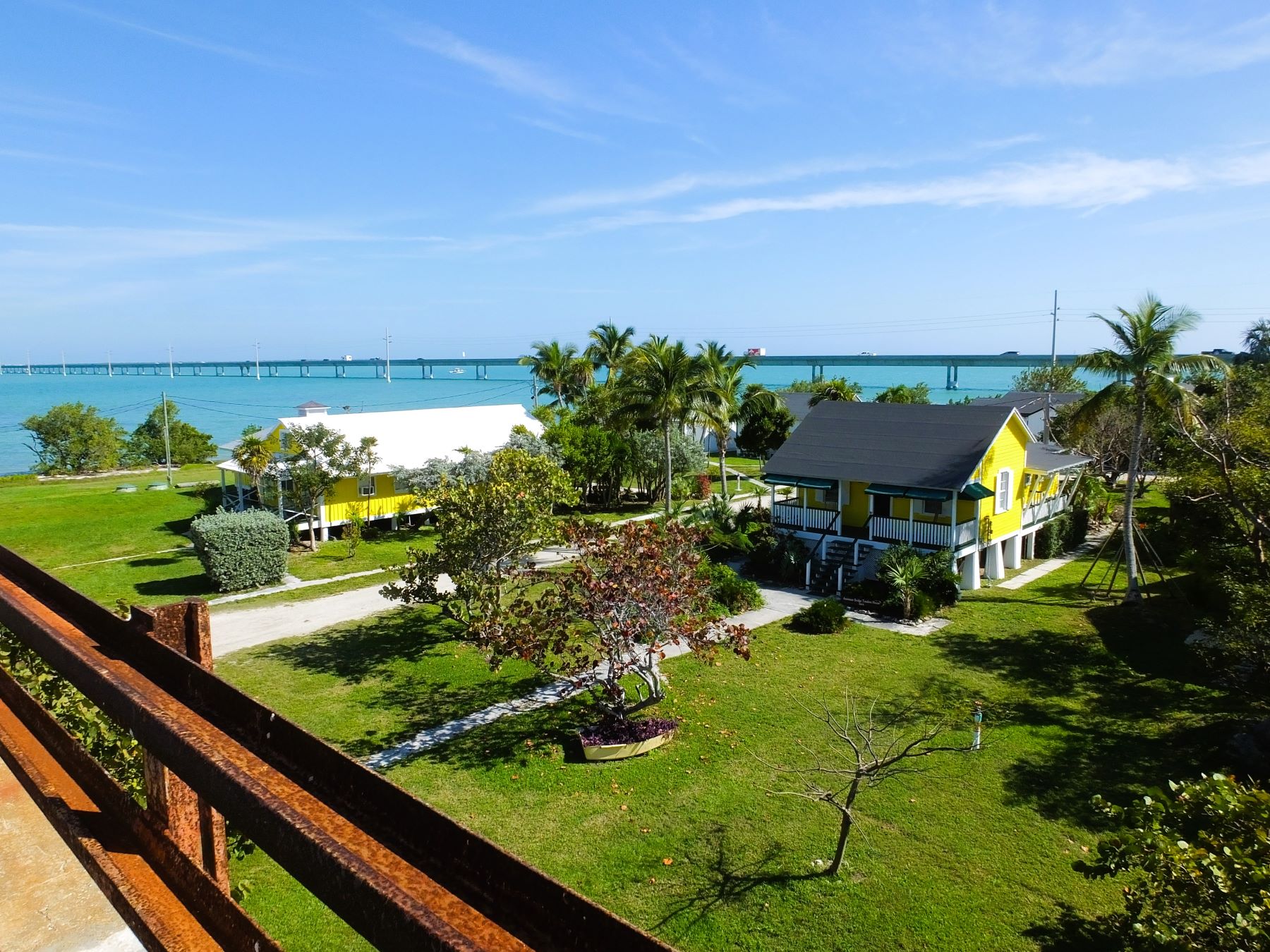
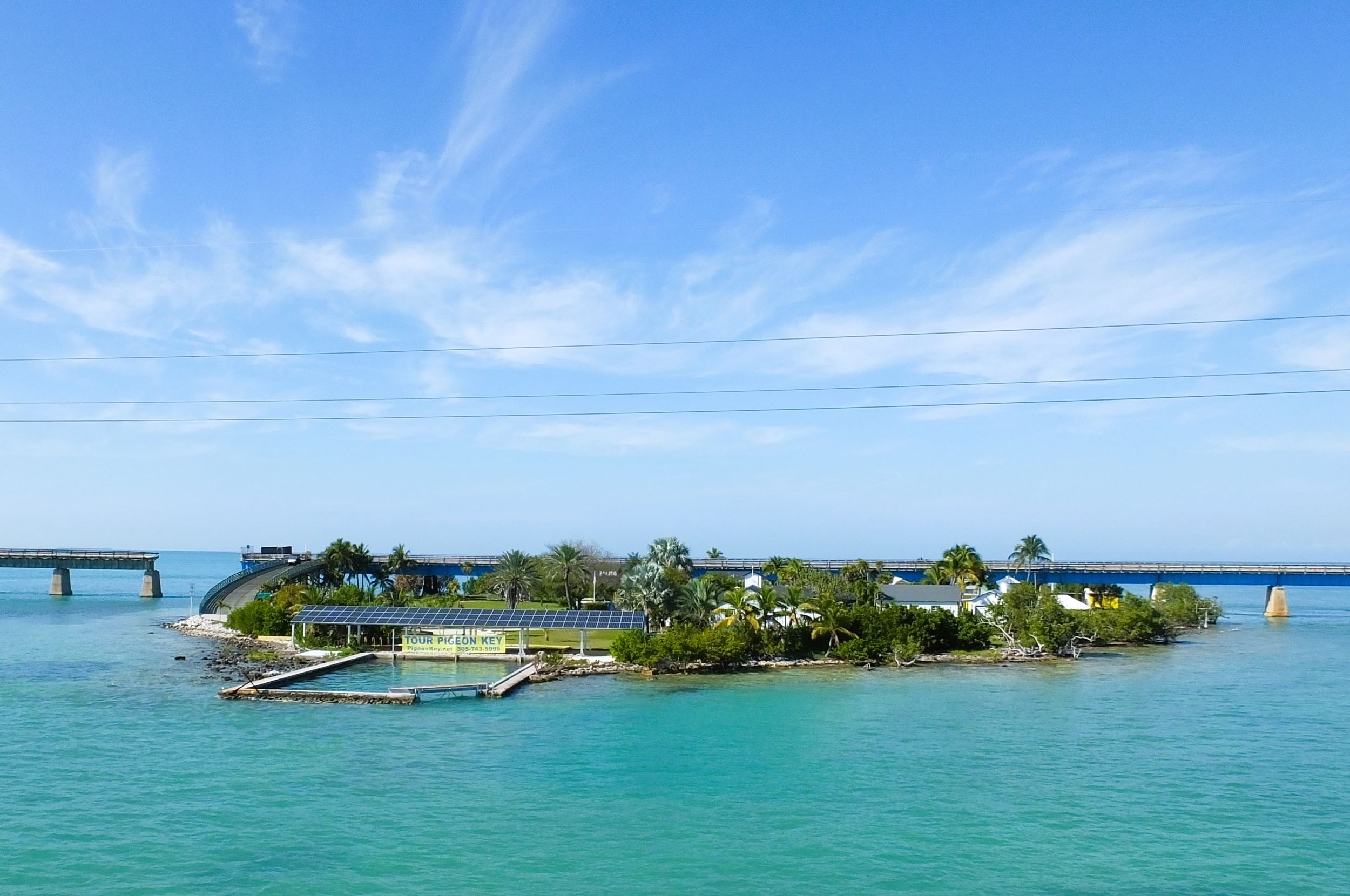
Construction workers and supplies were staged on Pigeon Key during construction of the 7 Mile railroad bridge

Pigeon Key – A Tiny Island with a Big Story

One day we visited Pigeon Key, a small island visible from the seven-mile bridge.  We took a tram nearly three miles on the original Bahia Honda bridge to the island that was used as a work camp when the original railroad bridge was built.  Photos and relics in Pigeon Key buildings give an interesting history about the railroad.

Ouch! Pap has a bent leg

Pap Gets A Bent Leg

We have been blessed with relatively few issues with our vehicles and campers as we have traveled over the years. 

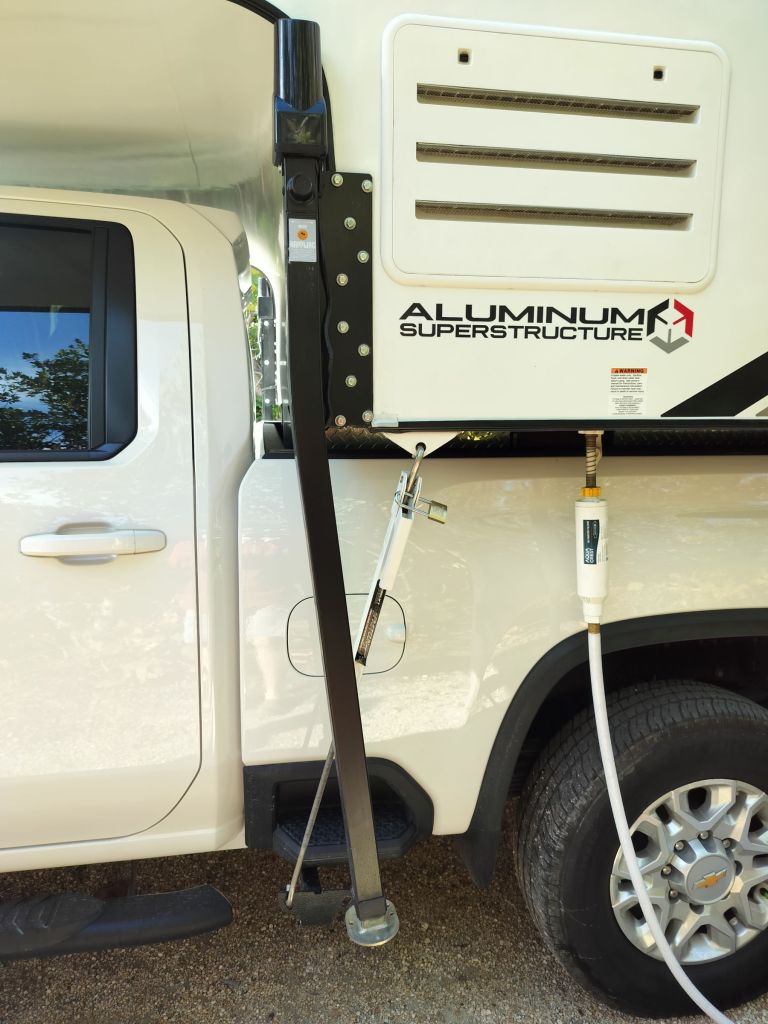
We had an unfortunate accident when arriving at Bahia Honda.  As we entered the campground, the front camper jack hit a post that protected the campground entry keypad. The jack, used to raise the camper, was significantly bent.   Pap had to stay on Percy until we got home and the jack was replaced.  It was an unfortunate and expensive lesson.          

Next Week 

Our heartland journey begins as we travel to Huntsville, TX for a week at Camp Cedarbrook Texas.

Heartland Bound and Catching Up (part 1)

(2024 Heartland Ep 1)

Welcome to RabbiTRAILS as we get underway with our summer 2024 travels. 

After an epic 2023 journey to Alaska, we are staying (much) closer to home this year.

Why 2024 Heartland? 

Much of our trip this year will be traveling through the central United States heartland from Texas to Minnesota.  We’re bound to see oilwells, windmills, cattle herds, cicadas and miles of cornfields. Hopefully we won’t encounter tornadoes and hailstorms!

Other affairs of the heart will be at play as we travel:  catching up with family in Texas, Oklahoma, Kansas and possibly Connecticut, and a visit with a close friend in New Hampshire.

We top it all off with something near and dear to our hearts:  two weeks serving at Camp Cedarbrook camps in Texas and Ohio.  As we connect all of this together, we’ll be on the lookout for interesting RabbiTRAILS to follow and share with you.

Before things get underway, there’s some catching up needed since our last blog post in December: 2023 Alaska Revisited Recap.

Catching Up, Part 1

Earlier this year Percy, Pap and a new addition carried us on a couple trips.

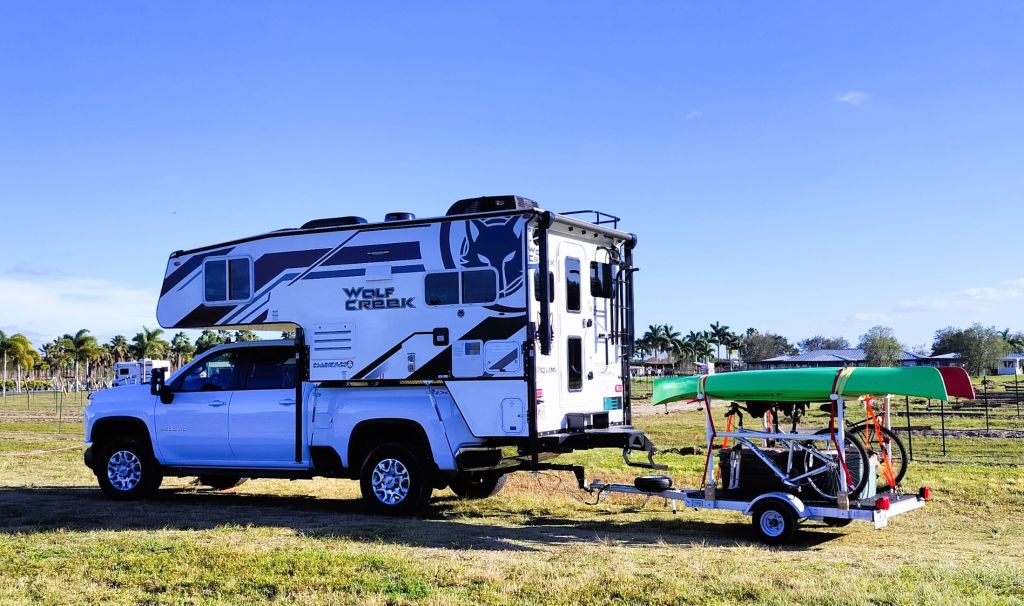
When we travel closer to home, Pat and I enjoy kayaking in addition to biking.  There’s no easy way to take kayaks with our current setup, so we purchased a small utility trailer and configured it to haul two kayaks, our bikes and assorted other camping gear.  Introducing Junior, Percy and Pap’s first cousin!    

Junior, our little utility trailer, joins Percy and Pap
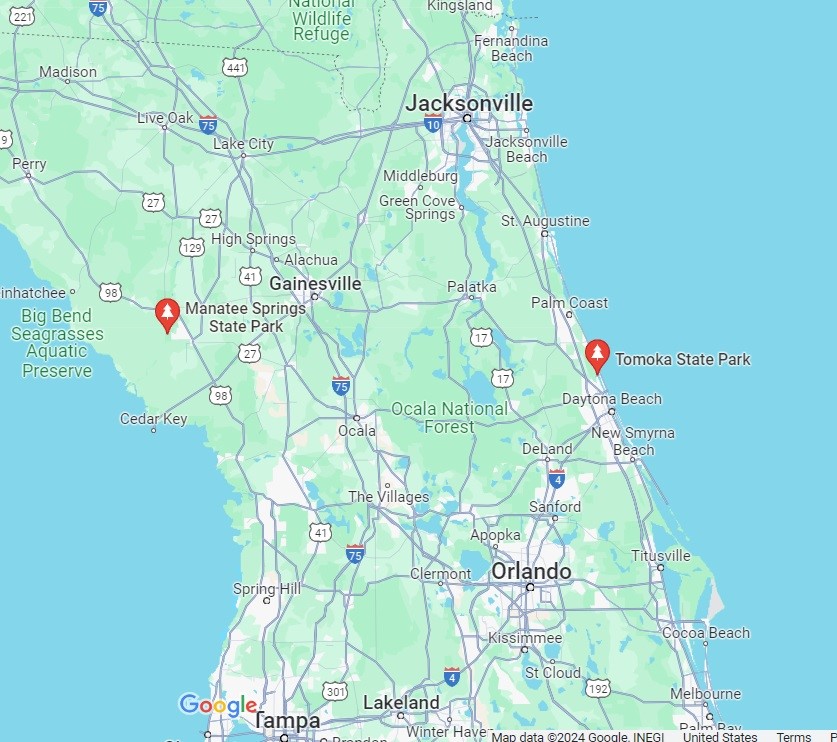
Our travels included Tomoka and Manatee Springs State Parks in Florida

Tomoka State Park

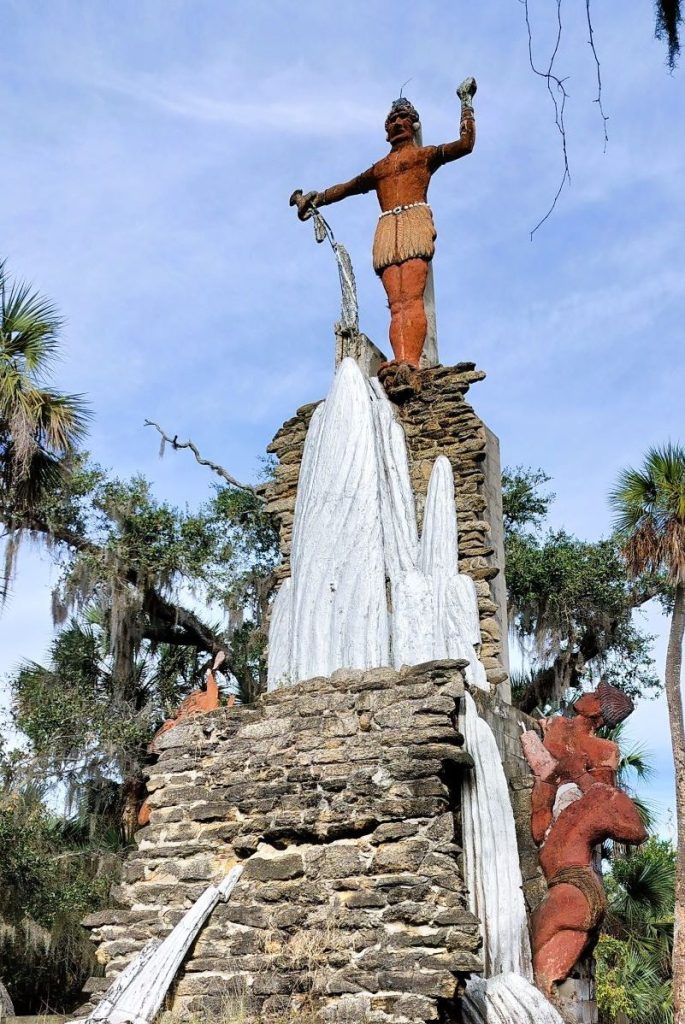
In January, we camped with longtime friends, John and Carol, at Tomoka State Park a few miles north of Daytona Beach.  Located on the Tomoka River, the park includes the site of an ancient Timucuan Indian village and a large statue of Timucuan Chief Tomokie.  The monument is a reminder that the area was populated by Native Americans for centuries before Europeans arrived.

Chief Tomokie statue in Tomoka State Park

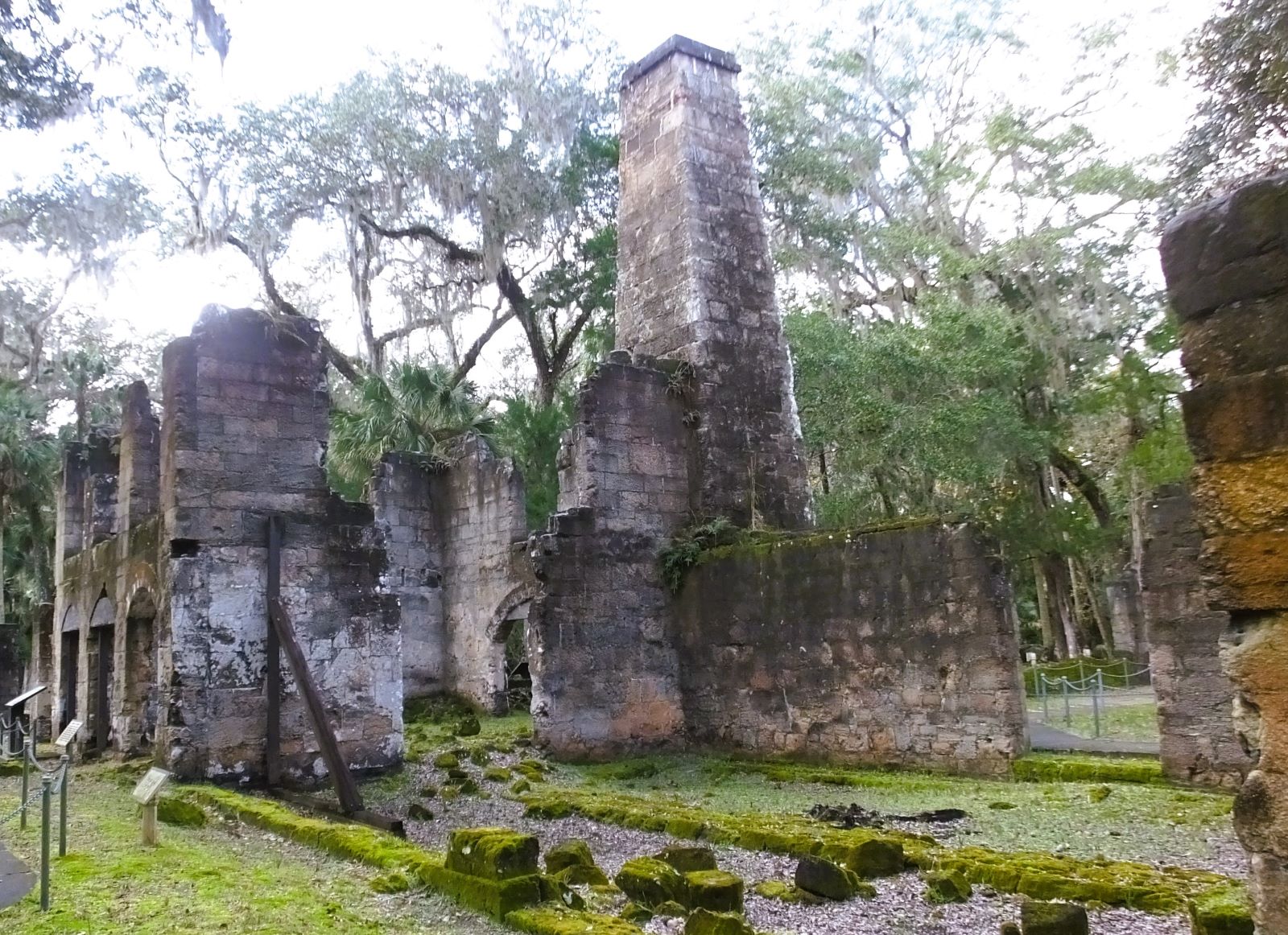
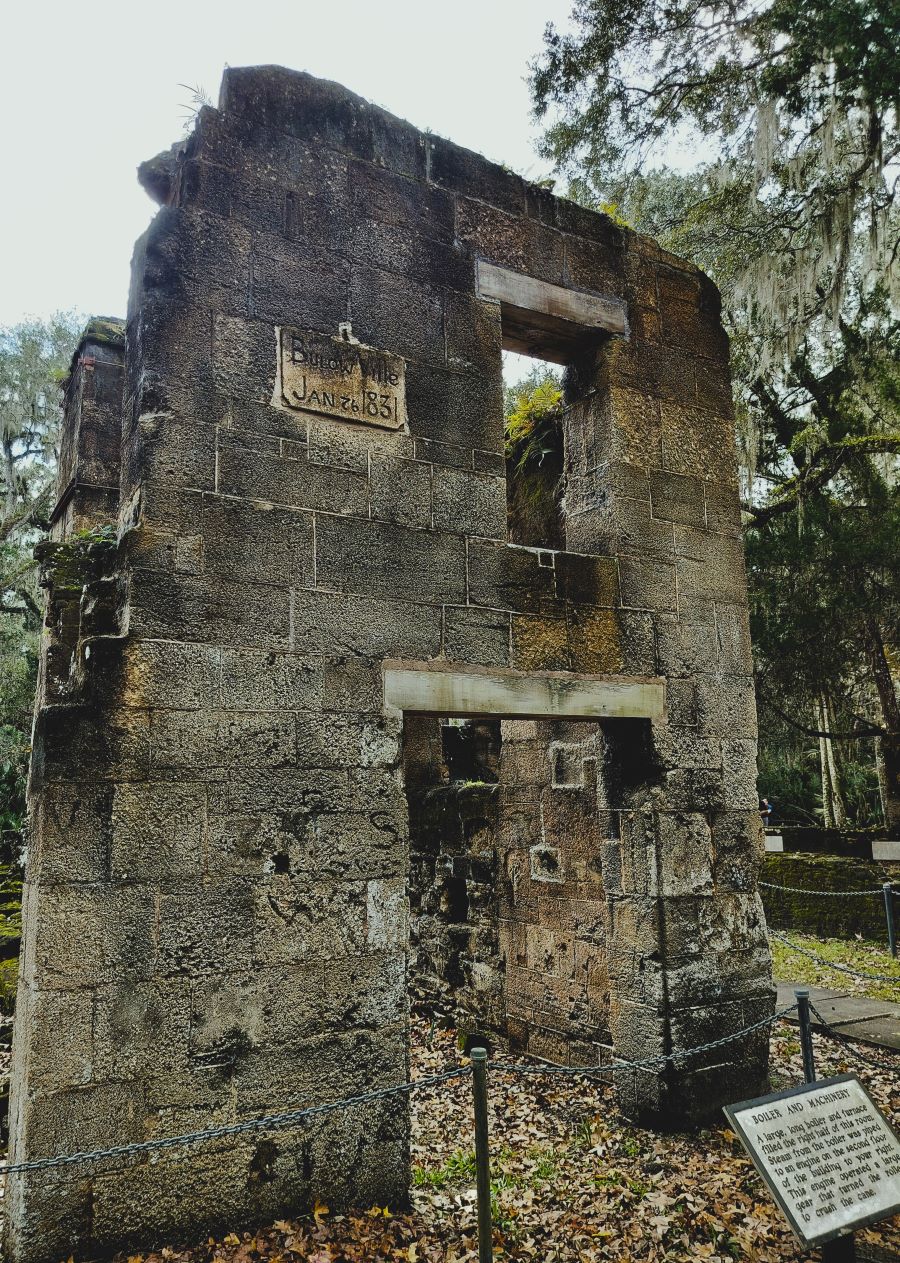
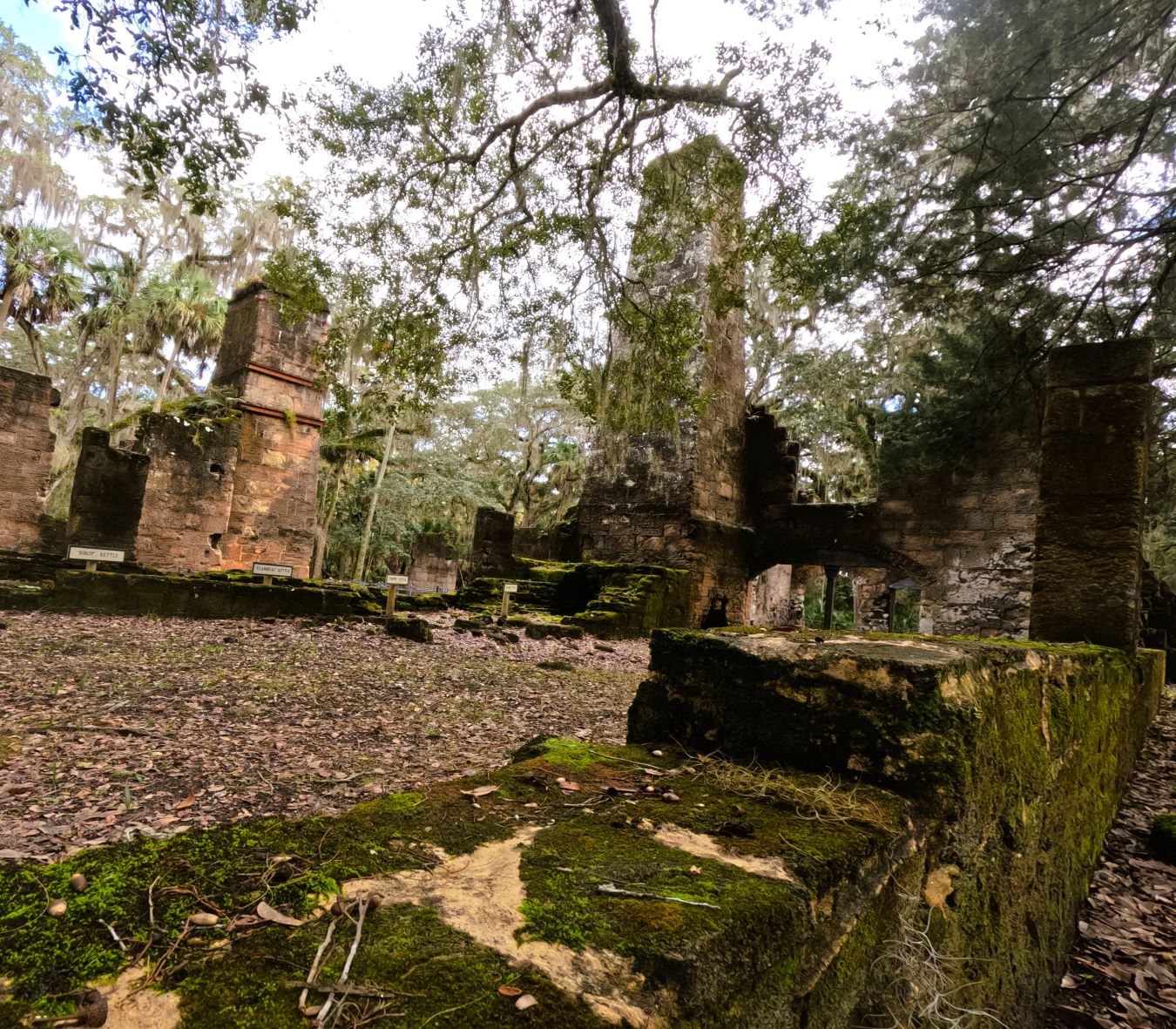
For several days we kayaked, biked and took several local side trips.  We toured nearby Bulow Plantation Ruins Historic State Park.  Developed in 1821, the plantation was once the largest plantation in East Florida where indigo, cotton, rice and sugarcane were cultivated.  The plantation was destroyed in the Seminole War of 1836, and, although many of the original plantation structures no longer exist, sizeable remnants of a large sugar mill can still be seen.  The plantation is an interesting part of Florida history.

Ruins of the sugar mill at Bulow Ruins Historic State Park

Aunt Catfish’s Cinnamon Bun

We stopped for lunch at Aunt Catfish’s on the River restaurant in Port Orange.  The menu offerings were what one would expect at a southern-style seafood restaurant. We learned they served homemade cinnamon buns and it was game on!  Although the buns were smaller than the ginormous buns we sampled on our 2023 Alaska Revisited journey, they were wonderfully sweet and cinnamony.  We had to have more than one to satisfy our bun craving!

Manatee Springs State Park

We left Tomoka and crossed the state, where we camped at Manatee Springs State Park. 

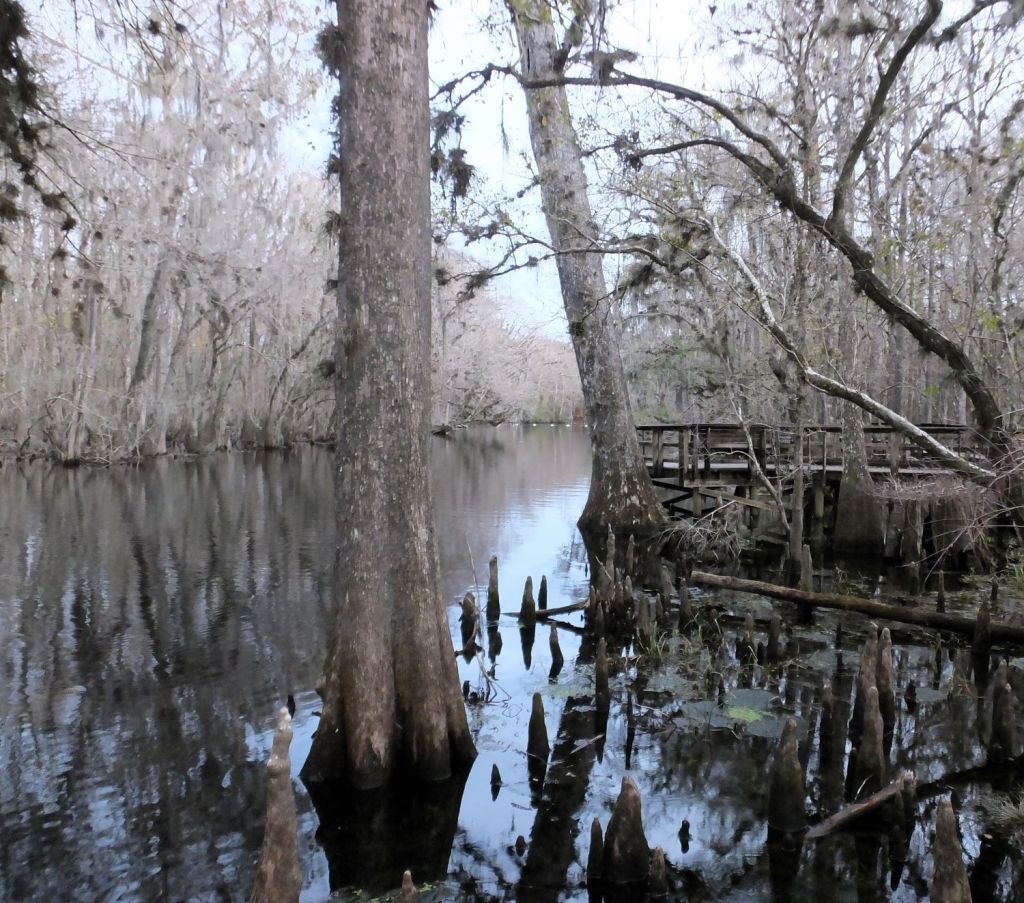
Manatee Springs is a first magnitude (e.g. large) spring that flows into the Suwannee River.  A boardwalk extends nearly a quarter mile from the spring through a swampy area with tall Spanish moss-covered cypress trees.  The boardwalk ends at a small pier on the Suwannee River. 

A quarter mile boardwalk runs from Manatee Springs to the Suwannee River

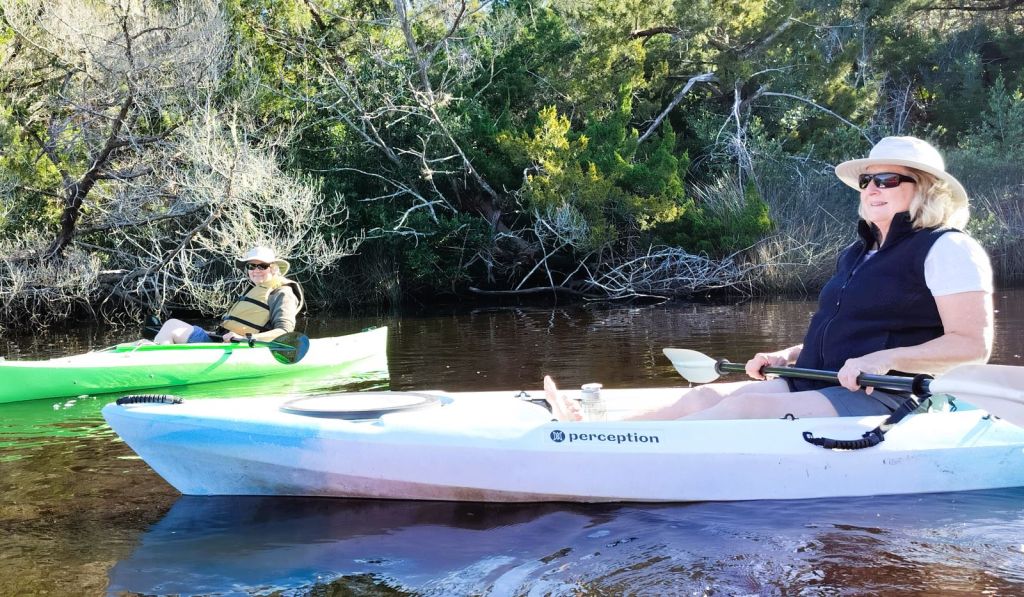
One morning we kayaked the run and along the Suwannee for several miles, where we enjoyed the sunny, cool and quiet surroundings.

Pat and Carol kayaking near Manatee Springs

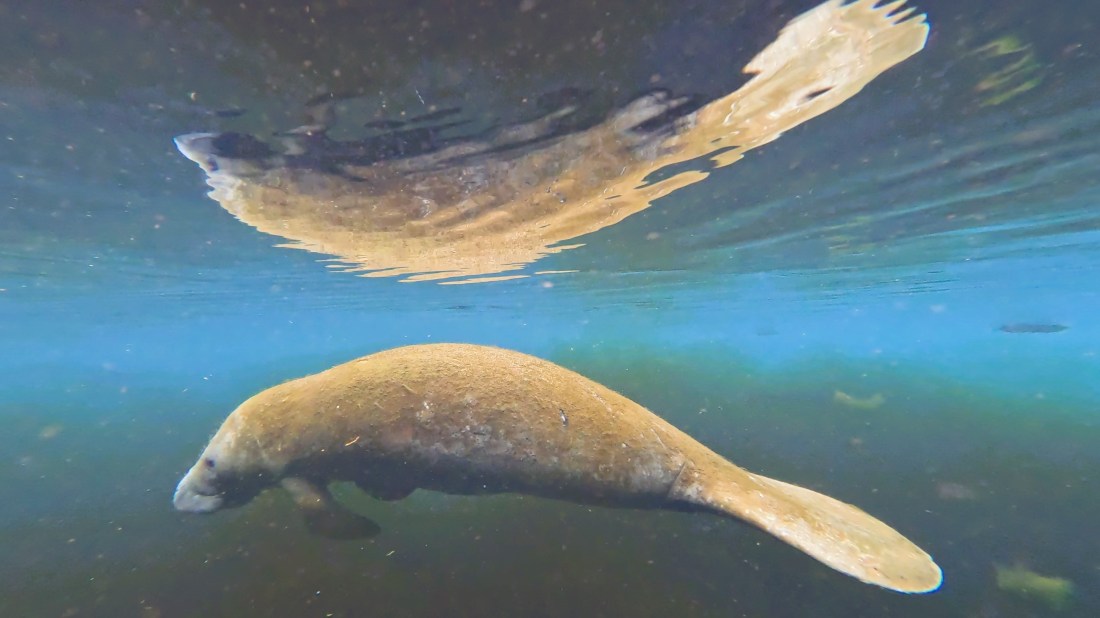
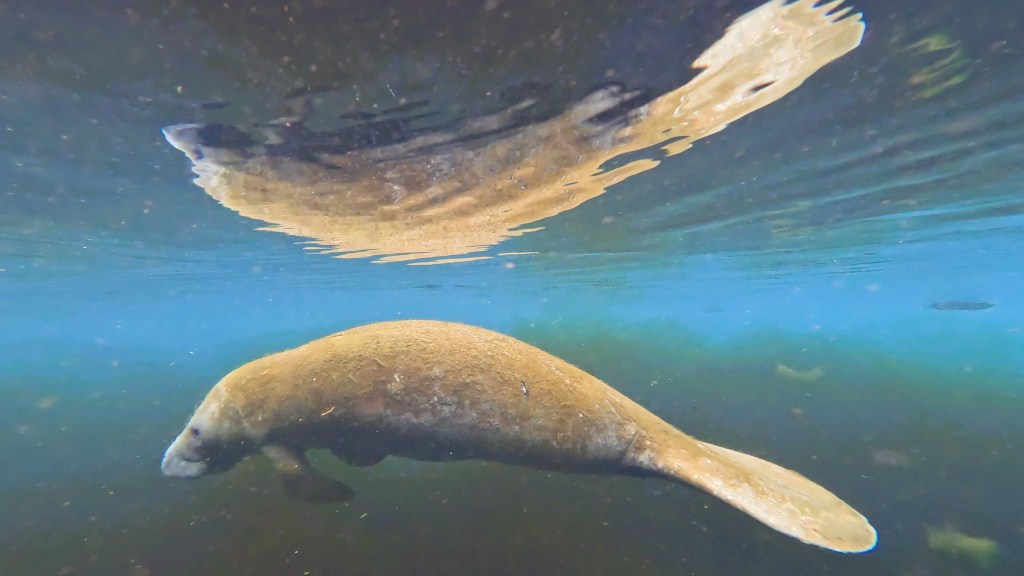
When we returned to the spring, we were delighted to find several manatees swimming near the boat launch area.  We paused for several minutes to watch the large potato-shaped animals swim about and surface from time to time.  I used my GoPro camera to capture some underwater photos of the spectacle.      

Manatee and reflection at Manatee Springs SP

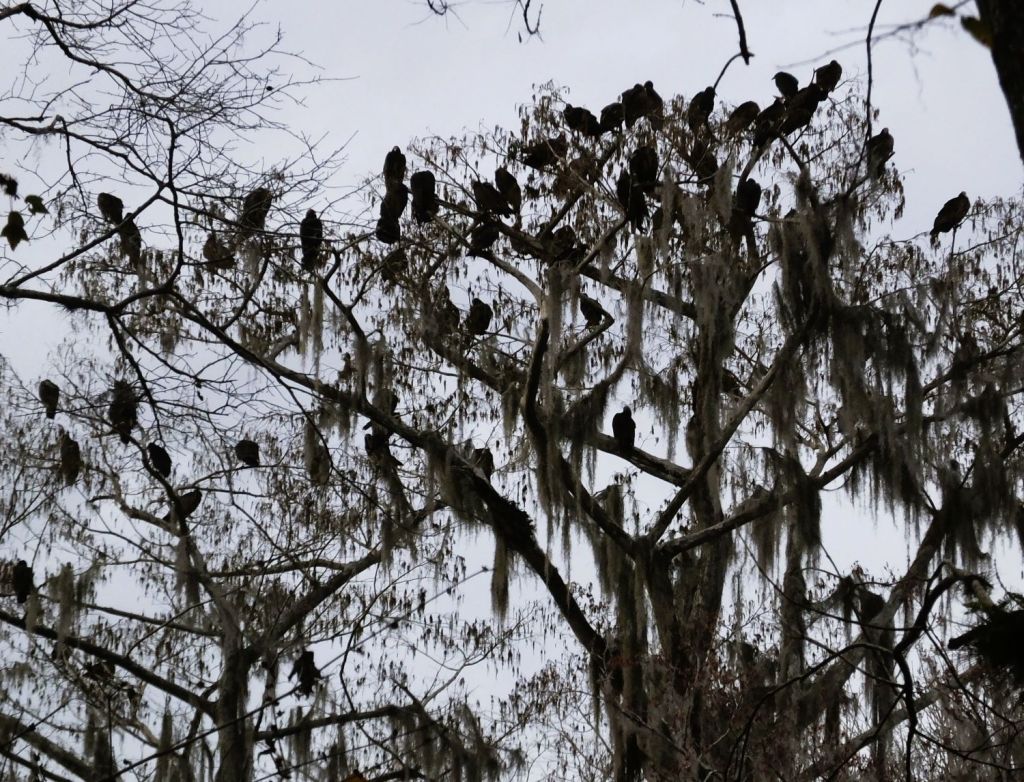
As we walked along the boardwalk one evening, we noticed the cypress trees surrounding the spring run were filled with hundreds of large, American black vultures. It was a rather Gothic spectacle in the evening twilight.

Hundreds of vultures watched us from cypress trees near the springs

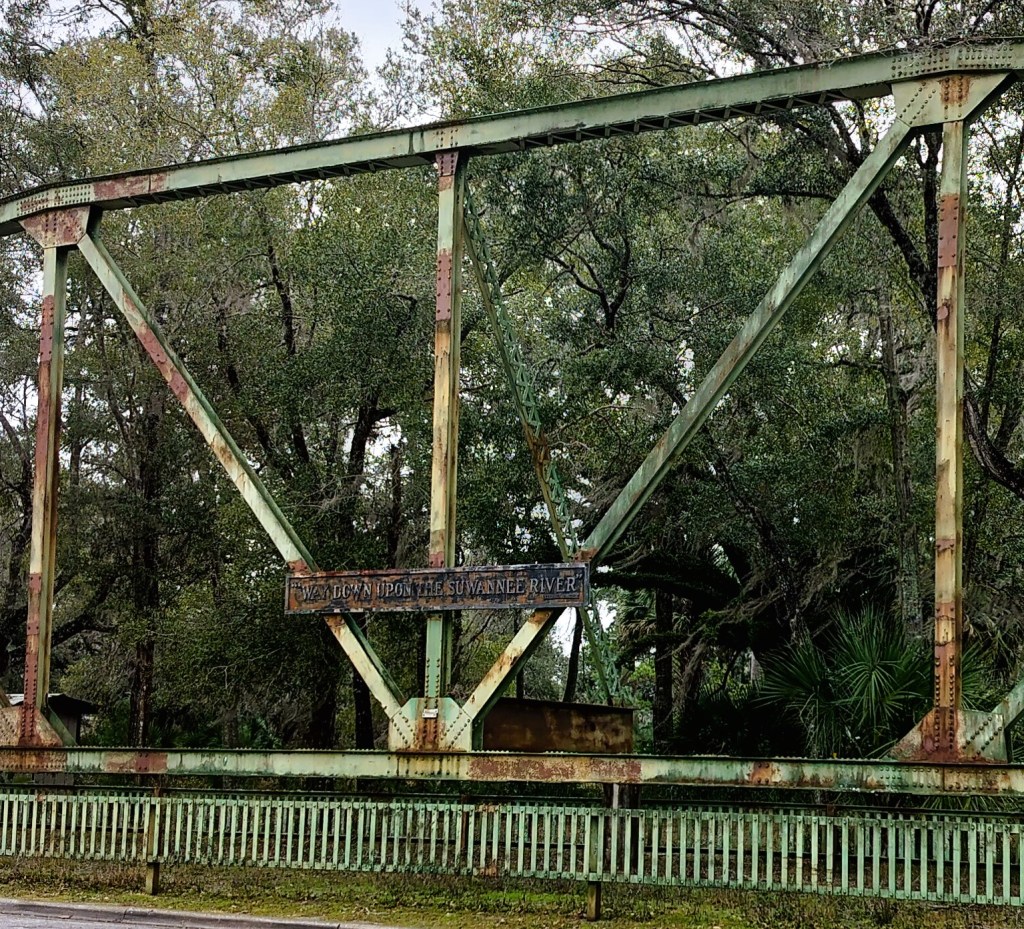
Our Manatee Springs stay included visits to Cedar Key, where we rode our bicycles around the small Gulf Coast community, and Fanning Springs, where we admired a remnant of an old bridge that crossed the Suwannee River inscribed with the title of Stephen Foster’s memorable song, “Way Down Upon the Suwannee River!”

One of four spans from the bridge that crossed the Suwannee River at Fanning Springs has been preserved. The bridge was built in 1934.

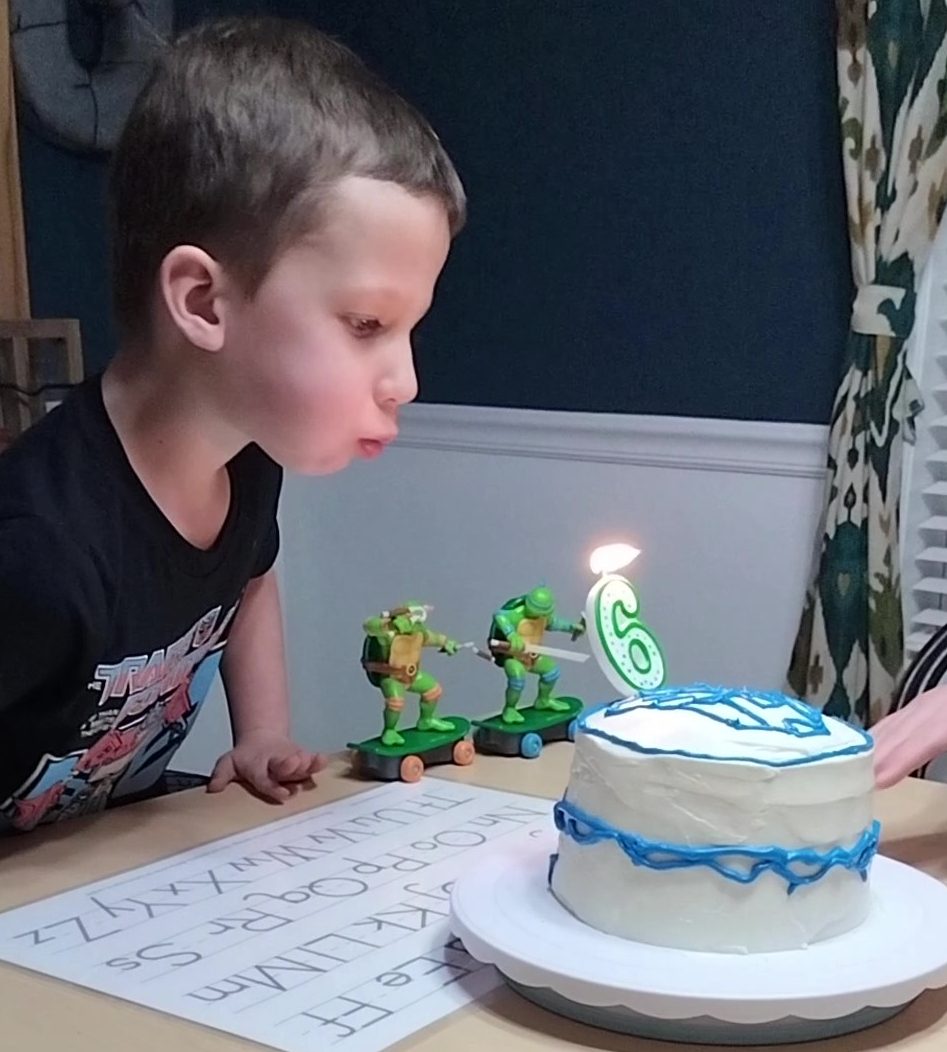
Henry Turns 6

Our trip ended near Macon, GA with a sixth birthday celebration for our grandson, Henry.

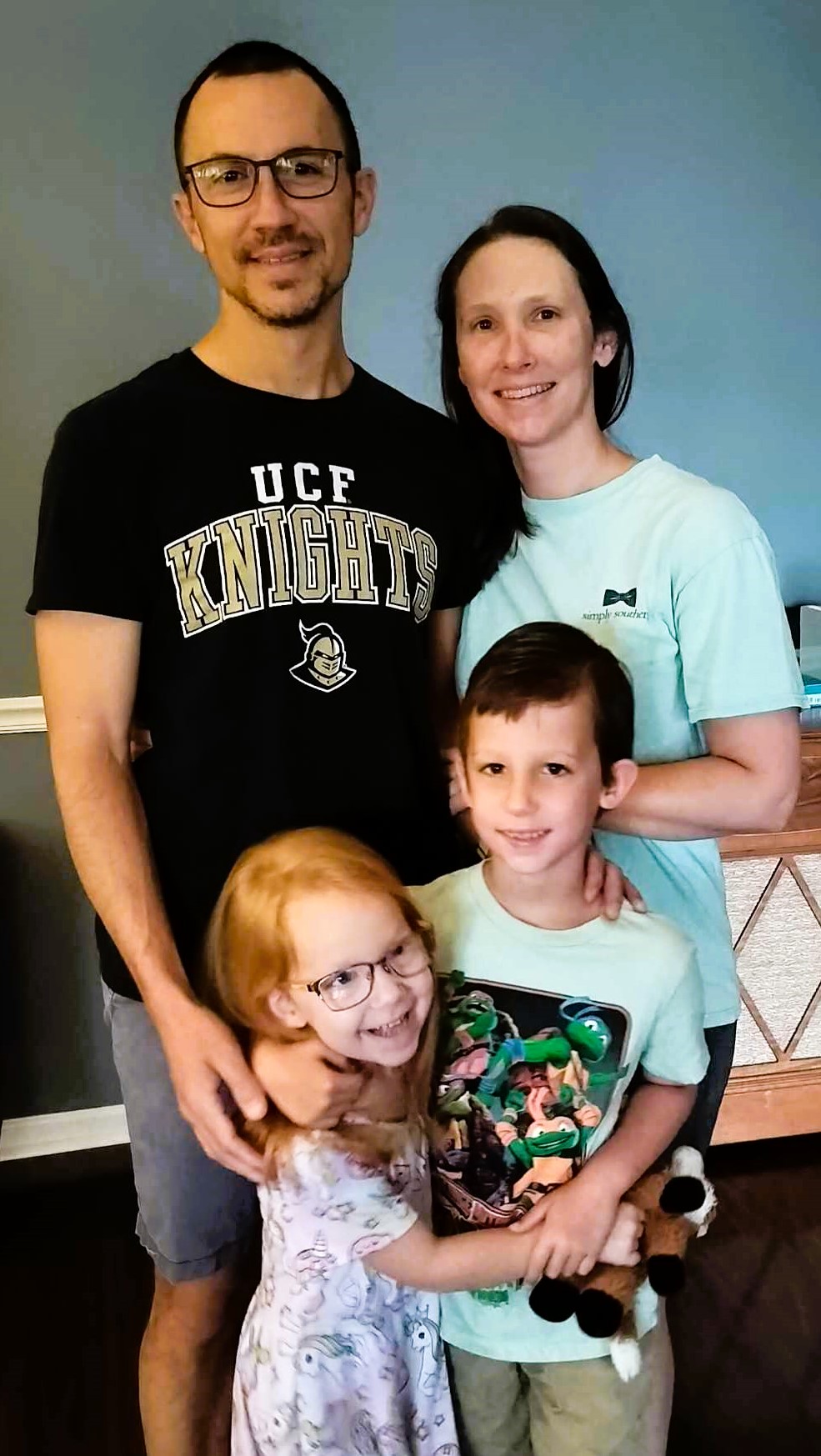
Son-in-law Josh, daughter Liz, and grandkids, Emilia and Henry; Henry celebrates his birthday

Next Week

Catching Up (part 2): Florida Keys and Everglades National Park