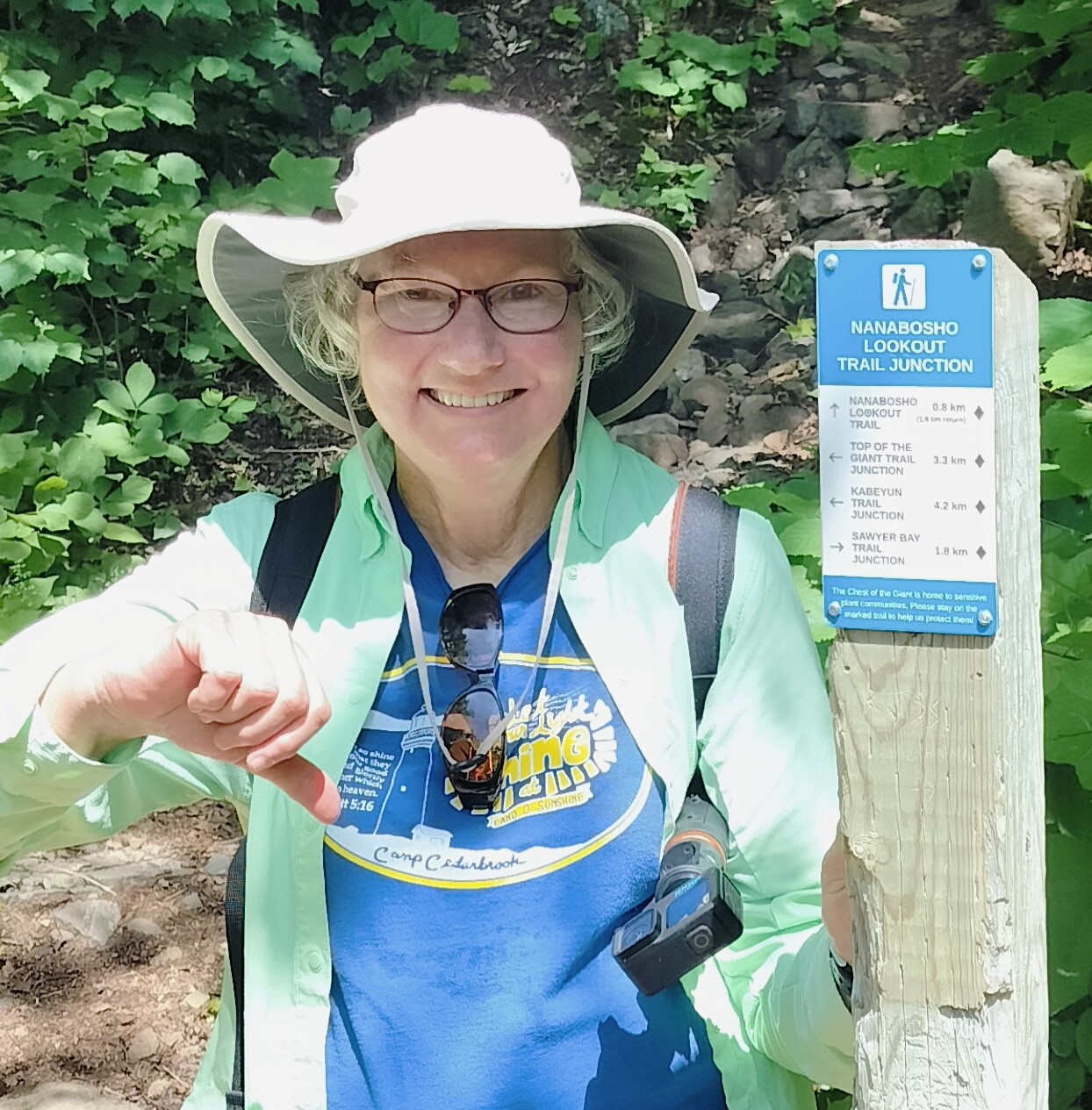
Superior Hikes and Black Fly Bites

(2024 Heartland Ep 7)

We left the North Shore Scenic Drive and Grand Portage behind and crossed the border into Canada, looking forward to nine nights at several provincial parks and a national park on the north shore of Lake Superior.  It would prove to be a memorable experience in several ways.
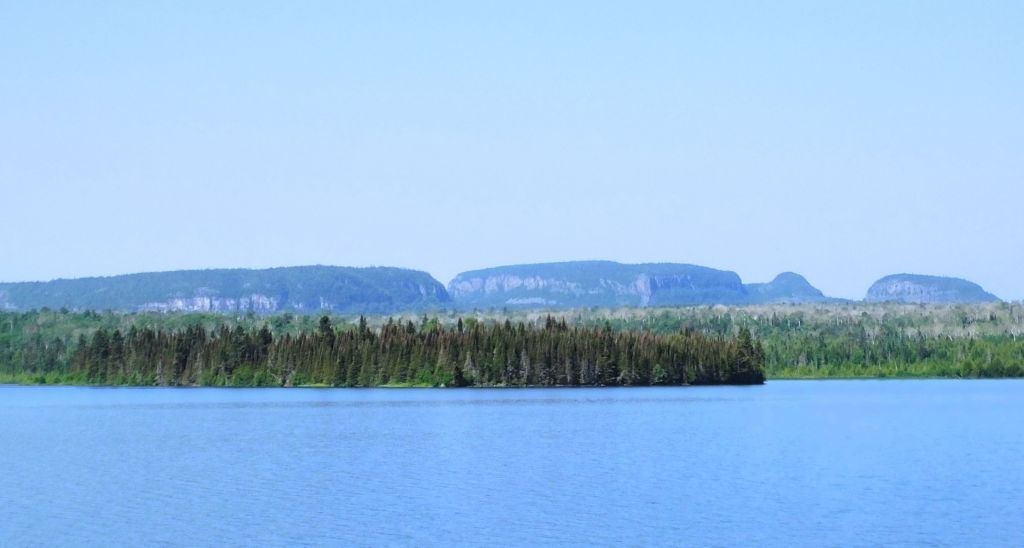
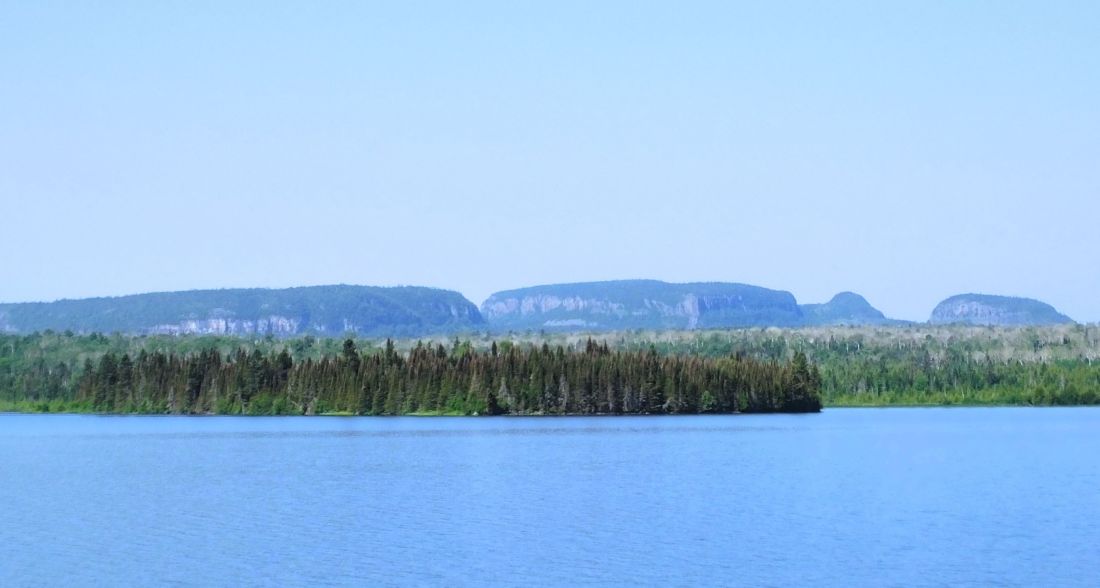
The sleeping giant. From left, legs, torso, Adams apple and head. We didn’t wake him up!
Letting the Sleeping Giant Lie

After a restful night at Sleeping Giant Provincial Park, we undertook an ambitious hike to the top of the sleeping giant the next morning. 
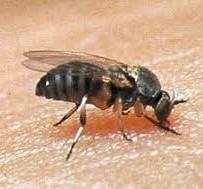
Who would think a little fly could create such grief

Minutes after starting out we were SWARMED by black flies.  We hastily pulled out the Deep Woods Off, spraying it generously on our legs, hands and faces (we were wearing long sleeve shirts thankfully). 

The bug juice helped…some.

In all our travels we experienced worse bugs only one time – last summer when driving to Chena Hot Springs in Alaska.  When we stopped to take a short hike, the mosquitoes were so bad we got back in our truck and kept going!

That wasn’t an option this time, so we kept moving, swishing and swatting as we moved along. 

We hiked up and down a series of hills for nearly three miles and came to a junction with two trails to the top of the giant.  We were told one trail was extremely steep and the other was slightly longer but not nearly as steep.  We chose the second one.
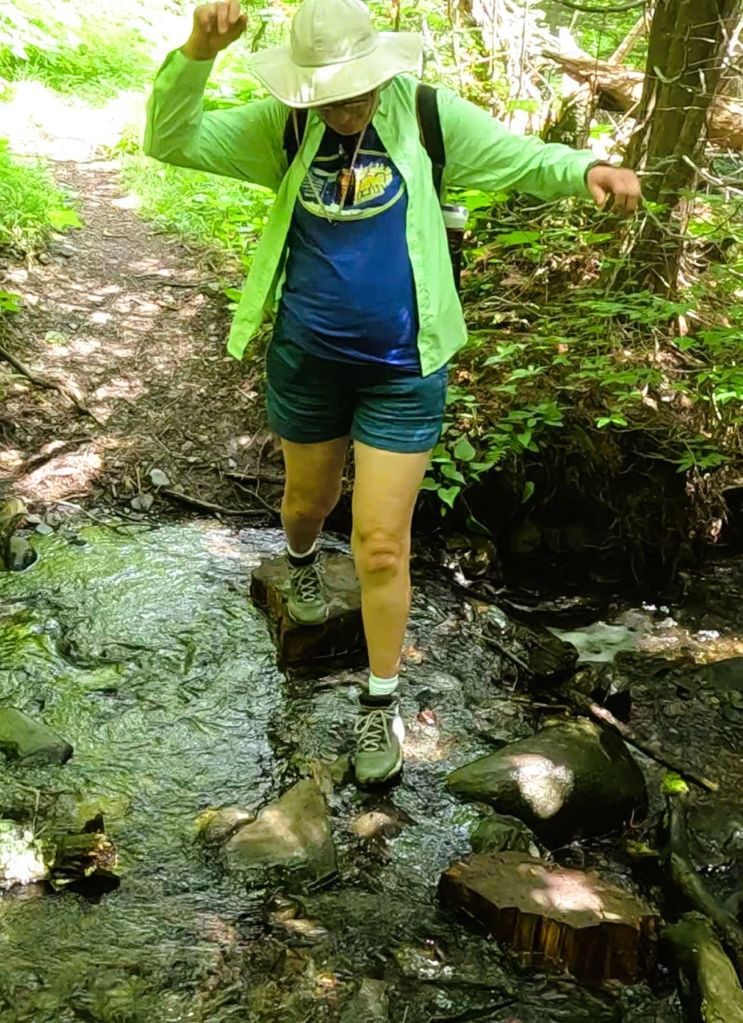
Pat carefully crosses a creek as we ascend to see the sleeping giant

The trail narrowed and followed a small creek.  We crossed the creek several times, hopping across rocks attempting to keep our feet dry.  The trail was very steep in places and at mile five, we reached the final junction to the trail to the top.  Ahead was a boulder field that we would have to scramble to keep going.
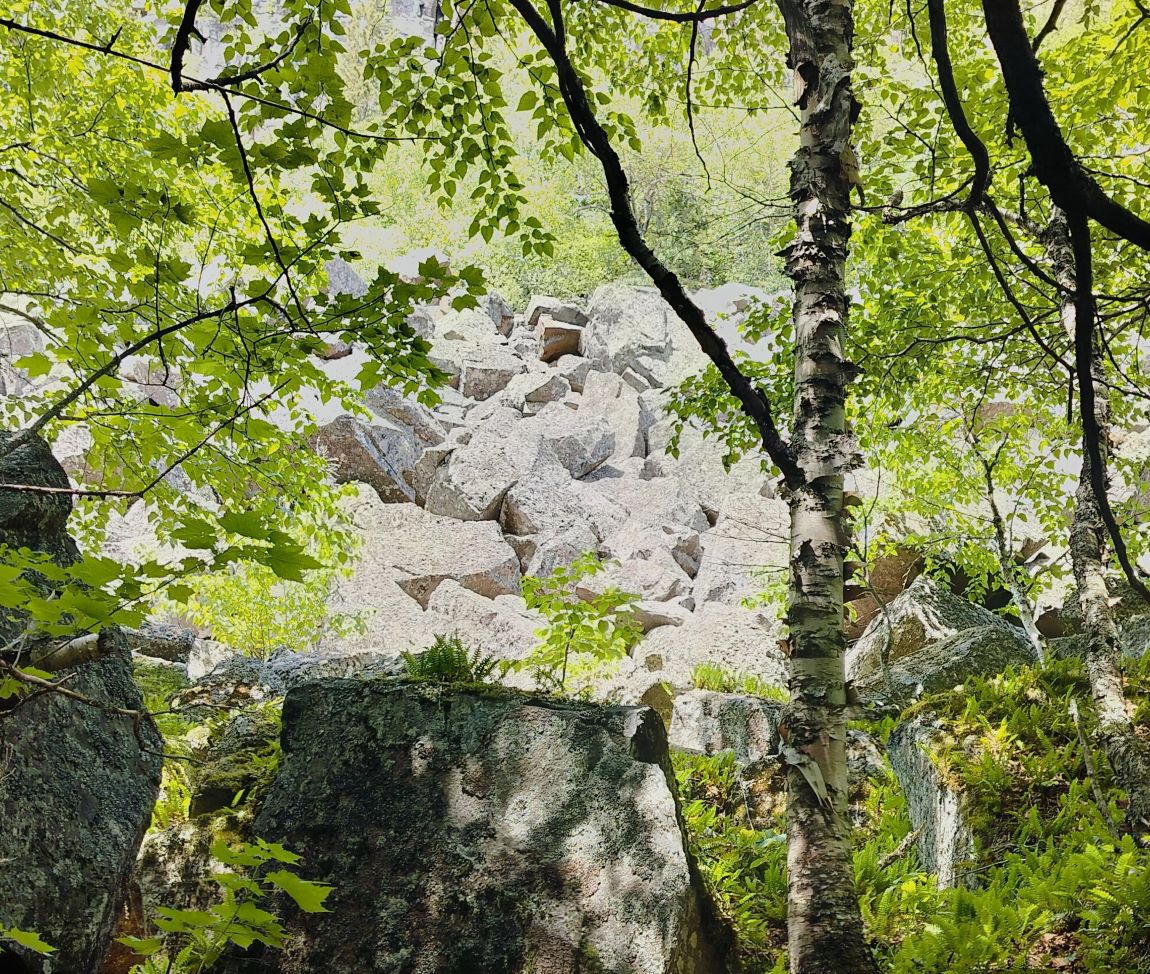
Stopped by a boulder field and steep climb!

We were covered with bug bites and already weary from the hike, so we let the sleeping giant lie and turned back. :<(
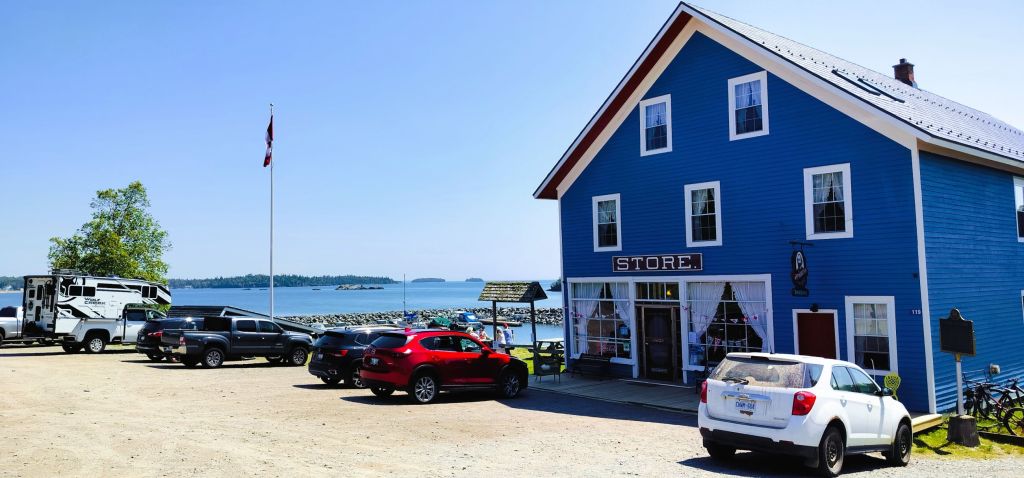
One of the small rocky islands beyond the Silver Islet General Store contained a thousand foot deep silver mine
The World’s Richest Silver Mine                   

We finally reached the parking lot, climbed into our truck and drove to Silver Islet, a small town near the park.  We were in search of something to comfort our sore feet and aching muscles. 

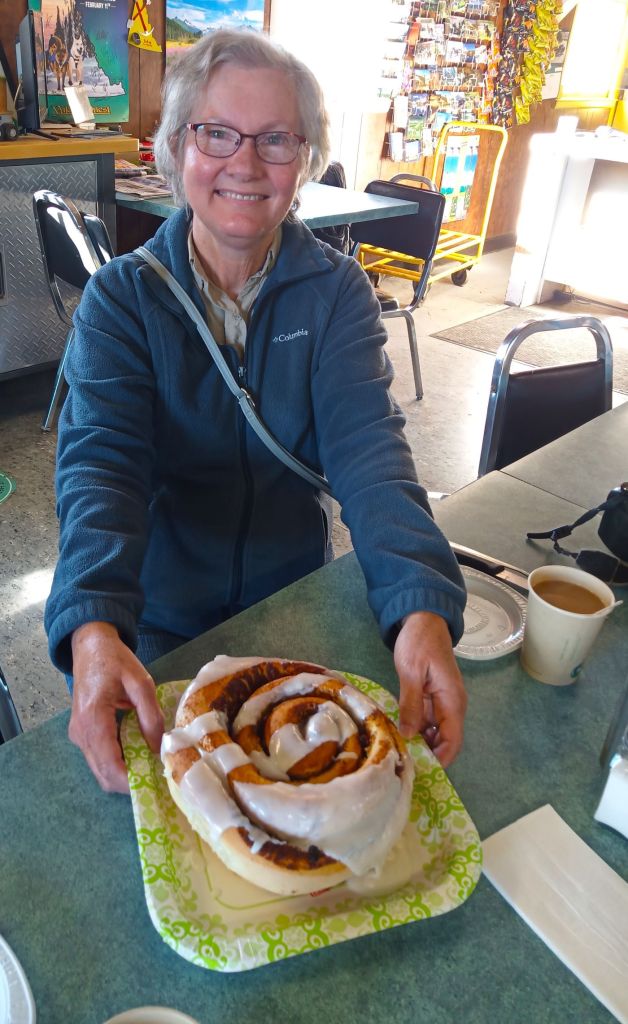
At Silver Islet General Store, we purchased a couple of their ‘famous’ cinnamon buns (review below) and learned about the Silver Islet mine.

In 1868, a silver vein was discovered on a barren rock just offshore from the store.  A mine shaft more than 1000 feet beneath the ice waters of Lake Superior was constructed, and more than $3.25 million (nearly $75 million today) in silver was extracted before the mine was closed in 1884.  It was the richest silver mine in the world at the time.
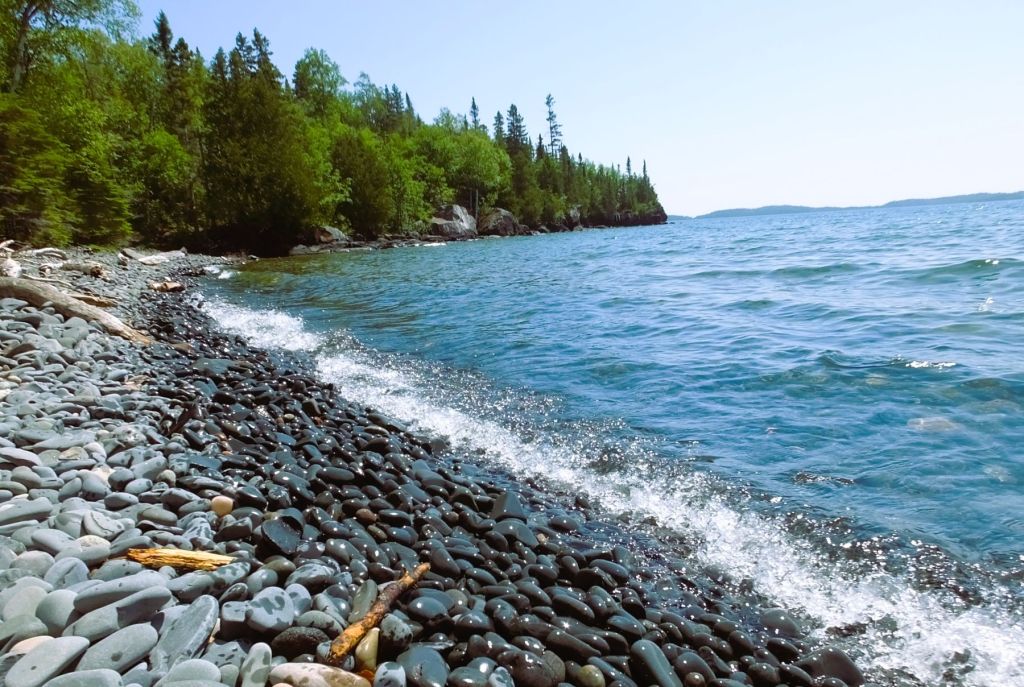
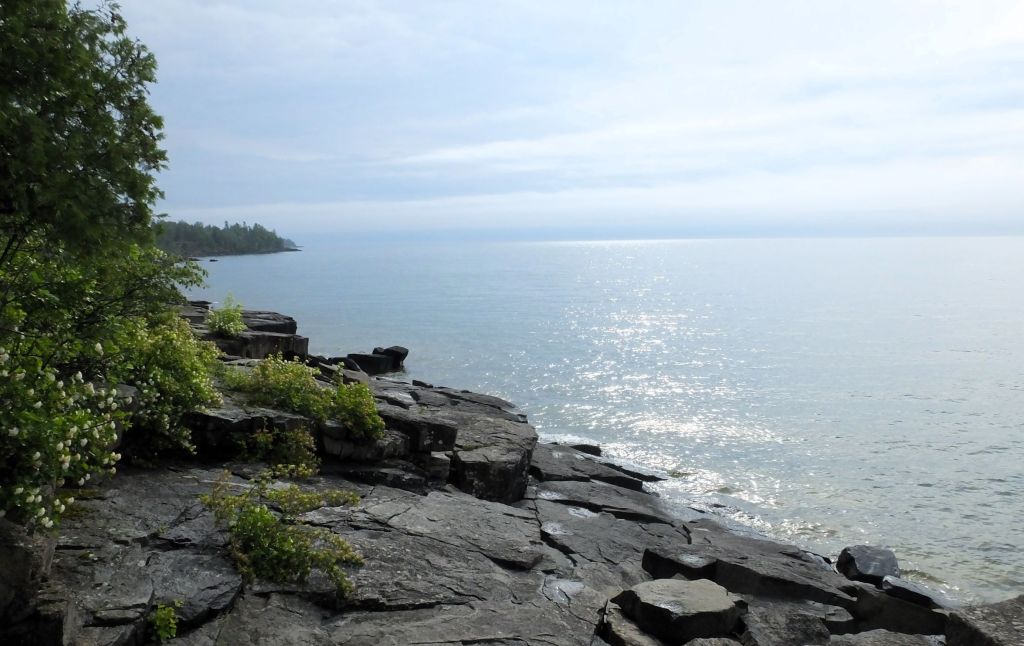
Rocky shoreline of Lake Superior

Later, we redeemed ourselves a bit with a shorter hike to the Sea Lion formation on the edge of Lake Superior.  The formation, which resembled a sea lion at one time, was formed by an intrusion of molten rock through thick layers of sedimentary rock.
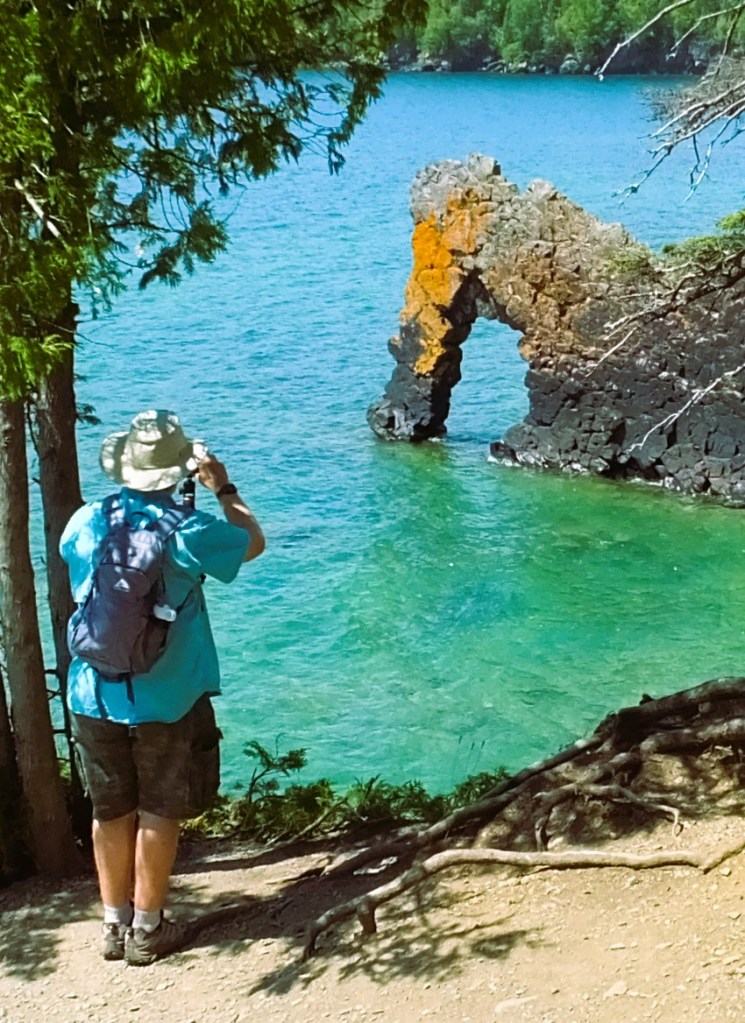
A successful hike to the Sea Lion formation
Ouimet Canyon
1000 Kilometers Deep?

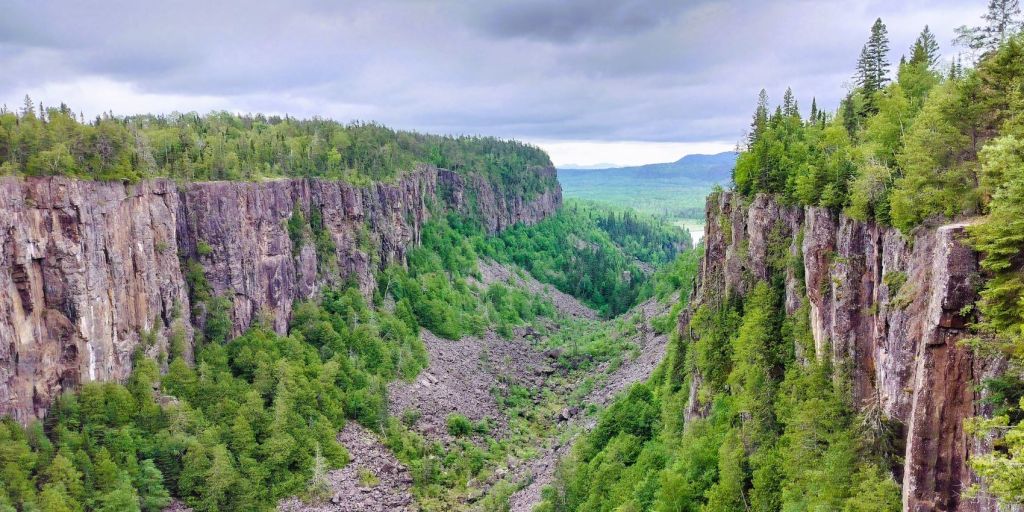
The next morning, we followed a RabbiTRAIL to Ouimet Canyon, a provincial park not far from Sleeping Giant.  The canyon is an impressive gorge, cut into the rock of Lake Superior’s northern shore by ice, wind and rain.  

A sign at one of the canyon viewing platforms claims it is more than 1000 kilometers to the canyon’s bottom.

Although the actual depth is about 100 meters, the sign refers to the climate at the canyon’s bottom.  The steep canyon walls protect the bottom from sun and weather, and Arctic plants found there closely resemble those at Hudson Bay, nearly 1000 kilometers to the north!

We found the rugged 150 meter wide and two kilometer long canyon to be quite stunning!
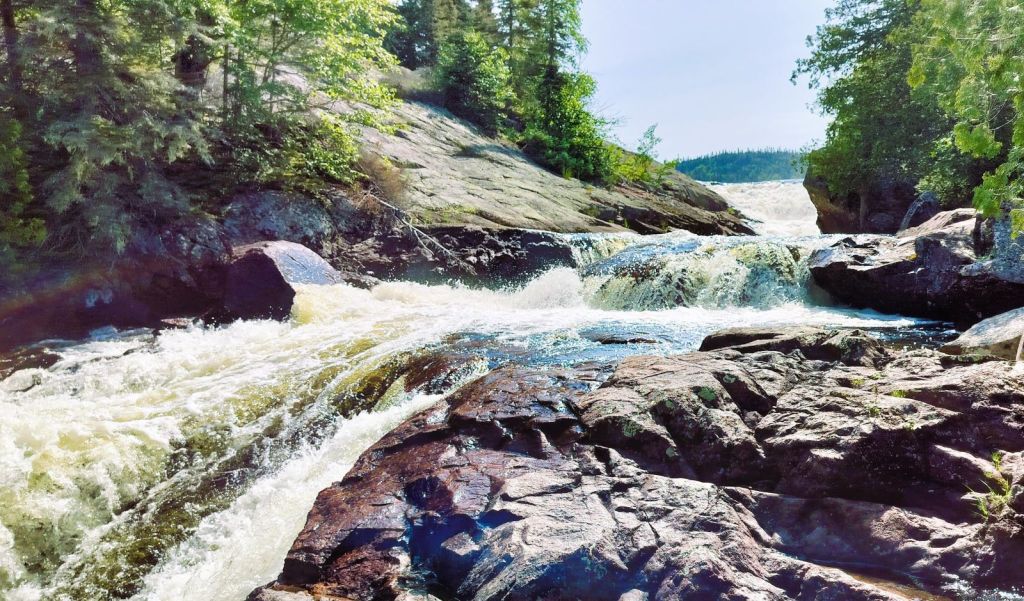
Upper portion of Rainbow Falls
Rainbow Falls

Our bug bites began to heal, and we continued our journey along Lake Superior arriving at Rainbow Falls Provincial Park.  The park is named for a series of waterfalls that flow across colorful rock layers to Lake Superior. 
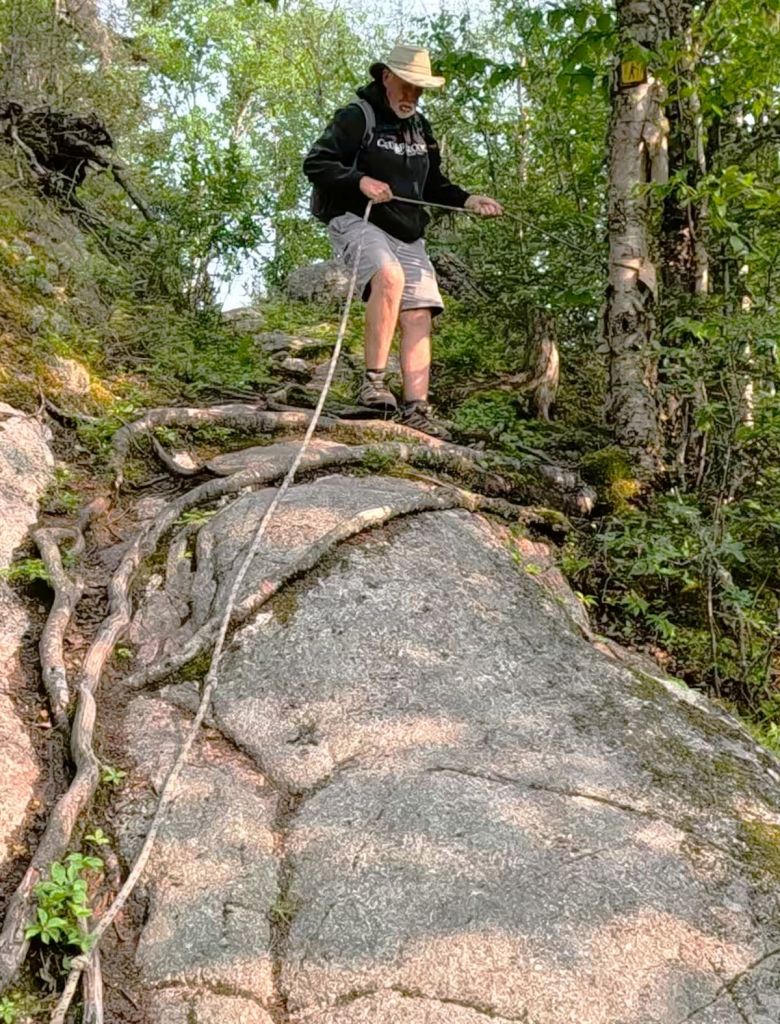
Getting ready to descend a short rock face using a rappelling rope

We hiked a couple trails to several beautiful vistas of the lake.  Although the bugs were not as bad as at Sleeping Giant, Pat did not take any chances.  She wore a head covering that protected her from the bugs any time she was outside the camper!
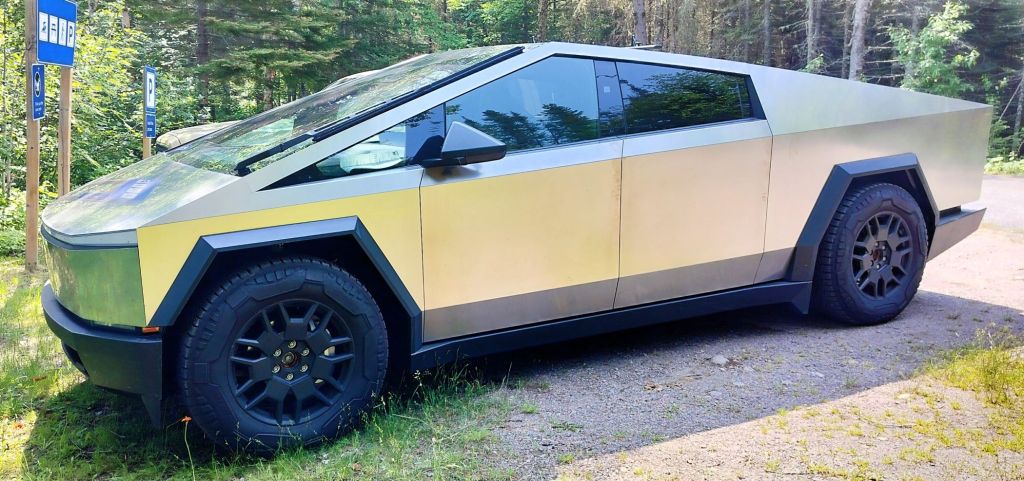
A Tesla Cybertruck in the wild

At the end of one hike we had our first close encounter with a Tesla Cybertruck.  The EV is as large as Percy, our pickup.  We wondered about the vehicle’s range and the location of the closest charging station!
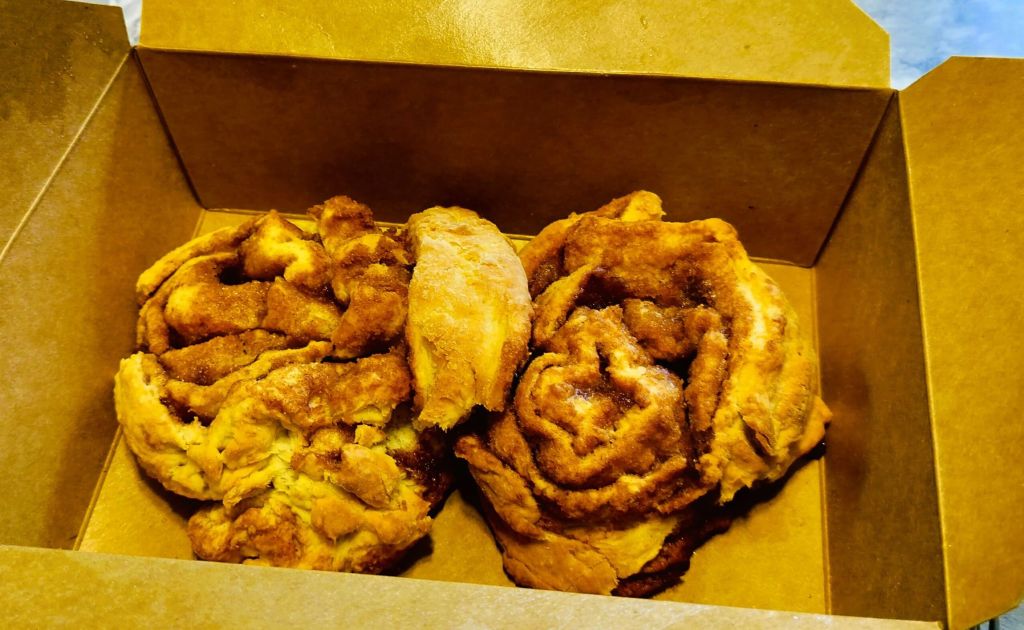
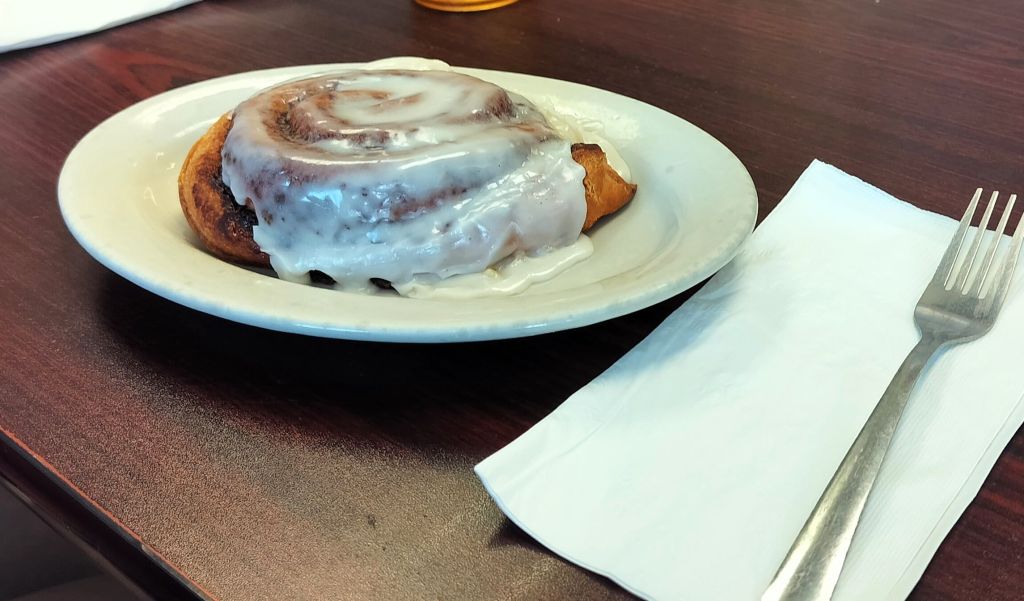
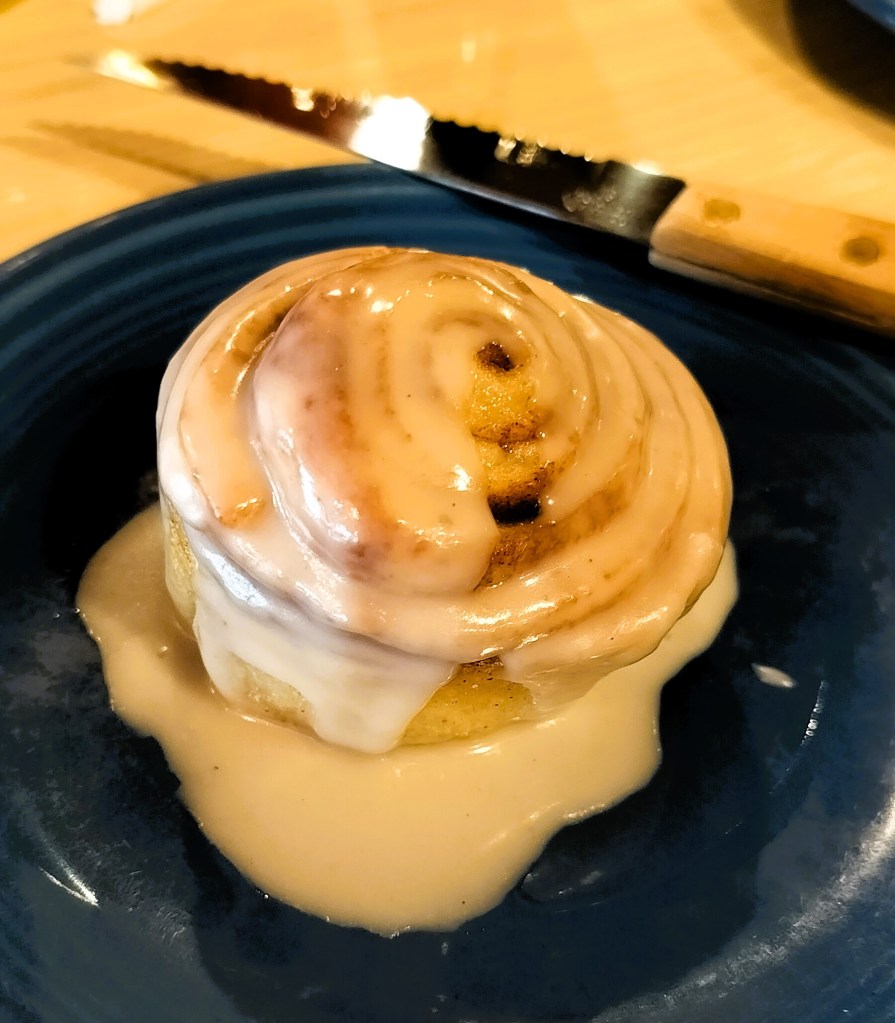
A ‘eastern’ style cinnamon bun
Cinnamon Bun Review

The Silver Islet General Store doesn’t ice their buns – they sprinkle them with sugar.  We were told this is ‘eastern’ style.  The buns resembled coiled biscuits which made them a little dry.  They had good cinnamon flavor however.

Our preference is iced buns with pillowy (raised?) dough.

Score – 3 out of 5.  Braeburn Lodge has nothing to be worried about.           

Next Week

A POW camp and leg injury – our Lake Superior park travels continue.
Gichi-gami Voyageurs and Donut Connoisseurs

(2024 Heartland Ep 6)

We left Duluth on a crisp Sunday morning bound for Canada and the north shore of Lake Superior.  Our route was Minnesota Highway 61 and the North Shore Scenic Drive with its 154 miles of lake views, waterfalls, historic sites, a donut shop that makes lofty claims and much more.

Shoreline view of Lake Superior

We stood on the rocky shore a few miles from Duluth and were awed by the size of Lake Superior.  As Floridians, a body of water that large should be salty, with seashells, sharks, jellyfish and other such things. 

Lake Superior IS Superior

Consider these amazing stats:

Lake Superior is 350 miles long and 160 miles wide and borders two countries and three states. It covers 31,700 square miles, about the size of South Carolina.

The lake contains 10% of the world’s fresh water – 440 trillion cubic feet. That’s enough to fill more than one BILLION Olympic swimming pools.  Superior has enough water to fill the other four Great Lakes combined!

The average depth is 439 feet (deepest is 1333 feet) with an average temperature of 40F.  The lake rarely freezes over completely – only twice in the last 100 years, 1973 and 1996 did this occur.

The lake has seen waves over 40 feet and through the years about 550 shipwrecks have occurred with over 1000 lives lost.

The Ojibwe name for the lake is gichi-gami meaning ‘great sea.’  Longfellow used this name as ‘gitche gumee’ in the poem ‘The Song of Hiawatha,’ as did Gordon Lightfoot in his ballad ‘The Wreck of the Edmund Fitzgerald.’

Falling Waters

The rivers that flow into Lake Superior have beautiful waterfalls.  There are at least ten spectacular falls worth seeing on the drive.          

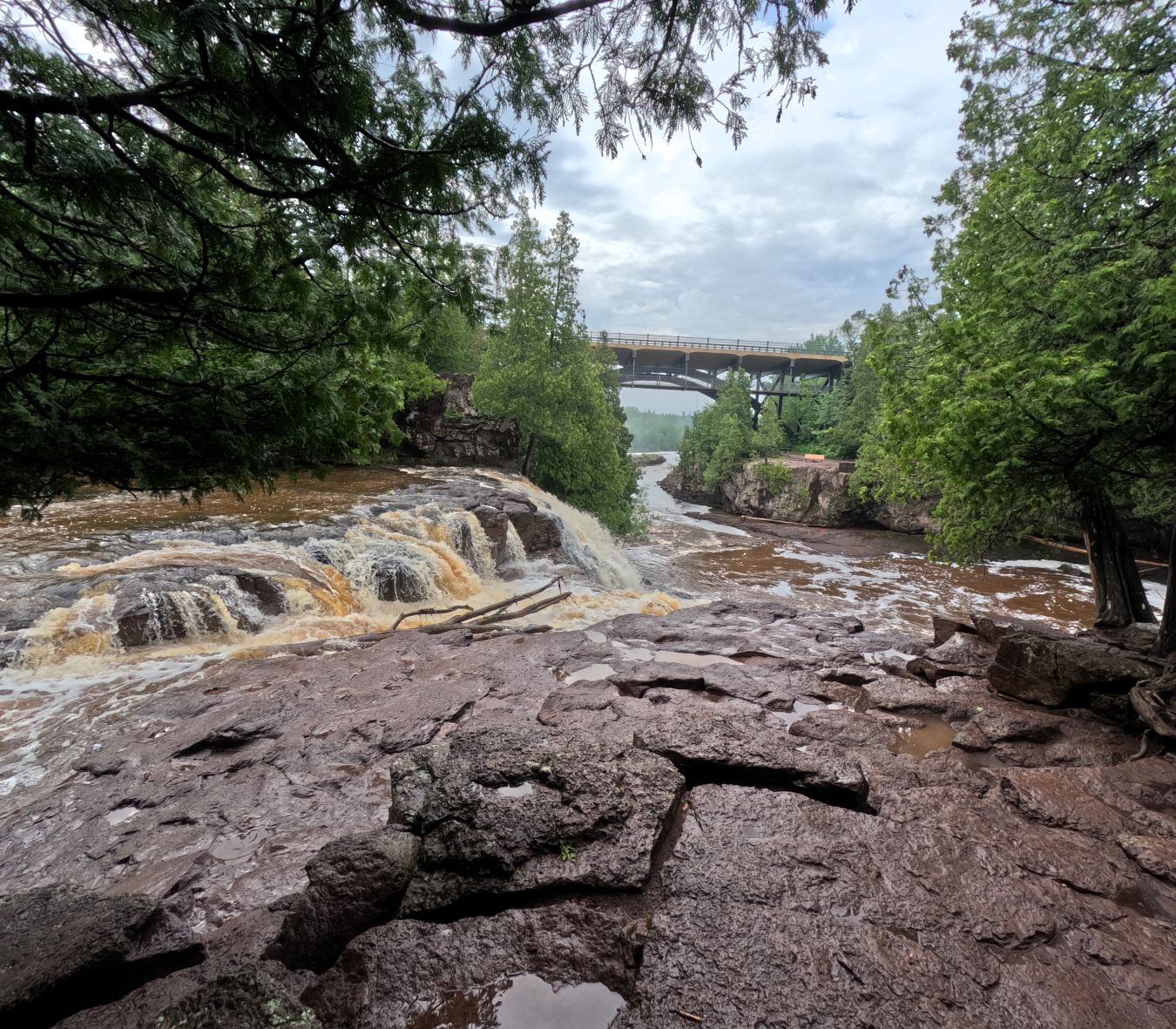
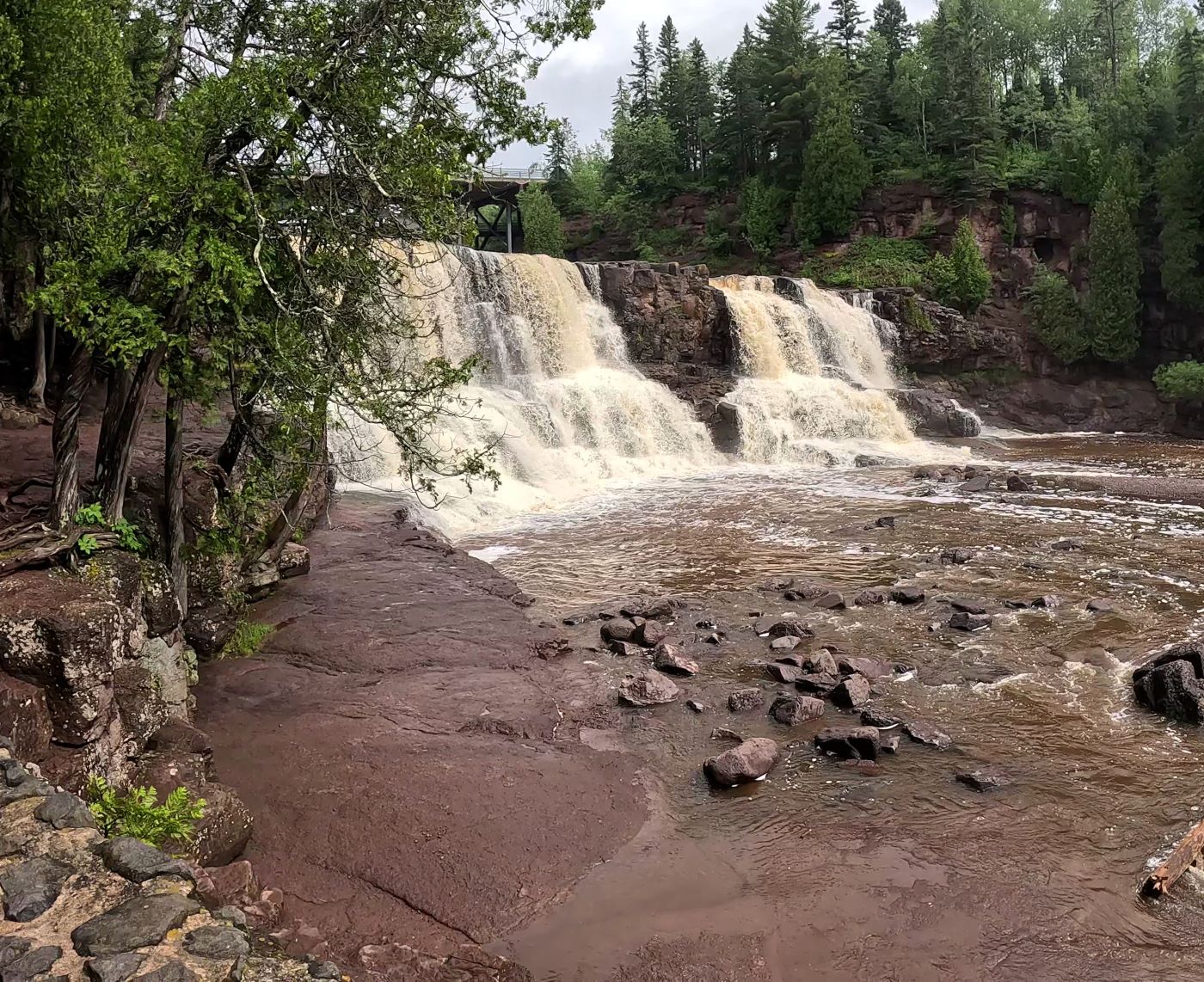
Two of the five waterfalls at Gooseberry Falls State Park

We stopped at Gooseberry Falls State Park about an hour from Duluth and hiked to four of the five falls in the park.  The water, muddy from recent rains, cascaded over several large drops and down steep inclines.  We moved quickly, trying to avoid being breakfast for hungry mosquitoes and blackflies.  This was a hint of what was to come in Canada.

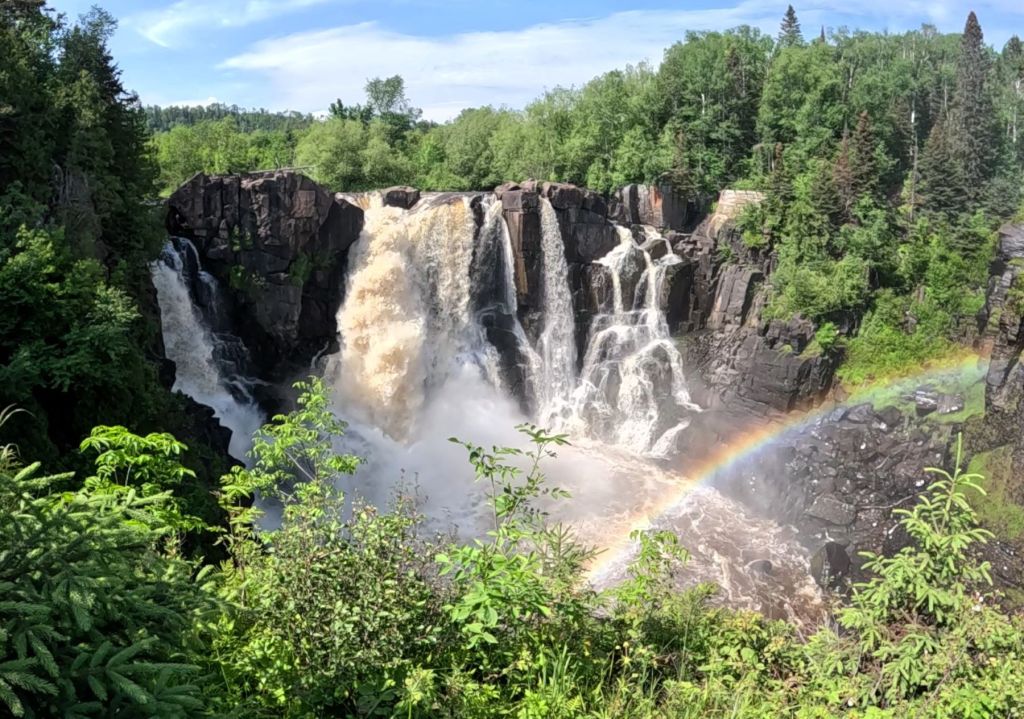
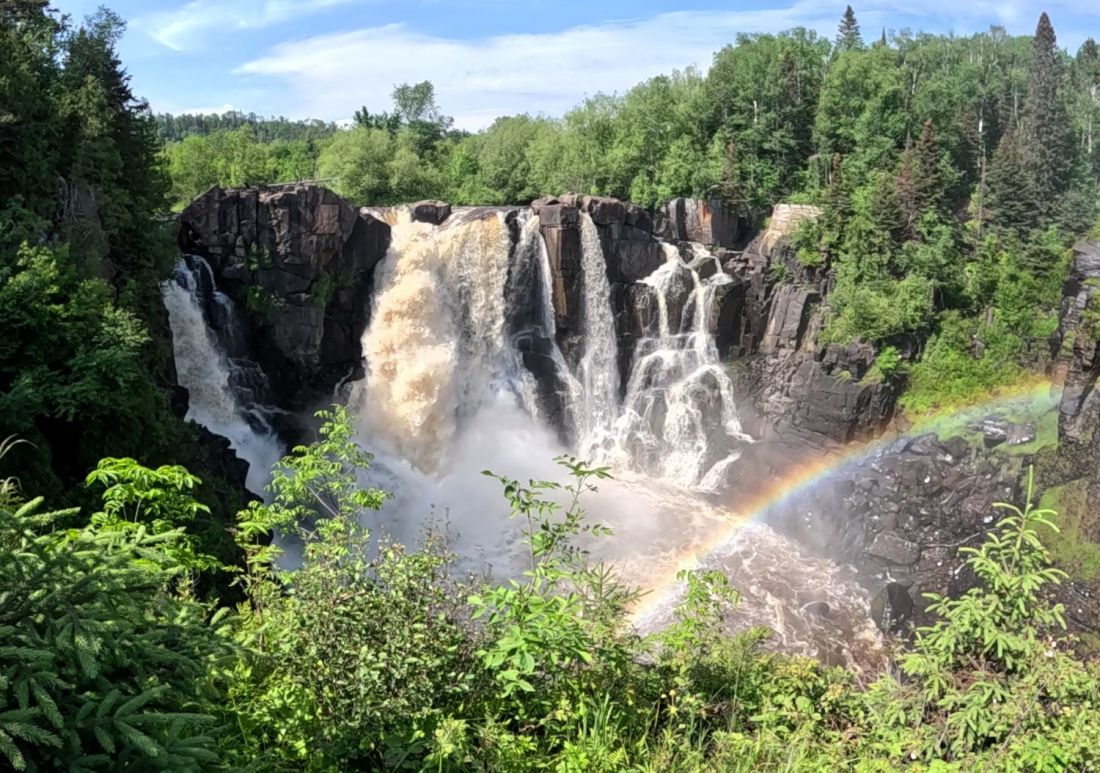
Rugged High Falls at Grand Portage State Park

That afternoon, we hiked to magnificent High Falls in Grand Portage State Park.  At 120 feet, they are Minnesota’s tallest waterfall.  Located on the Pigeon River on the US-Canada Border, they can be seen from several great viewpoints along the trail.

The Great Carrying Place – Grand Portage

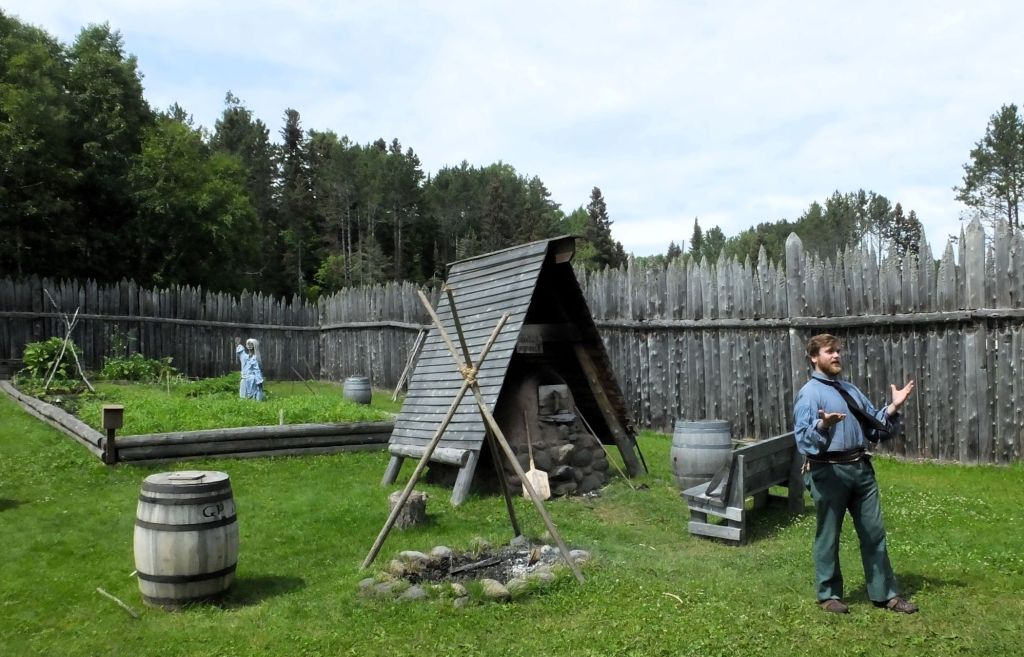
A few miles from the US-Canada border, we stopped to learn about the fascinating history of Grand Portage at the Grand Portage National Monument.

The Heritage Center at Grand Portage NM has live demonstrations of the North West Company operations and the Voyageurs and Montrealers who exchanged goods at the annual Rendezvous. The wall that surrounded the company buildings was for protection from the traders, NOT the native peoples nearby!

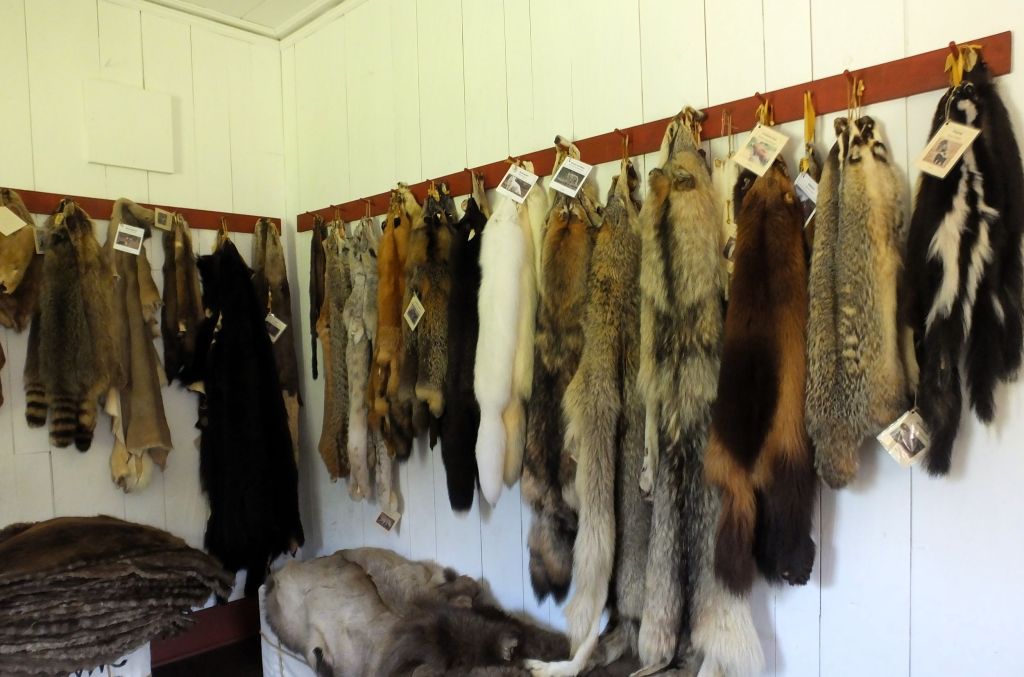
In the closing years of the 18th century, fur-trading companies labored to meet European demand for beaver skins. Fur covered hats were all the rage.

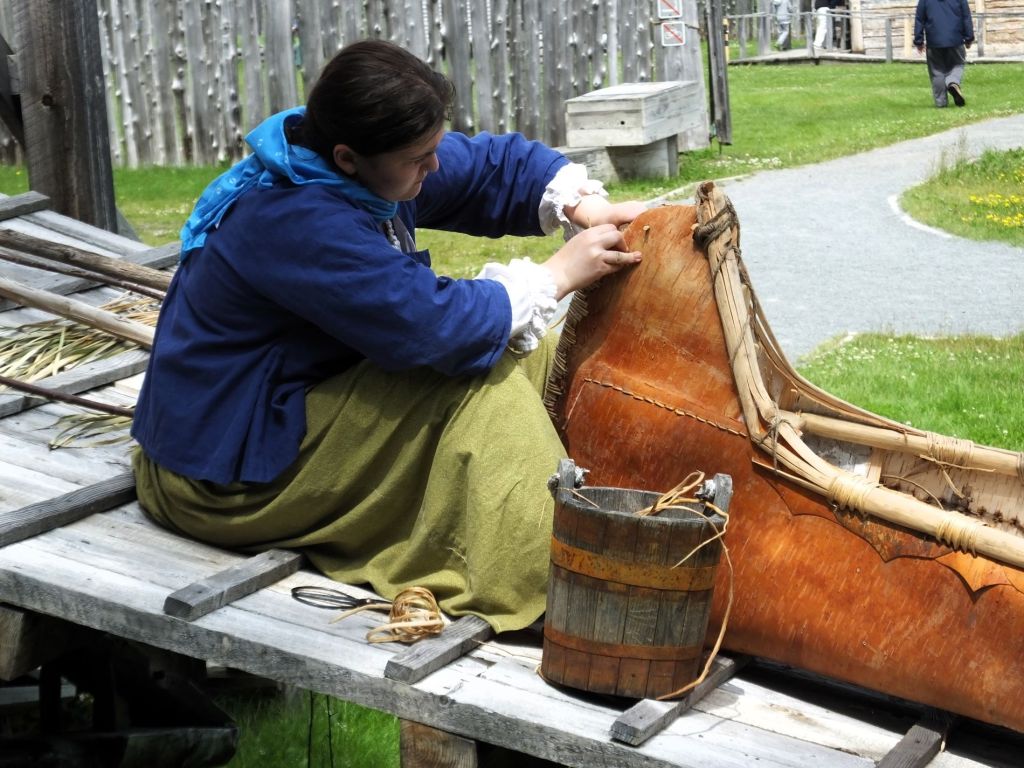
Late each spring French-Canadian Voyageurs traded for furs from native peoples living west of the Great Lakes. Using large birchbark canoes, they paddled eastward to the North West Company headquarters on Lake Superior.  Trade goods and supplies were paddled westward across the Great Lakes by men from Montreal. 

To construct a birchbark canoe, strips of birchbark are attached to a wooden frame and made watertight with pitch

At an annual mid-summer Rendezvous in Grand Portage, furs and goods were exchanged, with the furs bound for Montreal and the goods and supplies for the native peoples. 

The routes of the Voyageurs totaled nearly 3000 miles and included around 100 portages.  None were more than 13 miles in length.  The final or ‘Grand Portage’ to the Rendezvous was 8.5 miles, requiring the Voyageurs to make several trips carrying 90-pound packs. The portage was necessary due to waterfalls like High Falls and other rapids on the Pigeon River.

Samples of various animal furs exchanged in the compound

With the depletion of beavers and introduction of silk covered hats in Europe, the North West Company ceased operations in 1803.

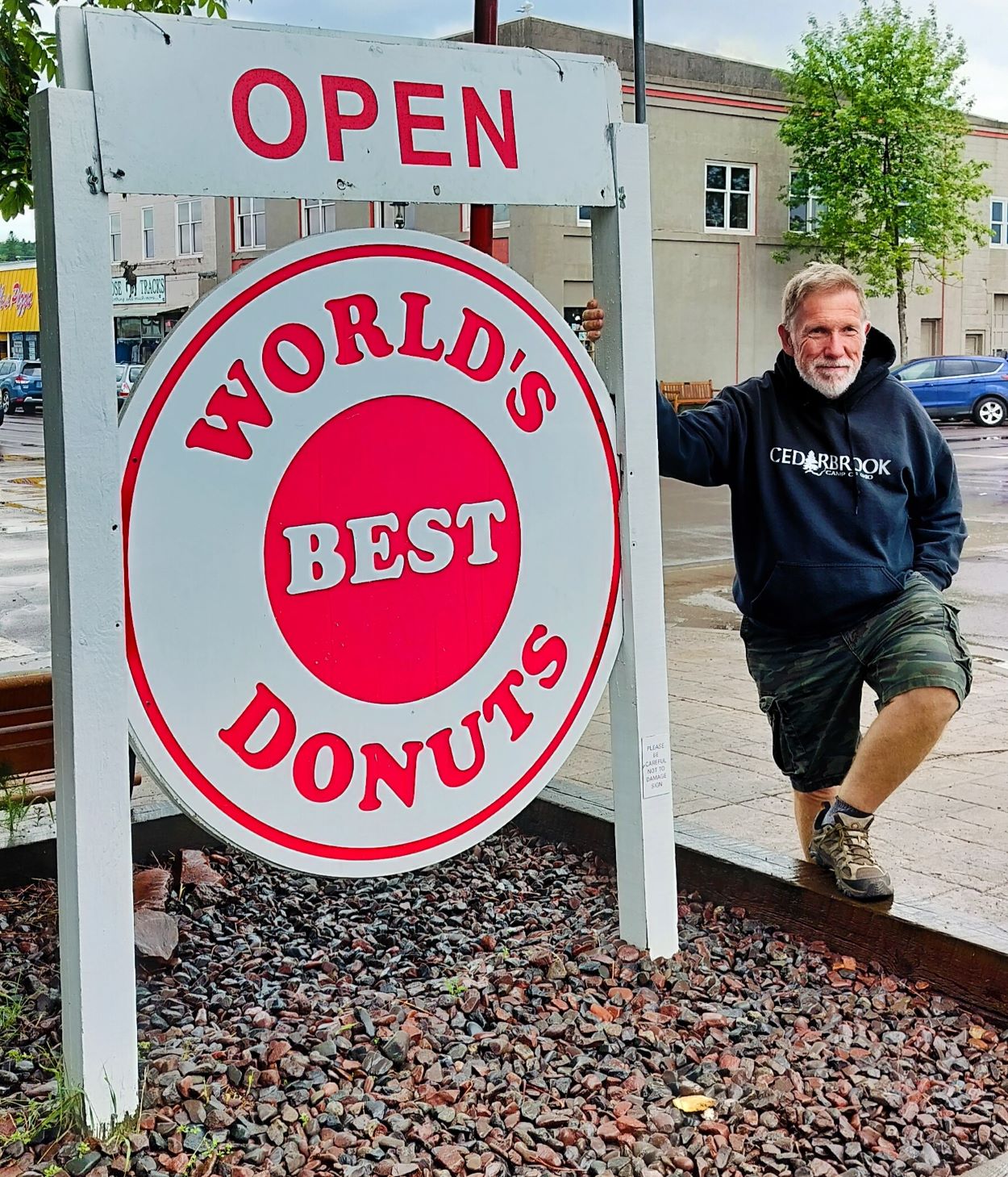
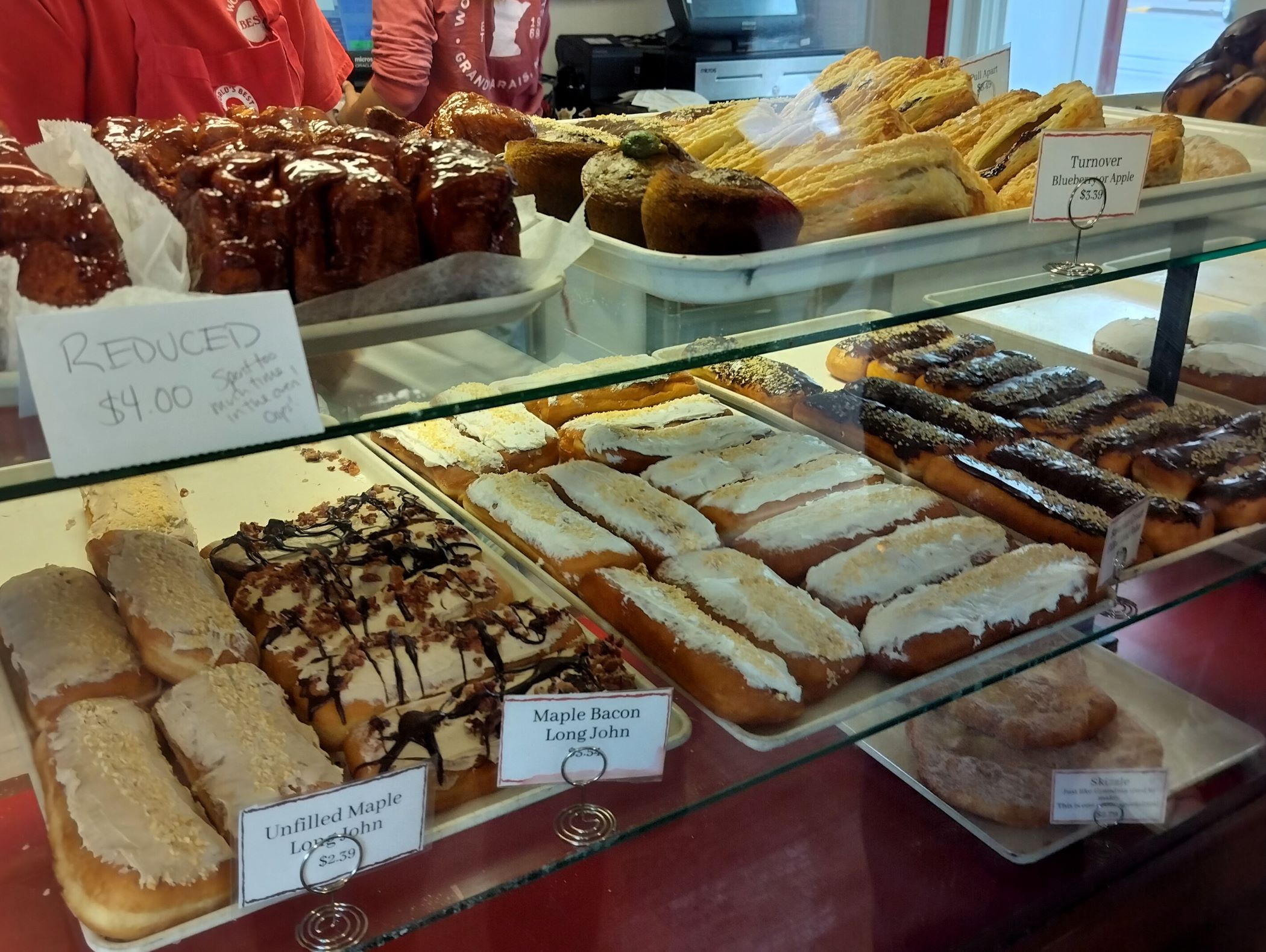
What could be better than a maple bacon long john?

World’s Best Donuts?

At Grand Marais, midway along scenic drive, we waited in line to see if this was true.
The verdict? The donuts are good but not the world’s best. 

You must admit, however, they have a great marketing scheme!

Name a place ‘Joe’s Donuts’ and you’ll get the usual traffic of people seeking something sweet to have with coffee.  But name it ‘World’s Best Donuts’ and people (like us and dozens of others) will come from afar and wait in line to see if the claim is true.  
Next Week

Lake Superior’s north shore – black flies, sore feet and the world’s richest silver mine.
Des Moines and Duluth, Two Heartland Cities

(2024 Heartland Ep 5)

Our route took us across the American heartland from south to north, through Kansas, Missouri, Iowa and Minnesota.  The rolling landscape was covered with corn, beans and hay fields.  There weren’t many farmers and mechanical implements to be seen, however, as it was between planting and harvest.
Des Moines

We came to Des Moines, Iowa, a small (population 225,000) city somewhat in the center of the heartland and the capitol of Iowa.  Friends of ours, Steve and Audra, chronicled their visit to Des Moines in 2023 on their YouTube channel.  Based on their positive review, we decided to spend a couple days looking around.

The Des Moines River bisects the city and was near flood stage during our visit due to heavy rains to the north.  We saw numerous signs about road closures due to flooding in low areas.

Gold in the Sky
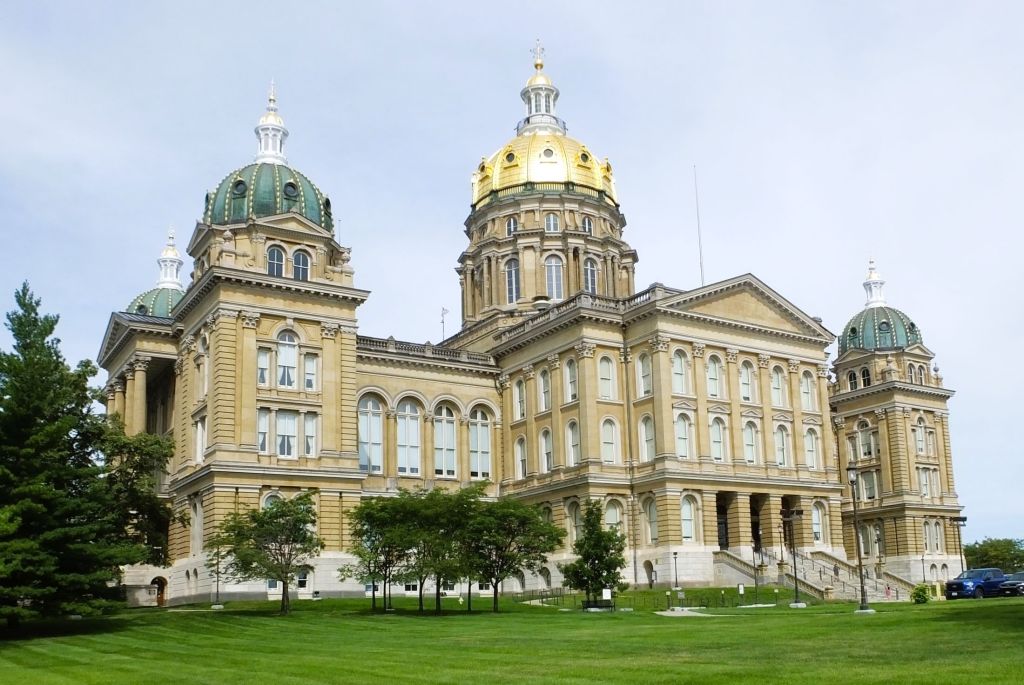
Iowa’s gold-domed state capitol is covered with 100 ounces of 23-karat gold leaf and is replaced about every 30 years

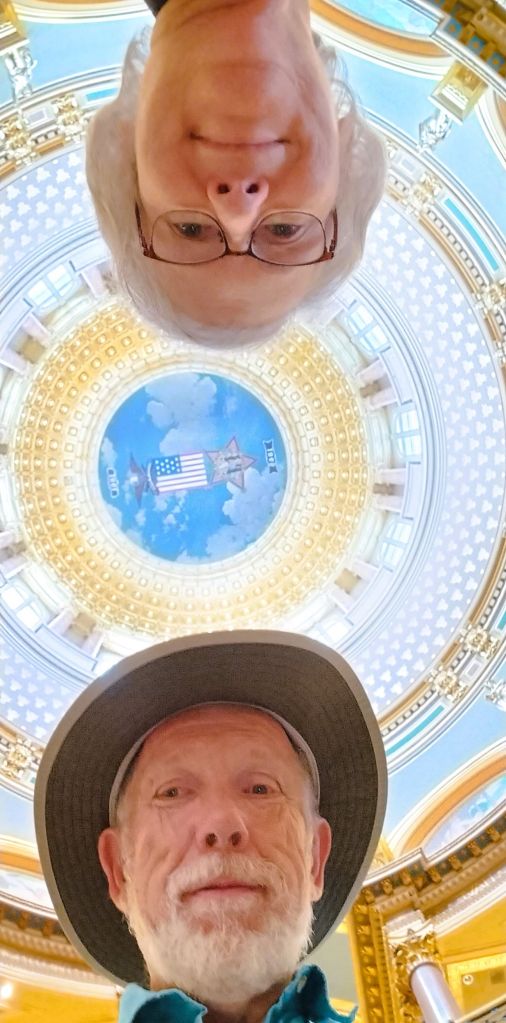
The Iowa capitol building has a magnificent gold covered dome.  Inside, the view upward into the dome is equally as impressive.

A view inside the dome. It rises more than 275 feet above us!

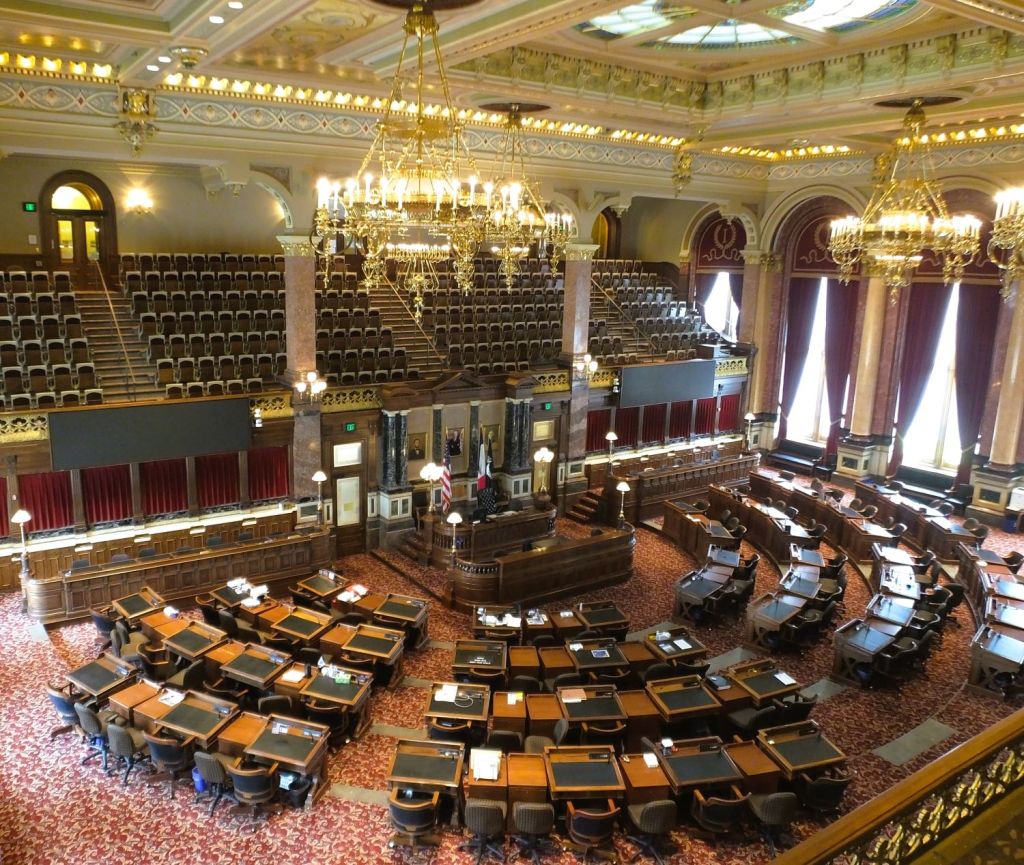
We joined a group touring the building and learned essential facts about Iowa state government and the building itself.  Completed in 1886, the capitol has two ornate main chambers – one for Iowa’s 50 senators and the other for their 100 representatives.  Another chamber for the state supreme court is no longer in use with completion of a nearby judicial branch building in 2003.

All was quiet in the ornate senate chamber – the Iowa state legislature is in session January-April.

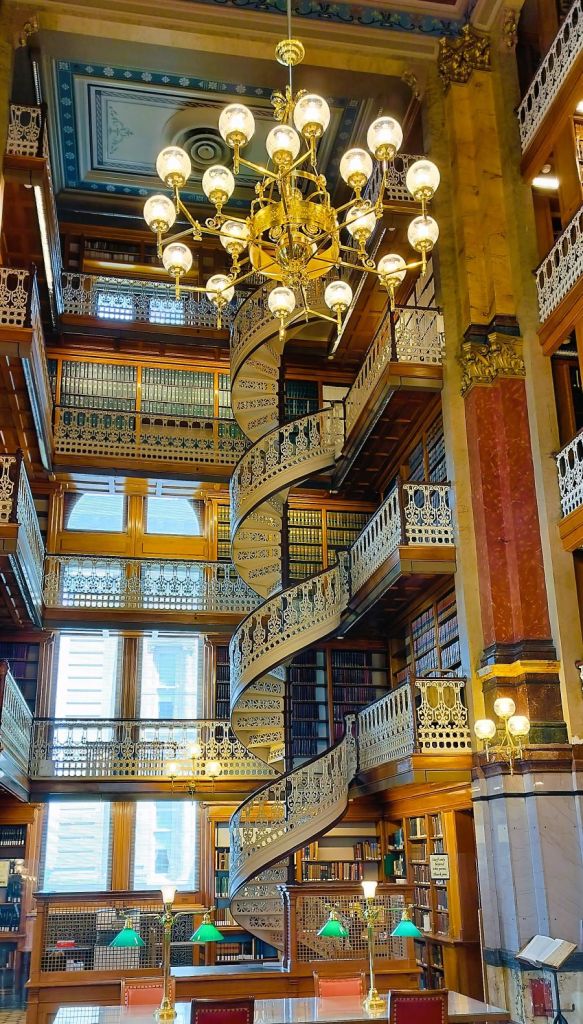
Our tour took us to various other parts of the building, including the Iowa state law library with its intricate ‘Victorian’-style architecture and spiral staircases at each end of the library. 

One of two spiral staircases in the Iowa state law library.

We also ascended a steep circular staircase to the whisper chamber high up in the dome. There, we could clearly hear our guide’s whispered comments all the way across the dome.

Botanical Gardens
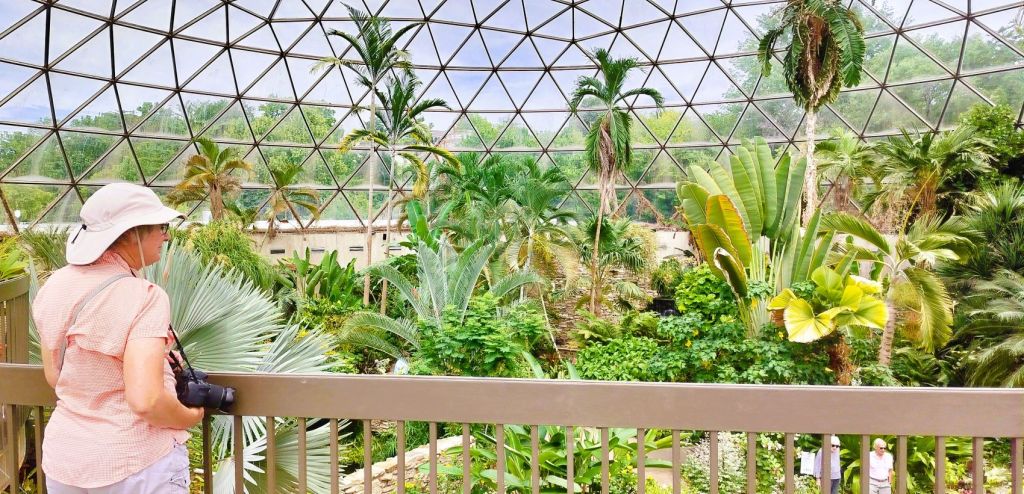
Pat surveys Des Moines’ tropical garden

From the capitol building we drove several minutes to the Des Moines Botanical Garden.  Inside a large dome structure was an assortment of tropical plants that included various types of palms, orchids, ferns and many other tropical plants.  We have some of the same plants in our yard at home!

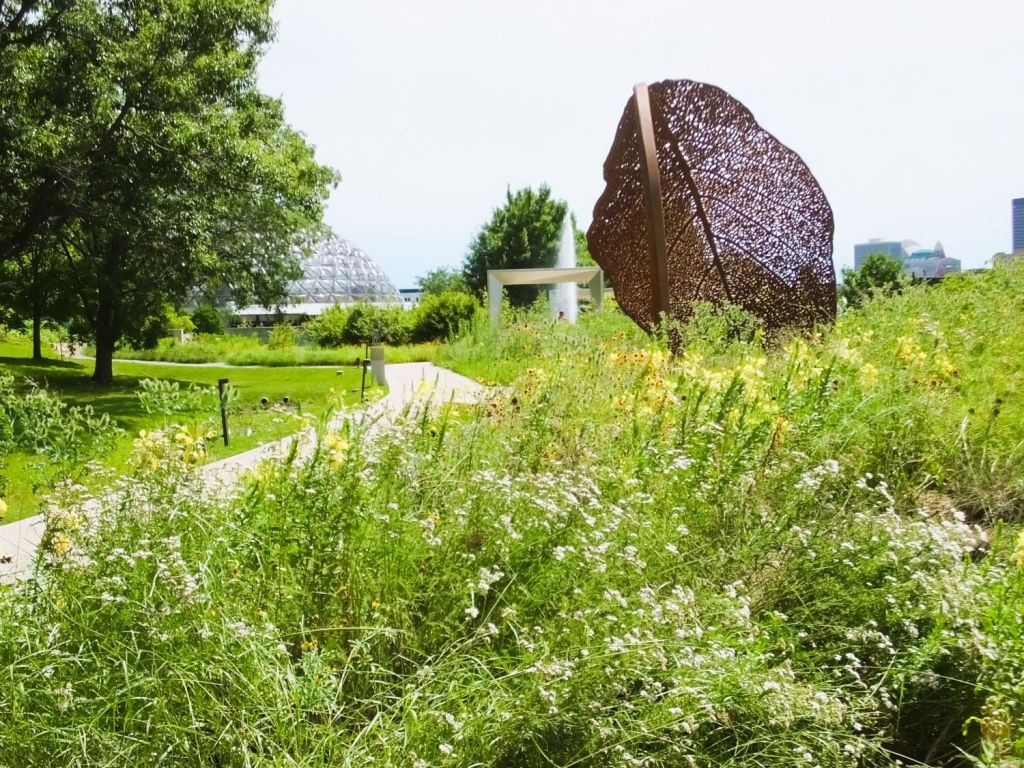
The garden includes outdoor sculptures and sitting areas amidst native plants, shade trees and several water features

There are various nicely landscaped garden areas and water features outside as well, with plenty of shaded benches to enjoy the setting.  The Des Moines River is adjacent to the gardens.

Better Sculptures, Better Art…Pappajohn!
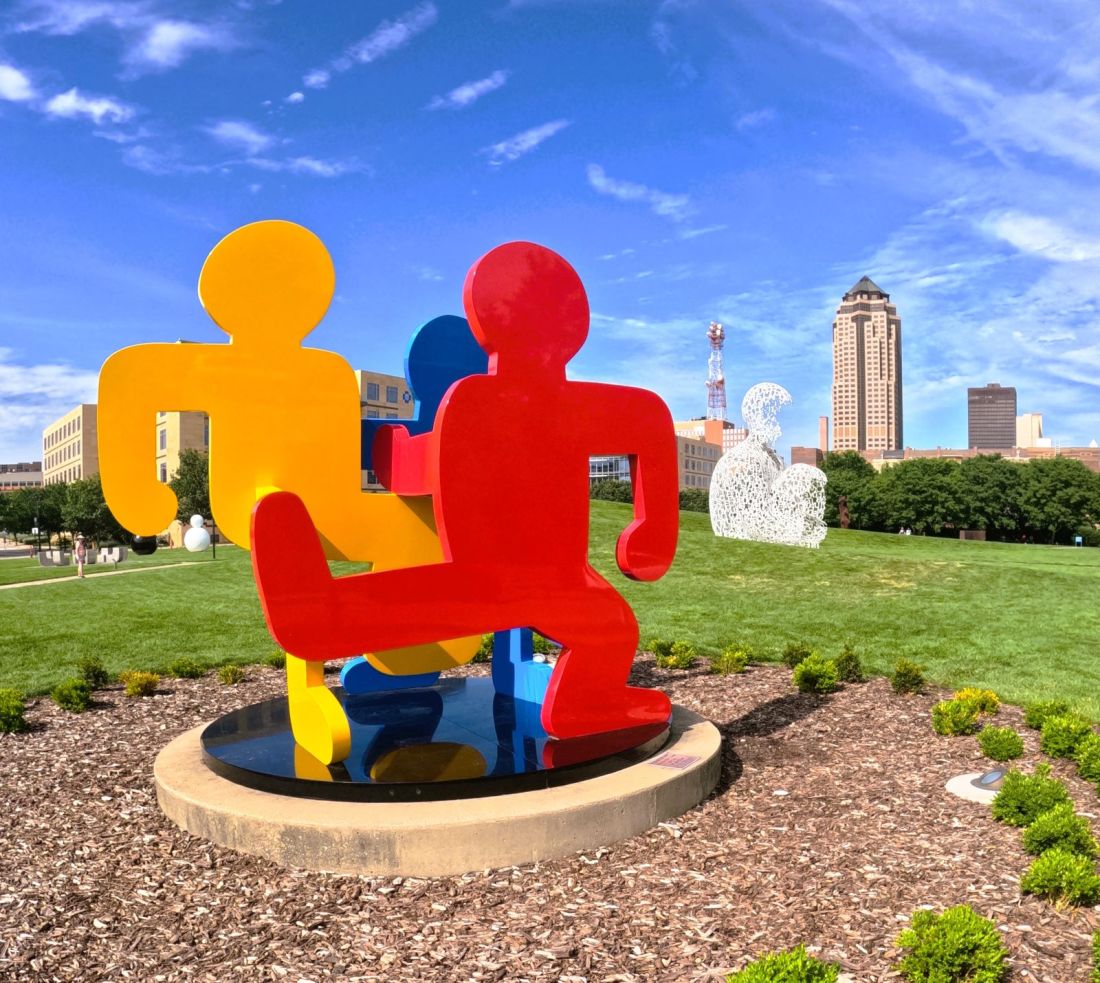
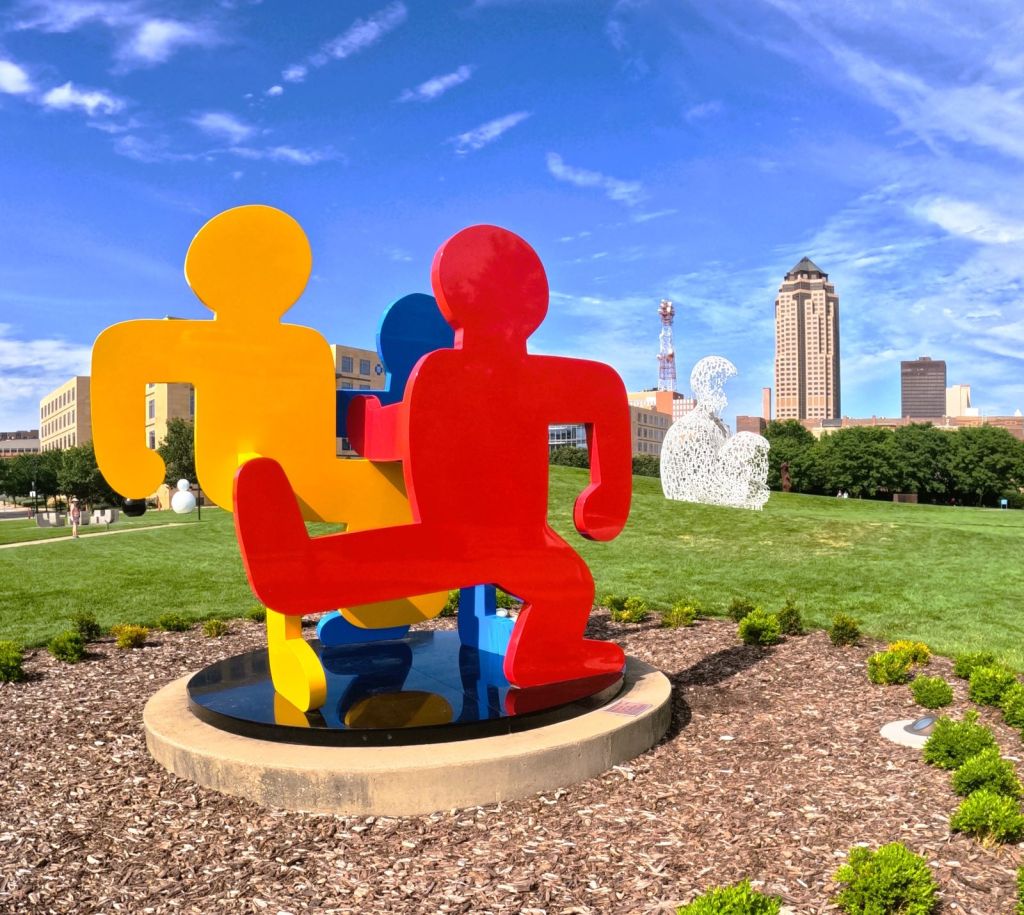
Two of the sculptures with Des Moines city buildings in the background

Our Des Moines visit ended with a walk through the Pappajohn Sculpture Park.  Opened in 2009, the 4.4-acre park has more than 30 sculptures by world-celebrated artists and was made possible by the generosity of John and Mary Pappajohn and other donors. 

Some of the sculptures were inspiring.  Others were difficult to understand and appreciate!

Riding the Trestle Bridge
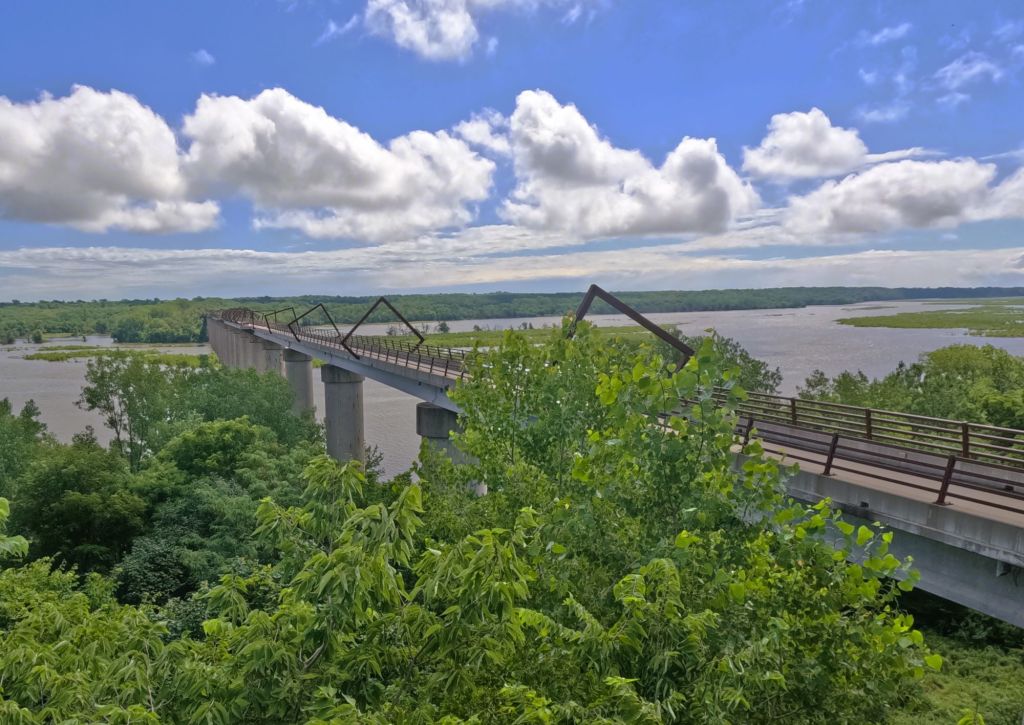
High trestle bridge across the Des Moines River

We left Des Moines the next morning and detoured a few miles to ride a portion of the High Trestle Rail Trail. 

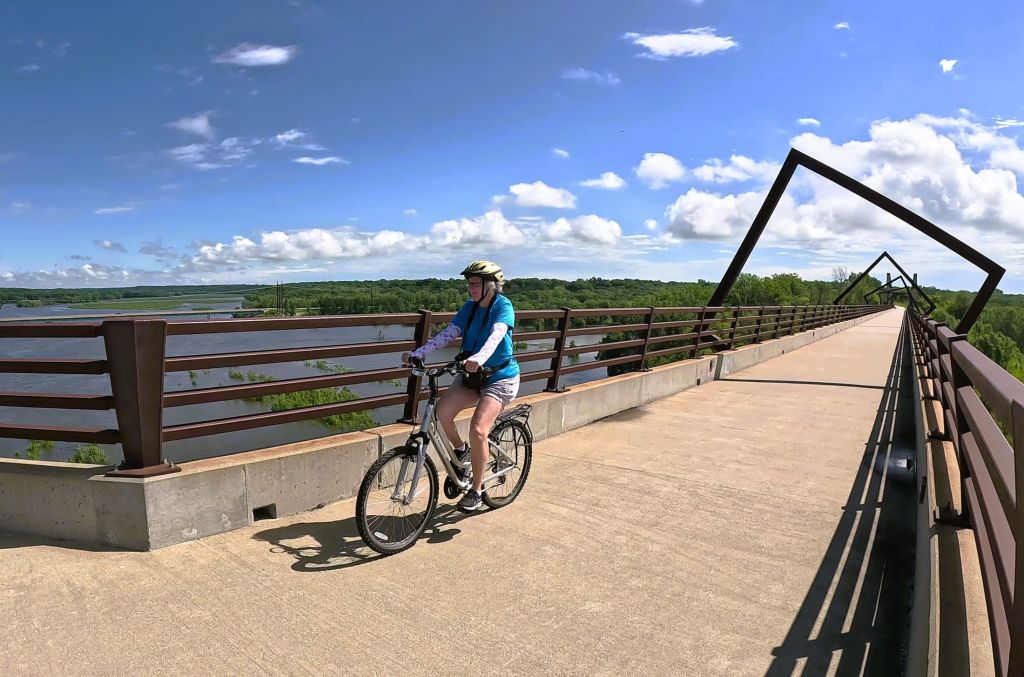
The highlight of the trail is a nearly half-mile long converted trestle railroad bridge 13 stories above the Des Moines River.  The bridge, originally built in the 1970s and retired in the early 2000s, has a series of decorative rotating rectangle structures.

Pat takes a sunny ride above the Des Moines River
Trouble on the Horizon

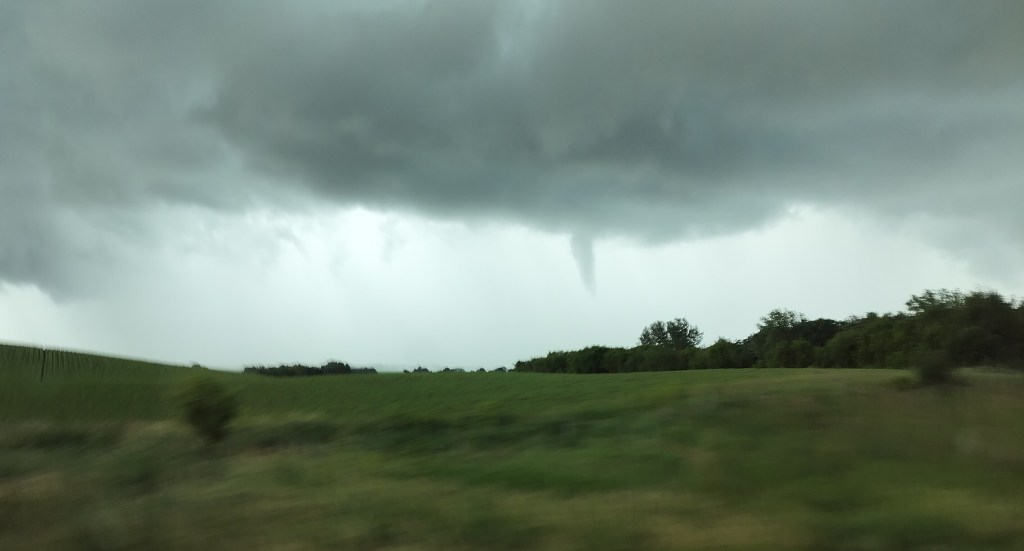
During our drive north toward Minneapolis, the sky darkened. We drove through heavy rain showers and Pat spotted a small funnel cloud. We were thankful the funnel quickly disappeared.

Duluth
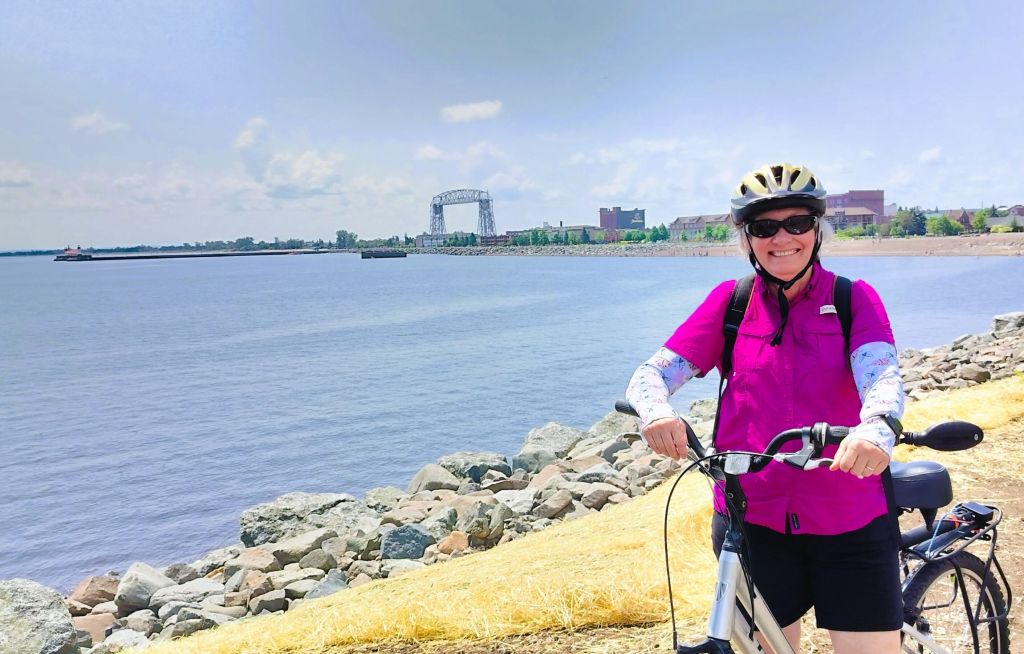
We rode along Lake Superior and were rewarded with a great view of Duluth

Before continuing north to Canada and the north side of Lake Superior, we stopped at Duluth, Minnesota for a couple nights.  Percy was due for an oil change and tire rotation – road trips are not always sunshine and rainbows!

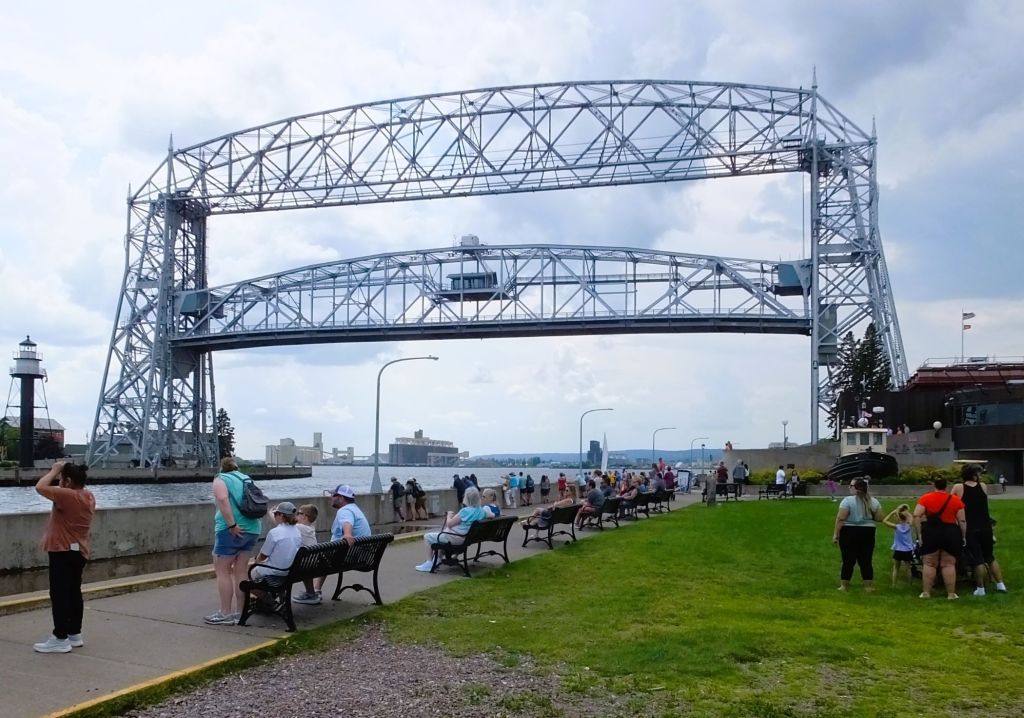
Duluth’s iconic aerial lift bridge was partially lifted so a small sailboat could pass

From downtown Duluth, we rode several miles along the shore of Lake Superior and returned to Canal Park, home of the Aerial Lift Bridge, which raises for ships entering the harbor area from Lake Superior.  A schedule with information about daily arrivals and departures of the nearly 1000 vessels that use the canal each year is posted at the Lake Superior Maritime Visitor Center.

We didn’t see any large ships during our visit but were told a 1000-ft ship passing through the canal is quite a spectacle.                        

Next Week

The world’s best donuts and spectacular waterfalls along the Lake Superior North Shore Highway.  Is Lake Superior really all that superior?

Family, Food, Favorites and Fun

(2024 Heartland Ep 4)

Our journey shifted to the five weeks between the Texas and Ohio Cedarbrook camps. We traveled through the American heartland and took time to do important things close to our hearts.

Visiting Family in Boerne

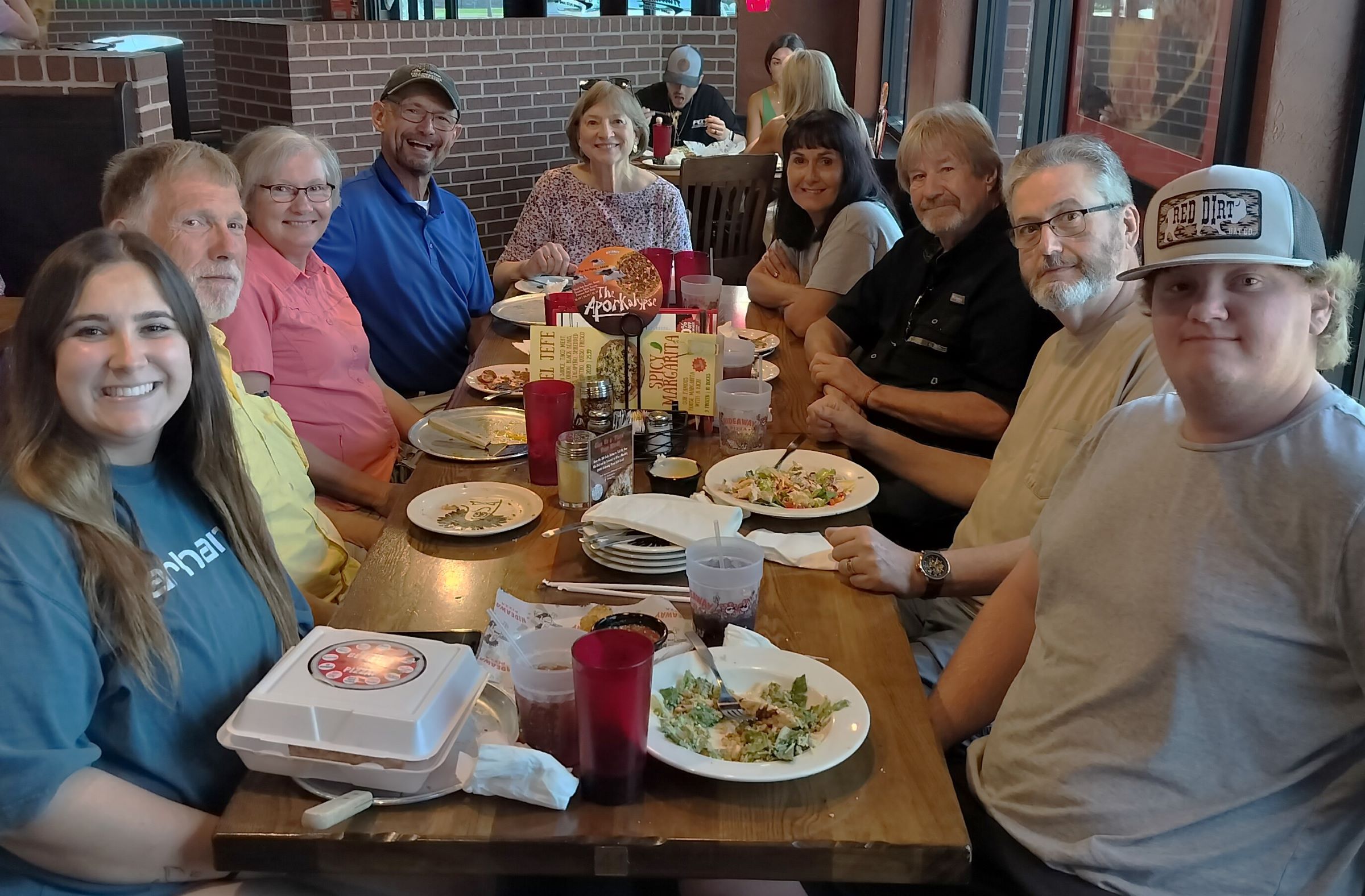
We headed west to Boerne, a small town about 30 minutes from San Antonio. There, we would visit Jim and Bobbi, my brother and his wife, and Dawn, our niece. 

It was good to catch up on life since our last visit two years ago.

Visiting the Thompsons in Boerne

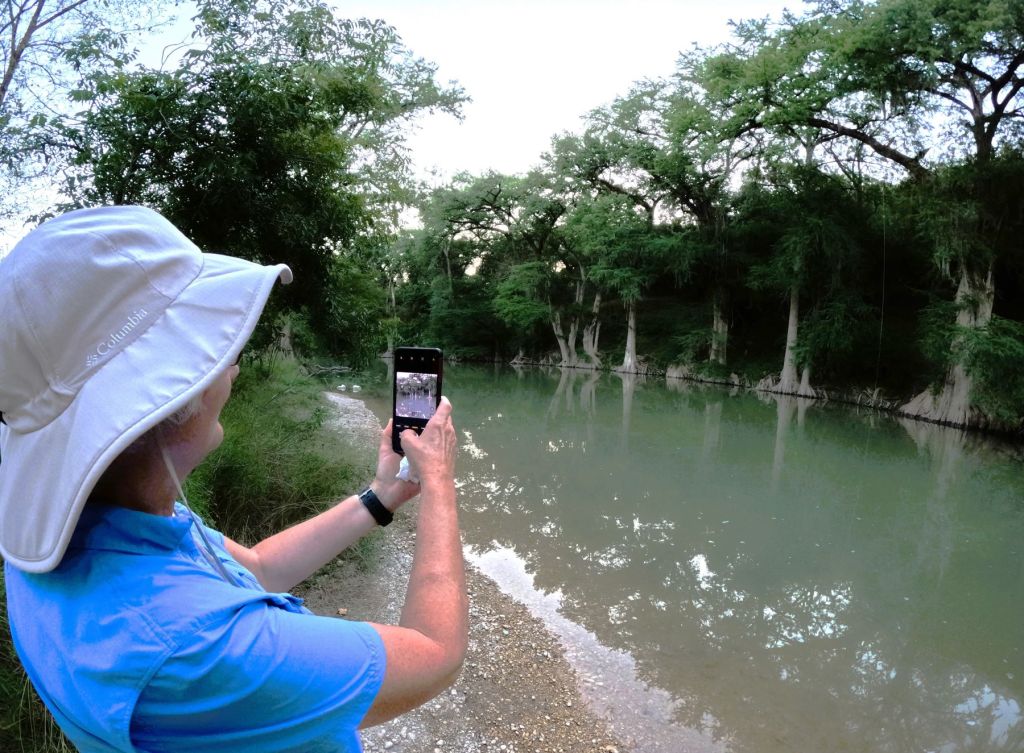
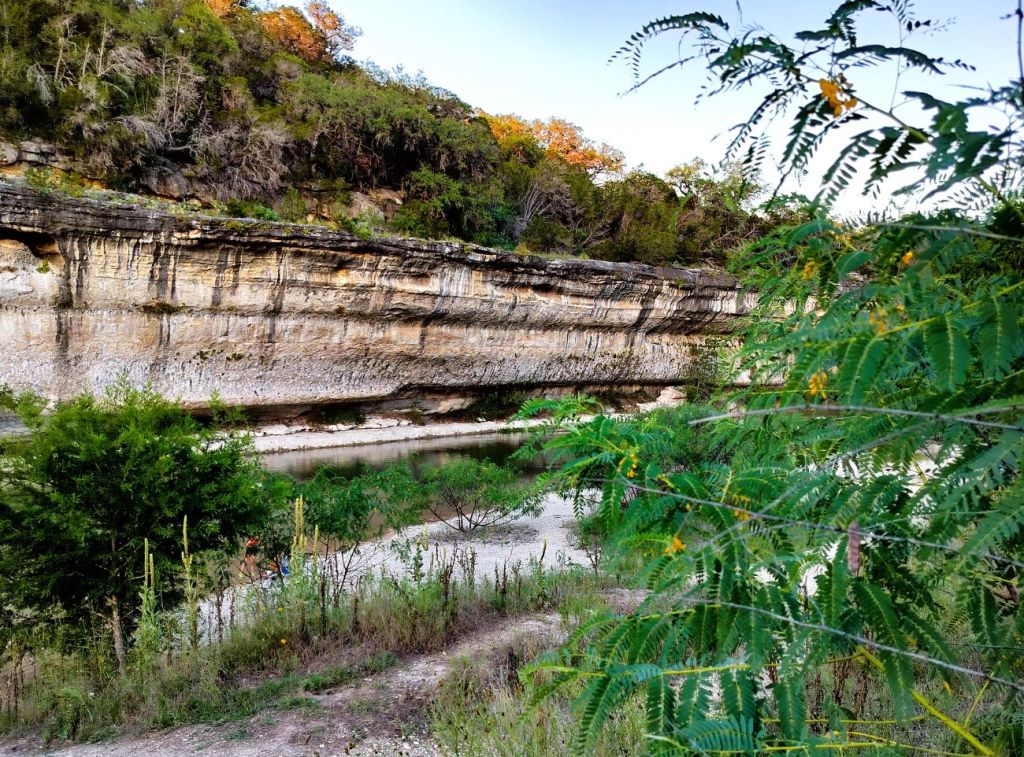
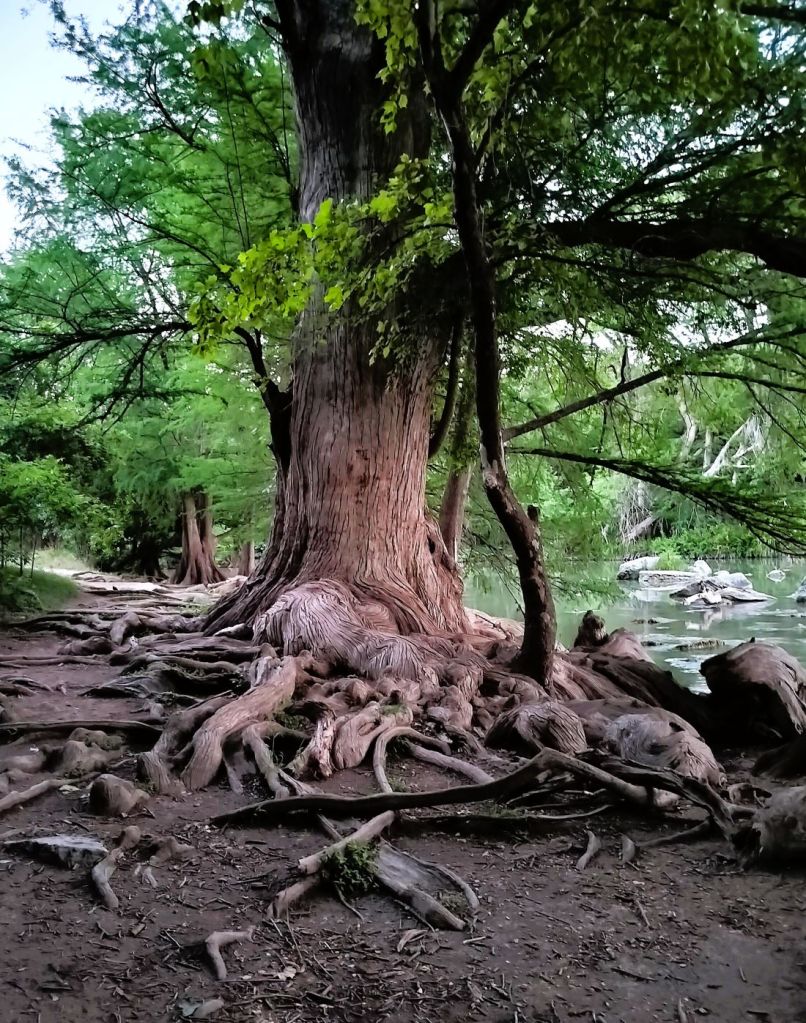
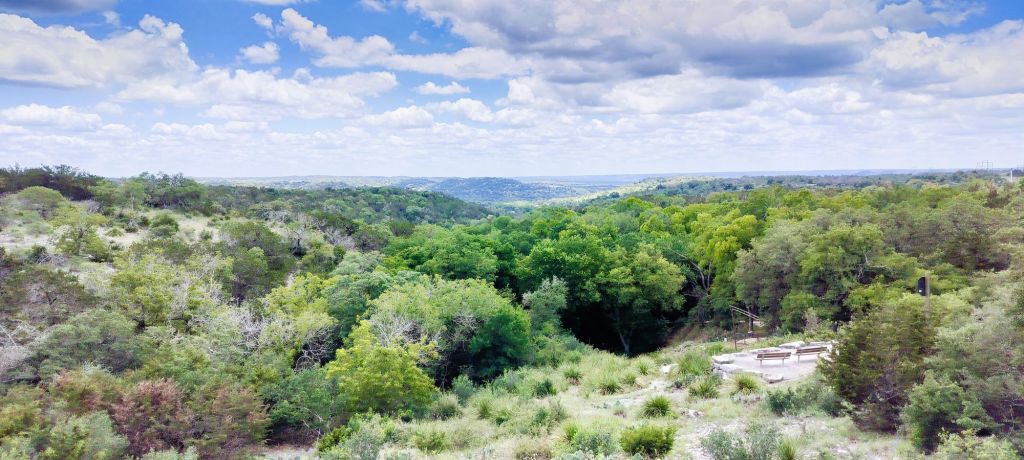
We camped nearby at Guadalupe River State Park.  The river snakes 230 miles from the Texas Hill Country near Boerne to the Gulf of Mexico.  In the park, there are swift flowing rapids and calm water stretches surrounded by steep limestone bluffs. 

Images from Guadalupe River State Park

Seeking relief from the relentless Texas heat, people waded and swam in the cool water. Nearby, twisted cypress trees grew along both sides of the river.

Revisiting Favorites

My brother and wife used to own a B&B and wine tour business in nearby Fredericksburg, so we’ve visited the area numerous times.  We returned to some of our favorite places:

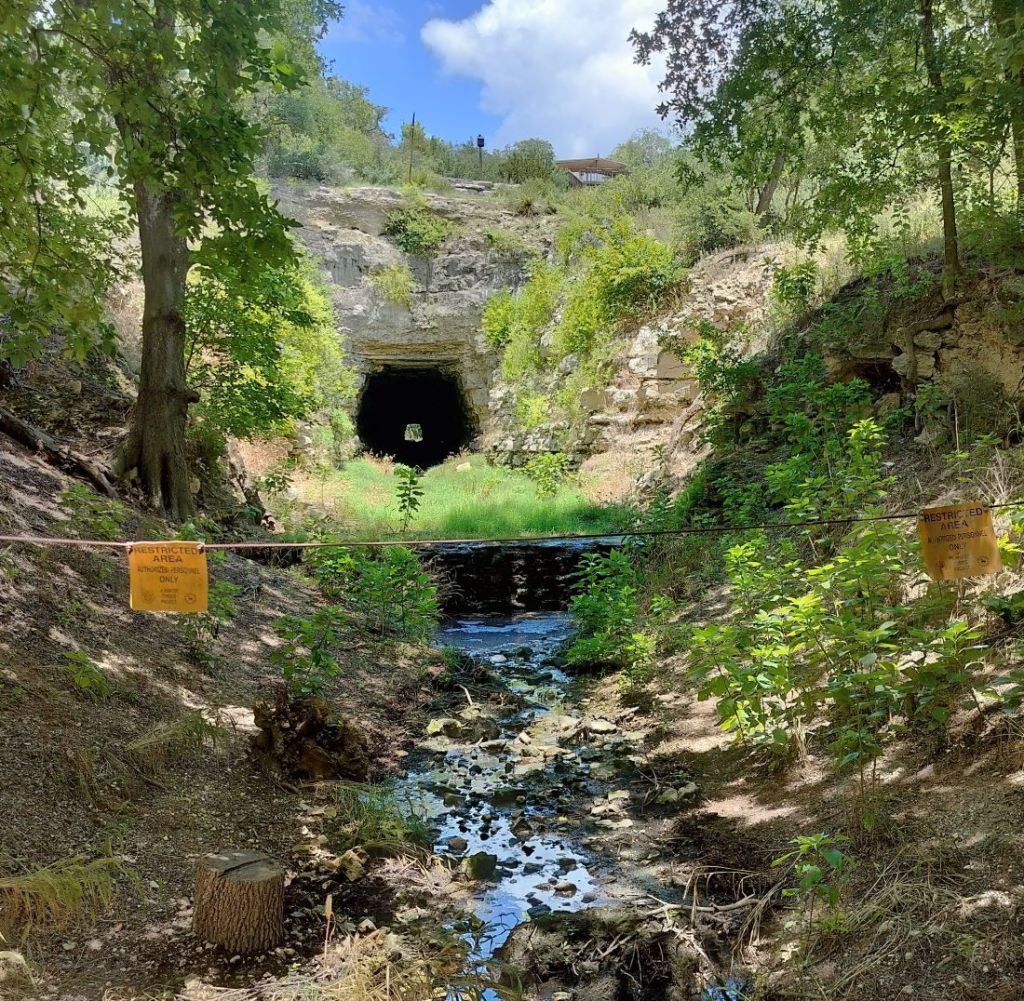
Old Tunnel State Park – millions of Mexican freetail bats live in an abandoned railroad tunnel between Fredericksburg and Comfort. They exit each summer evening to consume millions of insects.   From a viewing area at the top of a hill, we hiked down to see the tunnel. Inside, there were hundreds of bats flying about in the tunnel, presumably getting ready for their evening flight.

A view of the Old Tunnel, an abandoned railroad tunnel between Comfort and Fredericksburg
At sunset during summer months, millions of Mexican freetail bats exit the Old Tunnel, swirling upward from the dark area in the center of this photo

Alamo Springs Cafe – we were disappointed the restaurant adjacent to the tunnel was closed that day. We were craving the best jalapeno burgers in Texas (so we think). We considered driving to Llano, north of Fredericksburg, for amazing Texas BBQ at Cooper’s Old-Time Pit Bar-B-Que, but the round trip was more than 100 miles and our time was short.

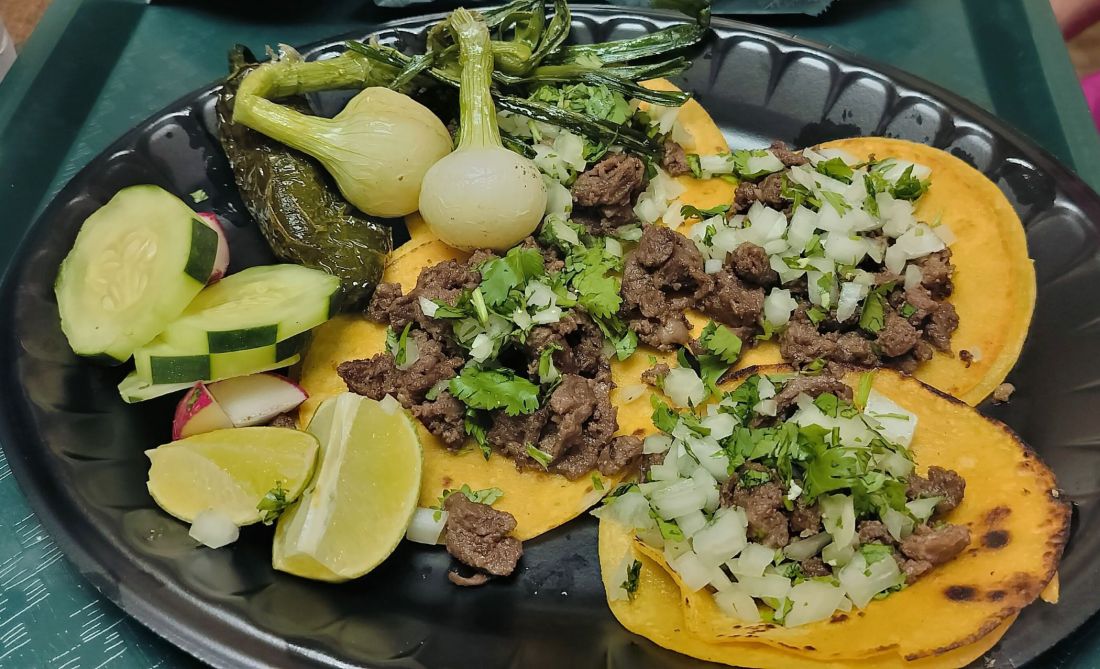
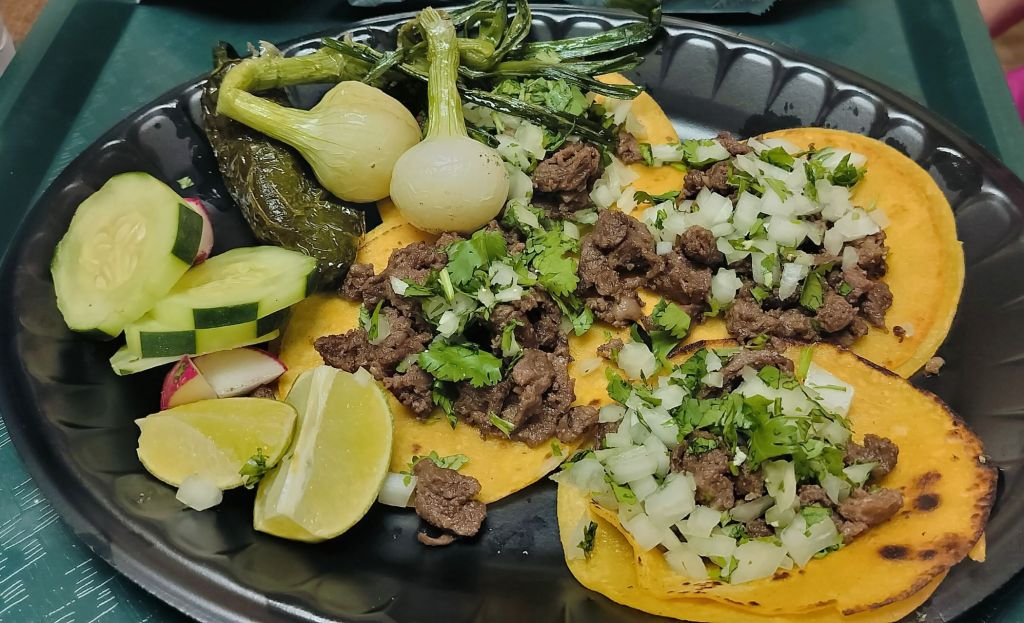
So, at the enthusiastic recommendation of a friend, we tried Mary’s Tacos in Boerne. Mary’s street tacos are amazingly fresh and delicious.

Mary’s Tacos – best street tacos in Boerne

We now have a new restaurant to revisit on our next Texas visit.

Rustlin’ Robs – a visit to Fredericksburg wouldn’t be complete without grazing RR’s free samples of jellies, salsas and sauces spooned on little crackers.

There’s lots more to see and do in the area, but this is all we had time for this time around.

More Family Visits

Our next stop would be near Tulsa, Oklahoma for a visit with Pat’s cousins and their families. We haven’t seen them for more than 20 years,

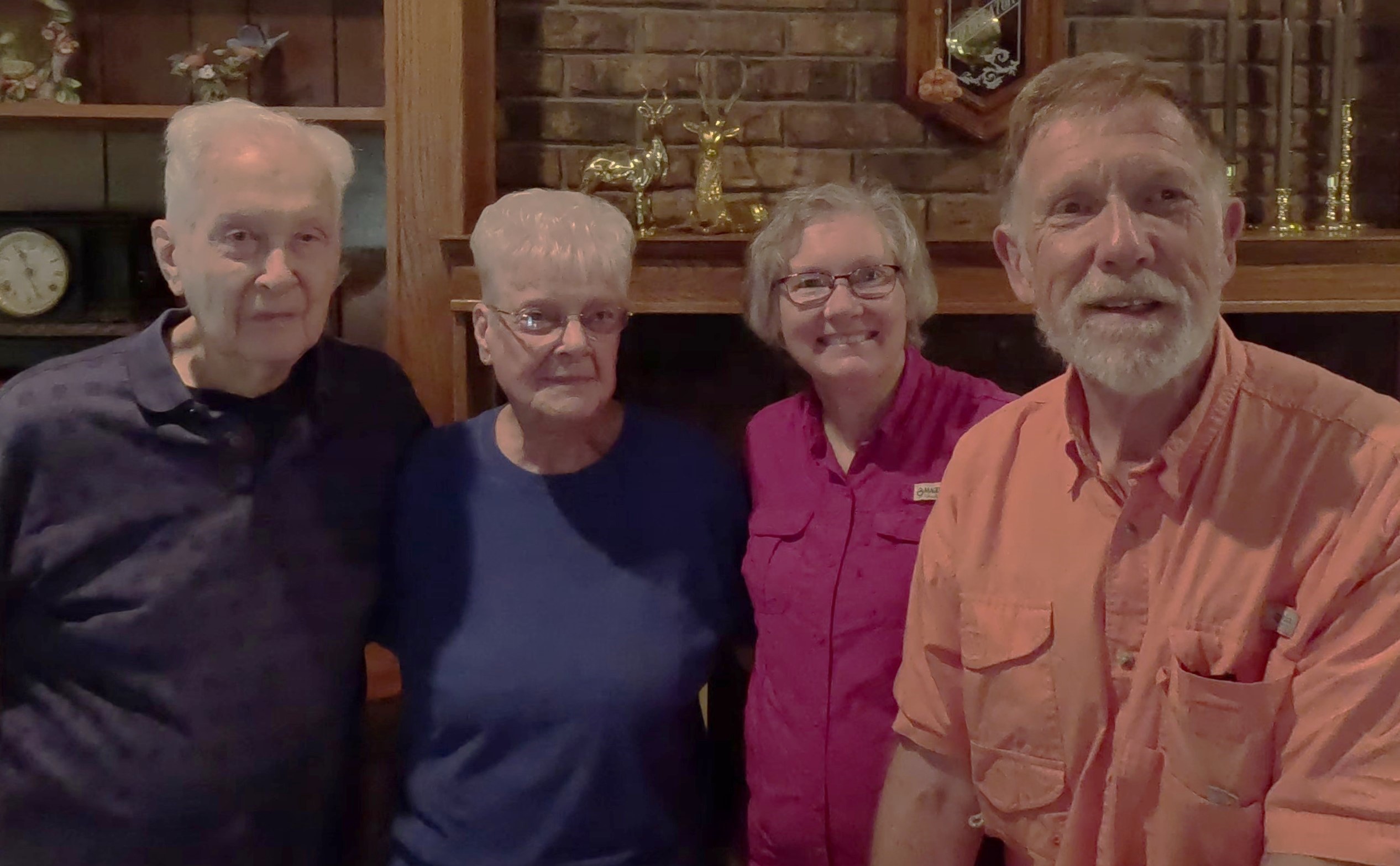
We continued north to the Kansas City area to visit Pat’s aunt and uncle, whom we saw last year on our trip to Alaska.  Married more than 71 years, they have an enduring testimony.

Visits with Pat’s cousins and families in Claremore, OK and Pat’s Aunt and Uncle in Shawnee, Kansas

We try to make reconnecting with family a priority.  Each visit has proven to be an incredible blessing to us both!

Harvest Hosts – Camping in the Heartland  

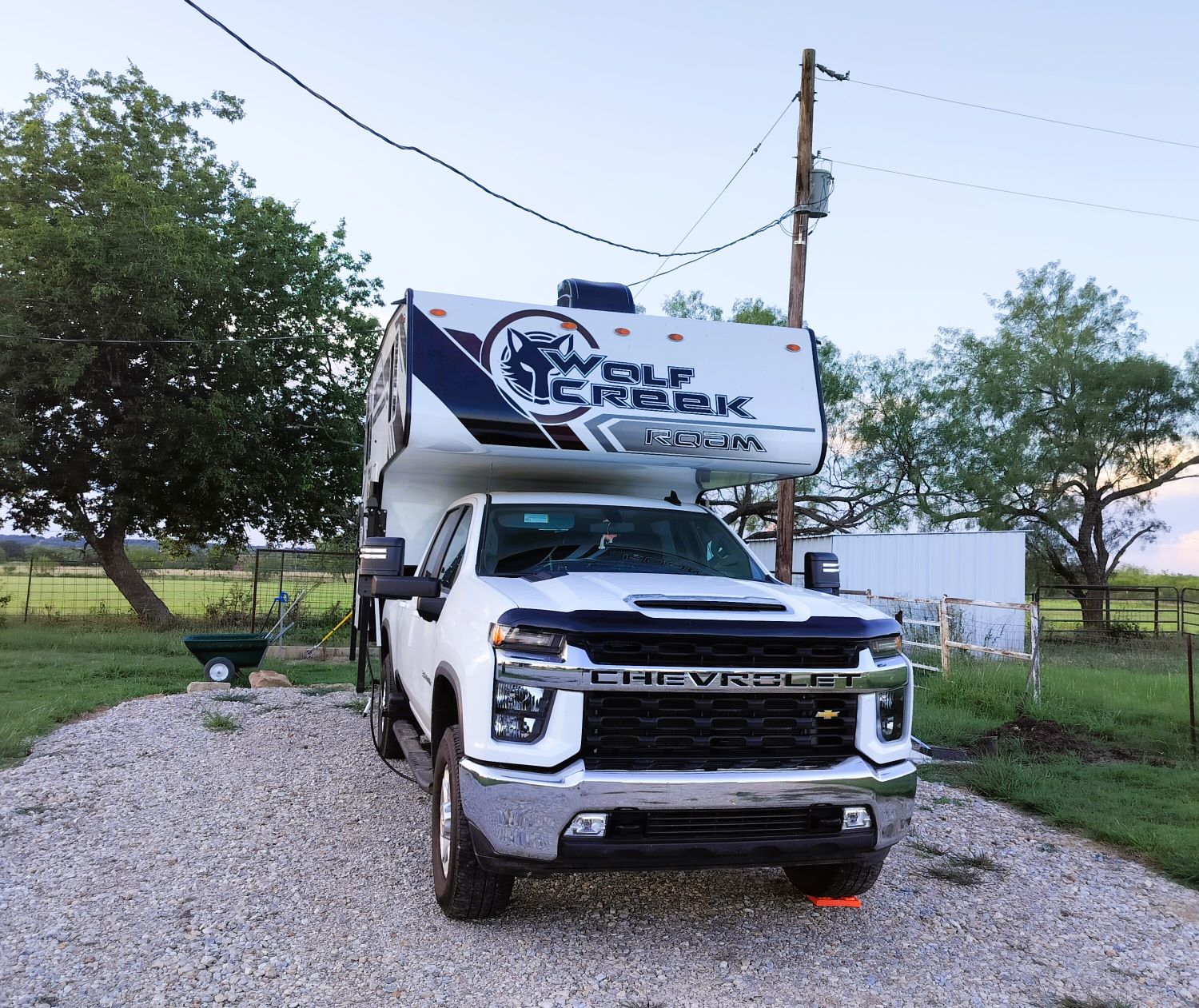
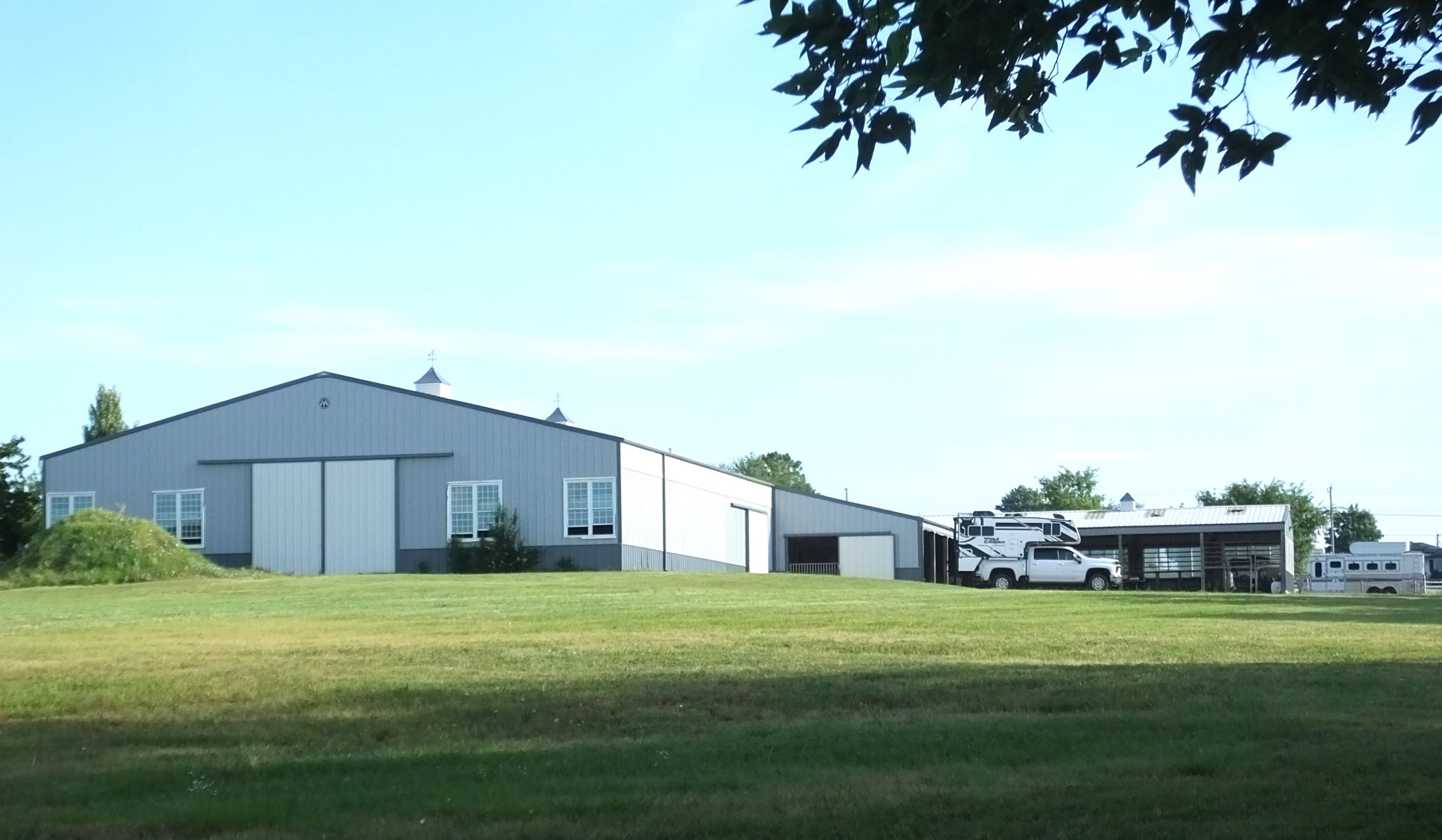
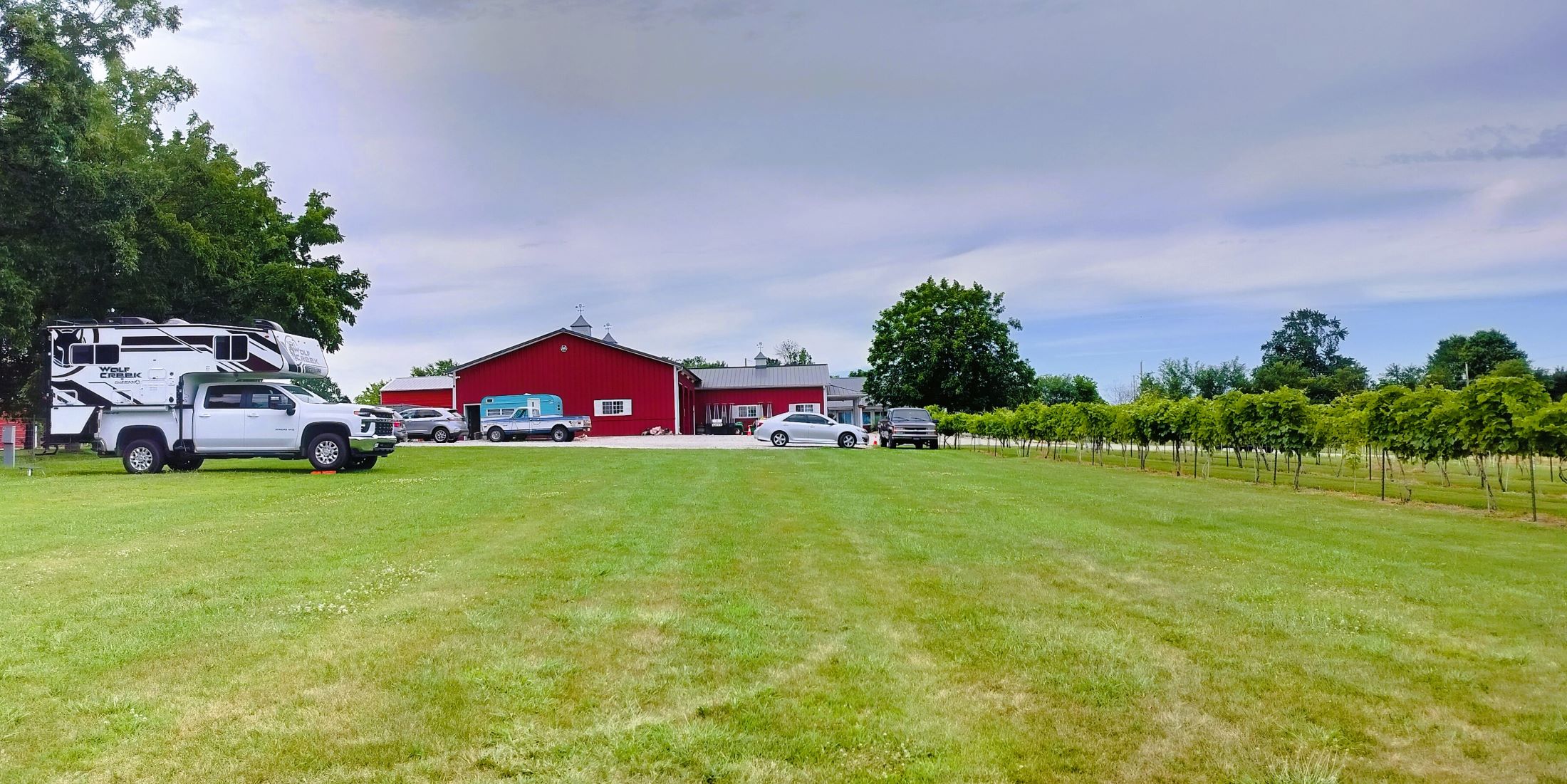
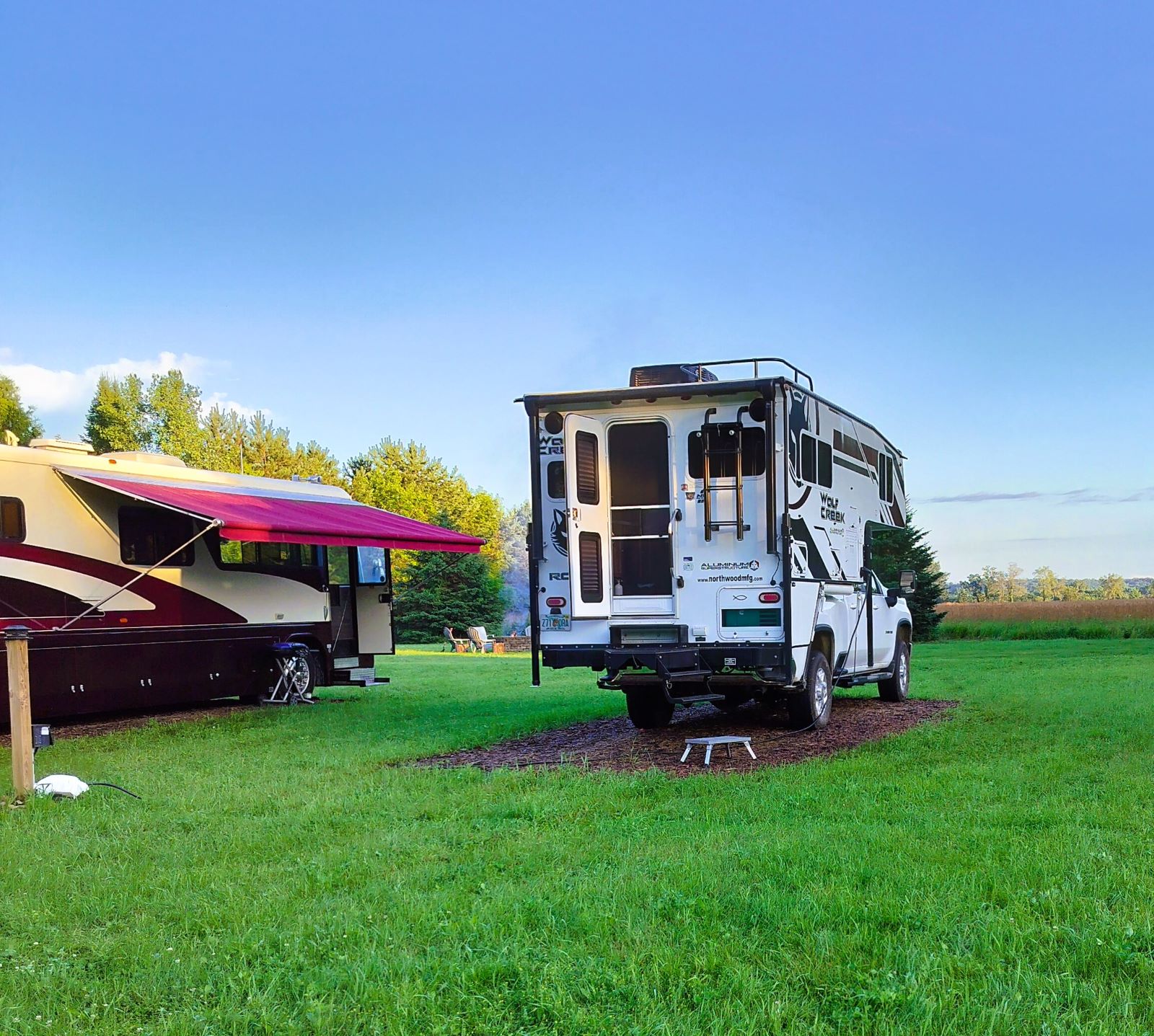
We often stop at Harvest Hosts locations during our travels.  Hosts are homeowners, farms, vineyards, churches, museums and more that make their properties available for travelers to camp overnight, often free or for a small fee. 

Various Harvest Hosts we have stopped at during our Heartland travels

We’ve stayed on dairy farms, vineyards, several museums and even a flower farm!  Gracious homeowners have allowed us to stay on their properties, where we enjoyed getting to know each other.

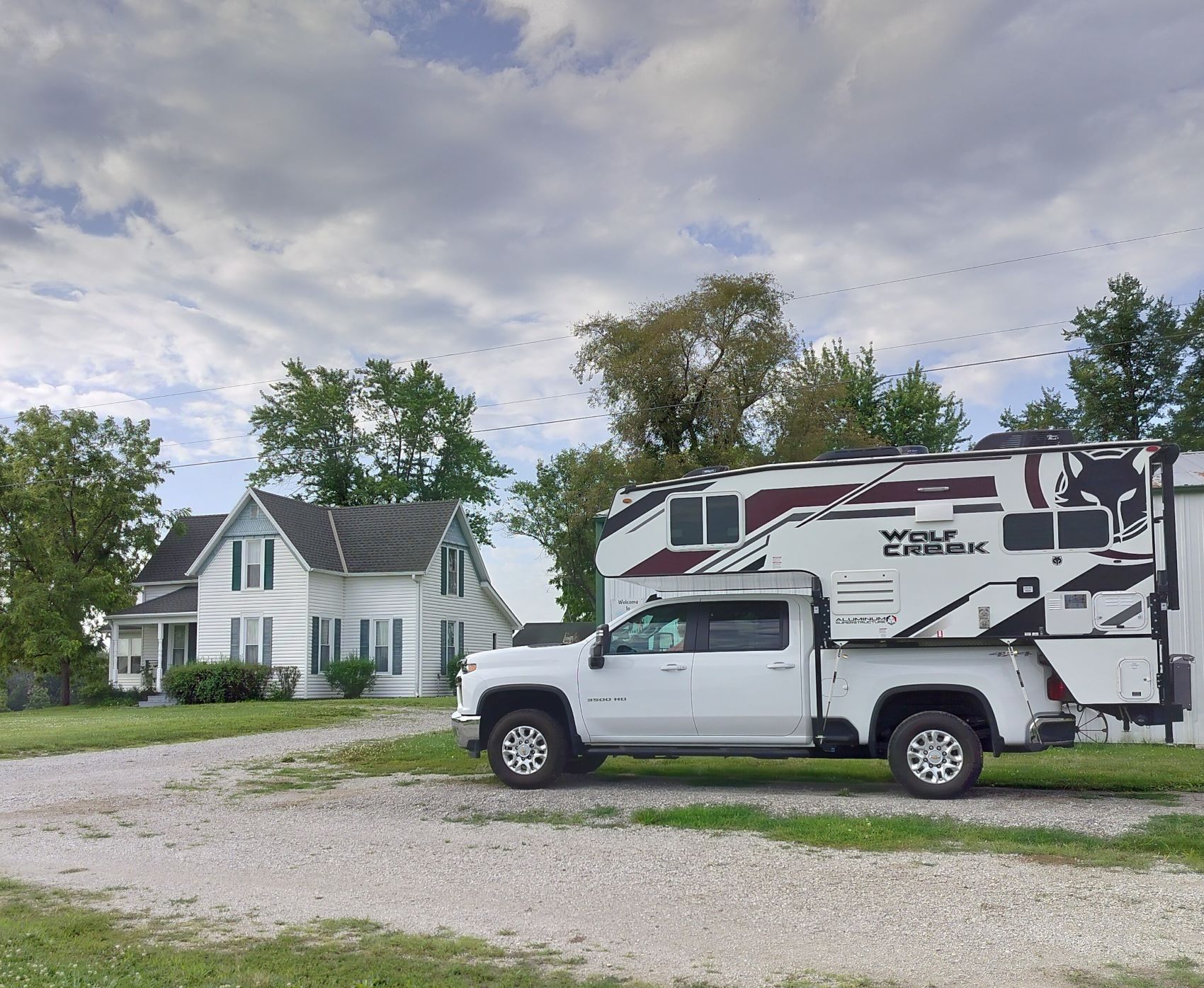
A couple hours north of Kansas City, we stopped at one HH location in Missouri, where we visited with hosts Ken and Robin for nearly two hours.  We learned we have much in common as Christ-followers and RVers, and enjoyed Robin’s fresh cookies as we learned about interesting things to do in the area.

Mail Delivery Across the West
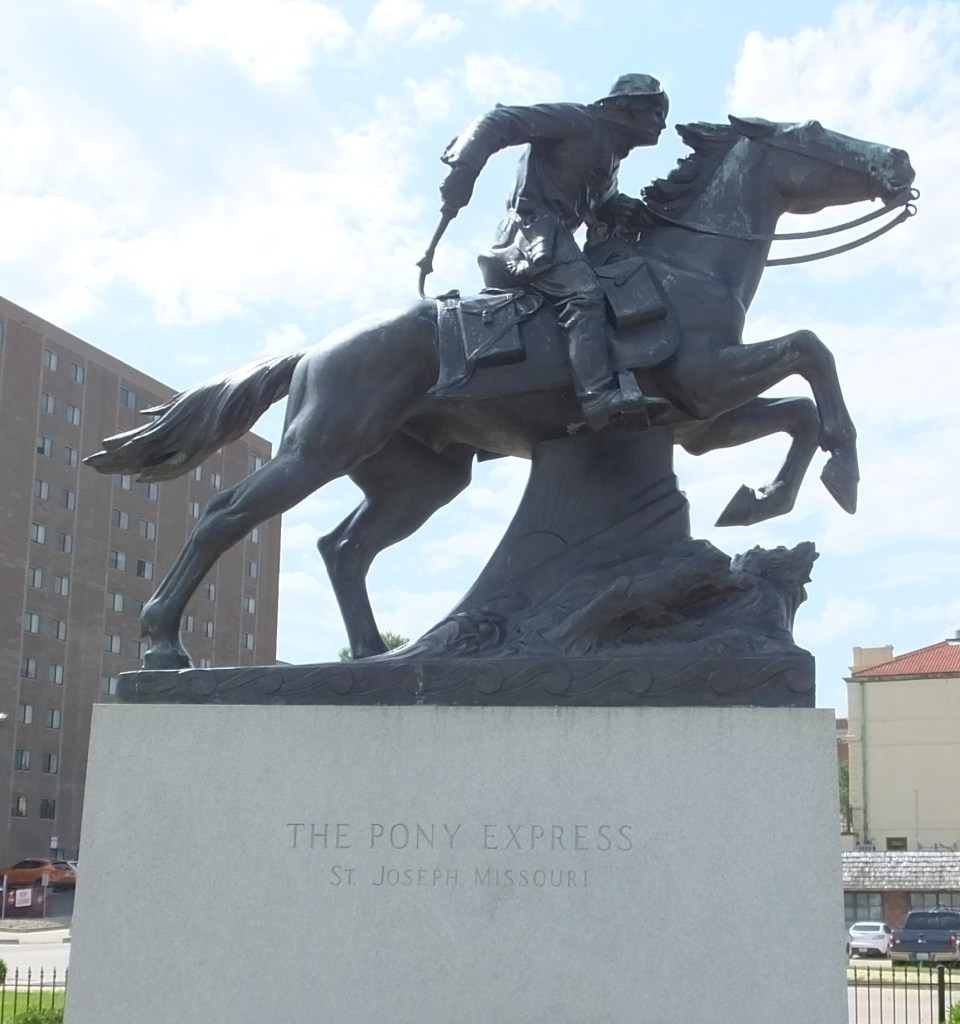
Pony Express monument in downtown St Joseph

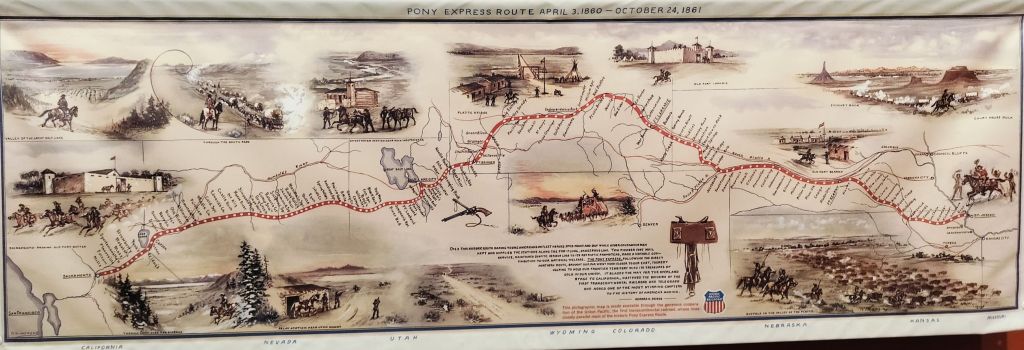
At their suggestion, we detoured the next morning to St Joseph, MO, location of the Pony Express Museum and starting point of the Pony Express.   Starting in April 1860, Pony Express riders carried mail nearly 2000 miles from St Joseph to Sacramento, California.  They exchanged horses at relay stations every 10-15 miles and new riders took over every 75-100 miles.    Mail could be delivered in 10 days for $5, a considerable price at that time.

Detailed map of the Pony Express route from St Joseph, Missouri to Sacramento, California, nearly 2000 miles

A bold and storied part of the American past, the Pony Express existed for only 18 months – it was replaced by the telegraph.

Quick RabbiTRAILS

As we drove America’s heartland, there were plenty of interesting stops.  Here are a few:     

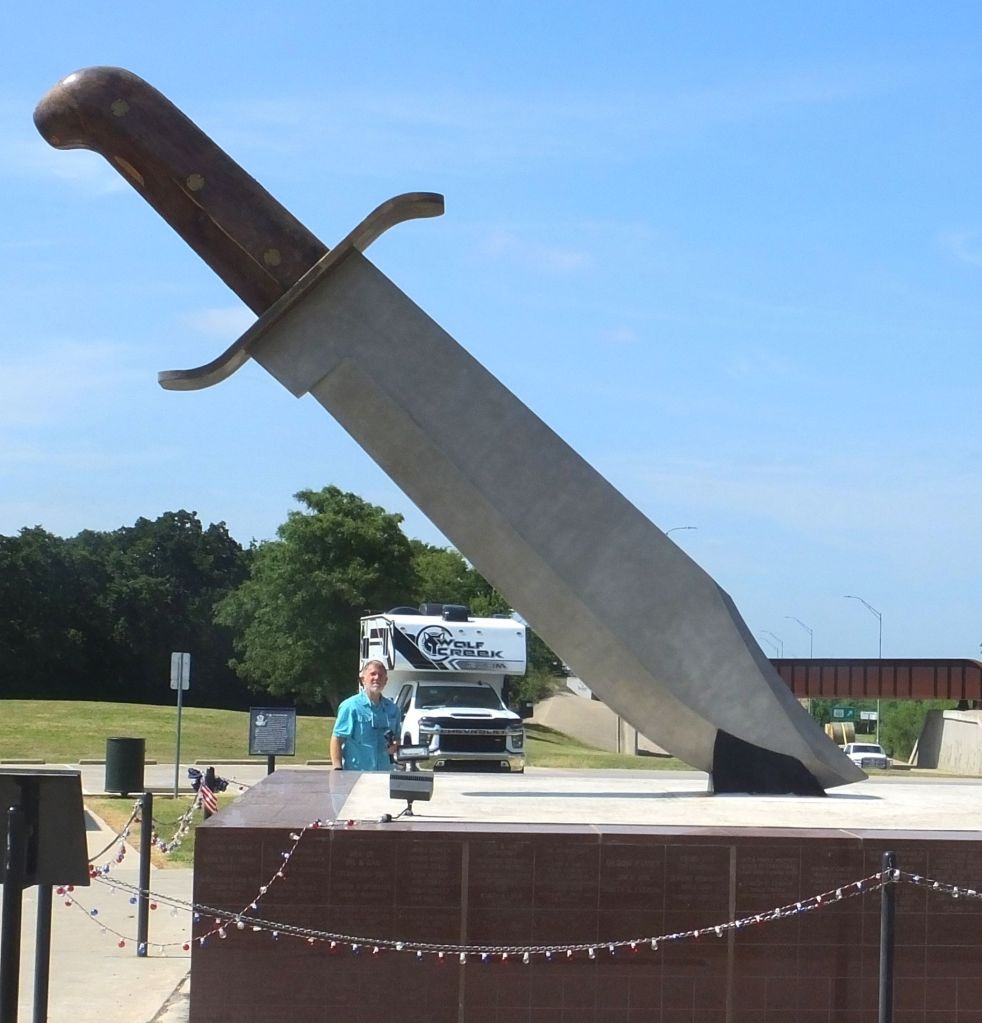
World’s largest Bowie knife in Bowie, Texas – it stands 20 ft 6 inches. That’s bigger than Pap!
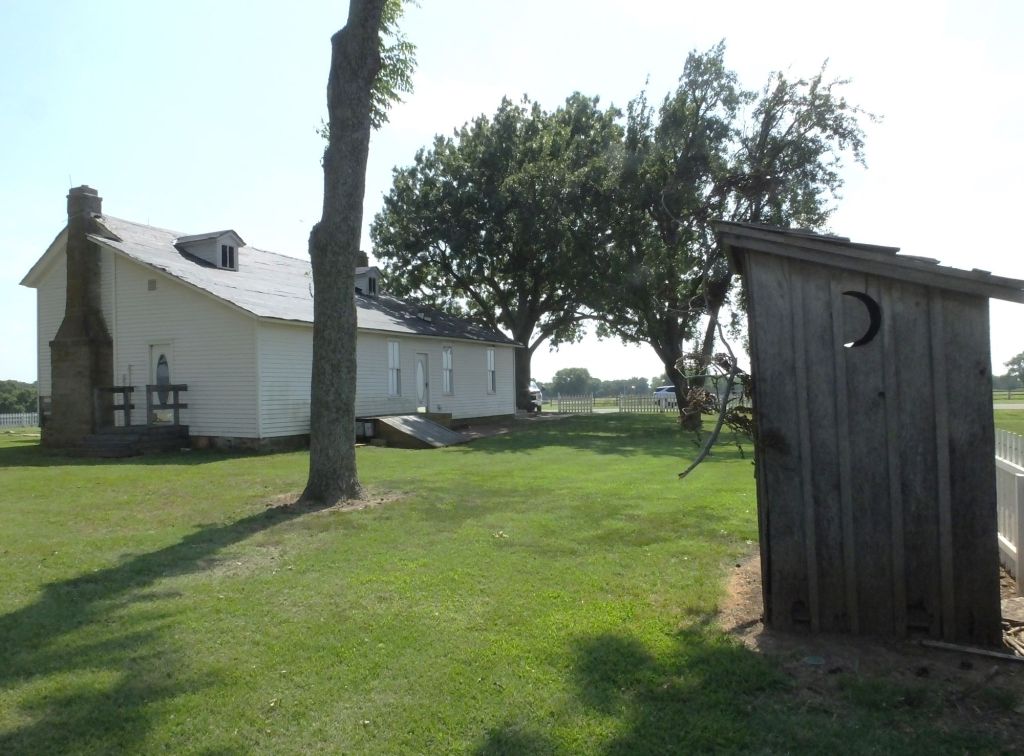
Will Rogers birthplace near Claremore, Oklahoma. We wondered if he made use of the privy…
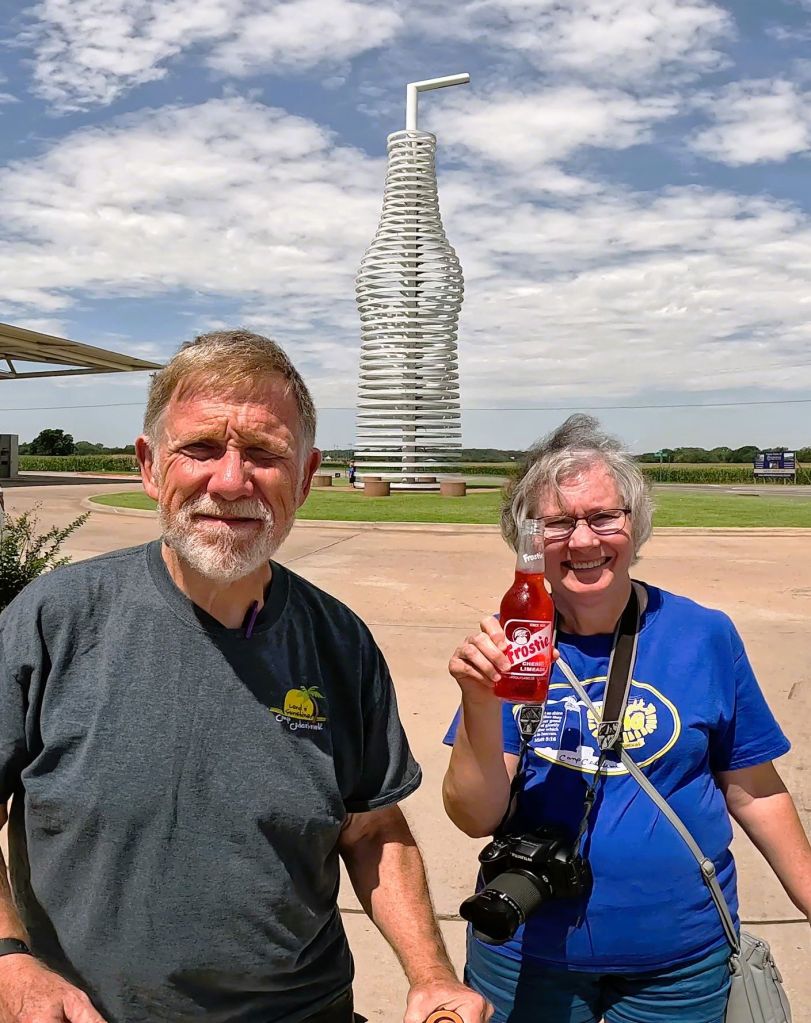
We sampled a cherry limeade Frostie soda at the Pops 66 roadside attraction on Route 66 near Oklahoma City;
the soda bottle in background is 66 foot tall!
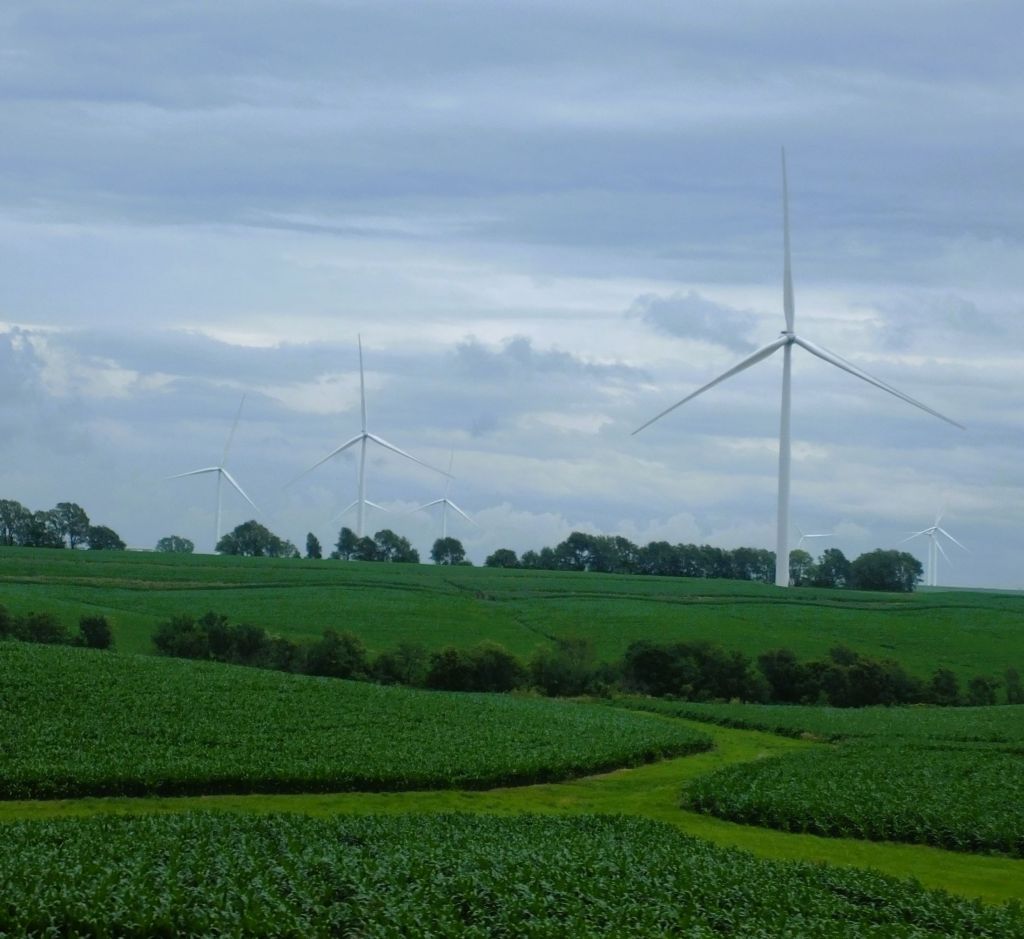
Hundreds of huge windmills can be seen throughout the heartland – each can power up to 940 homes at a cost of $2-4 million
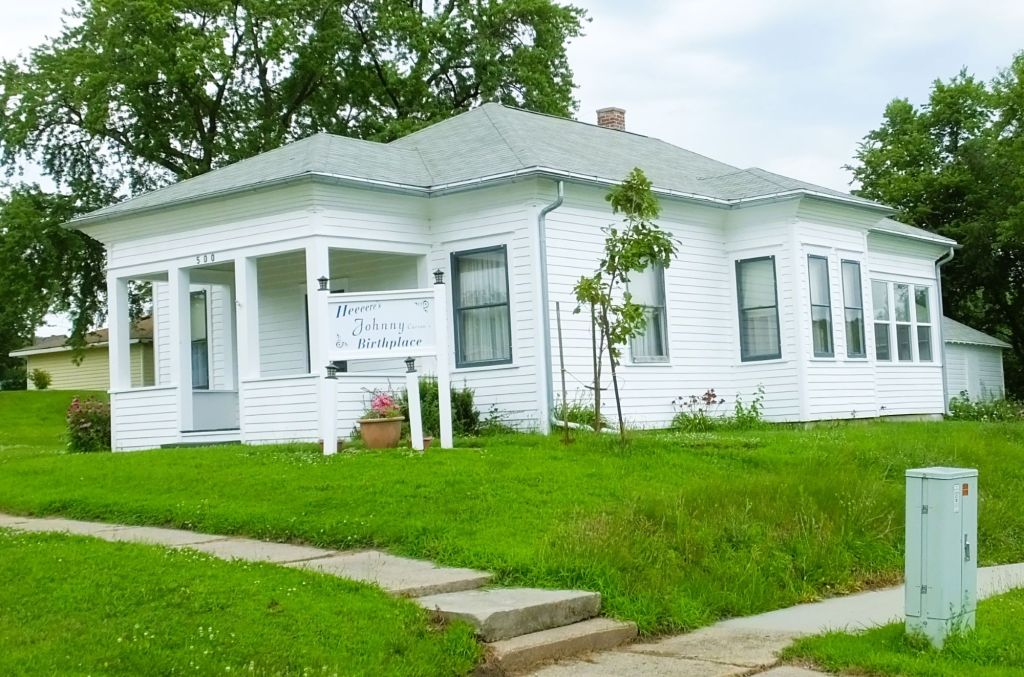
Here’s Johnny! Johnny Carson’s birthplace at Corning, Iowa – October 23, 1925
Next Week

We visit Des Moines, Iowa, in the heart of the heartland.       

1100 Miles and Heartfelt Camp Smiles

(2024 Heartland Ep 3)

Our 2024 Heartland Journey Begins

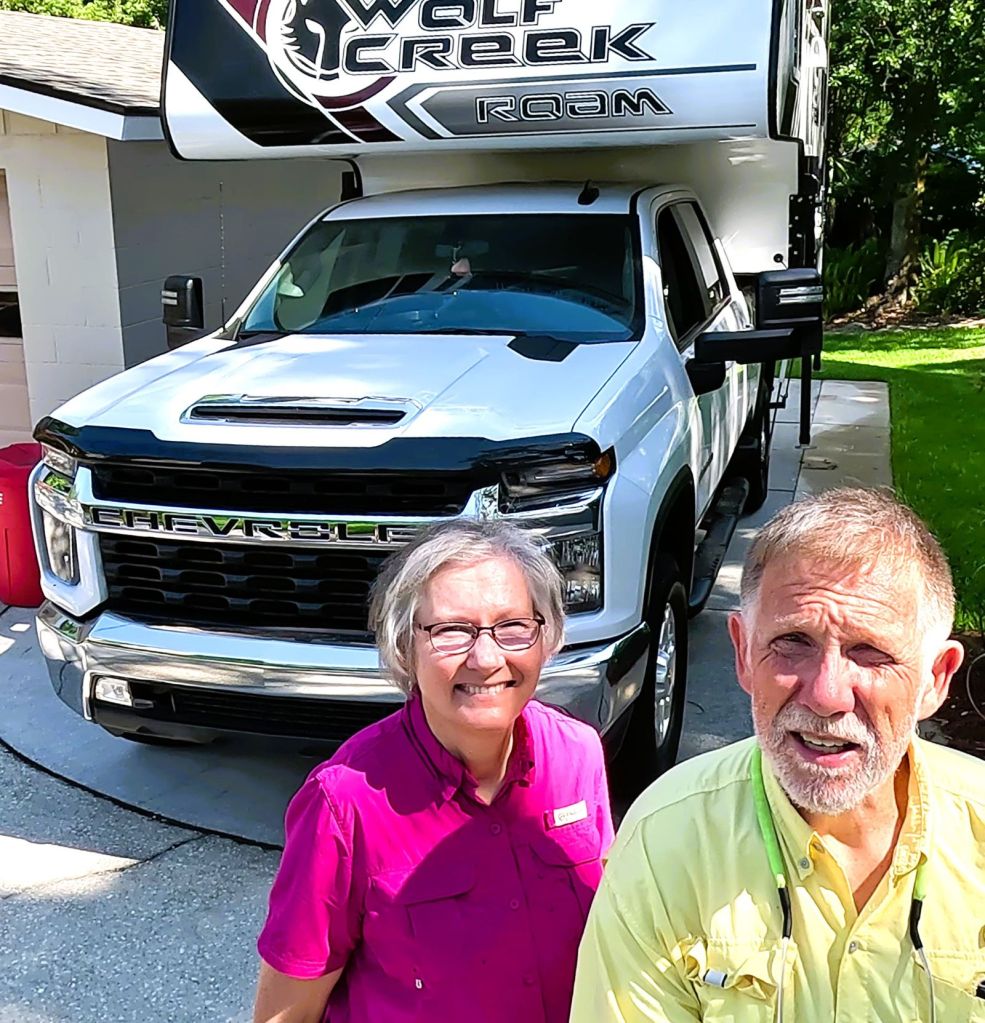
A last minute photo before leaving

Our travels got underway the second Sunday in June.  We visited Liz and Josh and our two grands, Henry and Emilia, near Warner Robins, GA, where we moochdocked in their driveway.  Like most grandparents, we marveled at how quickly they are growing up.  

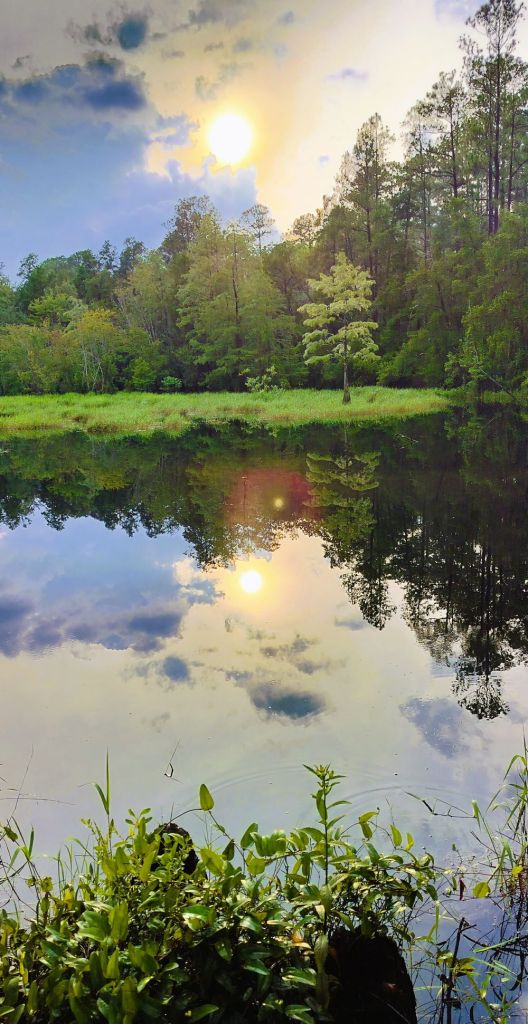
A peaceful view after a thunderstorm at Blackwater River SP

We left Georgia and continued to the western part of the Florida panhandle, where we spent the night at Blackwater River SP.   A thundershower grumbled in the distance, so we quickly set up camp.   

Once we were confident the storm was not getting closer, we followed a path to view the tea-colored river.  It twisted and turned with numerous sandbars on both sides of the flow.  The water in one backflow area was mirror-smooth, reflecting the sun and clouds.

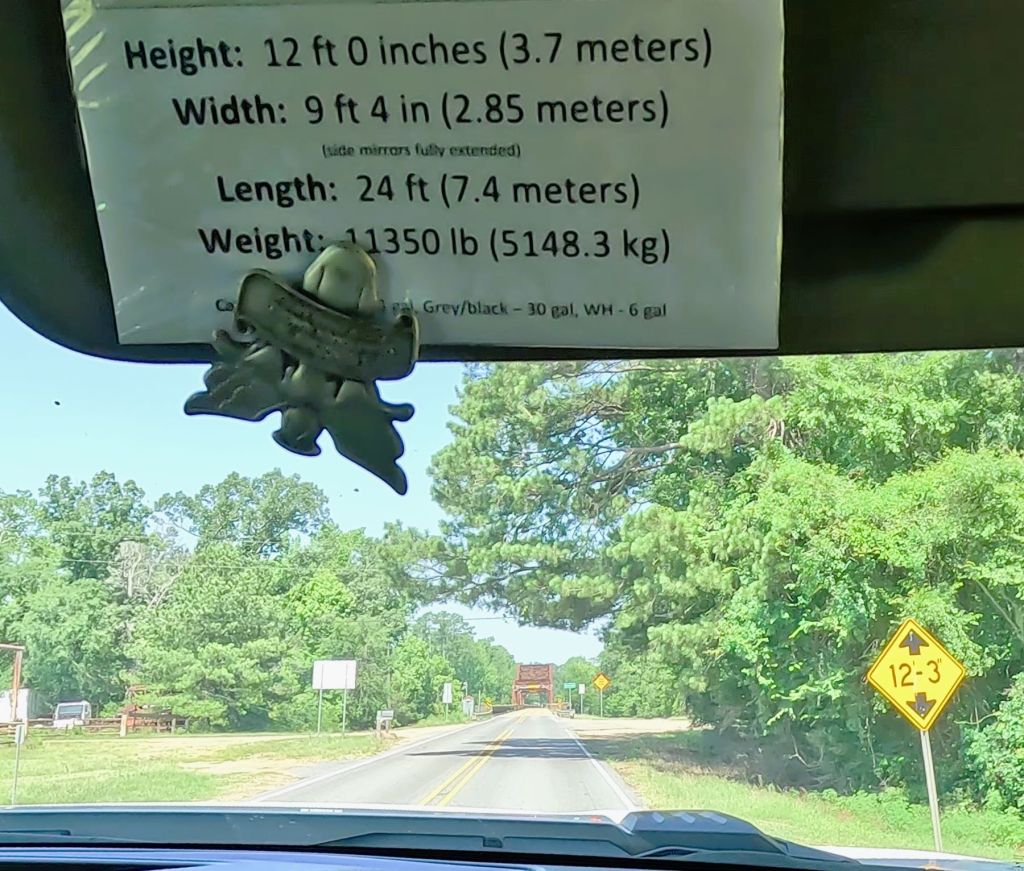
We continued across Alabama, Mississippi and Louisiana, where we camped two nights in the bayou state.   We drove Louisiana Route 8 westward and neared the Sabine River, the border between Louisiana and Texas.  Ahead, a yellow sign warned the clearance of the bridge was 12 foot 3 inches.  Images of the tops of campers and trucks smashing into low bridges came to mind, so we quickly flipped down our passenger side windshield visor. 

Checking our height before a low bridge crossing between Louisiana and Texas

When riding on Percy, Pap is 12 foot 0 inches high.  To be safe, we slowed considerably as we crossed the bridge and passed into Texas with three inches to spare! Whew!

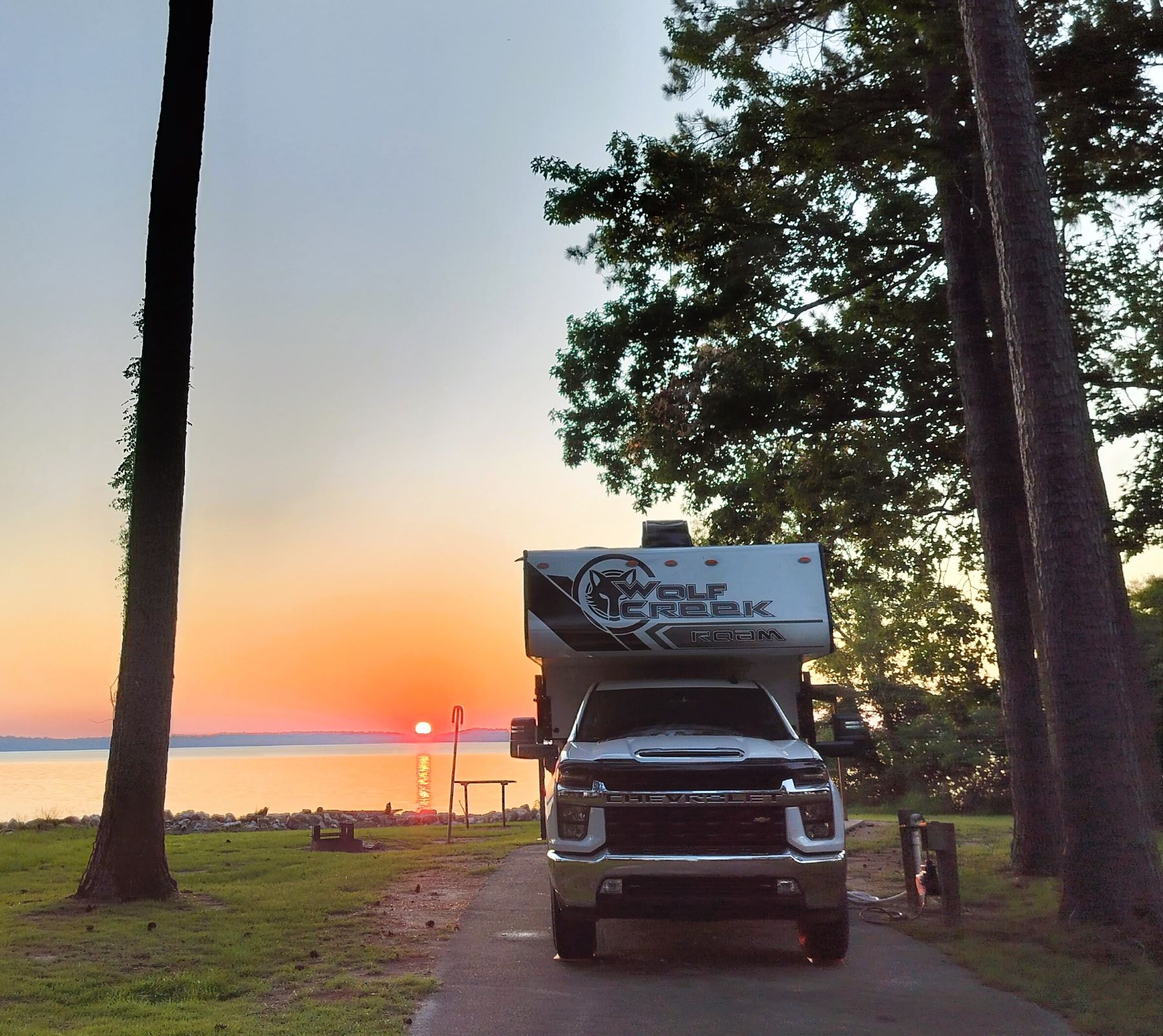
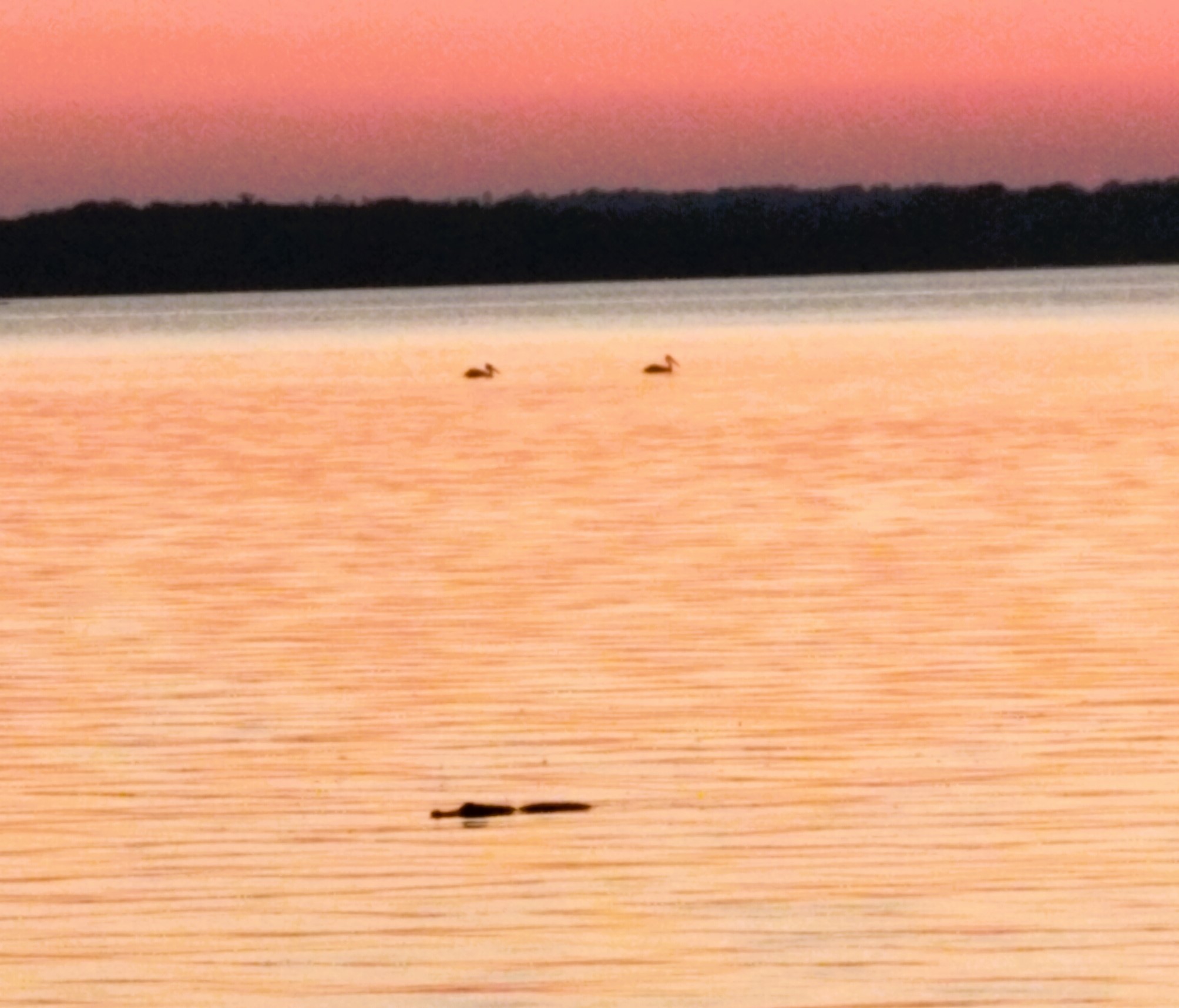
Views from our campsite on Steinhagen Reservoir in eastern Texas – a sunset and passing gator

Our two final nights before camp were spent at a Corps of Engineers campground on Steinhagen Reservoir near Jasper, TX.  Our campsite was right on the lake, and we enjoyed two beautiful sunsets.

Anchored in Truth

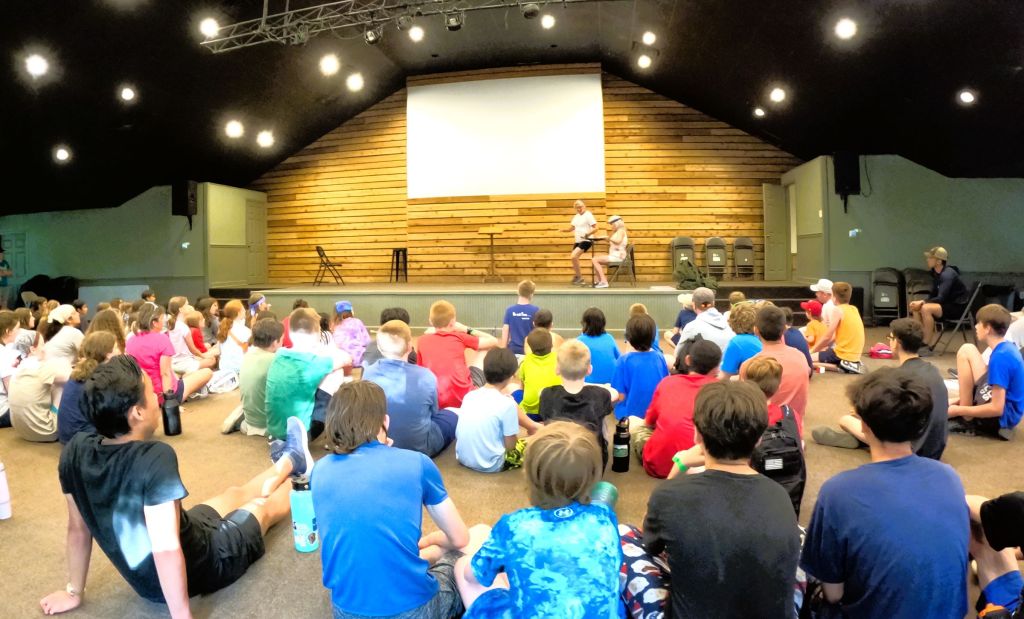
For the next week Pat and I were on staff with Camp Cedarbrook Texas, a Christ-centered, Bible-based camp near Huntsville, TX.   More than 100 campers arrived on Sunday, and for the next six days and nights we modeled and taught about God’s truths of grace, forgiveness and new life for those who believe in Jesus. 

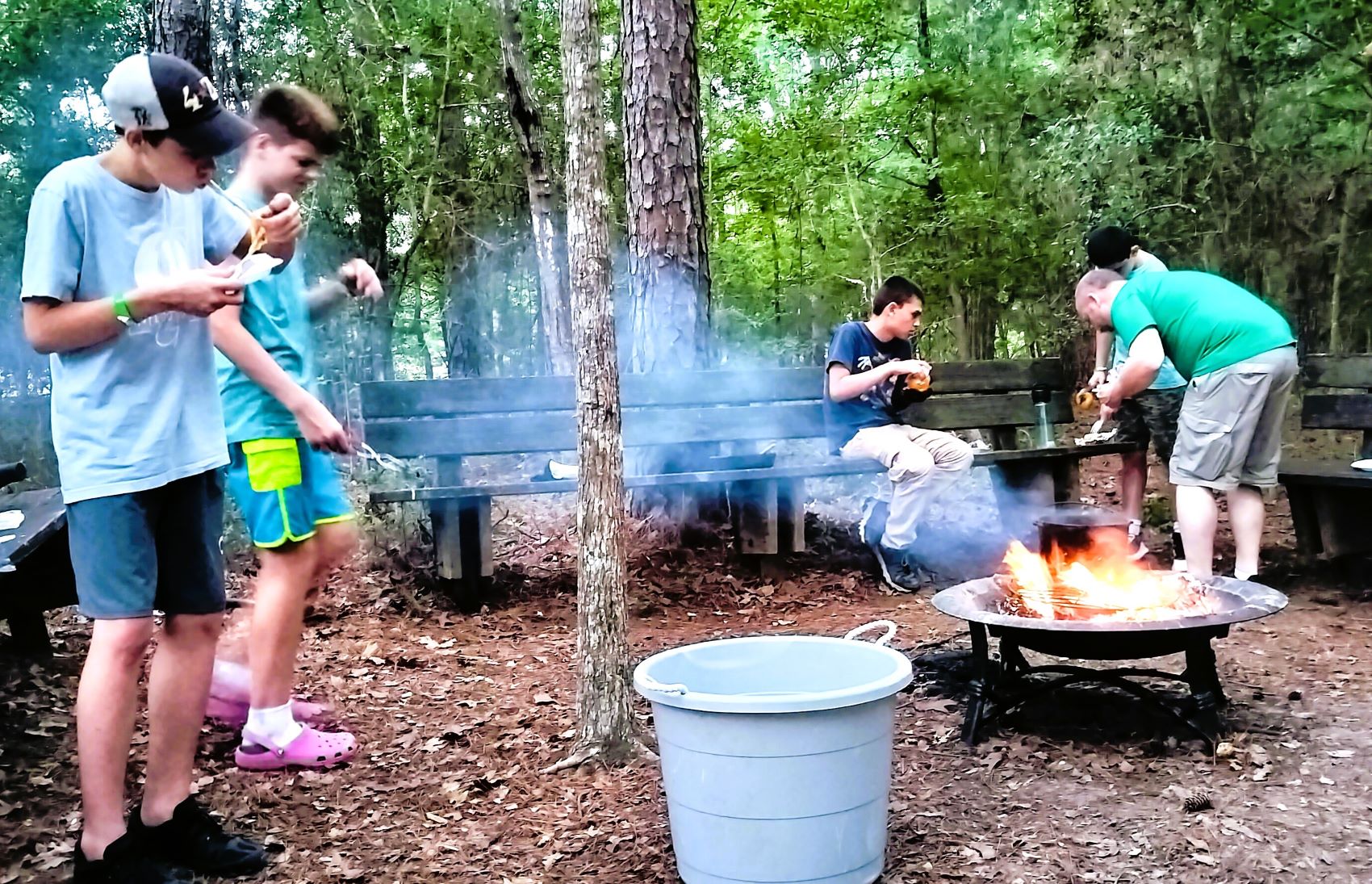
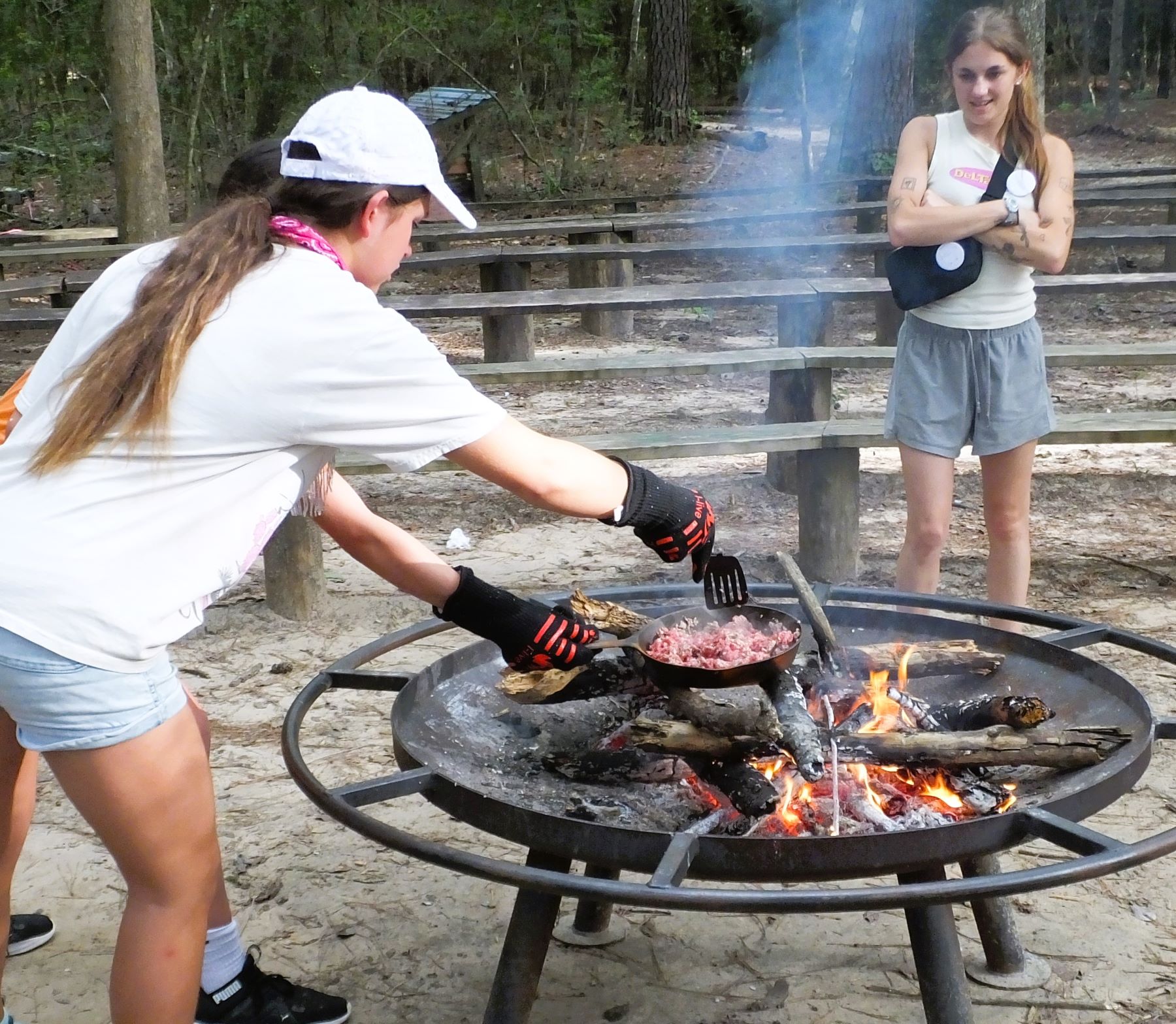
CCT offers campers a broad outdoor program that includes horsemanship and riding, archery, riflery, canoeing and kayaking, swimming, survival skills and lots more.  Pat and I led ‘Fire and Food’ activity, where we taught campers how to build and cook over a fire.  Pat worked with younger girls, and I taught younger boys.

We joined our cabin groups at a cookout one evening

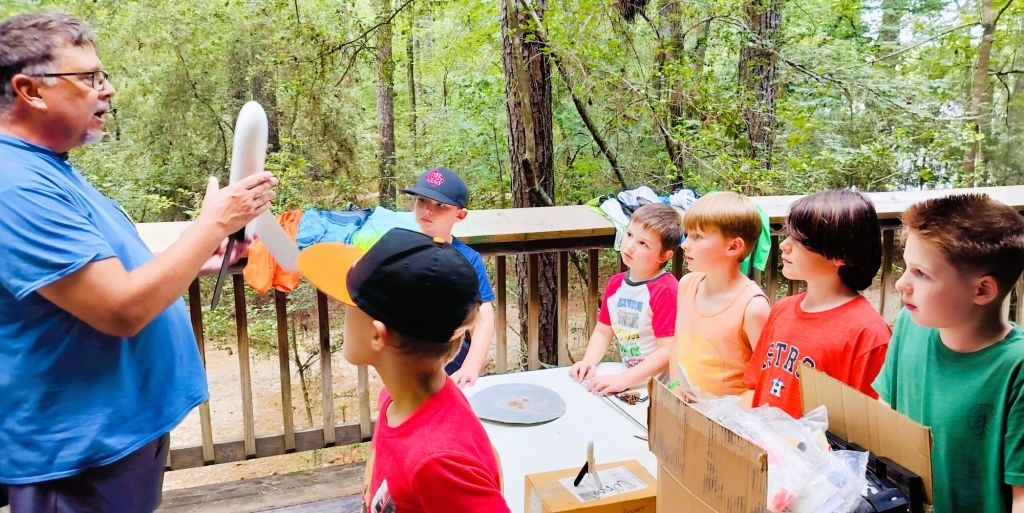
Whoo (CCT staff) shows third/fourth grades campers a model rocket he built as they work on their own model rockets
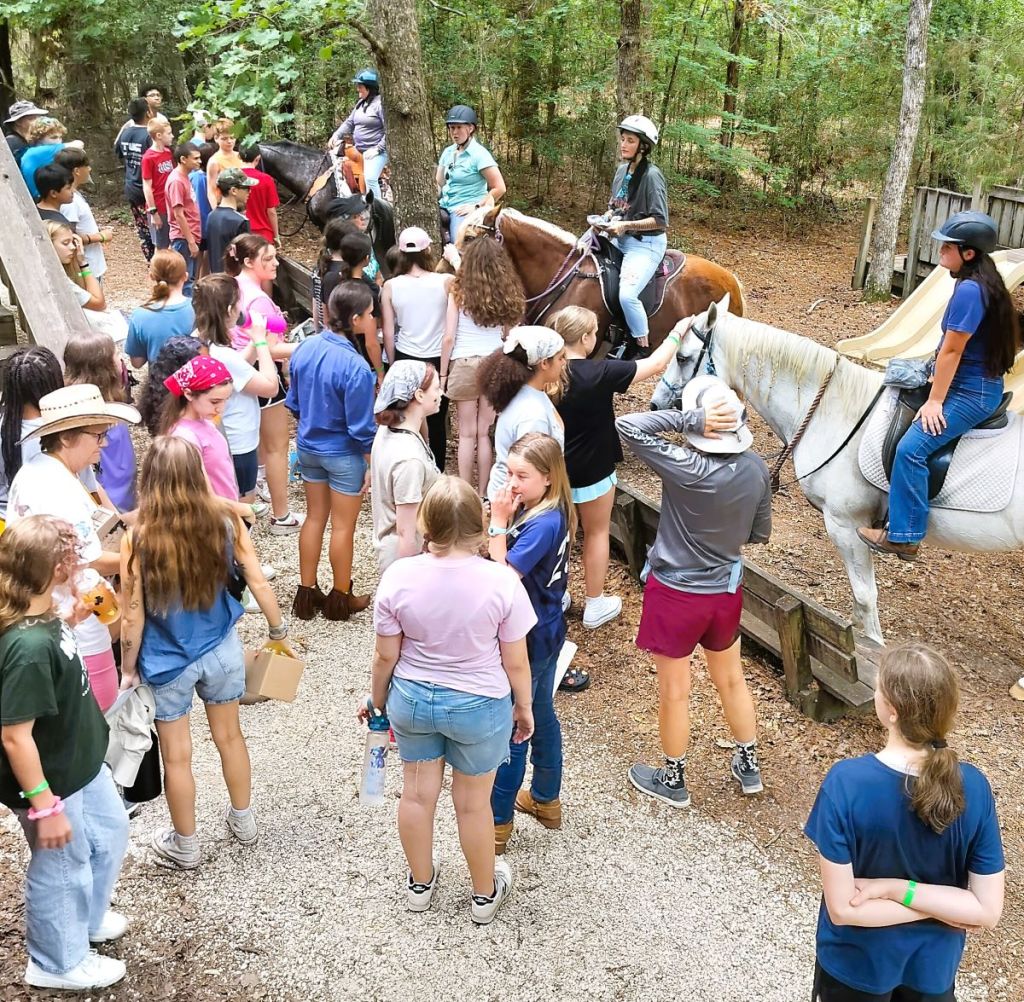
Campers receive mail from the CCT ‘Pony Express’ (horsemanship activity)
Evening worship included skits, and fun and worship songs

We enjoyed dining hall meals, evening worship times and nightly outdoor programs. 

50 and 1 Stars

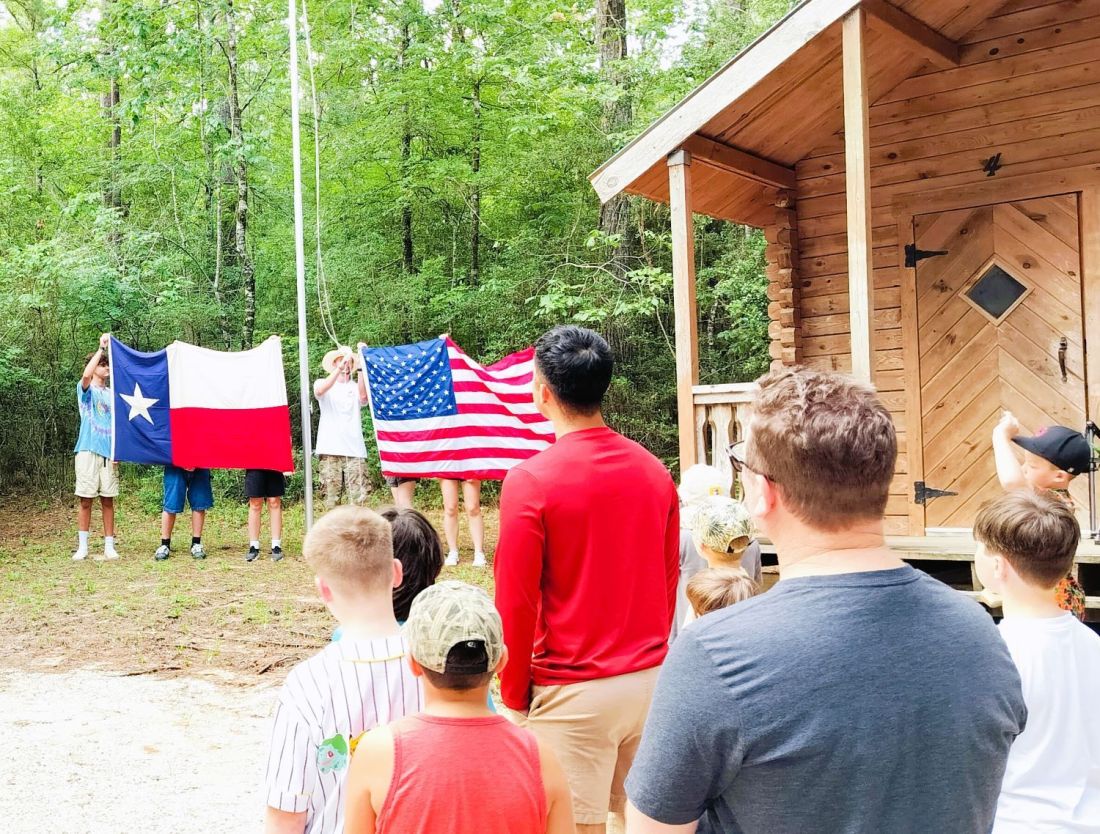
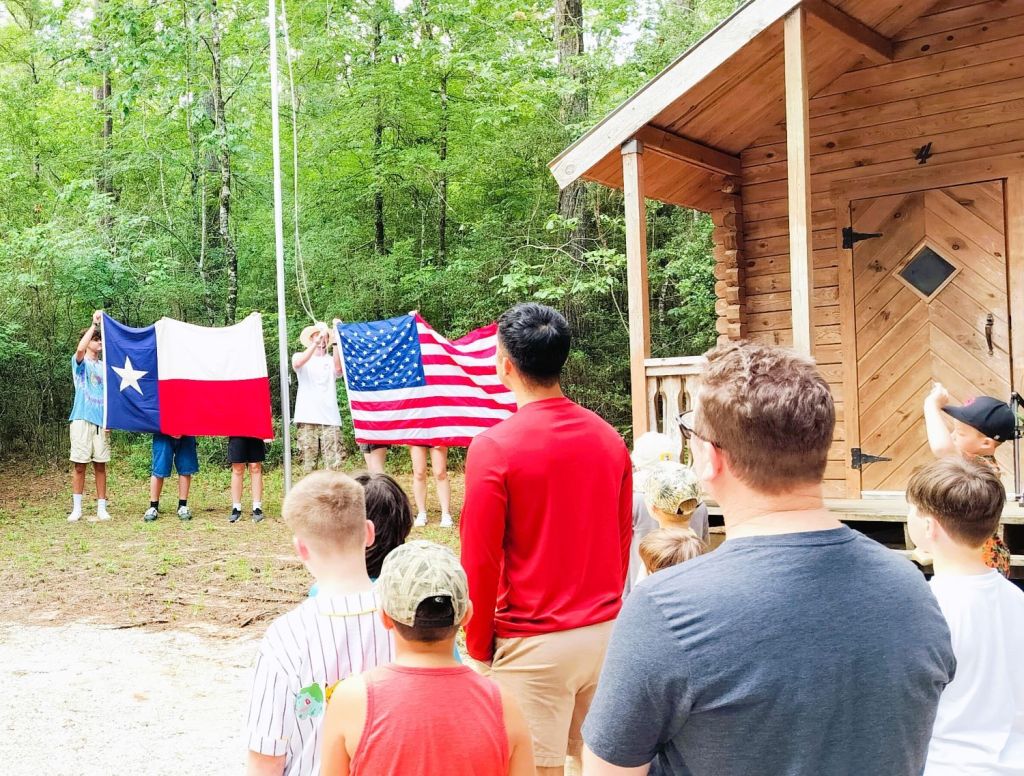
Following devotions and breakfast each morning, all campers and staff attended a flag raising ceremony.  When presenting the colors, it was interesting that the Texas state flag, with its single white star, was proudly displayed.  

Flag raising ceremony

These were Texans after all!

Next Week

We say goodbye to CCT campers and staff friends, and continue west toward San Antonio for a visit with my brother and his family.     

Bent Leg Blues and Catching Up (part 2)

(2024 Heartland Ep 2)

In recent years we have made several late-winter/early-spring camping trips to the Florida Keys. This year’s trip has some interesting surprises.

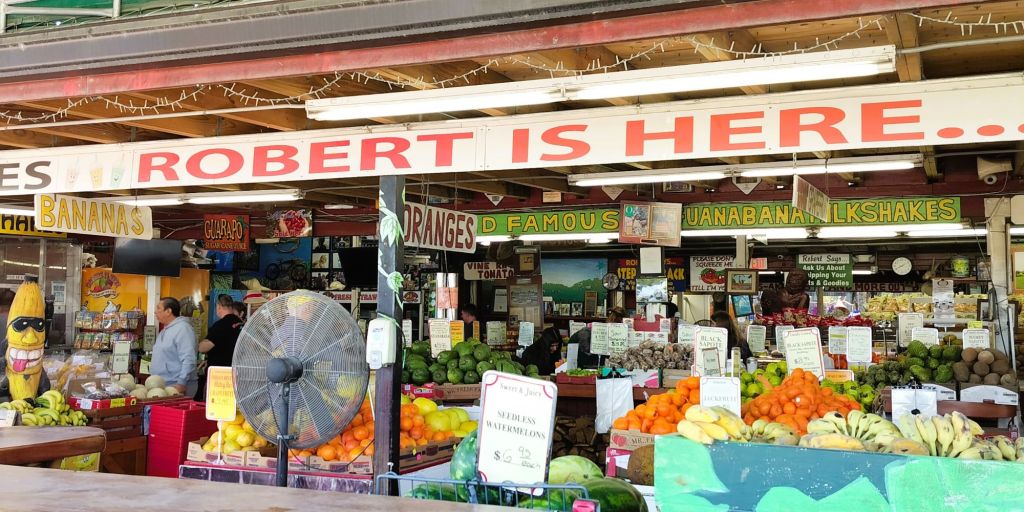
Robert is Here has an amazing selection of local and exotic fruits and vegetables

Robert is Here!

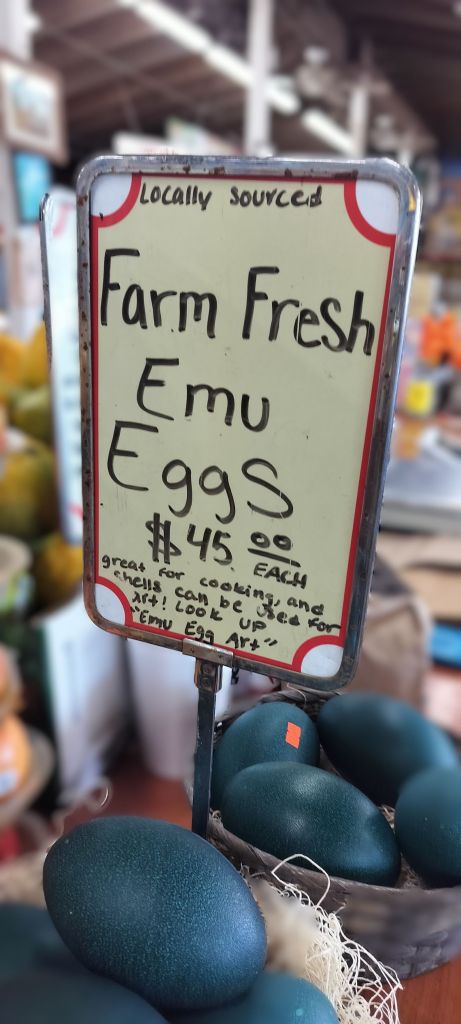
Fist-sized green Emu eggs would make a rather pricey omelet!

Our Florida Keys journey began with a stop at Robert is Here, an amazing fruit stand near Homestead at the start of the Keys. Dozens of local and exotic fruits and vegetables, and amazing fresh fruit-flavored milkshakes, can be purchased.  

The attraction was named for a sign Robert’s dad made to get the attention of people passing by his six-year-old son’s small fruit stand in 1959.  That day all of his produce was sold by noon and Robert’s lifelong fruit stand business was born!   

On to the Keys and John Pennekamp State Park 

From Florida City on the Florida mainland to its end in Key West, the Overseas Highway counts down 126 miles.  There’s lots to see and do all along the drive!

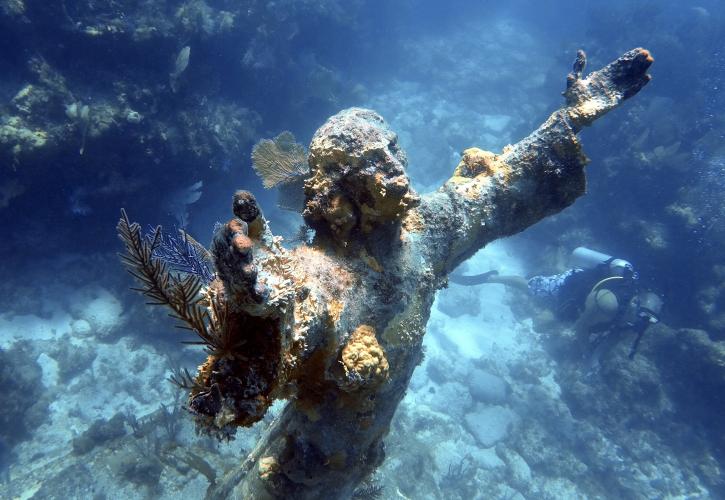
Our first stop was at mile marker 102.5 near Key Largo to spend a week at John Pennekamp Coral Reef State Park.  The park is known for coral reefs located several miles off the ocean side of the island.  Excursion boats carry snorkelers who view the coral and various sea life, and scuba divers who swim to a well-known underwater statue of Christ. 

Underwater statue of Christ at John Pennekamp SP (from Fla State Park website)

Due to choppy sea conditions, we opted for a glass bottom boat tour.  Unfortunately, the reefs were seriously damaged by high water temperatures last summer (as high as 101.1 F) and the reef views were disappointing.  One can only hope the reefs will recover with more normal ocean temperatures.

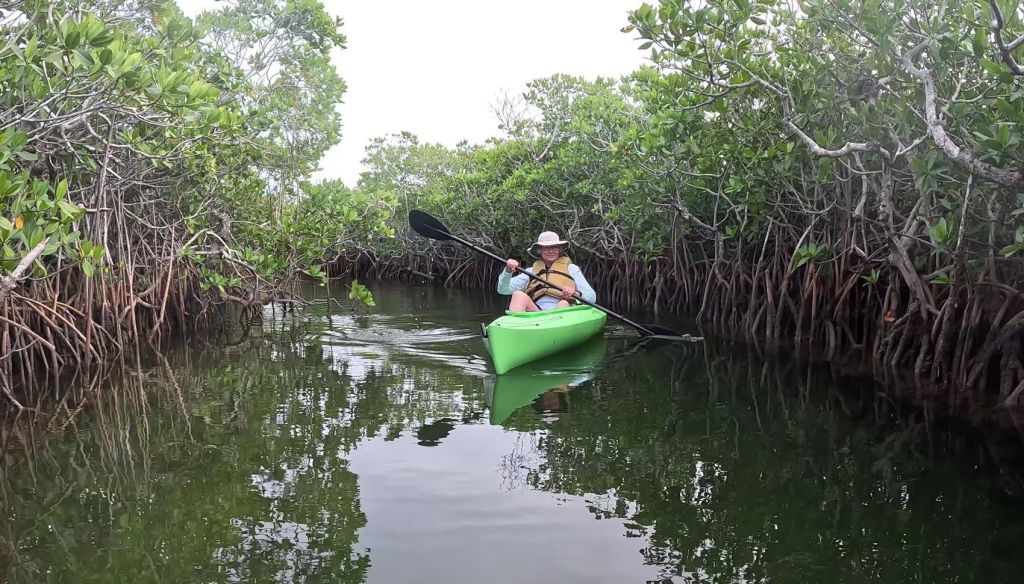
We did enjoy bicycling and hiking several short trails in the park and nearby.  A highlight of our visit was kayaking some very interesting ‘water trails’ in the park mangroves.

Pat kayaking in the mangrove canals at John Pennekamp SP

Crocs, Gators and More in the Everglades

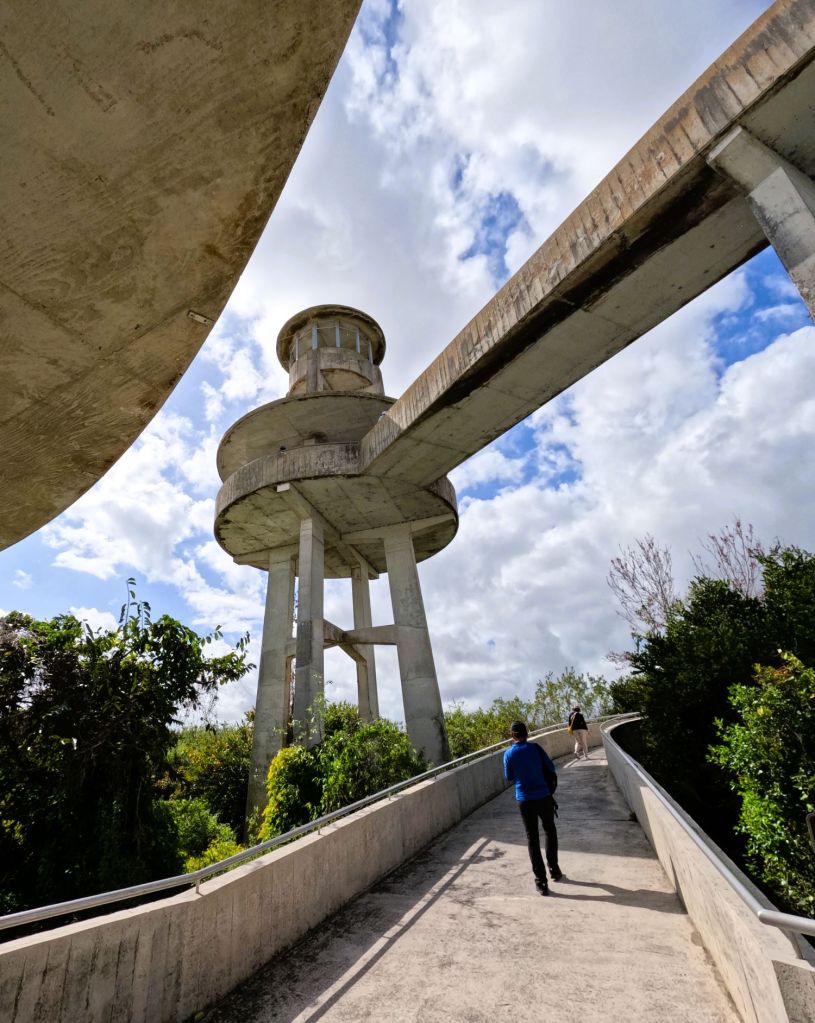
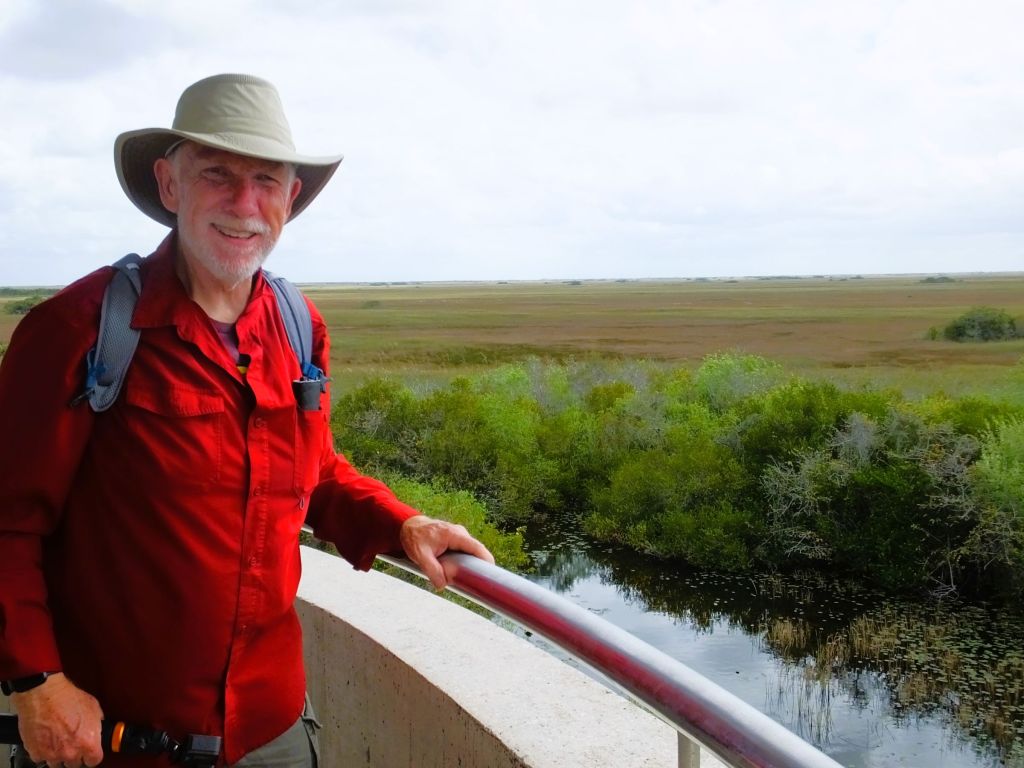
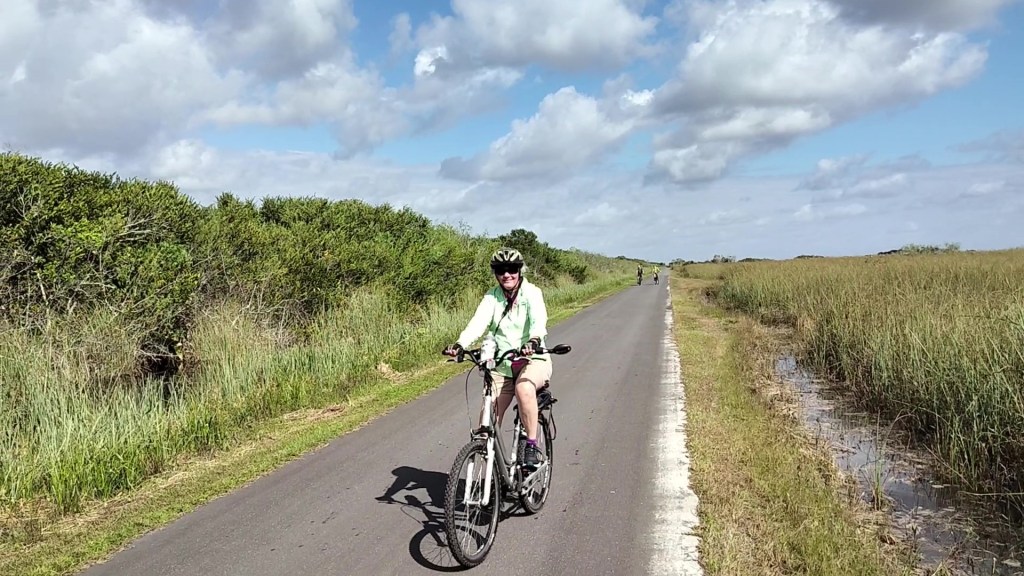
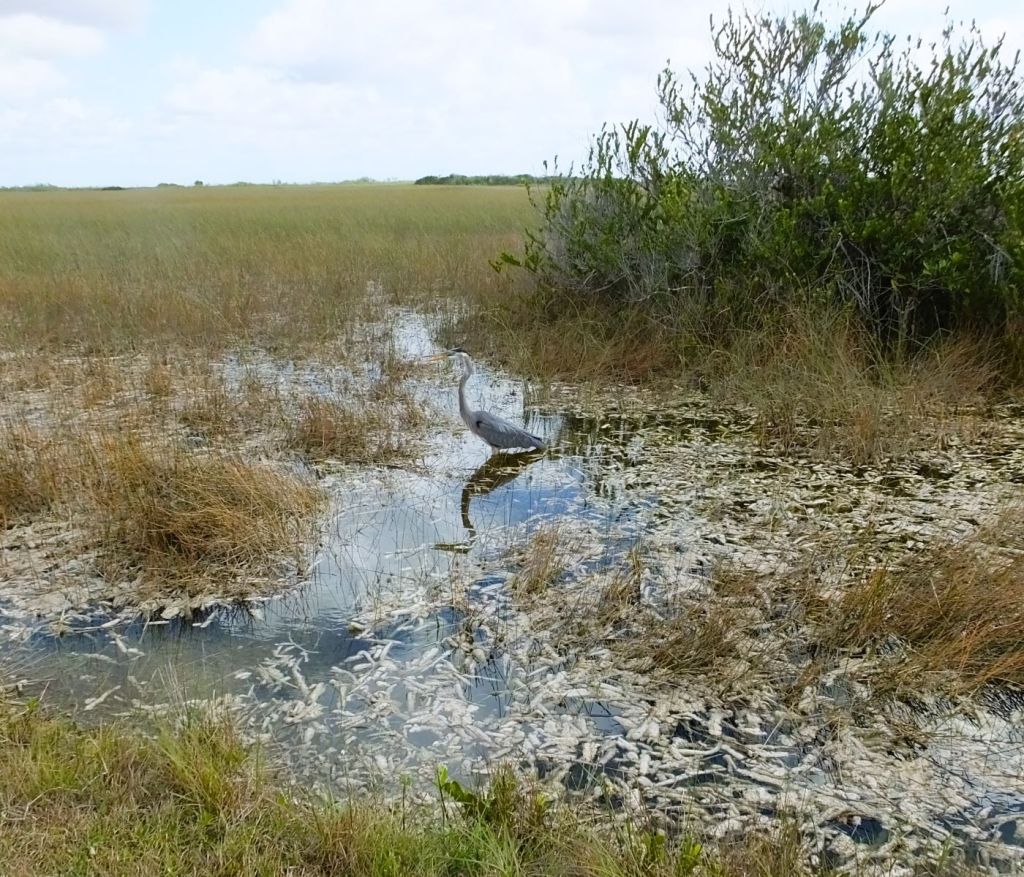
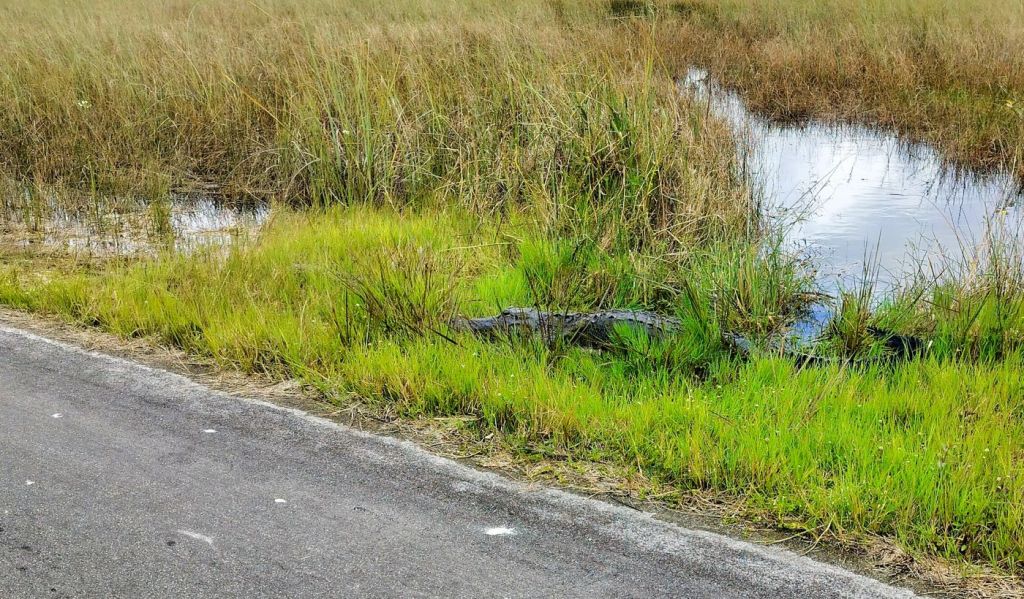
We took two day trips to Everglades National Park.  At the northern boundary of the park, we bicycled the 15-mile Shark Valley loop road, passing herons, egrets and numerous alligators. The highlight of the ride was a viewing tower from which we could see expansive grasslands and hammocks.  The tower reminded us of a similar structure at Clingman’s Dome in Great Smoky Mountains National Park.

Viewing tower at Shark Valley in Everglades NP

Shark valley views – biking, birds and trailside gators

The next day we drove to Flamingo, a developed area deep in the heart of the national park.  They have an excellent visitor center, campground, other accommodations and marina. 

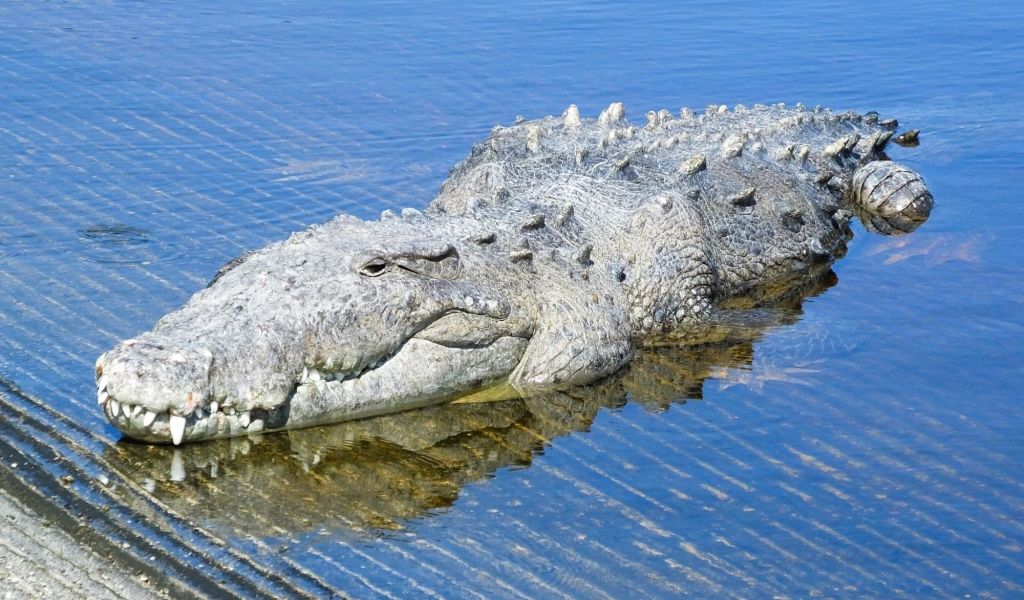
Snarly-toothed crocodile at Flamingo

At the marina boat landing, a park ranger kept curious visitors at a safe distance from two large snarly-toothed crocodiles that were sunning themselves.  We learned the Everglades has crocodiles AND alligators – both are rather ominous!  Meanwhile, several manatees swam at boat docks not too far away.

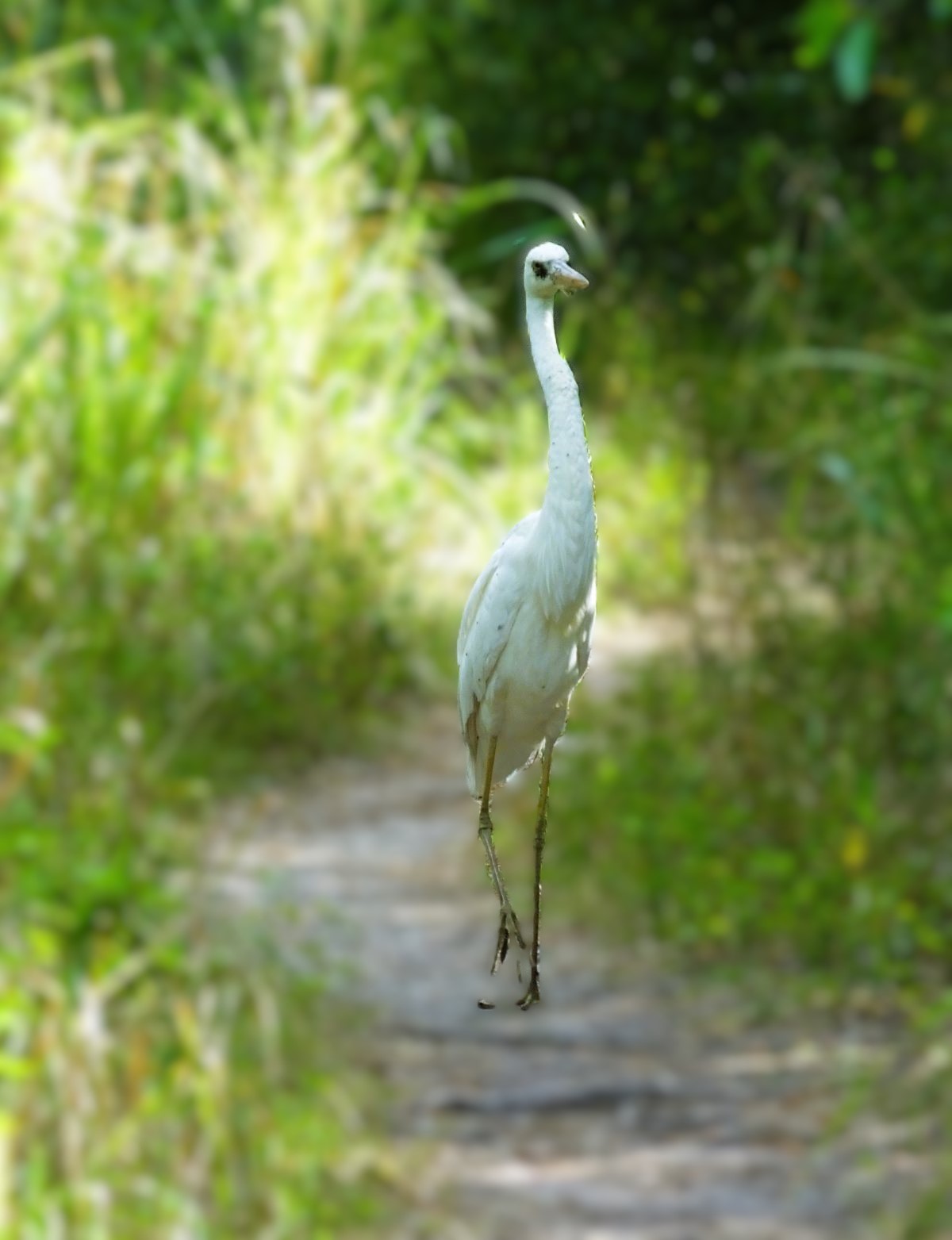
We hiked along an overgrown canal to Florida Bay; the tall white feathered fellow blocked the path

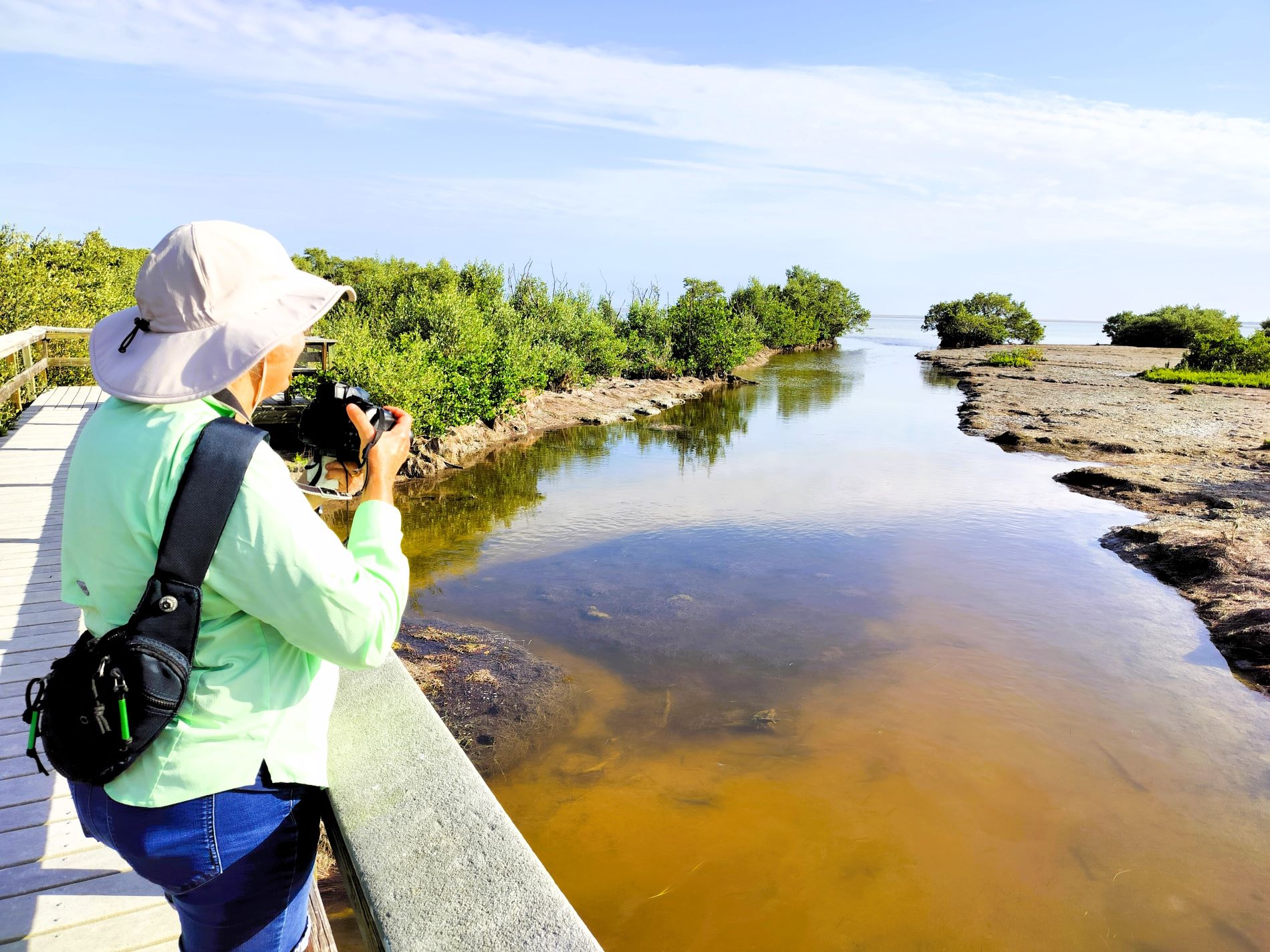
Later, we hiked along an overgrown canal trail to a viewpoint of the Florida Bay.  We saw many birds, including one rather tall white egret that blocked the trail for a bit, and a number of stealthy alligators trying to hide nearby.

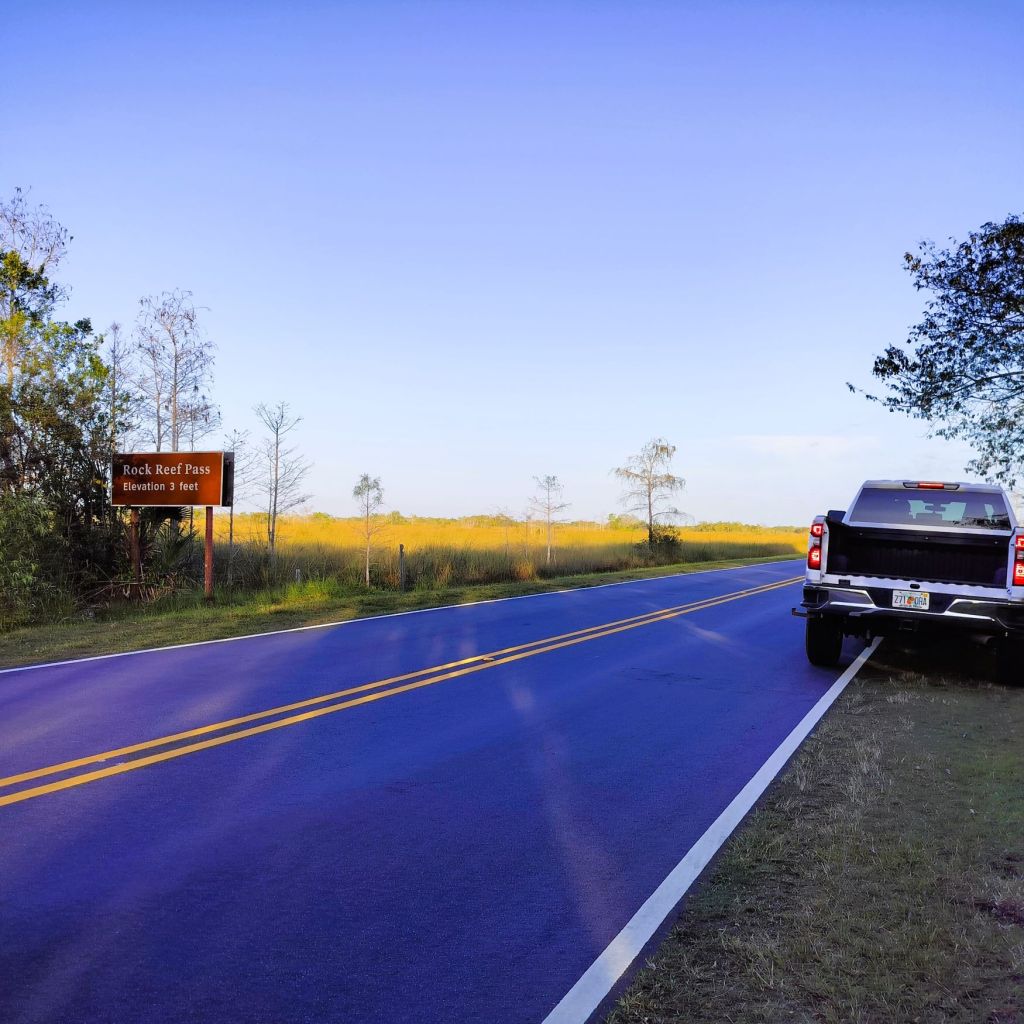
Elevation 3 feet – the Everglades are flat!

As we exited the park that afternoon, we stopped at Rock Reef Pass, elevation 3 foot.  The Everglades are remarkably flat, indeed!

We tried a cinnamon bun at Doc’s Diner in Key Largo – it was 4+ (out of 5) sweet goodness

On to Bahia Honda State Park

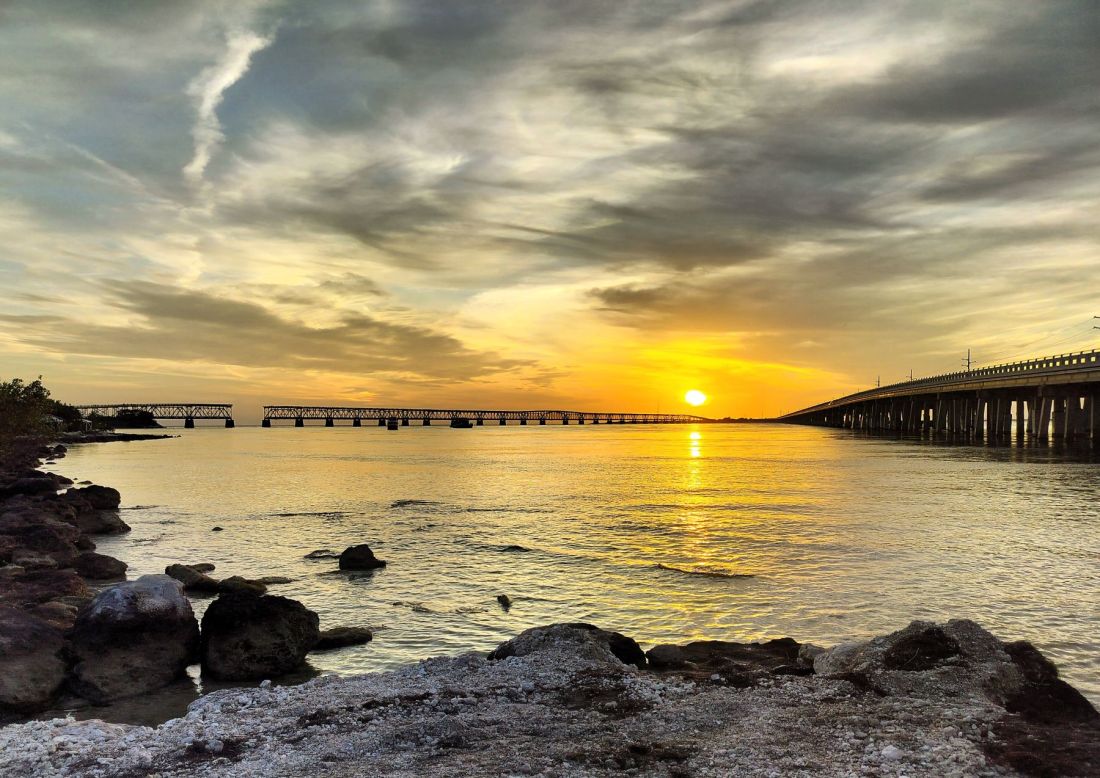
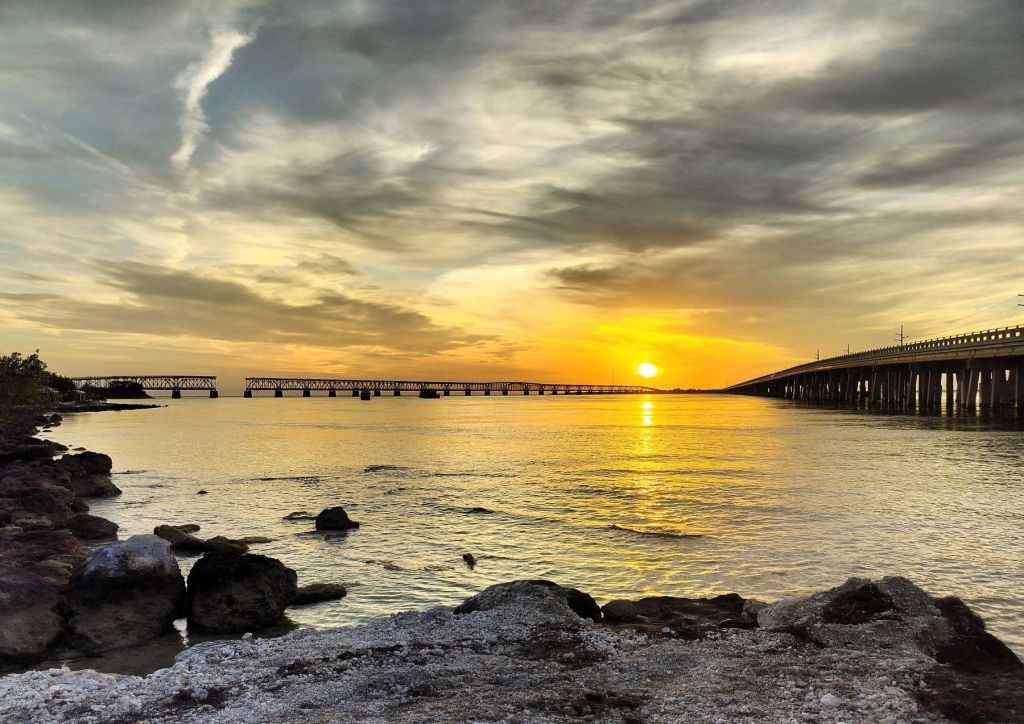
Bahia Honda sunset seen from the campground

From Pennekamp SP we continued on the Overseas Highway past the busy towns of Islamorada and Marathon, and across the seven-mile bridge to Bahia Honda State Park, mile marker 37.8.  The park is one of our favorite places to camp.

We bicycled to see the remains of a railroad bridge built by Henry Flagler.  The railroad to Key West was an amazing engineering feat for its time.  Completed in 1912, trains made the trip for 23 years before the bridges and rail lines were seriously damaged by the Labor Day Hurricane of 1935.   The railway was turned over to the state and converted to an automobile highway in the following years.

There are beaches on both sides of the island – an oceanside beach faces the Strait of Florida and Cuba, and a gulf-side beach faces Florida Bay and distant Everglades.  There are places to camp on both sides of the island.

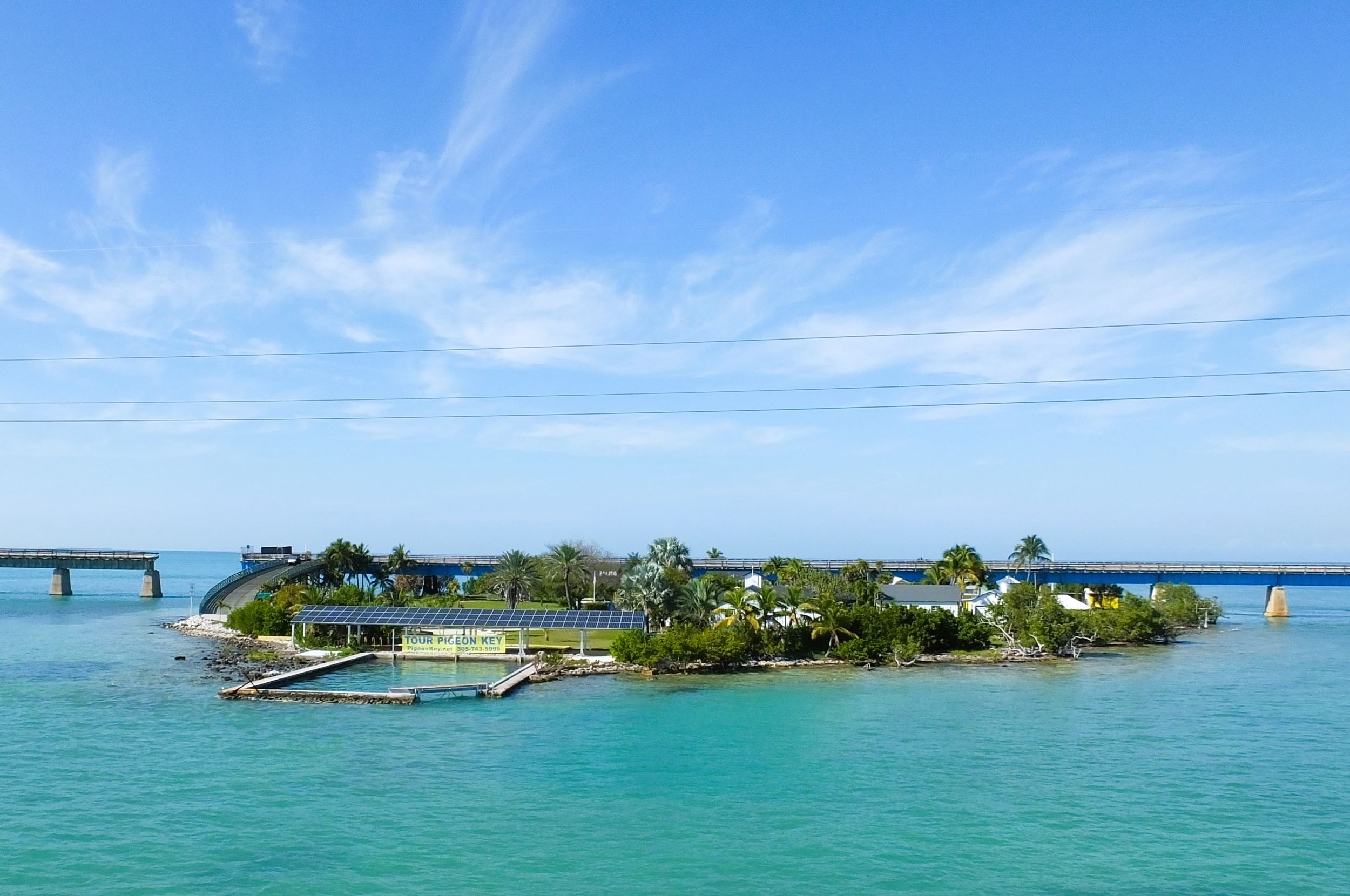
Construction workers and supplies were staged on Pigeon Key during construction of the 7 Mile railroad bridge

Pigeon Key – A Tiny Island with a Big Story

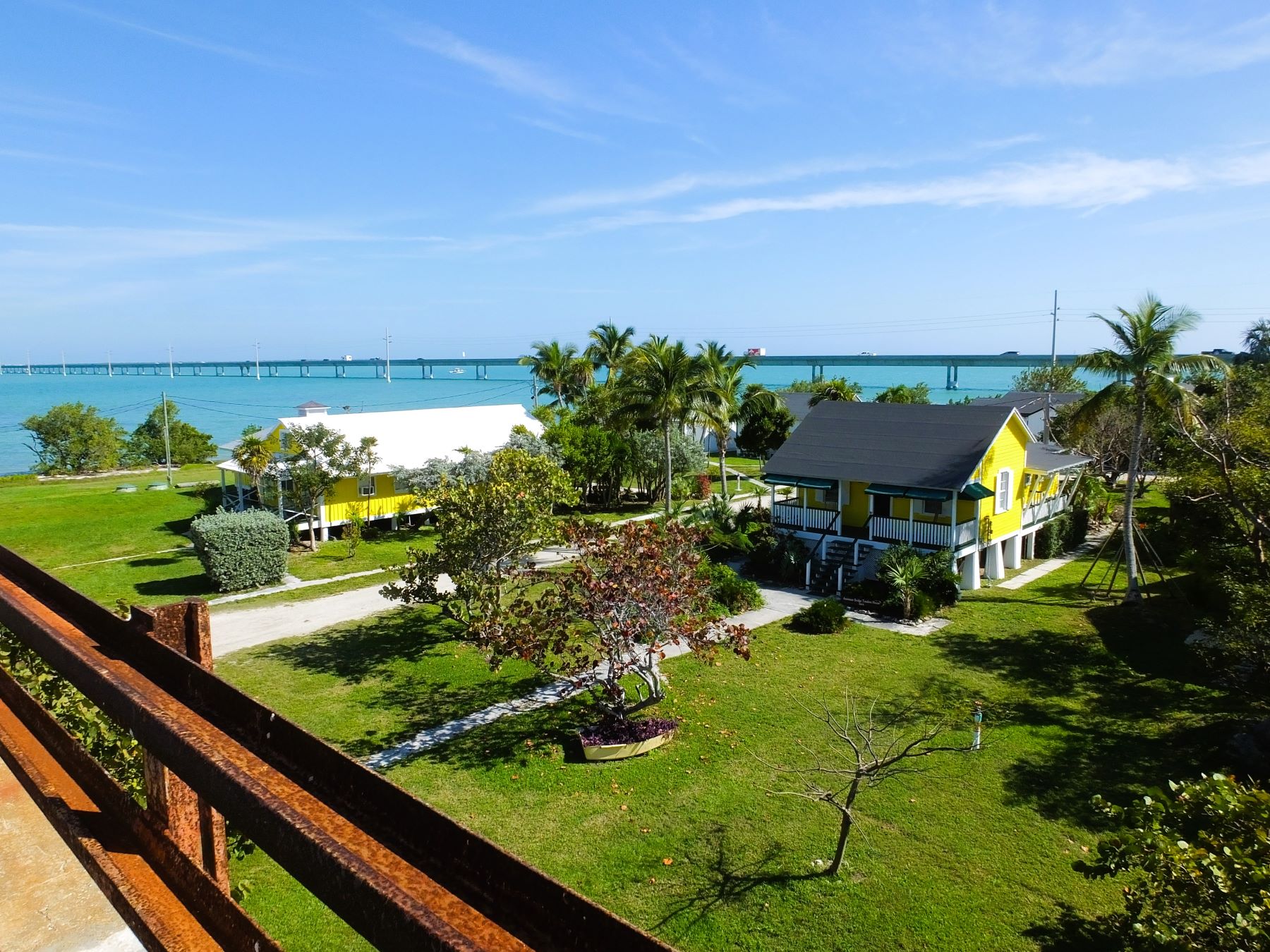
One day we visited Pigeon Key, a small island visible from the seven-mile bridge.  We took a tram nearly three miles on the original Bahia Honda bridge to the island that was used as a work camp when the original railroad bridge was built.  Photos and relics in Pigeon Key buildings give an interesting history about the railroad.

Ouch! Pap has a bent leg

Pap Gets A Bent Leg

We have been blessed with relatively few issues with our vehicles and campers as we have traveled over the years. 

We had an unfortunate accident when arriving at Bahia Honda.  As we entered the campground, the front camper jack hit a post that protected the campground entry keypad. The jack, used to raise the camper, was significantly bent.   Pap had to stay on Percy until we got home and the jack was replaced.  It was an unfortunate and expensive lesson.          

Next Week 

Our heartland journey begins as we travel to Huntsville, TX for a week at Camp Cedarbrook Texas.

Heartland Bound and Catching Up (part 1)

(2024 Heartland Ep 1)

Welcome to RabbiTRAILS as we get underway with our summer 2024 travels. 

After an epic 2023 journey to Alaska, we are staying (much) closer to home this year.

Why 2024 Heartland? 

Much of our trip this year will be traveling through the central United States heartland from Texas to Minnesota.  We’re bound to see oilwells, windmills, cattle herds, cicadas and miles of cornfields. Hopefully we won’t encounter tornadoes and hailstorms!

Other affairs of the heart will be at play as we travel:  catching up with family in Texas, Oklahoma, Kansas and possibly Connecticut, and a visit with a close friend in New Hampshire.

We top it all off with something near and dear to our hearts:  two weeks serving at Camp Cedarbrook camps in Texas and Ohio.  As we connect all of this together, we’ll be on the lookout for interesting RabbiTRAILS to follow and share with you.

Before things get underway, there’s some catching up needed since our last blog post in December: 2023 Alaska Revisited Recap.

Catching Up, Part 1

Earlier this year Percy, Pap and a new addition carried us on a couple trips.

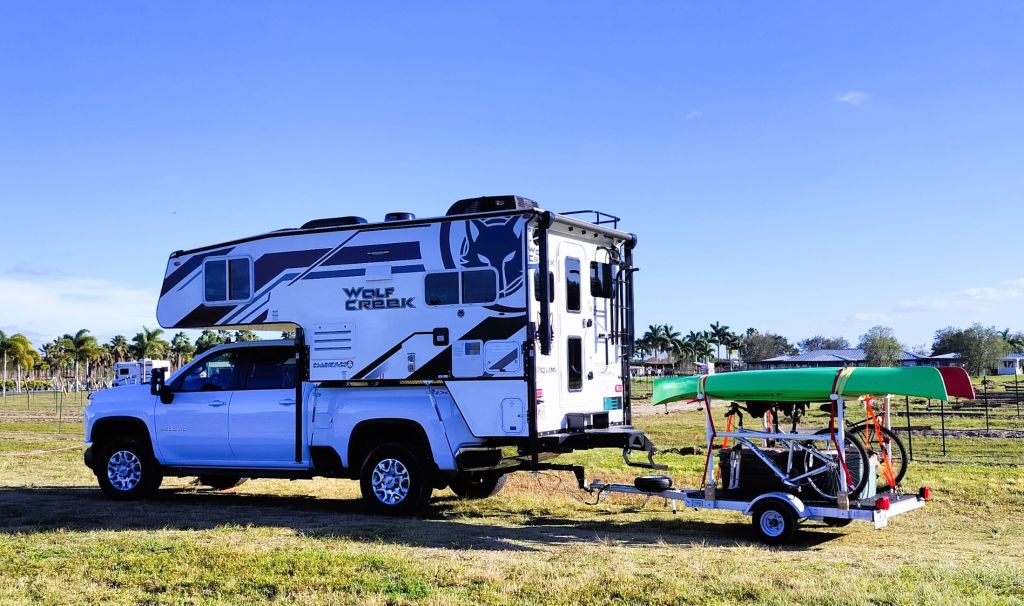
When we travel closer to home, Pat and I enjoy kayaking in addition to biking.  There’s no easy way to take kayaks with our current setup, so we purchased a small utility trailer and configured it to haul two kayaks, our bikes and assorted other camping gear.  Introducing Junior, Percy and Pap’s first cousin!    

Junior, our little utility trailer, joins Percy and Pap
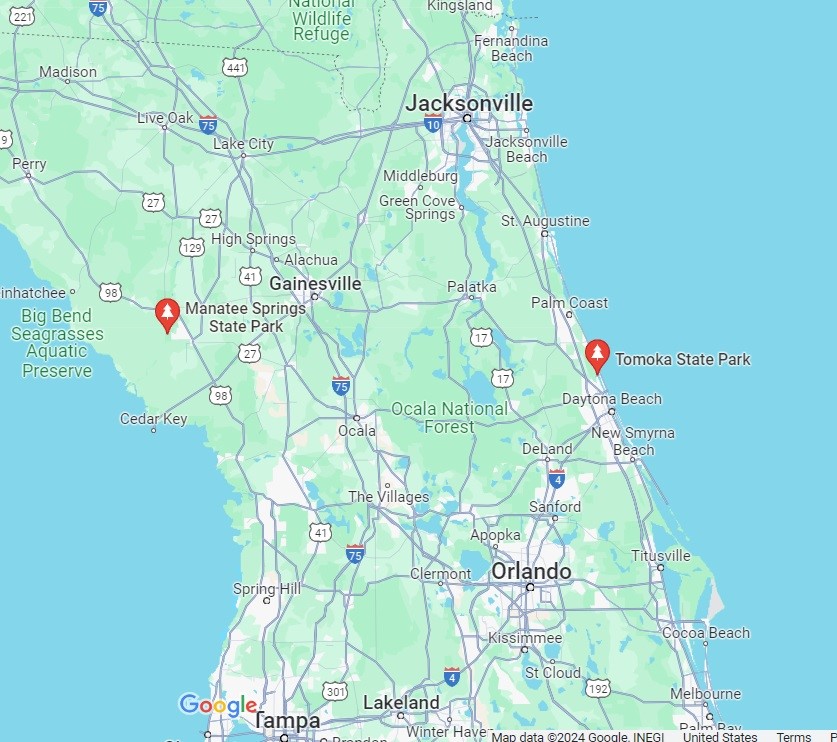
Our travels included Tomoka and Manatee Springs State Parks in Florida

Tomoka State Park

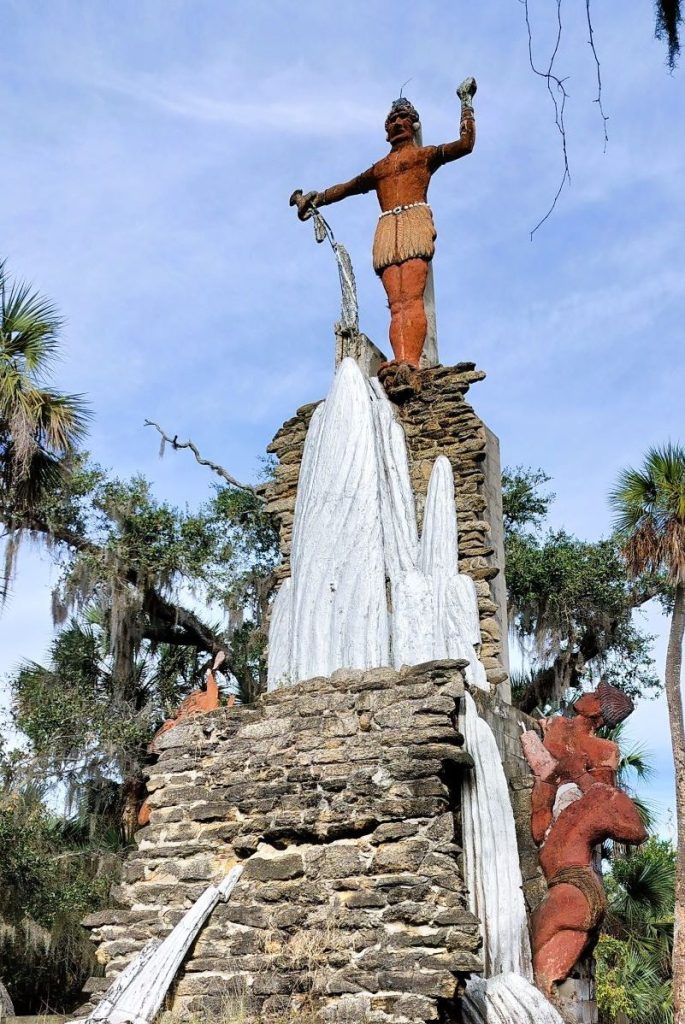
In January, we camped with longtime friends, John and Carol, at Tomoka State Park a few miles north of Daytona Beach.  Located on the Tomoka River, the park includes the site of an ancient Timucuan Indian village and a large statue of Timucuan Chief Tomokie.  The monument is a reminder that the area was populated by Native Americans for centuries before Europeans arrived.

Chief Tomokie statue in Tomoka State Park

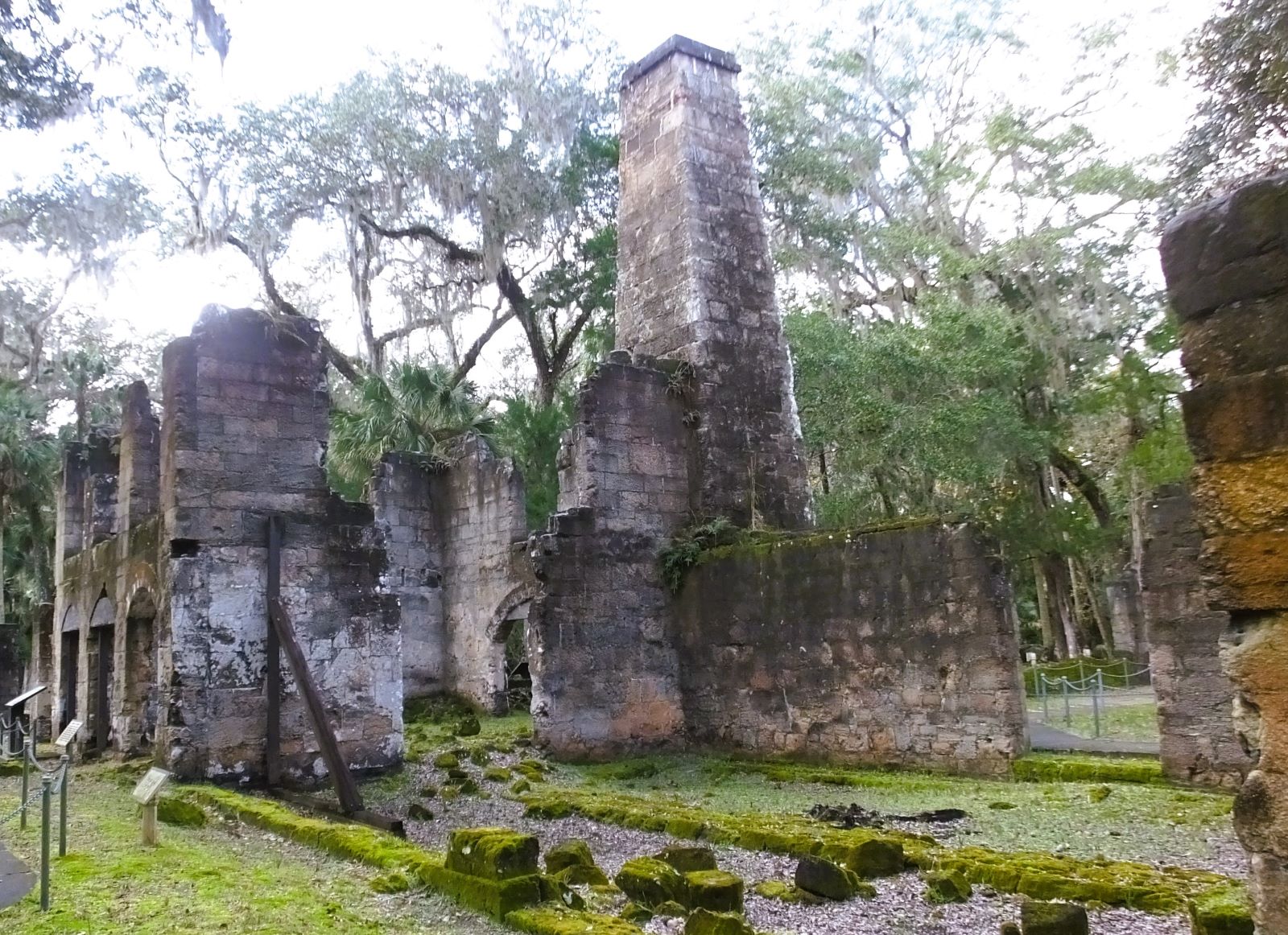
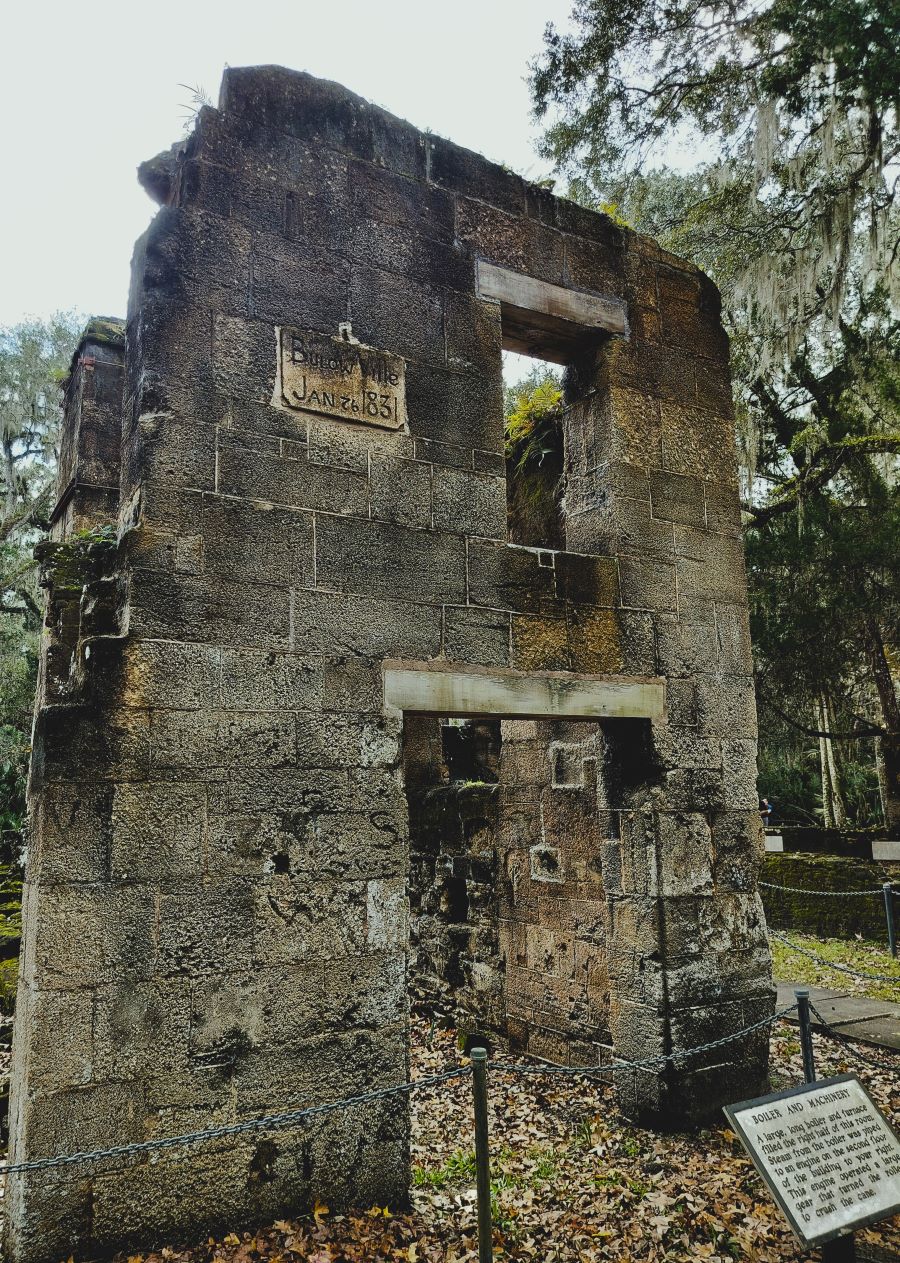
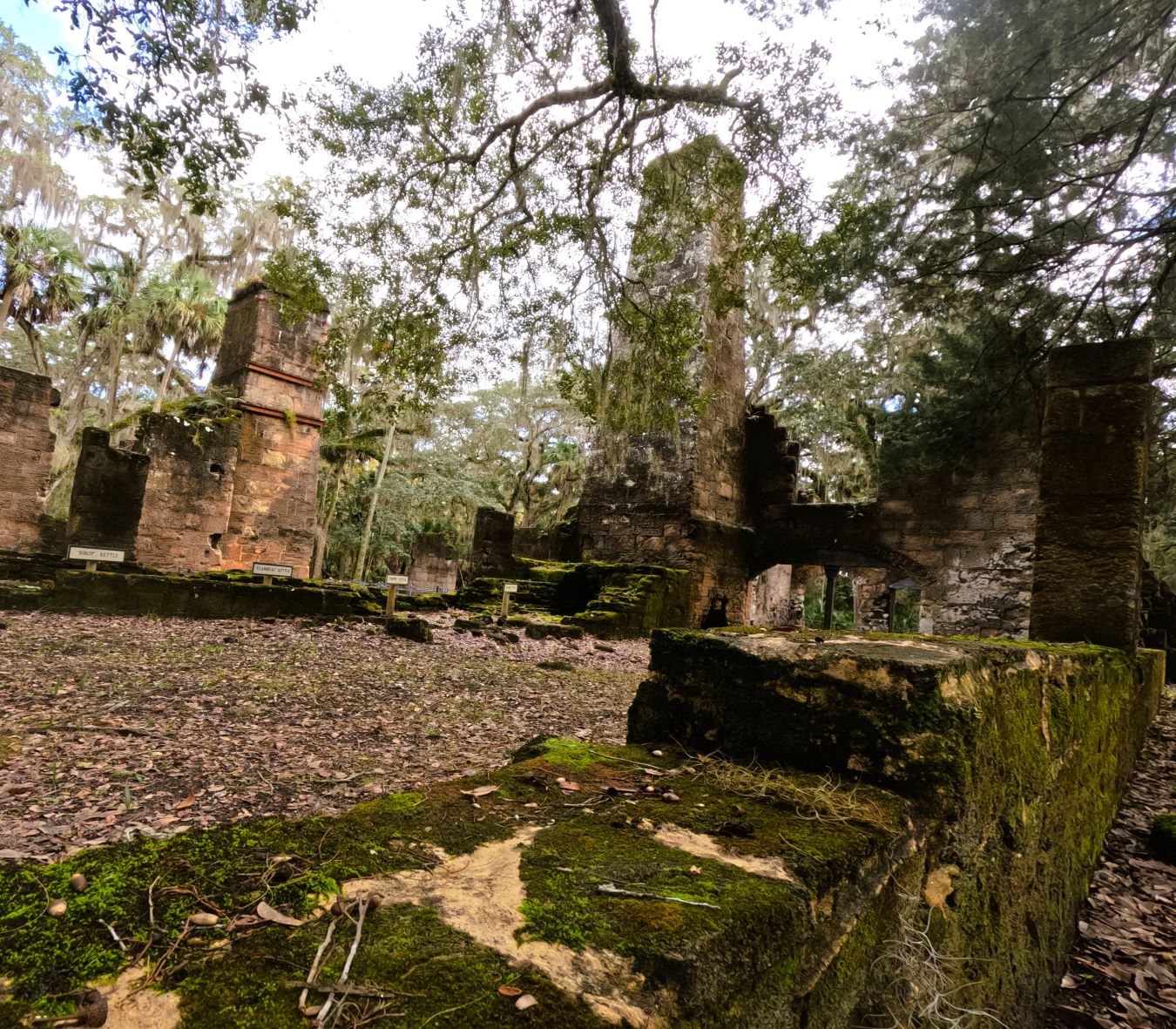
For several days we kayaked, biked and took several local side trips.  We toured nearby Bulow Plantation Ruins Historic State Park.  Developed in 1821, the plantation was once the largest plantation in East Florida where indigo, cotton, rice and sugarcane were cultivated.  The plantation was destroyed in the Seminole War of 1836, and, although many of the original plantation structures no longer exist, sizeable remnants of a large sugar mill can still be seen.  The plantation is an interesting part of Florida history.

Ruins of the sugar mill at Bulow Ruins Historic State Park

Aunt Catfish’s Cinnamon Bun

We stopped for lunch at Aunt Catfish’s on the River restaurant in Port Orange.  The menu offerings were what one would expect at a southern-style seafood restaurant. We learned they served homemade cinnamon buns and it was game on!  Although the buns were smaller than the ginormous buns we sampled on our 2023 Alaska Revisited journey, they were wonderfully sweet and cinnamony.  We had to have more than one to satisfy our bun craving!

Manatee Springs State Park

We left Tomoka and crossed the state, where we camped at Manatee Springs State Park. 

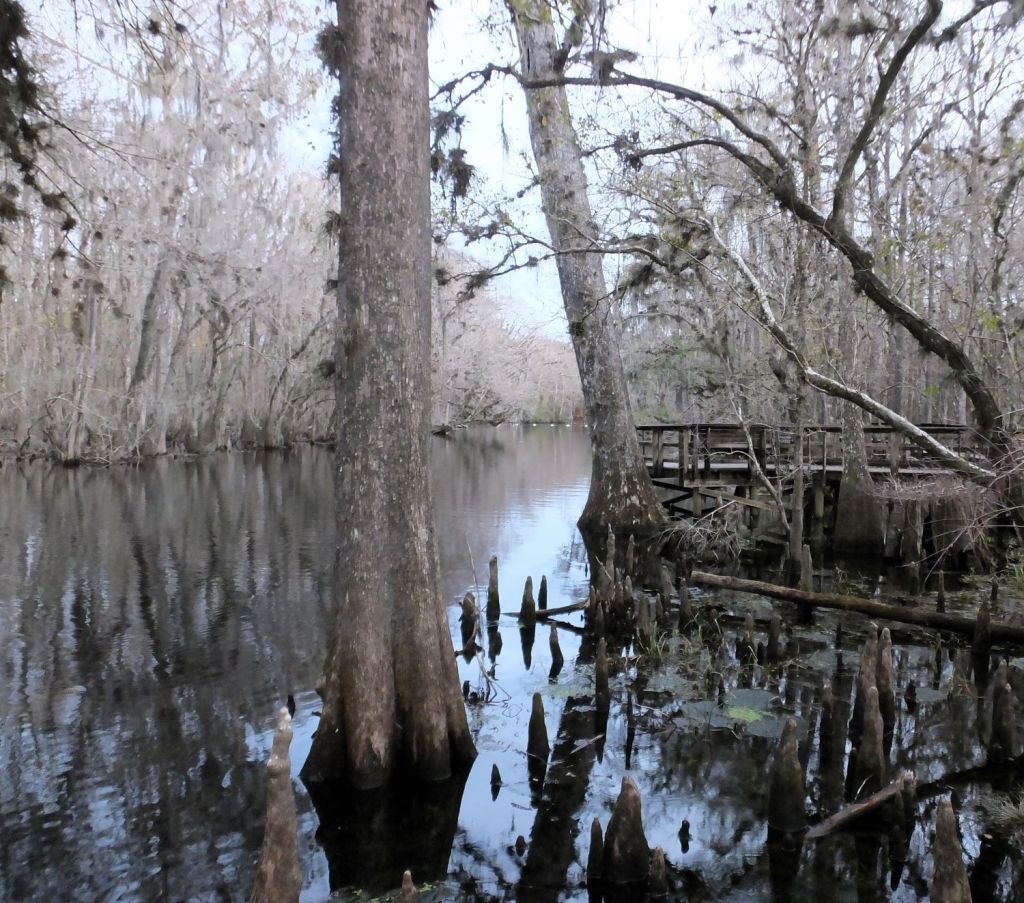
Manatee Springs is a first magnitude (e.g. large) spring that flows into the Suwannee River.  A boardwalk extends nearly a quarter mile from the spring through a swampy area with tall Spanish moss-covered cypress trees.  The boardwalk ends at a small pier on the Suwannee River. 

A quarter mile boardwalk runs from Manatee Springs to the Suwannee River

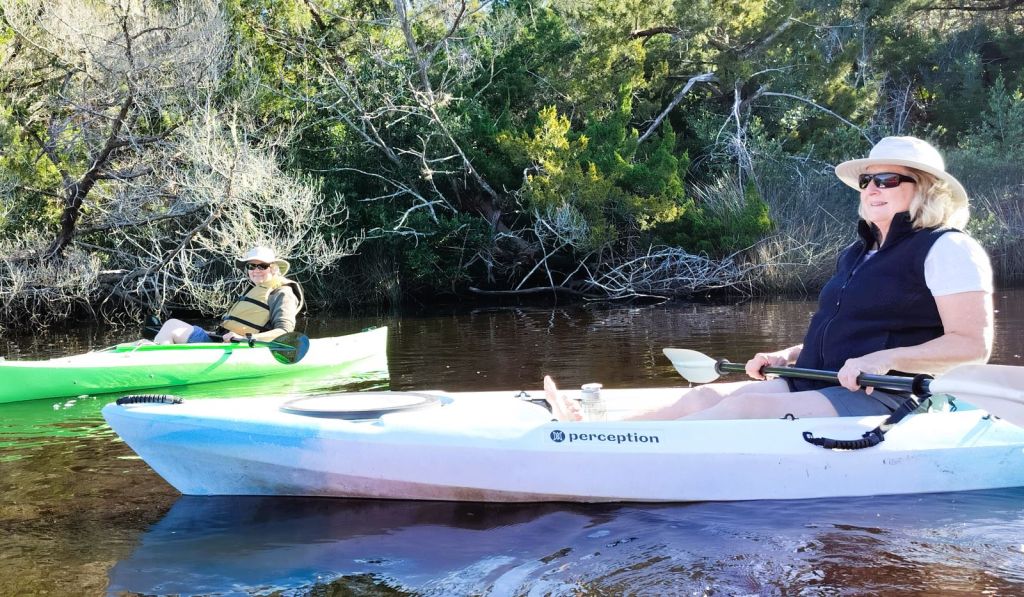
One morning we kayaked the run and along the Suwannee for several miles, where we enjoyed the sunny, cool and quiet surroundings.

Pat and Carol kayaking near Manatee Springs

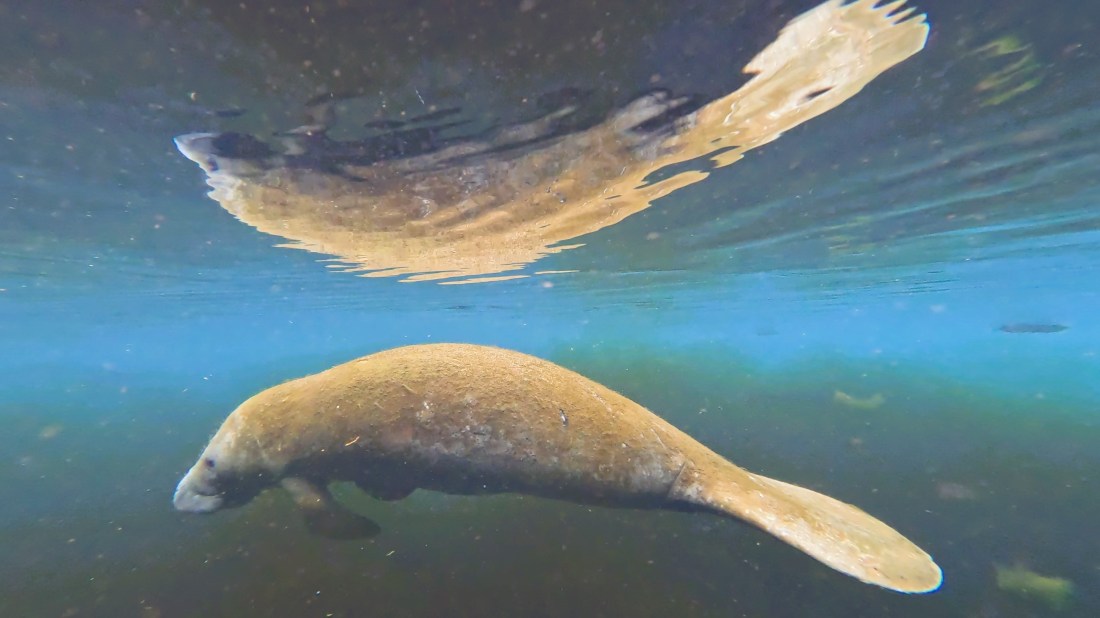
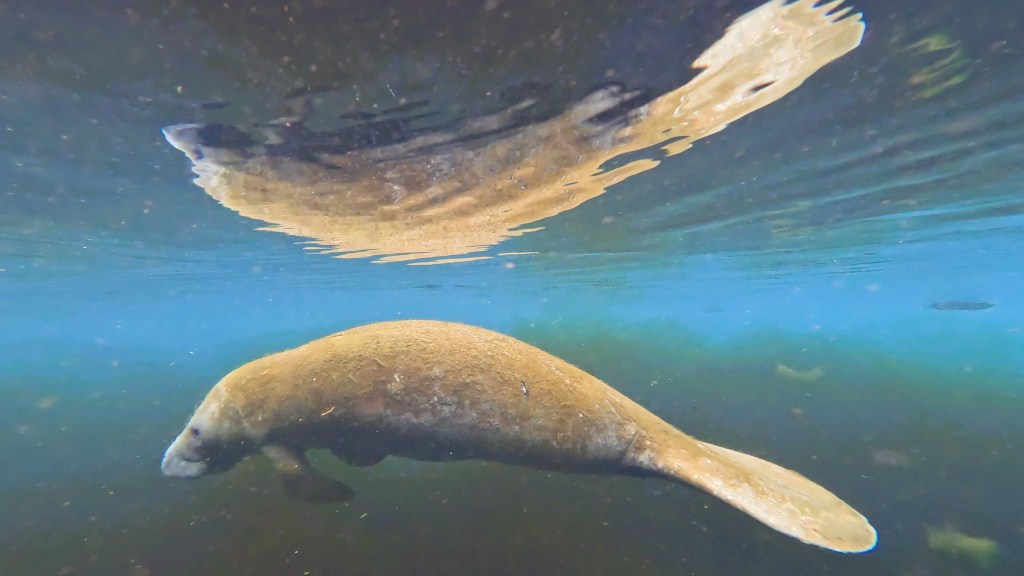
When we returned to the spring, we were delighted to find several manatees swimming near the boat launch area.  We paused for several minutes to watch the large potato-shaped animals swim about and surface from time to time.  I used my GoPro camera to capture some underwater photos of the spectacle.      

Manatee and reflection at Manatee Springs SP

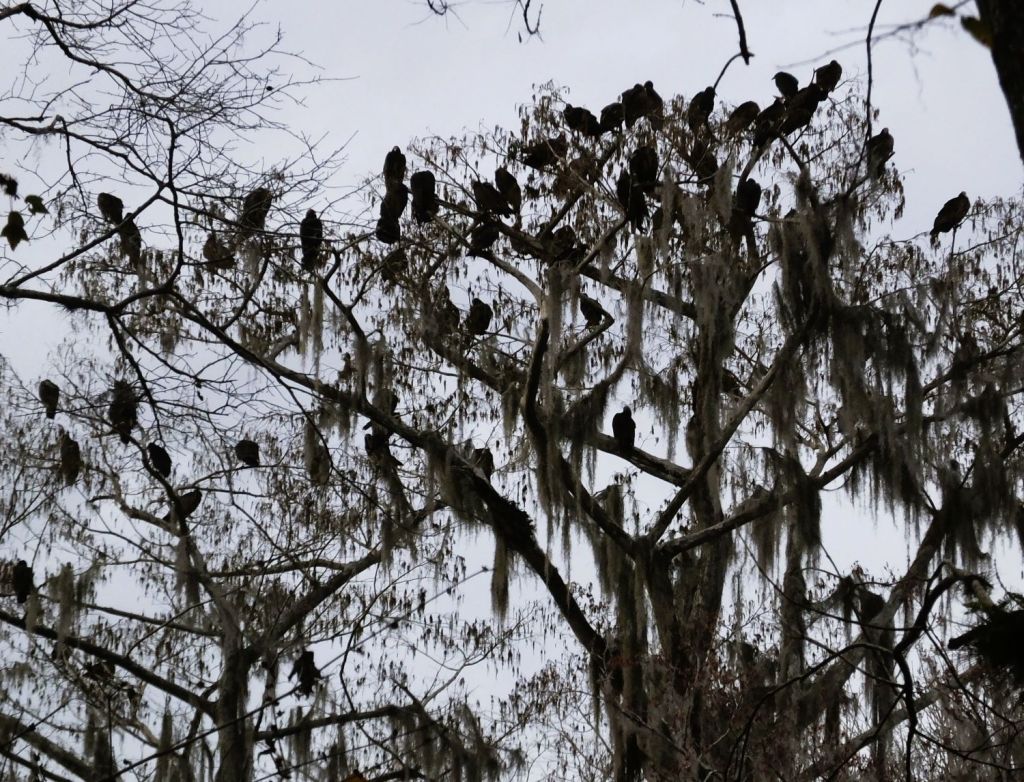
As we walked along the boardwalk one evening, we noticed the cypress trees surrounding the spring run were filled with hundreds of large, American black vultures. It was a rather Gothic spectacle in the evening twilight.

Hundreds of vultures watched us from cypress trees near the springs

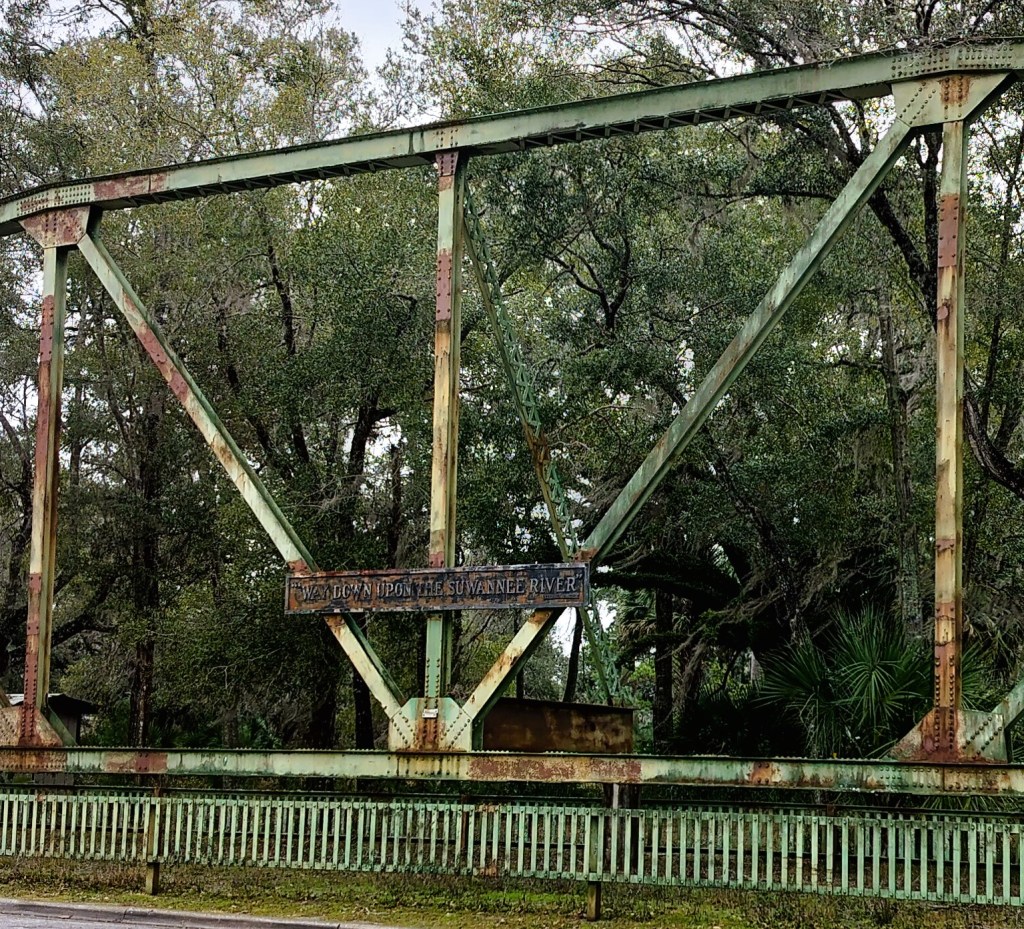
Our Manatee Springs stay included visits to Cedar Key, where we rode our bicycles around the small Gulf Coast community, and Fanning Springs, where we admired a remnant of an old bridge that crossed the Suwannee River inscribed with the title of Stephen Foster’s memorable song, “Way Down Upon the Suwannee River!”

One of four spans from the bridge that crossed the Suwannee River at Fanning Springs has been preserved. The bridge was built in 1934.

Henry Turns 6

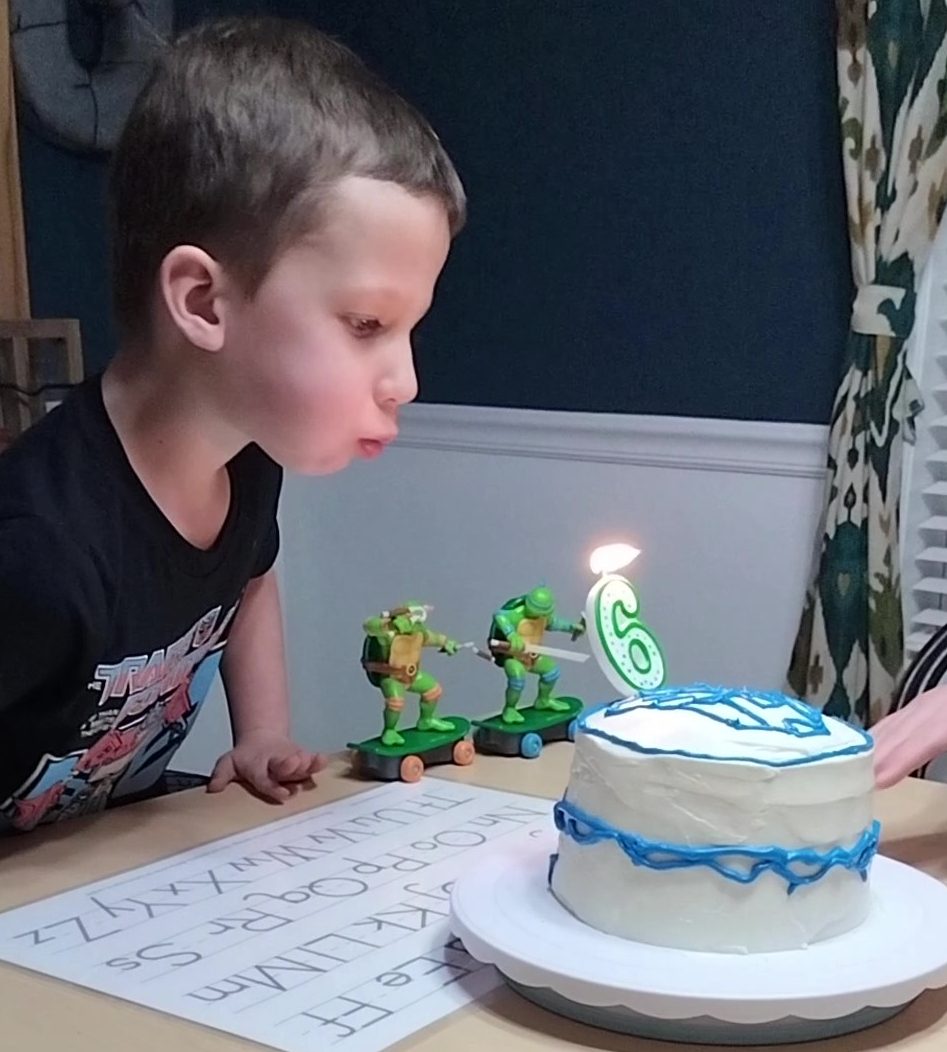
Our trip ended near Macon, GA with a sixth birthday celebration for our grandson, Henry.

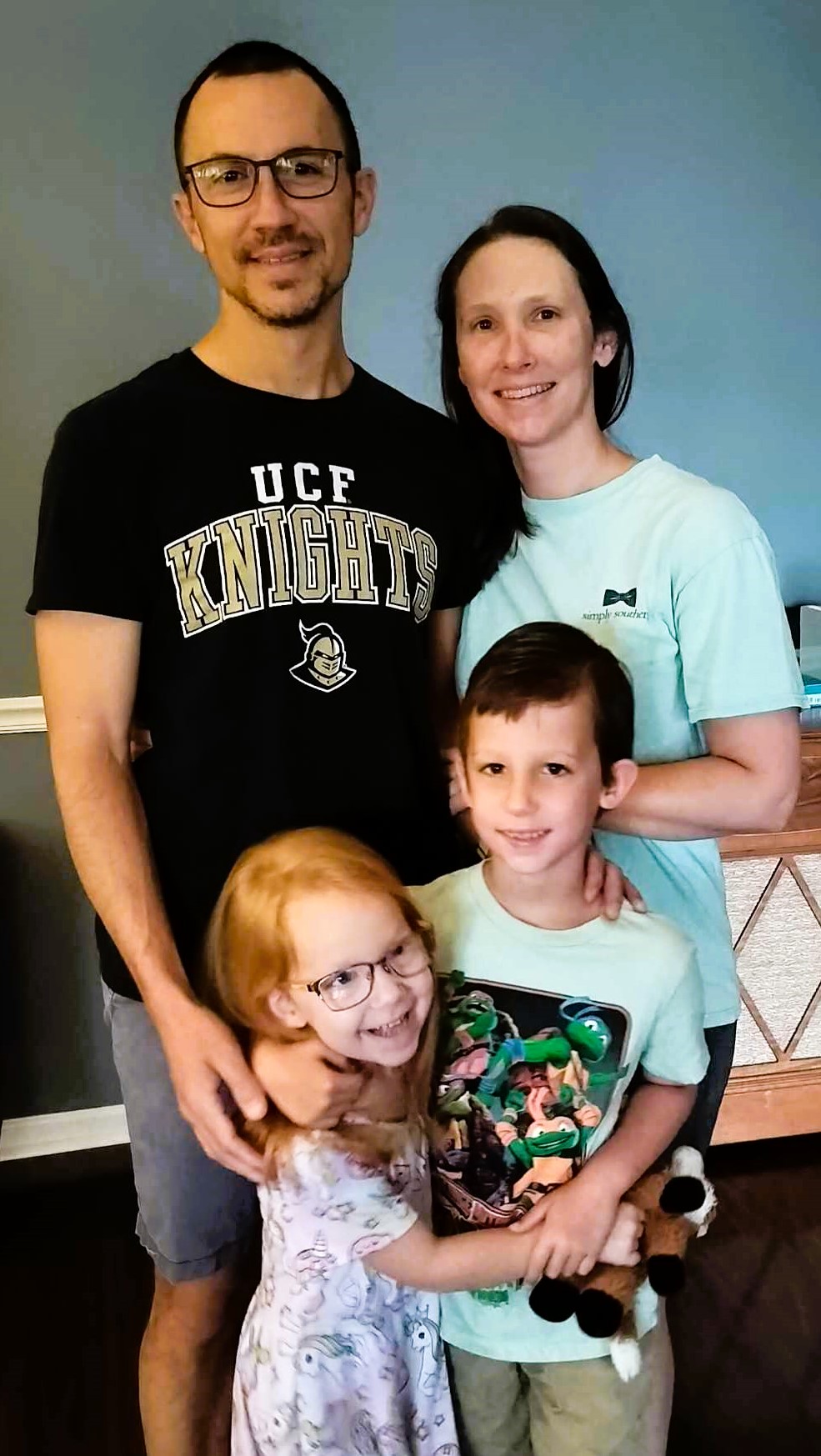
Son-in-law Josh, daughter Liz, and grandkids, Emilia and Henry; Henry celebrates his birthday

Next Week

Catching Up (part 2): Florida Keys and Everglades National Park

2023 Alaska Revisited: Series Finale

(2023 Alaska Revisited Ep 30)

We’ve come to the end of our 2023 Alaska Revisited blog series.  It was a blessing to have you follow us for over six months and 30 episodes, and your encouraging comments were really appreciated!

This final episode provides some stats and interesting details, along with related photos. 

In addition, Pat and I answer various questions about the trip (favorite campground, best hike and so forth) – from when we left home thru Vancouver, BC, and then north thru Canada and Alaska until we returned home.   

Finally, we reveal our favorite cinnamon bun of the trip!

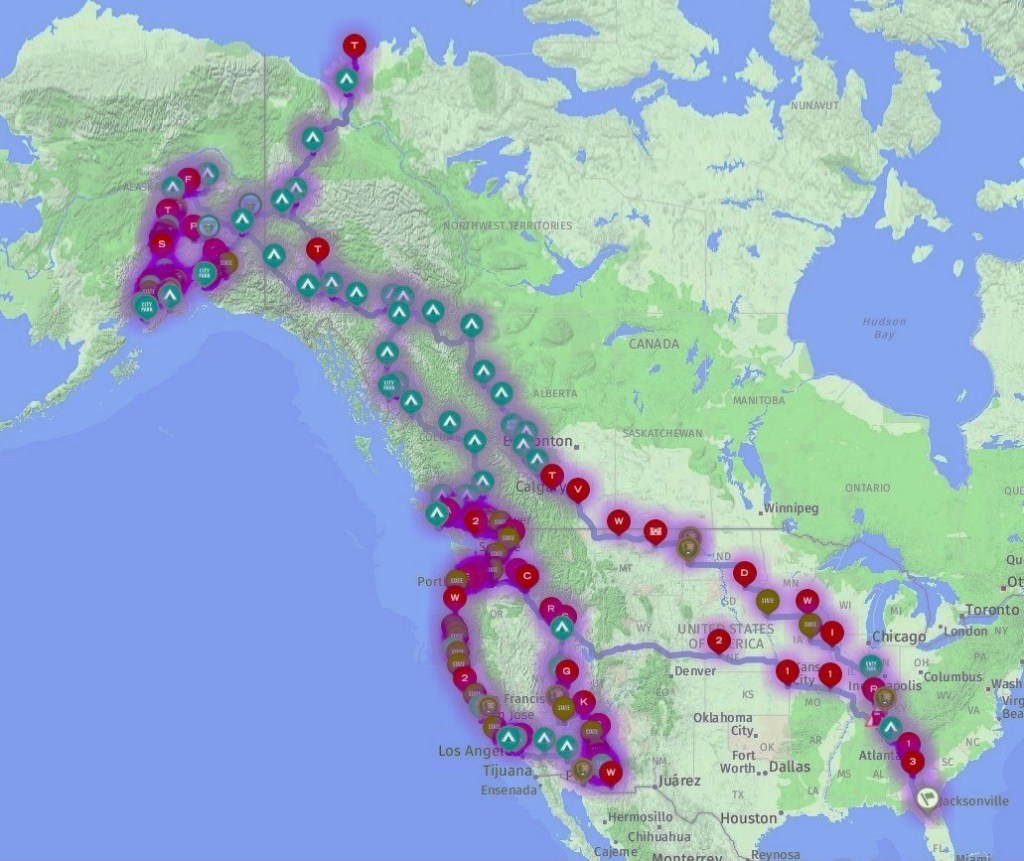
Route of 2023 Alaska Revisited trip

Part 1 – By The Numbers

190 days – total length of trip.  185 days were camping
137 – places we camped. The longest single stay was four days at Whitehorse, Yukon.
$21.93 – average cost per night. The most paid was $65 at Rincon Beach, California.
37 – free nights at pull offs, moochdocking, Walmart and Cracker Barrel.
$303/$413 – cost of laundry and propane.

Q&A – Home thru Vancouver – March 25 thru June 6

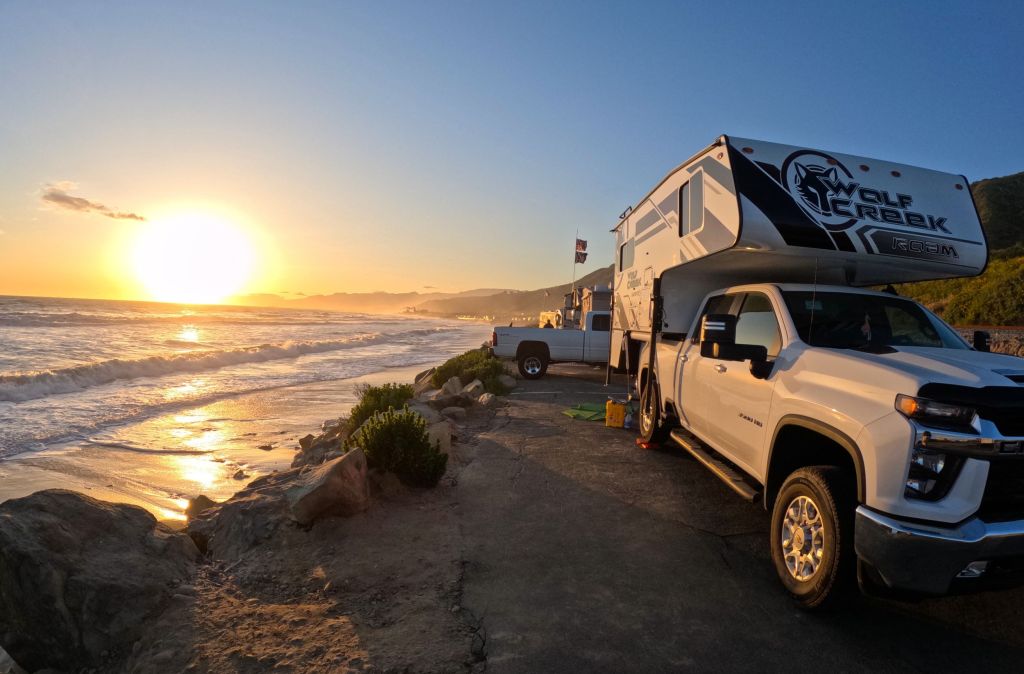
Rincon Beach, CA

Favorite campground

(Pat) Rincon Parkway Campground, CA – epic camping right on the Pacific.  Magnificent sunset!
(Ed) Organ Pipe Cactus NP – remote, quiet and many types of beautiful cacti

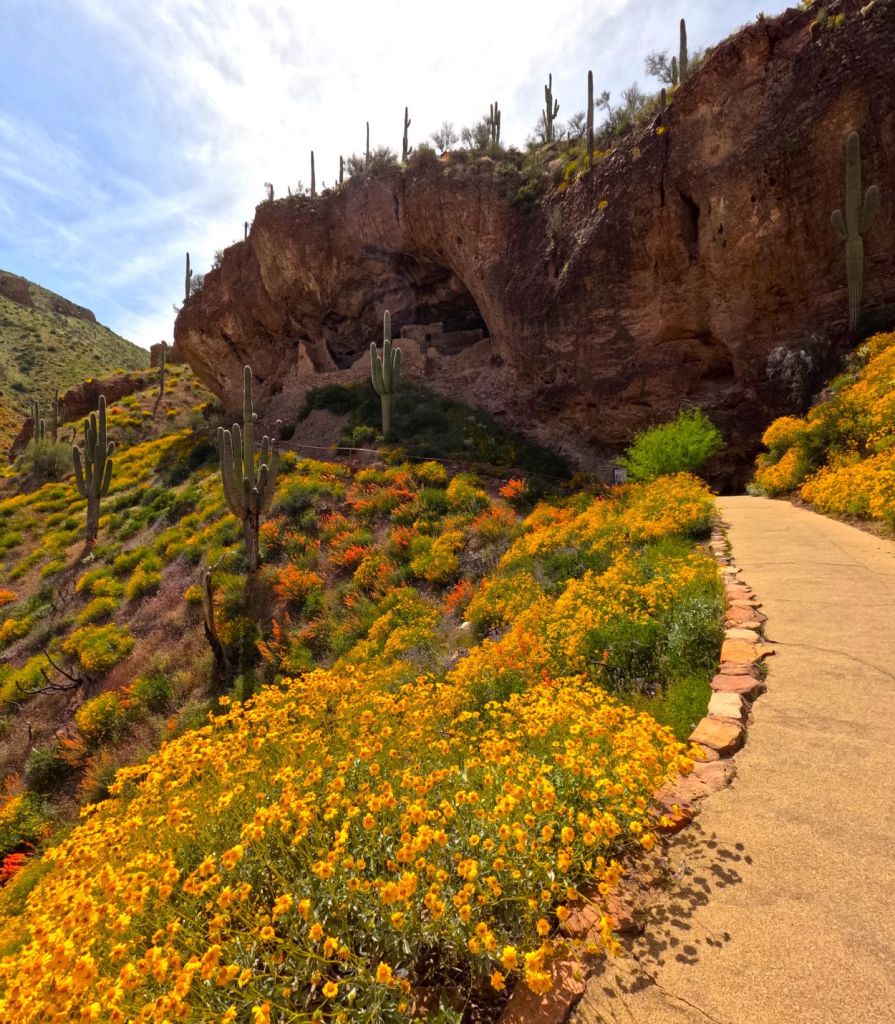
Tonto NM and desert super bloom

Favorite place visited

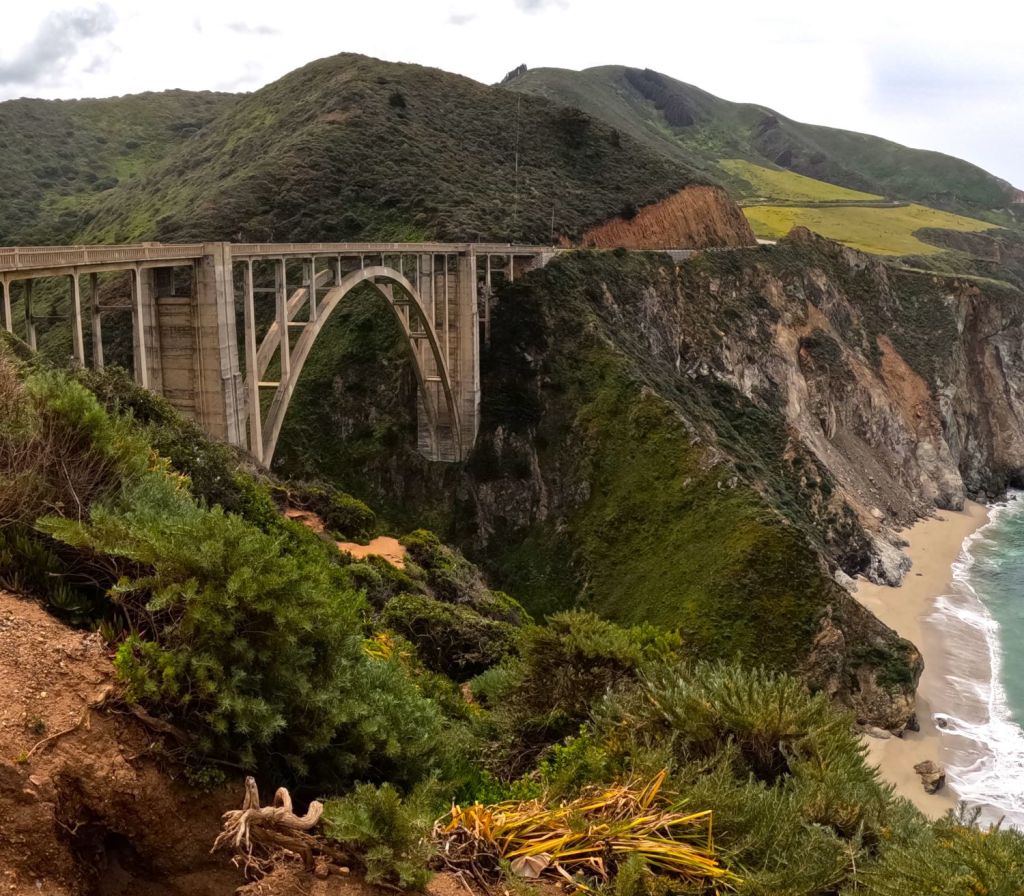
(P) Driving the Pacific Coast Highway:  coastline, classic bridges and elephant seals.  Enjoyed the whole thing!
(E) Tonto National Monument desert super bloom – surprise detour with steep uphill hike to cliff dwelling among yellow, gold, white and blue desert flowers

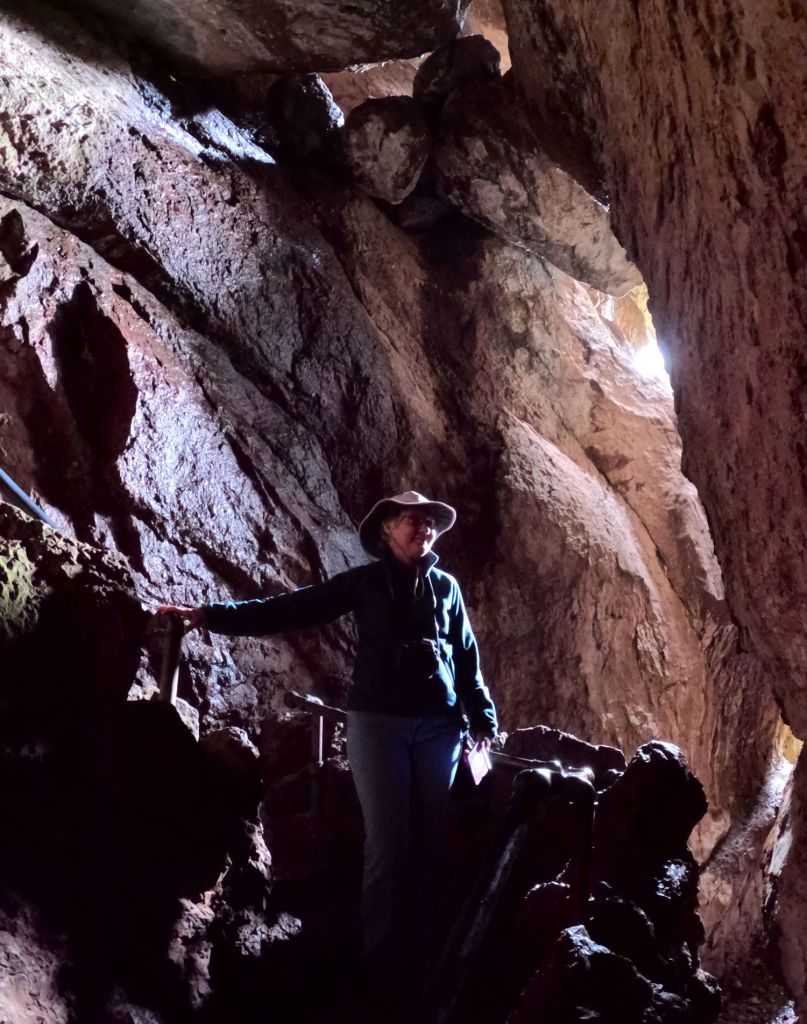
Cave hiking in Pinnacles NP

Best hike

(P) Tonto National Monument desert super bloom – see above
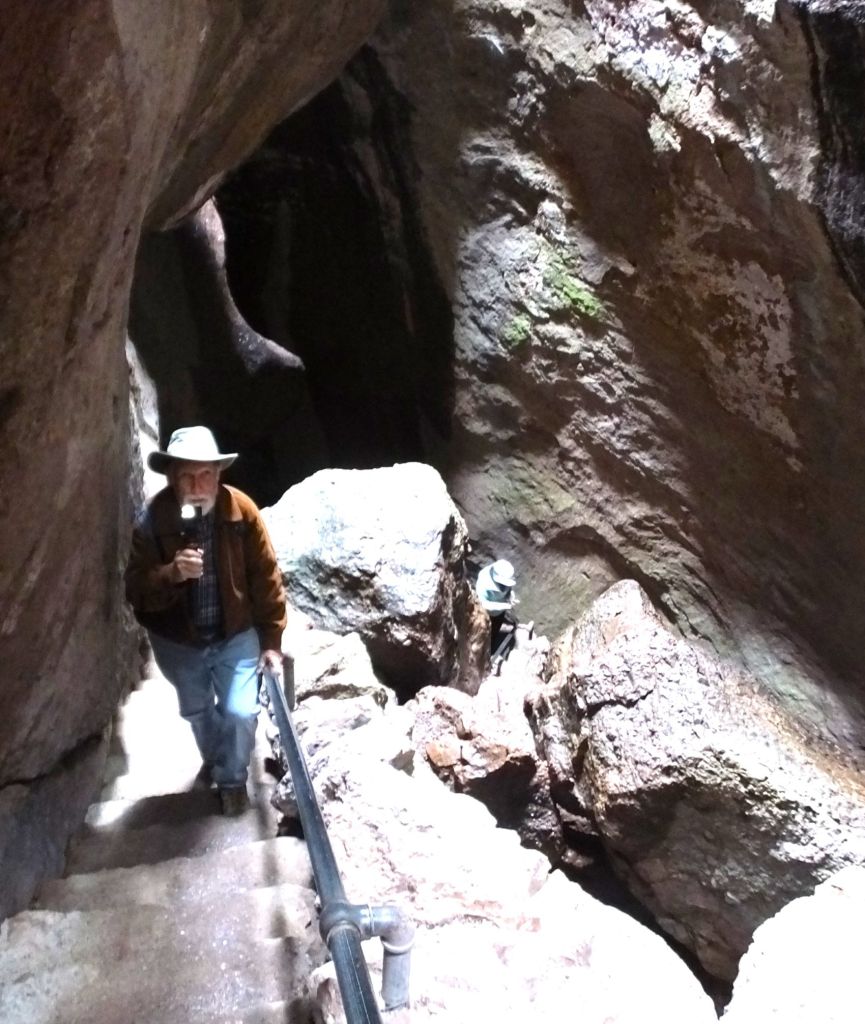
(E) Lower Bear Gulch Cave Trail, Pinnacles NP, CA – hike along creek in deep crevasse and up rocky stairs to a small reservoir.  We thought we saw a California condor in the nearby peaks.

Fish and chips for two in Tofino

Favorite Meal

(P) Fresh Harvest Cafe, Florence. OR – Mother’s Day breakfast, a lot of food that we really enjoyed.
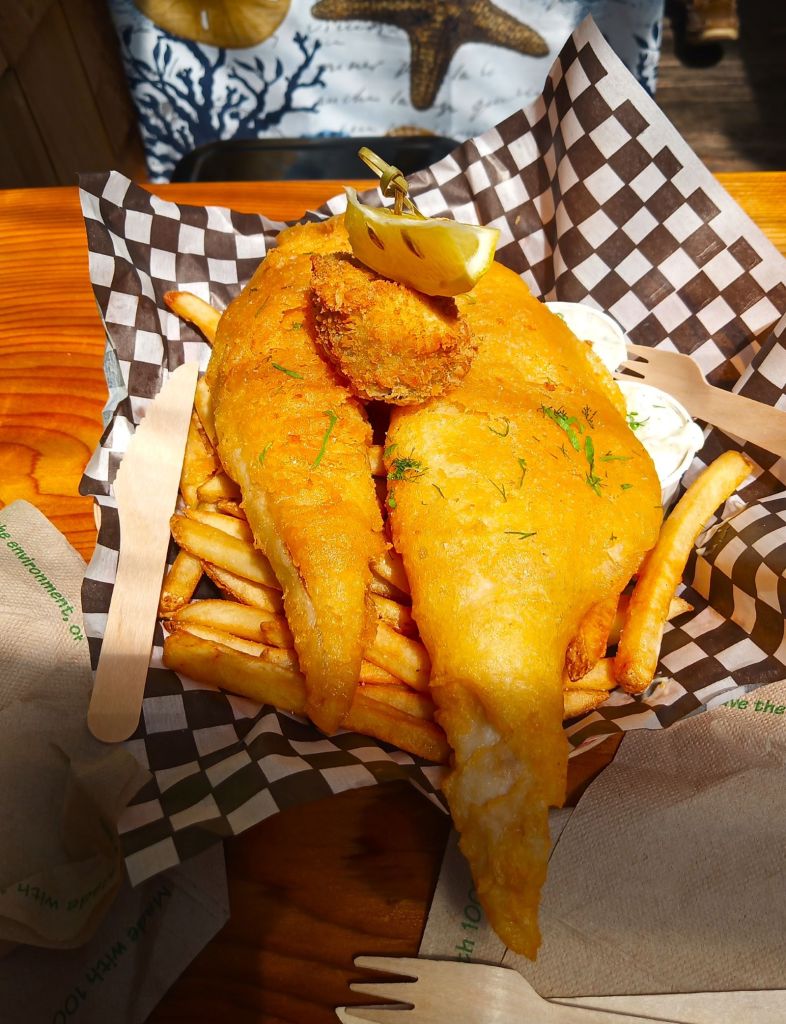
(E) Big Daddy’s Fish Fry, Tofino, BC – fish and chips in a cozy little restaurant on Vancouver Island, the two-piece order was enough for us both!

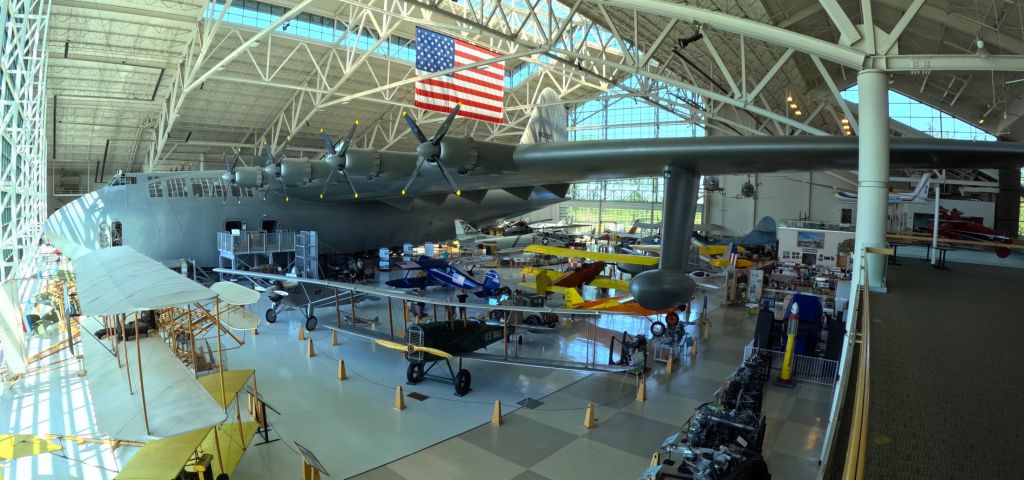
The Spruce Goose spans the entire museum building

Favorite Attraction

(P) Evergreen Aviation and Space Museum, McMinnville, OR – in addition to lots of interesting planes and space displays, we got to go inside the Spruce Goose and sit in Howard Hughes’ pilot seat.
(E) Redwoods – we had a ‘wow’ reaction every time we walked among the big trees.

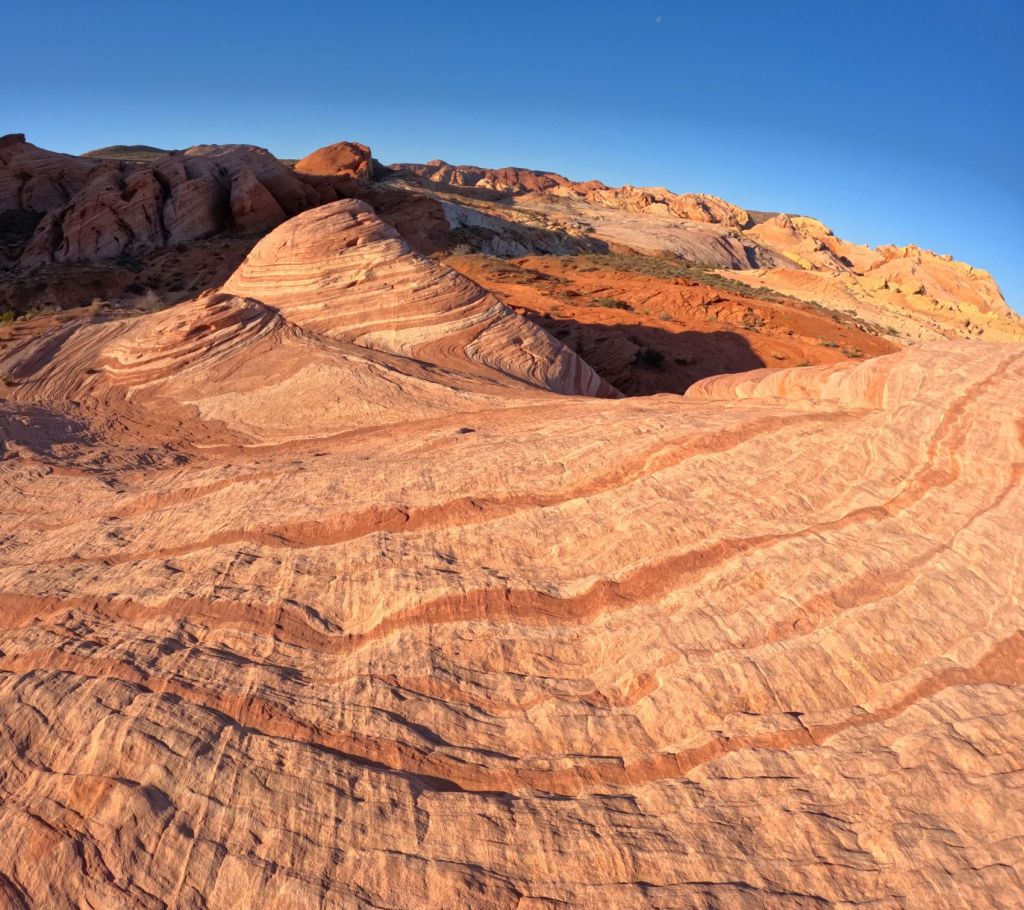
Sandstone waves in Valley of Fire SP

Favorite National or State/Provincial Park

(P) Humboldt Redwood State Park, CA – we camped in a Redwood grove.
(E) Valley of Fire SP near Las Vegas, NV – desert camping and hiking amid weather-etched sandstone.  We also watched big horn sheep butt horns just a few yards from our campsite.

Bixby Bridge on Pacific Coast Highway near Big Sur

Most Amazing View

(P) Super bloom of desert flowers in Arizona – beyond Tonto NM, desert blooms cast distant hills in yellow and orange.
(E) Pacific Coast Highway near Big Sur – see Pat’s favorite place visited above.

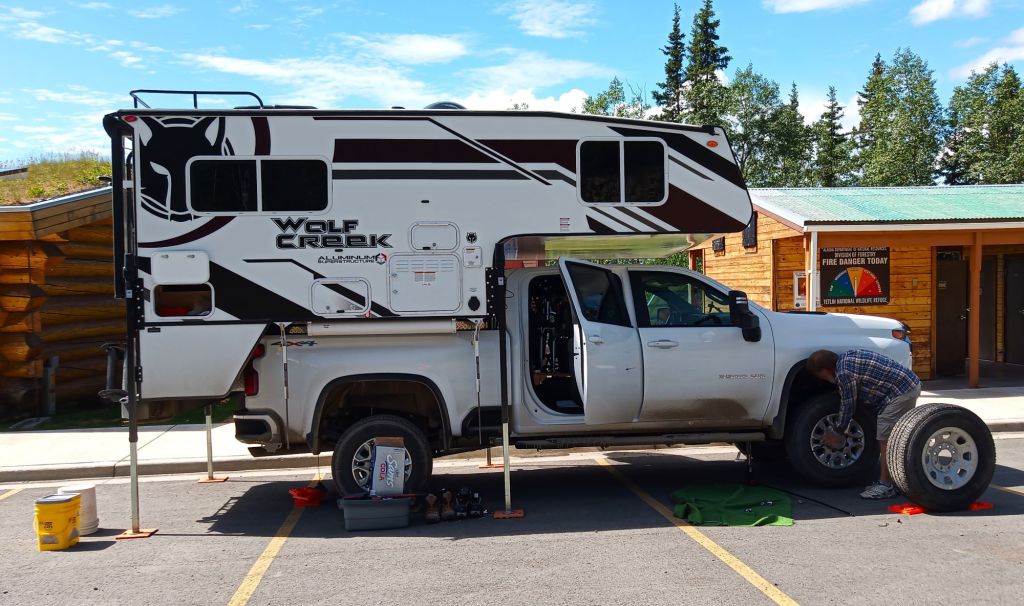
Tire swap at the Alaska border

Part 2 – By The Numbers

21785 – total miles driven
$8438 – total gas cost ($ 2.87/gal – lowest price at Murphy/Walmart in Warner Robins, GA, $6.31/gal – highest at Bob’s Welding, Inuvik NWT)
3 – Percy oil changes
2 – flat tires – at the Alaska border and on the Dempster Highway
8 – US/Canada Border Crossings
14 – ferry rides to Vancouver Island and across the Yukon, Mackenzie, and Peel Rivers, all in Canada

Q&A – North thru Canada and Alaska thru Home – June 7 thru October 1

Alaska Range view on the Denali Highway

Favorite place camped 

(P) Boondocking near Arctic Circle on Dempster Highway – remote pullout where we enjoyed fall colors of the tundra and picked blueberries
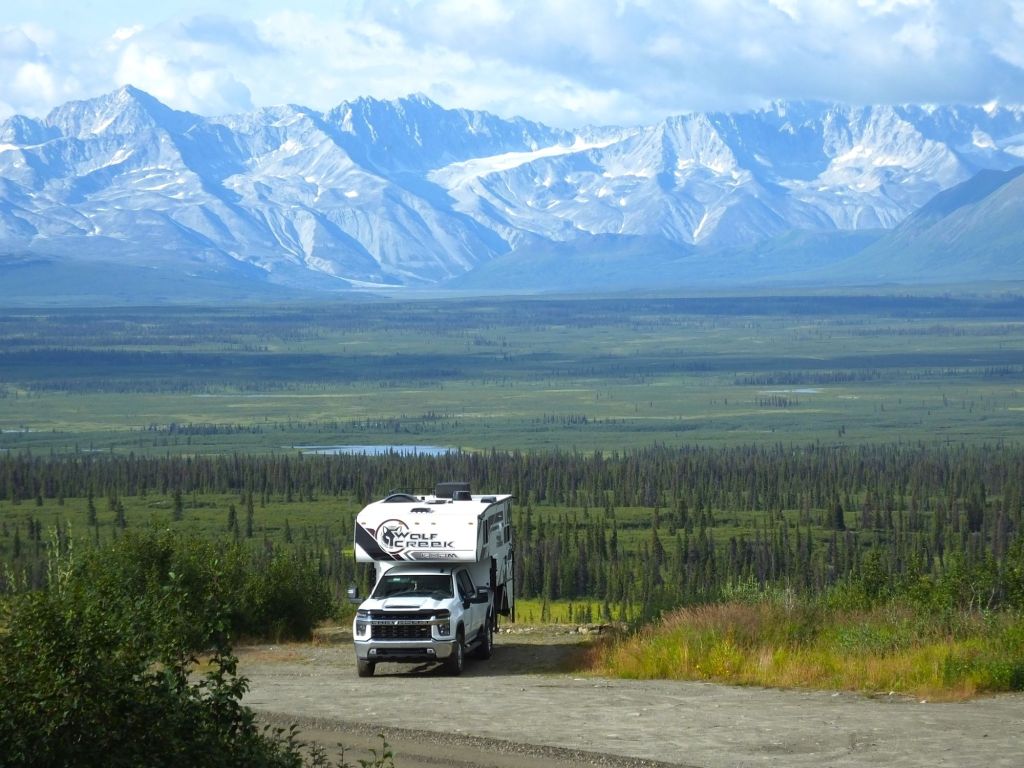
(E) Milepost 96 on the Denali Highway – we hiked under a rainbow with views of Alaska Range in the distance.   We were all alone!

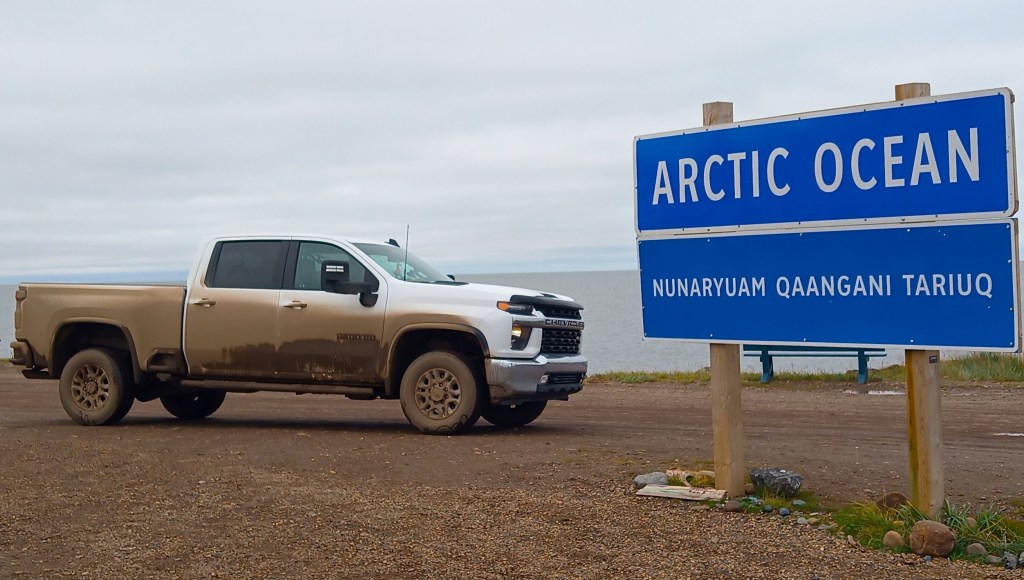
Percy poses at the Arctic Ocean, nearly 5000 miles from home

Favorite place visited

(P/E) Dempster Highway and the Arctic Ocean:  1000 miles of dirt road and a once in a lifetime experience.

Fireweed and distant mountains on the Denali Park Road

Best hike

(P/E) Denali NP near Teklanika Campground – the park bus dropped us off at Sable Ridge and we walked several miles along the road.  We enjoyed phenomenal mountain views and dodged a road-hogging caribou!

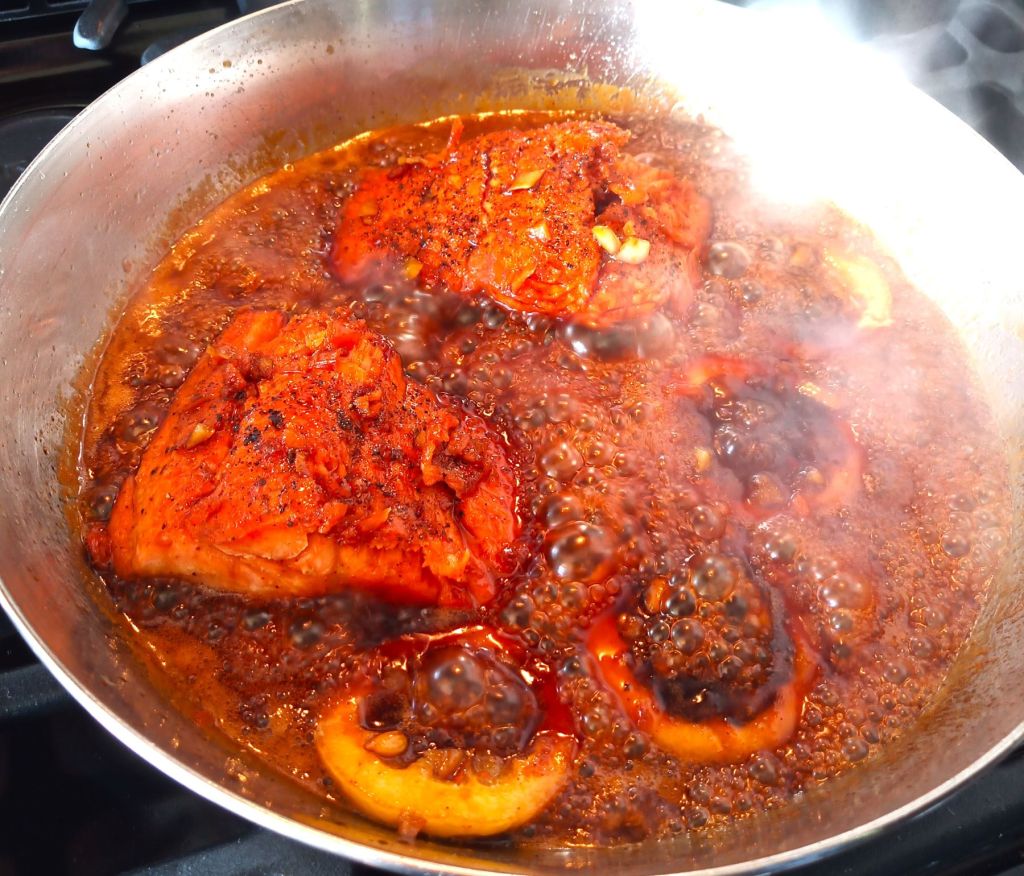
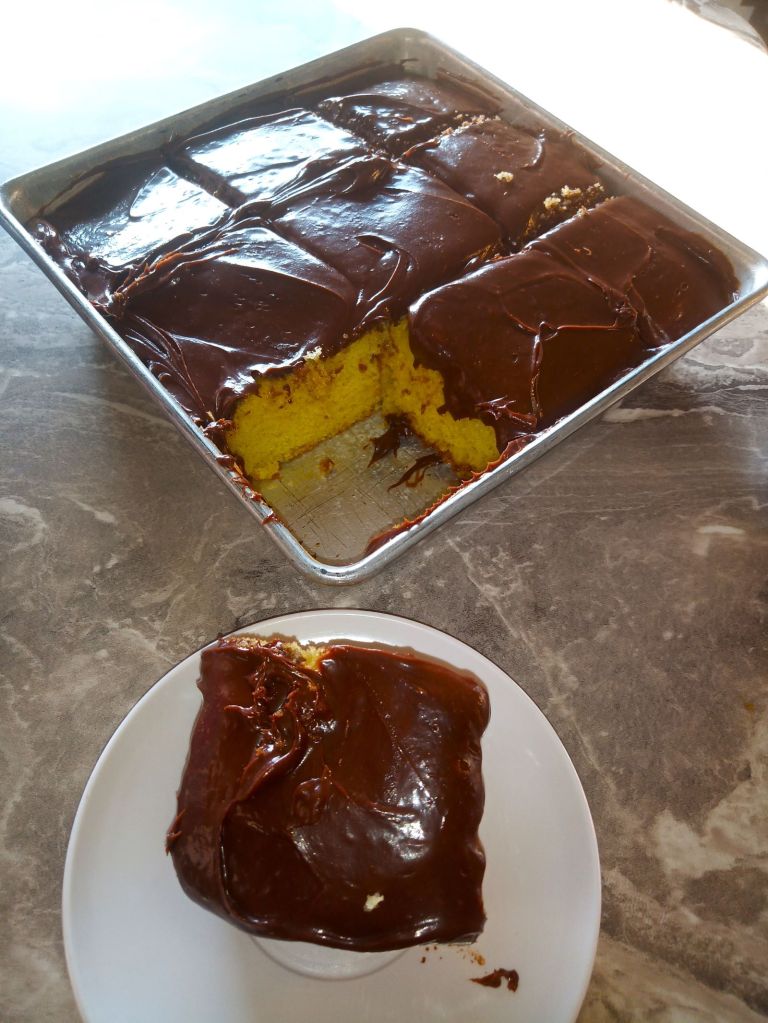
Fresh salmon and chocolate-frosted cake – a delicious way to celebrate Ed’s 66th birthday!

Favorite Meal

(P) Burger Bus in Kenai – fish/chips and a cheeseburger combo on a cold and rainy day. It brought back fond memories of Burger Bus meals on our 2018 Alaska trip.

(E)  Pat’s dinner for my 66th birthday:  fresh salmon caught in an adjacent lagoon and a homemade cake.  Wow!

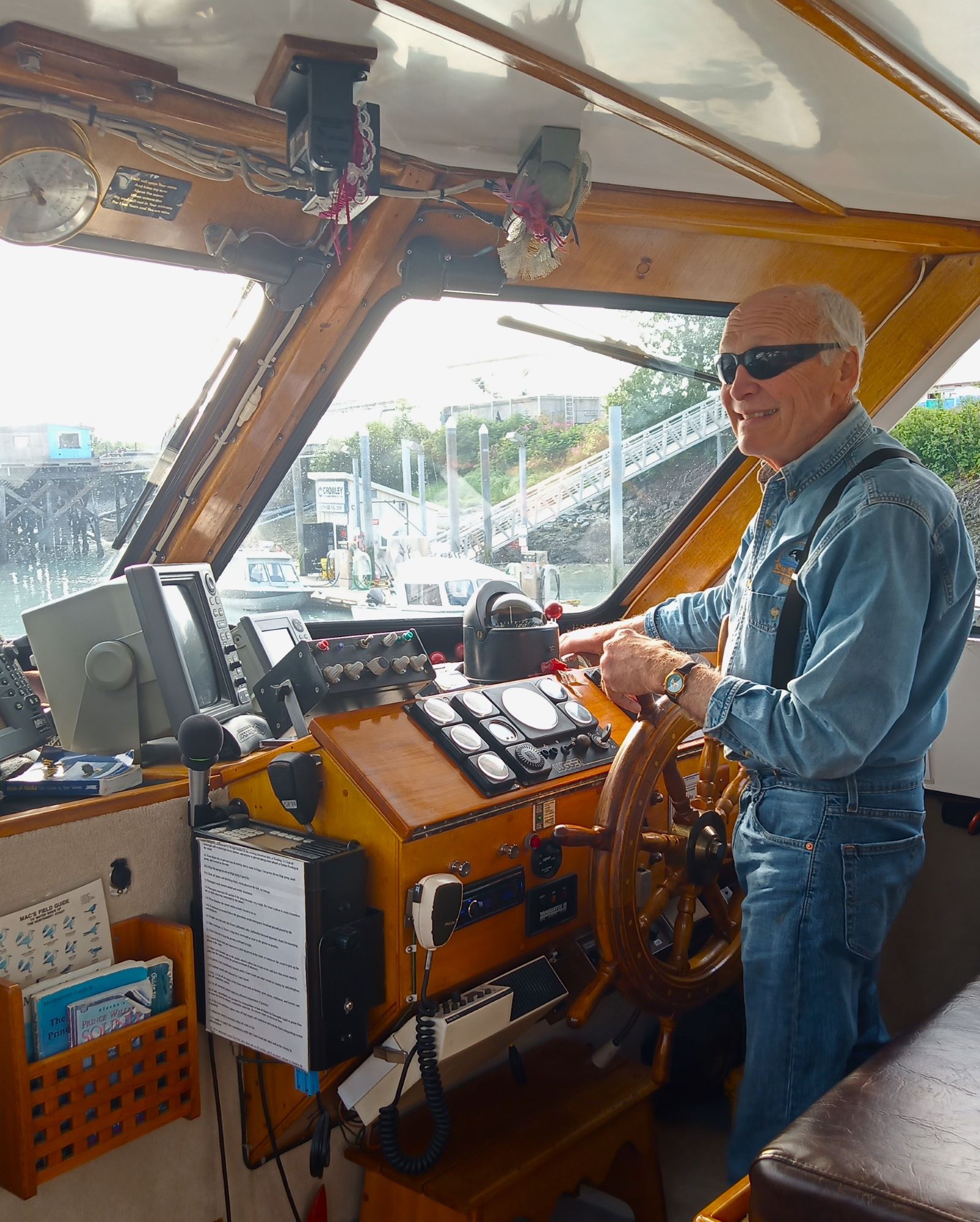
Lu-lu Belle approaching Columbia Glacier, expertly piloted by Captain Fred

Favorite Attraction

(P/E) Lu-lu Belle glaciers and wildlife cruise near Valdez – ten-hour cruise to see seals, puffins, whales, goats, and the Columbia Glacier.  It was amazing!

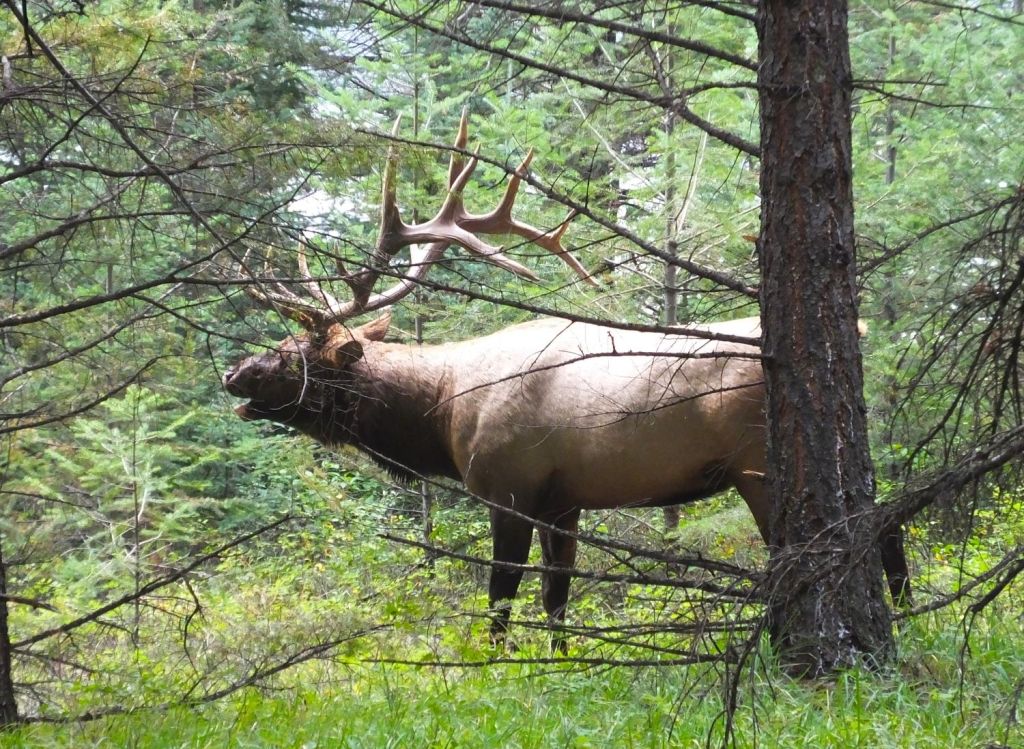
Bugling elk in Jasper NP

Favorite National or State/Provincial Park

(P) Denali NP – four days of great views, hikes, and camping.
(E) Jasper/Banff NP – bugling elk and spectacular Rocky Mountain views

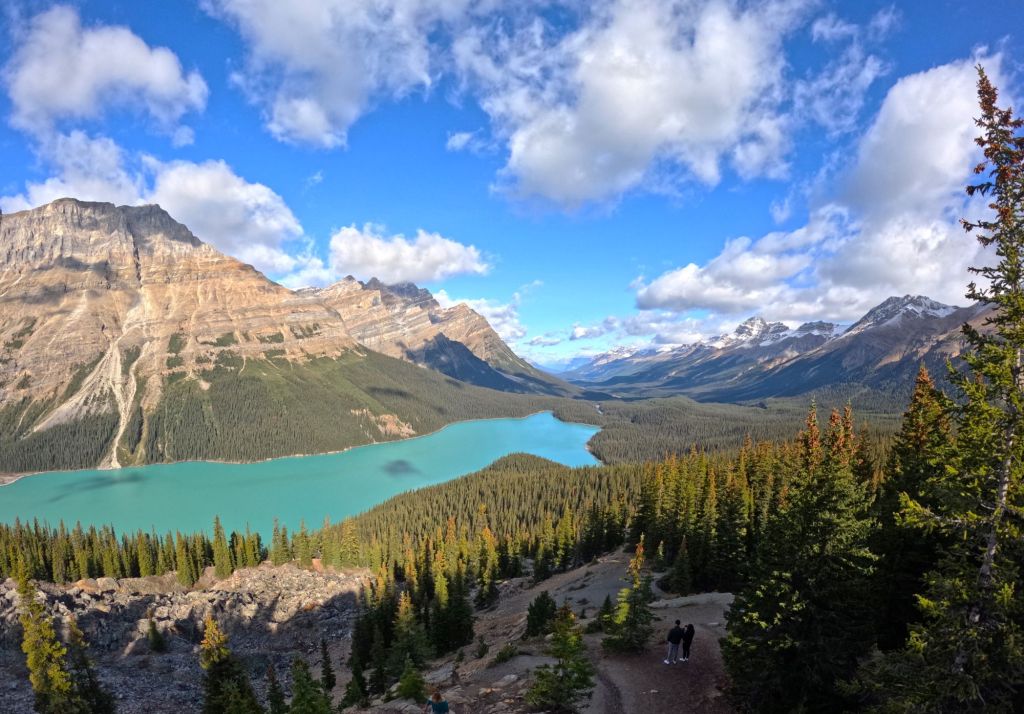
Peyto Lake view in Banff NP

Most Amazing View

(P) Peyto Glacier and Lake Overlook, Banff NP – we were rewarded after a VERY steep hike to the overlook.  The blue color of the lake was beautiful.
(E) Denali Airflight – we flew through rugged mountains near Denali and landed on a glacier!

Checking the daily schedule….

Part 3 – By The Numbers

18 – moose, all mamas and babies, no Bullwinkles.
30 – bears, 14 grizzly and 16 black bears.
Billions and billions – hungry mosquitoes.
3 and 2 – Star Trek-themed attractions and Gorns.
100,002+ – signs in the Watson Lake signpost forest, including two of ours.
320 feet, 11 inches – wingspan of the Spruce Goose H-4 Hercules
20310 feet – elevation of the Great One, Denali
22 hours, 6 mins – length of day on June 27 at Chena Hot Springs near Fairbanks
7/15/23 10:48 pm – 7.2 magnitude earthquake for which we received scary cell phone evacuation alerts. 
20 – frozen toes that dipped into the Arctic Ocean at Tuktoyaktuk, NWT.
13 – Cinnamon buns eaten (countless calories) (doesn’t include cinnamon bun-flavored cookies and popcorn).

Best Cinnamon Bun

And now, the big reveal you have been waiting for. 

It wasn’t an easy choice, but we agreed our trip’s BEST cinnamon bun was at Braeburn Lodge, an unostentatious restaurant an hour north of Whitehorse, Yukon.

Best bun from Braeburn

We split a huge, pillowy, cinnamon, deliciously-iced bun – bun perfection by any measure!

Looking Ahead to 2024

In the new year we will explore new RabbiTRAILs at a couple north Florida state parks in January and then camp in the Florida Keys in February. We’ll have other travel plans to announce as the year unfolds.

See you in 2024. Have a blessed Christmas and Happy New Year!

Badland Raves and Mammoth Cave

(2023 Alaska Revisited Ep 29)

Our trip home included visits to two national parks.

Theodore Roosevelt National Park

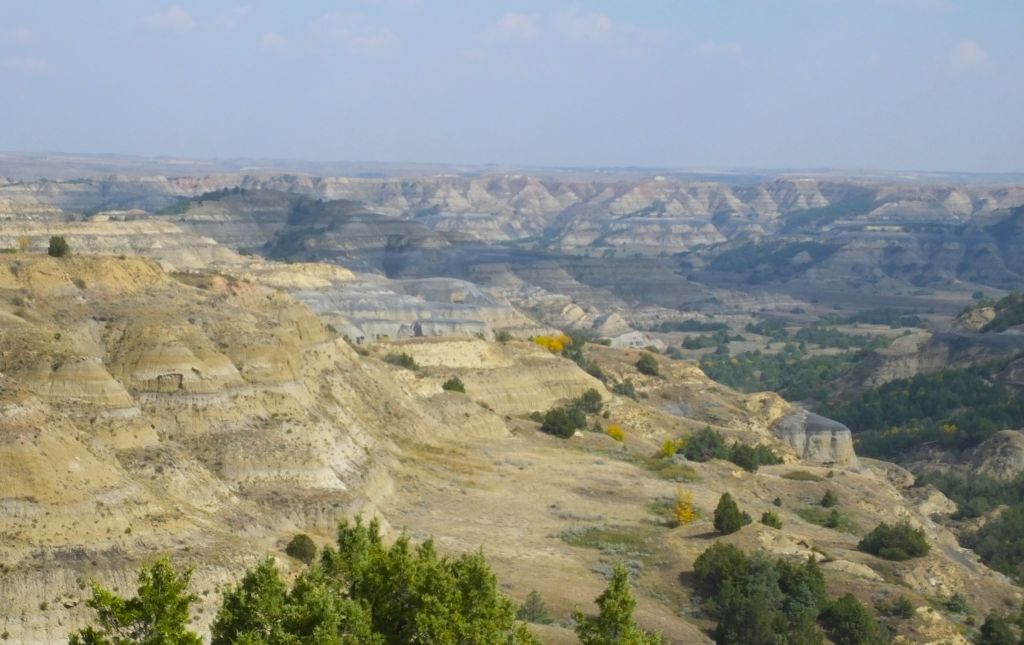
After the death of his wife and mother on Valentine’s Day 1884, Teddy Roosevelt sought solitude and healing in the North Dakota Badlands.    The rugged landscape and strenuous life that he experienced there helped shape the conservation policy we benefit from today.

The rugged badlands at Theodore Roosevelt National Park in North Dakota

His ranch and two nearby areas are now part of Theodore Roosevelt National Park. 

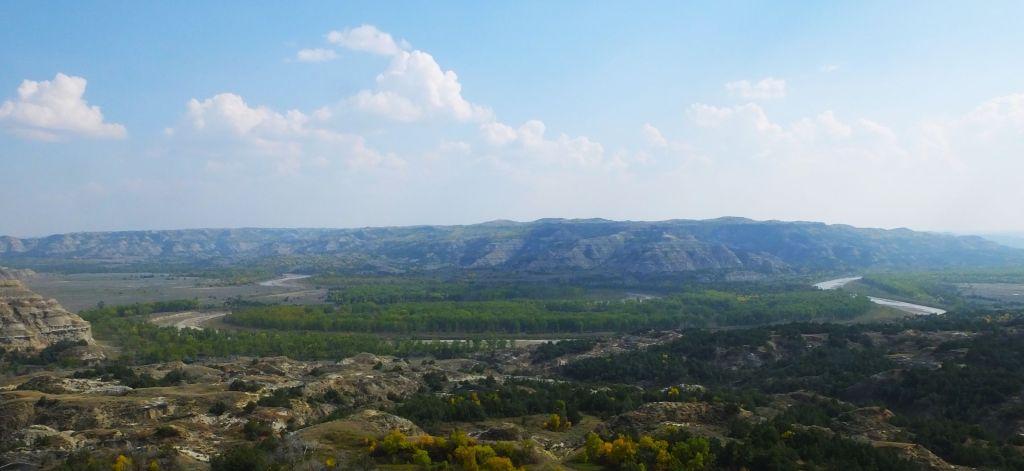
The Little Missouri River winds through the park

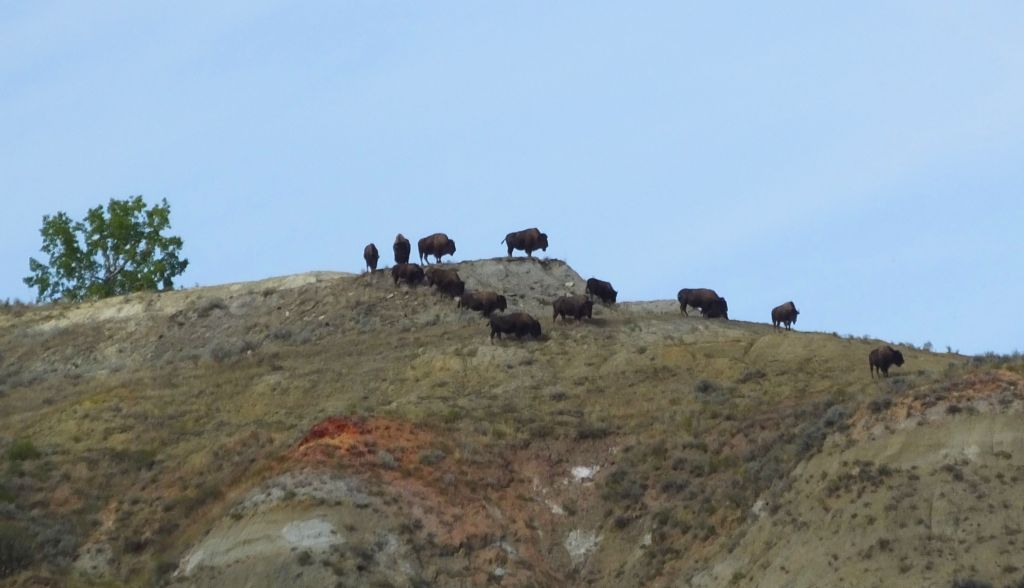
We spent three days in the park and marveled at the weathered landscape and the Little Missouri River that winds through the park.  Two scenic drives provided plenty of viewing opportunities of deep, layered canyons that cut into the grassed prairie and a wide variety of Great Plains wildlife, including bison, pronghorn antelope, elk, bighorn sheep and wild horses. 

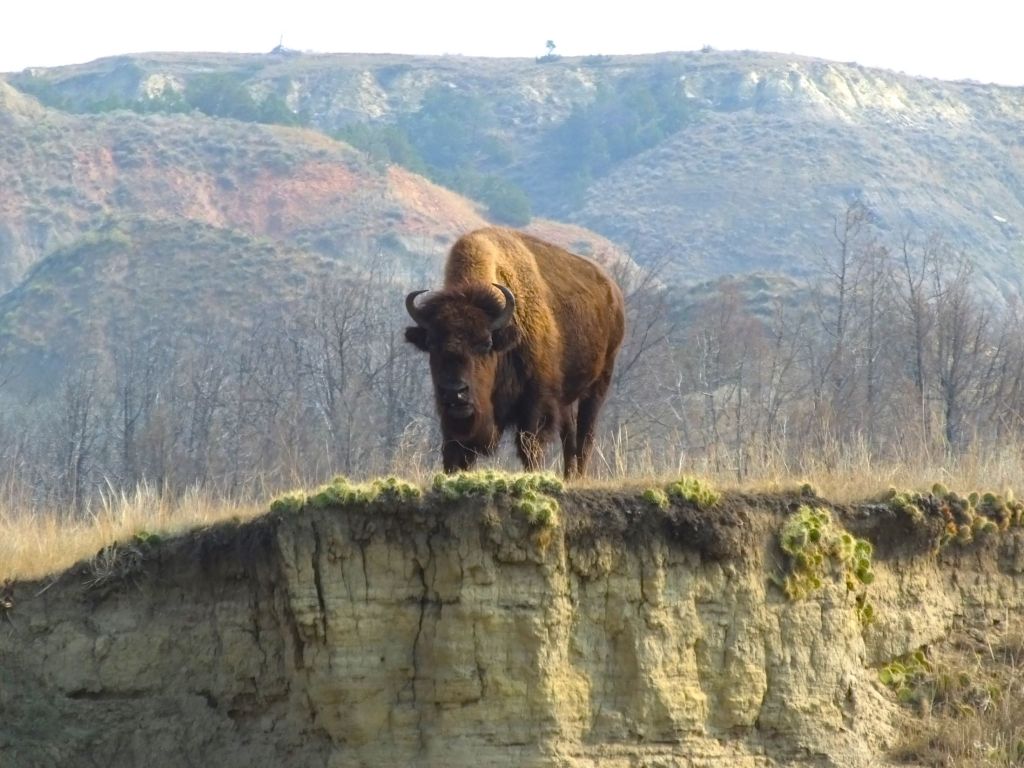
God owns bison on a thousand hills… (Psalm 50:10 paraphrase)
This brute eyed us from atop a drop-off. We kept our distance!

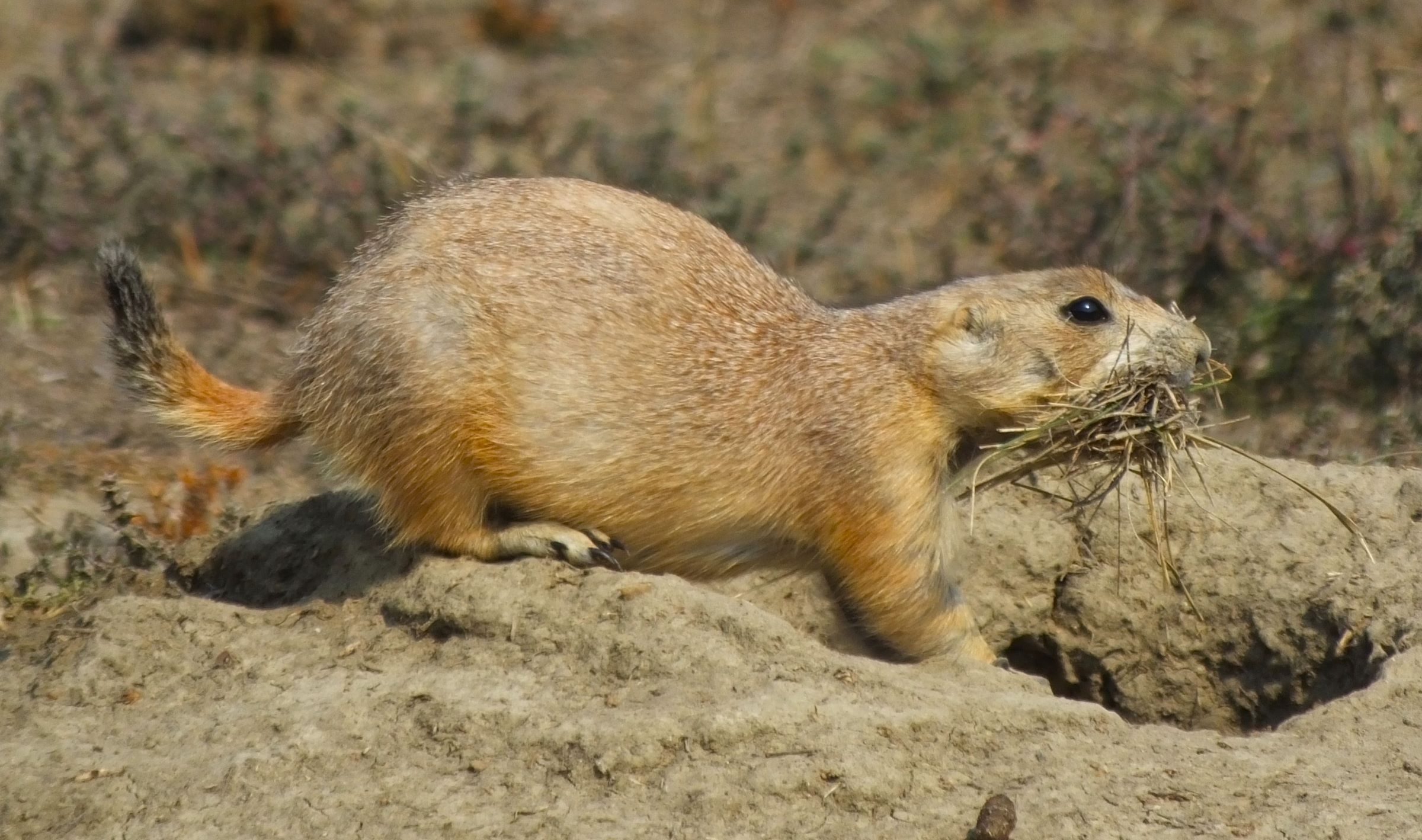
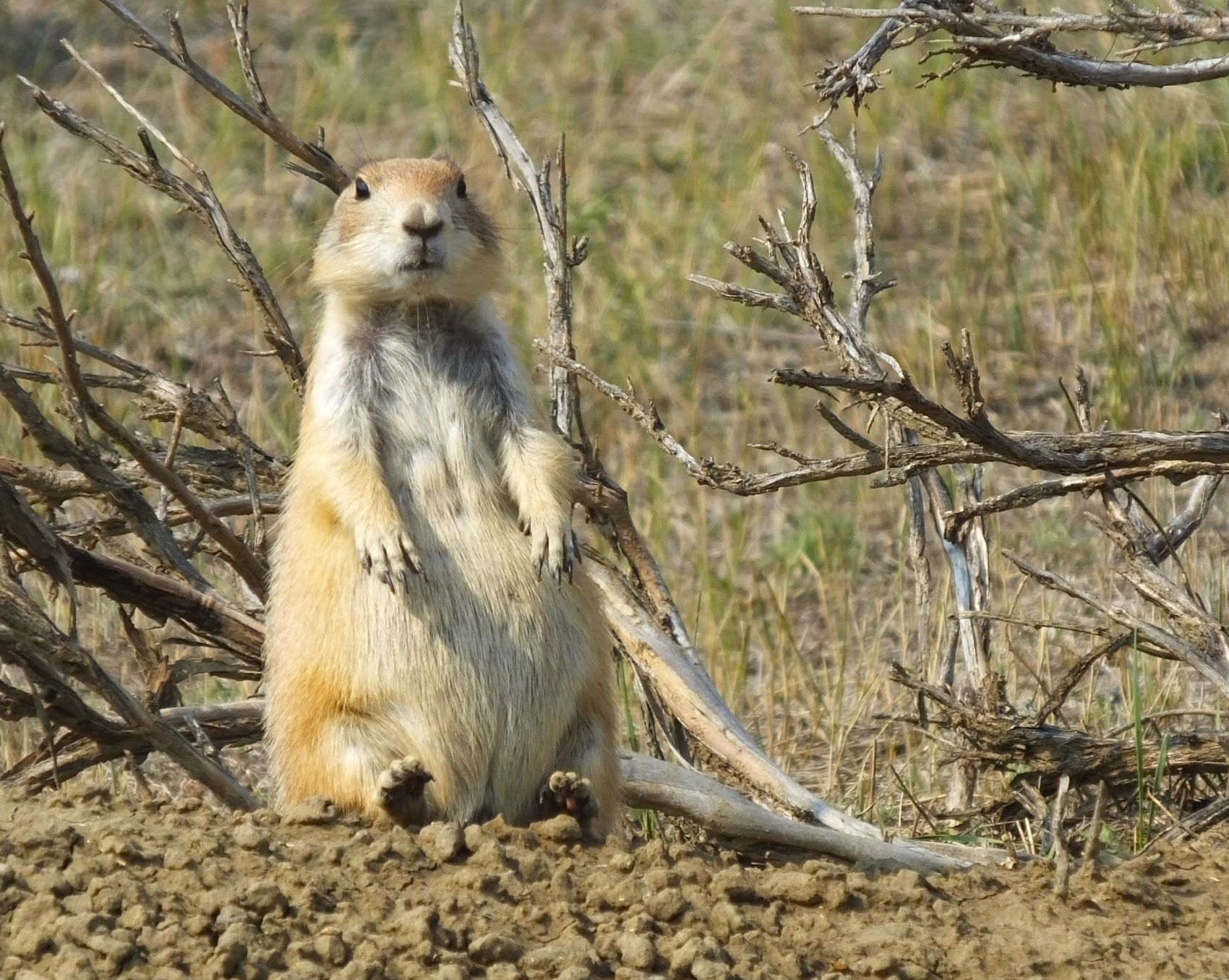
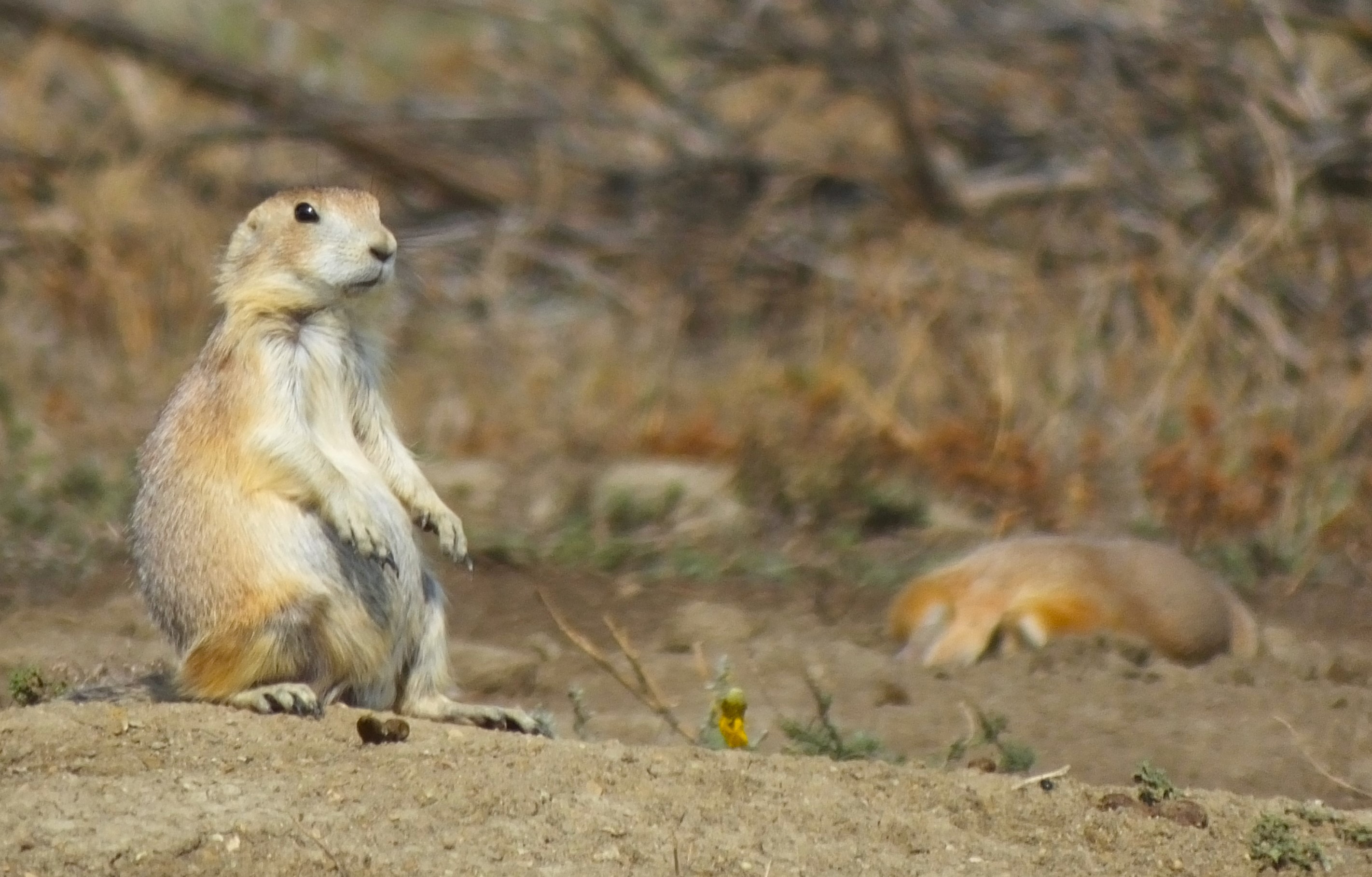
We hiked two miles along a small canyon to hard packed bottom land.  The trail passed small dirt piles with a few prairie dogs scurrying about.  We were at the prairie dog suburbs. 

Ahead, we came to many, many more dirt piles and hundreds of the yapping terrier-sized critters that announced our arrival.  Some scurried in and out of holes, and others sat or sprawled lazily, watching us closely.  This was TRNP’s prairie dog city!

Citizens of TRNP prairie dog city

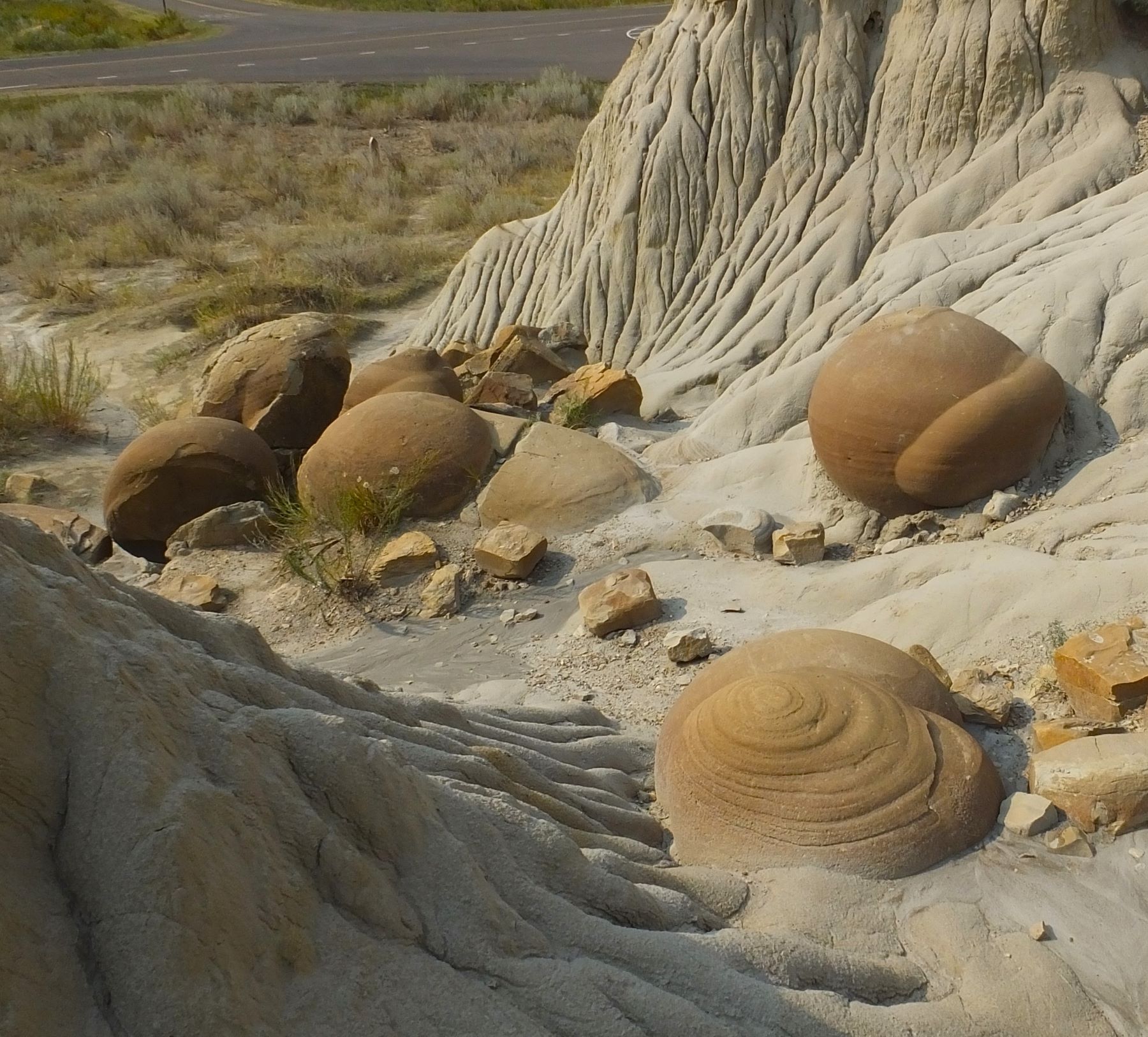
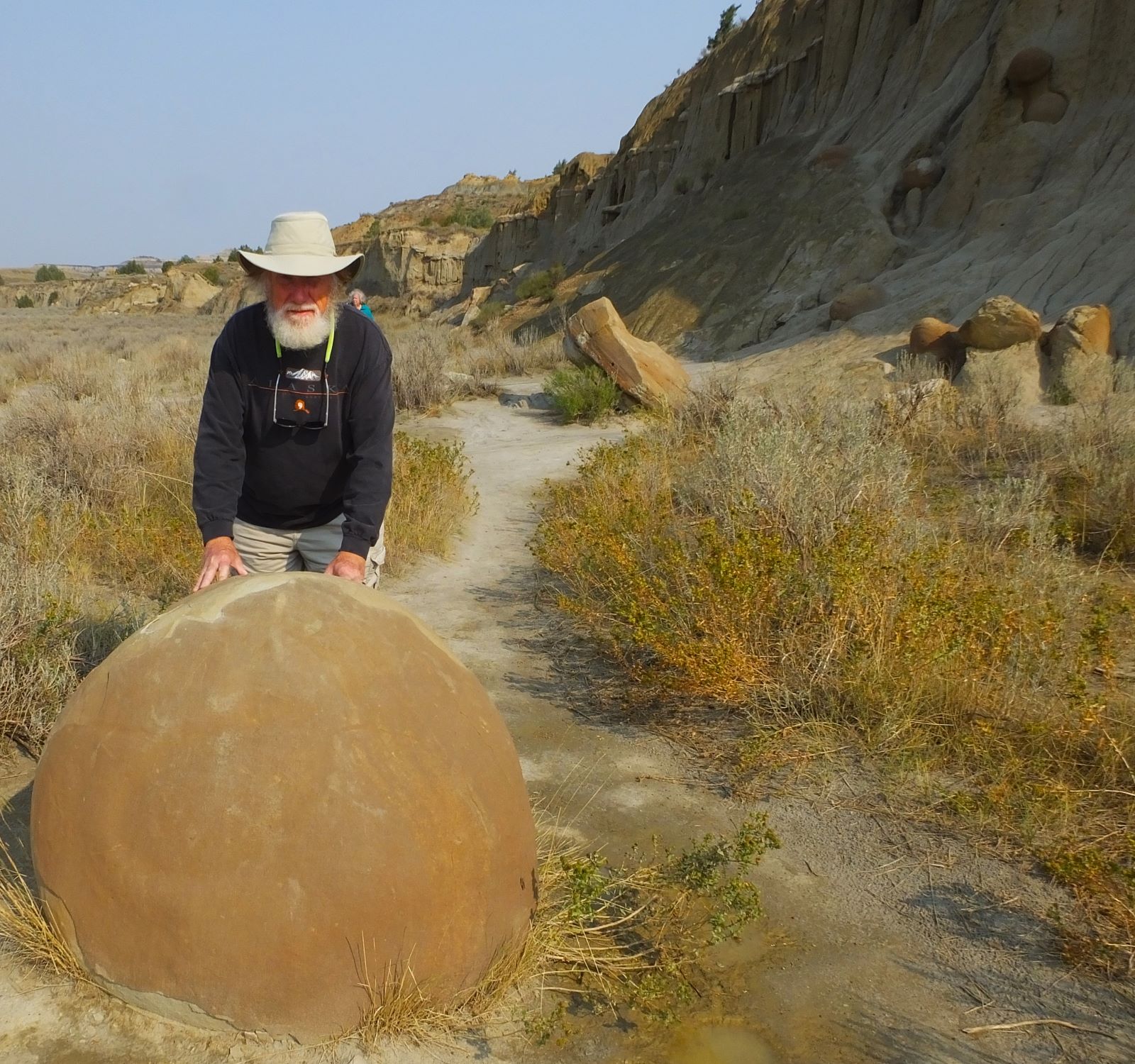
Later we saw a number of unusual cannonball-shaped rocks along the base of an eroded canyon wall.  These were spherical concretions formed by mineral deposits dripping through gaps in the sediment.

Unusual cannonballs jut out of the eroded hillsides, some more than four foot in diameter

A Close Encounter of the Bison Kind

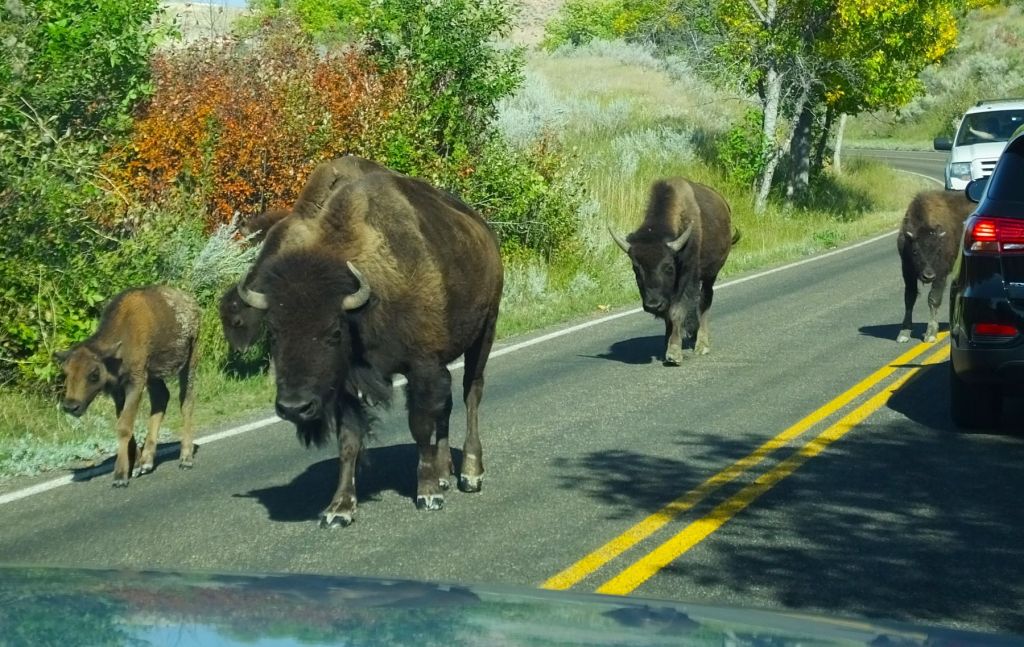
We saw telltale evidence of bison throughout the park.  Individuals and small groups wandered up and down the hills and valleys, including one group of nearly a dozen bison that walked in the middle of one of the scenic drives. Several passed within feet of our truck!

Several bison walked on the road right by our truck

Our mid-September visit to TRNP was enjoyable: the scenic drives and trails weren’t crowded, campsites were available in the park and the weather was pleasant.  If you pass through North Dakota on Interstate 94, the park is a great stop.

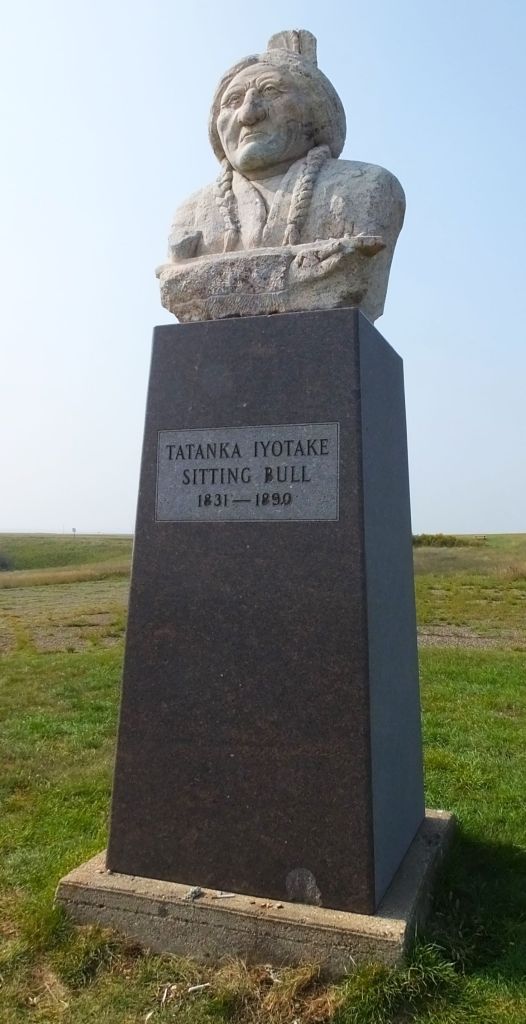
We visited the monument of the Lakota Indian holy man and leader Sitting Bull. It is located on a remote bluff above the Missouri River near Mobridge, South Dakota.

From TRNP, we continued south, visiting many of the roadside attractions mentioned recently in RabbiTRAILS episode 27 and episode 28.

Mammoth Cave National Park

Closer to home, we visited Mammoth Cave National Park in south-central Kentucky.  Explorers have surveyed and mapped 426 miles of the cave, making it the world’s longest known cave system.

Our last visit to the cave was in 1991, when we took several ranger-guided cave tours with Liz and Phil, our (now) adult children.  32 years later, our tours included the Extended Historic Modified Tour and Violet City Lantern Tour.

Percy and Pap would easily fit in some Mammoth Cave passages
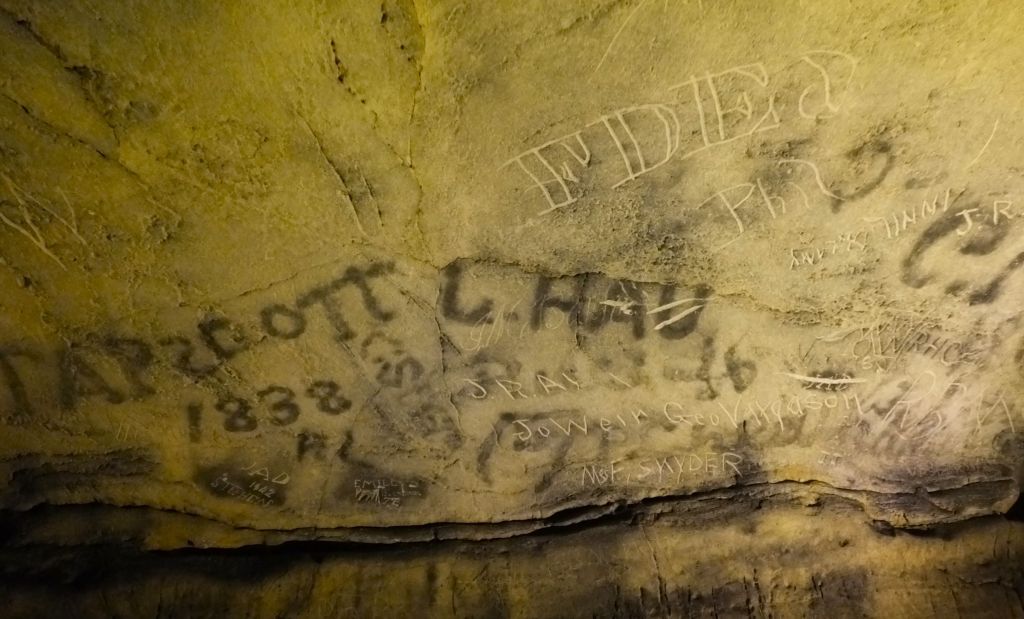
Something to ponder: when does graffiti become a historic artifact?
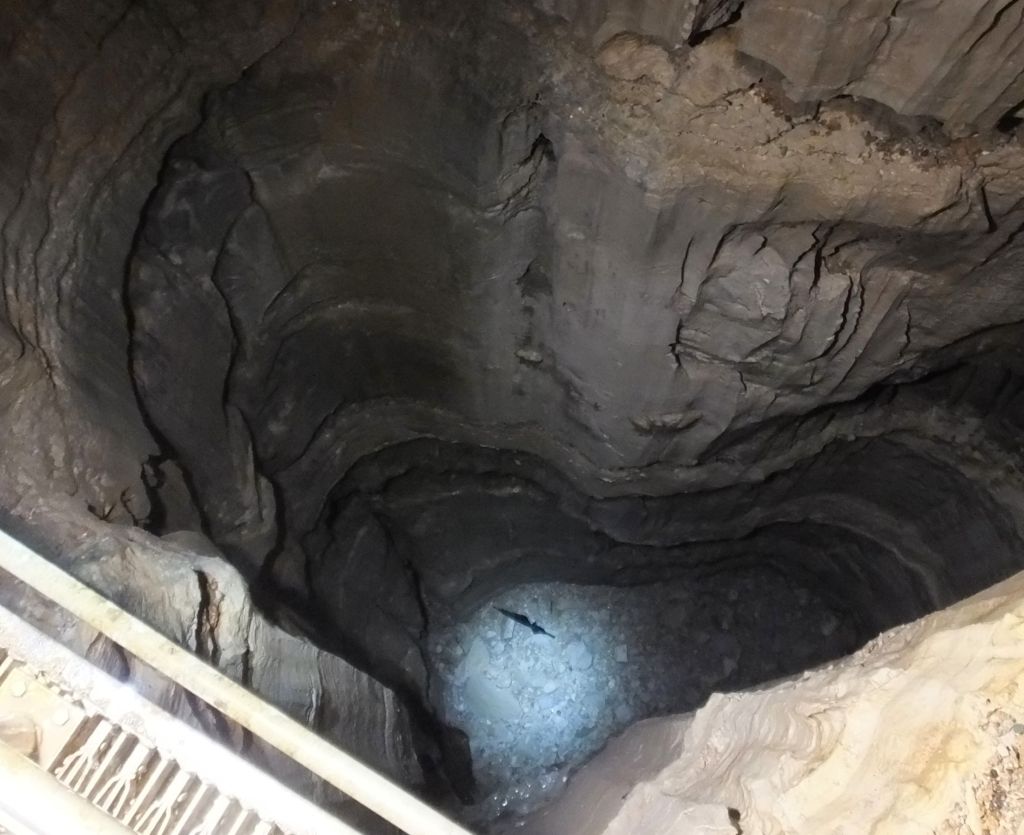
Mammoth Cave’s bottomless pit is actually 105 feet deep

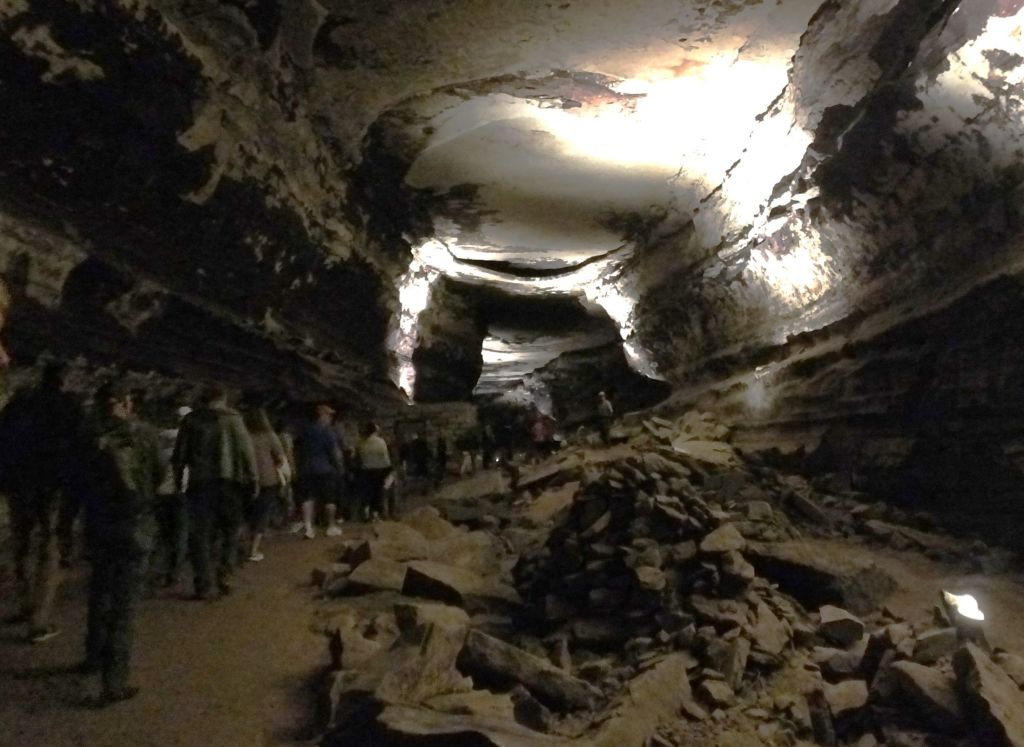
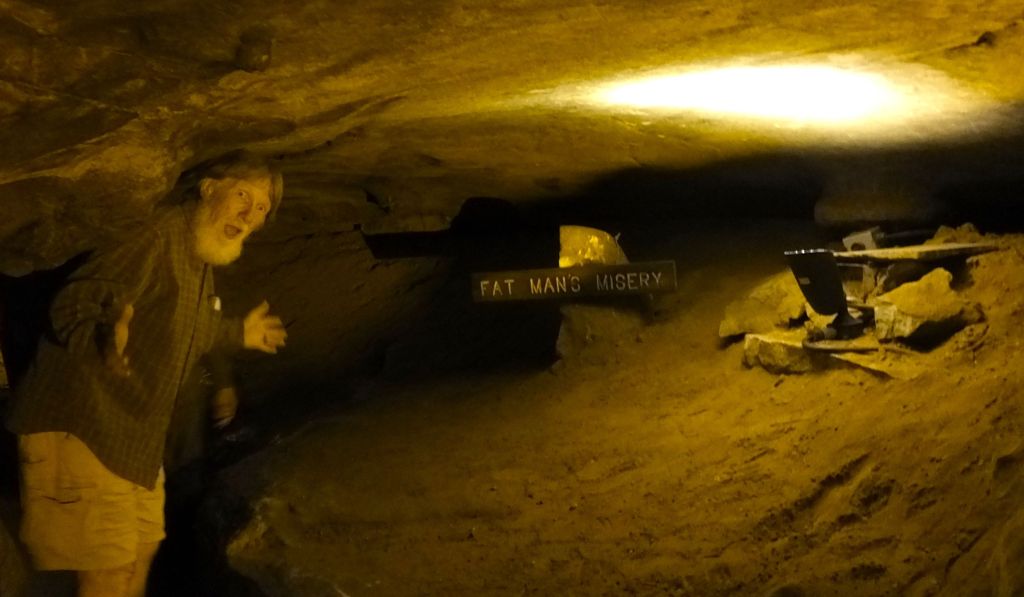
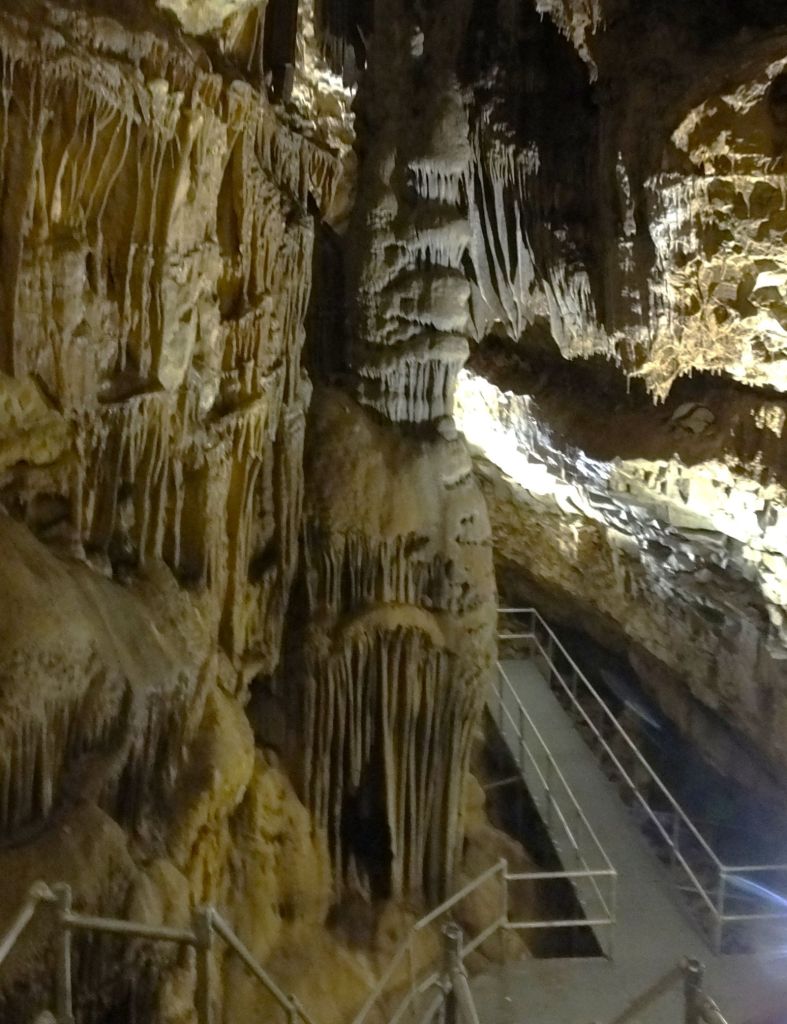
We hiked a steep trail down to the cave entrance where we entered the cool cave and walked nearly two underground miles on the two-hour Extended Historic Modified Tour.  The tour included many of the historic areas that originally made the cave famous – visits to huge rooms that gave Mammoth Cave its name and much tighter places deep inside the cave. We endured the narrow passage through fat man’s misery and welcomed the underground restrooms in great relief hall that followed.  The tour also included a side trip to the site of the 1840s Mammoth Cave experiment to treat consumption.

Getting ready for the big squeeze on the way to great relief hall

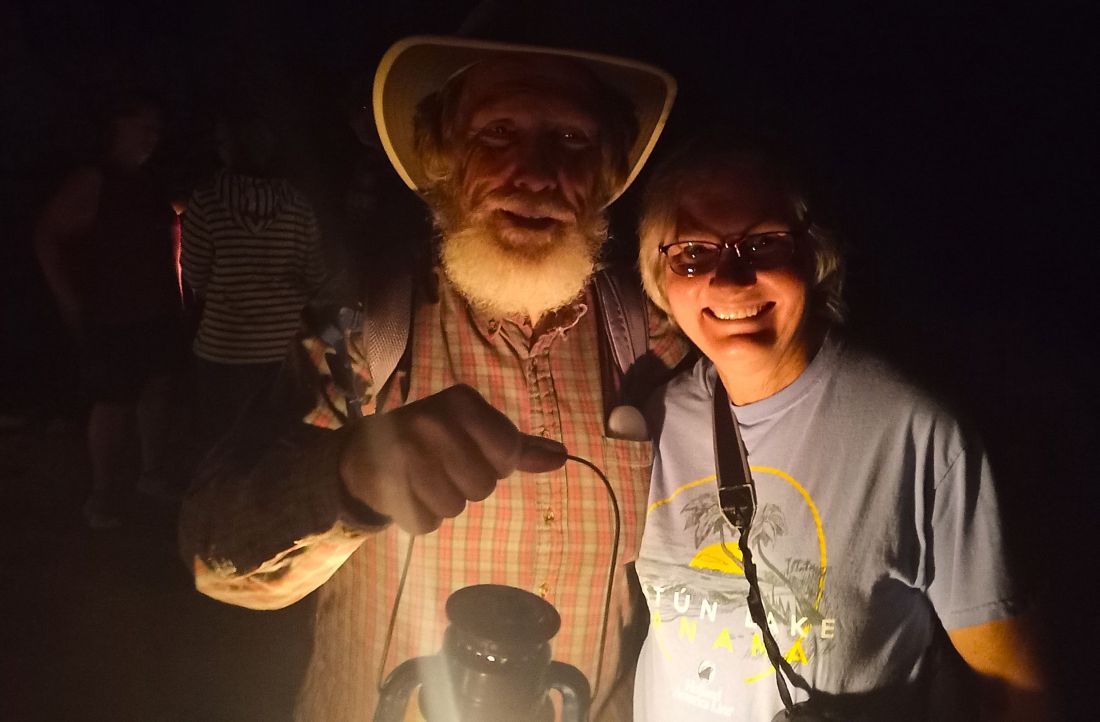
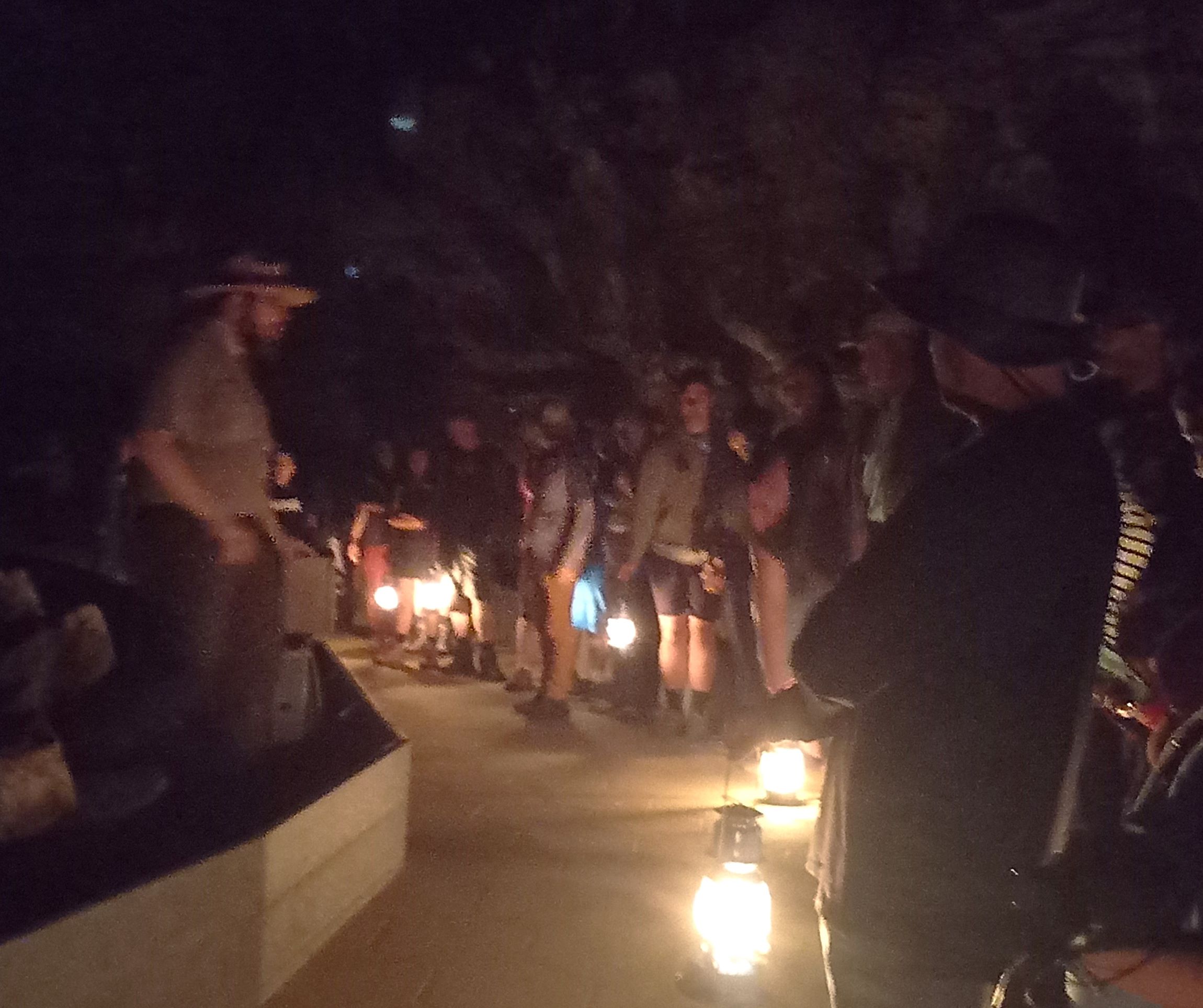
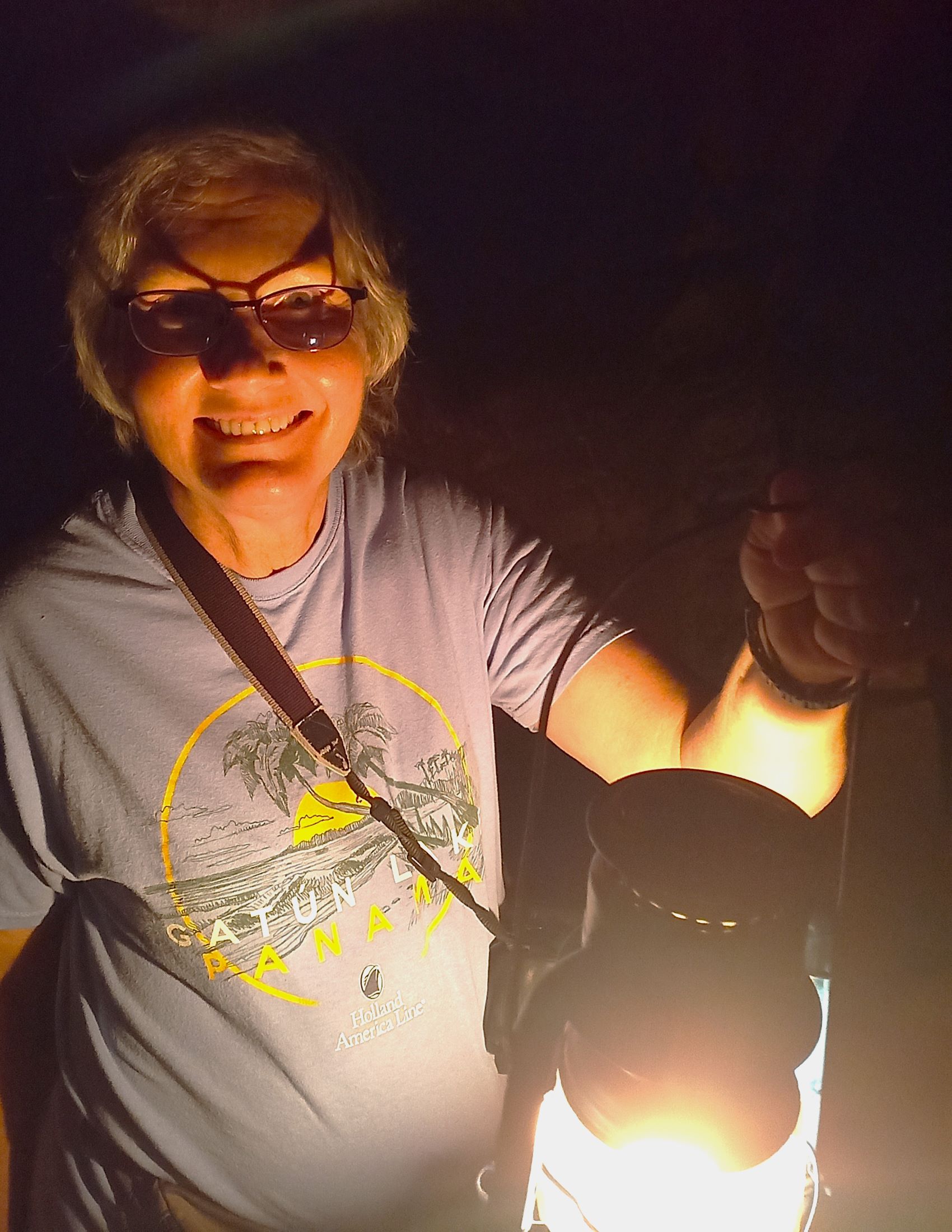
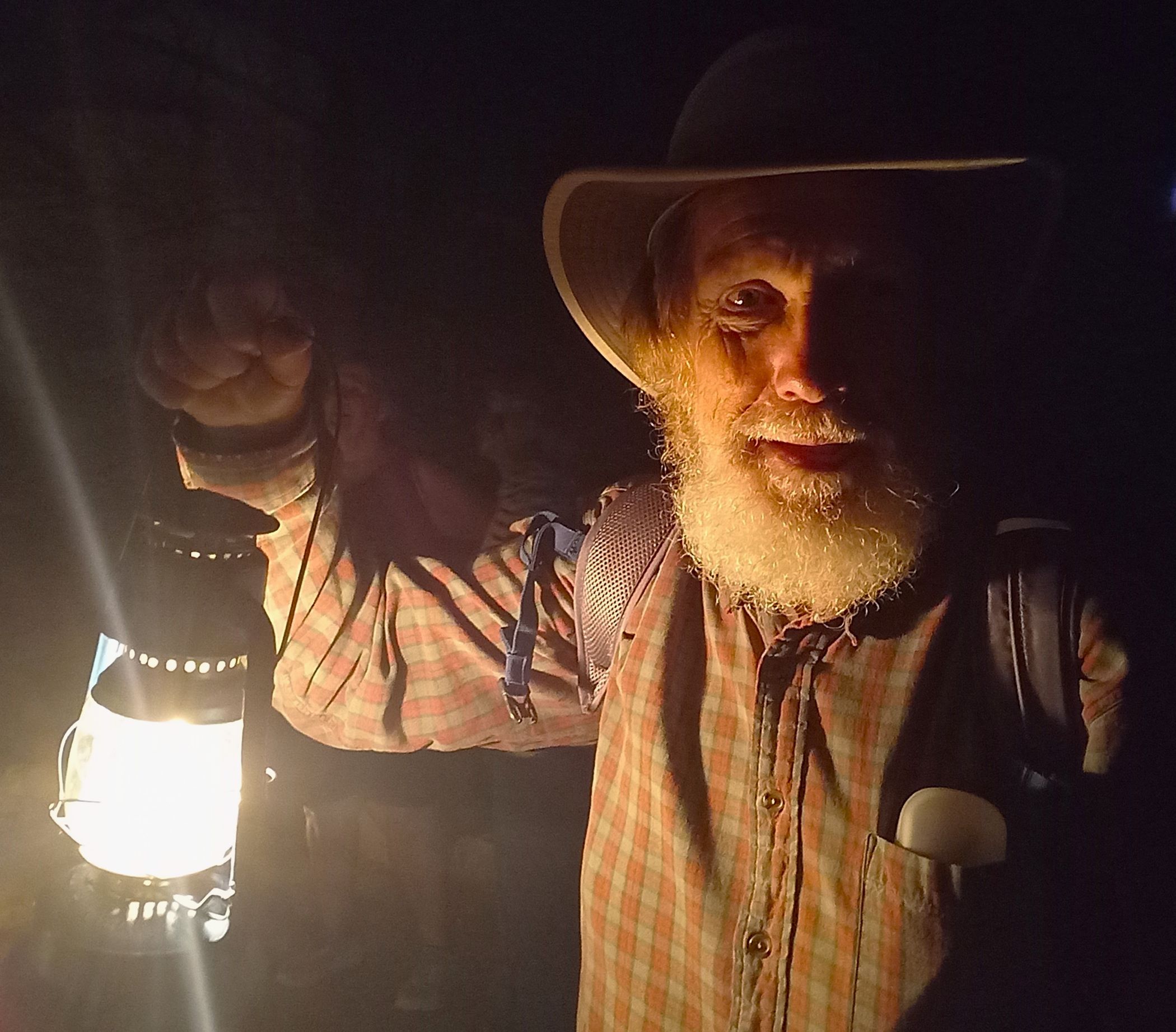
The next morning’s Violet City Lantern Tour was exclusively by lantern light.  For nearly three hours, we followed the dimly lit three-mile trail as it wound through huge, broad tunnels. We climbed and descended several steep hills on our way to the cave exit. The exit was several miles from the original cave entrance and a bus took us back to the visitor center

The three-hour tour was illuminated with kerosene lanterns

Mammoth Cave has few flowstone formations typically seen in caves. The formations above are at Wondering Woods Cave, a separate cave a few miles from the main cave
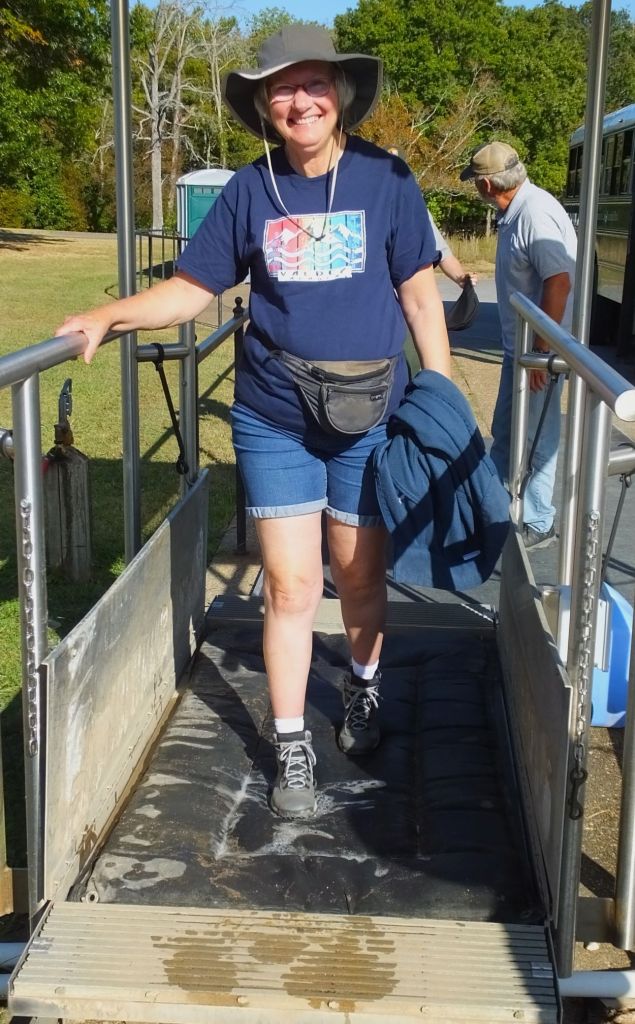
Pat walks the mat to save a bat. At the end of each cave tour, we walked across a bio-security mat that kills fungus spores that cause white-nose syndrome fatal to cave bats

Mammoth Cave tours are moderately strenuous. Some of the trails include series of stairs and a few steep climbs.  The rangers do a great job providing interesting historical and geologic details.  Before visiting, we recommend researching the cave tours and buying tickets in advance, as many tours sell out during the busier late-spring and summer months.

Critter Count

bison – many
pronghorn antelope – 36
wild turkey – 11
deer – 16
wild horses – 20
sandhill cranes – 2
prairie dogs – many
snakes – 3
skunk – at least 1 (by the smell)

Next week

We wrap up our 2023 Alaska Revisited trip with a by-the-numbers recap. Pat and I will compare our answers to several questions that include best trip experiences, favorite places camped and most amazing views. 

And we will reveal our pick of the best cinnamon bun of the trip!

Roadtrip Ramblings Pt 2: Mystery Meat, Matchsticks and More

(2023 Alaska Revisited Ep 28)

We hope you are enjoying our roadtrip RabbiTRAILS.  They helped make the long trip home fun and interesting.  Apart from Matchstick Marvels below, all of the places we visited were free. 

A good source of information to plan your own roadtrip to uniquely odd tourist attractions is the Roadside America website.

Matchsticks by the Millions

When I was (much) younger, I shaved the heads off matches and packed them into a copper tube with a flattened end to make a rocket engine of sorts.  After a few (very) low orbit flights of my not-quite-SpaceX booster, I was challenged with what to do with the headless matchsticks. 

We’re not sure if Iowa artist Patrick Acton got his start shaving matchsticks to fuel homemade rockets, but he definitely found a use for matchsticks.

Millions of them.

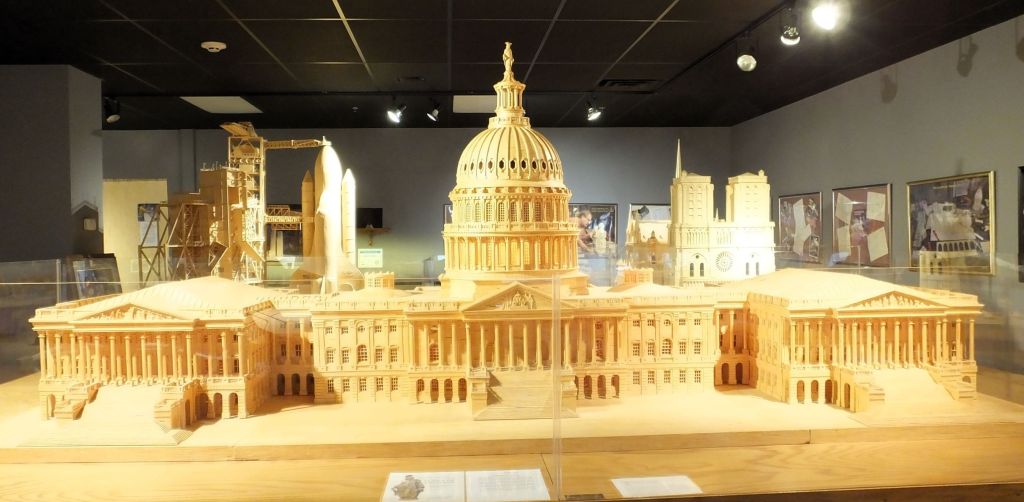
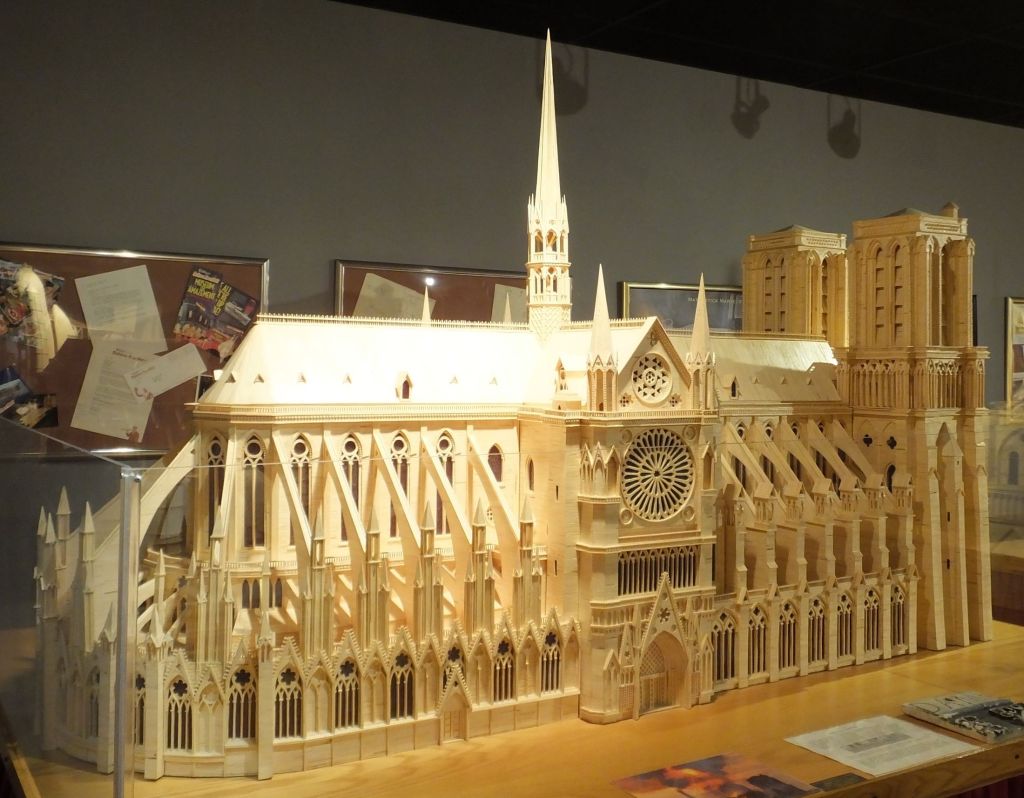
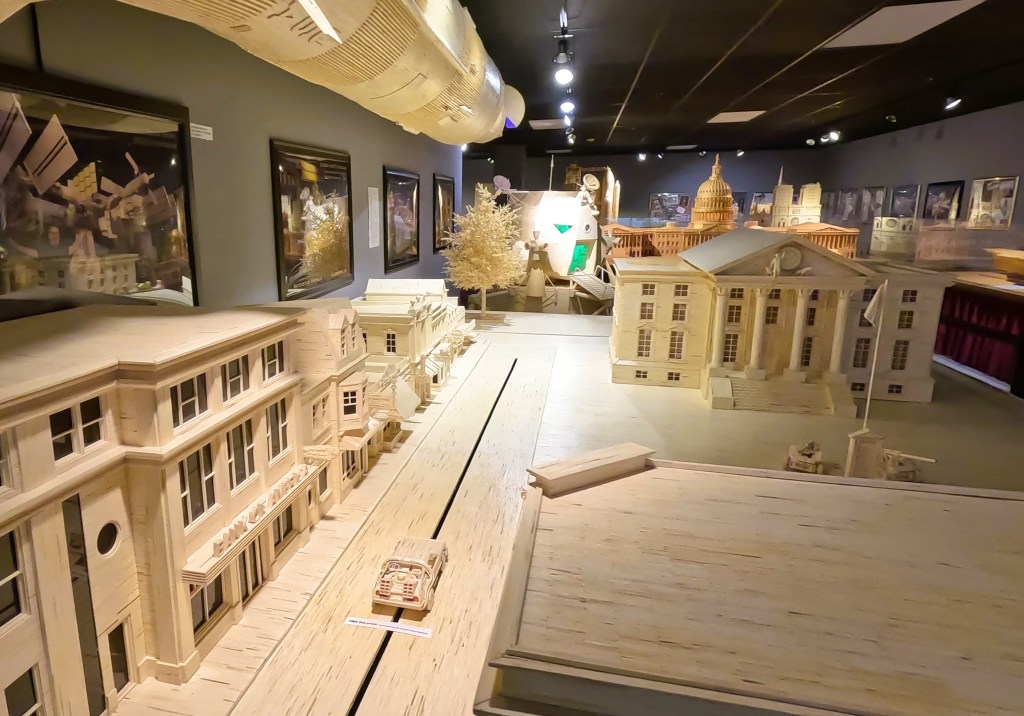
We stopped at Matchstick Marvels, a small museum in Gladbrook, Iowa.  There, we were amazed by the detailed scale models Acton has created using millions of two-inch-long matchsticks over the last 44+ years.

US Capitol model made from thousands of matchsticks
The details of the Notre Dame Cathedral model were phenomenal!

There was an amazing lighted model of the US Capitol and an intricate model of Notre Dame Cathedral.  A huge Apollo 11 complete with the Saturn V rocket engine and command module soared above us. 

A variety of models are on display in the small museum, from a Space Shuttle poised for takeoff and the USS Forrestal aircraft carrier, along with other ships, several types of planes, dinosaurs and other animals.  

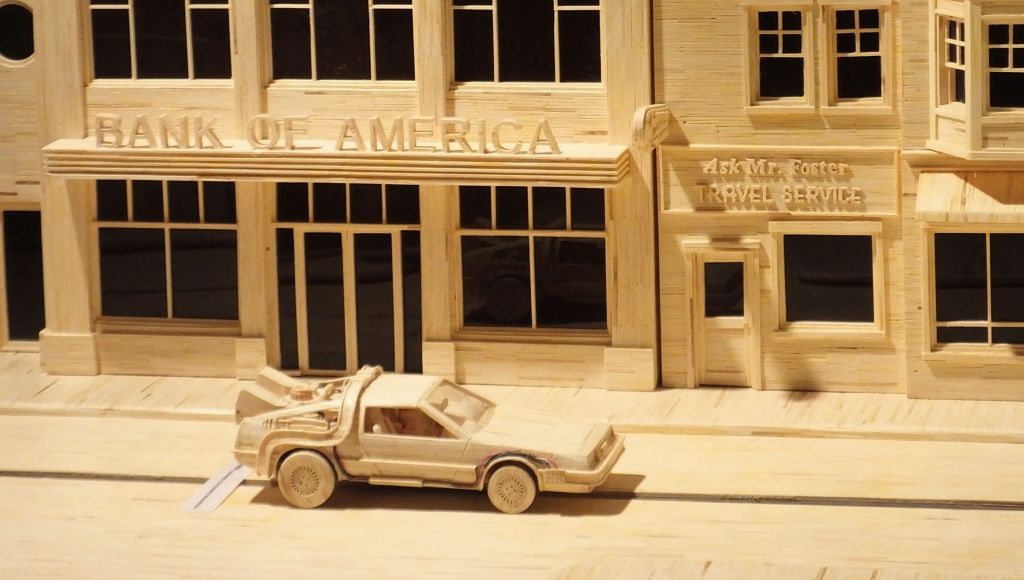
A model of Hill Valley from Back to the Future even included a time traveling DeLorean

A particularly interesting creation was of Hill Valley, the fictional town from the Back to the Future trilogy. The matchstick town was complete with various buildings, courthouse, clock tower and even a DeLorean.

Acton’s creations can be seen in a number of Ripley’s Believe it or Not! Museums throughout North America, Europe and Asia.  They have been featured on numerous television programs and in various publications.

Plowing the Prairie and Feeding the World

As we drove along the gently rolling hills of Minnesota and Iowa, Pat and I were fascinated by rugged farm machinery plowing fields and harvesting crops.  Quite often the equipment was green and yellow and emblazed with the well-known John Deere logo.

John Deere Tractor and Engine Museum in Waterloo, Iowa

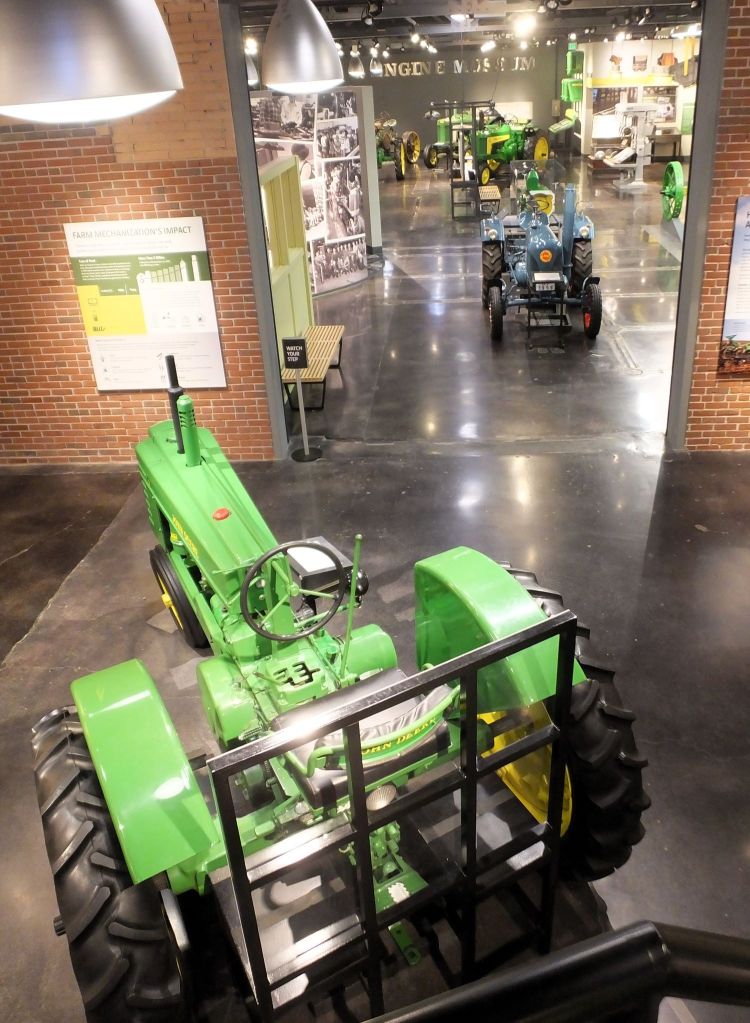
We visited the John Deere Tractor and Engine Museum to learn about the history and products of the John Deere company.  The museum includes dozens of restored tractors and other farm machines, various artifacts, and hands-on exhibits.

The John Deere Model D tractor was produced from 1923 to 1953, longest model run of any John Deere tractor
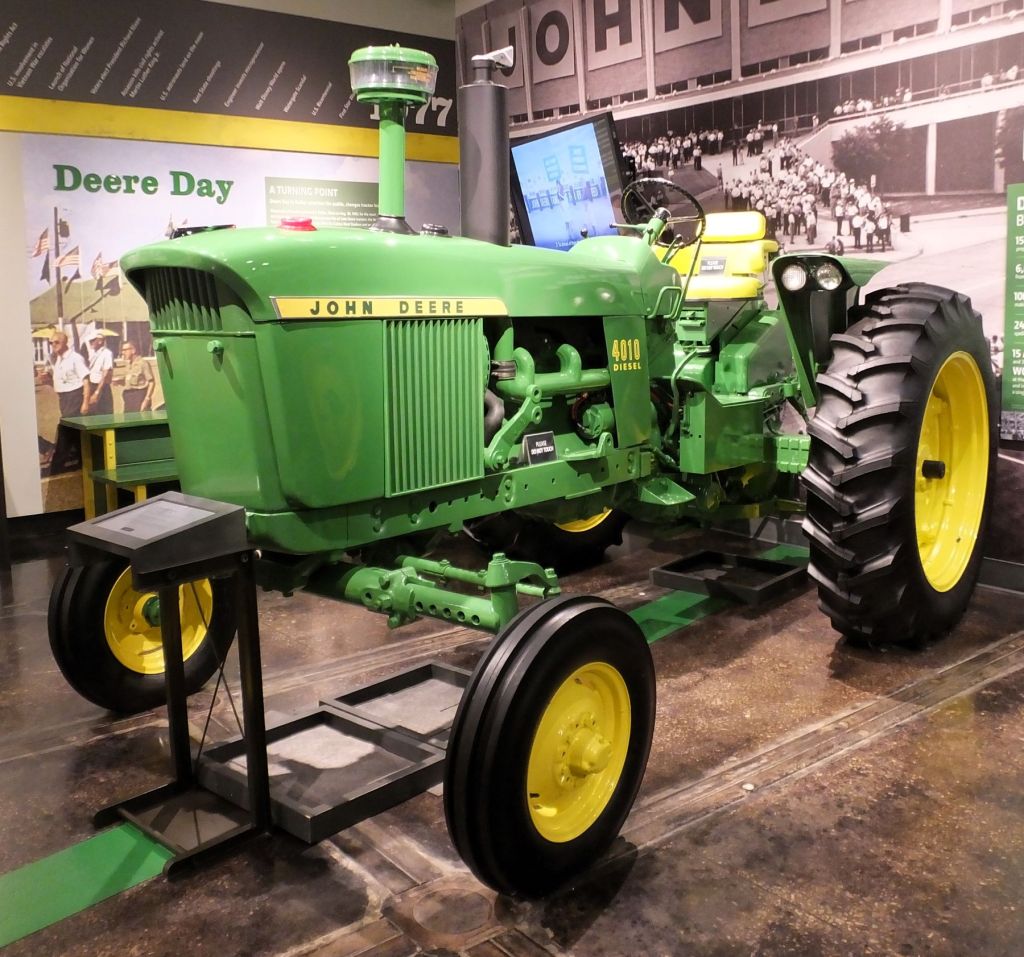
The John Deere 4010 tractor was the first of a new generation of tractors produced from 1960 to 1963. The John Deere 4020 model that followed is regarded as the most popular tractor ever produced by the company

Farming equipment on display ranged from plows and early tractors to an ultramodern air-conditioned tractor with a GPS guidance system.    

What an impact John Deere and other farm machinery manufacturers have had on producing food for a hungry world!

We Get Spammed

As we prepare for RabbiTRAILS journeys we often purchase a can of SPAM in case we are somewhere where groceries aren’t available. 

Pat claims SPAM is most palatable when thinly sliced and cooked until crispy. We’ve tried various flavors, including hickory smoke, maple, hot and spicy, and bacon. They pretty much taste the same. Suffice it to say SPAM is not our favorite menu choice.  

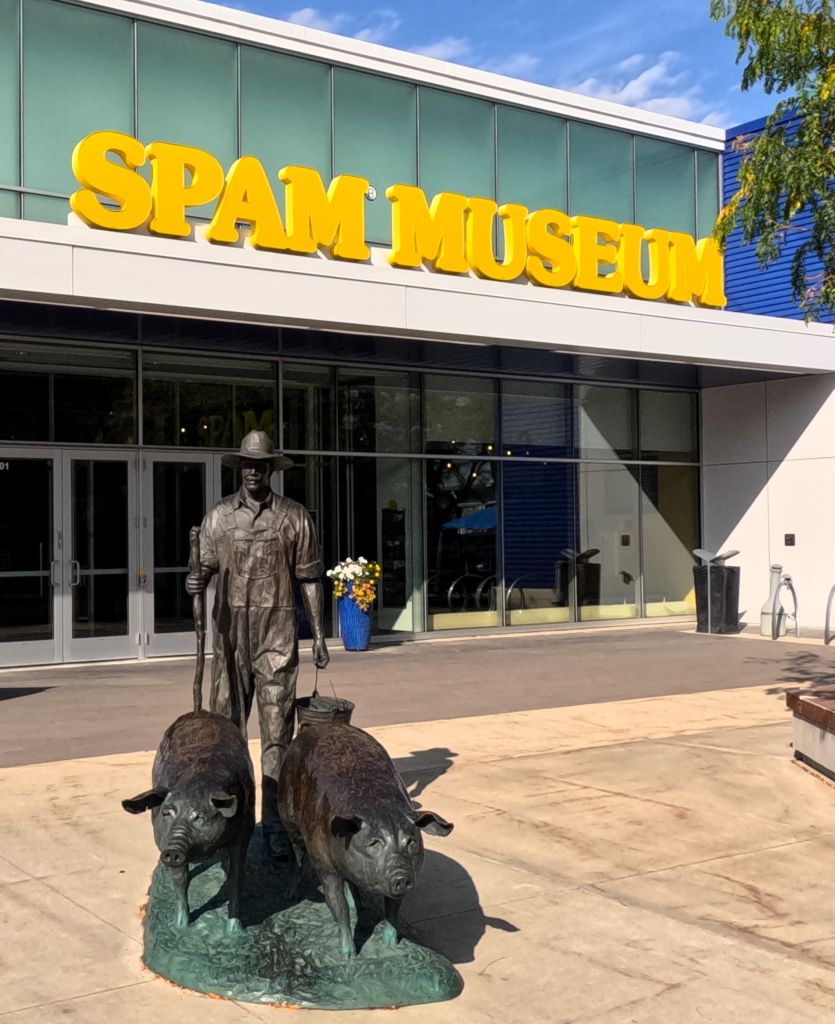
Our greeters as we entered the SPAM museum

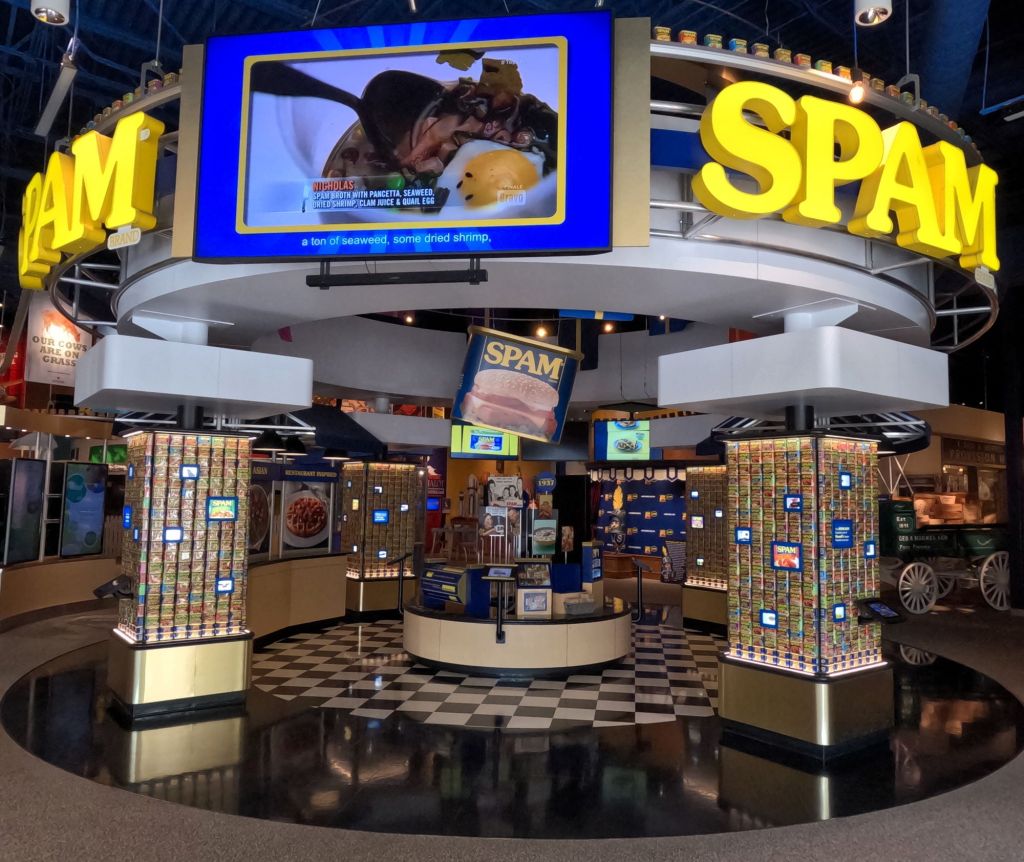
Although we had already satisfied our ‘one can of SPAM per trip’ allotment, we stopped at Hormel’s SPAM Museum in Austin MN, to learn all about SPAM!

Bright and interactive displays in the SPAM Museum

Introduced in 1937 as an affordable source of protein during the Great Depression and way to sell pork shoulder, SPAM was named by the brother of a Hormel Foods executive, allegedly the contraction of ‘spiced ham.’  More than 150 million pounds of the pink stuff were consumed by US soldiers during World War II.  They also used SPAM grease to lubricate their guns and waterproof their boots!

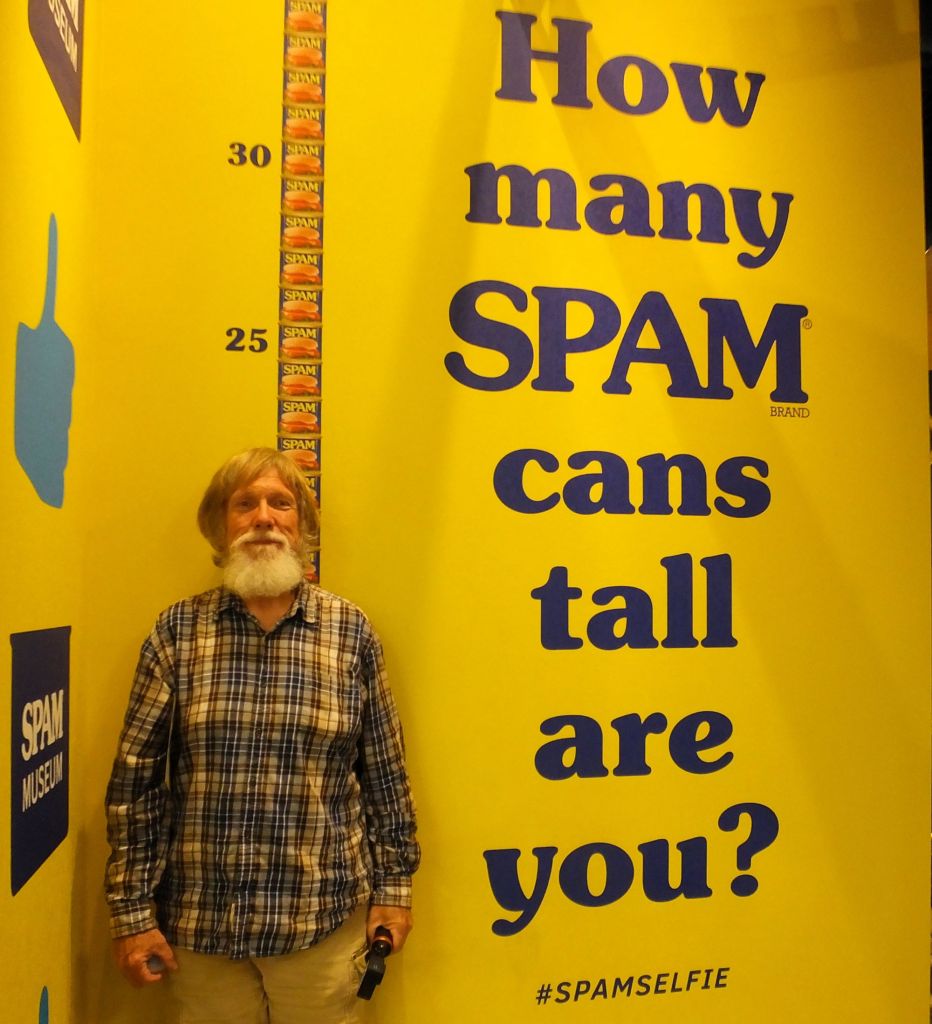
Height: 21.5 SPAM cans, beard length: 1.5 SPAM cans

SPAM has been celebrated and maligned over the years as ‘specially processed American meat’, ‘spoiled ham’, ‘stuff posing as meat’, and ‘scientifically processed animal matter’.  Who can forget the Monty Python skit with Vikings chanting ‘SPAM, SPAM, SPAM… ‘, that eventually became the source of the word ‘spam’ to describe unwanted emails.

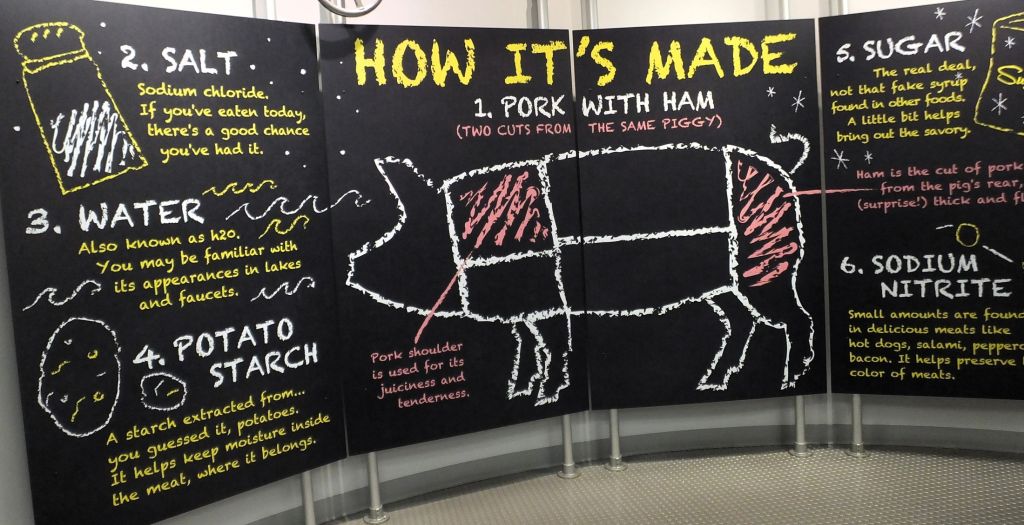
In case you were wondering, SPAM contains just six ingredients: pork shoulder, water, salt, potato starch, sugar, and sodium nitrite.
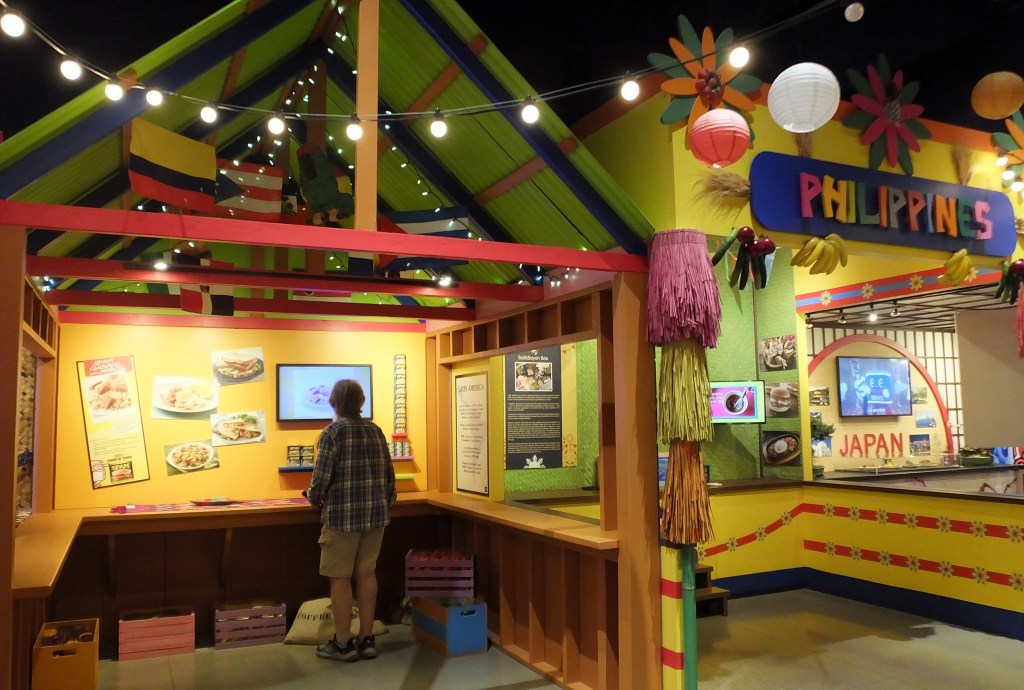
A portion of the international SPAM exhibits

Fifteen flavors of SPAM are currently sold in more than 44 countries.  There are international SPAM-related cultural displays and recipes, including exhibits from the Philippines, South Korea, Japan and Hong Kong, where the canned meat is particularly popular. 

Lovin’ It in Hawaii – SPAM, scrambled eggs and rice (from YouTube)

Overall, the US consumes the most SPAM.  Hawaiians have the highest per capita consumption in the US, averaging more than five cans a year per person.  SPAM is even available in many McDonald’s locations in the Aloha state.

205 Years from Now

Earlier in our trip we visited Vasquez Rocks Natural Area near Los Angeles (2023 Alaska Revisited Ep 7), where several episodes of Star Trek were filmed. Last week, we blogged (Ep 27) about our visit to Vulcan, Alberta, home of a Star Trek tourist center and numerous Star Trek and Spock-themed displays around the small town.

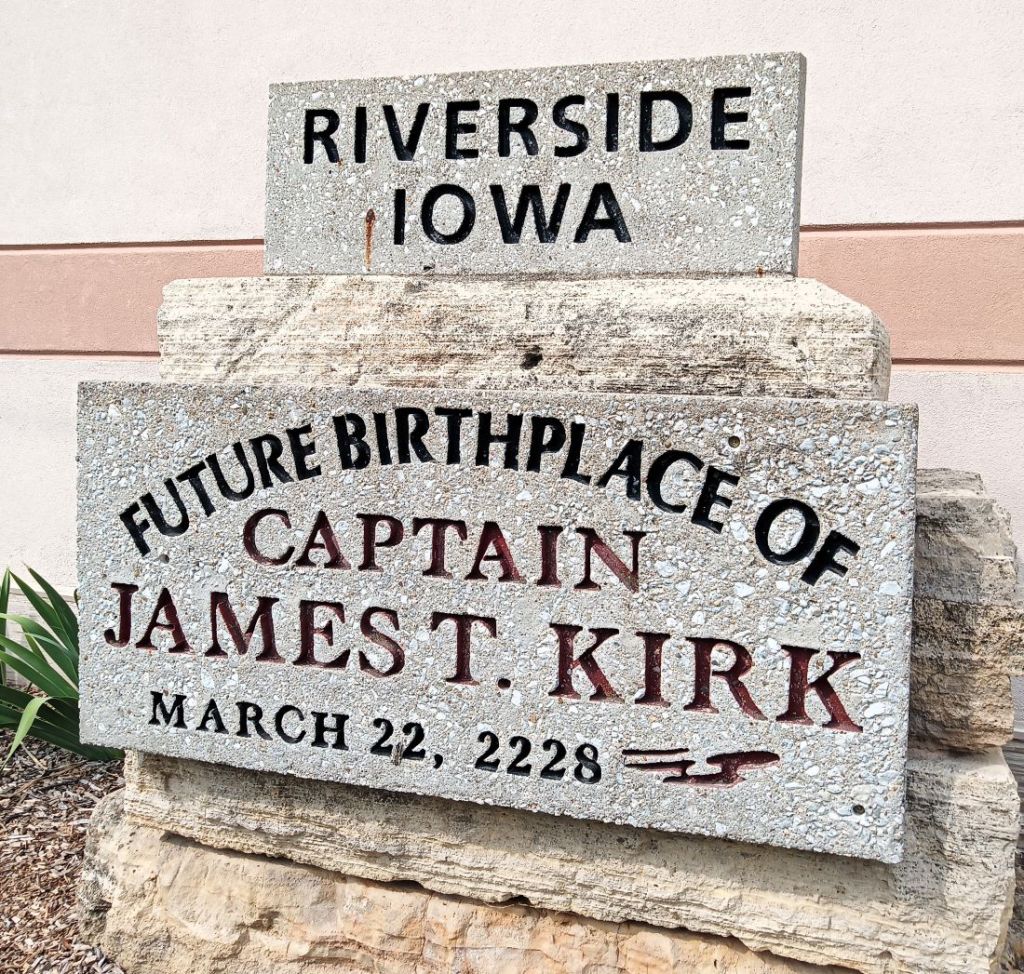
We thought it fitting to make another with Star Trek-related RabbiTRAIL stop, this time at the future birthplace of Star Trek’s James T. Kirk in Riverside, Iowa. The Enterprise captain will start his life trek on Saturday, March 22, 2228. 

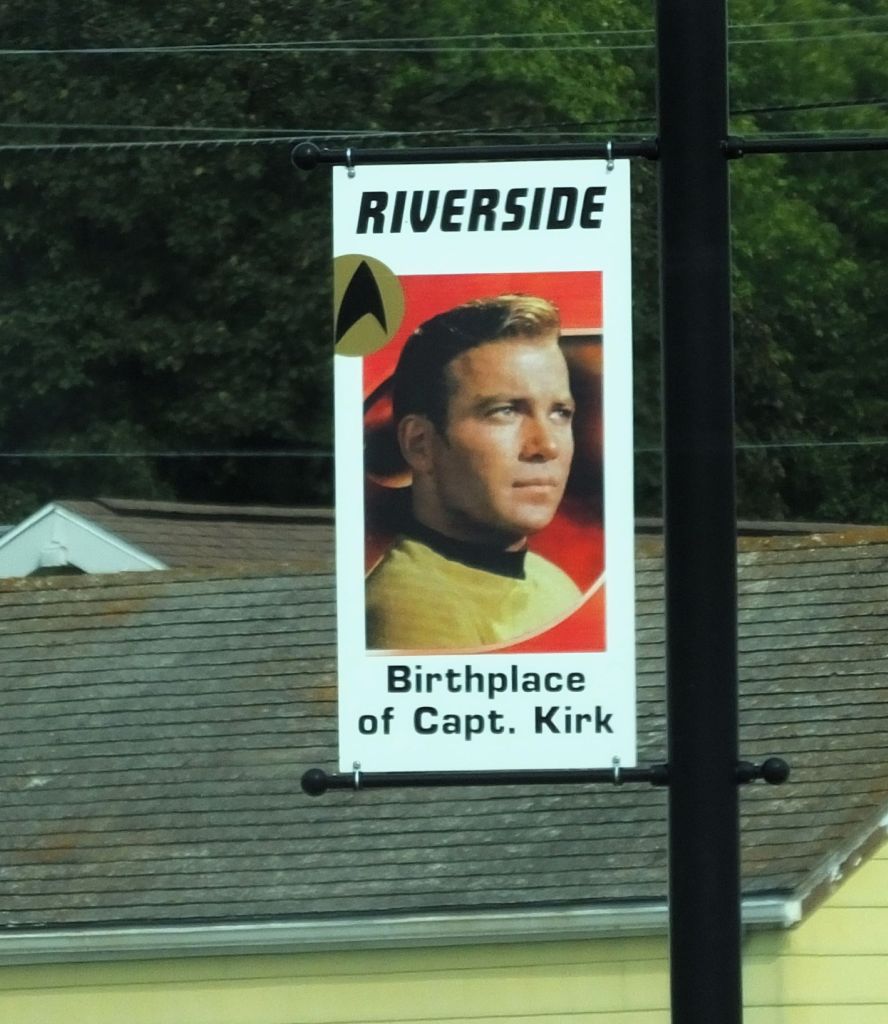
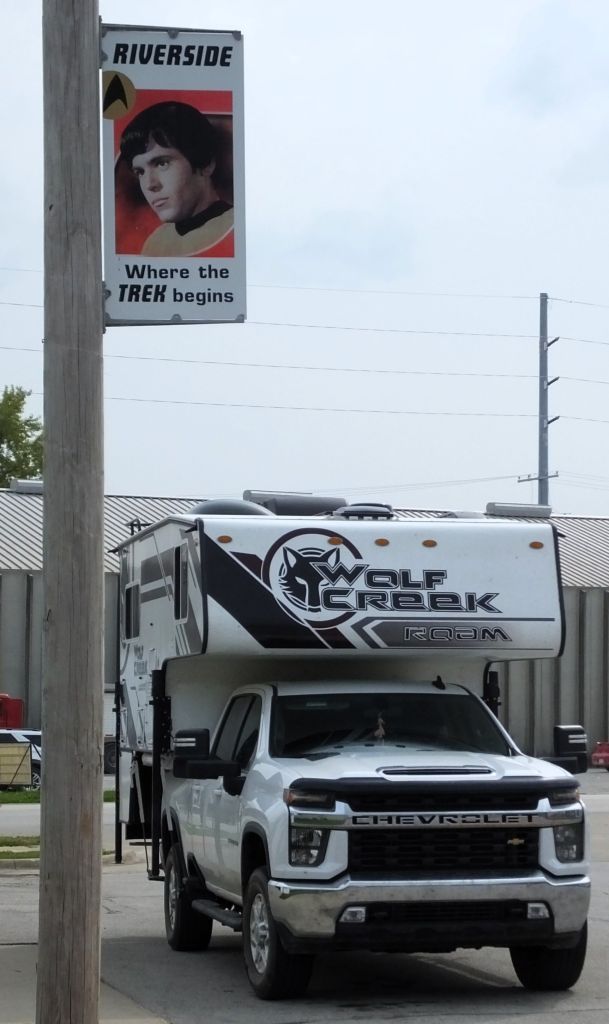
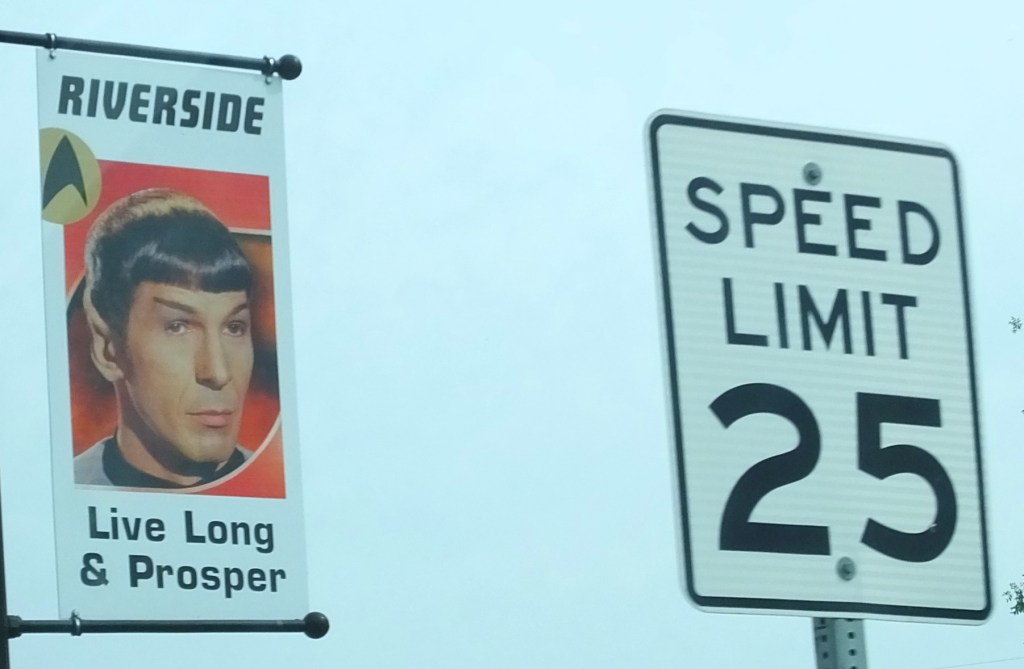
Riverside, a small town in southeast Iowa near the Amana Colonies and Amish community of Kolona, has erected a monument that establishes the town as Kirk’s future birthplace.  Banners on light poles throughout the town proclaim the town is “Where the Trek Begins.”

Star Trek-themed banners seen throughout the town; we wondered if the Enterprise obeyed the posted speed limit

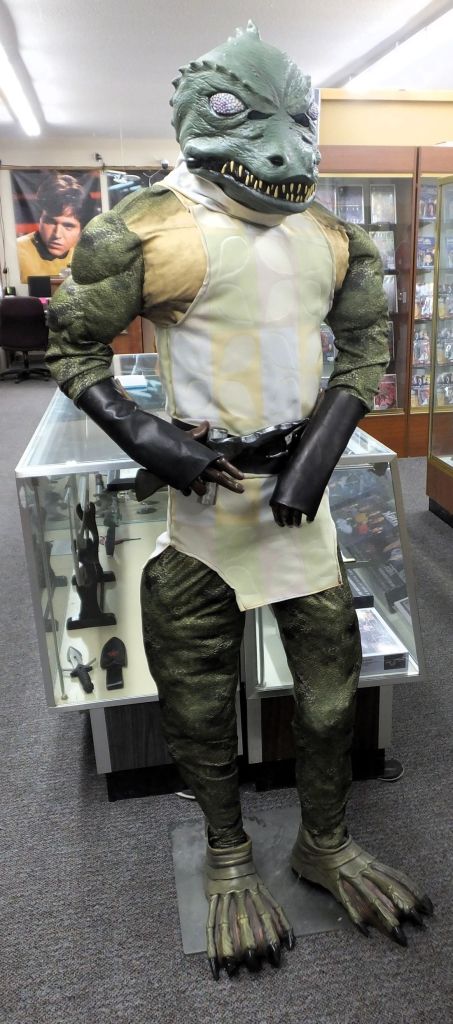
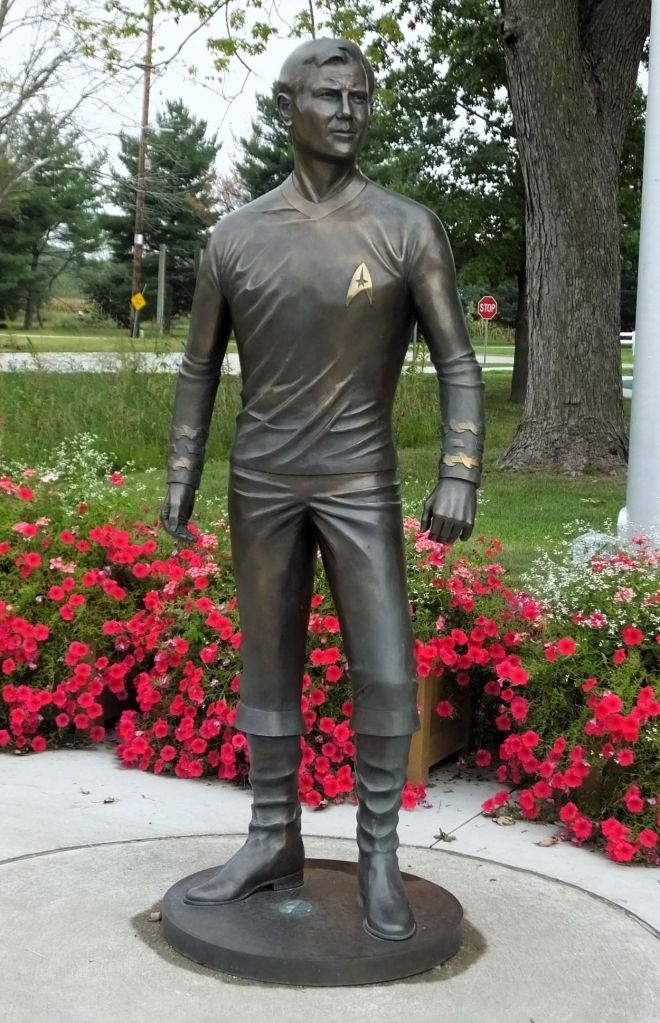
A Star Trek museum wouldn’t be complete without Gorn; the future Captain Kirk even has his own bronze statue

We stepped inside the Voyage Home History Center just around the corner from the plaque to peruse their Star Trek displays and memorabilia. We learned during the last weekend of June next year the town will host their 39th Trekfest, celebrating all things Star Trek with special guest speakers, costume contests, sports events, a large parade, fireworks and more.

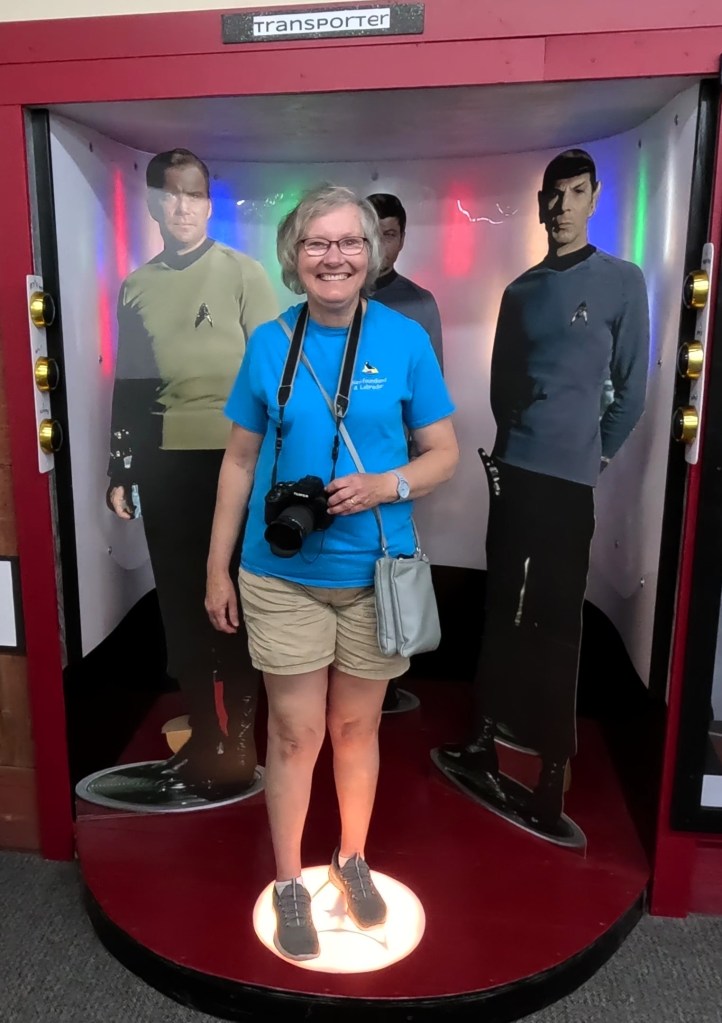
Pat was still trying to beam herself home

One of Riverside’s taverns used to claim to be the location where Captain Kirk was conceived.  Guess we won’t know for sure for another 205 years.

This Enterprise float is part of Riverside’s Trekfest parade each June
Cinnamon Bun Review/Critter Count

None to report this week. Check back in the next RabbiTRAILS episode!

Next Week

After many miles and several mid-west roadtrip RabbiTRAILS, we visit two National Parks as we near completion of our 2023 Alaska Revisited travels.