
(2023 Alaska Revisited Ep 21)
As our time in Alaska came to a close, several RabbiTRAILS gave us a sense of how wild and remote the 49th state can be. This week we visit the Kennecott Copper Mines nestled on the western side of the Wrangell Mountains in southeast Alaska. Next week our RabbiTRAILS take us to remote campsites in Denali National Park and along the Denali Highway, where we see amazing sights and wildlife.
The efforts that humans use to obtain valued resources are amazing. At the turn of the 20th century, thousands of fortune-seeking prospectors came to Alaska in search of gold. In the 1970s, an 800-mile oil pipeline was built from Prudhoe Bay to Valdez to help satisfy America’s need for black gold and energy independence.
Today’s RabbiTRAIL is about another quest for resources: copper and the Kennecott Mines in a remote area several hours north of Valdez.
Leaving Valdez
We traveled north from Valdez on the Richardson Highway through scenic mountains and along wide rivers, and turned east on the highway that would take us 92 miles east to McCarthy and the Kennecott Mines.
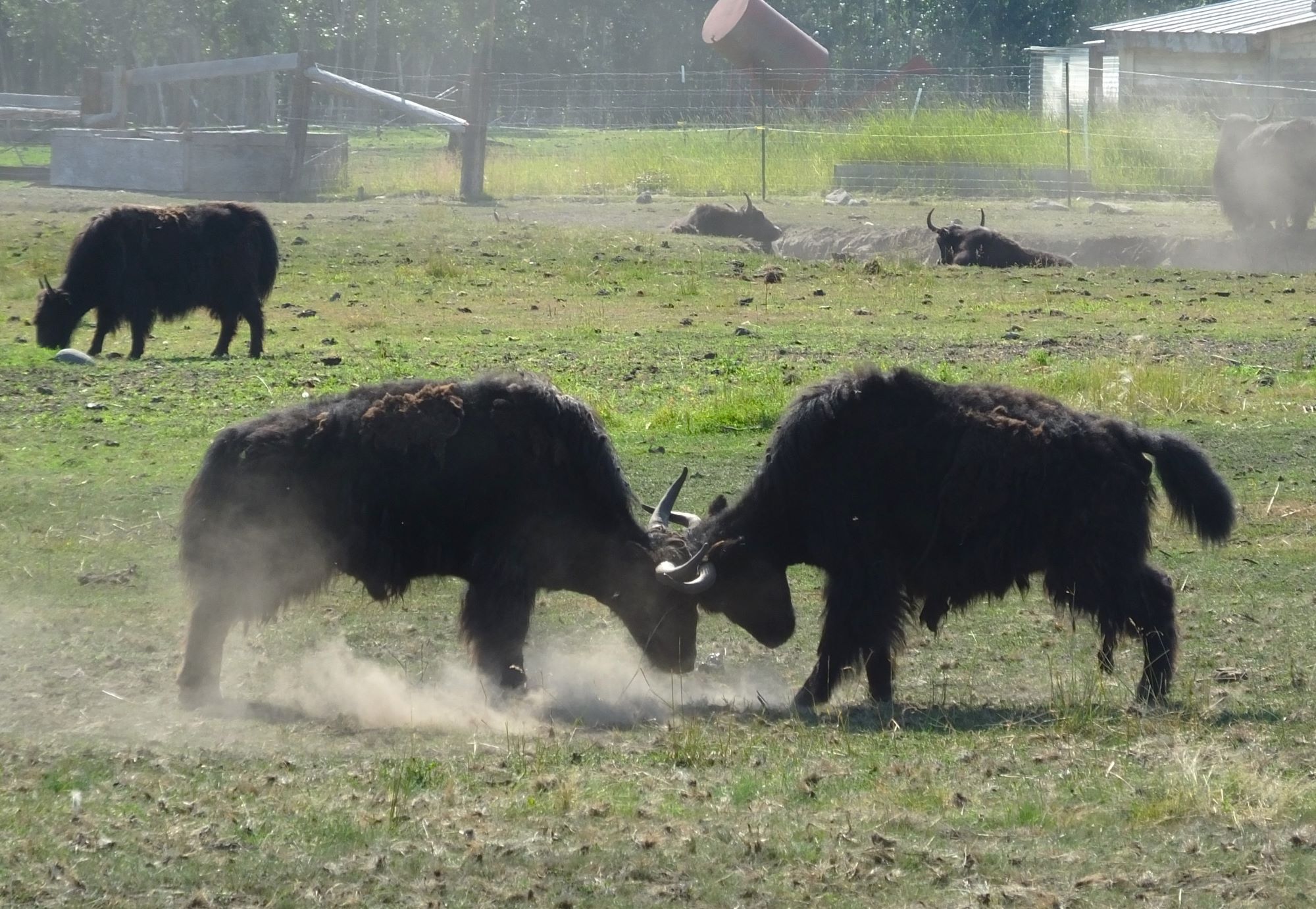
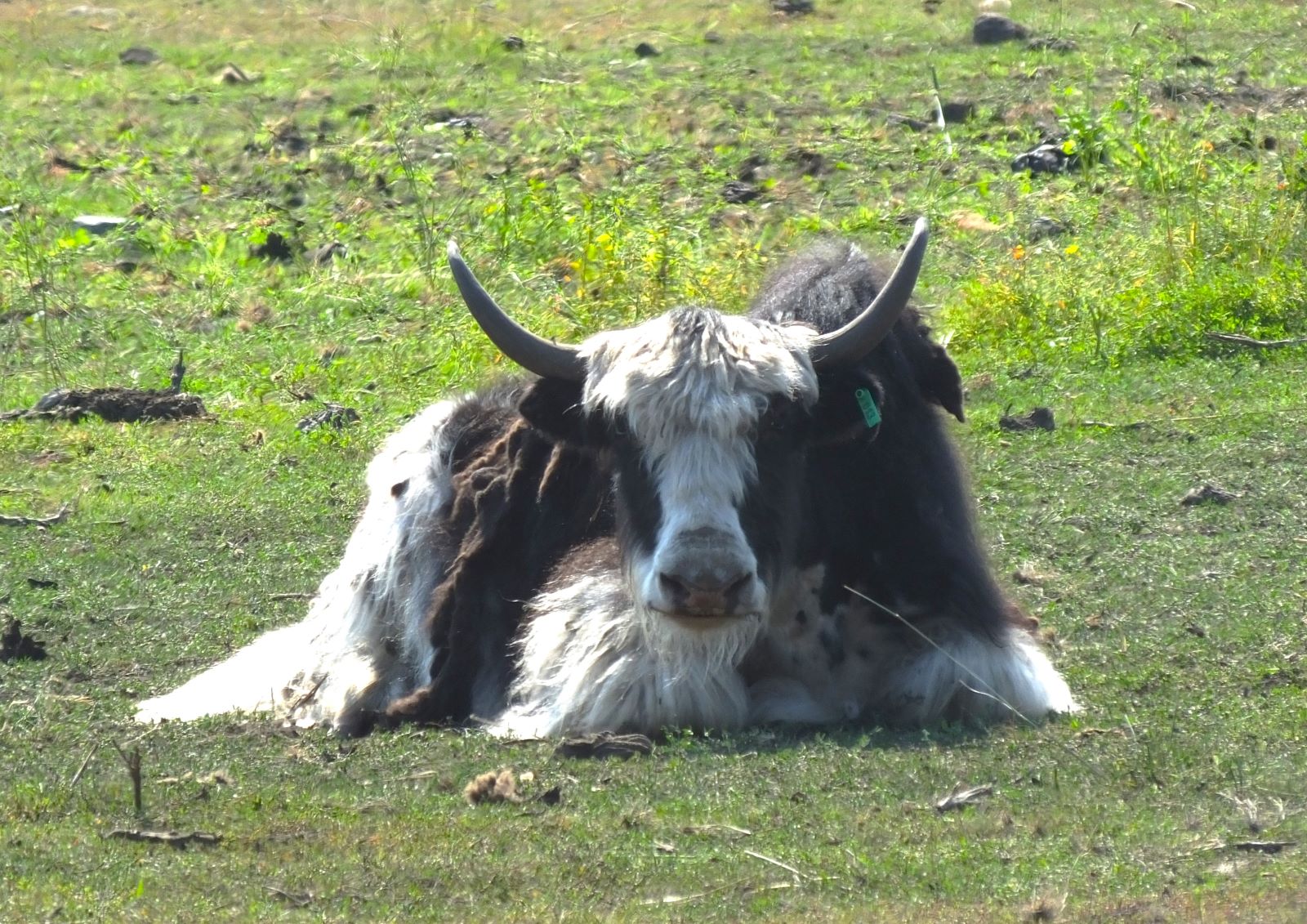
We were surprised to see a herd of yaks as we drove toward Kennecott. They are being raised at the Circle F Ranch
To the northeast were ghostly silhouettes of the Wrangell Mountains, hard to see due to smoke from fires in central Canada. Several of the mountains are nearly as tall as Denali, and on a clear day we were told the view is spectacular.
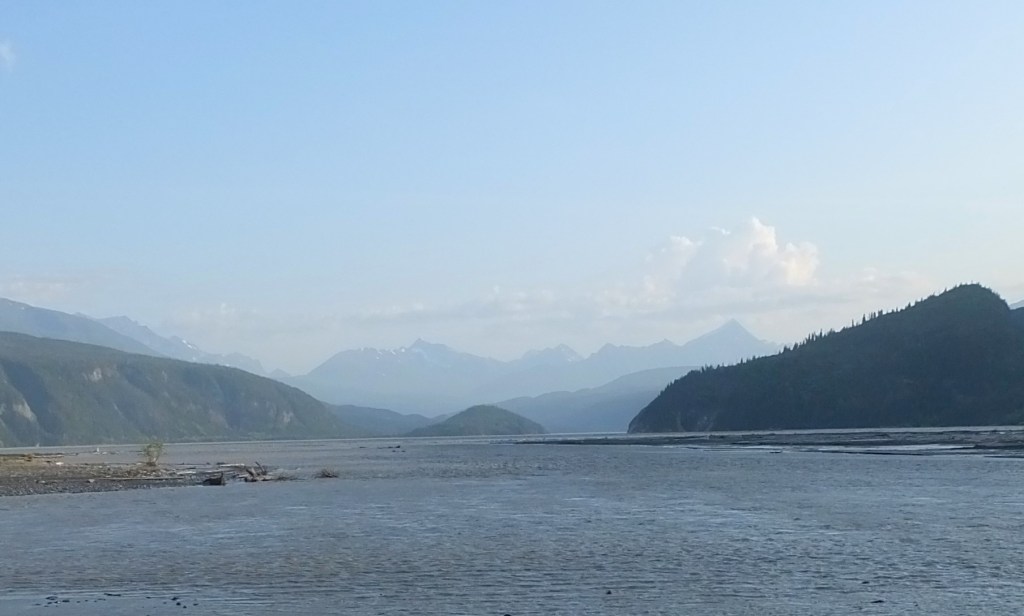
The Wrangell and St Elias mountains are part of America’s largest national park. During our drive to Alaska in June we visited Canada’s Kluane National Park on the other (eastern) side of these mountains. Together they make up the largest international protected area in the world.
The Kennecott Mines are a special historic district within the Wrangell-St Elias NP.
Kennecott Bound
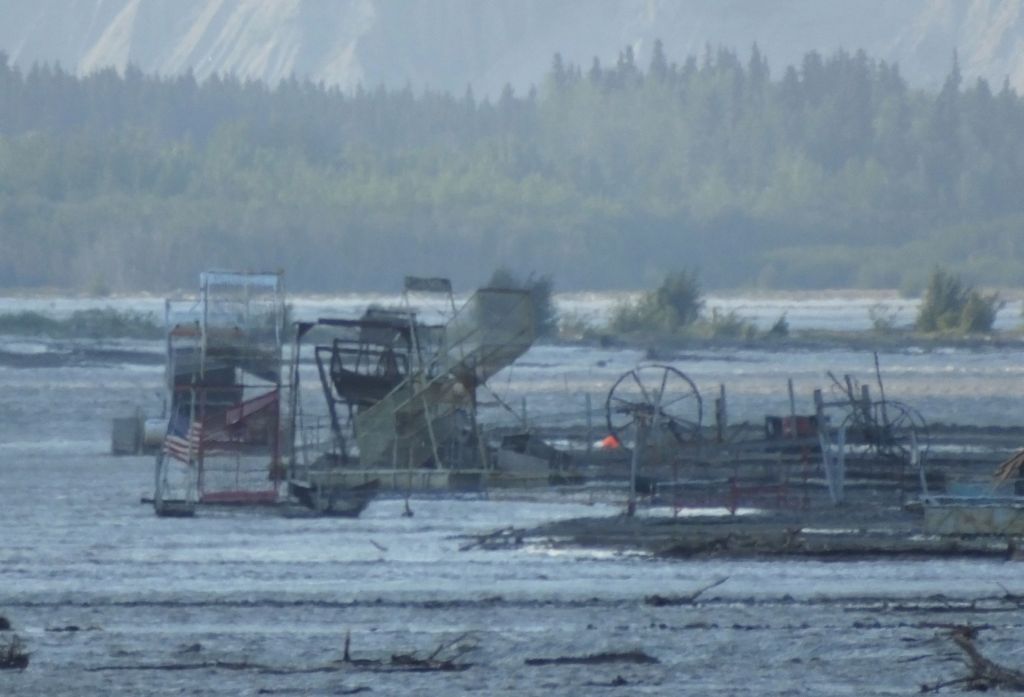
We dry camped at a state park on the banks of the Copper River, about a third of the way to the Kennecott Mines. Copper River salmon are prized for their distinctive taste.
The highway is not paved past the Copper River Bridge and quite rough and dusty as it follows an old railroad bed. We were warned that railroad spikes occasionally surface, and not wanting to risk a flat tire, we decided to take a shuttle to the Kennecott instead.
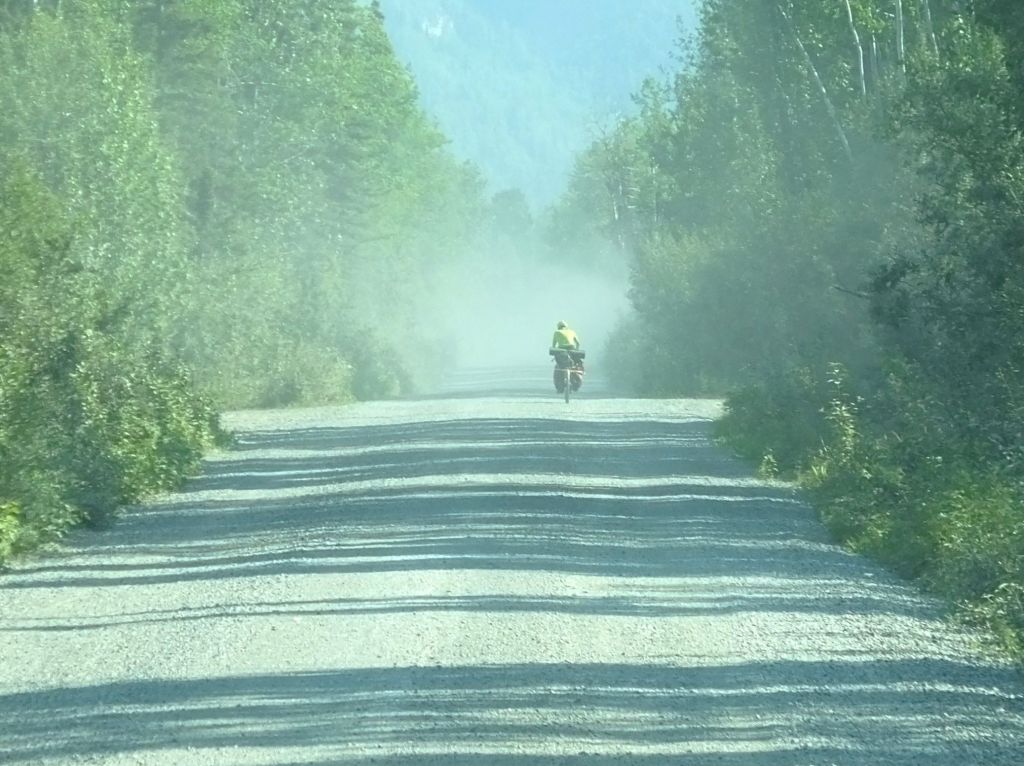
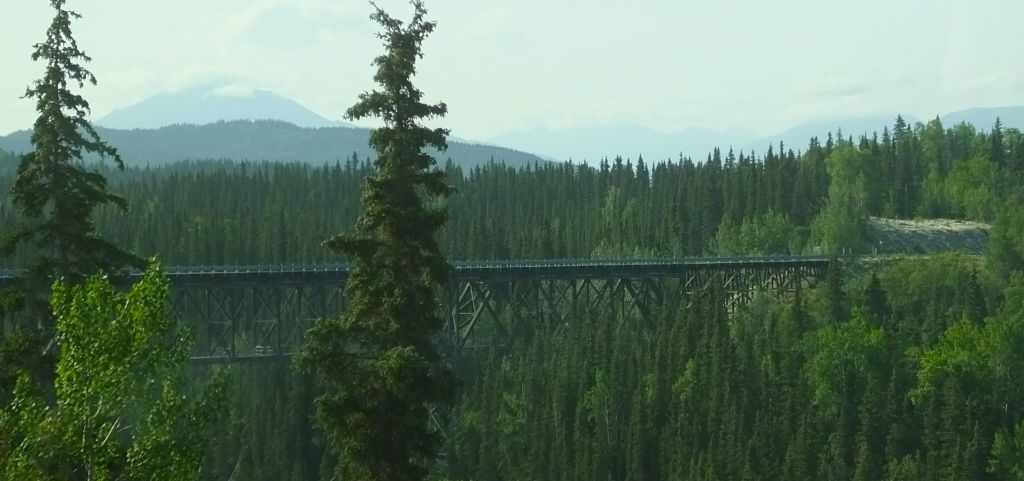
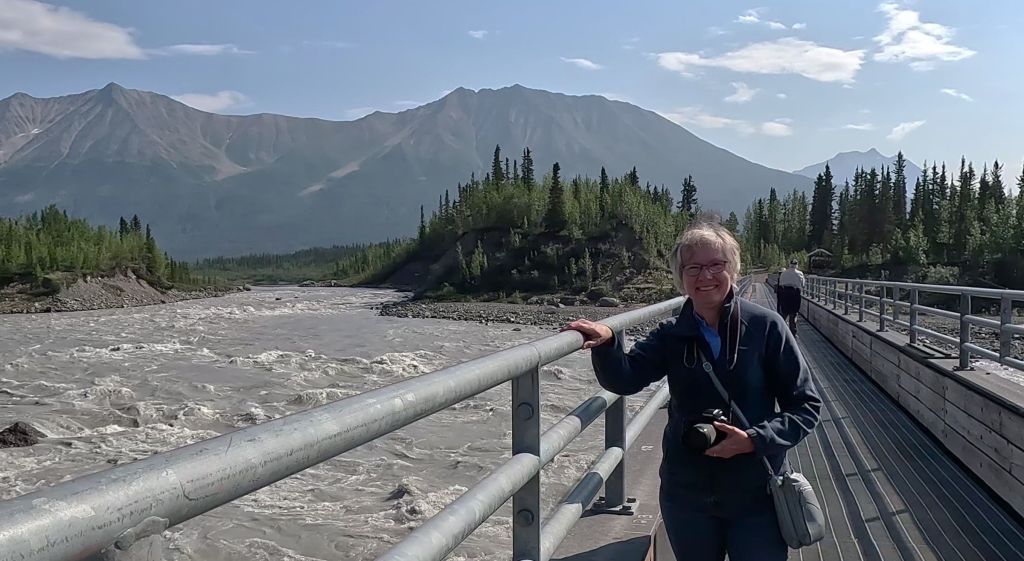
After nearly three hours, we arrived at the Kennicott River where we walked across a narrow footbridge that spans the river. The Kennecott Mines were still five miles away, so we rode a second shuttle past McCarthy on our way to the mines.
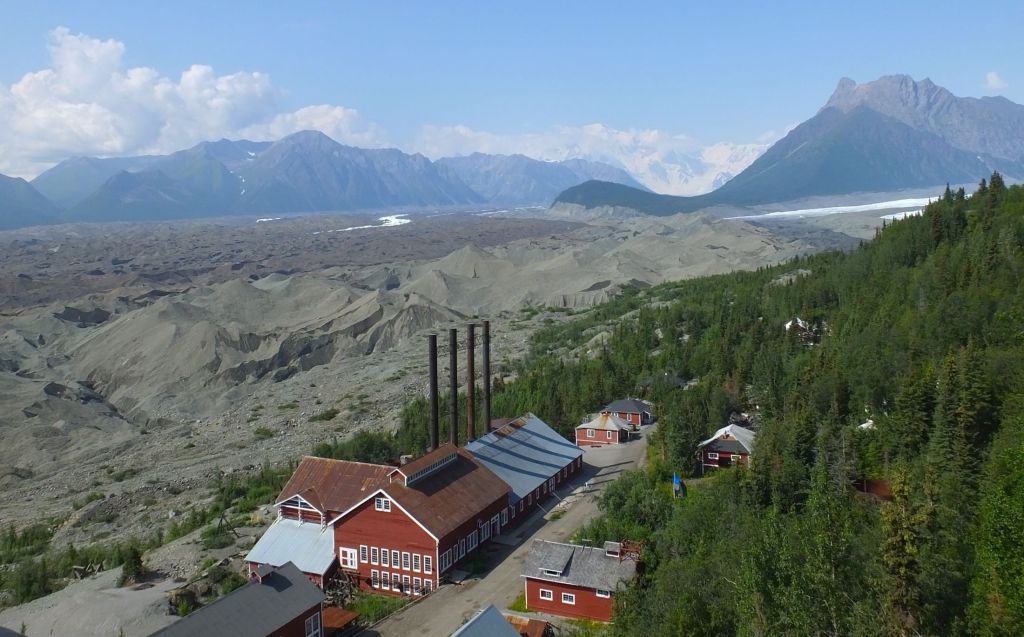
As we neared the mines, we could see the Root Glacier extending from the distant mountains and a broad area of gravel mounds adjacent to the mining area. Although the gravel piles might appear to be tailings from the mine, they are actually on top of a thick layer of ice, part of the Kennicott Glacier.
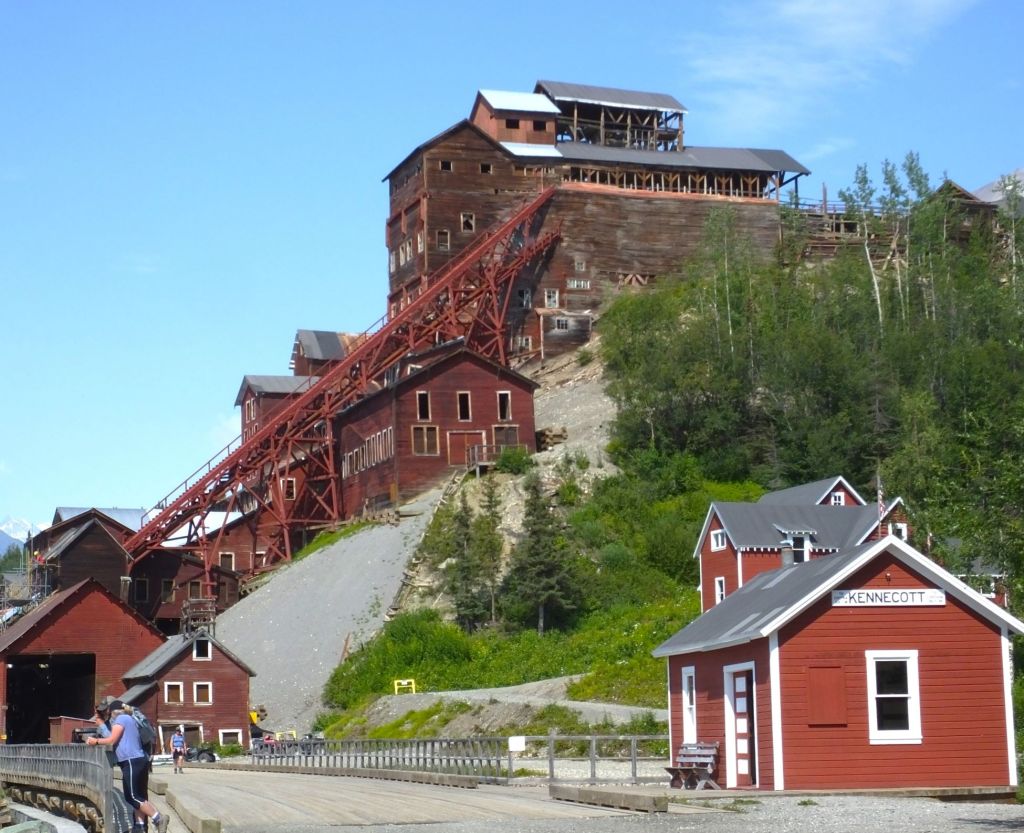
The Kennecott Mining District has informative displays that explain the history of the area along with more than two dozen restored and well-preserved buildings, including the prominent concentration mill, machine shops, a general store, living quarters for laborers and skilled workers, several houses for senior staff on a hill overlooking the district (known as Silk Stocking Row), a hospital and more.
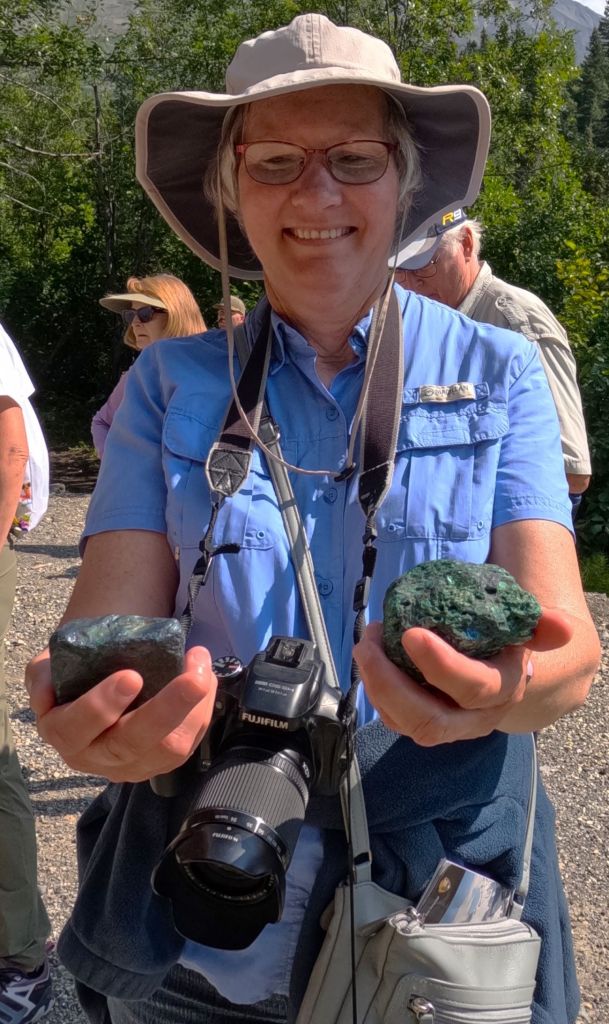
During a two-hour tour we walked through the mining district, where we learned that copper ore was extracted from five mines near the top of the nearby mountains (from 77+ miles of tunnels) and transported via several tramways to the red concentration mill.
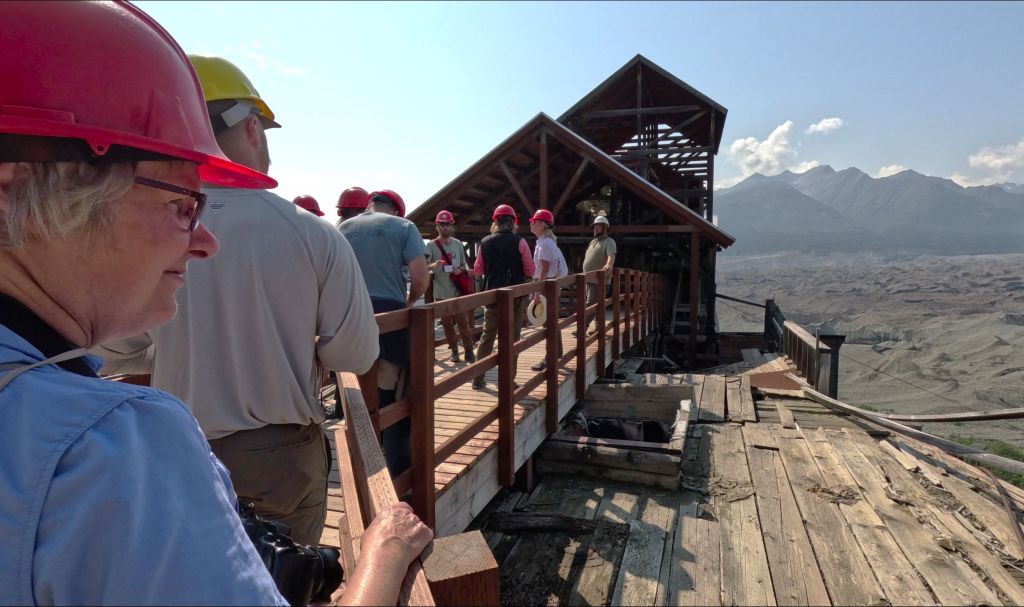
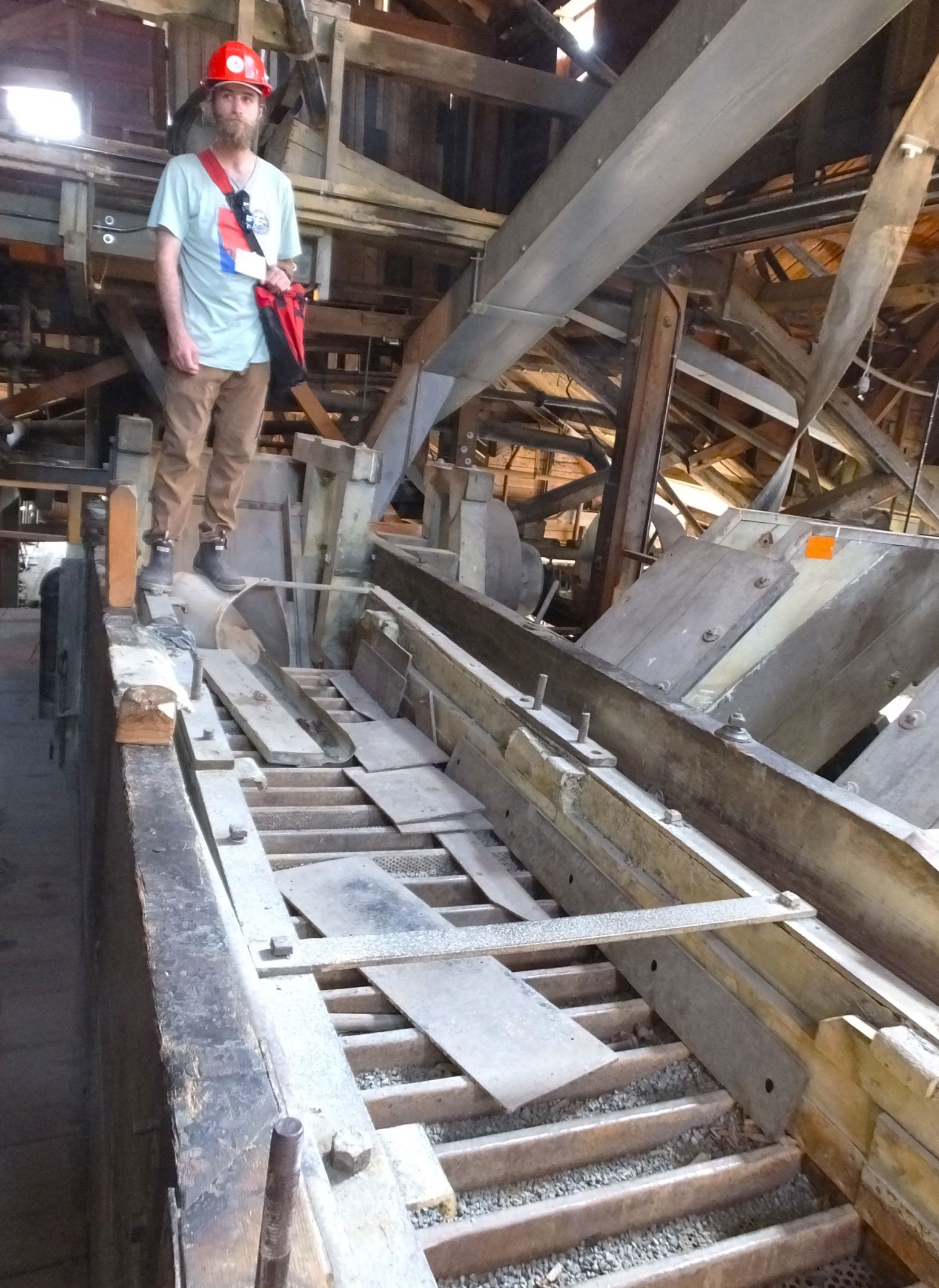
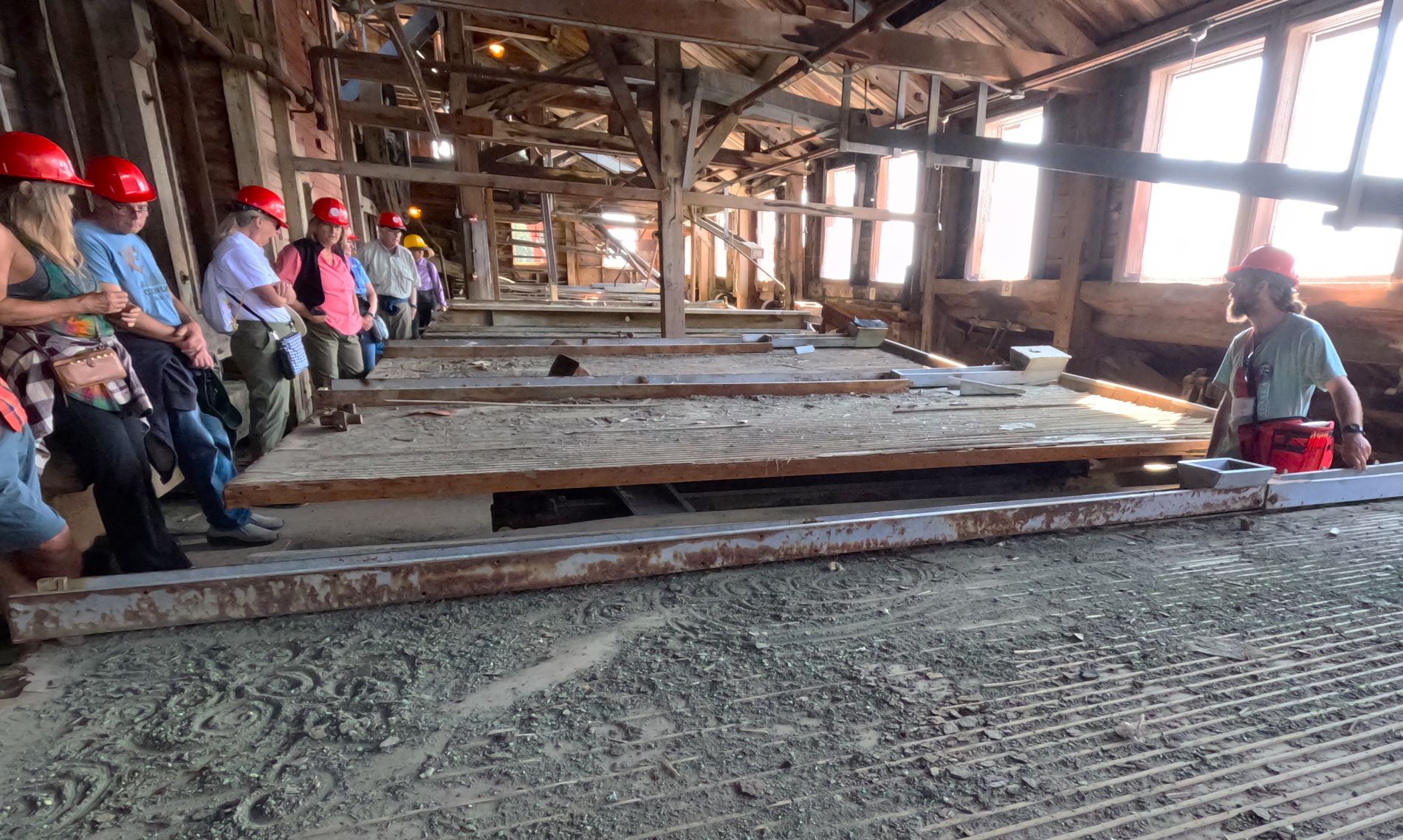
Our guide Patrick explains after the copper ore was crushed, it was shaken and sifted on multiple tables like these. Ore with a higher concentration of copper settled to the bottom
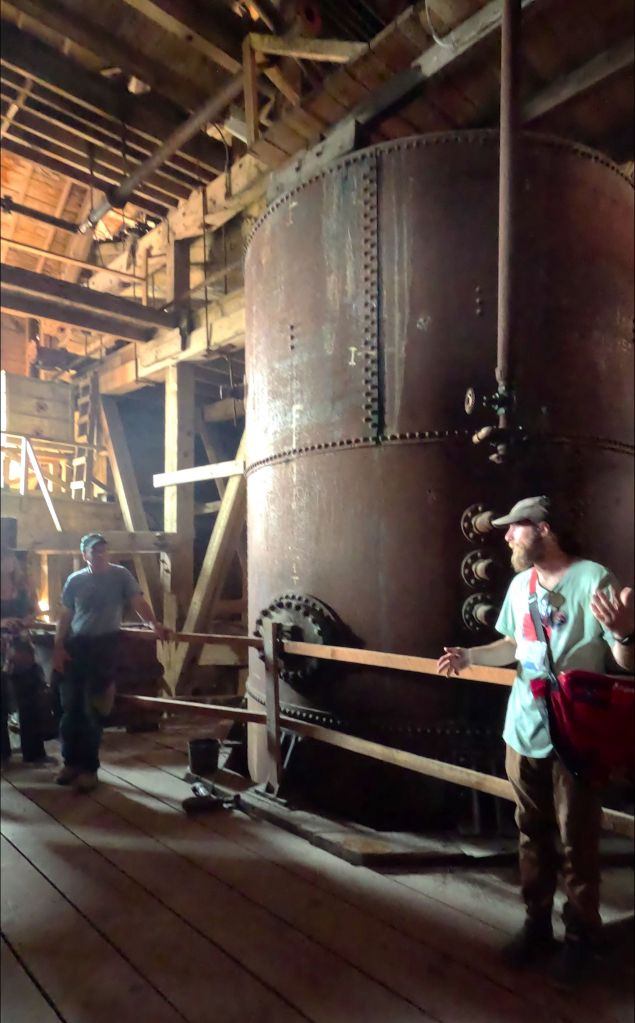
At the top of the 14-story concentration mill, we donned hard hats and descended several sets of steep stairs to various levels where copper ore was crushed, shaken and sifted numerous times and in different ways. After non-copper particles were removed, the resulting 72+ percent copper mix was put into 140-lb bags and shipped by the Copper River and Northwestern (CR&NW) railroad to Cordova, Alaska. From there, the ore was transported by ship to Tacoma, Washington, where copper smelting took place.
The CR&NW railway itself has an interesting history. Engineers had to overcame significant challenges of rivers, glaciers, canyon crossings and weather. Each spring portions of the 196-mile railway had to be rebuilt. Reflecting the impact of the challenges, some referred to the CR&NW as the Can’t Run and Never Will railway.
By the early 1930s the highest grades of ore at the Kennecott Mines were largely depleted, and open pit mines in Utah and Nevada began to produce more copper at a lower cost. The last train left Kennecott on November 10, 1938.
The mines operated from 1909 to 1938, processing over 4.6 billion tons of ore containing nearly 1.2 billion pounds of copper. Total cost of operations was nearly $200 million with a net profit of more than $100 million.

Cinnamon Bun Review
No cinnamon bun bakeries in the wild. Perhaps next week…

Critter Count
Moose – 3
Yaks – 50+
Coyotes – not seen, but heard in the Chitina Campground
Eagles – 10
Black bear – 1
Next Week:
Remote camping in Denali NP and along the Denali Highway.

 Take the LONG Road...
A challenge to get to, but well worth the trip.
LikeLike
Definitely worth it, but we were glad for smoother roads!
LikeLike
Very Nice Ed, after spending in Alaska and beauty of the nature definitely you dont like FL after coming here 🙂
LikeLike
Hi Kishore, for some strange reason we miss the heat/humidity and bugs and such of Florida. I guess that’s why we call it ‘home.’
LikeLike
Great photos with narration! Very interesting visit to the copper mines- can’t imagine that place in January! Having a sense of humor must have been a necessity- CR&NW as the Can’t Run and Never Will railway!
LikeLike
Hi Norm, we’ll stick with Florida in January! Thanks for gracious comments.
LikeLike