
(2023 Alaska Revisited Ep 17)
From Denali State Park where we viewed the Great One, we continued to Anchorage, Alaska’s biggest city. Anchorage has a typical big city feel, with multiple lane highways, urban sprawl, tall downtown buildings, shopping districts with the same chain stores found in the lower 48, and a sizeable homeless population.
Anchorage also has wonderful parks and bike trails, and a beautiful backdrop of tall mountains in Chugach State Park.
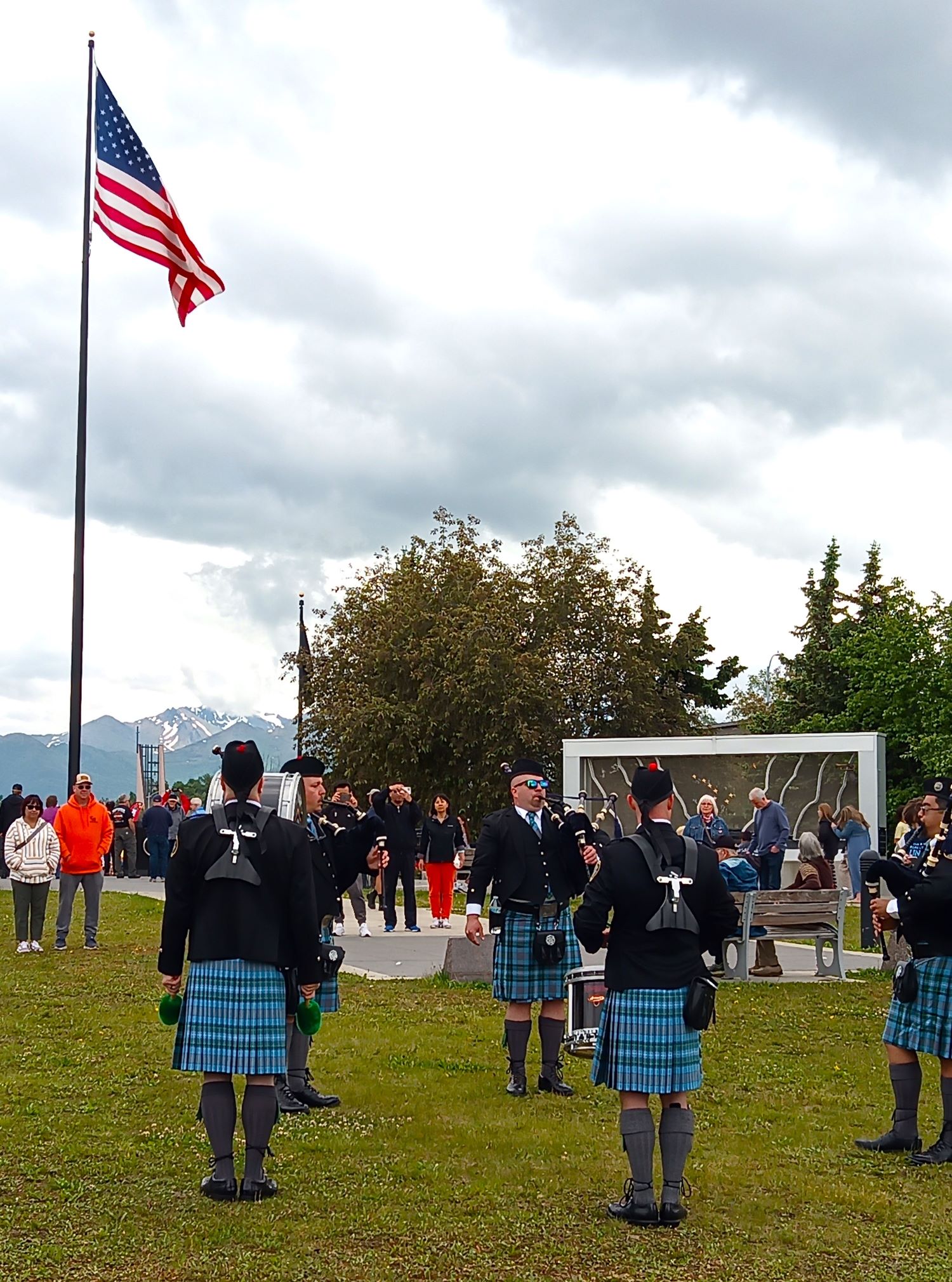
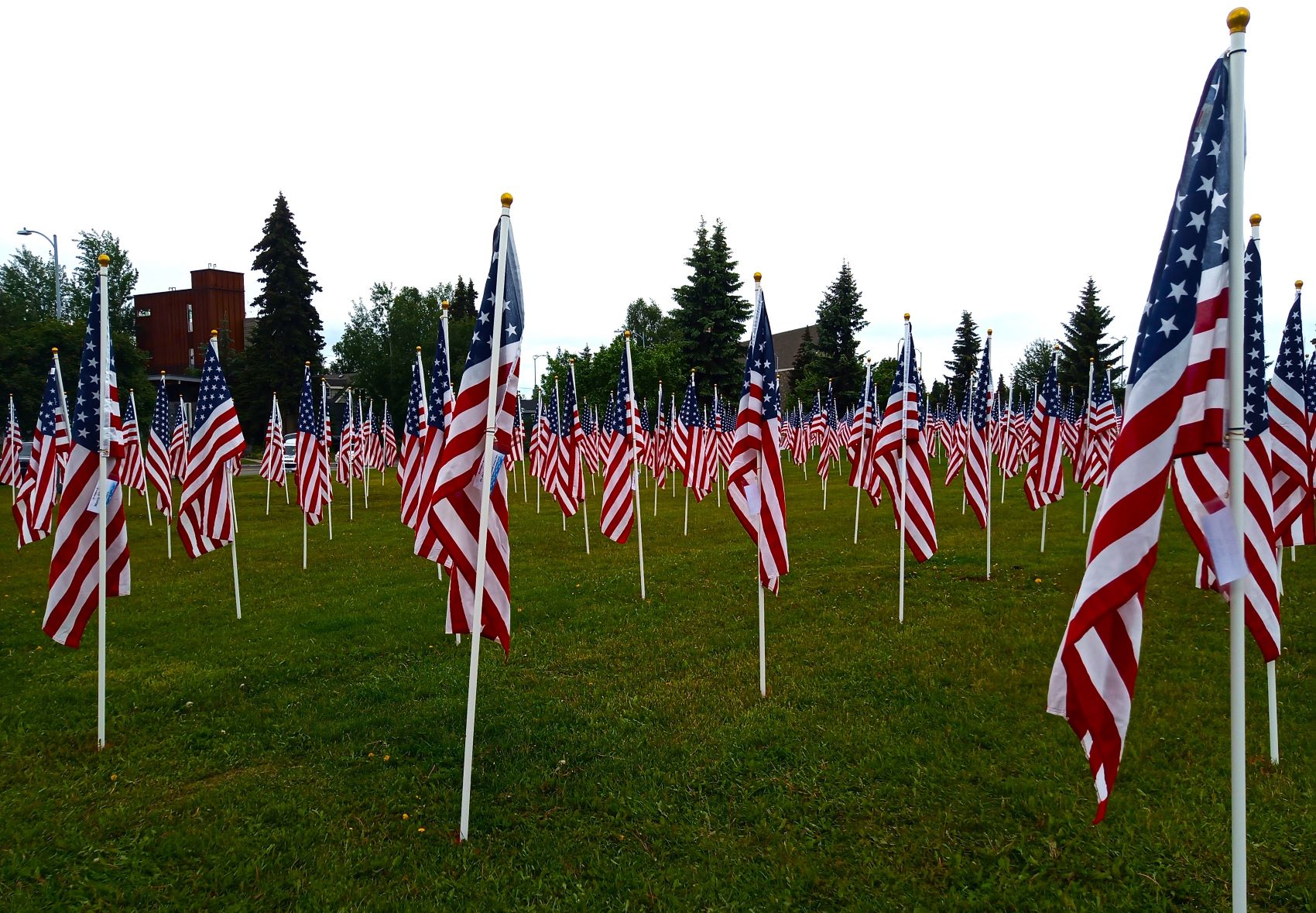
Patriotic 4th of July at Anchorage’s Delaney Park
We spent July 4th in the city, opting to visit the patriotic celebration at Delaney Park. While kilted bagpipers performed in a field of American flags and suited dignitaries gave speeches, the sizeable crowd enjoyed carnival rides and festival foods that included several types of salmon, halibut and chips, and reindeer sausage.
Unlike the sunny and very warm (80s) July 4th celebration we attended in 2018, this year’s event was overcast and sweatshirt cool. We enjoyed the festivities but decided not to come back for the fireworks. They were scheduled at midnight after the (very) late evening sunset in Anchorage.
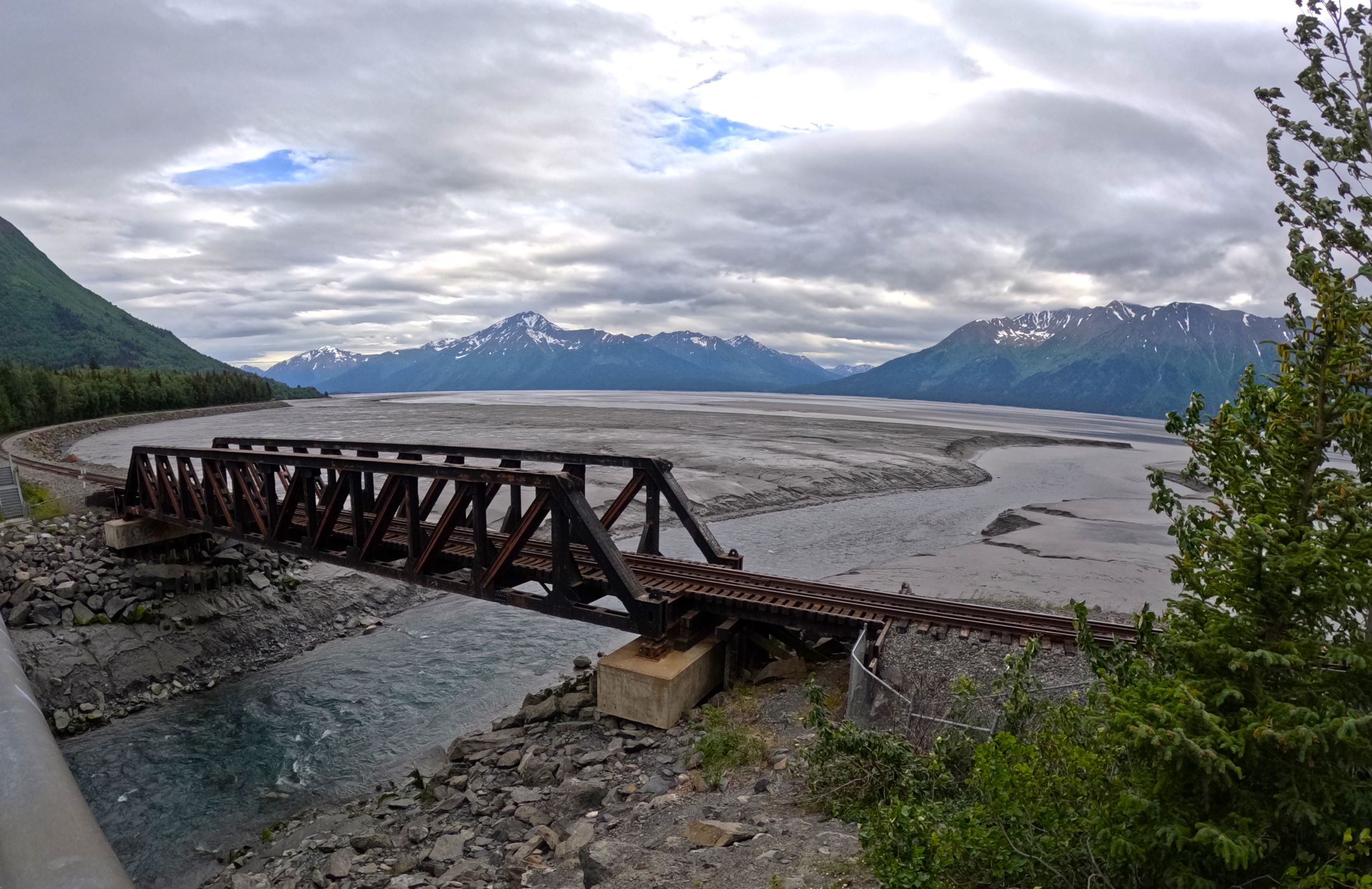
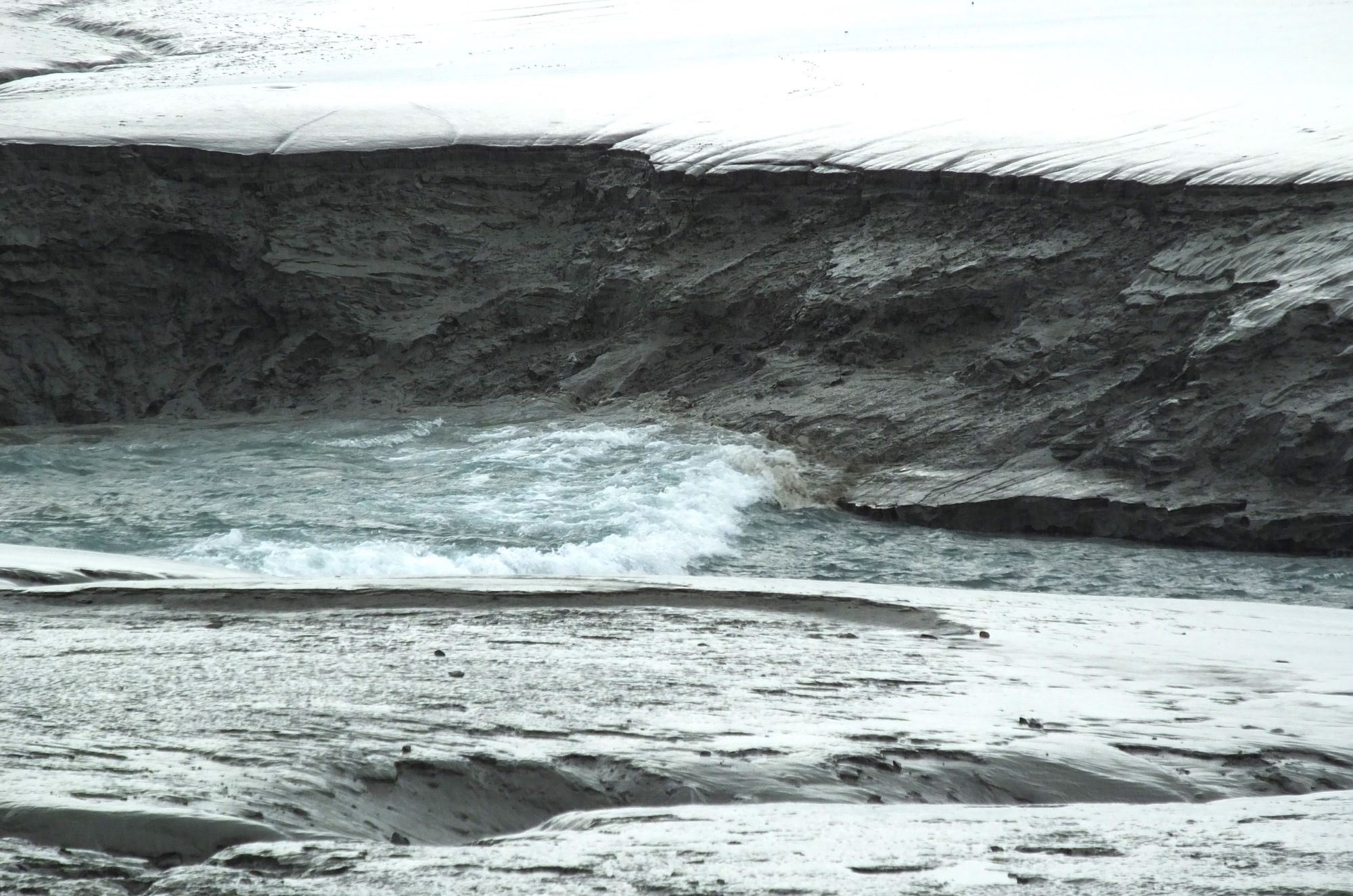
A view across Turnagain Arm showing broad low tide mud flats; tidal bore wave as the sea rapidly flowed up Bird Creek
Turnagain Arm
We left the city for the Kenai Peninsula and our route took us along Turnagain Arm, a 40-mile-long bay southeast of Anchorage with 30-foot tidal fluctuations. Broad mudflats and deep mud canyons are revealed at low tide.
We walked a half mile from our campsite at Bird Creek SP and watched the tidal bore come up Bird Creek. The wave, at times several feet tall, moved quickly.
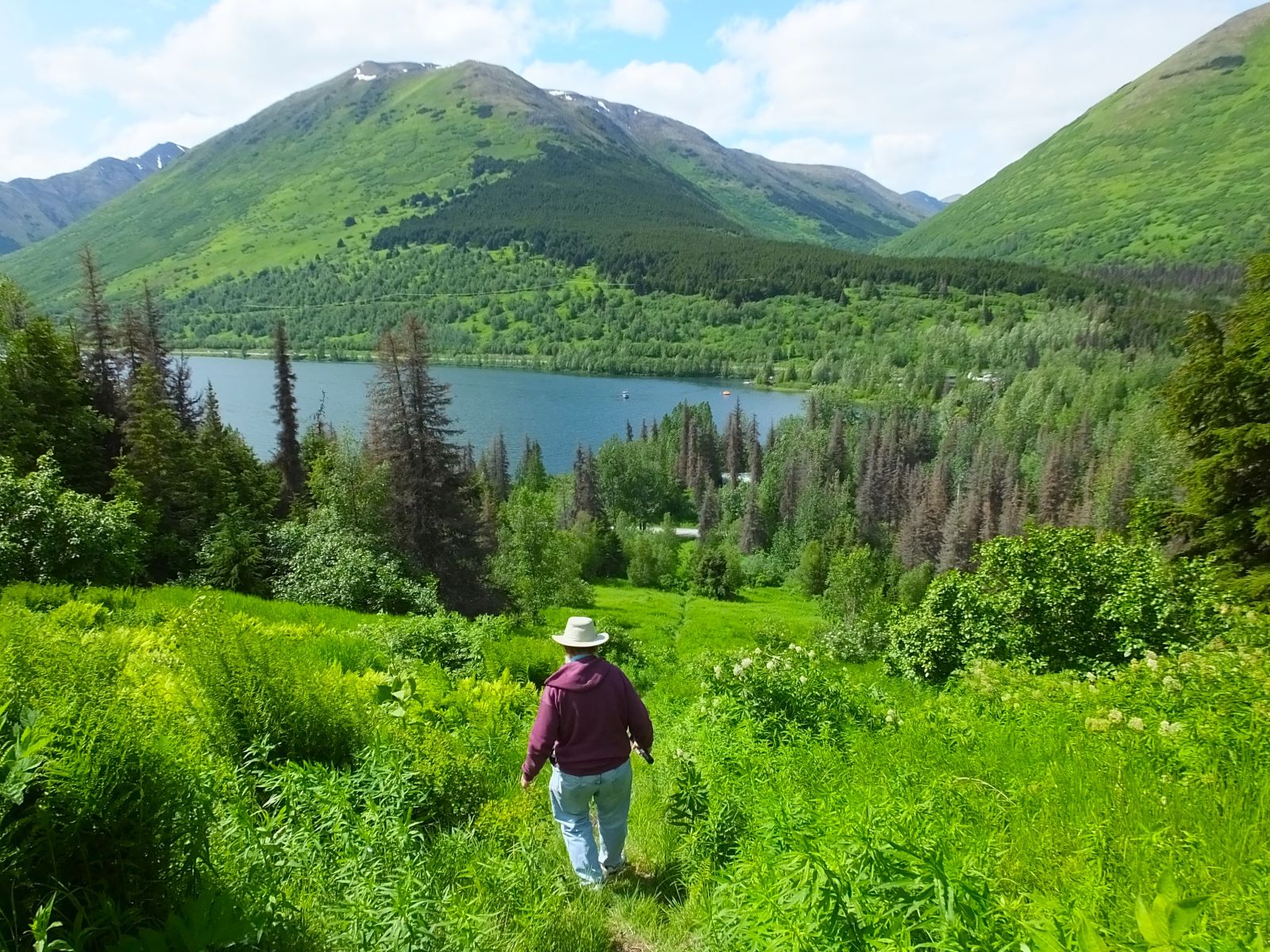
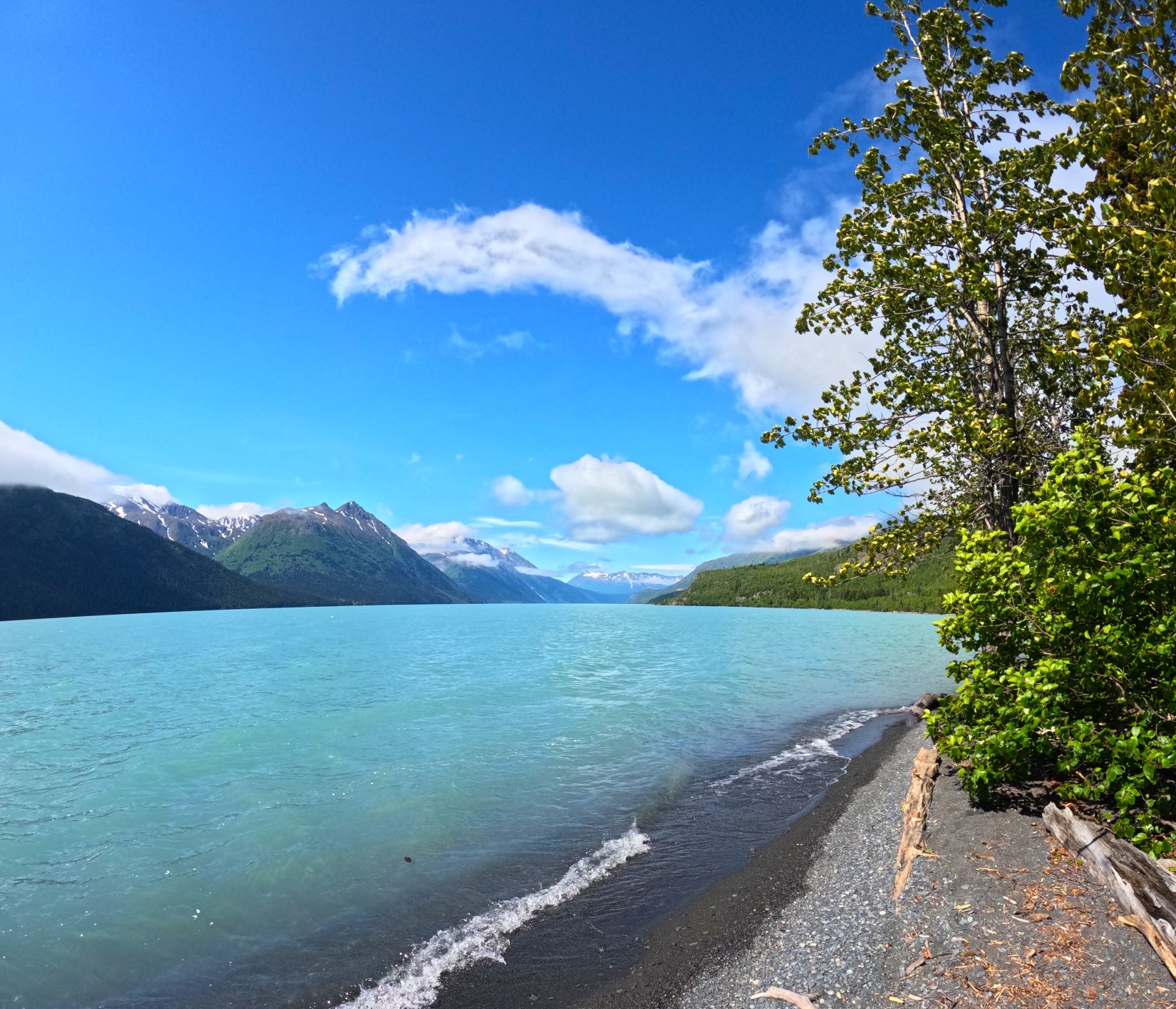
Kenai Views: hiking above Summit Lake and a shoreside view of turquoise Kenai Lake
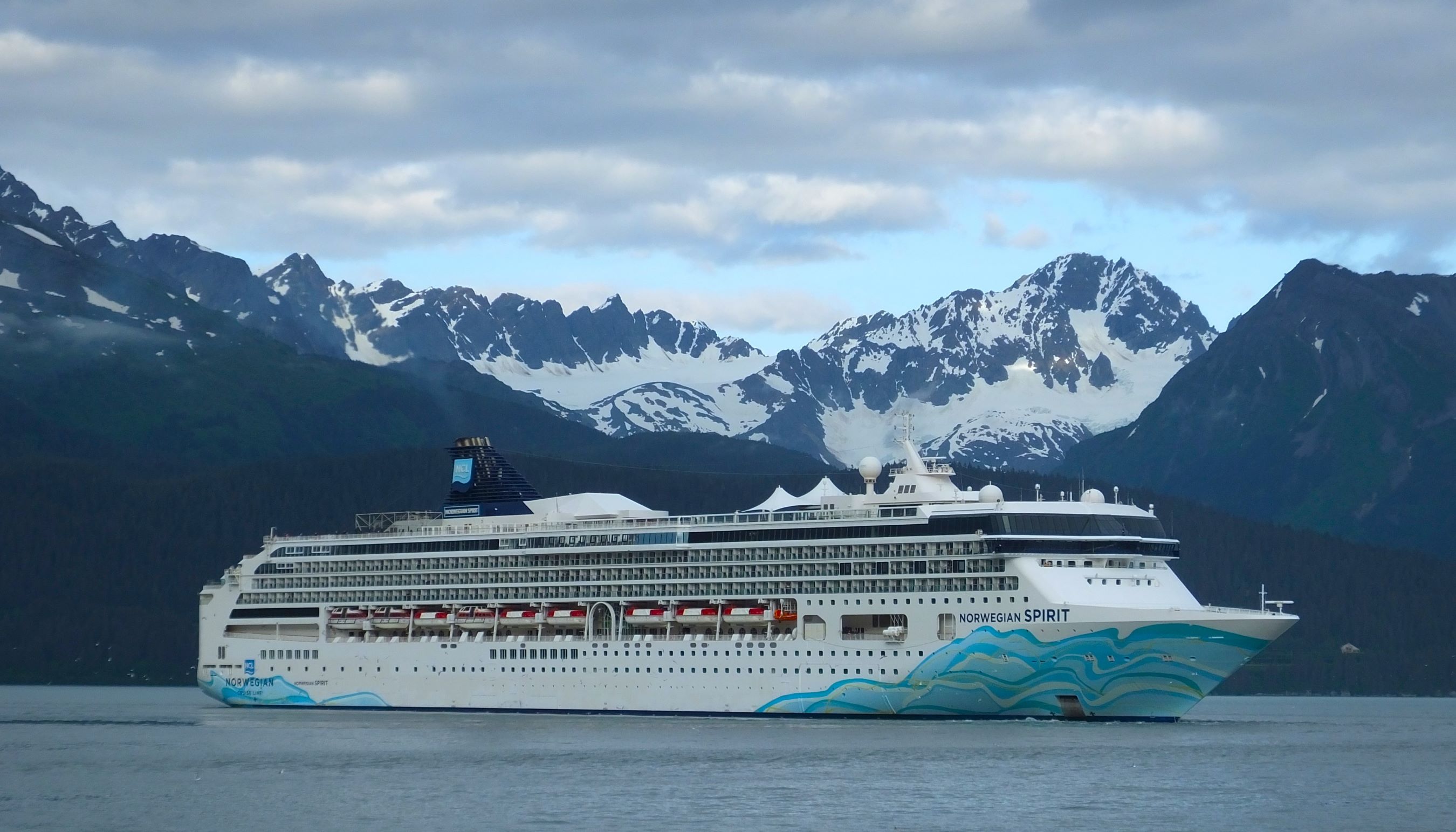
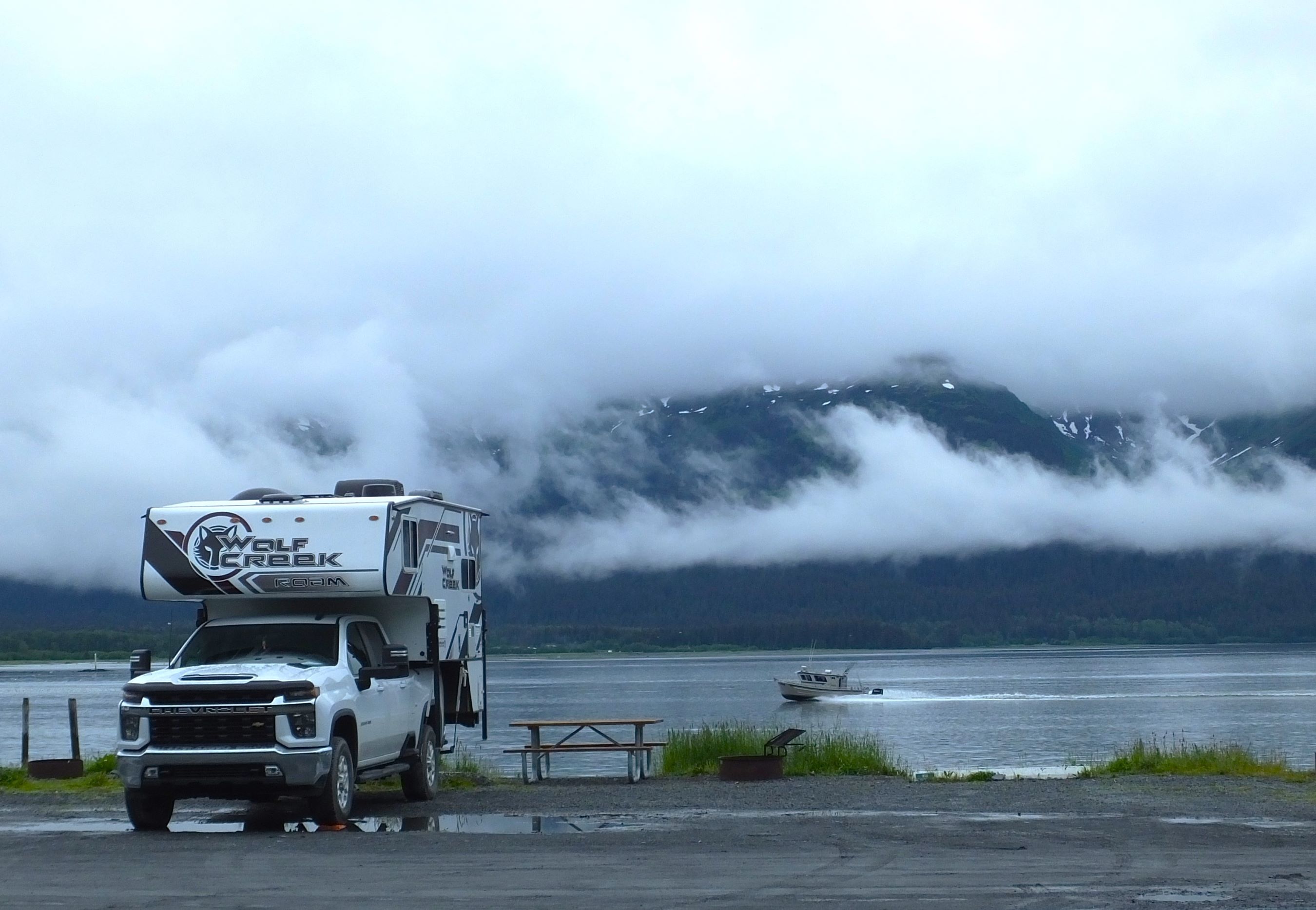
Norwegian Spirit departing the Seward Harbor; at first, fog and low clouds blocked the view from our campsite
Waterfront Camping in Seward
We drove on to Seward, a small town on the Prince William Sound. From Seward, cruise ship passengers can journey by train to Anchorage, Denali and Fairbanks. Others take day trips to Kenai Fjords National Park to see tidewater glaciers, whales, seals and sea lions, and a variety of coastal birds. Many go on fishing charter boats as well.
We camped at a city campground on the waterfront. It was raining when we arrived and the mountains that surround the town were shrouded in fog and rain. The weather slowly cleared over the next day and a half. By mid-day thick morning fog burned off and we could see the bottom half of the mountains across the inlet. Finally, the entire mountains were visible the next morning, framed by the beautiful sky. The wait was worth it!
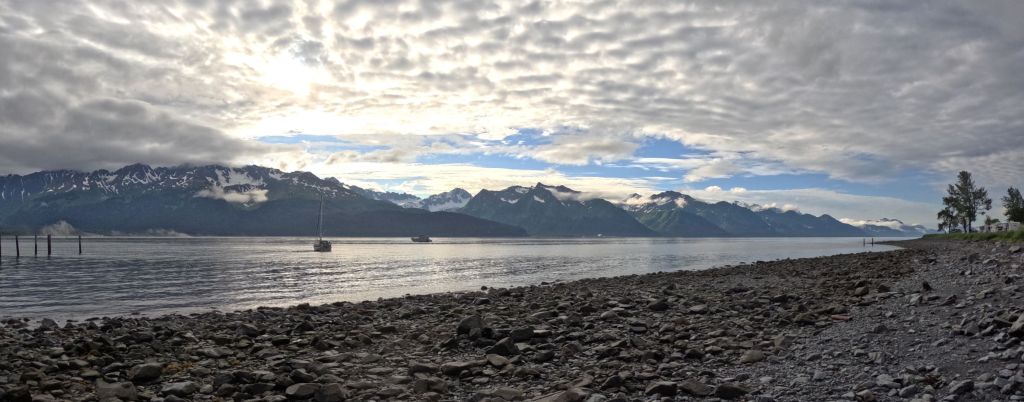
Typical of many campgrounds in Alaska, our campground was a gravel parking lot with deep potholes everywhere. There were few amenities. Other campers were just a few feet away.
Despite these shortcomings, the location was amazing. We enjoyed magnificent mountain views, rode our bikes throughout the town, and discussed our Alaska experiences with other campers.
We met a dad, mom and teenaged son from Bend, Oregon camped in a small teardrop camper next to us. Dad was between jobs and mom, a schoolteacher, was free for the summer. They were excited to visit Alaska for the first time.
Brad, another camper from Washington, stopped by to say hello. It was the fourth time we met during this trip. He, his wife and two golden retrievers were camping at a Yukon Provincial Park in June when we first met. We later connected at Whitehorse and Tok. It’s very possible we may meet again!
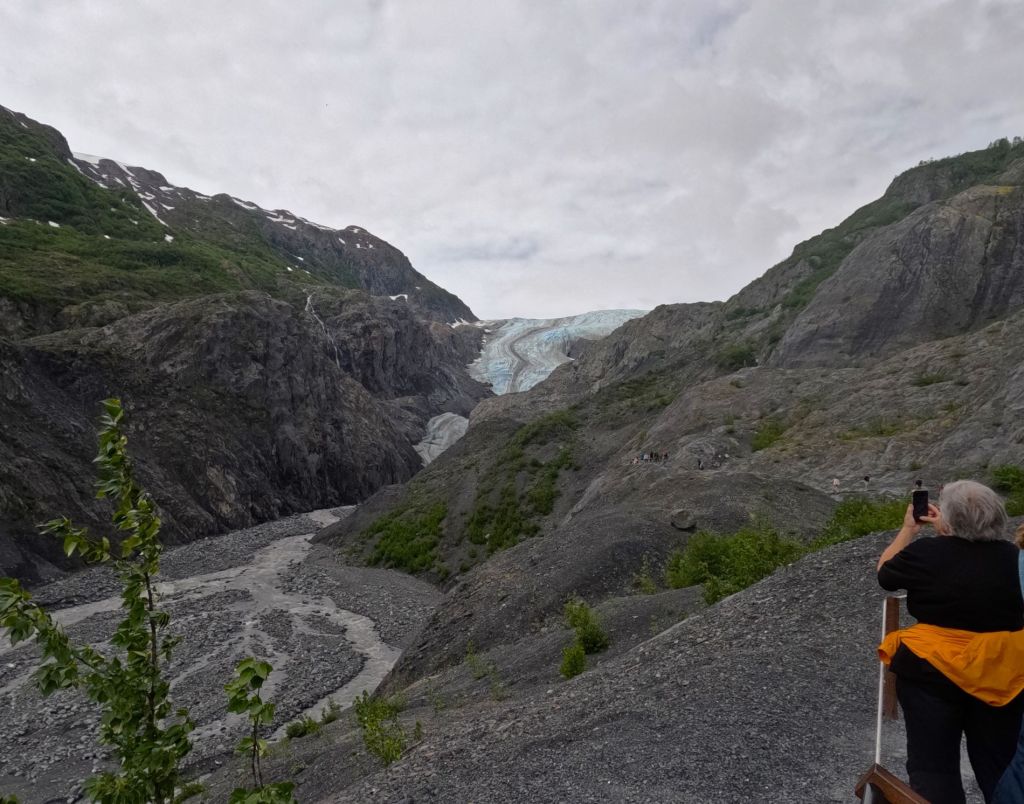
The next morning, we visited Kenai Fjords NP, a few miles outside Seward. Our hike up a short trail to view the base of Exit Glacier was delayed 30 minutes as we endured a Moose Encounter of the Kenai Kind (photos below).
The restless moose wandered around the parking lot and nature center, while park staff kept visitors at a safe distance. She snacked on grass and tree branches, and even examined the center activity board before knocking it over. When she finally wandered into the woods, we were able to continue our hike.
From a viewpoint at the end of the trail, we could see the blue ice of the glacier well above the valley floor. It extends downward from the massive Harding Ice Field at the top of the mountains. We later explored the broad rocky outwash plain below the glacier, where we were amazed at how much meltwater continually flows from the glacier and icefield.
Williwaw and Whittier
The weather was clear when we left Seward after three days. We decided to detour a few miles to visit Williwaw Campground and Portage Glacier, and to drive to Whittier via a 2.5-mile tunnel. We endured heavy rains in 2018 at both stops and were looking forward to clearer weather this time.
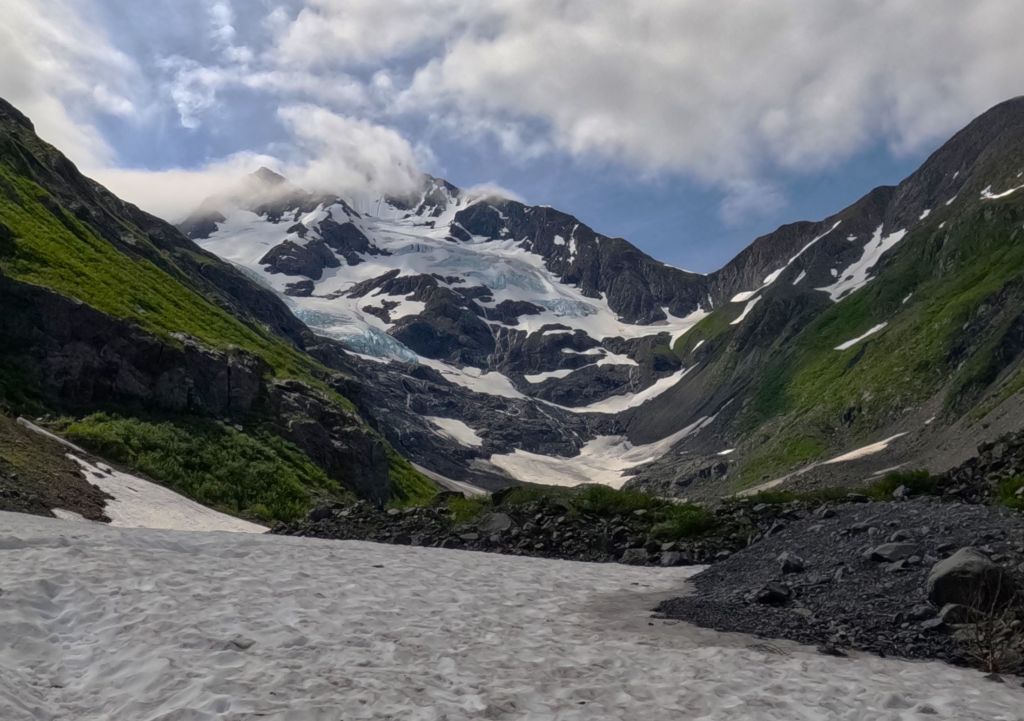
From the campground, we rode our bikes to Portage Glacier Visitor Center. Located on a beautiful lake beneath the glacier, the center has interesting natural history and geology exhibits. Outside, it was clear, breezy and cool, and after eating a sack lunch, we secured our bikes and hiked to Byron Glacier. Like most of the glaciers in the region, the melting glacier is quickly retreating up the valley.
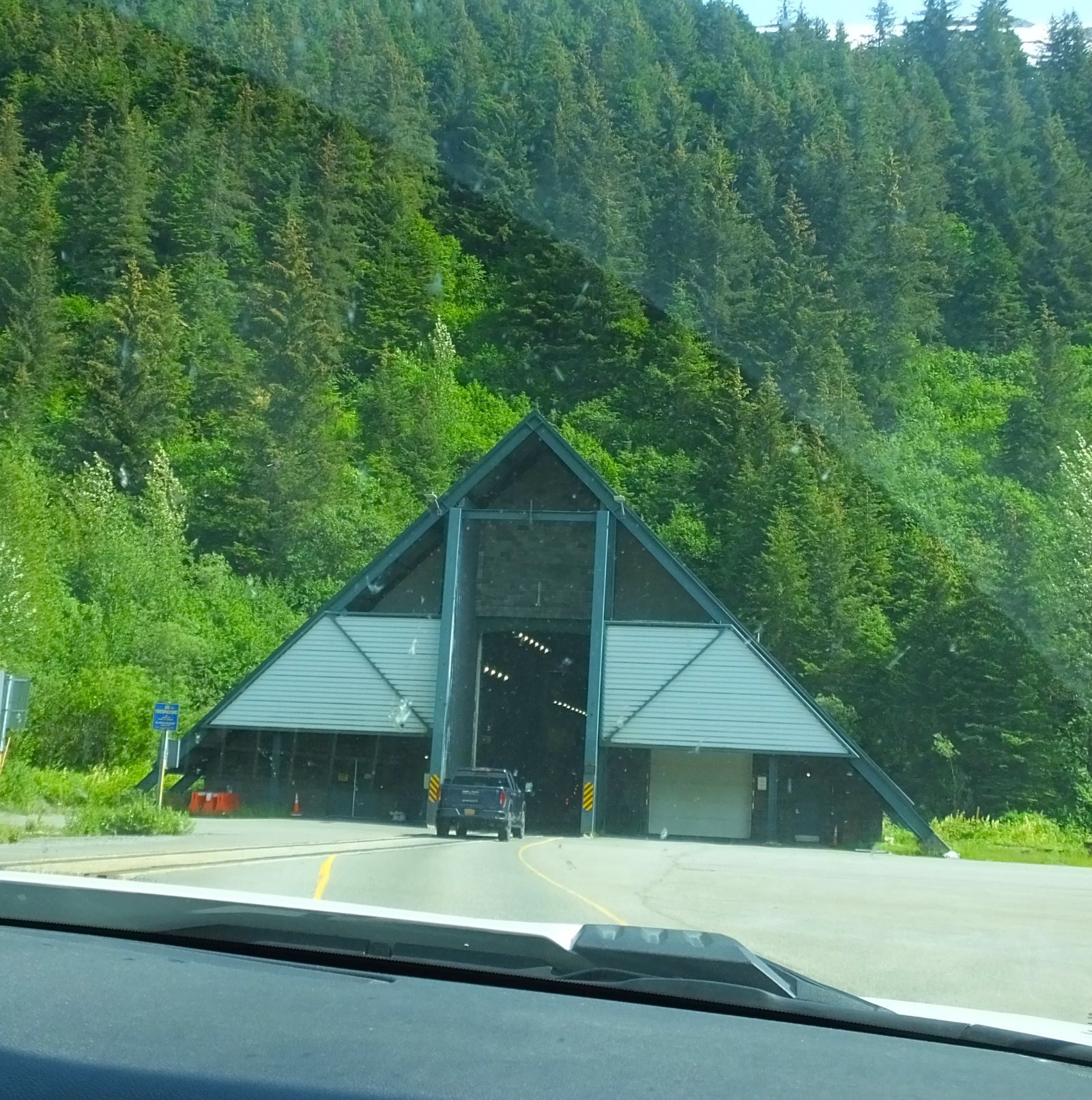
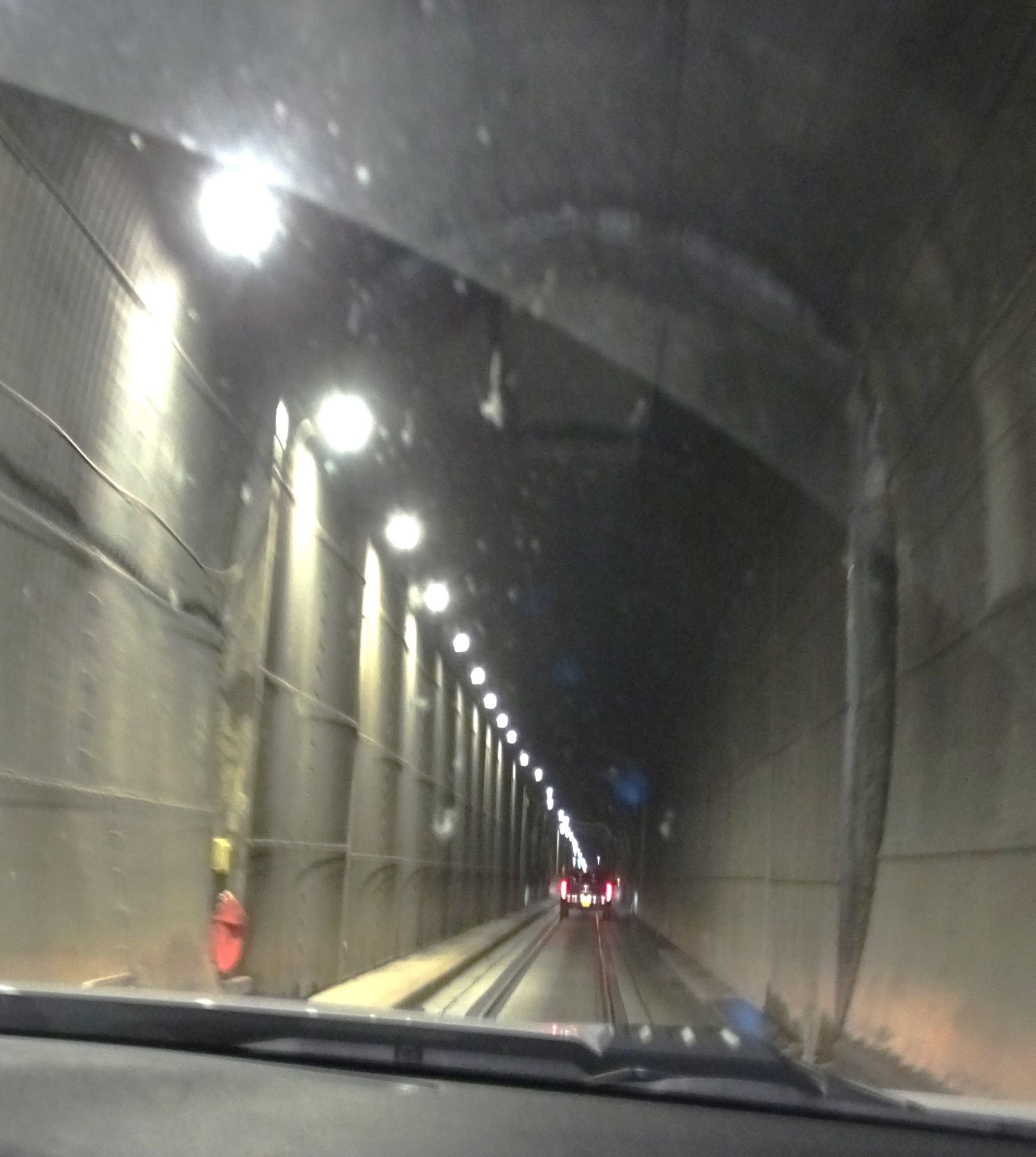
Narrow entrance to 2.5 mile single lane tunnel to Whittier; trains and vehicles share the tunnel
That afternoon we drove through the long and narrow tunnel to Whittier.
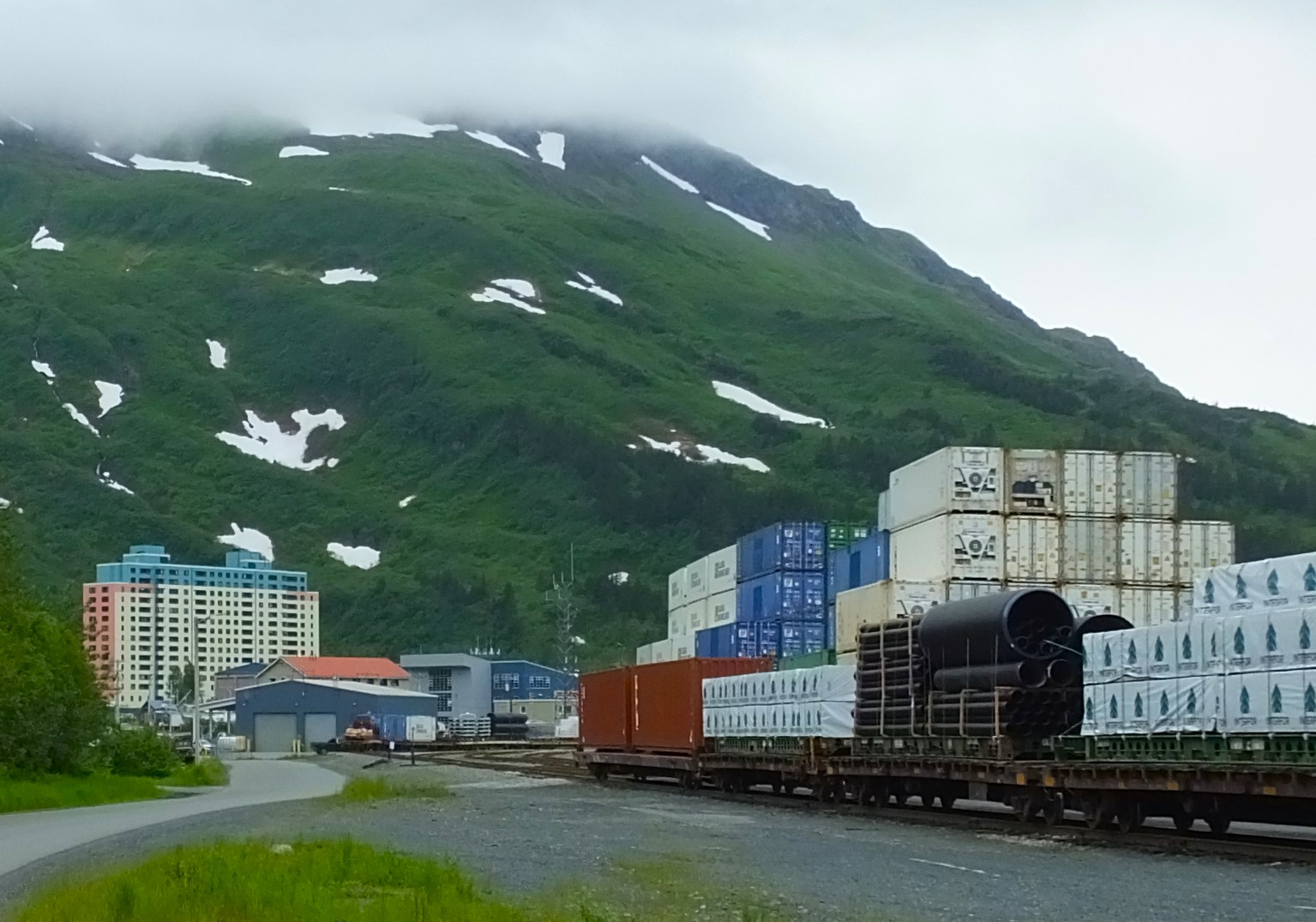
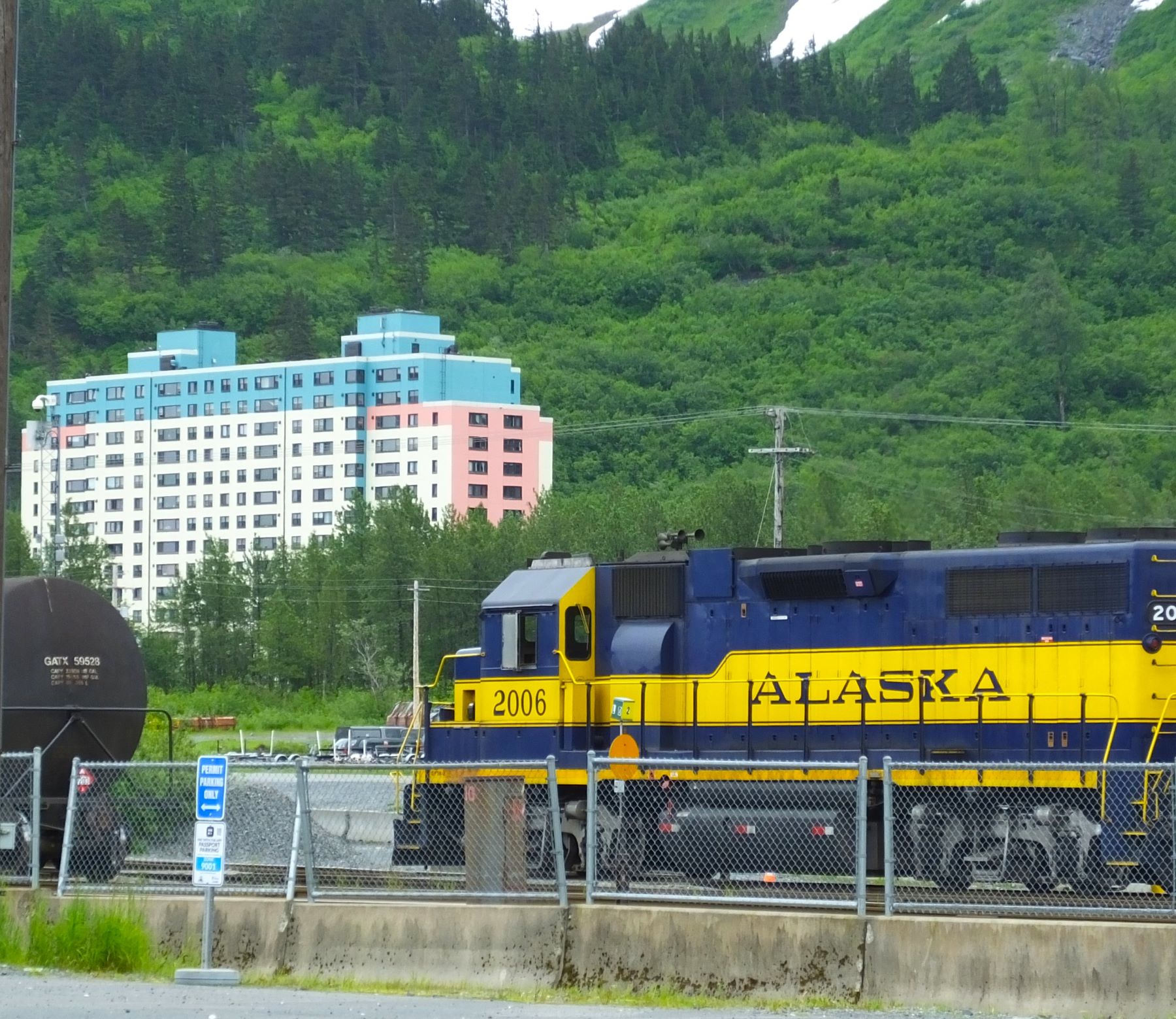
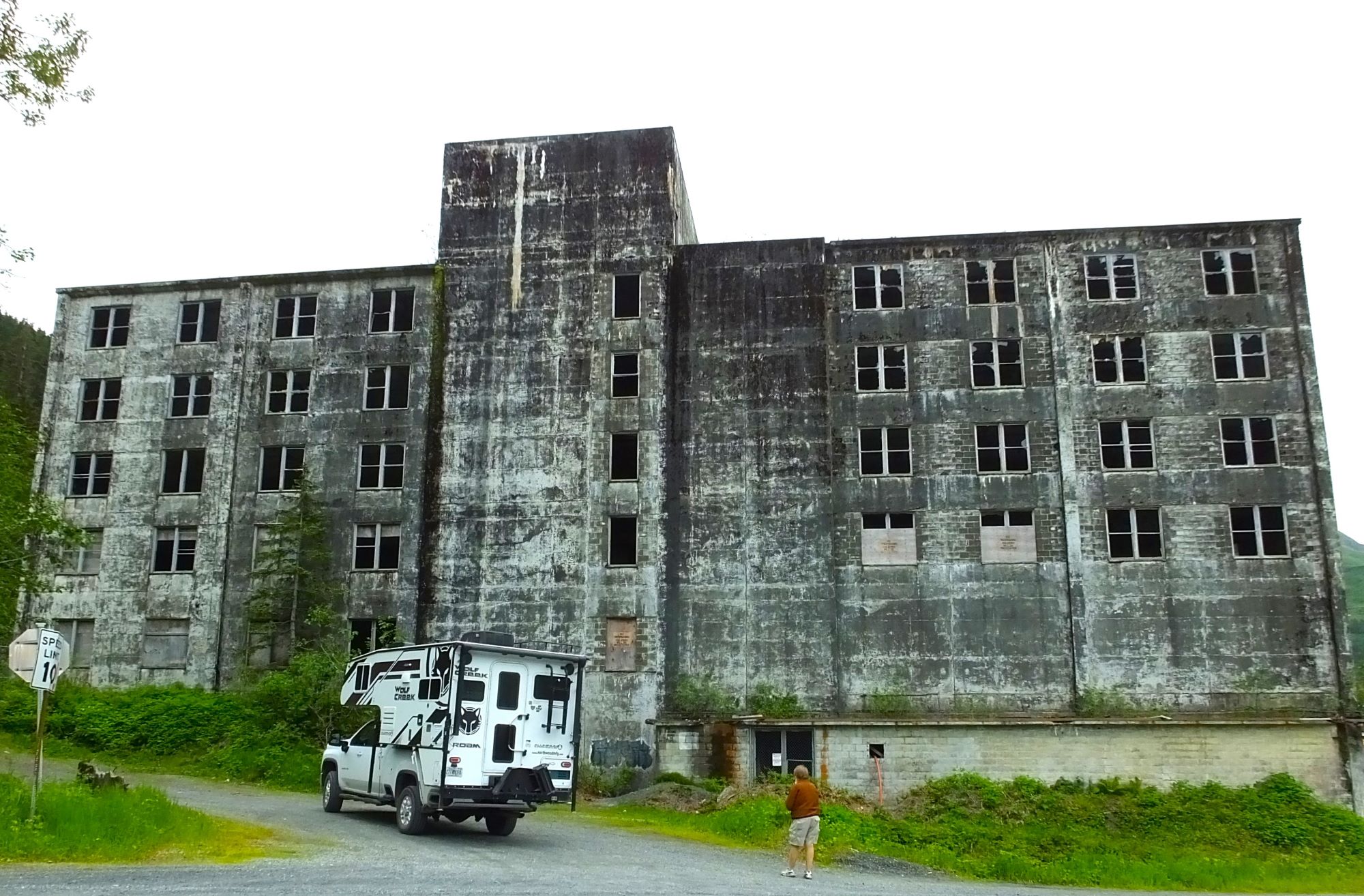
Views of Whittier and Begich Towers; exploring the abandoned Buckner Building nearby
Whittier is a working town, with stacks of cargo containers, loading cranes, ships and a railroad yard. Many of Whittier’s residences, business offices and city services are housed in Begich Towers, a 14-story building that overlooks the port area.
The Buckner Building, an abandoned military ‘city under one roof’ is nearby. It was completed in 1949 and abandoned in 1966. There is also a cruise ship dock, along with a few restaurants and souvenir shops. All are situated along a narrow fjord that is surrounded by tall mountains.
Our 2023 tour of Whittier was much better than the rainy and cold visit in 2018. It took two visits for us to finally agree with local expression: “Things are prettier in Whittier!“
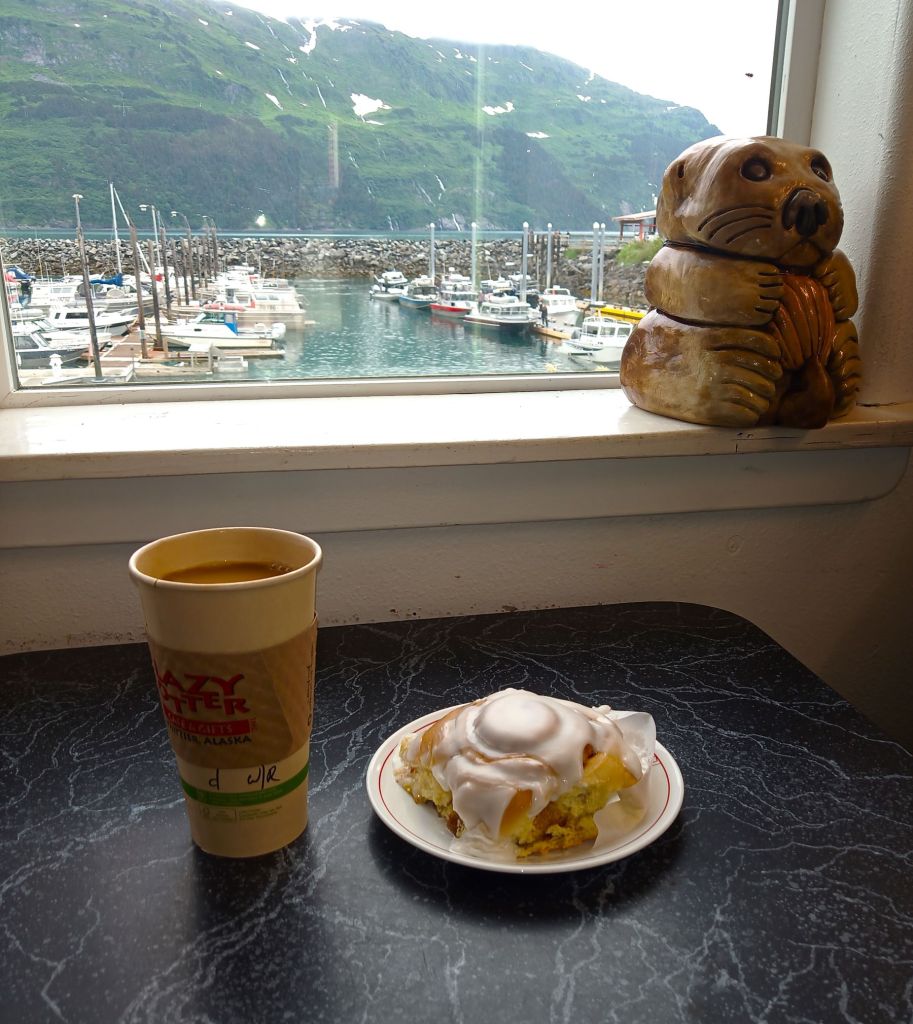
Bun Report: Lazy Otter Cafe

While in Whittier, we stopped at Lazy Otter Café for coffee and a cinnamon bun. The warmed bun, baked earlier that day, had a familiar taste and appearance. We think it was a grocery store Grands cinnamon roll! Although the bun tasted good and was nicely iced, it was nothing remarkable. Our bun score: 3.5 out of 5.
Critter count
Moose – 1
Otters – 2
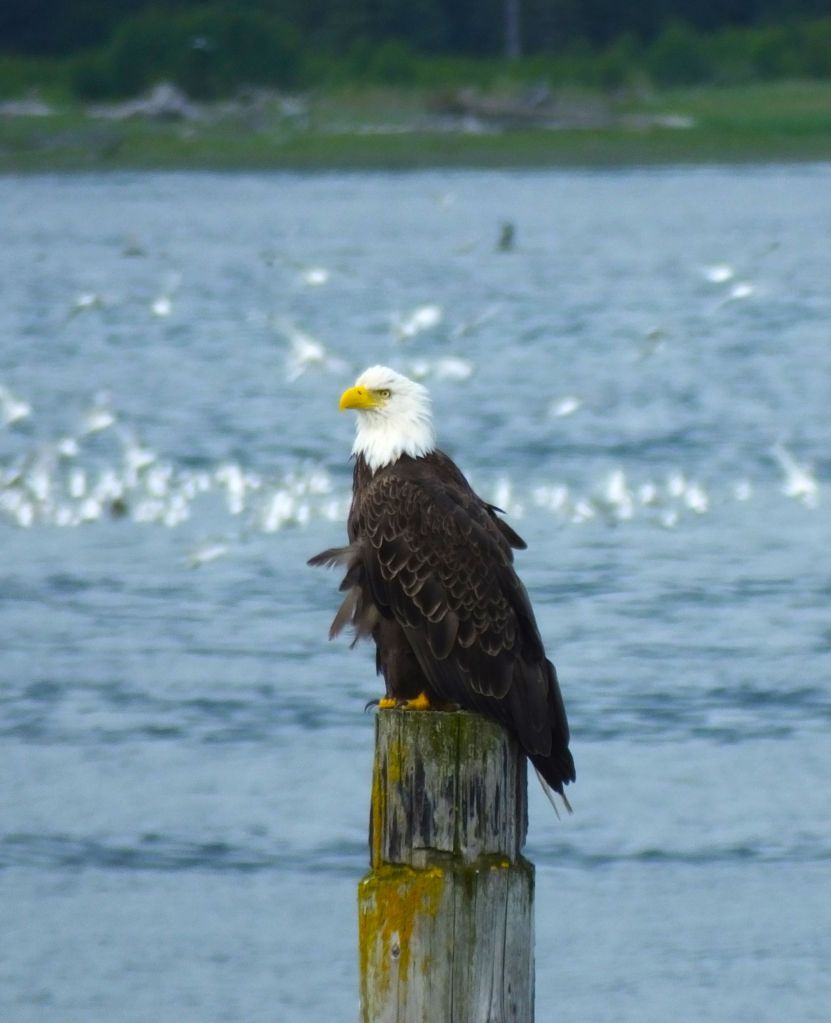
Eagles – 10+
Seagulls – lots
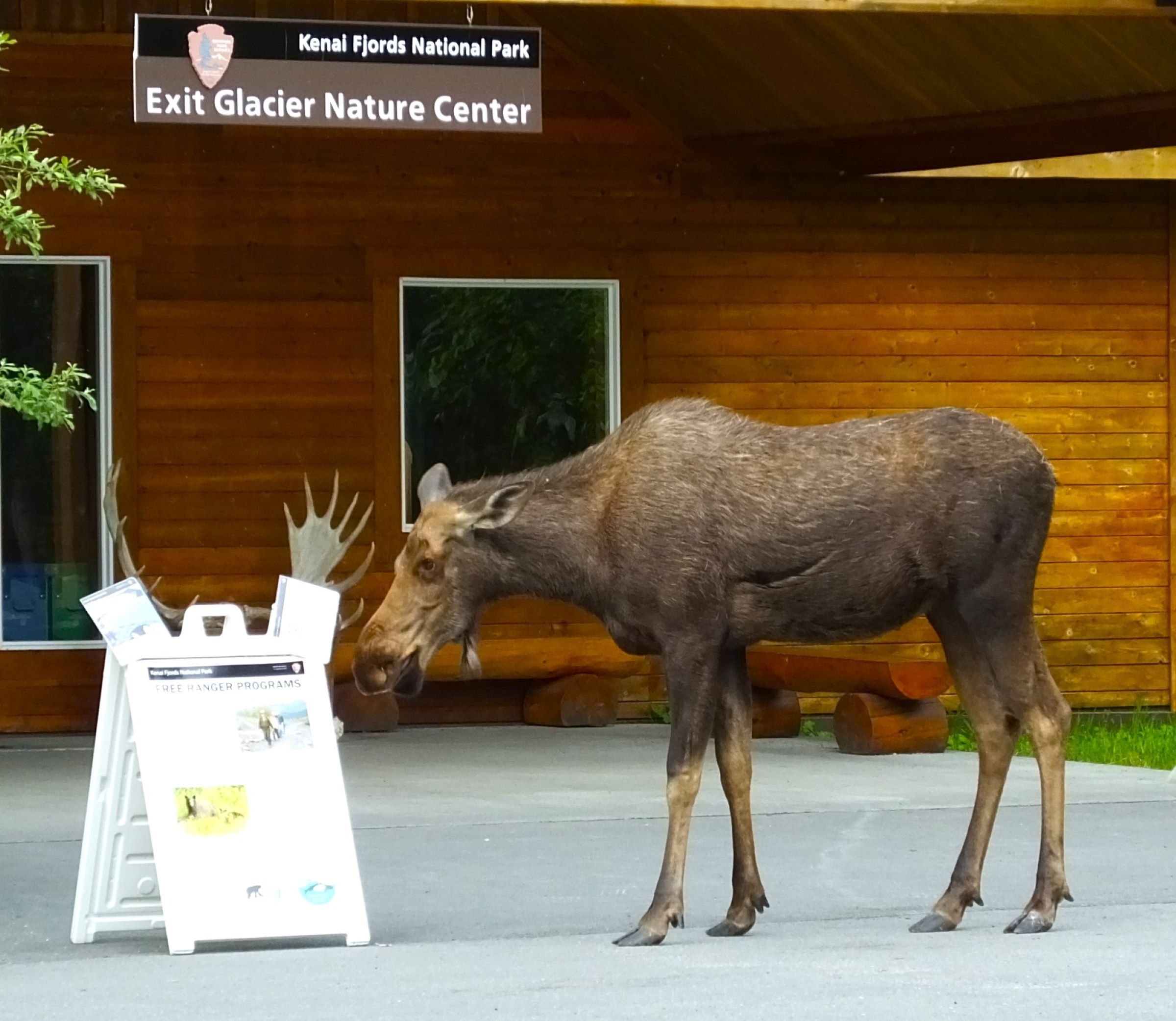
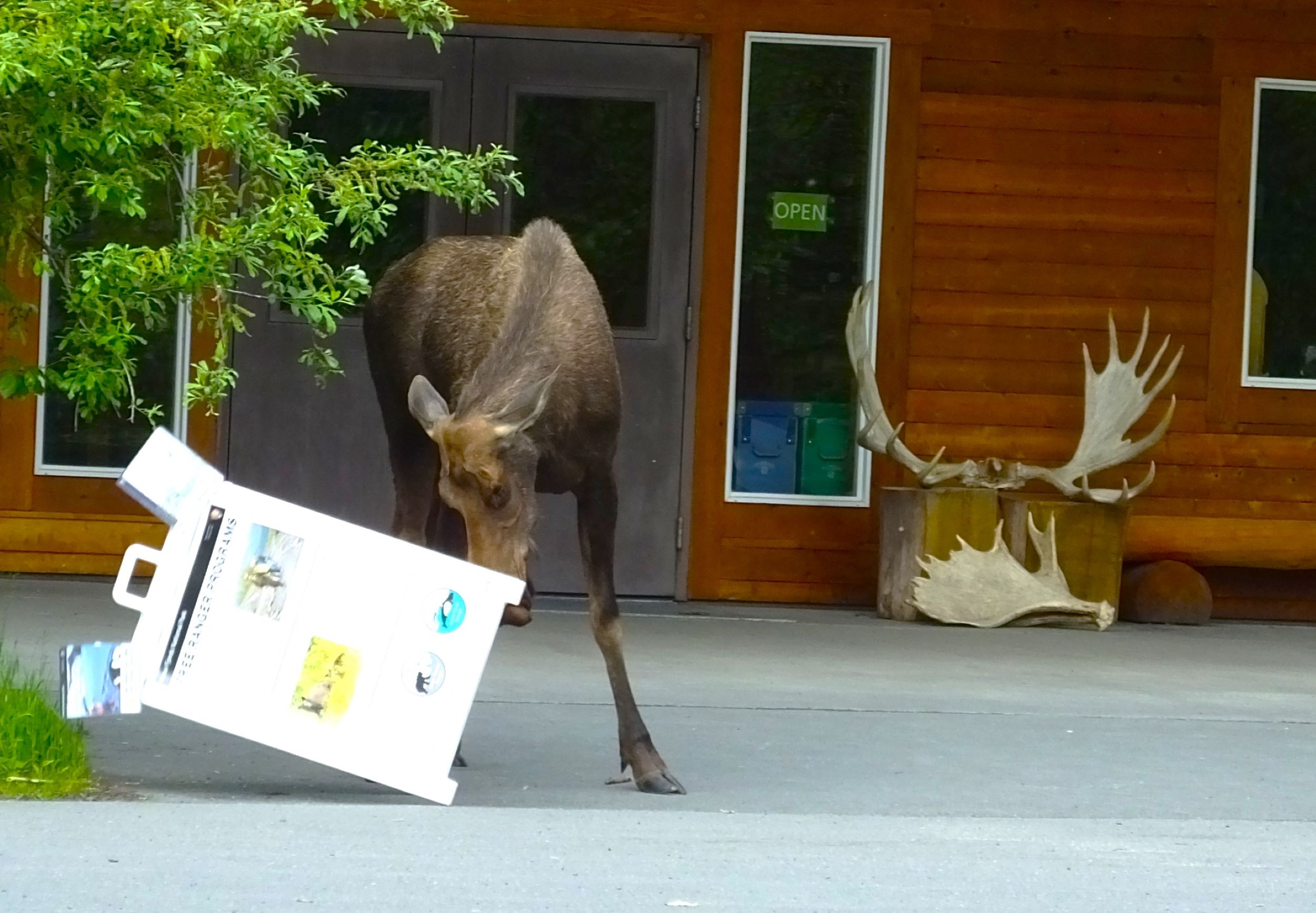
A curious moose checks the daily activity board at Exit Glacier Nature Center before knocking it over
Next week:
Find out what one word best describes the Kenai River and Soldotna!

 Take the LONG Road...
Thanks Ed, looks like a wonderful trip
LikeLike
We loved our inland tour of alaska. also took the train ride from Fairbanks to Anchorage Beautiful country
LikeLike
Hi Jim and Peggy, thanks for the comments. The train parallels Alaska highways in some areas, in other places it is more remote. Regardless, the trip is beautiful! Blessings!
LikeLike
Fourth of July fireworks at midnight! Great narration and pics as always! Appreciate your including people and objects for the viewers sense of scale! Living in Seward must be interesting? Looks and sounds like an X-Files setting : )
LikeLike
Hi Norm, we had great stay in Seward this time around – waterfront camping is the way to go (as long as you are willing to rough it a bit)!
LikeLiked by 1 person
Ed,
Very nice pics and good information.
LikeLike
Hi Kishore, good to hear from you!
LikeLike
As always, I love the people and the animals and surrounding beauty that you encounter! Perhaps that moose was saying, forget about activities, watching moose is far more interesting!
LikeLike